
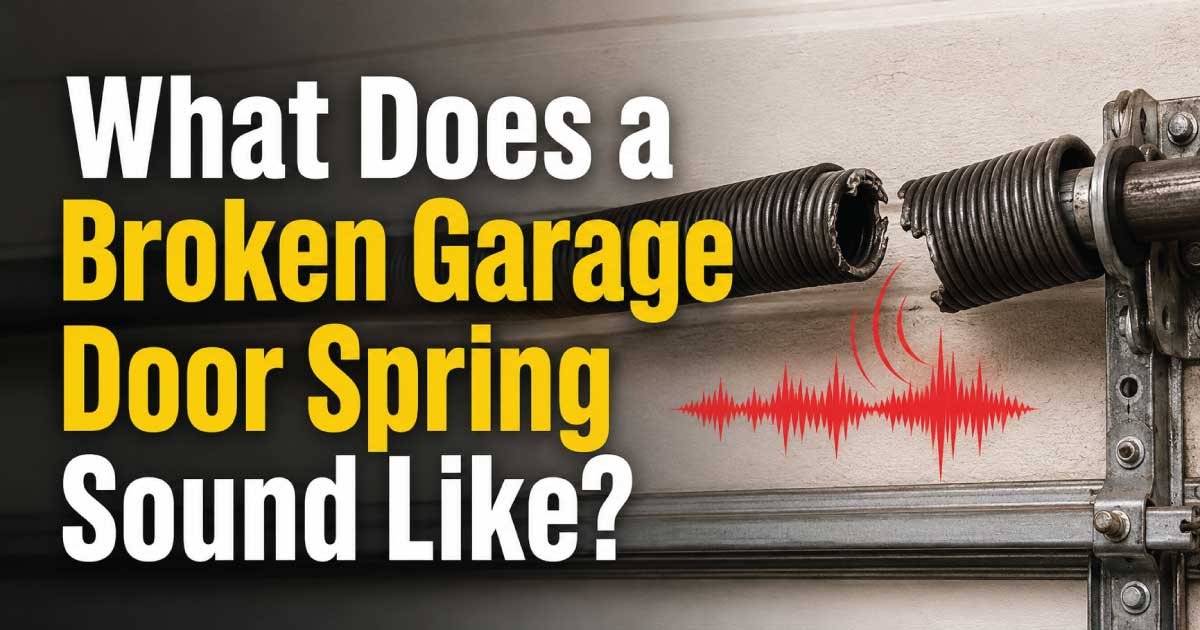
A broken garage door spring often announces itself before you ever see the damage. Many homeowners describe hearing a loud bang, snap, or gunshot-like noise, especially when the garage door is closed. That sound can be alarming because it seems as though something heavy has fallen or an object has hit the house. In reality, the noise usually comes from the sudden release of tension stored inside a garage door spring.
Garage door springs work under extreme pressure every time the door opens and closes. Over time, normal wear, rust, poor maintenance, or temperature changes can weaken the metal until it finally breaks. Ignoring the warning signs can make the door unsafe to operate and may even damage other garage door components.
In this repair guide, you’ll learn what a broken garage door spring sounds like, how to recognize the most common warning signs, why the failure happens, and how to troubleshoot the problem safely. You’ll also discover when a simple inspection is enough, when DIY repair is appropriate, and when professional repair is the safest choice.
Common Signs and Symptoms
A garage door spring rarely fails without leaving clues. Understanding these symptoms can help you diagnose the problem before attempting any repairs. While the loud breaking sound is usually the most obvious sign, several other changes in the door’s behavior often appear at the same time.
Common signs include:
A loud bang or snapping sound
- Often compared to a firecracker, gunshot, or heavy object hitting the garage.
- Usually happens when the spring suddenly breaks under tension.
The garage door will not open
- The opener may run normally, but the door barely moves or doesn’t move at all.
- The motor may struggle because the spring is no longer carrying the door’s weight.
The door feels unusually heavy
- A standard residential garage door can weigh between 130 and 300 pounds.
- Without spring assistance, lifting it manually becomes extremely difficult.
The garage door opens only a few inches
- Many modern garage door openers stop automatically when they detect excessive resistance.
- This safety feature helps prevent motor damage.
Visible gap in the spring
- Extension and torsion springs both develop a noticeable separation after breaking.
- Even a one-inch gap confirms the spring has failed.
Crooked or uneven door movement
- If only one spring breaks on a two-spring system, the door may lift unevenly.
- One side may rise while the other remains lower.
Loose or hanging cables
- Garage door cables depend on proper spring tension.
- When a spring breaks, the cables can become slack or fall off the drums.
Grinding or straining opener sounds
- The opener may produce louder-than-normal operating noises.
- This usually indicates it’s trying to lift more weight than it was designed for.
Practical example:
A homeowner hears a loud bang during the night but finds nothing unusual outside. The next morning, the garage door opener hums, but the door refuses to lift. A quick inspection reveals a two-inch gap in the torsion spring above the door. This combination of symptoms almost always points to a broken spring rather than an electrical issue.
How the Appliance or System Normally Works
Before diagnosing a spring failure, it helps to understand how a garage door normally operates. Once you know what each component does, identifying the source of unusual sounds becomes much easier.
Garage doors rely on a carefully balanced system rather than raw motor power. Contrary to what many homeowners believe, the electric opener is not designed to lift the entire weight of the door.
Here’s how the system works:
Garage door springs store energy
- Torsion springs twist around a steel shaft.
- Extension springs stretch along the horizontal tracks.
The stored energy offsets the door’s weight
- As the door opens, spring tension helps lift it.
- As it closes, the springs rewind or stretch to store energy again.
The opener guides movement
- The electric opener controls speed and direction.
- It relies on properly functioning springs to reduce lifting force.
Cables transfer spring force
- Steel cables connect the springs to the bottom of the door.
- They help raise and lower the door smoothly.
Rollers and tracks guide movement
- Rollers keep the door aligned.
- Tracks ensure smooth vertical and horizontal travel.
When everything functions correctly:
- The door opens smoothly.
- The opener sounds relatively quiet.
- The door stays balanced halfway open.
- Springs remain tightly wound without visible gaps.
When a spring breaks, this balance disappears instantly. The stored mechanical energy releases in a fraction of a second, creating the loud sound many homeowners mistake for an explosion.
Most Common Reasons This Problem Happens
Garage door springs are wear items. Even high-quality springs eventually fail after thousands of opening and closing cycles. Knowing the underlying causes can help you recognize problems early and reduce the chance of unexpected failure.
Normal Wear and Cycle Fatigue
Every garage door spring has a limited lifespan. Most standard residential springs are rated for approximately 10,000 cycles, although premium models may last much longer.
Why it happens:
The metal gradually weakens with repeated twisting or stretching.
Symptoms:
- Increasing squeaking
- Slower door movement
- Sudden loud snap
How to identify it:
- Spring appears broken with a visible gap.
- No signs of rust or impact damage.
Rust and Corrosion
Rust increases friction between spring coils and weakens the steel over time.
Why it happens:
Moisture, humidity, and poor garage ventilation allow corrosion to develop.
Symptoms:
- Creaking sounds
- Rust-colored residue
- Rough spring surface
How to identify it:
Inspect the spring closely for corrosion or flaking metal.
Poor Lubrication
Garage door springs need occasional lubrication to reduce friction during operation.
Why it happens:
Dry metal surfaces create additional stress as the spring twists.
Symptoms:
- Squealing
- Chirping
- Increased operating noise
How to identify it:
The spring appears dry with no protective lubricant coating.
Cold Weather
Winter temperatures can increase the likelihood of spring failure.
Why it happens:
Cold steel becomes slightly less flexible, especially if the spring is already weakened by age.
Symptoms:
- Spring breaks during the first opening of the morning.
- Loud bang after a freezing night.
How to identify it:
Failure occurs immediately after significant temperature drops.
Poor Installation or Incorrect Spring Size
Not every spring is suitable for every garage door.
Why it happens:
An undersized spring experiences excessive stress during normal operation.
Symptoms:
- Frequent repairs
- Poor door balance
- Premature failure
How to identify it:
A technician can compare the installed spring with manufacturer specifications.
Lack of Preventive Maintenance
Many garage door systems operate for years without inspection.
Why it happens:
Small problems remain unnoticed until the spring reaches its breaking point.
Symptoms:
- Increasing noise
- Jerky operation
- Loose hardware
How to identify it:
Multiple worn components are visible during inspection.
Safety Precautions Before Troubleshooting
Garage door spring diagnosis may appear simple, but springs contain enough stored energy to cause severe injuries. Before inspecting the system, take a few precautions to protect yourself and prevent additional damage.
Always remember that inspecting a spring is much safer than repairing or replacing one. Homeowners can safely perform basic visual checks, but adjusting or removing a loaded spring requires specialized tools and experience.
Follow these safety precautions before troubleshooting:
- Disconnect the automatic garage door opener from electrical power.
- Pull the emergency release only if the door is fully closed. Releasing an open door with a broken spring can cause it to fall unexpectedly.
- Never loosen torsion spring winding cones or adjustment bolts.
- Wear safety glasses and sturdy work gloves during your inspection.
- Keep children and pets away from the garage while troubleshooting.
- Avoid standing directly beneath the garage door if you suspect a spring failure.
- Do not attempt to force the opener to lift a heavy door repeatedly, as this can damage the motor.
- If lifting the door manually, use extreme caution and stop immediately if it feels excessively heavy.
If you discover a broken spring, the safest decision is usually to stop using the door until it has been repaired.
Tools Required
Before beginning your inspection, gather a few simple tools that help you examine the garage door safely without disassembling any high-tension components.
| Tool | Purpose |
|---|---|
| Flashlight | Inspect springs, cables, and tracks in dim lighting |
| Safety glasses | Protect eyes from dust and debris |
| Work gloves | Improve grip and reduce minor hand injuries |
| Step ladder | Safely view torsion springs above the door |
| Tape measure | Measure visible spring gaps or door alignment |
| Silicone garage door lubricant | Lubricate moving hardware after inspection if appropriate |
| Smartphone camera | Take close-up photos for comparison or professional diagnosis |
Step-by-Step Troubleshooting Guide
Troubleshooting should follow a logical order. Start with the safest visual inspections before considering any mechanical issues. This approach reduces the risk of injury and helps you identify the most likely cause without unnecessary disassembly.
Listen for recent unusual sounds
- Inspect: Recall whether you heard a loud bang, snap, or popping noise.
- Why it matters: A sudden explosive sound is one of the strongest indicators of a broken spring.
- Expected result: You can narrow the diagnosis before opening the system.
- What to do next: Perform a visual inspection of the springs.
Inspect the springs
- Inspect: Look for a visible gap, distortion, or broken coil.
- Why it matters: A separated spring confirms mechanical failure.
- Expected result: The damaged spring becomes easy to identify.
- What to do next: Avoid operating the door until repairs are completed.
Check the door balance
- Inspect: With the opener disconnected and the door fully closed beforehand, carefully test whether the door begins to lift evenly.
- Why it matters: An extremely heavy door usually indicates lost spring tension.
- Expected result: The door should feel much heavier than normal if a spring has failed.
- What to do next: Stop testing if excessive force is required.
Examine the cables
- Inspect: Look for loose, tangled, or hanging lift cables.
- Why it matters: Broken springs often allow cables to lose tension.
- Expected result: Cables should remain properly seated on the drums.
- What to do next: Do not attempt to rewind cables under tension.
Test the opener without forcing it
- Inspect: Activate the opener briefly.
- Why it matters: Struggling or reversing may indicate excessive door weight.
- Expected result: The opener should stop rather than force the door upward.
- What to do next: Disconnect power if abnormal operation continues.
Quick Diagnosis Table
This quick reference helps match common symptoms with the most likely cause, making it easier to decide whether simple maintenance, further inspection, or professional repair is the appropriate next step.
| Symptom | Possible Cause | Recommended Solution |
|---|---|---|
| Loud bang from garage | Broken torsion or extension spring | Inspect spring for a visible gap and arrange replacement |
| Door will not open | Broken spring | Stop using the opener and inspect the spring system |
| Door feels extremely heavy | Loss of spring tension | Avoid lifting repeatedly and schedule spring replacement |
| Door opens unevenly | One spring broken | Inspect both springs and replace the damaged pair if recommended |
| Loose cables | Broken spring or cable issue | Do not rewind cables yourself; inspect the spring first |
| Opener strains or reverses | Door too heavy due to spring failure | Stop operating the opener until the cause is corrected |
| Squeaking before failure | Dry or rusted spring | Lubricate if intact; replace if damaged |
| Visible gap in spring | Broken spring | Confirm diagnosis and avoid further door operation |
How to Fix Each Common Cause
Now that you’ve identified the likely source of the problem, it’s time to determine the appropriate repair. Some issues involve simple maintenance that homeowners can perform safely, while others require specialized tools and training. Before attempting any repair, make sure the garage door is fully closed, the opener is unplugged, and you’ve reviewed the safety precautions from the previous section.
Broken Torsion Spring
A broken torsion spring is the most common cause of the loud “gunshot” sound many homeowners hear.
Repair method:
- Confirm the spring has a visible gap.
- Disconnect power to the garage door opener.
- Do not loosen the winding cones or attempt to unwind the remaining spring tension.
- Replace the spring with one that matches the door’s weight, height, and manufacturer specifications.
- Test the door balance after installation and adjust tension if required.
DIY or professional?
This is best left to a professional. Torsion springs store tremendous energy, and improper handling can result in serious injury.
Broken Extension Spring
Extension springs stretch alongside the horizontal tracks and are generally easier to understand than torsion systems, but they still pose safety risks.
Repair method:
- Verify which spring has failed.
- Inspect the safety cable running through the spring.
- Replace both extension springs if they are the same age.
- Replace worn pulleys or cables if they show damage.
- Test door balance and smooth operation.
DIY or professional?
Experienced DIYers may replace extension springs if they understand the system and follow manufacturer instructions, but professional repair is recommended for most homeowners.
Rusted Springs
If the spring is still intact but shows surface rust, immediate replacement may not be necessary.
Repair method:
- Clean light surface corrosion with a soft cloth.
- Apply a silicone-based garage door lubricant designed for springs.
- Inspect the spring closely for cracks or thinning metal.
- Replace the spring if rust has significantly weakened it.
DIY or professional?
Suitable for DIY if the spring is undamaged.
Poor Lubrication
Dry springs create unnecessary friction that accelerates wear.
Repair method:
- Close the garage door.
- Spray a light coat of garage door lubricant across the spring coils.
- Open and close the door several times to distribute the lubricant evenly.
- Wipe away excess lubricant.
Avoid using heavy grease because it attracts dust and dirt.
Loose or Misaligned Cables
Sometimes the spring breaks first, causing the cables to come loose.
Repair method:
- Inspect the cables for fraying or broken strands.
- Never attempt to rewind cables while spring tension remains on the system.
- Replace damaged cables during spring replacement.
Because cable tension depends on the spring system, repairing both together often provides the safest and most reliable result.
Worn Rollers and Hinges
Although these parts don’t usually create the explosive sound of a broken spring, they often contribute to noisy operation.
Repair method:
- Tighten loose hardware.
- Lubricate rollers, hinges, and bearings.
- Replace cracked nylon rollers or worn steel rollers.
- Inspect hinges for cracks or bending.
This maintenance helps reduce strain on the entire garage door system.
Advanced Troubleshooting
Some garage door problems resemble a broken spring but have different underlying causes. If your inspection didn’t reveal an obvious spring failure, continue with a more detailed diagnosis. Taking a systematic approach prevents unnecessary part replacement and helps identify less common issues.
Opener Force Settings
Modern garage door openers include adjustable force limits.
If the force setting is too low:
- The opener may stop before lifting the door.
- The door may reverse unexpectedly.
- The problem may appear similar to a broken spring.
Consult the opener’s manual before adjusting these settings.
Bent Tracks
A damaged track creates resistance that increases stress on both the springs and opener.
Inspect for:
- Visible dents
- Twisted track sections
- Loose mounting brackets
- Rollers binding during movement
Minor alignment issues can sometimes be corrected by tightening hardware, but severely bent tracks usually require replacement.
Worn Bearings
The torsion shaft rotates through bearings mounted above the garage door.
Signs include:
- Grinding sounds
- Rough movement
- Increased resistance
- Excessive shaft vibration
Replacing worn bearings improves door performance and reduces strain on new springs.
Damaged Center Bearing Plate
Although uncommon, a worn center bearing can produce unusual noises and uneven spring movement.
Inspect for:
- Excessive shaft movement
- Metal shavings
- Bearing wear
- Loose mounting bolts
Damaged Garage Door Panels
Sometimes homeowners assume a spring has broken when the real problem is structural damage.
Look for:
- Cracked panels
- Bent reinforcement struts
- Broken hinges
- Door sections separating
Structural damage changes how weight is distributed across the system, increasing wear on springs and cables.
When Repair Is Not Worth It
Repairing a garage door spring is usually much less expensive than replacing the entire door. However, there are situations where investing in repairs no longer makes financial or practical sense.
Replacement is often the better option when:
- The garage door is over 20 years old.
- Multiple panels are damaged.
- Tracks, cables, rollers, and springs all show significant wear.
- Replacement parts are no longer readily available.
- The door lacks modern safety features.
- Repair costs approach half the price of a new garage door system.
For example, replacing one spring on a relatively new insulated steel door is usually worthwhile. In contrast, replacing springs, tracks, cables, rollers, and damaged wooden panels on an aging door may exceed the value of the existing system.
A professional inspection can help determine which option provides the best long-term value.
Preventive Maintenance Tips
Most garage door spring failures cannot be prevented forever, but regular maintenance can significantly extend their lifespan and reduce unexpected breakdowns.
Follow these preventive maintenance practices:
- Lubricate springs every three to six months with a garage door lubricant.
- Inspect springs for rust, cracks, and visible wear.
- Tighten loose nuts, bolts, and brackets.
- Check cables for fraying or corrosion.
- Keep tracks clean and free of debris.
- Test the garage door balance every few months.
- Listen for new squeaks, grinding, or popping sounds.
- Replace both springs together when one fails if they are the same age.
- Schedule a professional inspection every few years, especially for heavily used doors.
- Avoid repeatedly cycling the door unnecessarily, as every open-and-close cycle contributes to spring wear.
Regular preventive maintenance is far less expensive than emergency repairs and helps keep the garage door operating safely.
Common Mistakes to Avoid
Many garage door repairs become more expensive because of avoidable mistakes. Understanding what not to do is just as important as knowing the correct repair procedure.
Common mistakes include:
- Continuing to use the opener after a spring breaks.
- Attempting to replace torsion springs without proper winding bars.
- Using screwdrivers instead of specialized spring tools.
- Replacing only one spring in a matched pair when both have similar wear.
- Ignoring rust and unusual noises until complete failure occurs.
- Applying heavy grease instead of garage door lubricant.
- Forgetting to inspect cables and rollers during spring replacement.
- Buying replacement springs based only on appearance instead of specifications.
- Standing directly beneath the door during testing.
- Skipping balance testing after repairs.
Avoiding these mistakes improves both safety and repair quality.
When to Call a Professional
Some maintenance tasks are well within the abilities of careful homeowners, but garage door spring replacement is one repair where professional experience makes a significant difference.
Call a professional if:
- A torsion spring has broken.
- The garage door is stuck partially open.
- Cables have come off the drums.
- The door is crooked or severely unbalanced.
- Multiple components failed simultaneously.
- You notice bent tracks or structural damage.
- The opener continues struggling after basic troubleshooting.
- You’re uncertain about the correct replacement spring size.
- Specialized tools are required.
- You have any doubts about safely completing the repair.
Professional technicians have the equipment needed to safely release spring tension, install correctly matched replacement springs, and verify that the entire system is properly balanced before returning the door to service.
Estimated Repair Costs
Repair costs vary depending on your location, door size, spring type, and labor rates. The estimates below represent common residential repair ranges.
| Repair | Estimated Cost | DIY or Professional |
|---|---|---|
| Garage door lubrication | $10–$25 | DIY |
| Roller replacement | $40–$150 | DIY or Professional |
| Cable replacement | $100–$250 | Professional |
| Extension spring replacement | $120–$300 | DIY (experienced) or Professional |
| Torsion spring replacement | $200–$450 | Professional |
| Pair of torsion springs | $250–$600 | Professional |
| Track repair | $150–$350 | Professional |
| Garage door opener adjustment | $75–$150 | DIY or Professional |
| Complete garage door replacement | $800–$3,000+ | Professional |
Frequently Asked Questions
1. What does a broken garage door spring sound like?
A broken garage door spring usually sounds like a loud bang, gunshot, or firecracker. The noise occurs because the tightly wound spring suddenly releases stored energy when the metal breaks. Many homeowners initially think someone hit the garage or that something exploded inside the house.
2. Can I open my garage door if the spring is broken?
Yes, but it is generally not recommended. A garage door without spring assistance becomes extremely heavy and can damage the opener or cause injuries. If emergency access is necessary, use extreme caution and avoid forcing the door if it resists movement.
3. Why did my garage door spring break without warning?
Garage door springs often fail because of normal metal fatigue after thousands of operating cycles. Rust, poor lubrication, cold weather, and heavy daily use can shorten their lifespan. Even well-maintained springs eventually wear out and break unexpectedly.
4. Should both garage door springs be replaced at the same time?
Yes, replacing both springs is usually the best approach when they are the same age. If one spring has reached the end of its service life, the second is often close to failure. Replacing both together helps maintain proper door balance and reduces future repair calls.
5. Is a broken garage door spring dangerous?
Yes, a broken garage door spring can be dangerous. Springs are under significant tension, and improper handling can cause serious injuries. Additionally, a door without proper spring support can fall unexpectedly or overload the garage door opener.
6. How long do garage door springs typically last?
Most standard garage door springs last about 10,000 opening and closing cycles, which often equals 7 to 10 years for average households. Higher-cycle springs are available and can provide a considerably longer service life with proper maintenance.
7. Can cold weather cause garage door springs to break?
Yes, freezing temperatures can contribute to spring failure. Cold weather makes already weakened metal less flexible, increasing the likelihood that an aging spring will snap during normal operation. Regular inspections before winter can help identify worn springs early.
8. How can I tell whether the problem is the spring or the opener?
The easiest clue is the door’s weight. If the opener runs but the door barely moves and feels unusually heavy when tested safely, a broken spring is the likely cause. A visible gap in the spring provides additional confirmation.
9. Can I prevent my garage door spring from breaking?
You cannot prevent eventual wear completely, but regular lubrication, routine inspections, prompt rust treatment, and replacing worn components early can significantly extend spring life and reduce the likelihood of unexpected failures.
10. How much does professional garage door spring replacement usually cost?
Professional garage door spring replacement typically costs between $200 and $450 for most residential torsion spring systems, although prices vary by location, spring type, and labor rates. Investing in professional installation also helps ensure proper balancing and safe operation.
Final Thoughts
A loud bang from your garage is often the first and most noticeable clue that a spring has failed. Understanding what a broken garage door spring sounds like makes it easier to recognize the problem quickly, avoid unnecessary damage, and choose the safest course of action. While basic inspections, lubrication, and routine maintenance are well within the abilities of many homeowners, spring replacement itself involves high-tension components that demand careful handling and specialized tools.
The best approach is to diagnose the issue methodically. Listen for unusual noises, inspect the springs for visible gaps, check the cables and door balance, and avoid forcing the opener if the door feels unusually heavy. These simple troubleshooting steps can help you identify the cause without putting yourself at unnecessary risk.
Finally, don’t overlook preventive maintenance. Regular inspections, proper lubrication, and prompt attention to unusual sounds can extend the life of your garage door system and reduce the chance of unexpected breakdowns. When safety is uncertain, professional repair is always the smarter investment, protecting both your garage door and everyone who uses it.

Engineer Ali Usman is a professional garage door expert and author at FixFasty, with over 10 years of hands-on experience in garage door systems and mechanical maintenance. He writes clear, step-by-step guides on garage door repairs, parts, and safety practices, helping homeowners fix problems correctly and maintain smooth, secure, and long-lasting garage door performance.