
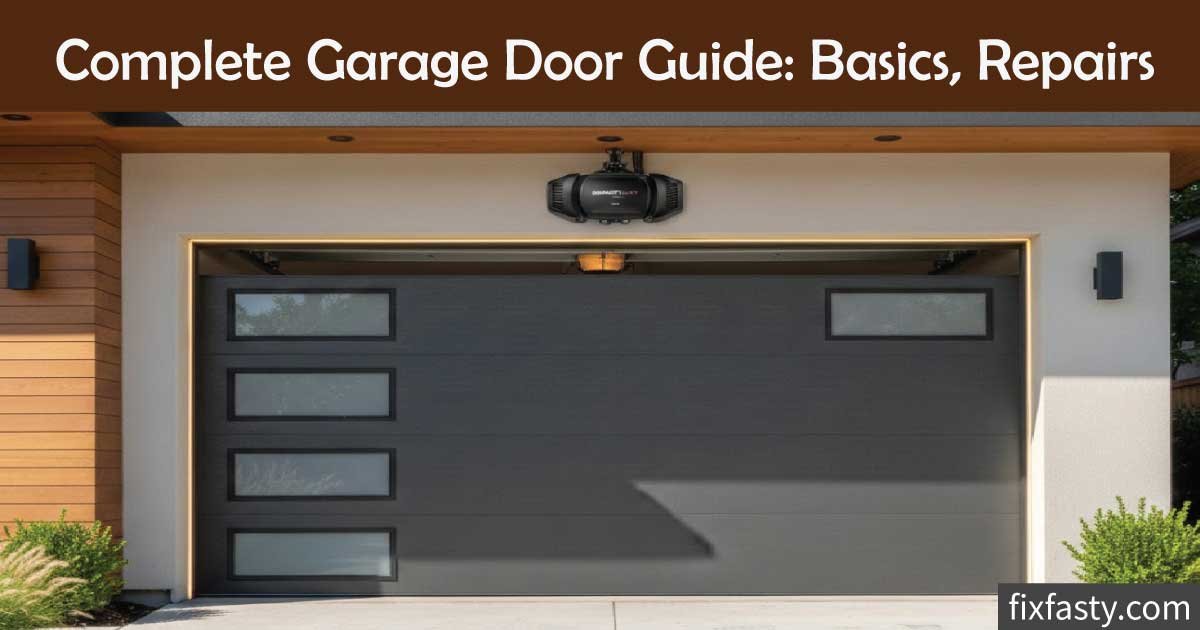
A garage door is not just a door into your garage, but it is an essential aspect of security, beauty and utilitarianism of your home. Most homeowners do not take care of it until something wrong occurs and this leads to expensive repairs or even there is inconvenience due to downtime.
No matter whether you are a DIYer or simply a homeowner who wants to know more about the workings of your garage door or simply the maintenance tips and tricks of the repair itself,.
This comprehensive guide will guide you through all the basics, the typical issues, maintenance, and the process of repairing it.
Understand Garage Doors: Why They Matter
The garage doors form one of the largest moving objects within the home. They will provide the safety of your objects, make your house more appealing to the exterior, insulate your house to help conserve energy, make your garage easy to access, and make your house generally safer and convenient.
Security: Protect your belongings and family from intruders.
Insulation: Helps maintain temperature in your garage and home, reducing energy costs.
Curb Appeal: A well-maintained garage door enhances the overall look of your property.
Convenience: Offers easy access to vehicles and storage spaces.
Types of Garage Doors
Garage doors are different in style, functionality, and installation style, with each with its own advantages and considerations.
The choice of the appropriate door will depend on the architecture of your house, budget consideration, level of insulation and convenience requirement.
Learning both will assist you to make an informed decision that will strike a balance between the aesthetics, durability and ease of use combined with increasing the security and curb appeal.
1. Sectional Garage Doors
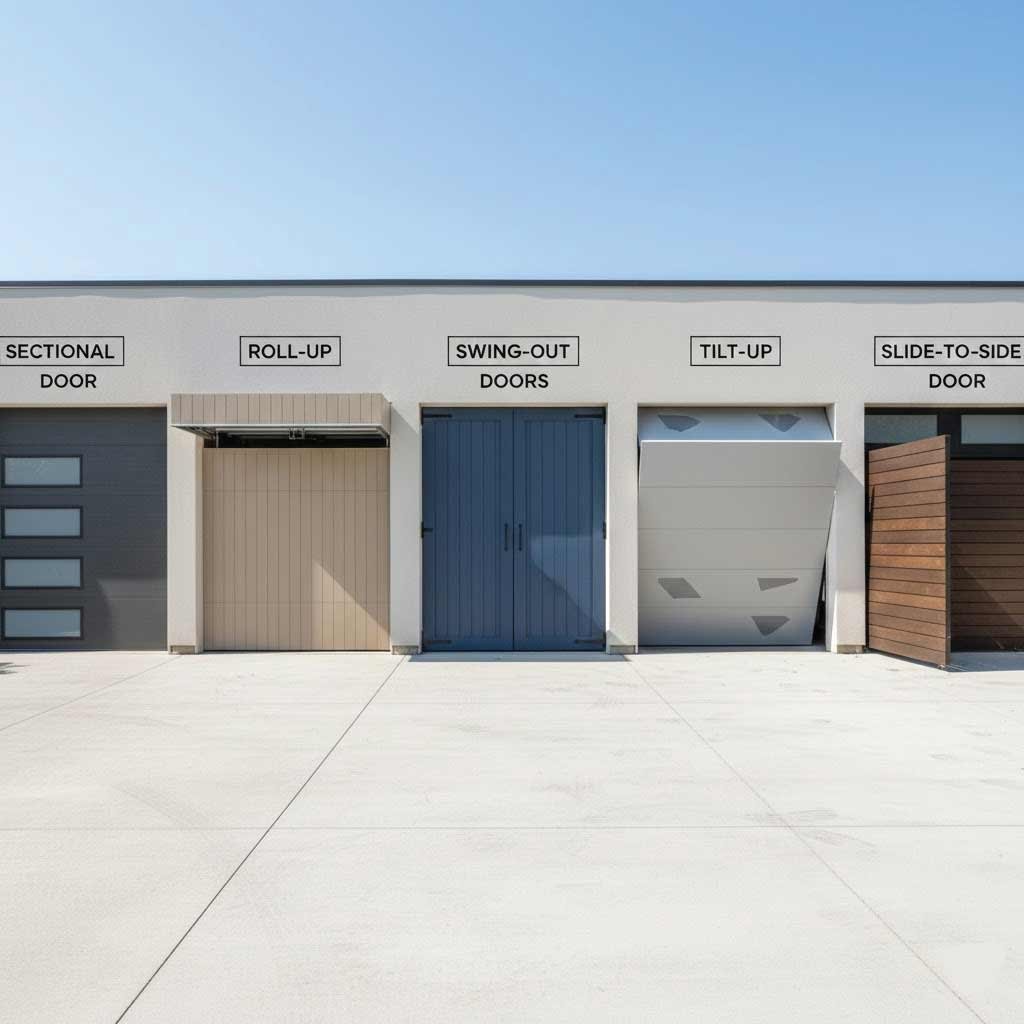
Sectional garage doors are made up of horizontal panels with hinges attached to them which roll on vertical tracks and curve over the head when opened.
They are compatible with majority of the designs on the homes, they are very insulated and can be used with the modern openers without much noise.
Professional installation is however advised and hinges or rollers can wear out as time goes by and thus some maintenance is required so that they run smoothly.
2. Roll-Up Garage Doors
Roll-up doors These doors have slats that roll around a drum over the opening. They are suitable in garages where there is limited ceiling space, durable, low-maintenance and can be easily automated.
Consumers have the disadvantage that roll-up doors are normally less insulated than sectional doors and they can be noisier when in use, and this would not suit noise sensitive places.
3. Slide-to-Side Garage Doors
Slide-to-side doors track along a wall-mounted track in a horizontal movement that provides an effective remedy in low-ceiling garages. They are easy to work with, and they do not demand overhead clearance.
They however require more wall space within the garage and since they are not as common, the repair options and parts could be more difficult to locate.
4. Swing-Out Garage Doors
Swing-out garage doors swing outward like the old barn doors, providing the ancient look, with a simple system. They are not dependent on tracks or springs, and hence, they are not hard to maintain.
The primary disadvantage is that it requires uninterrupted space in front of the garage, and often, automation is challenging or ineffective as compared to other types of doors.
5. Tilt-Up Garage Doors
Tilt-up doors are made up of one continuous solid panel which tilts upwards and swings back to the garage. They are simple to design and in many cases, cheaper than sectional doors.
Tilt-up doors however need lots of front space to use, are heavy and not easy to open manually, which makes their use inconveniencing to some homeowners.
Garage Door Components: Know Your Door
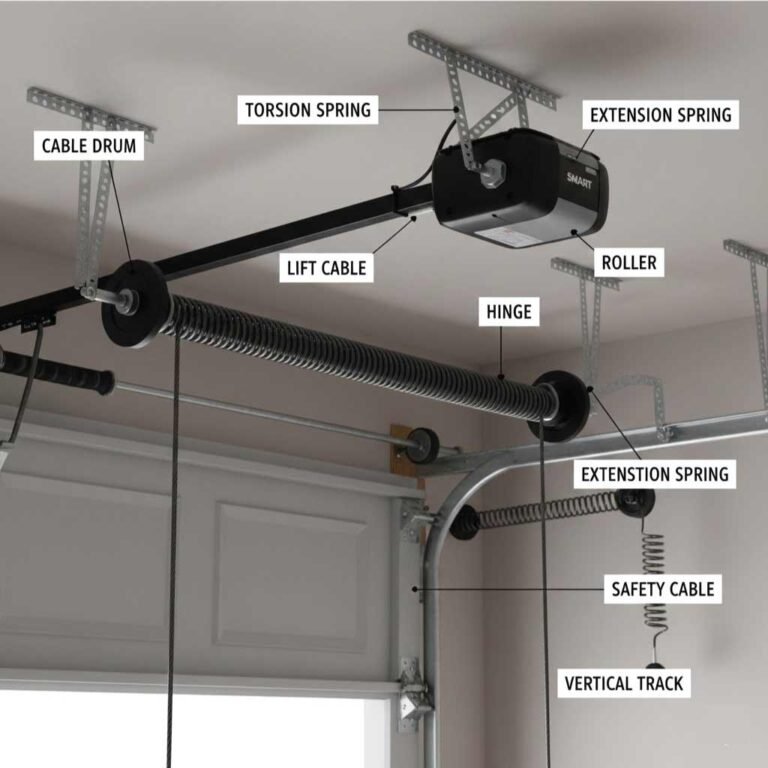
It is important to know the parts of your garage door to know how to maintain, do repairs and make them run smoothly. All the components are important in the operations of the door, safety, and lifespan.
The knowledge of these parts enables residential owners to detect any problems at an early stage, carry out small repairs, and preserve the best functionality with time.
1. Door Panels
The primary components of a garage door are Door panels which may be made of aluminum, fiberglass, wood, and steel. They offer structural strength, insulation and aesthetic appeal.
Hinges exist between the panels and the door bends accordingly. When damaged panels are used, it might be necessary to replace them to have their functionality and look.
2. Tracks
Tracks- These are metal tracks on which the rollers of the door follow when it closes and opens. The correctly oriented tracks will guarantee the movement and not sticking of the door, derailing.
Tracks which are misaligned or bent may lead to uneven operation, excess noise or roller damage and therefore, track maintenance is very essential in ensuring safe door operation.
3. Rollers
Rollers: These are miniature wheels which roll on the tracks and carry the weight of the door upon them in operation. Old, broken, or rusty rollers may cause a noisy, jerky or unequal movement.
Installing rollers with nylon or steel options that are damaged will provide a smoother operation, less noise and less stress on the door opener and other parts.
4. Springs
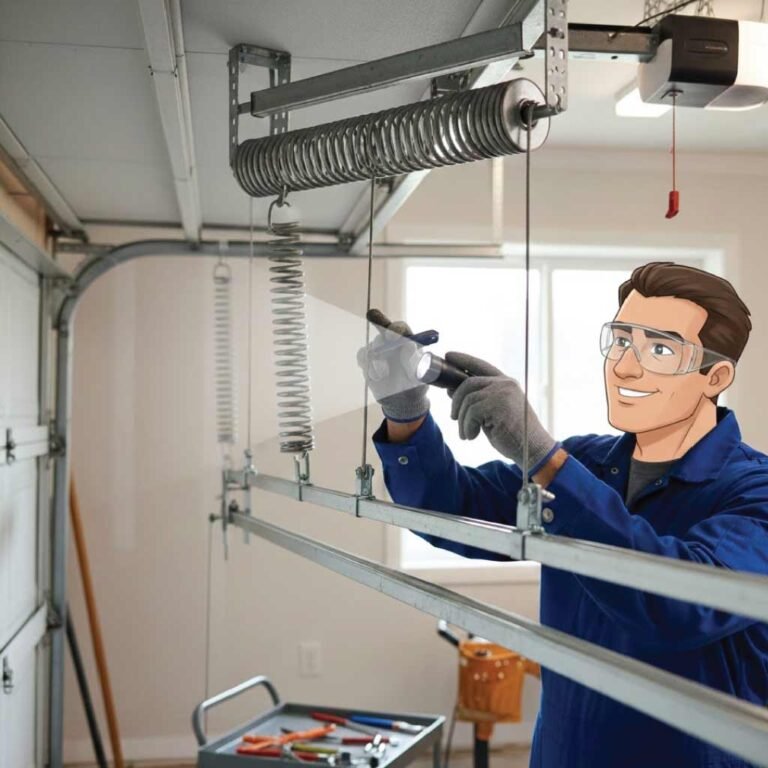
Garage door springs give the energy necessary to raise the heavy door. It is of two kinds: torsion springs that are installed over the door, which are durable and safer and extension springs on the sides that are cheaper.
But more dangerous when broken. Springs require appropriate care and proper maintenance by professional workers to be safe.
5. Cables
The Cables are designed to operate in tandem with springs which are used to lift the garage door and lower it in a safe manner.
They carry a lot of tension and in case they are worn or torn, may collapse the door at any moment, resulting in an injury or damage of property.
The safe operation of doors requires inspection activities and replacement of the damaged cables on a regular basis.
6. Hinges
The door panels are attached together using Hinges, which enables them to bend when the door is on the tracks.
Slim, damaged or damaged hinges may result in a misalignment, inconsistent functioning, and too much noise.
Hinges should be checked and lubricated regularly to make sure that they move freely and cause no permanent damage to the panels and other mechanical parts.
7. Garage Door Opener
The garage door opener is a powered machinery that is used to automate the motion of a door. Openers are either chain driven, belt driven or screw driven.
The recent systems tend to be equipped with intelligent capabilities such as remote control, accessing apps and security notifications.
To have a reliable, safe, and efficient operation, the opener must be maintained regularly, including by being lubricated and having an inspection of its motors.
Common Garage Door Problems
Garage doors are cumbersome and complicated systems that are impossible to be maintained safely and effectively. Less serious problems can result in expensive maintenance, or even accidents.
The following are some of the most prevalent issues that home owners encounter with their causes and effective solutions.
1. Noisy Operation
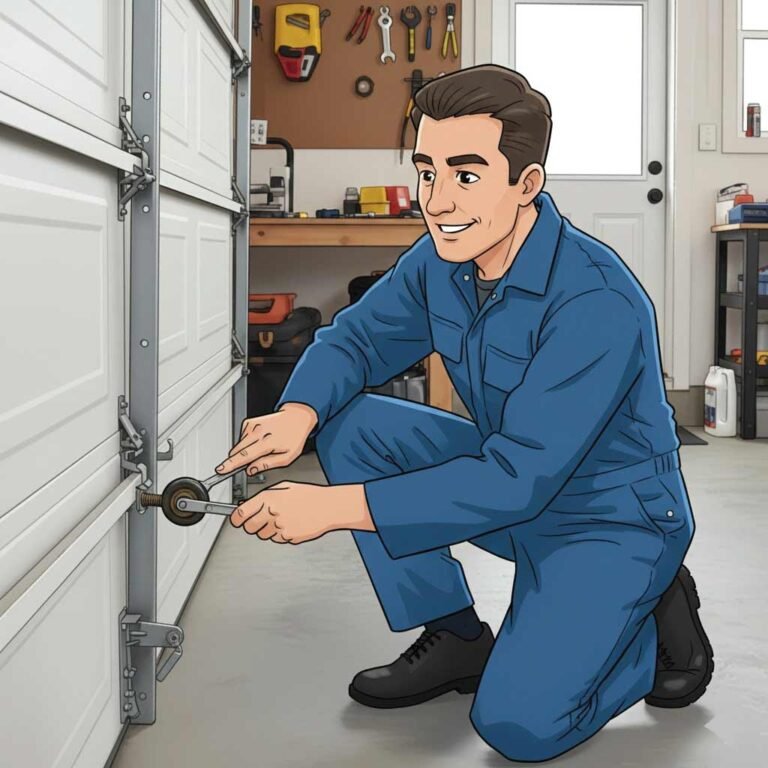
Dry rollers, loose hardware or worn-out hinges can make a garage door sound as if it were being banged with a stick. Friction or misalignment can be detected through squeaks, grinding or rattling noise.
To a large degree, noise can be reduced by lubricating all moving parts regularly and securing loose bolts or screws, which will enhance a smooth operation and prevent damage to the door mechanism in the long perspective.
2. Door Doesn’t Open or Close Fully
When a garage door fails to reach the full open or closed point, then there is a likelihood that the sensors have not been properly aligned, the springs are broken, or there is a problem with the motor.
Obstruction check sensors, track straightness, springs – damaged springs. The replacement or repair of these parts equals the functionality of the door.
3. Door Moves Unevenly
The lopsided or bouncing movement of the doors is usually due to worn rollers, damaged tracks or unbalanced springs. This will put a strain on the opener and other parts hence causing additional damage.
Check the door, repair or change any broken rollers or tracks and have a professional adjust the spring tension to provide smooth operation again.
4. Remote Control Malfunctions
The remote of the garage door can malfunction because of the dead batteries, wrong adjustment of the sensors, or the interference with the signal.
Begin with changing batteries, washing and repositioning of sensors and resetting of the opener where necessary.
Periodic inspection of remote controls and sensors makes sure that the work is always stable and the user will not become frustrated and/or lockout themselves.
5. Sagging or Bent Panels
It may cause the panels to be large or warped due to physical abuse, water or due to poor architecture. Bent panels undermine the look of the door, insulation and functionality.
Observe broken panels and replace them as soon as possible and strengthen the structure in case of necessity to provide the operation in a smooth way, to improve the security, and to avoid the additional destruction of the related parts.
Garage Door Maintenance Tips for Longevity
The routine preventive maintenance is very helpful in prolonging the life of your garage door, ensures that it operates properly and helps in minimizing the expensive repairs.
Through regular inspections and basic maintenance, you are able to ensure that your door stays secure, stable and efficient without experiencing unpleasant surprises due to unplanned failures or last minute repairs in the long run.
1. Lubrication
Wipe rollers, hinges and springs with garage door lubricant after every 6 months, to maintain a smooth and quiet operation.
Tracks should not be lubricated, because this will lure dust and debris, resulting in increased friction. Adequate lubrication will help to avoid wear, minimize noise and extend the life of every moving element.
2. Inspect Springs and Cables
Periodically inspect torsion springs and extension springs to ensure they are not rusty, worn, and frayed cables. The broken springs or cables may lead to an imbalanced door or collapse.
In case of replacement of torsion springs, do not attempt to do this on your own, rather contract an expert to be safe and to install them appropriately.
3. Tighten Hardware
Screws, bolts, and brackets loosen with the course of time with vibrations and frequent movement of the door. Check all hardware after every three or six months, and tighten.
Hardware securities ensure proper alignment, less noise and smooth running of your garage door as well as improve the life of your garage door.
4. Test Balance
Disengage the opener and lift the door half way. One of the doors, which is balanced, should remain in position. The springs might be in need of adjustment, in case it shoots up or down.
Balanced doors help to reduce the load on the opener and eliminate asymmetric movement, thereby making the use of the openers safer and more efficient.
5. Check Safety Sensors
Make sure that the safety sensors of the garage door are proper, clean, and not clogged. Check the reversal option on monthly basis to ensure that the door stops and reverses on detecting an obstacle.
Correct maintenance of the sensors keeps the accidents away and makes the door adhere to the present-day safety levels.
6. Clean Door Surfaces
Clean steel, aluminum or fiberglass doors with mild soap and water regularly to avoid accumulation of dirt. Special attention is to be paid to wooden doors: they should be checked on rot, cracks, or damages and covered with protective finishes.
Maintaining the cleanliness of the surfaces helps to maintain the appearance of the door, avoids corrosion, and increases the long-term performance.
Garage Door Troubleshooting Guide
Garage doors are cumbersome and complicated systems, which are prone to failure with time. Such issues as loud working, not completely opening doors, unequal movement, distance malfunctions, and weather damages are common.
Being aware of the causes and the creation of adequate solutions will increase the duration of the door, provide safety, and avoid expensive maintenance.
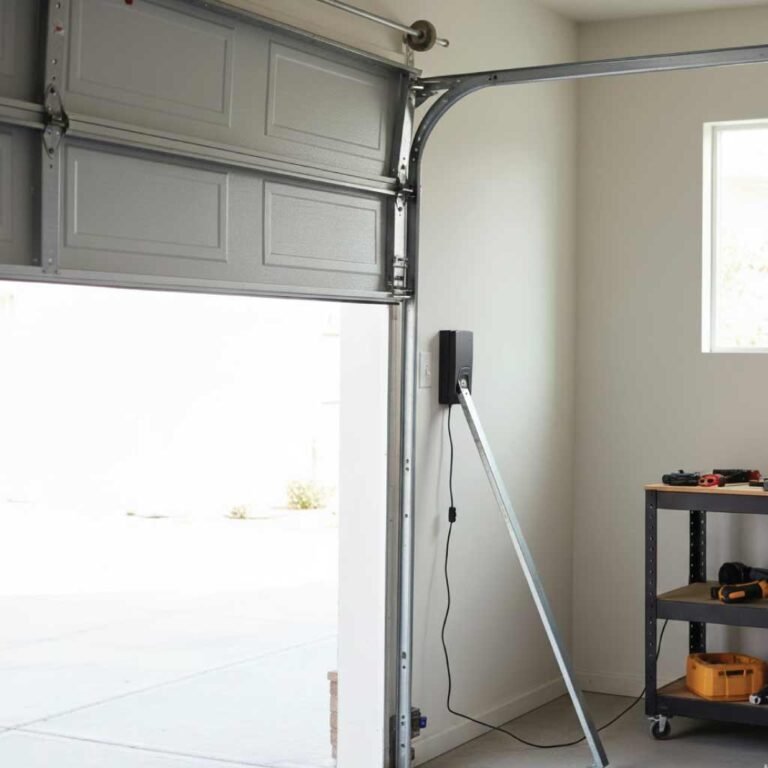
1. Noisy Garage Doors
Screeching or grinding noise, rattling, etc. of a garage door is normally a sign of worn rollers, dry hinges, loose hardware, or poor track alignment.
Timely maintenance lowers premature wear, strain on the opener, and provides easy and safe working conditions.
The door is always functioning quietly and efficiently at the expense of regular inspection and preventive maintenance.
Solutions:
-
Lubricate rollers, hinges, and springs (avoid tracks)
-
Tighten all loose screws and bolts
-
Replace damaged rollers with nylon or steel versions
-
Align tracks and clean debris
2. Door Won’t Open or Close Fully
When a garage door is stuck mid-way or not moving, then it may have broken springs, incorrect sensors, broken tracks, or malfunctioning openers.
The negligence of the problem can harm the door or be dangerous. Troubleshooting can be done carefully to find the root cause and puts the system back on track.
Solutions:
-
Clean and realign sensors
-
Inspect springs and cables; call a professional for torsion spring issues
-
Test the opener using the wall switch
-
Repair or replace bent tracks
-
Replace faulty opener components if necessary
3. Uneven or Jerky Door Movement
Garage door moves unevenly or jerks, this puts a strain on the opener, springs, and rollers, which may further damage the mechanics. The most common causes are damaged rollers, wrong track space, unbalanced springs and debris on the road. Early intervention brings about normal functioning and avert safety hazard.
Solutions:
-
Replace worn or damaged rollers
-
Lubricate rollers, hinges, and springs
-
Realign tracks using a level
-
Check door balance manually; call a professional for spring adjustment
4. Remote and Opener Issues
Convenient door may be unable to operate because of remote or motor problems. Most commonly the cause is dead batteries, sensor misalignment, interference or wiring issues. Correct troubleshooting is the guarantee of the reliable functioning of the opener and its adherence to the safety standards.
Solutions:
-
Replace remote batteries and reset the device
-
Clean and realign sensors
-
Remove obstacles from the sensor path
-
Inspect wiring and connections
-
Schedule professional repair for motor or opener failure
5. Weather-Related Problems
The garage doors are vulnerable to change in temperatures, moisture, and wind, and can freeze tracks, warp the panel, rust, or cause drafts. Preventive care and inspection in a season also assist in protecting the door and keeping the performance on the optimum level.
Solutions:
-
Apply weather stripping to seal gaps
-
Lubricate moving parts before cold weather
-
Paint or seal wooden doors to prevent warping
-
Inspect tracks for rust and remove debris
Minor Repairs You Can Do Yourself
There are numerous typical problems that can be solved by a homeowner with simple tools and precautions that do not require any serious actions or worries.
Regular minor repairs enhance the performance of doors, lower the amount of noise, and avoid bigger issues.
Basic activities such as lubrication, hardware tightening, the replacement of rollers, sensor cleaning and update weather stripping can extend the life of your garage door and also maintain smooth operation.
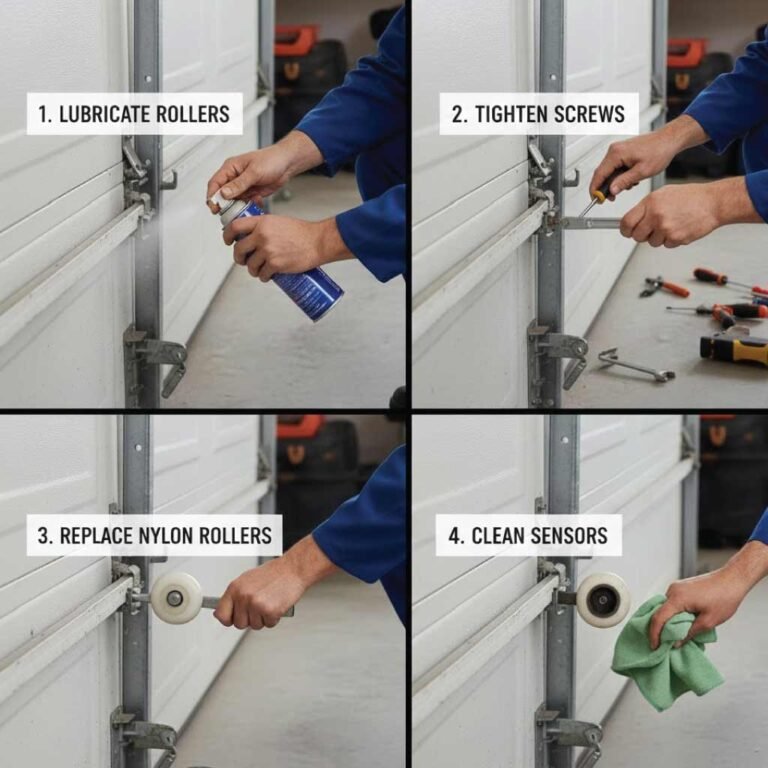
1. Lubrication
Rollers, hinges and springs of the garage doors are to be lubricated so that they can work smoothly and noiselessly.
Apply lubricants on garage doors to keep them moving, but do not use lubricants such as WD-40 on springs because the springs will attract dust.
Lubrication helps to reduce friction, eliminate squeaks and extend the life of moving parts. The best performance of this task is to schedule it after six months.
2. Tighten Screws and Bolts
Screws and bolts on door panels, track brackets and opener mounts may loosen over time because of vibrations.
Periodically check all hardware and screw tightening to avoid noise, misalignment and uneven action.
The attachment of loose parts will provide an assurance that the garage door will be set to perform its duties efficiently, safely and with minimal noise and wear out other components of the garage door.
3. Replace Broken Rollers
Rollers that were damaged, or are worn, may then make the door move in a jerky and noisy way. Nylon rollers are less noisy whereas steel rollers are durable.
To do away with them, it is necessary to manually open the door, take the old rollers out of it, and push in new ones of the right size.
Properly fitted rollers enhance easy operation, minimization of noise and track and spring stress.
4. Sensor Cleaning
Garage door sensors may get dirty or out of position and they cannot work well. Clean the wipe sensors using a dry cloth. Adjust to the start of the check until the indicator light changes to green.
The door should be able to reverse safely when an obstruction is detected and this is possible with clean sensors that are properly aligned hence keeping it safe and reliable at the same time.
5. Weathers trip Replacement
Varnished weather stripping may be old and worn out and it may permit draft, moisture, and pests to get into the garage. Take off and put in new weather stripping on the bottom of the door using the worn strips.
The appropriate seals enhance insulation and minimize the loss of energy and secure the garage interior. Constant change maintains comfort and longevity of the garage door system.
Safety Precautions for DIY Repairs
Garage doors are of heavy weight and are operated under high tension hence being dangerous. Never compromise on safety, adhere to the instructions of the manufacturer.
And do not assume that you can do high-risk operations such as torsion spring adjustments so as not to be injured and provide reliable and smooth operation.
- Disconnect the opener before working.
- Use proper gloves and safety glasses.
- Never attempt to adjust torsion springs yourself.
- Work with a partner for lifting or holding heavy panels.
- Test the door slowly after any repair to ensure proper operation.
🔑 Pro Tip: Even minor repairs can improve door lifespan and efficiency. A consistent maintenance routine avoids costly repairs down the line.
Advanced Maintenance Tips
The next level of maintenance takes care of your garage door besides basic lubrication and tightening, there is advanced maintenance, which makes sure that your garage door lasts long, operates smoothly and is safe.
Frequent inspection, correct adjustments and routine maintenance lowers wear, avoids mechanical breakdowns and ensures years of undisturbed use of reliable, quiet and efficient operation.
1. Inspect and Maintain Springs
The springs of the garage door are in the state of extreme tension and are crucial to the balanced, safe functioning. Conditional checkups and slight maintenance help to avoid corrosion, wear and break, and make sure that the door functions and can be easily opened, and also, to decrease the possibility of accidents, especially when torsion and extension springs are involved.
-
Torsion springs: Check for rust, wear, or gaps in coils.
-
Extension springs: Look for fraying or uneven stretching.
-
Maintenance tip: Apply a small amount of lubricant to prevent corrosion.
-
Replacement: Only professionals should replace torsion springs due to safety risks.
2 . Check and Maintain Cables
Cables operate under the aid of springs in order to raise and lower the garage door. Having them checked frequently to detect any damage and keeping the tension even helps in minimizing unexpected movements, minimizing stress on the door, and minimizing chances of unexpected failure or injuries.
-
Inspect for fraying, kinks, or corrosion.
-
Replace immediately if damage is detected.
-
Ensure cables are evenly tensioned; uneven cables can damage the door or opener.
3 . Maintain Tracks and Rollers
Well-maintained rollers and tracks are essential in order to have easy and noiseless door operation. The frequent checks, adjustment, and grease eliminate the uneven motion, lessen the noise as well as prolong the life of the rollers and the opener.
-
Inspect tracks for dents, bends, or debris.
-
Lubricate rollers but avoid lubricating tracks directly.
-
Ensure tracks are aligned using a level; misalignment causes uneven operation.
-
Nylon rollers reduce noise and wear compared to steel rollers.
4 . Test Door Balance Regularly
Door balance: It is important to check that springs are properly tensioned and that opener is not overloaded. A balanced door moves with ease and is safe as well as increases the usefulness of the mechanical parts, making them not to be replaced frequently.
-
Disconnect the opener.
-
Lift the door halfway; it should stay in place.
-
If it moves up or down, the springs need adjustment by a professional.
Seasonal Garage Door Care
Garage doors have exposure to weather changes throughout the year, which impact performance, safety, and durability.
Regular seasonal maintenance and checks make business run smoothly, avoiding any damages caused and avoiding expensive repairs.
A systematic seasonal practice makes the doors efficient, dependable and secure in all weather conditions.
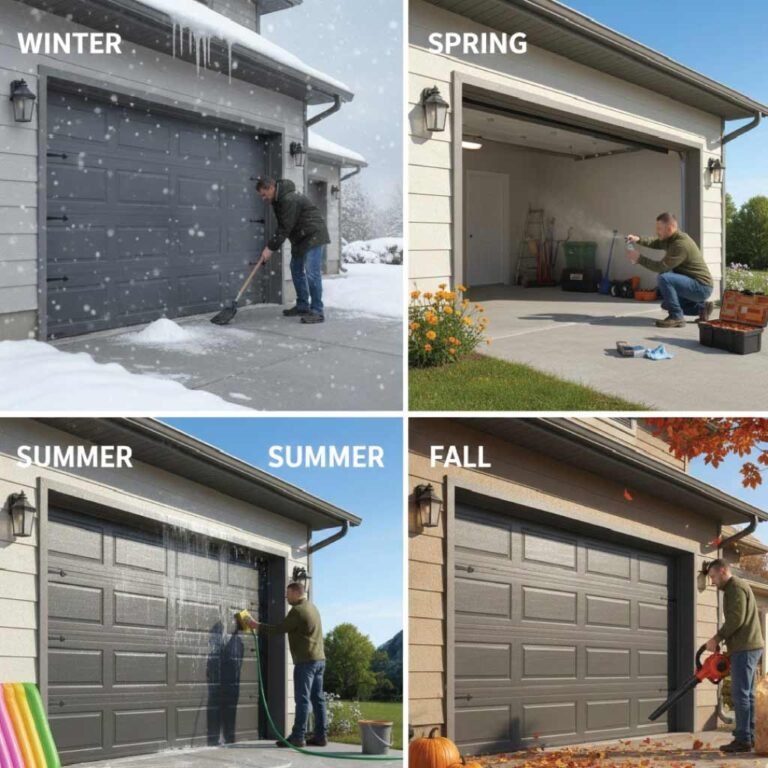
1. Winter
Freezing and cold weather conditions may interfere with performance of garage doors during winter. Frozen tracks, motor retardation and air leakage due to damaged brittle weather stripping are avoided by proper inspection, lubrication, and upkeep of the tracks and machines.
-
Frozen tracks: Apply silicone spray to prevent freezing.
-
Check opener: Cold weather can slow motors; test functionality.
-
Inspect weather stripping: Replace cracked or brittle strips to keep out cold air.
2 . Spring
Spring is wet and has temperature changes that may lead to rust, wear and misalignment. Regular maintenance also guarantees the proper operation, balance, and prolongation of the life of rollers, hinges, springs and other parts as this is done seasonally.
-
Inspect for rust: Winter moisture may have caused corrosion.
-
Lubricate moving parts: Rollers, hinges, and springs benefit from fresh lubrication.
-
Check door balance: Spring tension may shift over time.
3 . Summer
Summer- high temperatures and dry weather may affect the alignment of doors and panels. Cleaning and regular checks prevent the UV and dust damage and make sure that the working of the garage door is comfortable and efficient.
-
Heat exposure: Steel doors can expand; check alignment.
-
Inspect panels: UV exposure can damage paint; repaint or seal as necessary.
-
Clean tracks and rollers: Dust and debris accumulate in dry months.
4 . Fall
Fall is associated with leaves, debris, and changing temperatures that may interfere with door operation and insulation. Seasonal care will cover good operation, insulation and loss of hardware in colder seasons.
-
Leaf debris: Clear leaves and dirt from tracks.
-
Check insulation: Cold months are approaching, and insulation may need replacement.
-
Tighten hardware: Temperature fluctuations can loosen screws and bolts.
🌟 Pro Tip: Keep a maintenance calendar to track lubrication, inspections, and professional checkups each season.
Upgrading Your Garage Door
The modern garage doors offer improved security, saving of energy and convenience. Maintenance can be minimized by upgrading components or the door as a whole which can enhance performance and make sure that the door is reliable to use and it adds beauty to your home.
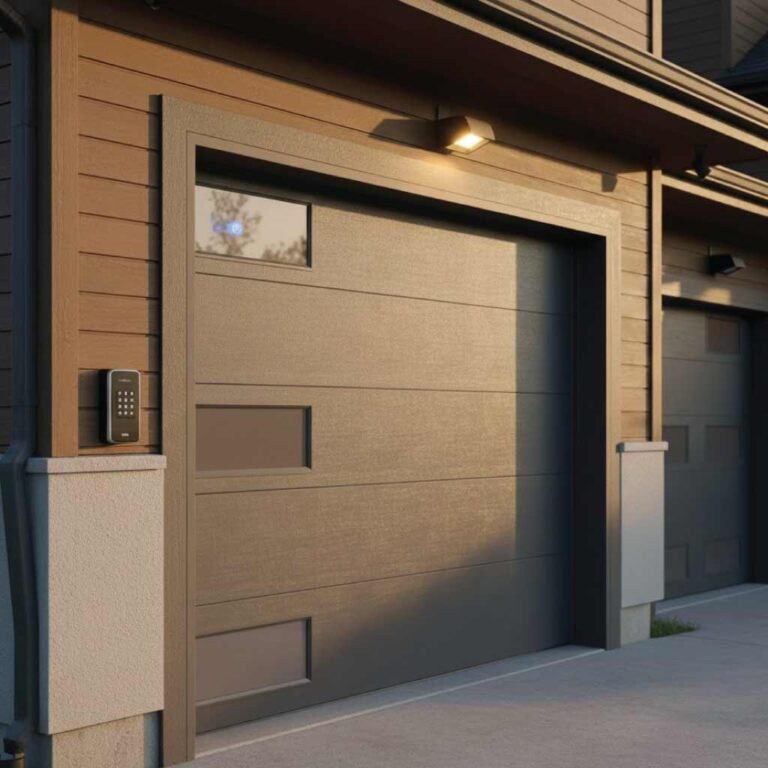
1 . Garage Door Openers
You can upgrade your garage door opener to enhance it, make it quieter and add new functions. When selecting the appropriate type, the performance should be flawless and convenient with intelligent connectivity to ensure ease and safety.
-
Chain-driven: Durable but noisy.
-
Belt-driven: Quieter and smoother operation.
-
Screw-driven: Requires less maintenance.
-
Smart openers: Wi-Fi connectivity, app control, and automatic alerts for maintenance.
2 . Insulated Doors
Garage doors are better insulated, which makes them more economical, comfortable indoors and less noisy outdoors. They also secure stored products against extremes of temperatures in addition to offering a more robust and comfortable garage environment.
-
Insulated doors improve energy efficiency.
-
Reduces noise from outside.
-
Protects stored items from extreme temperatures.
3 . Security Features
The contemporary security will help secure your garage and house. Recalibration to the rolling code remotes, keypads or integrated lighting also enhances security and deters any illegal entry or unauthorized hacking.
-
Rolling code remotes prevent hacking.
-
Keypad entry systems for convenience.
-
Motion-activated lights integrated with the opener.
4 . Material Upgrades
Selection of improved door materials impacts the maintenance, durability, and appearance. The alternative options such as steel, aluminum, wood, or fiberglass also have various advantages that are in line with your climate, style and performance requirements.
-
Steel: Durable, low maintenance.
-
Aluminum: Lightweight, resistant to rust.
-
Wood: Aesthetic appeal but requires regular sealing.
-
Fiberglass: Resistant to moisture and warping; ideal for humid areas.
Common Mistakes to Avoid
Even seasoned home browsers may commit errors when fixing or repairing the garage door, and this can lead to its premature wear, as well as poor functionality or create safety risks. The correct guidelines and precautions will result in taking care of the life of the door and safe, reliable use.
Neglecting lubrication: Dry rollers and hinges wear out faster.
Ignoring unusual noises: Squeaks or grinding often indicate mechanical problems.
DIY torsion spring replacement: Extremely dangerous; can cause severe injury.
Skipping seasonal inspections: Weather and environmental factors impact door performance.
Overloading storage: Heavy items stored on the door or near tracks can strain the mechanism.
5. When to Call a Professional
Certain tasks of repairing and maintaining a garage door are better left to the qualified personnel. The complicated parts such as the torsion springs, cables, and high tension openers are hazardous. Professional intervention is a guarantee of safety, correct installation, and durable and effective operation of the doors.
Torsion spring replacement – High-risk, requires precision tools.
Cable replacement – Especially if multiple cables are damaged.
Opener replacement or motor repair – Ensures correct installation and safety.
Severe track damage – Misaligned tracks can compromise safety.
Panel replacement – If structural integrity is compromised.
✅ Tip: Even with regular maintenance, scheduling an annual professional inspection ensures the door remains safe, balanced, and fully functional.
Garage Door Safety Tips
Garage doors are heavy in nature, under high tension and they are capable of causing severe injuries in case of mishandling. Proper safety precautions, using the right tools, and following the instructions of the operation make the use of a tool or instrument safe, avoid accidents, and protect people and property.
- Keep children and pets away from the door during operation.
- Test safety sensors monthly to ensure the door reverses when obstructed.
- Never let fingers or hands touch moving rollers, hinges, or tracks.
- Disconnect the opener when performing maintenance.
- Use proper lifting techniques; doors are heavy and can cause injury if they fall.
DIY vs. Professional Maintenance
Know which garage door tasks you can safely handle yourself and which require professional expertise is essential. Properly distinguish between DIY and professional maintenance ensures safety, prevents damage, and also keeps your garage door functioning reliably for years.
| Task | DIY | Professional |
|---|---|---|
| Lubricating rollers & hinges | ✅ | ❌ |
| Tightening hardware | ✅ | ❌ |
| Sensor cleaning & alignment | ✅ | ❌ |
| Roller replacement | ✅ (with safety) | ❌ |
| Torsion spring replacement | ❌ | ✅ |
| Cable replacement | ❌ | ✅ |
| Opener replacement | ❌ | ✅ |
| Severe track alignment or replacement | ❌ | ✅ |
💡 Key Point: Even if a task is DIY-friendly, always prioritize safety and follow manufacturer guidelines.
Final Tips for Long-Term Garage Door Care
To have a long, safe, and efficient garage door, it is important that it is well-maintained. Frequent maintenance, lubrication, balance checks and maintenance checkups maintain a smooth running, and repairs to damaged parts are undertaken and with the assistance of professionals.
The tasks with high complexity are also taken care of in time. Proper care is achieved by following manufacturer guidelines and having manuals.
With DIY care and professional help, where it is required, you will be able to experience a high level of performance, improved safety, and comfort, as well as increase the life of your garage door to well over 20 years.

Engineer Ali Hasan is a garage door expert and the founder of FixFasty. With over 16 years of experience in mechanical systems and home maintenance, he provides practical, step-by-step guides on garage door installation, repairs, and maintenance, helping homeowners keep their garage doors safe, reliable, and long-lasting.