
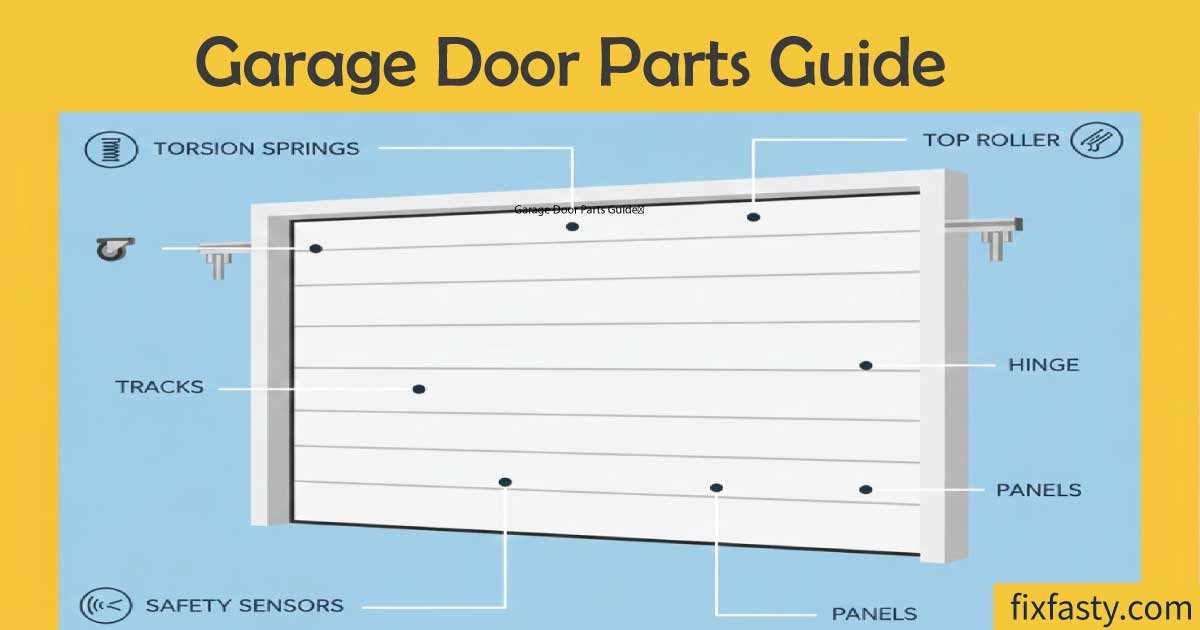
A garage door might seem to be plain on the outside but inside, it consists of a lot of moving parts. The failure of one component may lead to the cessation of the whole system or create a potential risk situation.
The ability to know the parts of a garage door is not only required by a homeowner or a DIY enthusiast but also by a person planning a repair.
In this garage door parts guide, we will disassemble all the key parts, discuss their functions, typical issues and their maintenance. At the end of it, you will know how your garage door works and when it is time to fix or replace certain components.
Why Understanding Garage Door Parts Matters
Garage doors are complicated mechanical systems composed of massive parts which work at the high tension. Even minor concerns would easily transform into a safety hazard or costly maintenance without adequate knowledge.
The knowledge on how parts of garage doors operate helps a home owner to secure their property, enhance security and prolong the existence of the door.
-
Ignoring early signs leads to major, costly repairs.
-
Unsafe DIY spring or cable fixes cause injuries.
-
Poor maintenance shortens door lifespan and performance.
-
Understanding parts helps detect problems early.
-
Knowledge improves maintenance, communication, smarter replacements.
👉 Garage Doors for Beginners: Your complete guide to garage door types, repairs, and maintenance. Learn how to choose the right door, understand features, and keep it running smoothly. Read the full post to master garage door basics and make your home safe and stylish!
Main Garage Door Parts Overview
Since we are going to dive in, we would like to give you a brief description of the key elements of a typical garage door system. Each component has a certain role to play in the smooth operation, safety and durability.
The knowledge of the interaction of these elements will assist you in identifying the problems at early stages and maintain your garage door better.
Essential Garage Door Parts and Their Functions
| Garage Door Part | Purpose |
|---|---|
| Garage Door Panels | Form the door structure |
| Springs | Counterbalance door weight |
| Cables | Lift and lower the door safely |
| Rollers | Allow smooth movement |
| Tracks | Guide the door’s path |
| Hinges | Connect panels and allow bending |
| Opener | Automates door movement |
| Sensors | Prevent accidents |
| Weather Seals | Block dust, water, and pests |
Garage Door Panels
The primary visible structure of the door is made up of panels on the garage door which is critical to strength, insulation and beauty.
The design of the garage door and the system of opening and closing it may consist of several interconnected parts or a single solid piece, which is a panel.
The exterior parts of the door are composed of garage door panels. Depending on the type of door one can have a single solid panel or several sectional panels.
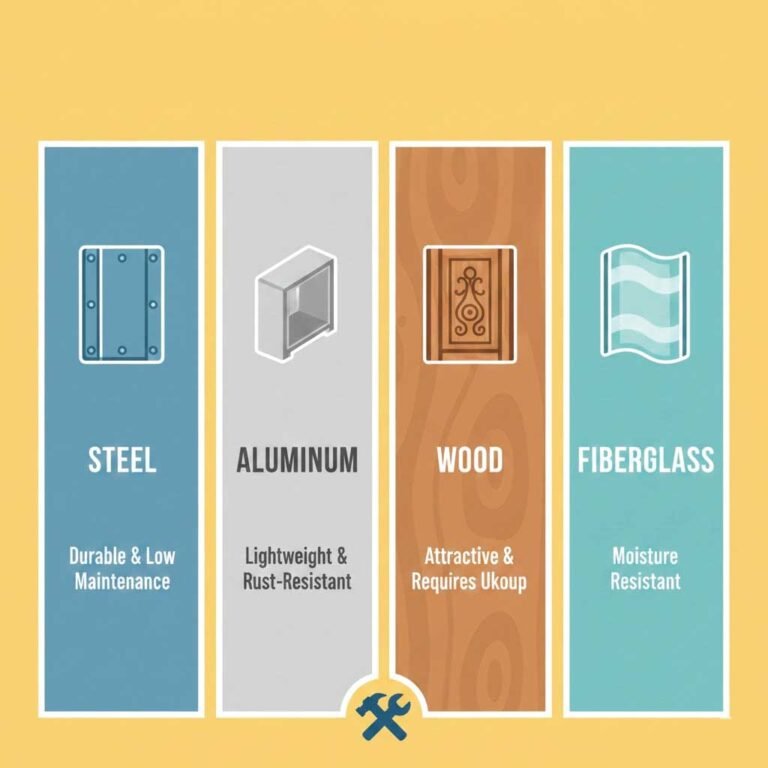
1- Common Panel Materials
There exists a variety of different materials available in garage doors panels, each of which has its own advantages connected with the idea of durability, weight, maintenance and aesthetic appeal.
The panel material selected determines the performance, insulation and durability.
Steel – Durable and low maintenance
Aluminum – Lightweight and rust-resistant
Wood – Attractive but requires upkeep
Fiberglass – Resistant to moisture
2- Common Issues
Garage door panels may be damaged over time as a result of weather exposure, daily usage, or due to an accidental collision.
By identifying these problems at an early stage, it is possible to avoid additional injuries and expensive repairs.
Dents from impact
Rust on steel doors
Cracking on wooden panels
💡 Tip: Damaged panels don’t always require a full door replacement. In many cases, a single panel can be replaced.
Garage Door Springs (Most Critical Part)
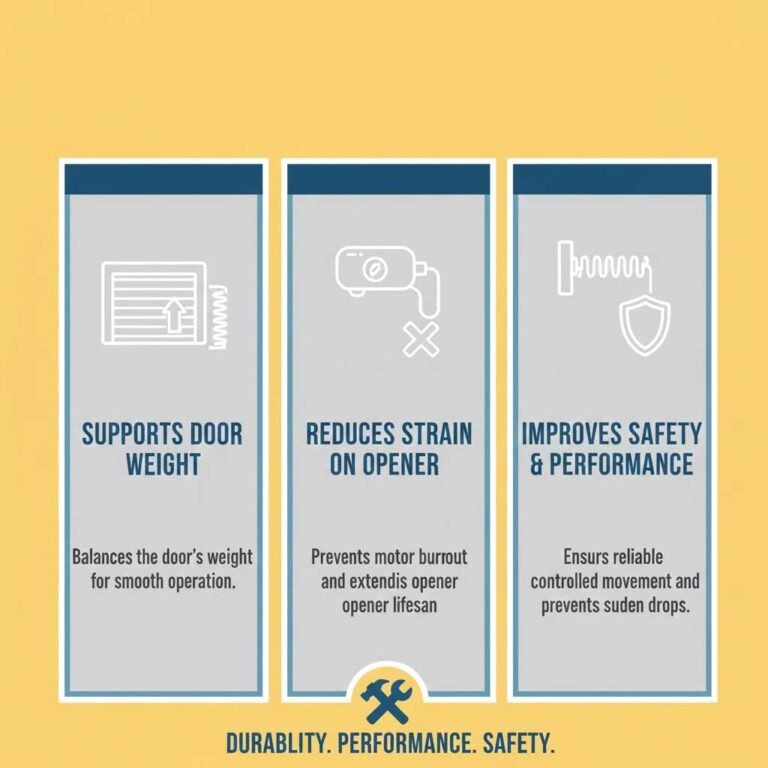
⚠️ Safety Warning: Never attempt spring replacement yourself unless trained. Springs are under extreme tension.
Garage Door Cables
Garage door cables are used in conjunction with springs to be able to lift and lower the door at the same time, so that it operates smoothly and stays even.
These cables are made of high-strength steel and face the tension on a daily basis. Splintering, rust or irregular lifting is an indicator of problems.
A broken cable is risky, and therefore, stop using the door and call a professional to fix it.
Garage Door Tracks
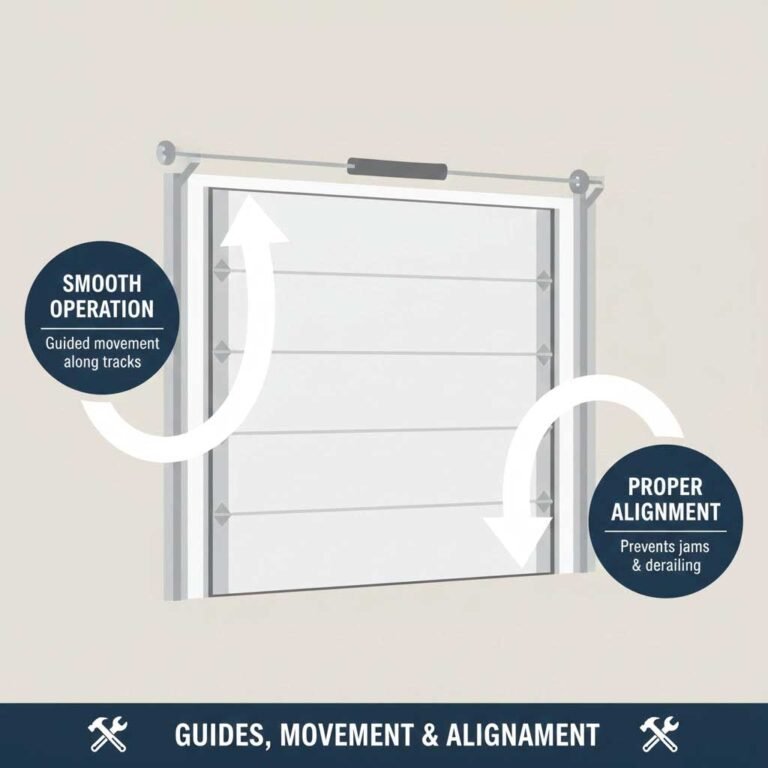
Garage Door tracks which move the garage door up and down and make sure they are in the proper position and free movement.
Track bending, looseness or misalignment may lead to jamming or collapsing of the door.
Periodic inspection and maintenance will eliminate accidents and minimize stress on other elements and increase the life of the door, and ensure safe and reliable operation.
Garage Door Opener System
Garage door opener: This is a motorized version that opens and closes the door automatically in order to make the process easy and secure.
Typical available forms of common drives include chain, belt, screw, and direct drives which have distinct noises and maintenance characteristics.
Among these important parts are the motor, rail, trolley, remote control and wall switch, which are all integrated in efficient, smooth and reliable functioning.
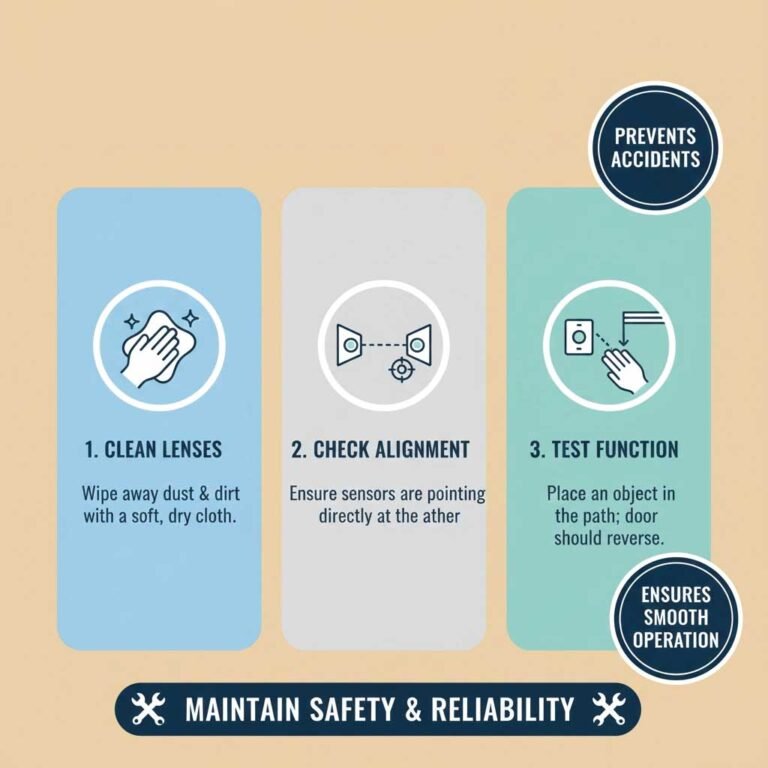
Safety Sensors (Photo Eyes)
The garage door would have safety sensors that are placed close to the floor on both sides of the door to ensure that it does not close on any object, pets or people.
Misalignment, dirt or sunlight interference are sensor problems. In case of the failure to close a door, sensor malfunction is frequently,
The offender, and that is why it is necessary to check and clean the door properly before using it safely.
Weather Seals and Insulation
Garage has weather seals to keep the interior dust free, water, bugs and heat loss. They are fitted at the bottom, sides and top of the door to provide a barrier which is secure and energy saving.
Replacing the deteriorated seals improves the insulation, hygiene, and general door action to keep the garage safe, dry and comfortable throughout the year.
Key Points:
-
Protect against dust, water, insects, and temperature loss
-
Improve energy efficiency and insulation
-
Regular maintenance ensures long-lasting performance
Garage Door Hardware Comparison
It is critical to realize the lifespan and maintenance requirements of all the garage door components to ensure a safe and smooth operation.
Various components wear out at a different rate and need different amounts of attention. Comparing these variables, the homeowners are able to make their maintenance arrangements in good time,
Prevent unforeseen repairs and make a wise choice with regards to replacement, making sure that the system will work well and can be counted on in the long-term.
| Part | Average Lifespan | Maintenance Level |
|---|---|---|
| Springs | 7–10 years | High |
| Rollers | 5–15 years | Medium |
| Cables | 8–12 years | Medium |
| Opener | 10–15 years | Low |
| Weather Seals | 3–5 years | Low |
Common Garage Door Problems & Causes
There are numerous problems which may occur in garage doors and influence the performance, safety, and convenience. Early detection of the underlying cause prevents expensive repairs and allows a smooth running as well as the garage door system to last longer.
| Problem | Likely Cause |
|---|---|
| Door won’t open | Broken spring or opener issue |
| Door is noisy | Worn rollers or lack of lubrication |
| Door opens unevenly | Cable or track issue |
| Door reverses | Sensor misalignment |
DIY Maintenance Tips (Safe Tasks)
Homeowners are able to carry out some maintenance activities that are safe to ensure that their garage doors run smoothly.
They are the lubrication of moving parts, tracks and sensors cleaning, tightening loose bolts, and worn-out weather seals.
Consistent maintenance ensures that small problems are not transformed to major ones as well as provides safety and effectiveness when opening the doors.
- Lubricate rollers, hinges, and tracks
- Clean safety sensors
- Tighten loose bolts
- Replace weather seals
❌ Avoid spring or cable repairs without professional help.
When to Replace vs Repair Garage Door Parts
21- Knowing whether to repair or replace garage door parts is crucial for safety, efficiency, and cost savings. Minor issues can often be fixed, but severe or repeated problems may require full replacement. Understanding the right approach prevents accidents, extends door lifespan, and ensures smooth, reliable operation.
Repair when:
-
Damage is minor
-
Part is affordable
-
Door is under 10 years old
Replace when:
-
Multiple parts fail
-
Door is very old
-
Safety is compromised
Final Thoughts
22- Understanding garage door parts empowers you to maintain, troubleshoot, and protect one of the most important entrances to your home. From springs and cables to sensors and openers, every component plays a critical role in safety and performance.
Regular inspection, proper lubrication, and knowing when to call a professional can save you money and prevent accidents. Use this garage door parts guide as your go-to resource whenever something feels off with your garage door.
👉 Next Step: Bookmark this guide and check your garage door today—you might catch a small issue before it becomes a big repair.
👉 Learn everything about garage doors in our Complete Garage Door Guide: Basics, Repairs & Maintenance. Discover types of doors, essential parts, troubleshooting tips, and DIY maintenance strategies. Whether you want to repair, lubricate, or replace components, this guide helps you keep your garage door safe, smooth, and long-lasting.

Engineer Ali Hasan is a garage door expert and the founder of FixFasty. With over 16 years of experience in mechanical systems and home maintenance, he provides practical, step-by-step guides on garage door installation, repairs, and maintenance, helping homeowners keep their garage doors safe, reliable, and long-lasting.