
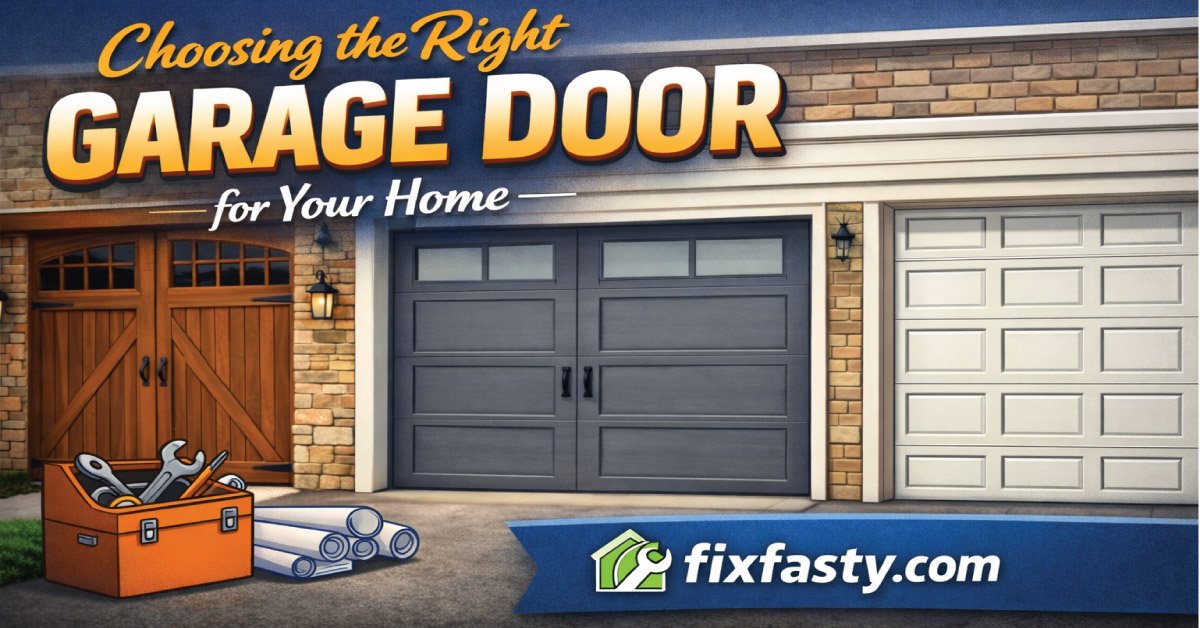
Your garage door is far more than just a functional entry to your home it’s one of the most visible parts of your exterior, contributes to curb appeal, impacts energy efficiency, and even affects security. In 2026, homeowners have a wide range of choices when it comes to garage door materials, styles, insulation, and technology, which can make selecting the perfect option overwhelming.
This detailed guide walks you through everything a homeowner needs to know to choose the right garage door, including step-by-step tips, material comparisons, and practical advice for maintenance, security, and aesthetics.
Why Your Garage Door Choice Has a Major Impact on Your Home
Many homeowners overlook the importance of the garage door, but it significantly influences a home’s appearance, security, energy efficiency, convenience, and long-term costs. Selecting the right material and style can enhance comfort, safety, and property value for years to come.
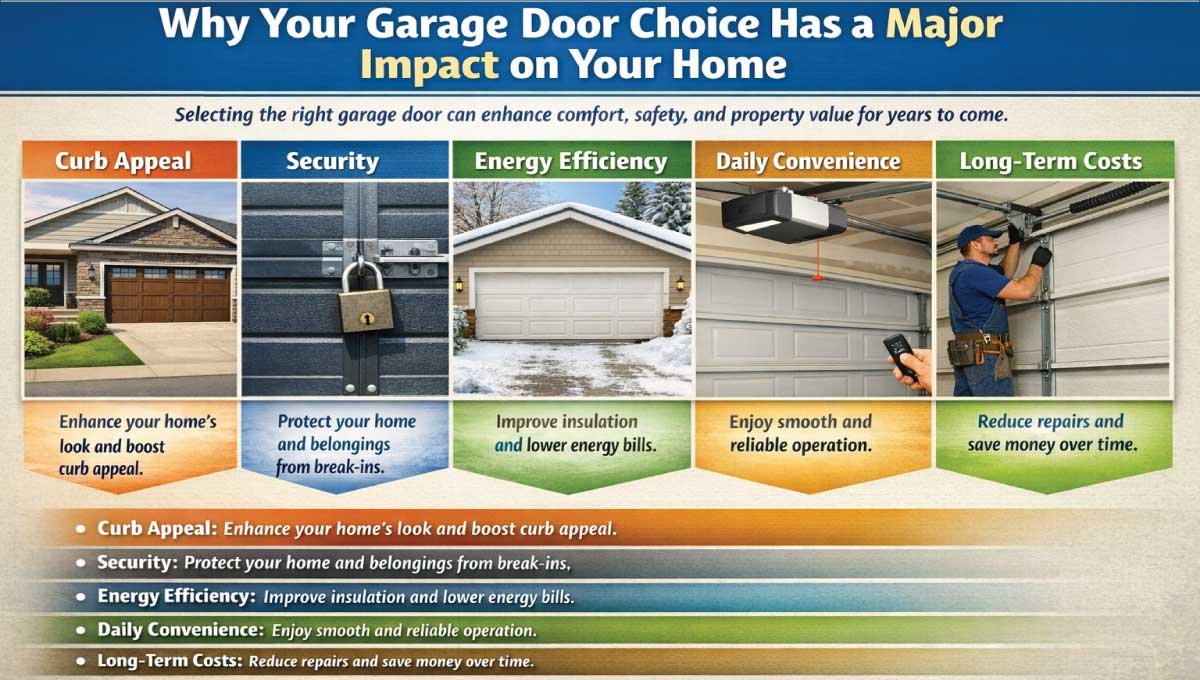
Curb Appeal: The garage door often dominates the front exterior of a home. Choosing a stylish, well-coordinated door can dramatically improve your home’s look, create a strong first impression, and elevate overall curb appeal.
Security: A durable garage door with reinforced panels, quality locks, and a modern opener system provides reliable protection for your family, vehicles, and belongings against break-ins and forced entry.
Energy Efficiency: Insulated garage doors help maintain consistent temperatures, reduce heat loss in winter, and keep the garage cooler in summer, lowering energy bills and improving overall home comfort.
Daily Convenience: Smooth, properly balanced doors with reliable automatic openers make daily use effortless, reducing strain and frustration while ensuring the door functions safely and efficiently.
Long-Term Costs: Choosing high-quality materials and proper installation minimizes repairs, maintenance, and replacements over time, saving money while maintaining the door’s appearance and functionality for years.
👉 Garage Door Types: How to Choose the Best helps you understand different garage door styles, materials, and mechanisms in simple terms. This post guides you in selecting the right door based on budget, durability, security, and home design. Avoid wrong choices and future regrets—👉 read the full post to confidently choose the best garage door for your home.
Step 1:Determine the Perfect Garage Door Style to Match Your Home’s Architecture
Garage doors come in many styles, each suited to different architectural designs. Selecting a style that complements your home enhances curb appeal, visual harmony, and even resale value, while ensuring functionality and daily convenience for your lifestyle.
Sectional Garage Doors: Sectional doors open vertically and slide along tracks on the ceiling, saving driveway space. They operate smoothly, are widely available, and are compatible with both traditional and modern homes.
Roll-Up Garage Doors: Roll-up doors coil into a compact space above the opening, making them highly durable and low-maintenance. They are commonly used in commercial settings but also work well for residential areas with space limitations.
Tilt-Up Garage Doors: Tilt-up doors consist of a single solid panel that tilts outward and upward when opened. They offer a minimalist look but require sufficient driveway clearance for safe operation and daily convenience.
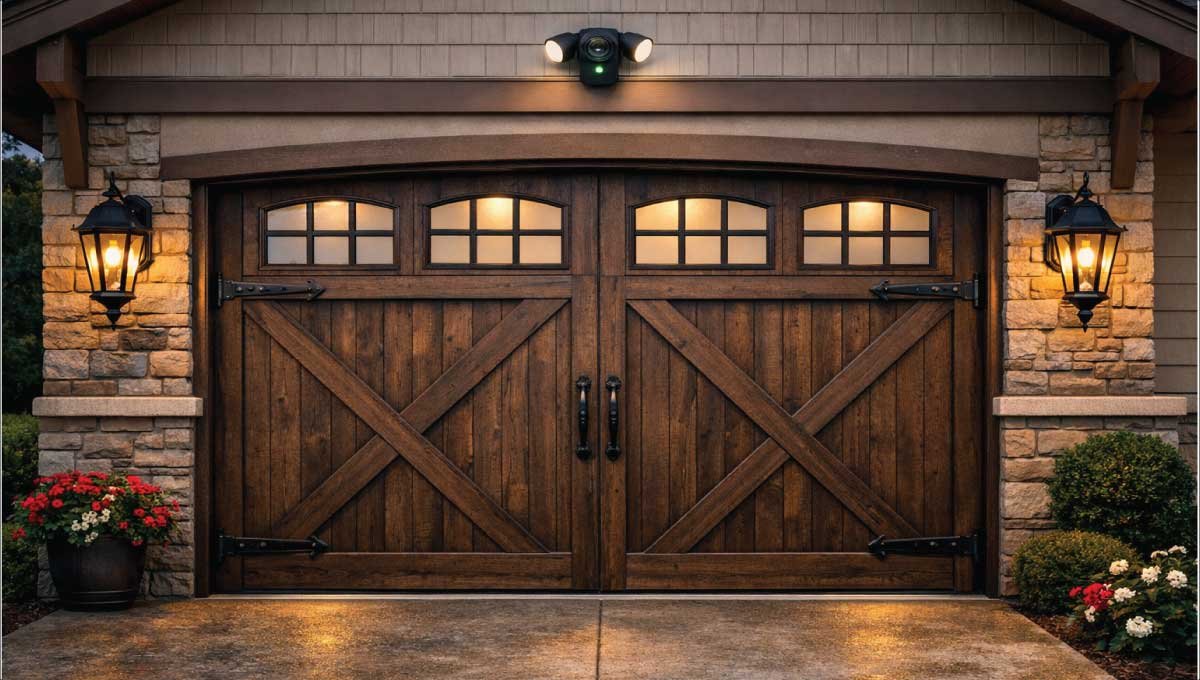
Carriage-House Garage Doors: These doors either swing outward or operate as sectional panels that mimic historic barn doors. They add rustic charm and are ideal for traditional, farmhouse, or country-style homes.
Contemporary/Modern Garage Doors: Modern doors often use aluminum or glass panels, delivering a sleek, minimalist aesthetic. They are perfect for urban or contemporary homes that prioritize style, clean lines, and natural light.
Pro Tip: Matching your garage door style to your home’s architecture—such as Victorian, Colonial, or Modern—can improve overall curb appeal and potentially boost resale value by up to 10%.
Step 2: Select the Ideal Garage Door Material Based on Your Needs
Choosing the right garage door material affects durability, maintenance, insulation, and cost. Understanding the pros, cons, and ideal applications for each material helps you select a door that meets both functional and aesthetic priorities.
1- Wood Garage Doors
Wood doors offer unmatched elegance, warmth, and traditional charm. They are highly customizable in terms of color, stain, panel design, and decorative accents, making them ideal for homeowners who value beauty and premium craftsmanship.
Cons: Requires annual painting or staining, susceptible to warping or rotting in humid or wet climates, and heavier than steel or aluminum, which can impact hardware and openers.
Best For: Luxury or traditional-style homes where visual appeal and custom design are top priorities.
2- Steel Garage Doors
Steel doors are strong, durable, and resistant to warping. They require minimal maintenance, can be insulated for energy efficiency, and are more affordable than wood, making them practical for most homeowners.
Cons: Can dent from impact, may rust if protective coatings are damaged, and offer fewer customization options compared to wood.
Best For: Residential homes where durability, security, and low maintenance are most important.
3- Aluminum Garage Doors
Aluminum doors are lightweight, corrosion-resistant, and low-maintenance. Their modern design, often paired with glass panels, makes them popular for contemporary homes and coastal environments where rust is a concern.
Cons: Less durable than steel, prone to dents, and standard models may provide limited insulation.
Best For: Modern or coastal homes where style, rust-resistance, and ease of operation are priorities.
4- Fiberglass or Vinyl Garage Doors
Fiberglass and vinyl doors are moisture-resistant and low-maintenance, often designed to mimic the appearance of real wood without the associated upkeep. They are durable in humid climates and require little regular care.
Cons: Can crack in extreme cold, and color and design options are more limited than wood or steel.
Best For: Homes in humid climates or for homeowners seeking a low-maintenance, wood-like appearance.
Garage Door Materials Comparison
| Material | Pros | Cons | Ideal For |
|---|---|---|---|
| Wood | Natural elegance, fully customizable | High maintenance, heavy, expensive | Luxury or traditional homes |
| Steel | Durable, low maintenance, can be insulated | Dents, may rust | Most residential homes |
| Aluminum | Rust-resistant, lightweight, modern | Dents easily, less insulation | Coastal & modern homes |
| Fiberglass/Vinyl | Moisture-resistant, low maintenance | Can crack in cold, limited design | Humid climates, family homes |
Step 3: Decide on the Right Garage Door Insulation for Comfort and Efficiency
If your garage is attached to your home, choosing the right insulation is essential. Insulated doors help regulate temperature, reduce energy costs, minimize noise, and protect the garage from extreme heat or cold.
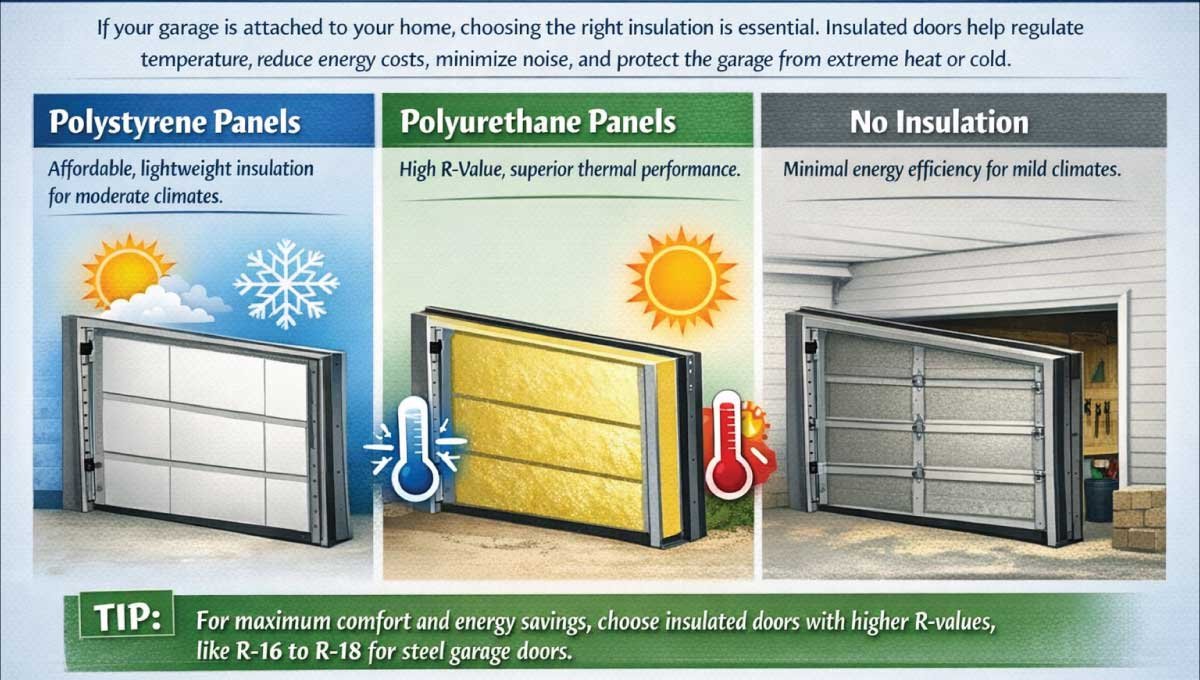
Polystyrene Panels: Polystyrene panels are an affordable, lightweight option that provides basic insulation. They help slightly improve energy efficiency and are easy to install, making them suitable for moderate climates or budget-conscious homeowners.
Polyurethane Panels: Polyurethane panels offer high R-values and excellent thermal performance. They also strengthen the door structure, enhance energy efficiency, and provide better protection against extreme temperatures for attached garages.
No Insulation: Non-insulated doors are ideal for detached garages or areas with mild climates. They require less upfront cost but offer minimal energy efficiency and temperature control.
Tip: For maximum comfort and energy savings, choose insulated doors with higher R-values, such as R-16 to R-18 for steel garage doors, especially if the garage is attached to your living space.
Step 4: Consider Garage Door Security Features to Protect Your Home
The garage is one of the most common entry points for intruders, so incorporating strong security features is essential. Combining a durable door with advanced technology ensures safety for your family, vehicles, and belongings.
Rolling Code Technology: Rolling code systems automatically change access codes with each use, preventing hackers or code grabbing and significantly enhancing security for your garage.
Reinforced Panels: Steel or aluminum doors with reinforced panels resist bending and forced entry, providing a robust barrier that strengthens overall home security.
Smart Sensors and Alarms: Smart sensors detect movement or door tampering and can send alerts to your smartphone, allowing real-time monitoring of garage activity from anywhere.
Manual Locks: Traditional manual locks serve as a reliable backup in case of power outages or opener malfunctions, adding an extra layer of protection.
Tip: For maximum safety, pair a high-quality, durable garage door with a modern smart opener that includes automatic locking and security alerts.
Step 5: Choose the Right Garage Door Opener for Convenience and Security
The type of garage door opener you select affects daily convenience, noise levels, and overall security. Choosing the right system ensures smooth operation, reliability, and added smart features for modern homes.
Chain-Drive Openers: Chain-drive openers are affordable and reliable, using a metal chain to lift the door. They are slightly noisy but durable and widely available for most garage types.
Belt-Drive Openers: Belt-drive openers operate smoothly and quietly, making them ideal for garages attached to living spaces where noise reduction is important.
Screw-Drive Openers: Screw-drive openers require low maintenance and perform well in moderate climates. They are reliable, simple to install, and cost-effective for many homeowners.
Smart Openers: Smart openers are Wi-Fi enabled and provide remote monitoring, app notifications, and advanced features like battery backup, offering convenience, enhanced security, and peace of mind.
Tip:In areas prone to power outages, a battery backup ensures the garage door continues to operate safely, preventing lockouts or inconvenience.
Step 6: Measure Your Garage Door Accurately to Ensure a Perfect Fit
Taking precise measurements before ordering a garage door is essential. Accurate dimensions prevent installation problems, ensure smooth operation, and avoid costly mistakes or the need for custom adjustments later.
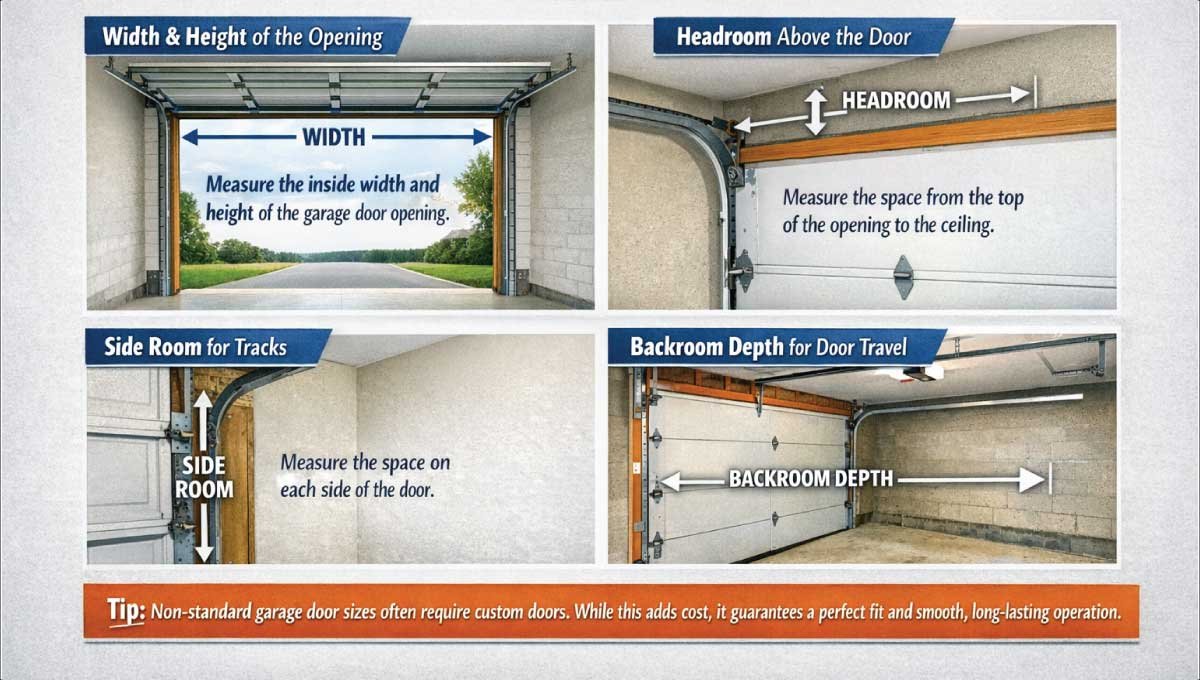
Width and Height of the Opening: Measure the garage door opening carefully from inside edge to inside edge. Both width and height are critical to selecting a properly fitting door.
Headroom Above the Door: Measure the vertical space between the top of the opening and the ceiling. Adequate headroom is necessary for tracks, springs, and door operation.
Side Room for Tracks: Measure the space on each side of the door. Sufficient side clearance is required to install tracks, hinges, and any hardware safely.
Backroom Depth for Door Travel: Measure the distance from the door opening to the far wall of the garage. Proper backroom depth ensures the door can fully open without obstruction.
Tip: Non-standard garage door sizes often require custom doors. While this adds cost, it guarantees a perfect fit and smooth, long-lasting operation.
Step 7: Consider Maintenance Requirements When Choosing Your Garage Door
Maintenance needs vary depending on the door material and opener type. Understanding what care each option requires helps prolong the door’s lifespan, prevent costly repairs, and ensure smooth, safe operation over time.
Wood Doors: Wood garage doors require annual staining or painting to protect against moisture and UV damage. Regular inspections for cracks, warping, or rot are essential to maintain appearance and structural integrity.
Steel Doors: Steel doors need occasional cleaning, touch-up paint for scratches, and lubrication of moving parts such as hinges and rollers. Minimal effort keeps the door functional and looking new.
Aluminum Doors: Aluminum doors are low-maintenance, usually needing only occasional washing and inspections for dents. Their corrosion resistance makes them ideal for coastal or humid environments.
Openers: Garage door openers require periodic lubrication of chains or belts, testing of safety sensors, and replacement of worn components to ensure reliable, safe operation.
Tip: Consistent, material-specific maintenance prevents costly repairs, reduces downtime, and significantly extends the lifespan of both doors and openers.
Garage Door Maintenance Checklist
| Task | Frequency | Purpose |
|---|---|---|
| Inspect springs & cables | Monthly | Prevent sudden failures |
| Test auto-reverse sensors | Monthly | Ensure safety for kids/pets |
| Lubricate rollers & hinges | Twice/year | Smooth operation and noise reduction |
| Clean exterior panels | Quarterly | Maintain appearance and curb appeal |
| Professional inspection | Annually | Safety, alignment, and warranty compliance |
Step 8: Consider Climate and Location When Choosing Your Garage Door
Your local climate and environmental conditions play a key role in garage door performance. Selecting the right material and insulation ensures durability, energy efficiency, and long-lasting appearance in your specific location.

Cold Climates: In cold areas, insulated steel or wood doors with proper weatherstripping help retain heat, prevent drafts, and maintain energy efficiency during winter months.
Coastal Regions: Aluminum or vinyl doors are ideal for coastal areas because they resist corrosion caused by salt air and high humidity, maintaining appearance over time.
Humid Areas: Fiberglass or vinyl doors perform well in humid climates, as they resist moisture damage, warping, and rot, unlike traditional wood doors.
Modern Urban Homes: Sleek aluminum and glass panel doors complement contemporary architecture, providing a stylish, minimalist aesthetic while remaining low-maintenance for busy city living.
Tip: Matching door material and insulation to your climate ensures long-term durability, consistent performance, and protection from weather-related damage.
Step 9: Budget Considerations
Budget influences style, material, and insulation:
Entry-level: Basic steel or aluminum doors, standard openers
Mid-range: Insulated steel or aluminum doors with decorative panels
Premium: Wood or carriage-house doors, custom styles, smart openers
Investing slightly more upfront reduces maintenance costs and replacement frequency over time.
Step 10: Decide Between Professional Installation and DIY for Your Garage Door
Garage doors are heavy and can be dangerous, particularly due to torsion springs, which can cause serious injury if handled improperly. While experienced homeowners might manage a DIY installation with the right tools and knowledge, professional installation ensures proper alignment, safe spring handling, smooth operation, and full warranty protection. For most doors, hiring a qualified installer guarantees safety, optimal performance, and peace of mind, making it the recommended choice over DIY except for the simplest kits.
Final Thoughts
Choosing the right garage door involves balancing style, durability, security, maintenance, insulation, and budget. Steel doors offer strength, affordability, and low maintenance for most homes. Wood doors provide timeless beauty and customization for luxury properties, while aluminum doors are lightweight, rust-resistant, and ideal for modern or coastal homes. A well-chosen door boosts curb appeal, energy efficiency, and long-term peace of mind.
👉 Complete Garage Door Guide: Basics, Repairs & Maintenance is your all-in-one resource for understanding garage doors from the ground up. This guide explains essential parts, common problems, safe repair tips, and routine maintenance steps. Whether you’re a homeowner or DIY learner, this post helps you avoid costly mistakes—👉 read the full guide now for expert, practical insights.

Engineer Ali Hasan is a garage door expert and the founder of FixFasty. With over 16 years of experience in mechanical systems and home maintenance, he provides practical, step-by-step guides on garage door installation, repairs, and maintenance, helping homeowners keep their garage doors safe, reliable, and long-lasting.