
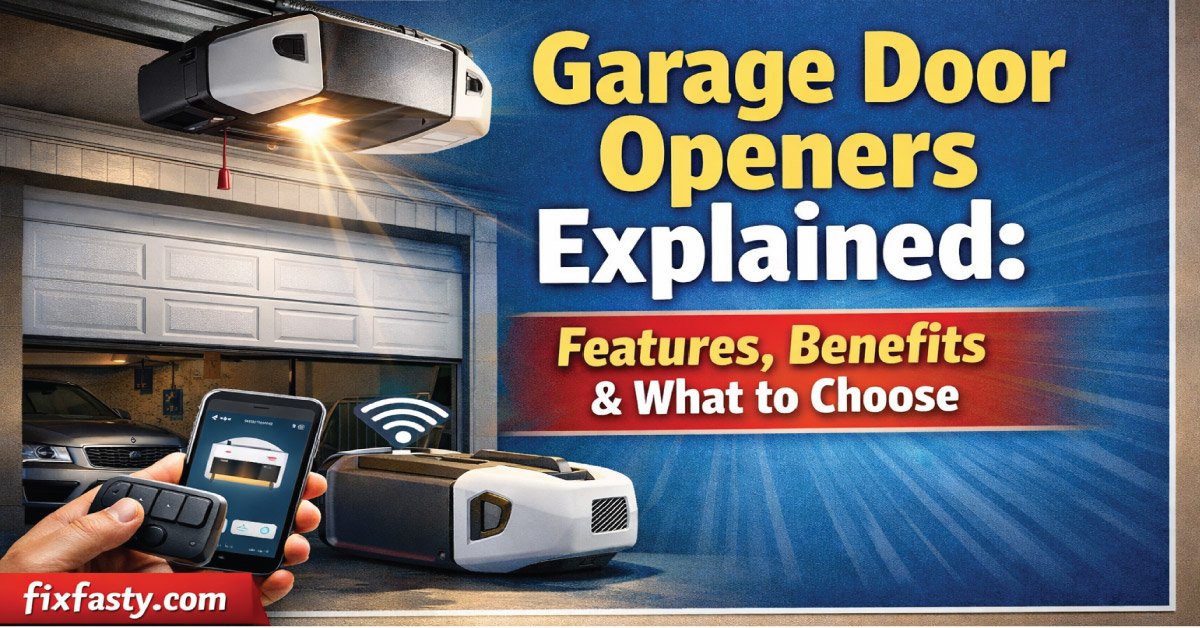
Garage door openers have come a long way in recent years. Once a simple mechanical device to lift your garage door, today’s openers are smart, quiet, energy-efficient, and feature-packed. Choosing the right opener in 2026 is about understanding your garage door type, lifestyle needs, and desired features. This guide will break down everything homeowners need to know, including types of openers, features, benefits, and buying tips.
Why Garage Door Openers Matter
“Your garage door opener is more than just a convenience; it directly impacts your home’s safety, security, noise levels, energy efficiency, and the long-term durability and performance of your garage system.”
Safety: Modern garage door openers are equipped with auto-reverse sensors and advanced safety mechanisms, preventing accidents or injuries. They protect children, pets, and property while ensuring smooth, reliable, and worry-free door operation.
Security: Smart garage door openers allow you to remotely monitor, control, and receive real-time alerts about your garage. This technology enhances home security, deters unauthorized access, and provides peace of mind for homeowners.
Noise Levels: High-quality garage door openers are designed to operate almost silently, reducing disruptive noise inside your home. This makes them ideal for garages attached to living areas, improving overall comfort and tranquility.
Durability: A durable garage door opener reduces wear on both the door and opener, extending the life of the entire system. This minimizes maintenance, repairs, and replacement costs over many years of use.
Energy Efficiency: Advanced garage door openers consume very little electricity while maintaining strong, consistent performance. They help lower energy bills, reduce environmental impact, and deliver smooth, reliable operation without sacrificing efficiency.
Avoiding Frustration: Choosing the wrong opener can result in noise, mechanical failures, or even damage to the garage door itself. Selecting the right model ensures reliable operation, long-term satisfaction, and hassle-free daily use.
A poorly chosen opener can lead to frustration, excessive noise, or even garage door damage over time.
Understand the Types of Garage Door Openers
Understanding the Different Types of Garage Door Openers Available in 2026 and How to Choose the Best Option for Your Home’s Specific Needs, Noise, and Budget.
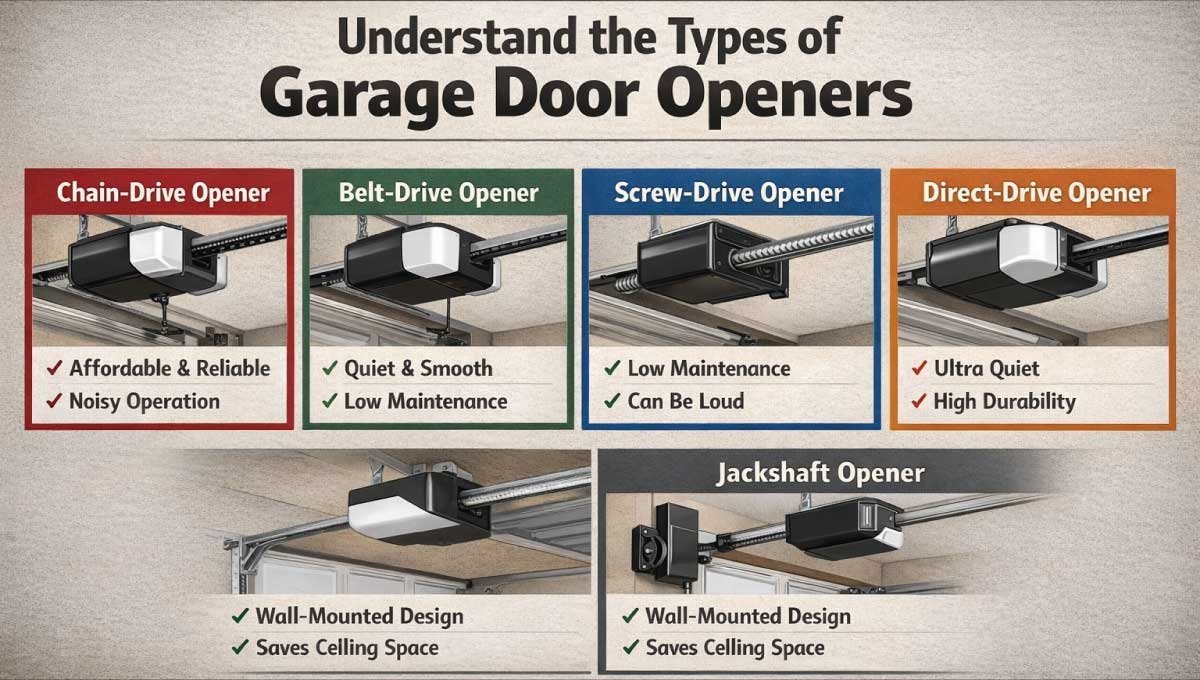
1- Chain-Drive Openers
How They Work: A durable metal chain moves the trolley that lifts and lowers the garage door along its tracks, providing reliable performance for heavy doors with a tried-and-true mechanical system.
Pros: Affordable, long-lasting, and highly reliable for handling heavier doors without frequent maintenance, making it a practical choice for homeowners seeking durability over quiet operation.
Cons: Noisier than other opener types and requires occasional lubrication to maintain smooth operation, which may be disruptive for garages attached to living areas.
Best For: Detached garages or homeowners on a tight budget who prioritize reliability and strength over silent operation or premium features.
2- Belt-Drive Openers
How They Work: Uses a reinforced rubber belt instead of a metal chain to move the trolley, creating smoother and quieter operation while lifting or lowering the garage door efficiently.
Pros: Virtually silent, smooth movement, and requires minimal maintenance, making it ideal for garages adjacent to living spaces.
Cons: Slightly more expensive upfront compared with chain-drive openers, though the long-term benefits often justify the investment.
Best For: Attached garages or homeowners who value noise reduction and smooth, low-maintenance performance over initial cost savings.
3- Screw-Drive Openers
How They Work: A threaded steel rod rotates to move the trolley along the tracks, lifting the door with a simple mechanical design and fewer moving parts than chains or belts.
Pros: Requires low maintenance due to fewer components and provides reliable performance under standard conditions.
Cons: Can be noisier than belt-drive options, and extreme temperatures may affect smooth operation and overall efficiency.
Best For: Moderate climates and mid-range garages where durability and low maintenance are more important than absolute silence.
4- Direct-Drive Openers
How They Work: The motor itself moves along the track to push or pull the garage door, eliminating most moving parts and creating exceptionally quiet, reliable operation.
Pros: Extremely quiet, highly durable, and fewer components reduce maintenance needs, making it ideal for premium home garages.
Cons: Higher upfront cost compared with chain, belt, or screw-drive systems, though long-term reliability offsets the investment.
Best For: High-end or attached garages where silent operation, long-term durability, and premium performance are essential.
5- Jackshaft Openers
How They Work: Mounts on the wall beside the garage door rather than the ceiling, turning the torsion bar to open or close the door, freeing ceiling space for other uses.
Pros: Quiet, saves ceiling space, works well with large or custom doors, and provides a sleek, modern installation.
Cons: Higher installation cost and compatibility limitations with some garage doors, requiring professional assessment before purchase.
Best For: Modern, high-end, or compact garage spaces where headroom is limited and a quiet, unobtrusive opener is desired.
Key Garage Door Opener Features to Prioritize
When selecting a garage door opener, the features it offers are just as important as the type. Safety, security, convenience, and energy efficiency all play a role in ensuring reliable, long-lasting performance and user-friendly operation.
Safety Features: Auto-reverse sensors detect obstacles and immediately stop and reverse the door to prevent accidents. Manual release handles allow operation during power outages, while emergency battery backups keep the door functional in areas prone to blackouts.
Security Features: Rolling code technology automatically changes the access code with each use to prevent hacking. Smartphone access and alerts allow remote monitoring, and automatic locking systems provide additional protection against forced entry.
Convenience Features: Belt and direct-drive openers offer quiet operation, while soft start and stop functions reduce wear on the door. Integrated motion-activated or timer-controlled lighting improves visibility and ease of use.
Energy Efficiency: Modern openers consume less electricity, often incorporate LED lighting, and use smart technology to optimize operation, lowering power usage and improving overall efficiency for homeowners.
Consider Motor Power Relative to Your Garage Door Weight
Selecting the correct motor power is crucial for smooth, reliable garage door operation. The horsepower determines which door types and weights the opener can handle, affecting longevity, performance, and overall safety of the system.
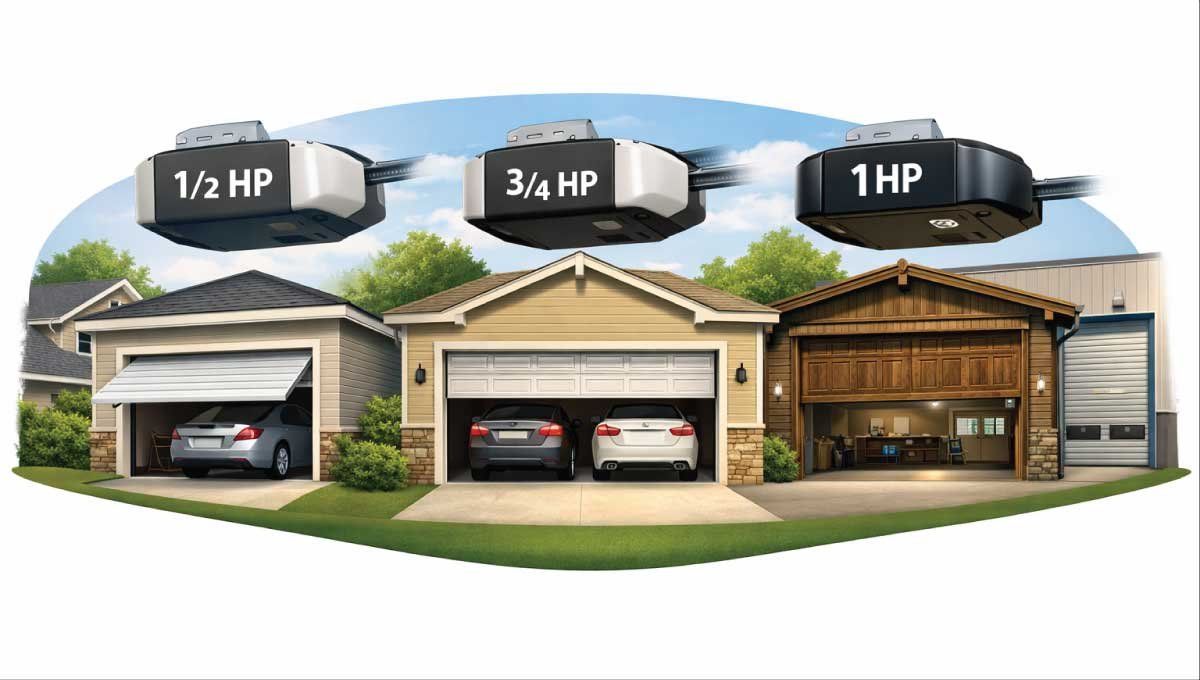
½ HP Motors: A ½ HP motor is suitable for lightweight residential garage doors, including single-car or smaller aluminum and steel doors, providing adequate lifting power for daily use.
¾ HP Motors: A ¾ HP motor can handle most standard two-car garage doors, including insulated steel or aluminum doors, offering reliable performance for typical residential applications.
1 HP or More Motors: Motors rated 1 HP or higher are necessary for heavy wood doors, large insulated doors, or commercial-style doors, ensuring smooth operation without straining the opener over time.
Incorporate Smart Technology and Home Automation into Your Garage Door
In 2026, garage door openers increasingly integrate with smart home systems, providing convenience, enhanced security, and real-time monitoring. These features allow homeowners to control their doors remotely and ensure peace of mind while improving overall safety.
Wi-Fi Connectivity: Openers with Wi-Fi allow you to control, open, or close your garage door from anywhere using a smartphone app. This feature adds convenience and ensures you never worry if the door was left open.
Voice Control: Many smart openers are compatible with Alexa, Google Assistant, or Apple HomeKit, enabling hands-free operation and seamless integration into your existing smart home ecosystem.
Notifications: Receive instant alerts if the garage door is left open, tampered with, or malfunctioning. Notifications improve security and give homeowners confidence that their property is protected at all times.
Integration with Security Systems: Modern openers can sync with cameras, alarms, and smart locks, creating a comprehensive home security system that monitors your garage alongside other entry points.
Noise Considerations
The type of opener affects noise level:
| Opener Type | Noise Level | Best Use |
|---|---|---|
| Chain-Drive | Loud | Detached garages |
| Belt-Drive | Quiet | Attached garages, homes with bedrooms nearby |
| Screw-Drive | Moderate | Moderate-use garages |
| Direct-Drive | Very Quiet | Premium or high-end homes |
| Jackshaft | Quiet | Modern homes, limited headroom |
Understand Maintenance Requirements for Different Garage Door Openers
All garage door openers require some level of maintenance to ensure safe, reliable, and quiet operation. Proper care prevents breakdowns, extends the lifespan of the opener, and maintains smooth performance over time.
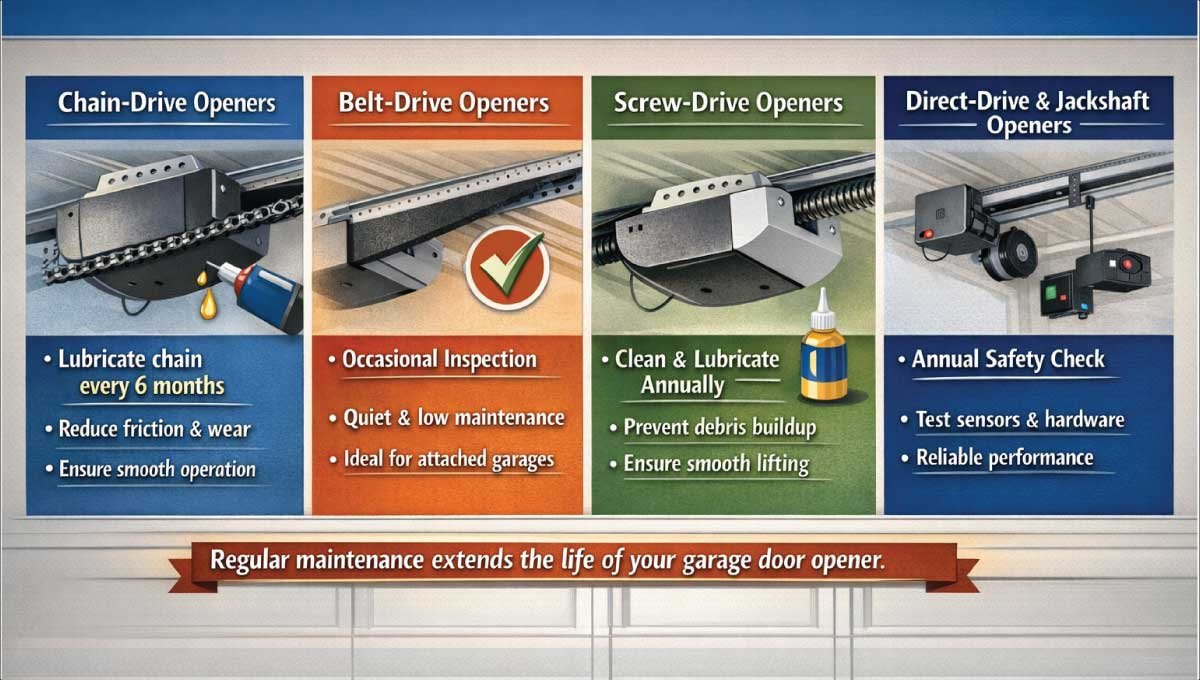
Chain-Drive Openers: Chain-drive openers need the metal chain to be lubricated approximately every six months. Regular lubrication reduces friction, prevents wear, and keeps the opener operating smoothly and reliably.
Belt-Drive Openers: Belt-drive openers require only occasional inspections, as they operate quietly and have fewer moving parts. Minimal maintenance is needed, making them ideal for garages attached to living spaces.
Screw-Drive Openers: Screw-drive openers need the threaded rod cleaned and lubricated at least once a year. This prevents debris buildup, reduces friction, and ensures smooth lifting of the garage door.
Direct-Drive & Jackshaft Openers: These modern systems require very little maintenance. Annual inspection of sensors, safety features, and hardware ensures continued safety, quiet operation, and reliable performance.
Cost Considerations
Garage door openers in 2026 range widely depending on type, features, and horsepower:
Chain-Drive: $200–$400
Belt-Drive: $300–$600
Screw-Drive: $300–$500
Direct-Drive: $500–$800
Jackshaft: $600–$1,000+
Smart features and battery backups can increase costs, but they offer convenience and security benefits worth the investment.
👉 Garage Door Opener Types: Find the Perfect One explores different opener mechanisms, power options, and smart features to help you make the right choice. Learn which opener suits your door size, usage, and noise needs. To avoid costly mistakes and choose confidently, 👉 read the full article for expert guidance.
Choose the Right Garage Door Opener for Your Home’s Needs
Selecting the correct garage door opener depends on your door type, home layout, and desired features. Matching the opener to your specific requirements ensures safe, smooth, quiet, and reliable operation for daily use.
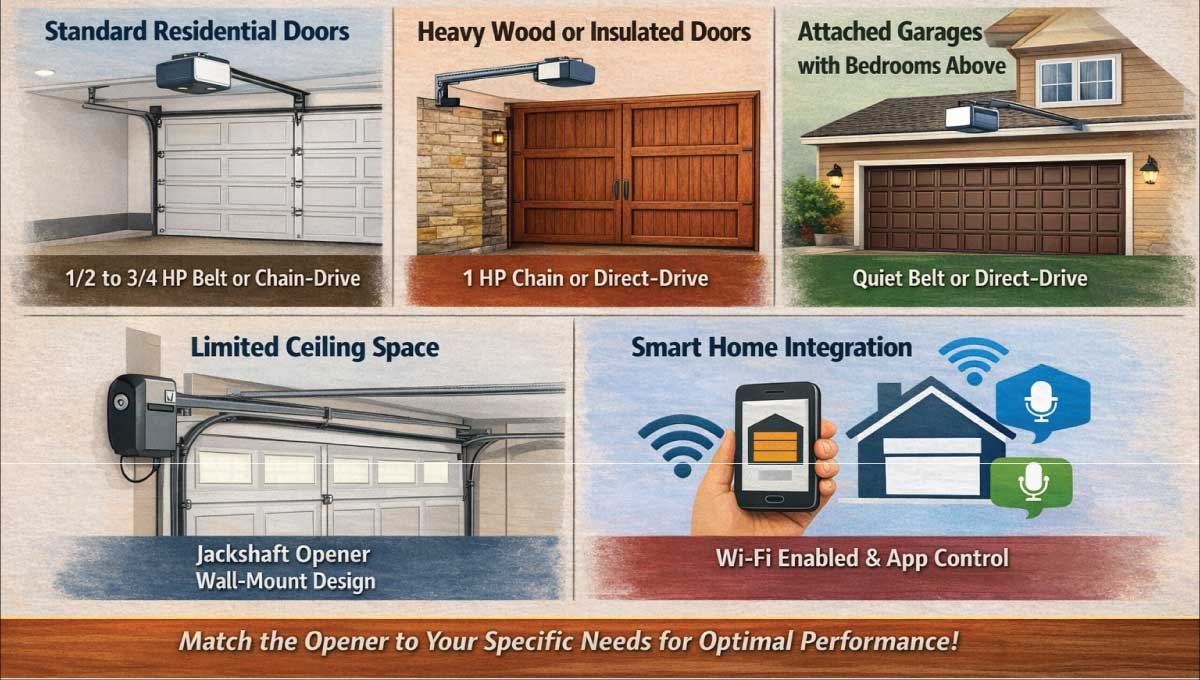
Standard Residential Doors: For typical single or two-car residential doors, a belt-drive or chain-drive opener with ½ to ¾ HP provides sufficient power, reliable operation, and a good balance of cost and performance.
Heavy Wood or Insulated Doors: Large, heavy wood or insulated doors require a more powerful opener, such as a 1 HP direct-drive or chain-drive model, to ensure durability, smooth lifting, and long-term reliability.
Attached Garages with Bedrooms Above: Garages attached to living spaces or with rooms above benefit from belt or direct-drive openers, which operate quietly and minimize noise disruption inside the home.
Limited Ceiling Space: Jackshaft openers are ideal for garages with low or restricted headroom, as they mount on the wall beside the door and do not require overhead clearance for tracks or motors.
Smart Homes: Wi-Fi-enabled openers with app integration, notifications, and voice control are perfect for smart homes, allowing homeowners to monitor and operate doors remotely while enhancing convenience and security.
Garage Door Opener Types & Best Use
| Opener Type | Ideal Door Type | Noise Level | Best For |
|---|---|---|---|
| Chain-Drive | Standard steel or wood | Loud | Budget-friendly, detached garages |
| Belt-Drive | Standard or insulated doors | Quiet | Attached garages, bedrooms nearby |
| Screw-Drive | Moderate-weight doors | Moderate | Moderate climates, mid-range homes |
| Direct-Drive | Heavy or insulated doors | Very quiet | Premium homes, frequent use |
| Jackshaft | Tall or custom doors | Quiet | Limited headroom, modern homes |
Key Features & Benefits
| Feature | Benefit | Why It Matters |
|---|---|---|
| Auto-Reverse Sensors | Prevents accidents | Keeps children and pets safe |
| Rolling Code Technology | Prevents hacking | Enhances security |
| Battery Backup | Operates during outages | Ensures access at all times |
| Wi-Fi & Smart Control | Remote monitoring & alerts | Convenience and peace of mind |
| Soft Start/Stop | Smooth door movement | Reduces wear on door and opener |
👉 Essential Garage Door Components Explained: A Complete Parts Overview helps you understand key garage door hardware, their functions, and how they work together. Learn to identify worn or faulty parts before they cause bigger issues. For smarter maintenance and safer operation, 👉 read the full article and upgrade your garage door knowledge.
Decide Between Professional Installation and DIY for Your Garage Door Opener
While DIY installation may seem cost-effective, garage door openers involve complex components and safety risks. Professional installation ensures correct setup, safe handling, and long-term performance, reducing the chance of errors or injuries.
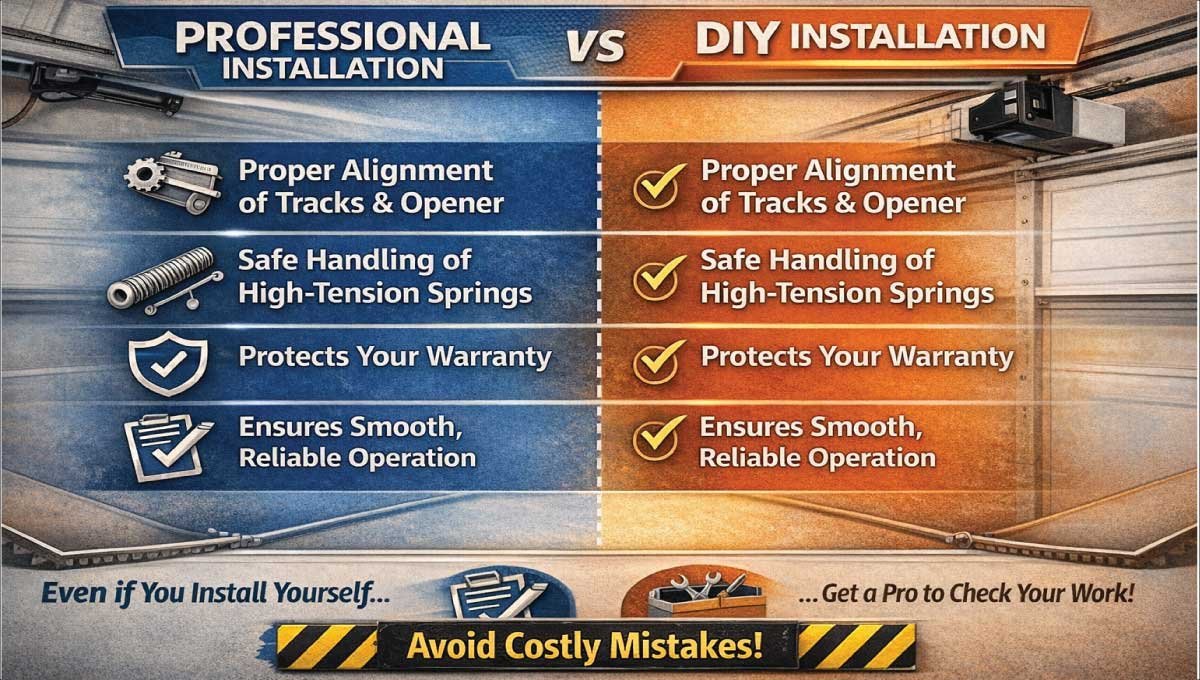
Ensures Proper Alignment of Tracks and Opener: Professionals make sure the tracks, opener, and door are perfectly aligned, which prevents uneven movement, reduces strain on components, and ensures smooth, reliable operation.
Handles High-Tension Springs Safely: Torsion and extension springs are under extreme tension and can cause serious injury if mishandled. Trained technicians have the tools and experience to install them safely.
Protects Warranty: Many manufacturers require professional installation to keep warranties valid. Improper DIY installation can void coverage and leave you responsible for future repair costs.
Guarantees Smooth, Long-Lasting Operation: Expert installation ensures all parts work together correctly, reducing wear and tear, preventing premature failures, and extending the overall lifespan of your garage door system.
Follow Essential Maintenance Tips to Maximize Garage Door Opener Longevity
Regular maintenance is key to keeping your garage door opener operating efficiently, safely, and quietly. Simple routine checks and care help prevent breakdowns, reduce repair costs, and extend the lifespan of your entire garage door system.
Inspect Safety Sensors Monthly: Check that the safety sensors are clean, aligned, and unobstructed to ensure they properly detect objects and prevent accidents during door operation.
Lubricate Moving Parts as Recommended: Apply lubricant to chains, belts, rollers, and hinges according to manufacturer guidelines to reduce friction, noise, and wear on mechanical components.
Test Auto-Reverse Function Regularly: Place an object under the door to confirm it reverses immediately upon contact, ensuring the safety system is functioning correctly.
Check the Battery Backup Annually: Test and replace the battery backup as needed to ensure your opener continues working during power outages or emergencies.
Clean Exterior Components and Keep Tracks Clear: Wipe down the opener housing and remove dirt, debris, or obstructions from tracks to maintain smooth, reliable door movement.
Final Thoughts
Choosing the right garage door opener in 2026 means matching your door type, home layout, noise preferences, and smart technology needs. Chain-drive openers are affordable and reliable for detached garages, while belt-drive models offer quiet, smooth operation for attached homes. Direct-drive openers provide premium, ultra-quiet performance, and jackshaft openers save space in modern layouts. Adding smart features, battery backups, and proper maintenance enhances convenience, security, and long-term reliability. A well-chosen opener is an investment in comfort, safety, and efficiency.

Engineer Ali Hasan is a garage door expert and the founder of FixFasty. With over 16 years of experience in mechanical systems and home maintenance, he provides practical, step-by-step guides on garage door installation, repairs, and maintenance, helping homeowners keep their garage doors safe, reliable, and long-lasting.