
A garage door that opens slowly is not just annoying—it can also signal potential safety hazards. Whether your door hesitates halfway or struggles to lift entirely, understanding the root cause is essential before calling a professional. In this guide, we will break down the most common reasons for a slow garage door and provide step-by-step fixes you can try yourself. Plus, we will include helpful tables to make troubleshooting a breeze.
Why Your Garage Door Might Be Opening Slowly
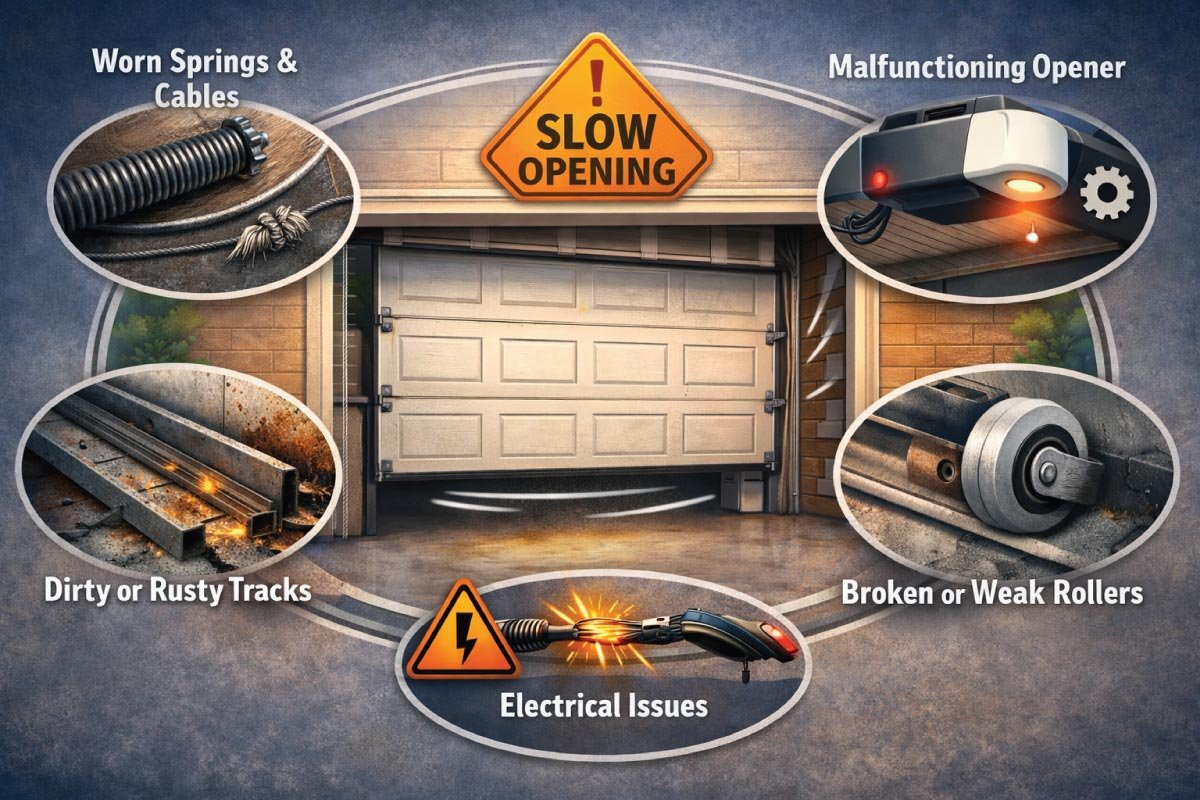
Step 1: Inspect the Springs
-
Torsion Springs: Mounted above the door.
-
Extension Springs: Located on either side of the door tracks.
Spring Types and Signs of Wear
| Spring Type | Location | Signs of Wear | Recommended Action |
|---|---|---|---|
| Torsion Springs | Above door | Gaps, rust, squeaking | Call a professional; avoid DIY |
| Extension Springs | Side tracks | Fraying, stretching, noise | Replace immediately; safety risk |
Pro Tip: Garage door springs are under high tension and can be dangerous. If you suspect a spring issue, hire a professional.
Step- 2: Clean and Lubricate Tracks
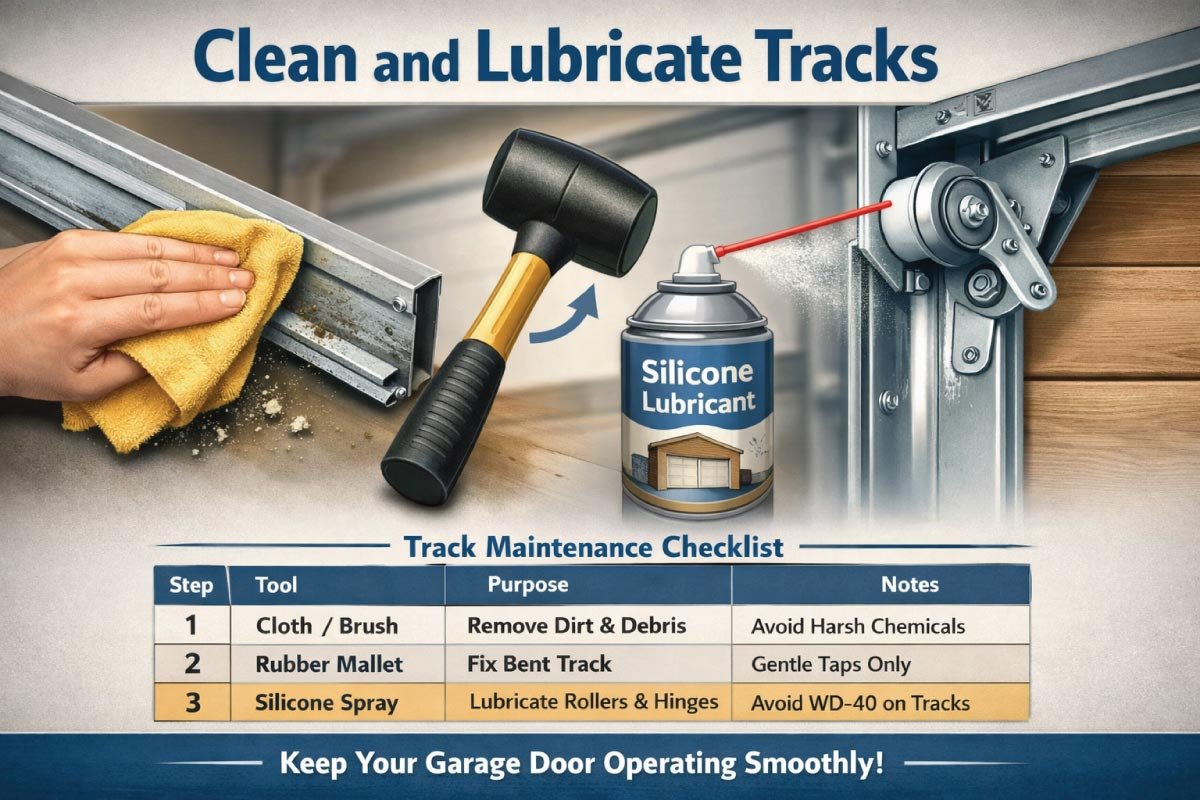
Garage door tracks guide the door smoothly during operation, but dirt, debris, and rust can build up over time, causing slow or jerky movement. Regular cleaning and proper lubrication help reduce friction, prevent wear on rollers, and restore smooth operation. Following a simple maintenance routine can keep your door functioning efficiently and extend its overall lifespan.
Steps:
-
Remove debris with a cloth or brush.
-
Check for dents or bends in the track.
-
Lubricate rollers and hinges with a silicone-based spray.
Track Maintenance Checklist
| Step | Tool Needed | Purpose | Notes |
|---|---|---|---|
| 1 | Cloth/Brush | Remove dirt and debris | Avoid harsh chemicals |
| 2 | Rubber Mallet | Straighten bent track | Gentle taps only |
| 3 | Silicone Spray | Lubricate rollers and hinges | Avoid WD-40 on tracks |
Regular track maintenance prevents slow opening and extends your garage door’s lifespan.
Step 3: Test the Garage Door Opener
A slow-moving garage door isn’t always caused by mechanical issues—sometimes the opener itself is at fault. Components like the power supply, drive mechanism, and speed settings can affect how quickly the door operates. Testing and adjusting these parts helps identify the source of the slowdown and ensures the opener functions efficiently and safely.
Power Supply: Ensure the opener is plugged in and the outlet is functional.
Drive Mechanism: Chain, belt, or screw drives can wear down over time.
Speed Settings: Modern openers allow you to adjust door speed.
Garage Door Opener Troubleshooting
| Component | Issue | How to Test | Solution |
|---|---|---|---|
| Power Supply | Door moves slowly/halts | Test outlet with another device | Reset breaker, check wiring |
| Drive Mechanism | Noise or jerky motion | Inspect chain/belt for wear | Tighten or replace worn parts |
| Speed Setting | Door opens slowly | Check manual or settings on opener | Adjust speed settings according to manual |
Pro Tip: Regularly inspect the opener for loose bolts, worn gears, and frayed wires.
Step 4: Examine Rollers and Hinges
Rollers and hinges are essential for smooth garage door movement, reducing friction along the tracks. When rollers become worn or hinges stiffen, the door may slow, jerk, or make excessive noise. Regular inspection, lubrication, and timely replacement of damaged parts help maintain smooth operation and prevent further strain on the opener and other components.
Steps to Inspect:
Look for worn, cracked, or flat rollers.
Check hinges for rust or stiffness.
Replace any damaged parts promptly.
Rollers and Hinges Maintenance
| Part | Symptoms of Wear | Recommended Maintenance | Replacement Interval |
|---|---|---|---|
| Rollers | Noise, jerky movement | Lubricate with silicone spray | Every 5 years or as needed |
| Hinges | Rust, stiffness | Clean and lubricate | Inspect annually |
Pro Tip: Nylon rollers are quieter and require less maintenance than steel rollers, though steel rollers are more durable for heavier doors.
Step 5: Check Electrical Components
Electrical components play a key role in the smooth operation of an automatic garage door. Problems with remotes, safety sensors, or wiring can slow the door, cause it to stop mid-cycle, or make it respond intermittently. Regularly checking and maintaining these components helps ensure reliable performance and prevents small issues from turning into costly repairs.
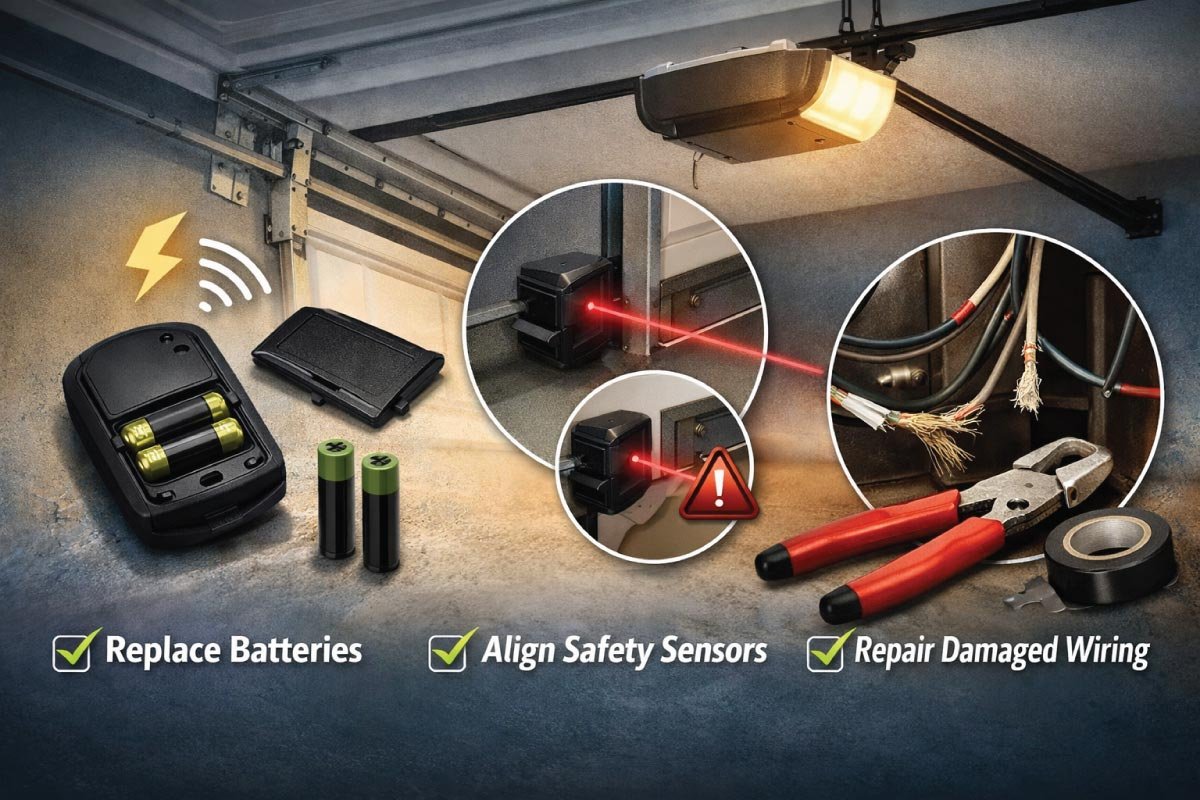
Remote Controls: Weak batteries can reduce signal strength.
Photo Eyes: Misaligned sensors may stop the door mid-cycle.
Wiring: Frayed or damaged wires can affect opener performance.
Quick Fixes:
Replace batteries in remotes.
Align safety sensors so they face each other directly.
Inspect wires and replace if damaged.
Step 6: Test Door Balance
A properly balanced garage door reduces strain on the opener and ensures smooth, efficient operation. If the door is unbalanced, it can move slowly, jerk, or stop unexpectedly. Testing the balance manually helps identify spring or cable issues early. Because springs are under high tension, any necessary adjustments should always be performed by a trained professional to avoid serious injury.
Disconnect the opener (pull the release handle).
Lift the door manually halfway.
If it stays in place, the door is balanced. If it falls or rises, the springs may need adjustment.
Safety Tip: Never adjust springs yourself if you’re inexperienced—they are under extreme tension.
Step 7: Regular Maintenance Schedule
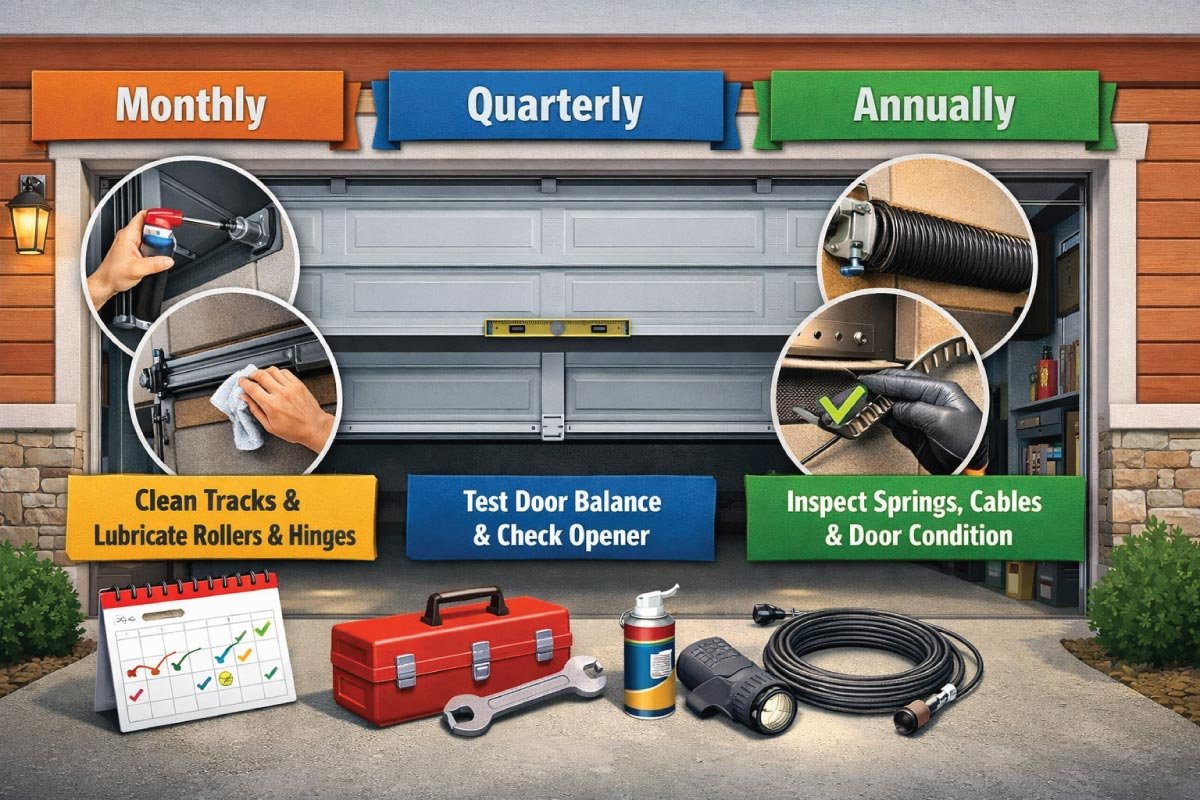
Monthly: Clean tracks, lubricate rollers and hinges.
Quarterly: Test door balance and opener function.
Annually: Inspect springs, cables, and overall door condition.
Bonus Tips for Faster Garage Doors
A slow garage door can be frustrating, but simple adjustments and upgrades can improve its speed and efficiency. Small factors like extra weight, worn weather stripping, or an outdated opener can reduce performance. By addressing these issues and making targeted upgrades, you can ensure your garage door opens and closes quickly, smoothly, and reliably
Bonus Tips for Faster Garage Doors:
Avoid overloading the door with heavy insulation.
Replace weather stripping if it creates extra friction.
Upgrade to a high-speed garage door opener if your current one is outdated.
Common Signs Your Garage Door Needs Immediate Attention
Garage doors rarely fail suddenly; they usually show warning signs before a major issue occurs. Paying attention to these early indicators can prevent accidents, reduce repair costs, and extend the lifespan of your door. Recognizing problems like unusual noises, jerky movement, or malfunctioning sensors allows homeowners to take timely action and maintain safe operation.
| Warning Sign | Possible Cause | Recommended Action |
|---|---|---|
| Jerky or uneven movement | Worn rollers, misaligned tracks, or unbalanced springs | Inspect rollers and tracks; call professional if needed |
| Unusual noises (squeaks, grinding) | Dry or worn rollers, hinges, or opener gears | Lubricate moving parts; replace damaged components |
| Door stuck halfway | Broken springs, damaged cables, or obstruction | Do not force; call a professional for repair |
| Slow opening or closing | Opener settings, worn rollers, or weather effects | Adjust settings or lubricate; consult professional if persists |
| Visible wear on springs or cables | Rust, fraying, or tension issues | Immediate replacement by a trained technician |
| Malfunctioning sensors | Misaligned or dirty safety sensors | Clean and realign; call professional if unresolved |
How Temperature and Weather Affect Garage Door Speed
Garage doors are affected by changes in temperature and weather, which can impact their speed, efficiency, and longevity. Cold, heat, rain, and humidity can alter how metal and plastic components function, thicken lubricants, or cause corrosion. Understanding these effects helps homeowners anticipate issues and take preventive measures, keeping doors operating smoothly year-round.
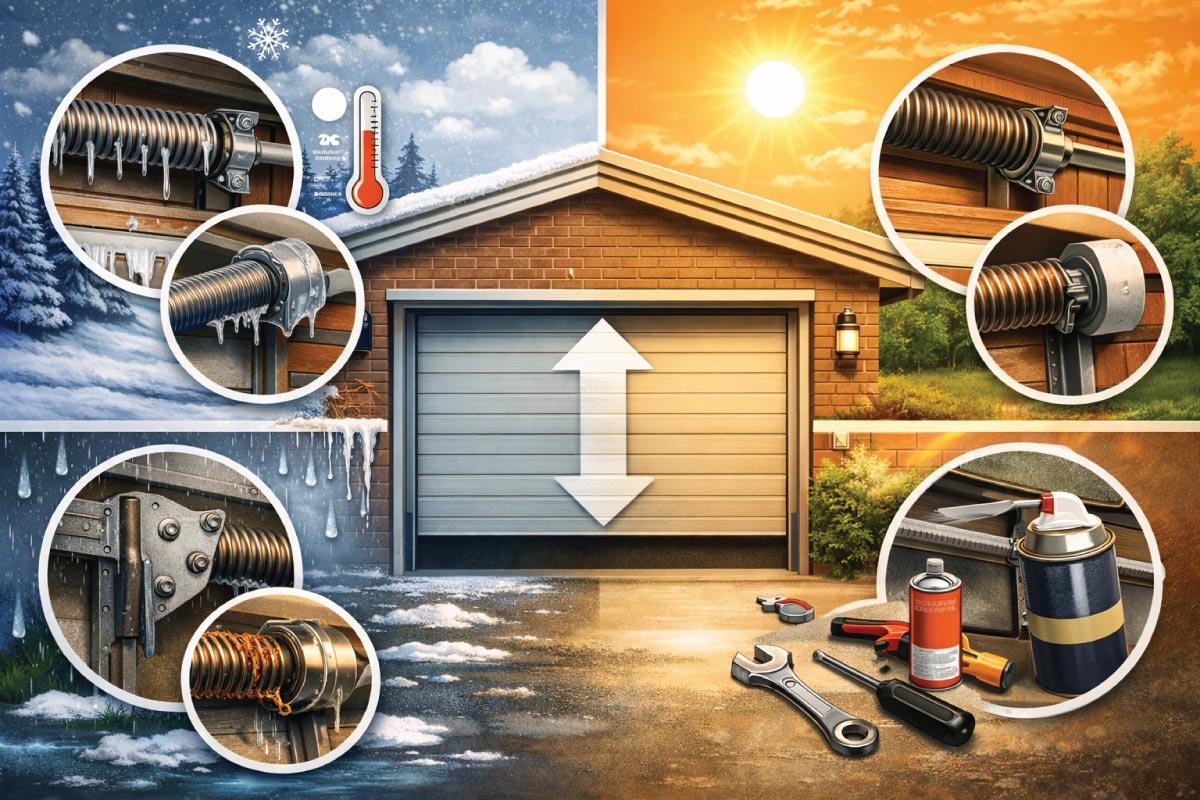
Impact of Cold Temperatures: Cold temperatures thicken lubricants, contract metal, slowing garage door movement.
Effects of Hot Weather: Hot weather expands components, increases friction, reducing garage door speed.
Rain and Humidity Risks: Rain and humidity cause rust, corrosion, increasing friction and damage.
Seasonal Lubrication Practices: Seasonal lubrication adjustments reduce friction, ensuring smooth garage door operation.
Preventive Maintenance Tips: Preventive maintenance detects issues early, maintaining consistent garage door performance.
The Role of Garage Door Tracks in Smooth Operation
Garage door tracks play a crucial role in guiding rollers and ensuring smooth, balanced operation. Even minor issues like dents, misalignment, or debris buildup can cause friction, hesitation, or uneven movement. Regular inspection, cleaning, and proper alignment, combined with lubrication, help maintain efficient operation, reduce stress on mechanical components, and extend the lifespan of both rollers and the opener.
Guide Rollers: Tracks provide a pathway for rollers, ensuring even and consistent door movement.
Prevent Hesitation: Bent or misaligned tracks can cause the door to stick or struggle.
Reduce Friction: Even small dents or debris can slow the door and strain the opener.
Regular Cleaning: Remove dirt, dust, and buildup to maintain smooth operation.
Check Alignment: Proper track alignment prevents uneven wear and mechanical stress.
Combine with Lubrication: Lubricated tracks reduce friction and extend the life of rollers.
Protect Components: Well-maintained tracks decrease wear on the opener, springs, and rollers, saving costly repairs.
Choosing the Right Lubricant for Your Garage Door
Choosing the right lubricant is essential for keeping your garage door operating smoothly and quietly. Using the wrong product can attract dirt, cause buildup, and reduce efficiency. Proper lubrication minimizes friction, protects moving parts, and prolongs the life of your door’s components. Selecting the correct type and applying it correctly ensures safe, reliable, and long-lasting performance.
Use Silicone-Based Sprays: Ideal for rollers, hinges, and springs; reduces friction without attracting dust.
Avoid Heavy Oils: Can gum up tracks and create buildup that impedes door movement.
Skip WD-40 for Maintenance: Useful for cleaning but not recommended as a long-term lubricant.
Lubricate Rollers and Hinges Regularly: Keeps the door operating smoothly and quietly.
Protect Springs: Proper lubrication reduces wear and prevents rust on torsion or extension springs.
Apply Before Cold Weather: Cold temperatures increase friction; pre-winter lubrication prevents stiffness.
Maintain Consistent Schedule: Regular lubrication every 6–12 months ensures optimal performance and longevity.
How to Safely Adjust Garage Door Opener Settings
Modern garage door openers allow for precise control of speed and force, which is essential for safe and efficient operation. Incorrect settings can strain springs, rollers, and the motor, causing damage or accidents. Proper calibration, guided by the manufacturer’s instructions, ensures smooth movement, prevents excessive wear, and prolongs the lifespan of your garage door system.
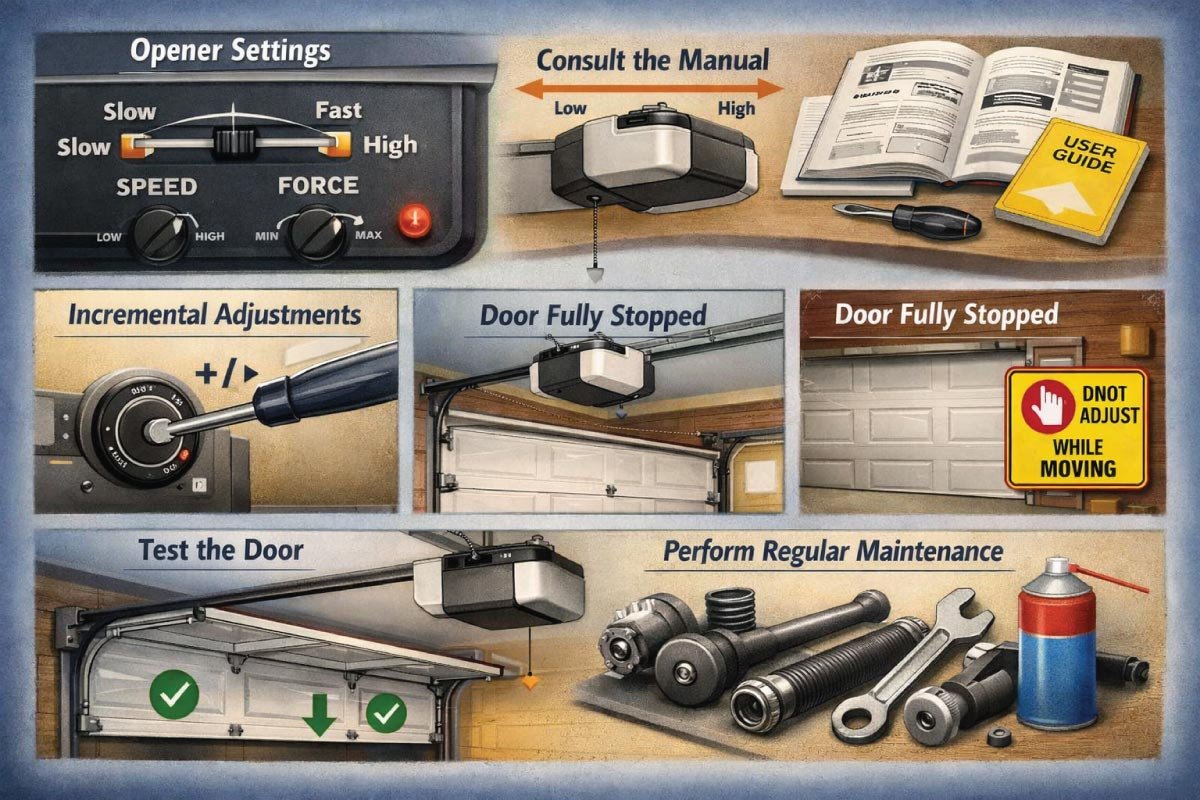
Understand Opener Speed and Force Settings: Speed and force settings affect safety, performance, and garage door lifespan.
Consult the Manufacturer’s Manual: Manufacturer manuals provide correct settings, preventing damage, errors, and warranty issues.
Use Incremental Adjustments: Small adjustments help achieve smooth operation without straining garage door components.
Never Adjust While the Door is Moving: Adjust settings only when stationary to avoid injury and damage.
Test Door Operation After Adjustment: Test multiple cycles to confirm smooth, balanced, and safe door movement.
Maintain Regular Opener Checks: Regular inspections and lubrication keep the opener reliable and efficient.
When to Replace Rollers vs. When to Lubricate
Garage door rollers play a vital role in smooth, safe, and quiet operation. Over time, they can wear out, become noisy, or develop flat spots, affecting door performance and straining the opener. Knowing when to lubricate versus when to replace rollers helps maintain efficiency, prolongs door lifespan, and ensures hassle-free operation.
Inspect Rollers Regularly: Look for cracks, flat spots, or unusual noise.
Replace Worn or Damaged Rollers: Ensure smooth operation by changing old or broken rollers.
Lubricate Intact Rollers: Apply lubricant only to clean, undamaged rollers to reduce friction.
Choose the Right Material: Nylon rollers are quiet and low-maintenance; steel rollers handle heavier doors.
Prevent Opener Strain: Proper care prevents slow operation and reduces stress on the garage door opener.
Troubleshooting Noisy Garage Doors
Noisy garage doors are more than just annoying—they can signal underlying mechanical problems that may worsen over time. Identifying the type of noise and its cause helps prevent damage, prolongs the life of your door, and ensures safe operation. Regular maintenance, lubrication, and timely repairs are key to keeping your garage door quiet and efficient.
| Noise Type | Possible Cause | DIY Solution | When to Call a Professional |
|---|---|---|---|
| Squeaking | Dry hinges or rollers | Clean and lubricate moving parts | ❌ Usually DIY-safe unless persistent or severe |
| Grinding | Bent tracks or worn gears | Inspect and clean tracks | ✅ Call a professional for gear or track replacement |
| Rattling or banging | Loose bolts or misaligned panels | Tighten hardware, adjust panels | ✅ If noise persists or door misalignment continues |
| Creaking | Worn rollers or hinges | Lubricate or replace rollers | ✅ Replacement may require professional help |
| Humming | Opener motor strain | Check for obstructions, lubricate | ✅ Persistent motor issues require a technician |
The Importance of Proper Spring Tension
Garage door springs are critical for the safe and smooth operation of your door. They support the door’s weight, balance the system, and ensure proper movement. Improper spring tension can cause slow operation, unbalanced doors, or serious safety risks. Professional handling is essential, as adjusting or replacing springs incorrectly can lead to injury or damage.
Supports Door Weight: Springs carry the full weight of the garage door, easing strain on the opener.
Ensures Balance: Correct tension keeps the door level and prevents it from tilting or sagging.
Prevents Slow Operation: Properly tensioned springs allow smooth, efficient opening and closing.
Reduces Safety Risks: Over-tight or loose springs can cause accidents or damage.
Professional Adjustment Required: Only trained technicians should adjust or replace springs due to high tension hazards.
Upgrading to Smart Garage Door Openers for Speed and Safety
Upgrading to a smart garage door opener transforms your garage into a modern, secure, and efficient space. Unlike traditional openers, smart systems offer advanced control, safety features, and performance monitoring. They can prevent mechanical issues, improve operation speed, and reduce wear on components, providing convenience, peace of mind, and a longer lifespan for your garage door system.
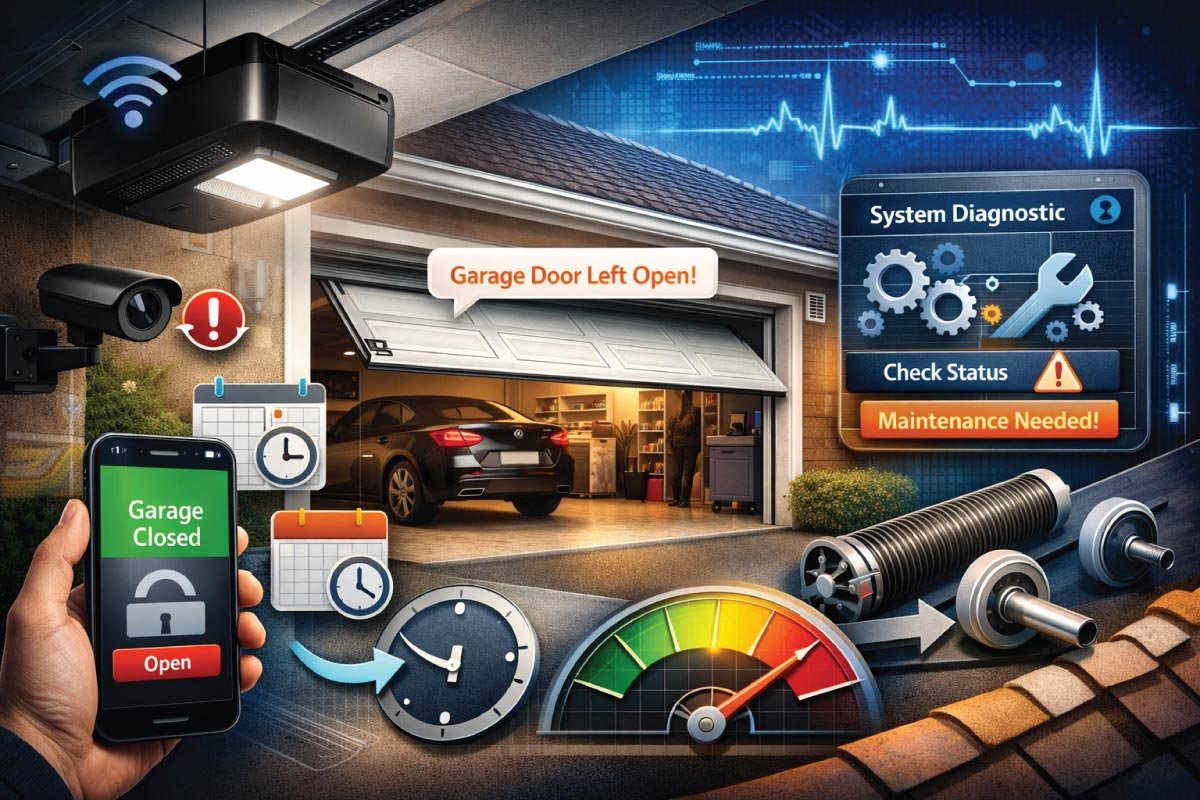
Remote Operation: Open or close your garage door from anywhere using a smartphone app.
Automatic Alerts: Receive notifications if the door is left open or if unusual activity is detected.
Scheduled Control: Set automatic opening and closing times to suit your routine.
Performance Monitoring: Detect mechanical issues early to prevent costly repairs.
Enhanced Safety and Longevity: Optimize door speed and reduce wear on springs, rollers, and tracks.
DIY vs. Professional Garage Door Repairs: What You Should Know
Garage doors are essential for safety and convenience, but not all maintenance tasks are suitable for DIY. Simple chores like cleaning or lubricating can be handled at home, while complex repairs involve risks that require professional skills. Knowing which tasks you can safely perform yourself and which need expert help protects both your safety and your door’s longevity.
| Type of Task | DIY-Friendly | Professional Required | Reason |
|---|---|---|---|
| Cleaning & Lubricating | ✅ Wiping tracks, lubricating hinges and rollers | ❌ Not needed | Simple maintenance, low risk |
| Spring Replacement | ❌ | ✅ Replacing torsion or extension springs | High tension; risk of severe injury |
| Opener Repairs | ❌ | ✅ Motor or electronic repairs | Requires technical knowledge and electrical safety |
| Track Alignment | ❌ | ✅ Adjusting bent or misaligned tracks | Misalignment can cause door malfunction or accidents |
| General Inspection | ✅ Checking for wear, loose screws | ❌ Not needed | Can identify potential problems early |
Conclusion
A slow garage door is not just inconvenient—it can compromise safety and efficiency. By systematically inspecting springs, tracks, rollers, and the opener, you can identify the problem and fix it—or know when to call a professional. Regular maintenance and timely repairs keep your garage door opening smoothly, safely, and reliably for years.
👉 Complete Garage Door Guide helps you understand garage door basics, identify repair issues early, and follow proper maintenance steps. Learn how small checks can prevent big problems and extend your door’s lifespan. Read the full post to keep your garage door running safely and smoothly.

Engineer Ali Hasan is a garage door expert and the founder of FixFasty. With over 16 years of experience in mechanical systems and home maintenance, he provides practical, step-by-step guides on garage door installation, repairs, and maintenance, helping homeowners keep their garage doors safe, reliable, and long-lasting.