
What Are Garage Door Cables?
Garage door cables, made of high-tensile steel, work with springs to lift the door safely and evenly. Regular inspection prevents wear, uneven movement, and potential accidents.
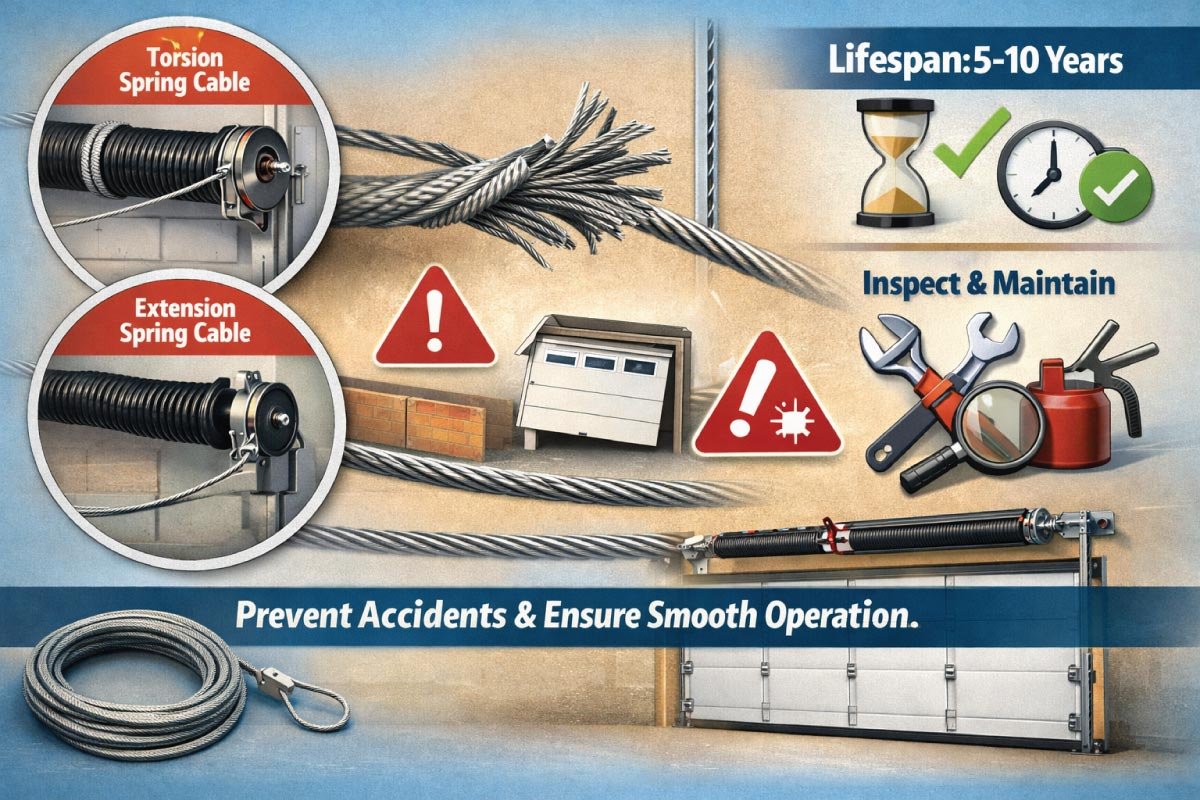
| Cable Type | Location | Function | Lifespan | Notes |
|---|---|---|---|---|
| Torsion spring cable | Side of torsion springs | Lifts door by winding with spring | 5–10 years | Handles high tension |
| Extension spring cable | Side of extension springs | Works with spring to lift door | 5–10 years | Easier DIY repair |
Signs Your Garage Door Cable Needs Repair
Garage door cables endure constant tension and wear over time. Ignoring damage can cause uneven movement, sudden drops, or total failure, creating serious safety risks. Regular inspections and prompt repairs prevent accidents and ensure safe operation.
| Symptom | Explanation | Urgency |
|---|---|---|
| Frayed wires | Cable strands are breaking | High |
| Cable off the drum | Door may not lift evenly | High |
| Uneven door movement | One side lags behind | Medium |
| Loud snapping sound | Cable or spring broke | High |
| Door won’t open fully | Cable may be loose or broken | High |
⚠️ Important: Never attempt to operate a door with a broken cable. The door could fall unexpectedly, causing injury or property damage.
Causes of Cable Damage
Garage door cables endure high tension with every cycle, making them prone to wear and damage. Knowing common causes—like rust, fraying, or misalignment—helps homeowners prevent costly repairs and unsafe malfunctions. Regular inspections, lubrication, and timely adjustments keep cables in good condition and the door operating safely.
| Cause | Description | Preventive Measure |
|---|---|---|
| Wear and tear | Cables fray from repeated cycles | Inspect cables quarterly |
| Rust and corrosion | Moisture weakens steel | Lubricate with silicone spray |
| Misalignment | Drums or tracks out of alignment | Professional track adjustment |
| Excessive tension | Springs too tight or door too heavy | Proper spring calibration |
| Poor maintenance | Dirt and debris damage cables | Clean and lubricate regularl |
Tools Needed for Garage Door Cable Repair
Repairing garage door cables requires precision, proper tools, and careful handling. High tension makes slips dangerous, so safety and correct equipment are essential for effective repairs.
| Tool | Purpose |
|---|---|
| Winding bars | Adjust torsion springs if needed |
| Socket wrench set | Remove bolts and brackets |
| Clamps or locking pliers | Secure the door during repair |
| Safety glasses | Protect eyes from snapping cables |
| Gloves | Prevent cuts from steel strands |
| Ladder | Access cable drums safely |
Step-by-Step Guide to Safely Repairing a Garage Door Cable
Repairing garage door cables demands careful attention, proper tools, and strict safety precautions. Following a step-by-step process ensures safe, smooth, and reliable operation while preventing accidents or damage.
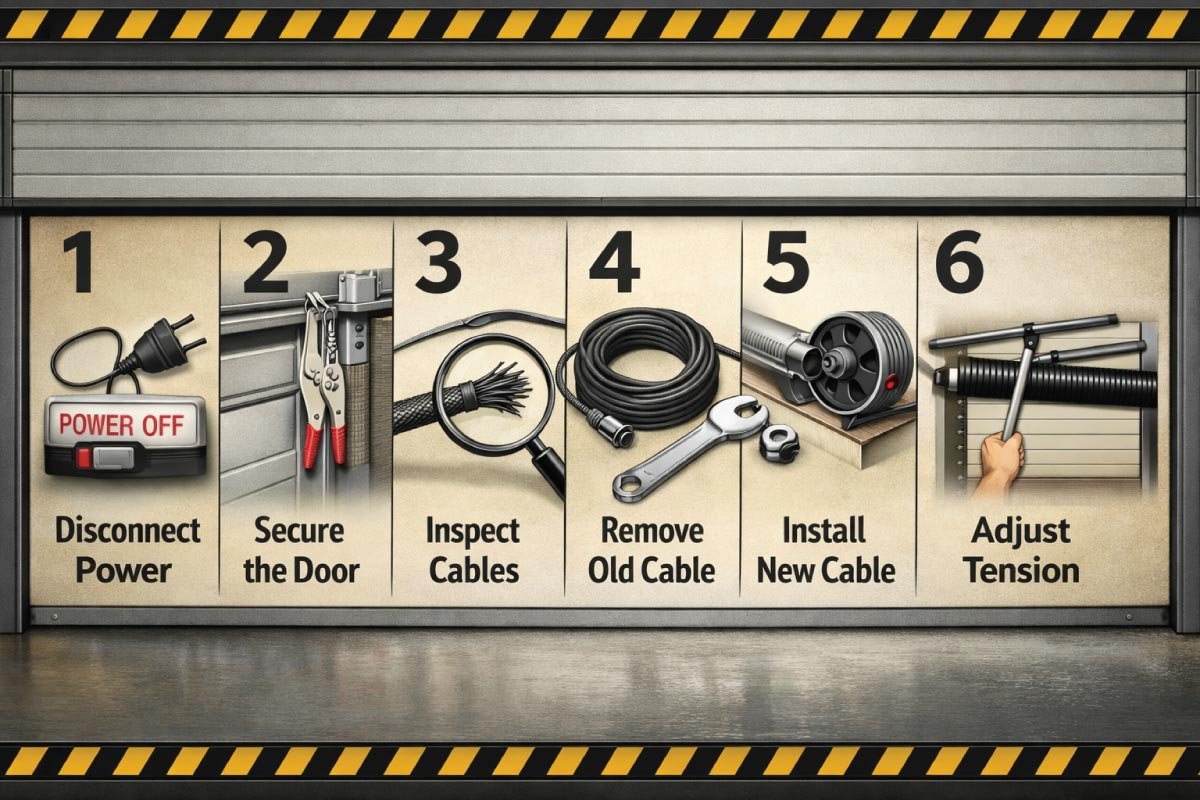
| Step | Action | Safety Tip |
|---|---|---|
| 1 | Disconnect power | Prevents accidental activation |
| 2 | Secure door | Stops door from falling |
| 3 | Inspect cables | Identify fraying or damage |
| 4 | Remove old cable | Wear gloves and safety glasses |
| 5 | Install new cable | Ensure even placement on drum |
| 6 | Adjust tension | Use proper winding bars |
| 7 | Test door | Confirm smooth operation before regular use |
Costs of Garage Door Cable Repair
The cost of repairing garage door cables depends on cable type, damage severity, and whether you DIY or hire a professional. Torsion spring cables are high-tension and dangerous, requiring professional service, while extension spring cables can sometimes be handled by skilled DIYers with proper tools. Knowing costs helps homeowners plan safely and avoid risks.
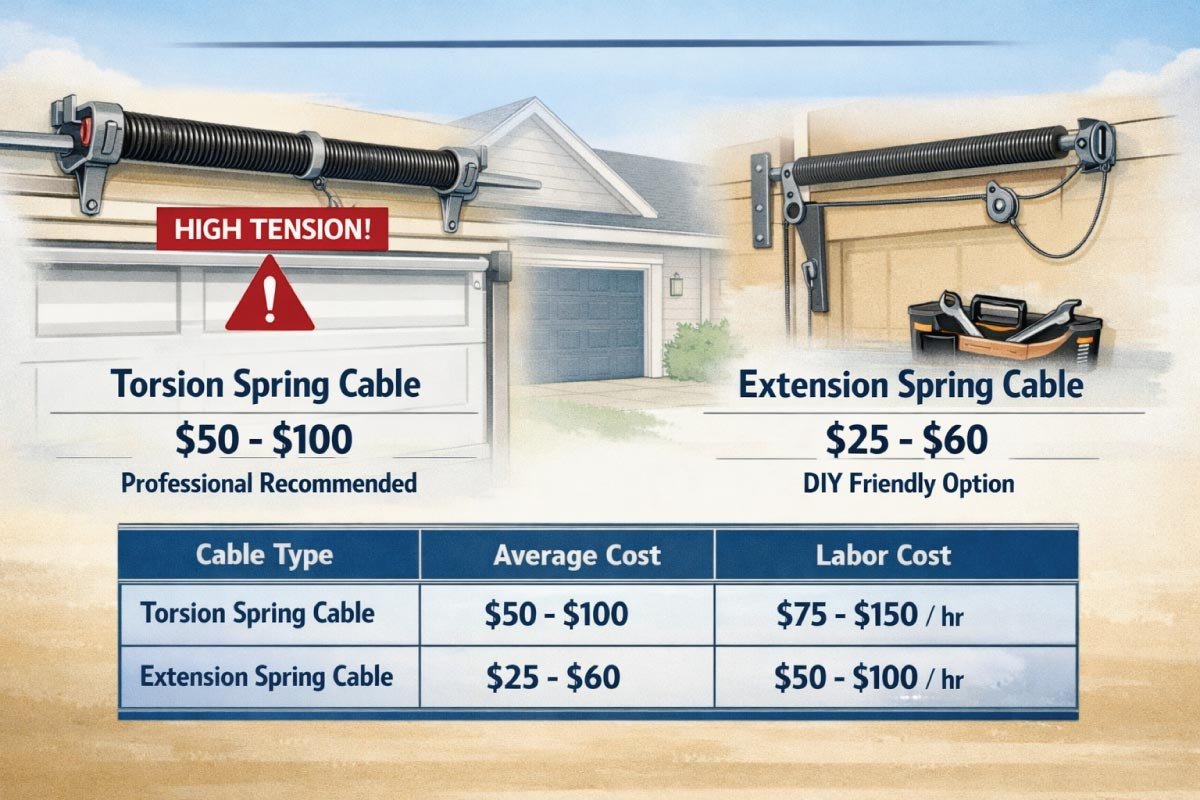
| Cable Type | Average Cost | Labor | Notes |
|---|---|---|---|
| Torsion spring cable | $50–$100 | $75–$150/hr | High tension; professional recommended |
| Extension spring cable | $25–$60 | $50–$100/hr | Can be DIY with proper tools |
Maintenance Tips to Prevent Cable Damage
Garage door cables endure constant tension, and neglecting maintenance can cause sudden failure, uneven movement, or safety hazards. Regular inspections, lubrication, and adjustments prevent wear and ensure smooth, balanced operation, extending cable life and keeping the door safe and reliable.
| Maintenance Task | Frequency | Benefit |
|---|---|---|
| Lubricate cables | Every 6 months | Reduces friction and rust |
| Inspect for frays | Monthly | Early detection of issues |
| Balance door | Every 6 months | Prevents uneven stress on cables |
| Clean tracks | Quarterly | Ensures smooth cable operation |
| Replace worn parts | As needed | Prevents stress on other components |
Pro Tip: Replace both cables at the same time to maintain door balance, even if only one shows wear.
Safety Precautions
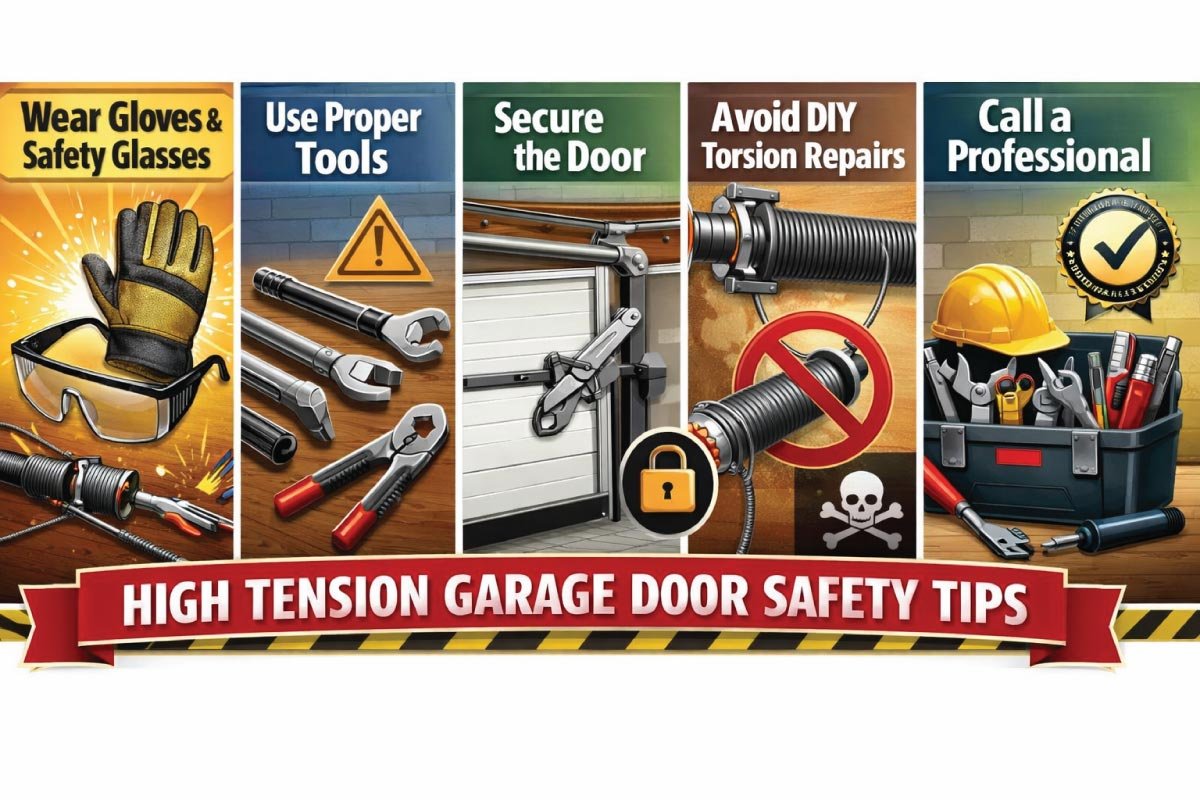
Garage door cables are under high tension and can snap violently, causing serious injury or damage. Using proper tools, protective gear, and a secure workspace is essential, and professionals are recommended for torsion cables.
| Safety Tip | Reason |
|---|---|
| Wear protective gear | Protects from steel strands and debris |
| Use correct tools | Reduces risk of snapping cable injuries |
| Secure door | Prevents door from falling |
| Avoid DIY torsion repair | High risk of injury |
| Call professional | Ensures proper tension and installation |
Conclusion
A broken or frayed garage door cable is a serious safety hazard, not just an inconvenience. Operating the door with damaged cables can cause sudden drops, uneven movement, or injury.
Understanding repairs and knowing when to call a professional ensures your garage door remains safe and reliable. Regular inspections, lubrication, and timely replacement of worn or damaged cables prevent unexpected failures.
Whether making minor DIY adjustments on extension spring cables or relying on certified technicians for high-tension torsion cables, consistent care extends cable life, enhances safety, and keeps the garage door operating smoothly for years.
Read More:

Engineer Ali Usman is a professional garage door expert and author at FixFasty, with over 10 years of hands-on experience in garage door systems and mechanical maintenance. He writes clear, step-by-step guides on garage door repairs, parts, and safety practices, helping homeowners fix problems correctly and maintain smooth, secure, and long-lasting garage door performance.