

If your garage door feels heavy or won’t open fully, a broken spring may be to blame. Springs balance the door’s weight, ensuring smooth operation. This guide covers causes, repairs, safety, and maintenance.
What Are Garage Door Springs?
Garage door springs support the door’s weight for smooth operation. Without them, doors become heavy, unbalanced, or inoperable. Understanding spring types helps identify issues and know when to call a professional.
Torsion Springs – Mounted above the door, these springs twist to lift the door.
Extension Springs – Located on the sides of the door, they stretch to counterbalance the weight.
| Type of Spring | Location | Function | Lifespan (Approx.) | Safety Notes |
|---|---|---|---|---|
| Torsion Spring | Above door | Twists to lift door | 10,000–20,000 cycles | Very high tension; professional recommended |
| Extension Spring | Sides of door | Stretches to lift door | 10,000 cycles | Can snap violently if handled improperly |
Springs endure a lot of tension and pressure, so even a minor defect can cause a garage door to stop functioning properly.
Signs of a Broken Garage Door Spring
Garage door springs handle extreme tension, so a broken spring can prevent lifting and create safety hazards. Spotting warning signs early helps prevent injury, damage, and costly repairs—call a professional immediately.
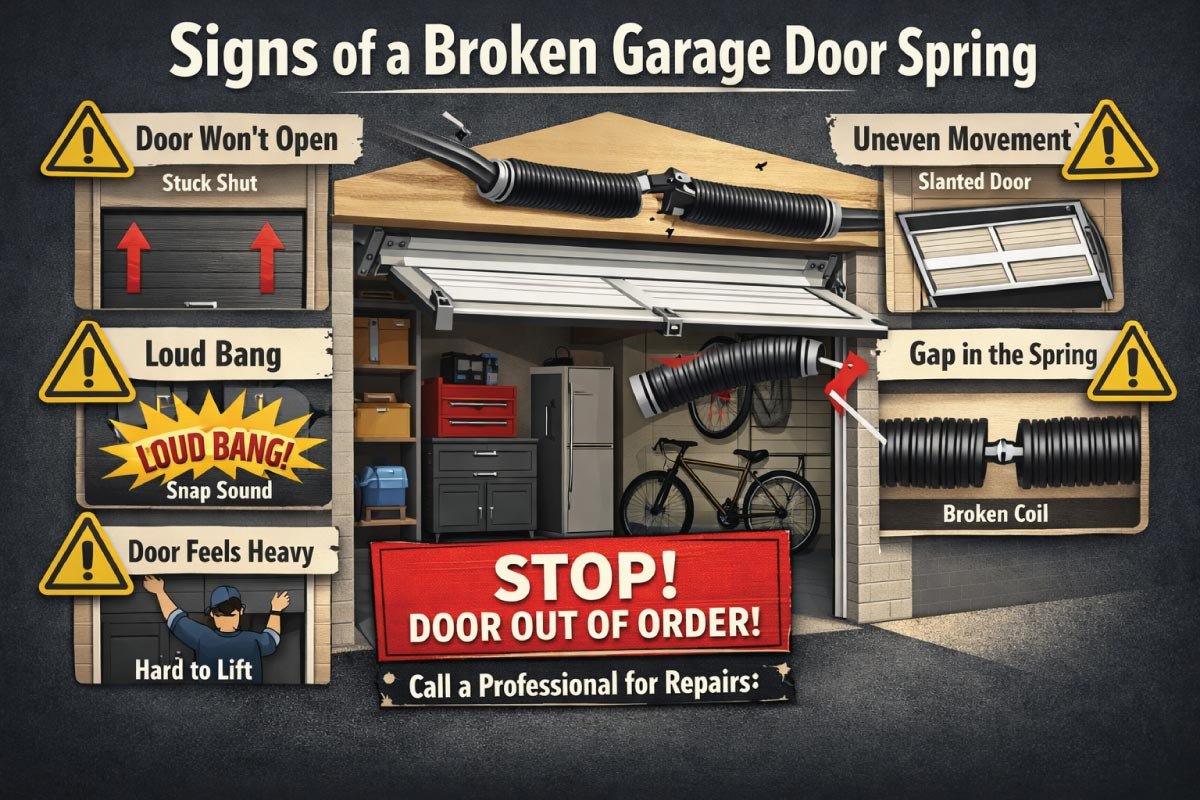
| Symptom | Explanation | Severity |
|---|---|---|
| Door won’t open | The spring isn’t providing lift | High |
| Loud bang | Spring snapped under tension | High |
| Door feels heavy | Manual lifting is harder | Medium |
| Uneven door movement | One side moves slower | Medium |
| Gaps in spring | Visible coil separation | High |
If you notice any of these warning signs, it’s best to stop using the door until the spring is repaired.
Causes of Garage Door Spring Failure
| Cause | Description | Preventive Measure |
|---|---|---|
| Metal Fatigue | Springs stretch and wear over time | Replace springs every 10–15 years |
| Rust | Corrosion weakens the coils | Lubricate springs regularly |
| Poor Maintenance | Dirt and debris increase wear | Clean and inspect quarterly |
| Improper Installation | Incorrect tension or size | Hire a certified installer |
| Overuse | Excessive cycles | Upgrade to heavy-duty springs |
Tools Needed for Garage Door Spring Repair
Repairing garage door springs is extremely dangerous due to high tension, risking serious injury. Proper tools are essential, but for most homeowners, hiring a professional is strongly recommended.
| Tool | Purpose |
|---|---|
| Winding bars | Safely wind torsion springs |
| Socket wrench set | Remove brackets and bolts |
| Clamps or locking pliers | Secure door in place |
| Safety glasses | Protect eyes from snapping springs |
| Gloves | Prevent cuts and abrasions |
⚠️ Important: Torsion springs are under extreme tension. DIY repairs are risky. For most homeowners, hiring a professional is the safest option.
Step-by-Step Broken Spring Repair Guide
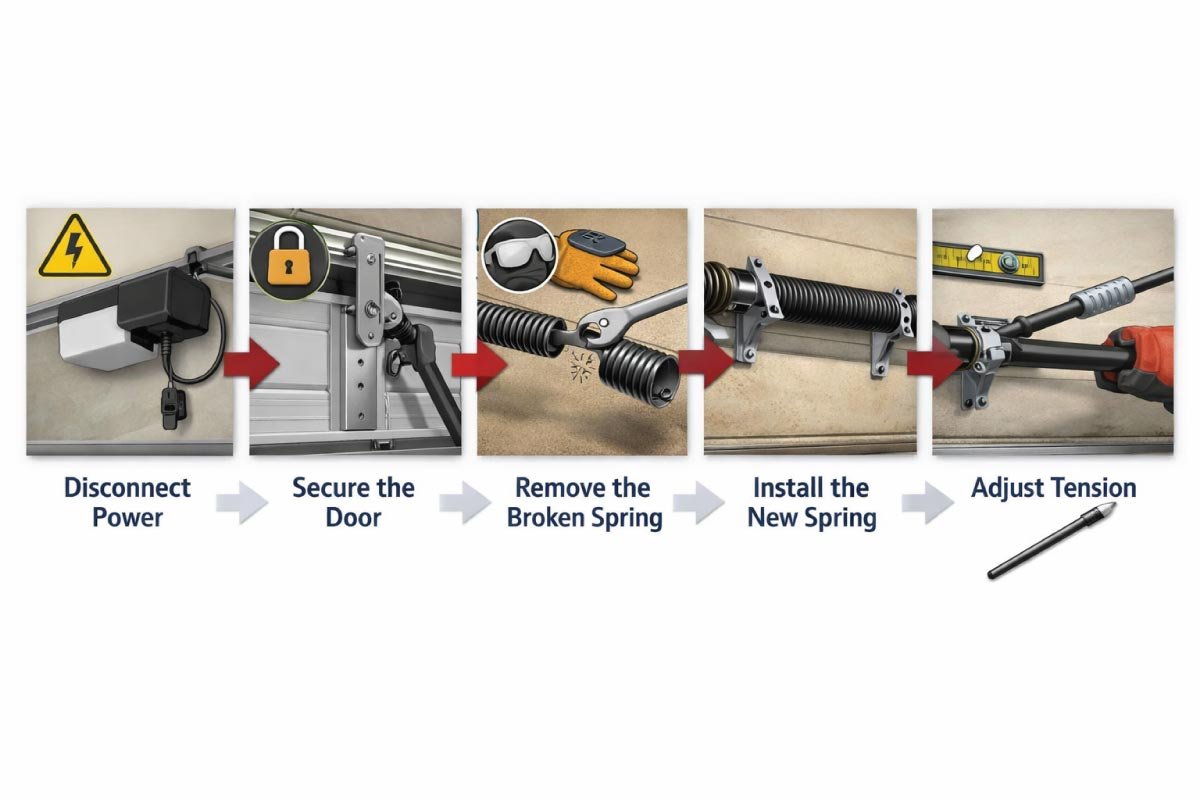
1- Disconnect Power
Before starting any garage door spring repair, always disconnect the opener from the power source. Unplugging prevents accidental activation, which could cause serious injury or damage even if the door seems stationary.
2- Secure the Door
After disconnecting power, secure the garage door to prevent sudden movement. Use clamps or locking pliers on the bottom track to keep the door stable while working under high spring tension.
3- Remove the Broken Spring
Carefully remove the damaged spring by loosening the bracket bolts and sliding it off the torsion bar. Wear protective gloves and safety glasses to avoid injury from snapping coils or debris.
4- Install the New Spring
Position the new spring where the old one was, ensuring proper orientation and alignment on the torsion bar. Correct installation is critical for smooth, safe door operation and system longevity.
5- Adjust Tension
Gradually apply tension using proper winding bars, testing the door manually. Correct tension ensures smooth movement, balances the door, and prevents strain on the opener or other components.
| Step | Action | Safety Tip |
|---|---|---|
| 1 | Disconnect power | Prevents accidental opener activation |
| 2 | Secure door | Door won’t fall unexpectedly |
| 3 | Remove spring | Wear gloves and safety glasses |
| 4 | Install new spring | Check alignment carefully |
| 5 | Adjust tension | Only use proper winding bars |
Costs of Garage Door Spring Replacement
| Spring Type | Average Cost | DIY vs Professional |
|---|---|---|
| Torsion Spring | $150–$300 | Professional highly recommended |
| Extension Spring | $50–$150 | Can be DIY if comfortable |
| Labor | $75–$150 per hour | Professional ensures safety |
Investing in professional service reduces the risk of injury and ensures your garage door works reliably for years.
Maintenance Tips to Extend Spring Life
Garage door springs handle thousands of cycles, so regular maintenance is essential. Routine care reduces wear, prevents rust, keeps the door balanced, and extends the lifespan of components while improving safety and reliability.
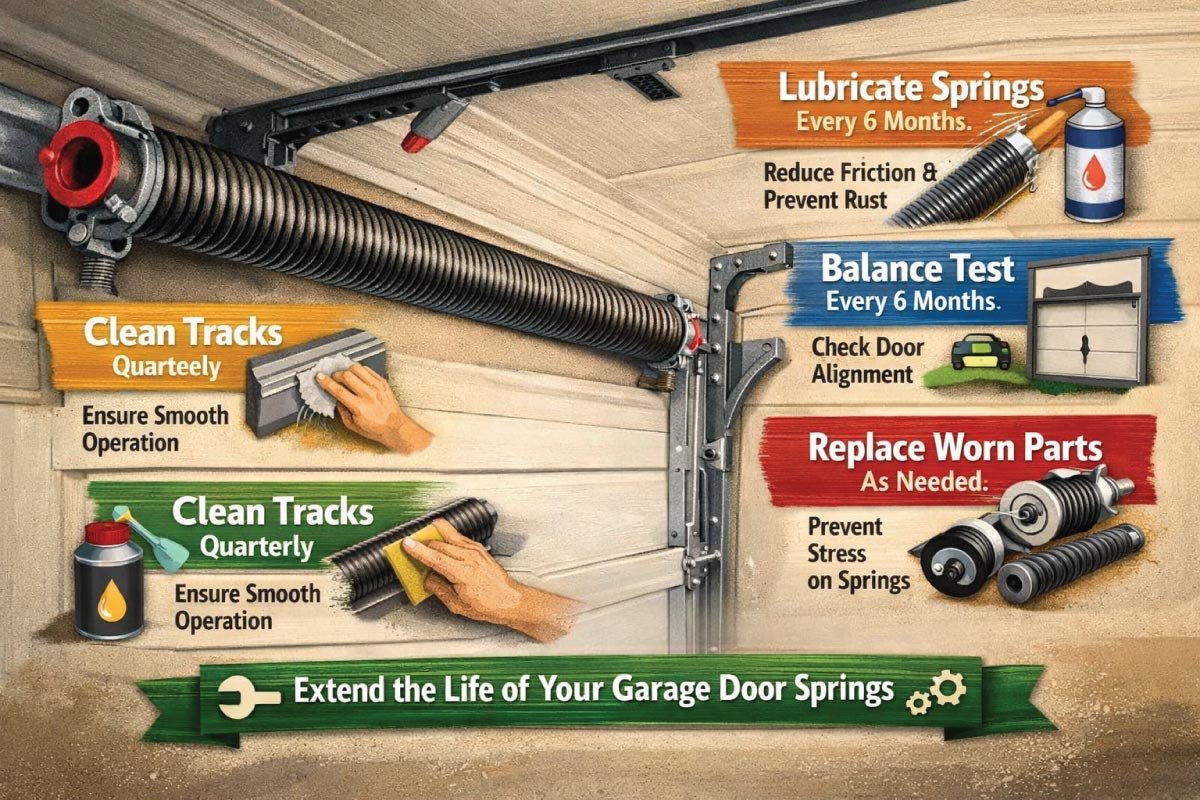
| Maintenance Task | Frequency | Benefits |
|---|---|---|
| Lubricate springs | Every 6 months | Reduces friction and rust |
| Inspect for wear | Monthly | Early detection of fatigue or damage |
| Clean tracks | Quarterly | Smooth operation and reduced tension on springs |
| Balance test | Every 6 months | Ensures proper tension and reduces wear |
| Replace worn parts | As needed | Prevents stress on springs |
A well-maintained garage door reduces repair costs and extends spring lifespan.
When to Call a Professional
| Situation | Why Professional Help Is Needed |
|---|---|
| Torsion spring replacement | Extremely high tension can cause severe injury |
| Multiple broken springs | Indicates systemic wear or alignment issues |
| Unusual door movement | May signal track or cable problems |
| Frequent spring failures | Suggests installation or weight imbalance issues |
Even if you’re handy, some repairs are simply too dangerous for DIY.
Safety Precautions for Garage Door Spring Repairs
Garage door springs store massive energy, so mistakes during repair can cause serious injury or damage. Using proper tools, protective gear, securing the door, and knowing your limits ensures safe maintenance.
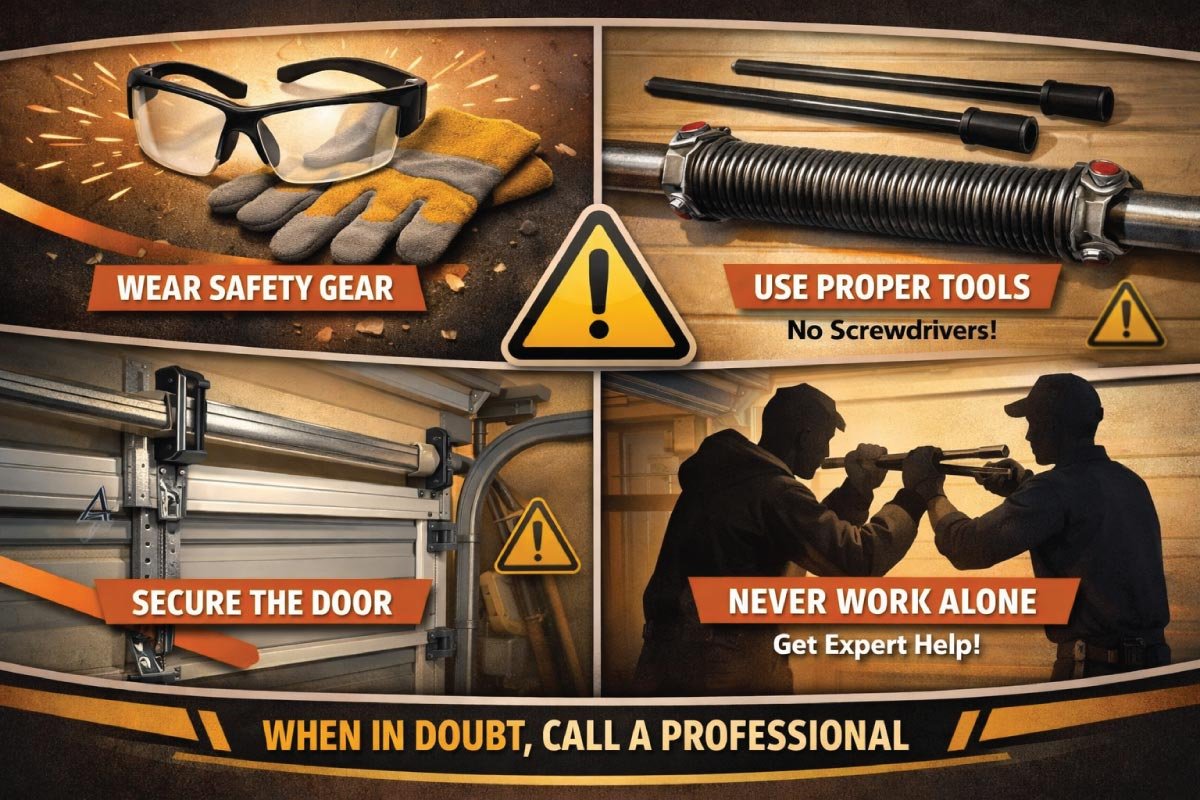
1- Wear Safety Glasses and Gloves
Always protect your eyes and hands when working with garage door springs. Springs can snap unexpectedly, and debris or metal fragments may fly. Gloves prevent cuts, abrasions, and pinching, while safety glasses shield eyes during inspection, lubrication, or minor maintenance. Proper protective gear is the first and most important safety precaution.
2- Use Proper Winding Bars—Never Screwdrivers
Torsion springs store extreme tension, so using the wrong tools can be catastrophic. Winding bars are designed specifically to safely add or release spring tension. Improvising with screwdrivers or other tools risks slipping or breaking, causing severe injury or property damage. Always follow manufacturer guidelines and use only correct winding bars.
3- Secure the Door with Clamps Before Working
Before working on springs, secure the garage door using clamps or locking pliers on the tracks. An unsecured door can fall suddenly during maintenance, causing injury or crushing objects. Clamping the door keeps it stationary, providing a stable, safe workspace for inspection, lubrication, or spring replacement.
4- Never Attempt Torsion Spring Replacement Alone
Replacing torsion springs alone is extremely dangerous due to the immense tension stored in the springs. Performing this task solo greatly increases the risk of severe injury or death. Always have a second person present or, ideally, hire a certified professional to ensure the repair is done safely and correctly.
5- Call a Certified Garage Door Technician if Unsure
If you are uncertain about any part of spring maintenance or replacement, stop and contact a certified garage door technician. Professionals have the proper tools, training, and safety knowledge to handle torsion and extension springs safely. Relying on an expert ensures your door remains safe, operational, and compliant with industry standards.
| Safety Tip | Reason |
|---|---|
| Wear protective gear | Prevents eye and hand injuries |
| Use correct tools | Avoids spring snap accidents |
| Secure door | Stops door from falling unexpectedly |
| Avoid DIY torsion repair | High risk of severe injury |
| Call a professional | Ensures proper installation |
Conclusion
A broken garage door spring poses serious safety risks and can prevent the door from operating properly. Regular maintenance, lubrication, and inspections help prevent failures and ensure smooth, reliable movement.
High-risk repairs, especially on torsion springs, should always be handled by certified professionals. Proper care and timely professional assistance keep your garage door safe, functional, and long-lasting.
Read More:

Engineer Ali Usman is a professional garage door expert and author at FixFasty, with over 10 years of hands-on experience in garage door systems and mechanical maintenance. He writes clear, step-by-step guides on garage door repairs, parts, and safety practices, helping homeowners fix problems correctly and maintain smooth, secure, and long-lasting garage door performance.