
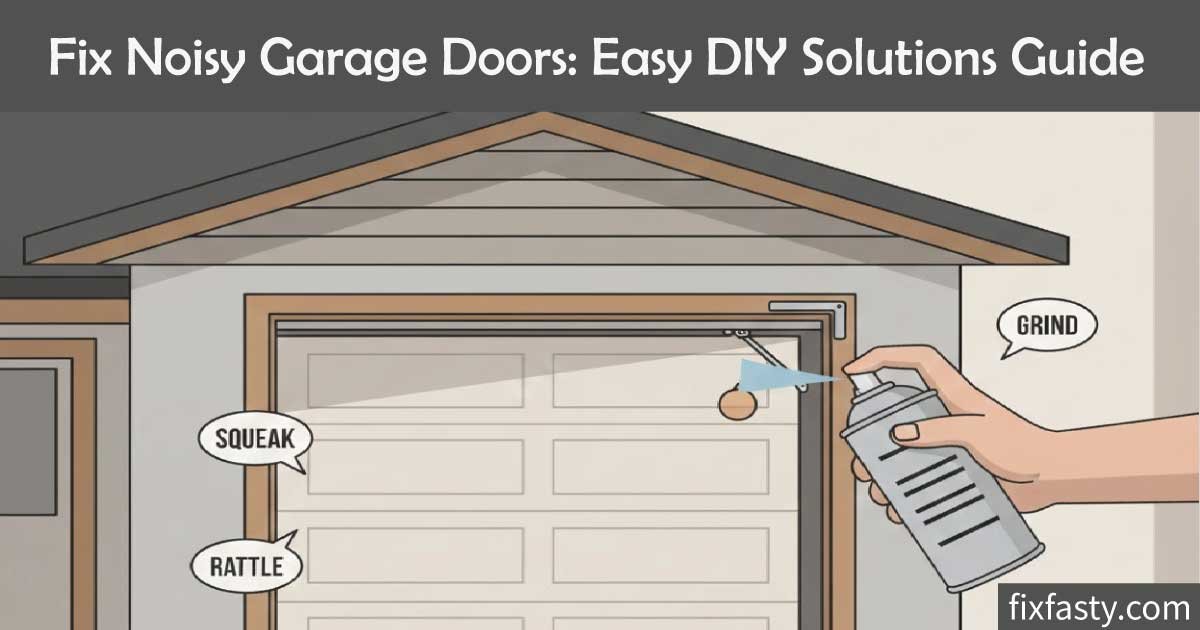
Does your garage door have irritating, loud, or strange sounds? If so, you’re not alone. One of the most utilized features of a home is a garage door, and most homeowners do not consider making any maintenance to it until some issue occurs.
A shaky garage door is not only annoying, but can also be used to signal a mechanical problem which may prove to be extremely expensive to fix.
This guide will discuss the most prevalent causes of noise in a garage door and give step-by-step solutions on how to remedy the noise. Afterwards, you will be able to keep your garage door running smoothly, safely and efficiently.
Why is My Garage Door Making Noise?
Garage doors are complex systems comprising numerous moving components that cooperate to open and close without any difficulty.
As time goes by, the wear and tear of such parts as rollers, hinges, tracks, and springs may occur, teasing or misaligning.
When this occurs, there are chances that your garage door is squeaking, grinding, rattling and any other strange noise, which indicates that it requires checking and repair.
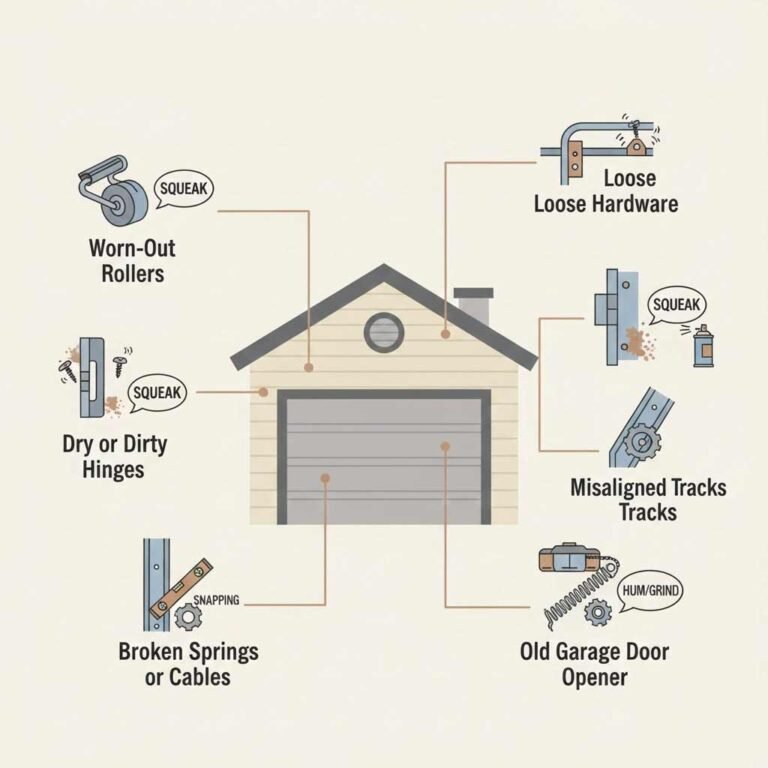
Tip: Always inspect your garage door carefully to identify the source of the noise before attempting repairs.
Step-by-Step Guide to Fix a Noisy Garage Door
A loud garage door may be annoying, yet the majority of the issues can be resolved with little equipment and maintenance.
This step wise tutorial will assist you to determine the origin of the noise and practice reasonable measures towards manual silence of your garage door.
The majority of the steps can be performed by hand, still, springs and cables may be provided, it is better to hire a professional to prevent accidents. Regular maintenance also minimizes noise in addition to increasing the life of your garage door system.
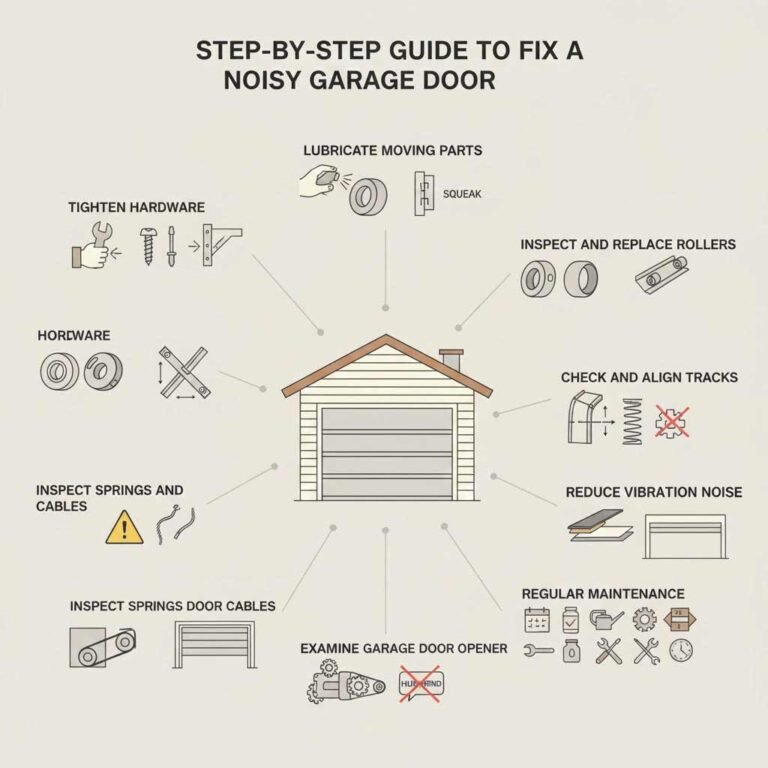
1. Tighten Loose Hardware
Rattling or shaking noises may be caused by loose bolts, screws, and brackets. Check all that can be seen with a wrench or socket set. Even minorly loose sections will render your garage door noisy when it is in use.
Pay attention to:
-
Hinge bolts
-
Roller brackets
-
Track brackets
Tightening of these parts makes the door move with smooth movement and quietness, avoiding vibrations which can otherwise damage the door and structures holding it in a long-term.
2. Lubricate Moving Parts
Lube oil deficiency is one of the most common causes of a garage door to make noises. The door is made to run quietly and with ease due to proper lubrication between moving parts.
Use a silicone-based spray or garage door lubricant on:
-
Rollers (metal or nylon)
-
Hinges
-
Springs (only if safe and accessible)
-
Bearing plates
Avoid using WD-40 or cooking oils, as these attract dust and debris, which can worsen friction and create additional wear on your garage door components.
Table: Recommended Lubrication Points for Garage Doors
| Component | Lubricant Type | Frequency | Notes |
|---|---|---|---|
| Rollers | Silicone-based spray | Every 6 months | Metal rollers need more attention |
| Hinges | Garage door lubricant | Every 6 months | Squeaks indicate immediate need |
| Springs | Garage door lubricant | Every 6 months | Only if accessible safely |
| Tracks | Wipe clean only | Monthly | Do not lubricate tracks directly |
| Bearing plates | Garage door lubricant | Every 6 months | Ensure smooth rotation |
3. Inspect and Replace Rollers
Rollers are essential in the smooth running of the garage door. Grinding, rattling or scraping may be generated by worn, damaged or misaligned rollers. Their replacement will restore silent operation and avoid additional damage to the tracks and hinges so that the door moves without risks or inconvenience.
-
Nylon rollers are quieter and require less maintenance.
-
Metal rollers are more durable but noisier.
How to replace rollers safely:
-
Disconnect the garage door opener.
-
Lift the door slightly to relieve tension.
-
Remove the roller bracket from the track.
-
Replace the old roller with a new one.
-
Repeat for all noisy rollers.
Replacing rollers is one of the most effective ways to significantly reduce garage door noise and improve its overall functionality.
4. Check and Align Tracks
The tracks must be aligned correctly, otherwise, they may lead to scraping or grinding sounds when the door slides. Frequently checking and setting tracks will provide a smooth and quiet run and avoid any damage to rollers and other parts. Effective alignment is central to sustainable performance.
To inspect:
-
Look for bends, dents, or gaps between the door and track.
-
Use a level to ensure tracks are vertically and horizontally aligned.
-
Loosen mounting brackets slightly, adjust the track, and re-tighten bolts.
If the tracks are severely damaged, replacement may be necessary to maintain safe and quiet operation.
5. Inspect Springs and Cables
The door has springs and cables that regulate the balance and tension applied to the door, but they are subjected to extreme pressure. Severed or torn springs will create a lot of banging sounds and create significant risks to safety; hence, it is necessary to professionally check them to be safe.
Important: Do not attempt to repair springs yourself unless trained. Call a licensed garage door professional.
You can safely:
-
Visually inspect for rust or fraying.
-
Listen for snapping or sudden tension noises.
Proper spring and cable maintenance ensures smoother operation and prevents accidents.
6. Examine the Garage Door Opener
Noise may sometimes be caused by the garage door opener, and not the door. Grinding, humming or rattling are caused by worn gears, slack motor, or an unlubricated chain or belt and this will impact overall performance as well as reduce the life of the opener.
Common issues include:
-
Loose mounting hardware
-
Worn gears
-
Dry motor chain or belt
Lubricate the chain or the belt as instructed by the manufacturer and screw up any loose parts. In case the opener is old or noisy, a good solution may be associated with changing it to the new and quiet model.
7. Reduce Vibration Noise
The rattling or clanging noises can be made by a well-lubricated garage door banging against the frame. A reduction of these vibrations promotes the quietness, security and general performance of your door when using, which makes your garage door feel stable and smooth when being operated.
Try:
-
Adding weather stripping to the door edges
-
Installing rubber pads under the door frame
-
Checking that the door is properly balanced
Small adjustments like these can make a surprisingly big difference in reducing unnecessary noise and preventing long-term damage.
Table: Noise Reduction Tips for Garage Doors
| Noise Type | Cause | DIY Solution |
|---|---|---|
| Squeaking or whining | Hinges or rollers dry | Lubricate with silicone spray |
| Rattling or shaking | Loose hardware | Tighten bolts and brackets |
| Grinding or scraping | Misaligned tracks | Realign tracks or replace bent sections |
| Loud banging on closing | Door imbalance | Adjust spring tension (professional) |
| Motor noise | Opener chain or gears | Lubricate or replace opener |
8. Regular Garage Door Maintenance
Noisy garage door can be prevented best when it is done on a regular basis, during routine maintenance. Maintaining everything by keeping it clean, lubricated, and in the right position makes it run a lot quieter, increases the wear and tear, and also makes it last a long time as a whole system in your garage.
- Inspect rollers, hinges, and tracks every 6 months
- Lubricate moving parts twice a year
- Tighten hardware as needed
- Test balance and alignment
- Check the opener and replace worn gears or belts
When to Call a Professional
Although most of the garage door sounds are solved with simple repair, some of them are too hazardous or complicated to be fixed by individuals. By identifying these warning signs at an early age, accidents, expensive damage and guaranteeing your garage door to be safe and reliable is an opportunity realized.
Some garage door noises require professional attention:
-
Loud banging or snapping sounds (springs or cables)
-
Grinding with metal friction
-
Opener gear issues
-
Bent or broken tracks beyond DIY repair
By paying an expert garage door repairman, you are guaranteed of the necessary repairs, increased safety and your garage door will not be damaged any more, which gives you the peace of mind and a smoothly working quiet garage door over the next few years.
Final Thoughts
A clamorous garage door does not only annoy, it also indicates mechanical trouble that when not corrected can cause an expensive mechanism or even an accident.
Routine maintenance, lubrication and changing worn out components can go a long way in ensuring that your garage door is operating in a peaceful and effective manner.
With the steps in this guide, you can do the fix of the garage door noise yourself in most of the cases and you know when it is necessary to involve a professional.
A silent, noiseless functioning garage door is not only convenient, but much safer, and it also prolongs the life of your garage door.
🖐️ Discover the Complete Garage Door Guide: Basics, Repairs & Maintenance! Learn how to fix noisy garage doors, lubricate rollers and hinges, align tracks, inspect springs, and maintain your opener. This step-by-step guide offers practical tips, DIY solutions, and safety advice to keep your garage door running smoothly. Read the full post to master garage door repair and maintenance today!

Engineer Ali Hasan is a garage door expert and the founder of FixFasty. With over 16 years of experience in mechanical systems and home maintenance, he provides practical, step-by-step guides on garage door installation, repairs, and maintenance, helping homeowners keep their garage doors safe, reliable, and long-lasting.