
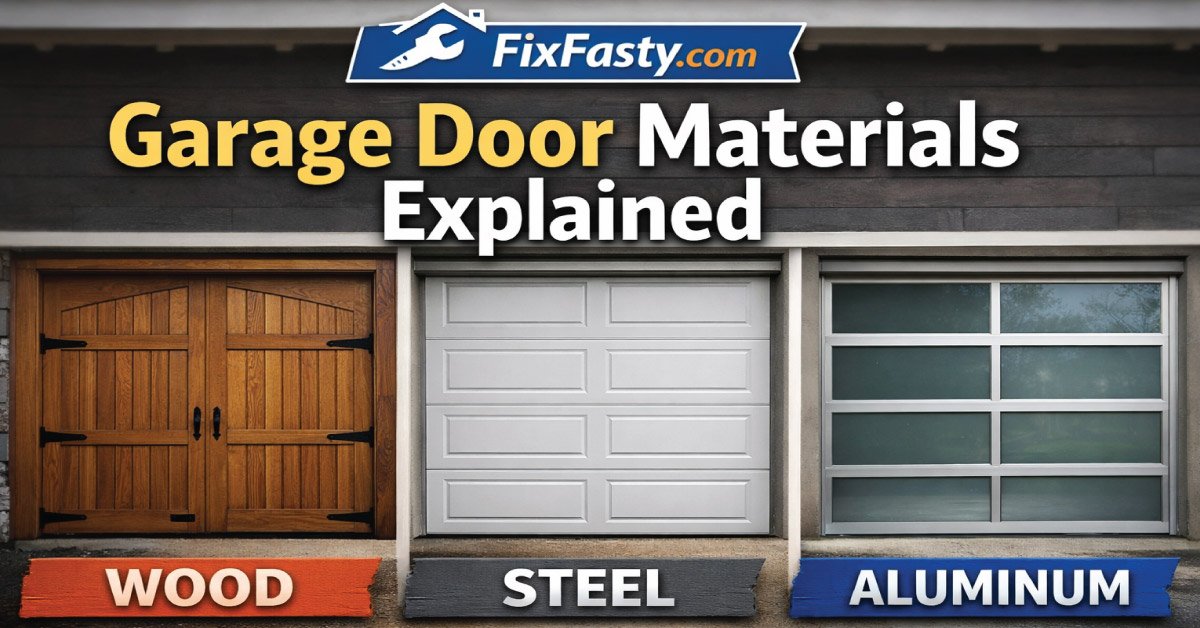
Choosing the right garage door material in 2026 is more important than ever. With rising energy costs, changing home design trends, and new manufacturing technologies, homeowners are paying closer attention to durability, insulation, and long-term value. Among all the available options, wood, steel, and aluminum remain the top three choices for residential garage doors.
Each material has its own personality. Wood brings warmth and elegance, steel delivers strength and reliability, and aluminum offers modern style with low maintenance. This detailed guide will walk you through everything you need to know about wood, steel, and aluminum garage doors so you can confidently choose the best option for your home.
Why Garage Door Material Matters in 2026
In today’s homes, the garage door is no longer just a functional feature it’s a design statement. With smart homes, modern architecture, and increased focus on energy efficiency, the material you choose impacts:
1- Your home’s curb appeal:
The garage door plays a major role in your home’s exterior appearance. A well-designed door can enhance architectural style, create a strong first impression, and significantly boost overall visual attractiveness and neighborhood appeal.
2- Energy efficiency and insulation:
An insulated garage door helps regulate indoor temperatures, reduces heat loss in winter and heat gain in summer, and can lower energy bills, especially if your garage is attached to your home or used as a workspace.
3- Security and safety:
Strong, durable garage doors improve protection against break-ins and unauthorized access. Quality materials, reinforced panels, and reliable locking systems add an extra layer of security, helping keep your home, belongings, and family safe.
4- Maintenance and repair costs:
Different materials require different levels of upkeep. Choosing a low-maintenance option can save money over time by reducing the need for frequent repairs, repainting, part replacements, and professional servicing.
5- Long-term property value:
A high-quality garage door can increase your home’s resale value by improving curb appeal, functionality, and buyer perception. It’s an investment that enhances both everyday living and long-term market appeal.
In 2026, homeowners are looking for materials that not only look good but also perform well in changing climates and busy lifestyles.
Quick Overview: Wood, Steel, and Aluminum Garage Doors
Before choosing a garage door, it’s helpful to understand the basic differences between wood, steel, and aluminum. Each material offers unique benefits in appearance, durability, maintenance, and performance, making them suitable for different home styles, climates, and lifestyle needs.
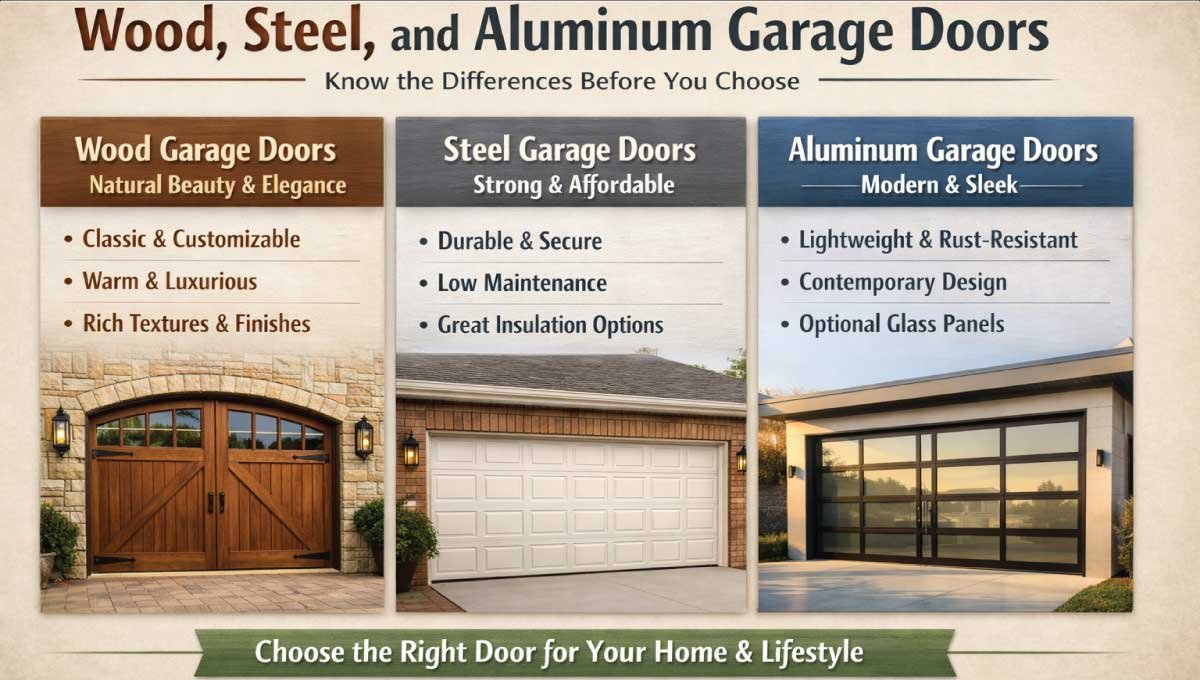
Wood Garage Doors: Wood garage doors are admired for their natural beauty, rich textures, and classic charm. They add warmth and elegance to traditional and luxury homes and can be customized with stains, finishes, and decorative details for a truly unique appearance.
Steel Garage Doors: Steel garage doors are the most popular option due to their strength, affordability, and low maintenance. They offer excellent durability, security, and insulation options, making them a practical and reliable choice for most homeowners.
Aluminum Garage Doors: Aluminum garage doors are lightweight, rust-resistant, and ideal for modern or contemporary homes. Their sleek design, corrosion resistance, and optional glass panels make them especially appealing in coastal or humid environments.
Each material fits a different lifestyle and design preference.
Wood Garage Doors: Timeless Beauty and Classic Appeal
Wood garage doors have long been popular and continue to appeal to homeowners seeking a warm, classic aesthetic. They are frequently selected for historic residences, upscale properties, and custom-built homes that emphasize craftsmanship and timeless design.
Advantages of Wood Garage Doors
Wood garage doors are prized for their natural beauty, craftsmanship, and upscale appearance. Their unique grain patterns and rich textures create a warm, elegant look that enhances architectural character and gives homes a truly premium, custom feel.
Can be stained or painted in any color: They allow complete color flexibility, letting homeowners match trim, siding, or create bold design statements.
Adds significant curb appeal: The natural warmth and texture of wood instantly enhance your home’s exterior and overall visual attractiveness.
Works beautifully with traditional and rustic architecture: Wood complements classic, farmhouse, and rustic styles, blending naturally with stone, brick, and timber features.
Wood garage doors can be crafted from cedar, redwood, mahogany, or hemlock, each offering different grain patterns and durability.
Disadvantages of Wood Garage Doors
Although wood garage doors offer unmatched beauty and character, they require more care and investment than other materials. Homeowners should be prepared for ongoing maintenance, higher costs, and potential weather-related issues when choosing wood.
Needs regular painting or staining: Wood doors must be sealed, painted, or stained frequently to protect against moisture, sun damage, and fading.
Can warp, crack, or rot in extreme weather: Exposure to humidity, rain, heat, or freezing temperatures can cause wood to swell, split, or deteriorate over time.
Heavier than steel and aluminum The solid construction makes wood doors heavier, placing extra strain on openers, springs, and supporting hardware.
Higher upfront cost Wood garage doors are more expensive due to premium materials, custom craftsmanship, and long-term maintenance requirements.
Steel Garage Doors: Strong, Reliable, and Versatile
Steel garage doors are the most popular choice in 2026, and for good reason. They provide an ideal balance of durability, affordability, and low maintenance, making them a practical and reliable option for a wide range of homeowners.
Advantages of Steel Garage Doors
Steel garage doors are one of the most popular choices among homeowners due to their exceptional strength, long lifespan, and versatility in design. They perform well in various climates and offer a reliable balance between performance, appearance, and affordability.
High durability and security: Steel doors provide excellent protection against impacts, harsh weather, and forced entry, making them a dependable option for home safety.
Resistant to warping and cracking: Unlike wood, steel does not warp, split, or crack over time, ensuring consistent performance even in extreme temperature changes.
Available with insulation for energy efficiency: Many steel doors include insulated cores that help regulate garage temperature, reduce energy loss, and improve overall home comfort.
Low maintenance: Steel doors only require occasional cleaning and minor touch-ups, making them ideal for homeowners who prefer minimal upkeep.
Affordable compared to wood: Steel offers a cost-effective alternative to wood while still delivering durability, style options, and long-term value.
Many steel doors are now designed with faux wood finishes, giving you the look of wood without the upkeep.
Disadvantages of Steel Garage Doors
While steel garage doors are strong and reliable, they are not completely damage-proof. Certain environmental factors and impacts can affect their appearance and performance, making it important to understand these limitations before choosing steel.
Can dent if hit hard: Steel doors can develop dents or dings from heavy impacts, hail, or accidental bumps, which may affect the door’s appearance.
May rust if the protective coating is damaged: If the paint or finish is scratched or chipped, steel can rust over time, especially in humid or coastal environments.
Less natural look than real wood: Although steel doors can mimic wood designs, they lack the authentic texture and warmth of genuine wood materials.
With proper care, however, steel garage doors can last 20 years or more.
Aluminum Garage Doors: Modern, Lightweight, and Stylish
Aluminum garage doors have gained popularity in 2026, particularly in modern and urban homes. They are valued for their sleek lines, glass panel options, and contemporary aesthetic that complements minimalist architectural styles.
Advantages of Aluminum Garage Doors
Aluminum garage doors are valued for their lightweight design, corrosion resistance, and modern appearance, making them an excellent choice for coastal, humid, and contemporary home environments.
Lightweight and easy to operate: Aluminum doors are easy to open and close, placing less strain on openers and hardware.
Rust-resistant: Aluminum naturally resists corrosion, making it ideal for coastal regions and humid climates.
Modern and sleek appearance: Their clean lines and smooth finishes complement modern and minimalist home designs.
Low maintenance: Aluminum doors require minimal upkeep, usually only simple cleaning to stay attractive.
Often paired with glass for a high-end look: Many aluminum doors feature glass panels that enhance style and allow natural light.
Disadvantages of Aluminum Garage Doors
While aluminum garage doors offer modern style and low maintenance, they lack the strength and durability of steel, making them less suitable for certain environments.
Less durable than steel: Aluminum doors are more prone to bending and wear, especially when exposed to frequent use or harsh conditions.
Lower insulation unless specially designed: Standard aluminum doors offer minimal insulation, requiring upgraded insulated models for better energy efficiency and temperature control.
Not ideal for high-impact areas: In locations prone to storms, heavy activity, or accidental impacts, aluminum doors may dent or damage more easily.
Still, for many modern homes, aluminum is the perfect fit.
👉 Explore the Complete Garage Door Guide designed for today’s homeowners. Learn the basics, understand common repairs, and discover essential maintenance tips that improve durability, security, and energy efficiency. Whether you’re upgrading or troubleshooting, this guide offers expert insights—read the full post to make smarter, long-lasting decisions for your home.
Wood vs Steel vs Aluminum – Feature Comparison
| Feature | Wood Garage Doors | Steel Garage Doors | Aluminum Garage Doors |
|---|---|---|---|
| Appearance | Classic, natural, elegant | Versatile, clean | Modern, sleek |
| Durability | Moderate | High | Moderate |
| Maintenance | High | Low | Low |
| Weight | Heavy | Medium | Lightweight |
| Cost | High | Low–Medium | Medium |
| Customization | Excellent | Good | Limited |
Curb Appeal and Design Trends in 2026
In 2026, homeowners place greater emphasis on exterior design, with garage doors playing a key visual role. No longer just functional, they serve as prominent design elements that enhance curb appeal, reflect personal style, and complement overall architectural aesthetics.
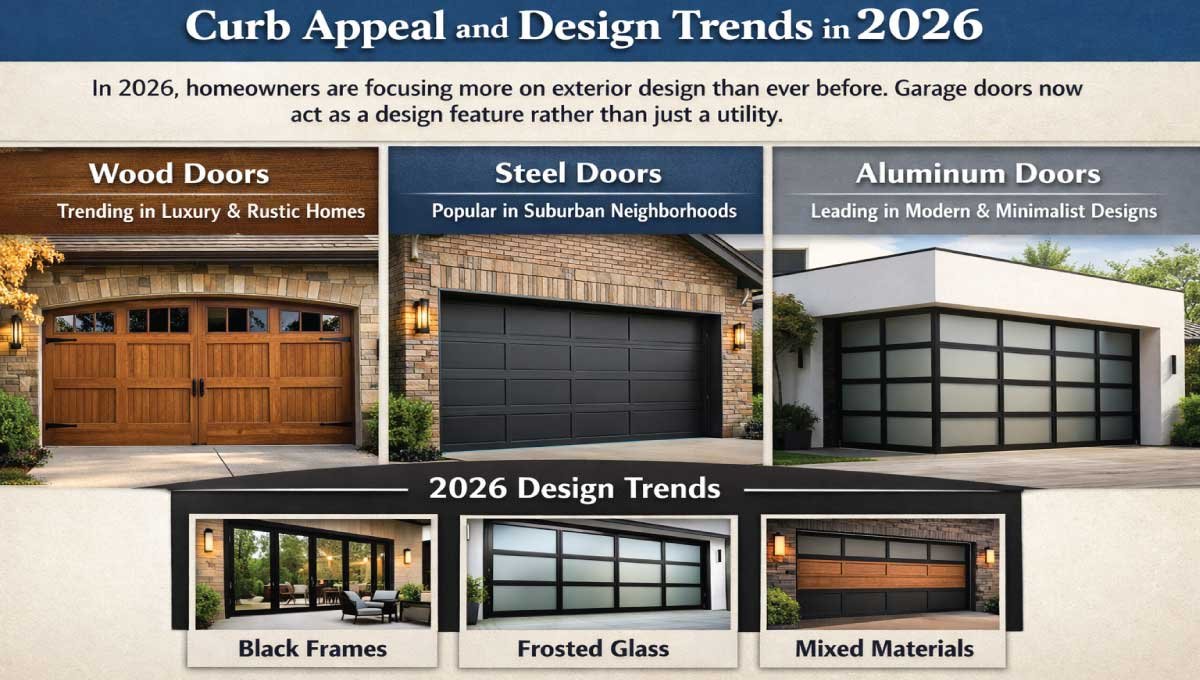
Wood doors are trending in luxury homes and rustic designs.
Steel doors dominate suburban neighborhoods due to their versatility.
Aluminum doors are leading in modern and minimalist architecture.
Black frames, frosted glass, and mixed materials are popular design trends this year.
👉 Choosing the right garage door type can transform your home’s curb appeal, security, and energy efficiency. This guide explains popular garage door styles, materials, and key factors to consider when selecting the best option for your needs. Read the full post to make a confident, informed decision that fits your home and lifestyle perfectly.
Durability and Lifespan
Durability is a major consideration, particularly for families who rely on their garage multiple times each day, ensuring consistent performance, safety, and long-term reliability despite frequent use.
Steel garage doors are the most durable and can withstand heavy daily use.
Wood garage doors can last decades but only with consistent maintenance.
Aluminum garage doors resist rust but are more prone to dents.
If longevity is your top priority, steel is usually the best option.
Insulation and Energy Efficiency
Energy efficiency is a major concern in 2026 as rising energy costs push homeowners to seek better insulation, reduced heat transfer, and smarter design choices that help maintain indoor temperatures and lower monthly utility bills.
Steel doors often come with polyurethane or polystyrene insulation, offering excellent thermal performance.
Wood doors provide natural insulation but may develop gaps over time.
Aluminum doors usually require thermal breaks to improve insulation.
For attached garages, insulated steel doors offer the best energy savings.
Security and Safety
Your garage door is a primary entry point to your home, making security essential. Strong materials, reliable locking systems, and modern safety features help protect your property, belongings, and family from potential intrusions.
Steel garage doors offer the highest level of security.
Wood doors are solid but can weaken with age.
Aluminum doors are lightweight and should be reinforced for better protection.
If security is a priority, steel is the safest choice.
👉 Understanding garage door parts is essential for proper maintenance, safety, and performance. This guide breaks down all the key garage door components, explaining how they work together and when repairs are needed. Read the full post to gain expert knowledge that helps prevent issues and keeps your garage door running smoothly.
Maintenance in Real Life
In everyday use, garage door maintenance matters. Homeowners often prefer options that require minimal care while remaining durable, attractive, and functional over the long term.
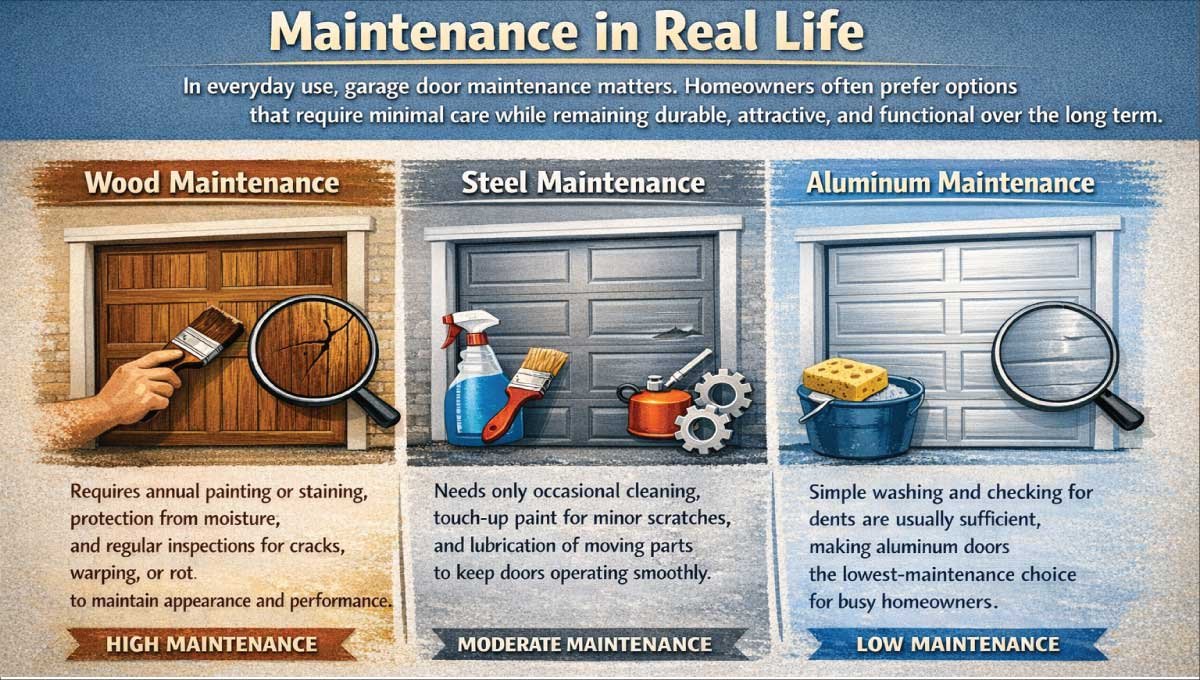
1- Wood Maintenance: Requires annual painting or staining, protection from moisture, and regular inspections for cracks, warping, or rot to maintain appearance and performance.
2- Steel Maintenance: Needs only occasional cleaning, touch-up paint for minor scratches, and lubrication of moving parts to keep doors operating smoothly.
3- Aluminum Maintenance: Simple washing and checking for dents are usually sufficient, making aluminum doors the lowest-maintenance choice for busy homeowners.
Cost, Maintenance, and Best Use Guide
| Material | Average Cost | Maintenance Level | Best For |
|---|---|---|---|
| Wood | High | High | Luxury & traditional homes |
| Steel | Low–Medium | Low | Most residential homes |
| Aluminum | Medium | Low | Modern & coastal homes |
Climate Considerations in 2026
In 2026, climate considerations are more important than ever when selecting garage door materials. Temperature extremes, humidity levels, and environmental exposure directly impact durability, maintenance, and long-term performance. Choosing the right material for your specific climate helps ensure better protection, efficiency, and longevity for your garage door investment.
Humid or rainy climates: Aluminum and steel perform better than wood.
Cold climates: Insulated steel doors provide the best protection.
Coastal areas: Aluminum is ideal due to rust resistance.
Dry climates: Wood performs well with proper care.
Choosing a material that suits your climate will extend the life of your garage door.
Noise and Daily Use
Noise and daily use are important factors when choosing a garage door, especially for attached garages. Door material, weight, insulation, and hardware all influence sound levels during operation. Selecting quieter materials and upgrading components like rollers and insulation can greatly improve comfort and reduce disruptive noise inside your home.
Wood doors are naturally quieter but heavy.
Steel doors may be noisy without insulation.
Aluminum doors are lightweight and often quieter.
Adding quality rollers and insulation can significantly reduce noise.
Which Garage Door Material Will Best Suit Your Home and Lifestyle?
Selecting the perfect garage door material involves considering your home’s design, climate, personal style, maintenance preferences, and budget. Understanding the strengths and limitations of wood, steel, and aluminum ensures you make the most informed, long-term choice.
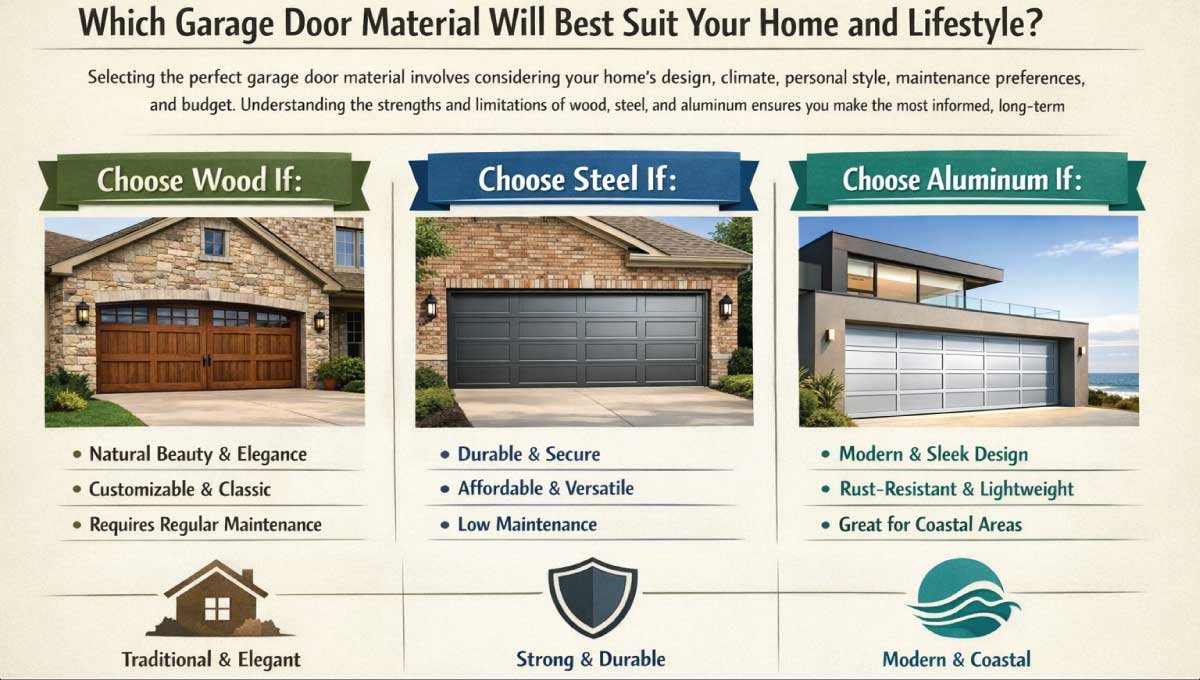
1- Choose Wood If: Wood garage doors are perfect for homeowners who prioritize natural beauty, elegance, and a high-end, traditional look. While they require regular maintenance, their customization options and warm, classic appearance make them a premium choice.
2- Choose Steel If: Steel doors are ideal for those seeking durability, security, and minimal upkeep. Affordable, long-lasting, and versatile in design, steel offers an excellent balance of strength, value, and energy efficiency for most homes.
3- Choose Aluminum If: Aluminum garage doors are best for modern, contemporary homes, particularly in coastal or humid areas. Lightweight, rust-resistant, and low-maintenance, they combine sleek design with practical performance and easy long-term operation.
Final Thoughts
In 2026, selecting the right garage door goes beyond looks. Homeowners must balance style, durability, energy efficiency, maintenance, and budget. Wood doors offer timeless beauty and customization, steel doors provide strength, security, and affordability, and aluminum doors deliver modern, low-maintenance style. Understanding these differences ensures a confident choice that enhances your home’s value, comfort, and long-term appeal, making your garage door a true investment.

Engineer Ali Usman is a professional garage door expert and author at FixFasty, with over 10 years of hands-on experience in garage door systems and mechanical maintenance. He writes clear, step-by-step guides on garage door repairs, parts, and safety practices, helping homeowners fix problems correctly and maintain smooth, secure, and long-lasting garage door performance.