
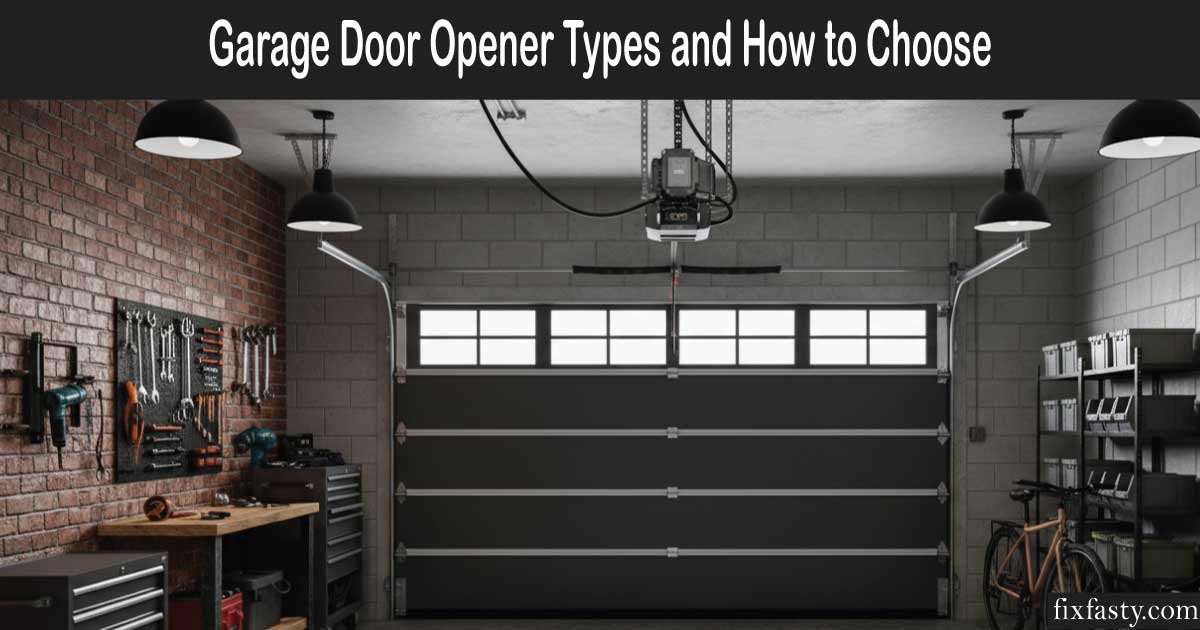
The right choice for a garage door opener extends beyond mere convenience and directly relates to your security, comfort, and overall efficiency. For instance, a reliable opener means smooth and quiet operation, adding value to your home in the long term.
With different types such as chain drive, belt drive, screw drive, and jackshaft openers, each serving a different purpose,
This guide explains the main garage door opener types, helping you select the best option based on space, budget, door weight, and lifestyle.
Why Choose the Right Garage Door Opener Matters
The right choice for a garage door opener has a direct impact on your comfort, security, and overall costs in the long term. For instance, a reliable opener means smooth and quiet operation, adding value to your home in the long term,
While a wrong choice means constant maintenance costs, security risks, and frustrations, among other problems, thus requiring a thoughtful choice for comfort, reliability, and overall satisfaction.
Safety: Modern openers include sensors and auto-reverse features that prevent accidents.
Security: Advanced openers protect against hacked and unauthorized access.
Noise Control: The wrong opener can be extremely loud, especially if your garage is attached to your home.
Durability: Some openers last significantly longer than others.
Smart Features: Many homeowners want Wi-Fi, smartphone control, and smart home integration.
Choose the right opener means fewer repairs, better comfort, and long-term savings.
👉 A garage door is more than an entry point—it’s a vital part of your home’s safety and daily convenience. This complete garage door guide covers garage door basics, common garage door repairs, essential maintenance tips, and important garage door safety practices. Read the full post to learn how to keep your garage door working smoothly, safely, and reliably all year round.
Overview of Garage Door Opener Types
Garage door openers are categorized into different types, each with its own mechanism, such as chain drive, belt drive, screw drive, direct drive, and jackshaft openers, among others, each different in terms of reliability, noise, performance, and overall costs, among other attributes, thus provide the homeowners with a chance to choose the right one for their garages and doors, among other attributes.
1- Chain Drive Garage Door Openers
Chain drive garage door openers use a chain mechanism to operate, providing reliability and affordability, especially for doors that are either heavy or used more often, albeit a bit noisy compared to other types.
-
Strong & Reliable: Handles heavy or insulated doors efficiently.
-
Budget-Friendly: Affordable and dependable daily performance.
-
Durable Construction: Sturdy metal parts endure frequent use.
-
Easy Maintenance: Simple mechanics allow quick lubrication.
-
Proven Performance: Long-lasting operation in all climates.
2- Belt Drive Garage Door Openers
On the other hand, belt drive garage door openers use a belt, either rubber, fiberglass, or polyurethane, to operate, provide the much quieter experience compared to chain drive openers, thus ideal for homeowners who value quiet operation, among other attributes
Key Features
Smooth and quiet operation
Ideal for attached garages
Often includes smart features
Pros
Very quiet operation reduces noise in garage.
Minimal vibration ensures smooth, stable door movement.
Low maintenance requires little ongoing attention.
Threaded rod design improves long-term reliability.
Cons
Higher upfront cost
Belt may wear over time (rare with quality models)
Belt drive openers are perfect for homes with bedrooms or live spaces above the garage.
3- Chain Drive vs Belt Drive Garage Door Openers
Chain drive openers are strong, reliable, and cost-effective but are noisier, make them suitable for heavy doors.
Belt drive openers are very quiet, have minimum vibration, and require less maintenance, make them suitable for attached garages.
| Feature | Chain Drive | Belt Drive |
|---|---|---|
| Noise Level | Loud | Very Quiet |
| Cost | Low | Medium to High |
| Maintenance | Moderate | Low |
| Durability | High | High |
| Best For | Detached garages | Attached garages |
4- Screw Drive Garage Door Openers
Screw drive garage door openers make use of a threaded steel rod that moves the garage door along the track.
The screw drive is less complicated as compared to the chain drive and the belt drive, as it contains fewer moving parts.
Due to the less complicated nature of the screw drive, the chances of breakdown are less, and the screw drive is very reliable as compared to other types of garage door openers.
Key Features
Opens garage doors very quickly.
Simplified design reduces mechanical issues.
Handles heavy doors efficiently.
Reliable performance under frequent use.
Pros
Powerful
Less maintenance than chain drives
Good for wide or heavy doors
Cons
Screw drive openers produce moderate noise.
Extreme temperatures can affect performance.
Regular lubrication maintains smooth operation.
Noise may disturb nearby rooms
Screw drive openers work well in moderate climates and for homeowners who want speed and power.
5- Direct Drive Garage Door Openers
Direct drive garage door openers move the motor along the rail, and the chains and belts are eliminated. The direct drive is less noisy, provides smoother operation, requires less maintenance, and is reliable and durable, making them suitable for residential garage doors.
Key Features
Extremely quiet operation reduces noise inside and outside.
Minimal moving parts ensure smooth, reliable daily performance.
Long lifespan provides durable, trouble-free garage door operation.
Quiet motor ideal for attached home garages.
Simplified mechanics lower maintenance and repair requirements.
Noise and Performance Comparison
The differences between the garage door openers are the noise and the performance. The chain drive is strong and reliable but moderately noisy.
The belt drive is very quiet and requires less vibration, making them suitable for an attached garage. The screw drive provides consistent performance but varies with temperature.
The direct drive is the quietest and the most reliable.
| Opener Type | Noise Level | Speed | Maintenance |
|---|---|---|---|
| Chain Drive | High | Medium | Moderate |
| Belt Drive | Low | Medium | Low |
| Screw Drive | Medium | High | Low |
| Direct Drive | Very Low | Medium | Very Low |
6- Jackshaft (Wall-Mounted) Garage Door Openers
Jackshaft garage door openers are mounted on the wall beside the door instead of the ceiling, giving the garage a modern look and freeing up valuable overhead space.
The jackshaft garage door openers are ideal for high-end and contemporary garages and are suitable for heavy doors, offering smooth and reliable operation.
Key Features
Saves valuable overhead ceiling space efficiently.
Sleek, modern design enhances garage aesthetics.
Advanced security features protect home effectively.
Jackshaft openers are excellent for luxury homes, garages with limited overhead space, or custom designs.
7- Smart Garage Door Openers: A Modern Upgrade
1In recent years, garage door openers, especially those that use a belt drive or jackshaft, have started to feature smart technology.
This technology allows users to remotely monitor and control their garage doors through smartphones or other electronic means.
The use of a smart opener offers a range of benefits, including increased convenience, security, and accessibility, and can integrate with other smart technology to improve the overall experience
Common Smart Features
Control garage door remotely using smartphone application easily.
Receive real-time alerts about door activity instantly.
Operate garage door using voice commands conveniently.
Access and control opener remotely from anywhere safely.
Monitor door status anytime for enhanced home security.
Integrates with smart home systems seamlessly and efficiently.
Smart garage door openers improve security, convenience, and peace of mind, especially for busy households.
👉 Understanding garage door parts helps you spot problems early and maintain smooth operation. This detailed garage door parts guide explains key garage door components, how each part works, and when repairs or replacements are needed. From springs to rollers and openers, read the full post to gain complete knowledge and keep your garage door safe, efficient, and long-lasting.
Safety and Security Features to Look For
Regardless of the type of garage door opener, it is important to choose one that includes safety features that are important for a smooth and efficient experience.
The safety features include auto-reverse, manual release, and obstruction detection, among others.
The inclusion of these features ensures that family members, pets, and properties are protected and that the door is safe to use every time.
Auto-Reverse Sensors: Prevents the door from closing on objects or people
Rolling Code Technology: Changes access codes to prevent hacking
Manual Release: Allows operation during power outages
Battery Backup: Keeps the opener working during blackouts
These features are especially important for families with children or pets.
Best Garage Door Opener Types by Home Situation
The best type of garage door opener is one that meets your garage door’s requirements. The chain drives are best for heavy doors and are preferred by those on a budget, while the belt drives are best for attached garages,
The screw drives are best for those who want a reliable opener, and the direct drives are best for those who want a smooth experience, while the jackshaft drives are best for modern high-end garages that require space-saving technology
| Home Situation | Recommended Opener Type |
|---|---|
| Detached Garage | Chain Drive |
| Attached Garage | Belt Drive or Direct Drive |
| Heavy Garage Door | Chain or Screw Drive |
| Low Ceiling Space | Jackshaft |
| Smart Home Setup | Belt Drive or Jackshaft |
👉 Choosing the right garage door type can improve security, curb appeal, and daily convenience. This helpful garage door types guide explains different garage door styles, materials, and opening mechanisms, along with their pros and cons. Read the full post to learn how to choose the best garage door for your home, budget, climate, and lifestyle needs.
How to Choose the Perfect Garage Door Opener
When choose the best garage door opener, there are a number of important factors to consider, such as the door’s weight and size, the level of noise, and the cost. The answers to these questions help one choose the best opener for the garage door
Is Your Garage Attached or Detached?
Whether your garage is attached or detached is another factor to consider when selecting a garage door opener. If your garage is attached to your home, it would be advisable to purchase an opener that is quiet to avoid disturbing your home. If your garage is detached, you have more flexibility in terms of selecting an opener motor.
How Important Is Quiet Operation?
If your garage door is close to your home, you would want an opener that can operate quietly. In this case, it would be advisable to purchase a belt-drive or direct-drive garage door opener. If you do not care about noise, you can purchase a chain-drive opener, which is affordable and reliable.
Do You Need Smart Features?
If you want to purchase a garage door opener, you would want an opener that is connected to your home automation system. Smart garage door openers offer convenience and security, especially if you are away. However, this feature is more expensive than other garage door openers.
What Is Your Budget?
Budget is another factor to consider when purchasing a garage door opener. Garage door openers vary in price, and your budget would help you determine the best opener for your garage door. If you have a small budget, you can purchase a basic garage door opener.
How Heavy Is Your Garage Door?
The weight of your garage door is another factor to consider when purchasing a garage door opener. If your door is heavy, you would want an opener that can handle it. In this case, you would want an opener with a powerful motor, such as a belt-drive or jackshaft motor.
Final Thoughts
Choose the right garage door opener becomes easier when you are aware of the choices available in the market, as well as your requirements.
While chain drives provide affordability and durability, belt drives provide quiet operation, which is suitable for attached garages.
Screw drives provide reliability, direct drives provide ultra-quiet operation, while jackshaft drives provide space-saving operation.
Hence, choose the right garage door opener will enhance the convenience, security, durability, and comfort of the garage, which is a worthwhile investment in the home.

Engineer Ali Usman is a professional garage door expert and author at FixFasty, with over 10 years of hands-on experience in garage door systems and mechanical maintenance. He writes clear, step-by-step guides on garage door repairs, parts, and safety practices, helping homeowners fix problems correctly and maintain smooth, secure, and long-lasting garage door performance.