
A garage door stuck halfway can be frustrating, inconvenient, and even a little alarming—especially if your car is trapped inside or your home’s security is compromised.
This problem is more common than many homeowners realize, and the good news is that in many cases, the cause is something simple you can identify quickly.
In this guide, we’ll walk you through why your garage door gets stuck halfway, how to troubleshoot common issues, and when it’s time to call a professional. Whether your garage door is manual or automatic, this detailed breakdown will help you understand what’s going on and what to do next.
Why Is My Garage Door Stuck Halfway?
A garage door that gets stuck halfway can be frustrating and concerning for any homeowner. This problem usually signals that one or more components are not working as they should. Because garage doors are designed with safety systems, they often stop mid-operation to prevent damage or injury when something goes wrong. Identifying the cause early helps ensure a safer, faster, and more affordable repair.
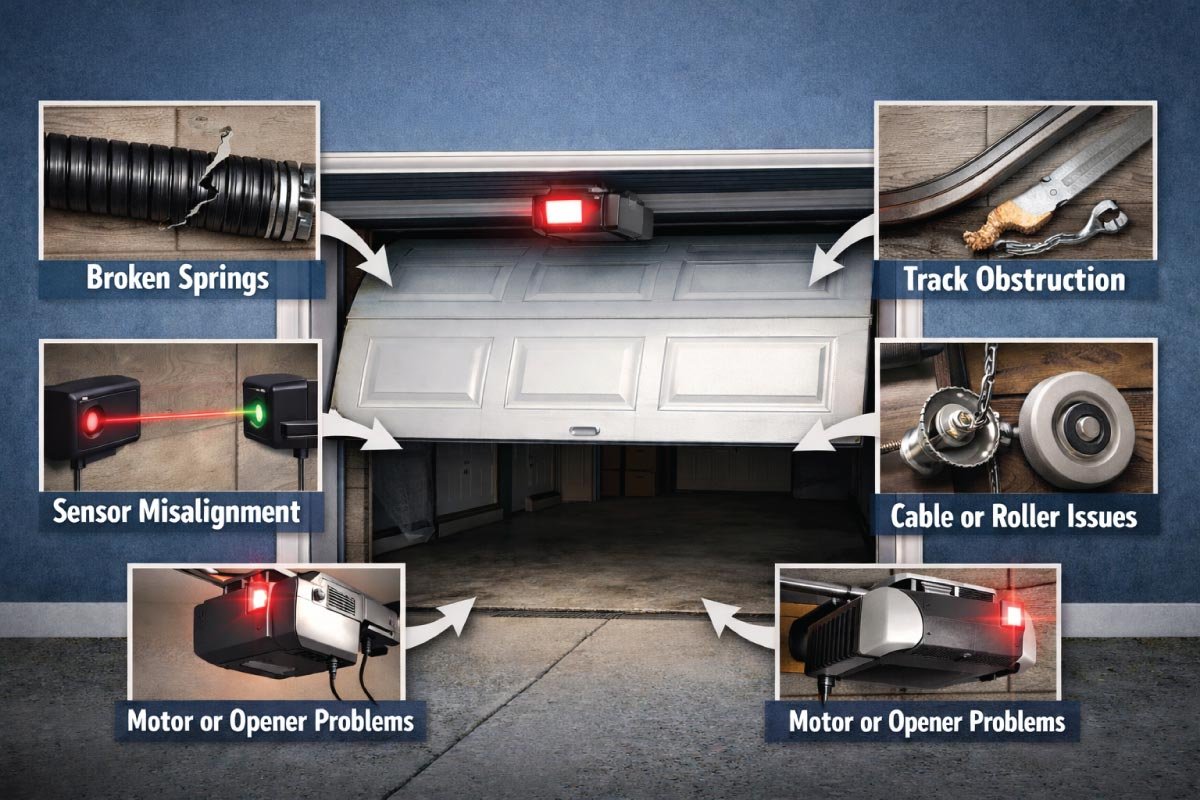
1- Broken or Worn-Out Springs
Garage door springs carry most of the door’s weight, allowing it to move smoothly. When a spring is broken or worn out, the opener may struggle to lift the door and stop midway. Springs can also trigger safety mechanisms that halt movement. Because spring repairs are dangerous, this issue should always be handled by a professional technician.
2- Obstructions in the Tracks
Tracks guide the garage door as it opens and closes, so any obstruction can interrupt movement. Dirt, debris, small objects, or bent tracks may cause the door to jam halfway. Even minor blockages can activate the door’s safety stop. Regularly inspecting and cleaning the tracks helps prevent sudden stoppages and extends the life of the system.
3- Sensor Misalignment
Garage door sensors are designed to detect obstacles and prevent accidents. If the sensors become misaligned, dirty, or damaged, they may falsely signal an obstruction and stop the door halfway. This often happens after accidental bumps or vibrations. Checking sensor alignment and cleaning the lenses can sometimes resolve the issue quickly before seeking professional repair assistance.
4- Cable or Roller Issues
Lift cables and rollers help balance the door and keep it moving evenly along the tracks. If a cable frays, slips, or breaks, or if rollers wear out, the door may tilt and stop midway. These problems increase strain on other components. Prompt repairs prevent further damage and reduce the risk of sudden door failure occurring.
5- Motor or Opener Problems
Garage door openers provide the power needed to lift and lower the door. If the motor is failing, overheating, or improperly calibrated, it may stop working halfway through a cycle. Electrical issues or worn gears can also be responsible. Diagnosing opener problems early helps avoid complete system failure and costly replacement while improving overall garage door reliability.
👉 Garage Door Making Noise can be a warning sign of worn parts, poor lubrication, or alignment issues. This guide explains the most common causes of garage door noise and simple ways to fix them before they turn into costly repairs. Read the full post to restore smooth, quiet operation.
Common Reasons a Garage Door Stops Halfway
When a garage door stops halfway, it often indicates a mechanical or safety-related issue that needs attention. Some problems are minor and easy to fix, while others can be serious and dangerous if handled incorrectly. Understanding the most common causes and their severity helps homeowners decide whether a quick DIY solution is possible or if professional repair is the safest option.
Common Causes of a Garage Door Stuck Halfway
A garage door that stops halfway can be caused by a variety of issues, ranging from minor blockages to serious mechanical failures. Understanding the common problem areas helps determine whether a quick DIY fix is possible or if professional help is needed. Identifying the severity of each cause ensures safer, faster, and more effective repairs.
| Problem Area | Possible Cause | Severity Level | DIY or Professional? |
|---|---|---|---|
| Torsion or Extension Springs | Broken, weak, or unbalanced springs | High | Professional |
| Garage Door Tracks | Bent, dirty, or blocked tracks | Medium | DIY or Professional |
| Safety Sensors | Dirty or misaligned sensors | Low | DIY |
| Garage Door Cables | Frayed, loose, or off-drum cables | High | Professional |
| Rollers | Worn-out or damaged rollers | Medium | DIY or Professional |
| Garage Door Opener | Motor strain or limit setting issue | Medium | DIY or Professional |
Step-by-Step Troubleshooting Tips
Before calling a technician, there are a few safe checks you can perform to narrow down the issue. Always prioritize safety—garage doors are heavy and under high tension.
1. Inspect the Garage Door Tracks
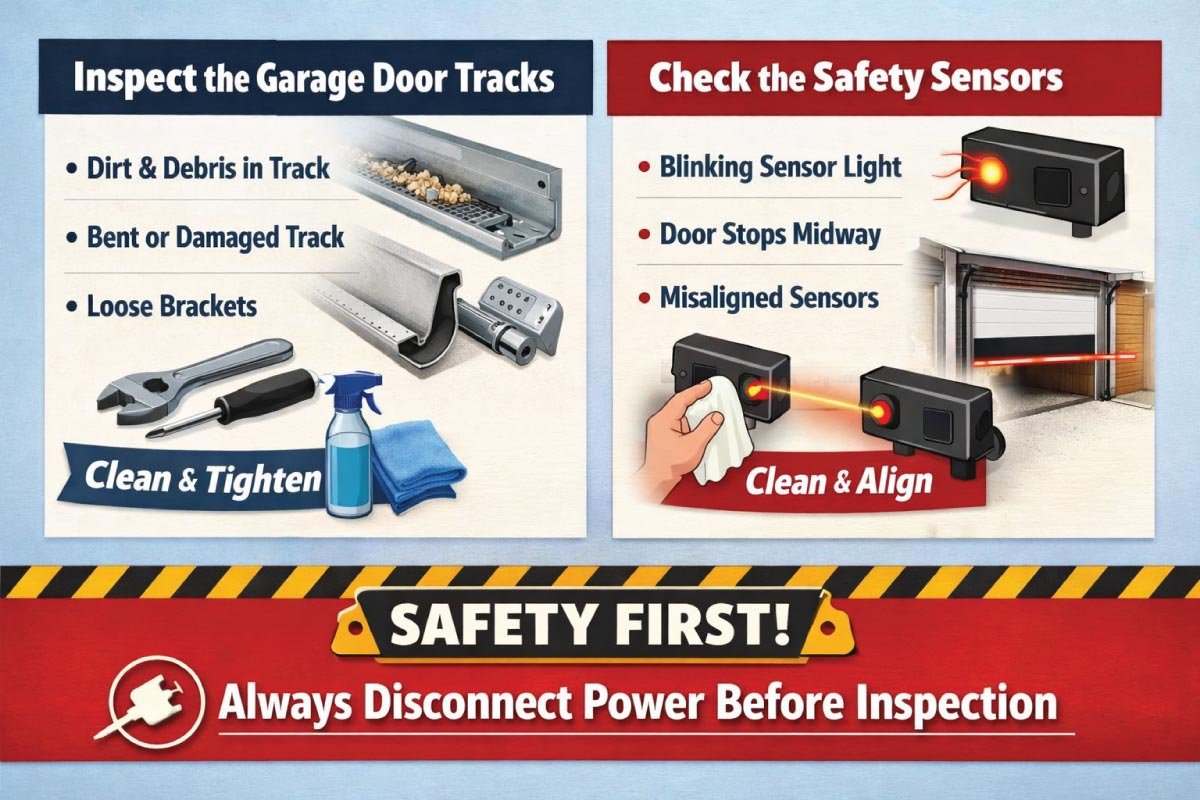
Garage door tracks play a critical role in guiding the door smoothly during opening and closing. Even minor issues with the tracks can interrupt movement and cause the door to stop halfway. Dirt buildup, loose hardware, or physical damage can all interfere with proper alignment. Inspecting the tracks carefully helps identify problems early and prevents further strain on the door system.
What to look for:
-
Dirt, debris, or small objects lodged in the track
-
Visible dents or bends
-
Loose mounting brackets
What you can do:
-
Clean the tracks using a dry cloth or mild household cleaner
-
Tighten loose bolts (do not loosen track alignment bolts)
If the track is severely bent, avoid forcing the door—this requires professional repair.
2. Check the Safety Sensors
Safety sensors are designed to prevent accidents by stopping the garage door when something is in its path. However, when these sensors are dirty or misaligned, they can mistakenly signal an obstruction. This often causes the door to stop or reverse halfway. Checking the sensors is a quick and simple step that can resolve the issue without professional assistance
Signs of sensor issues:
-
Blinking sensor lights
-
Door moves slightly, then stops
-
Door works intermittently
Quick fix:
-
Clean the sensor lenses with a soft cloth
-
Make sure both sensors face each other and are aligned
This is one of the easiest and most common fixes.
👉 Complete Garage Door Guide covers everything you need to know—from basic functions to common repairs and smart maintenance tips. Learn how to keep your garage door safe, quiet, and long-lasting. If you want to avoid costly mistakes and make informed decisions, don’t miss reading the full post.
Look for Broken or Weak Springs
Garage door springs are essential for lifting and balancing the door’s weight during operation. When a spring becomes weak or breaks entirely, the opener may not have enough support to raise the door fully, causing it to stop halfway. Spring issues are serious and require immediate attention to avoid further damage or safety risks.
Warning signs:
-
Loud bang heard earlier
-
Door feels extremely heavy when lifting manually
-
Door rises unevenly
Important: Do not attempt to repair or replace springs yourself. Springs are under extreme tension and can cause serious injury.
Examine the Garage Door Rollers
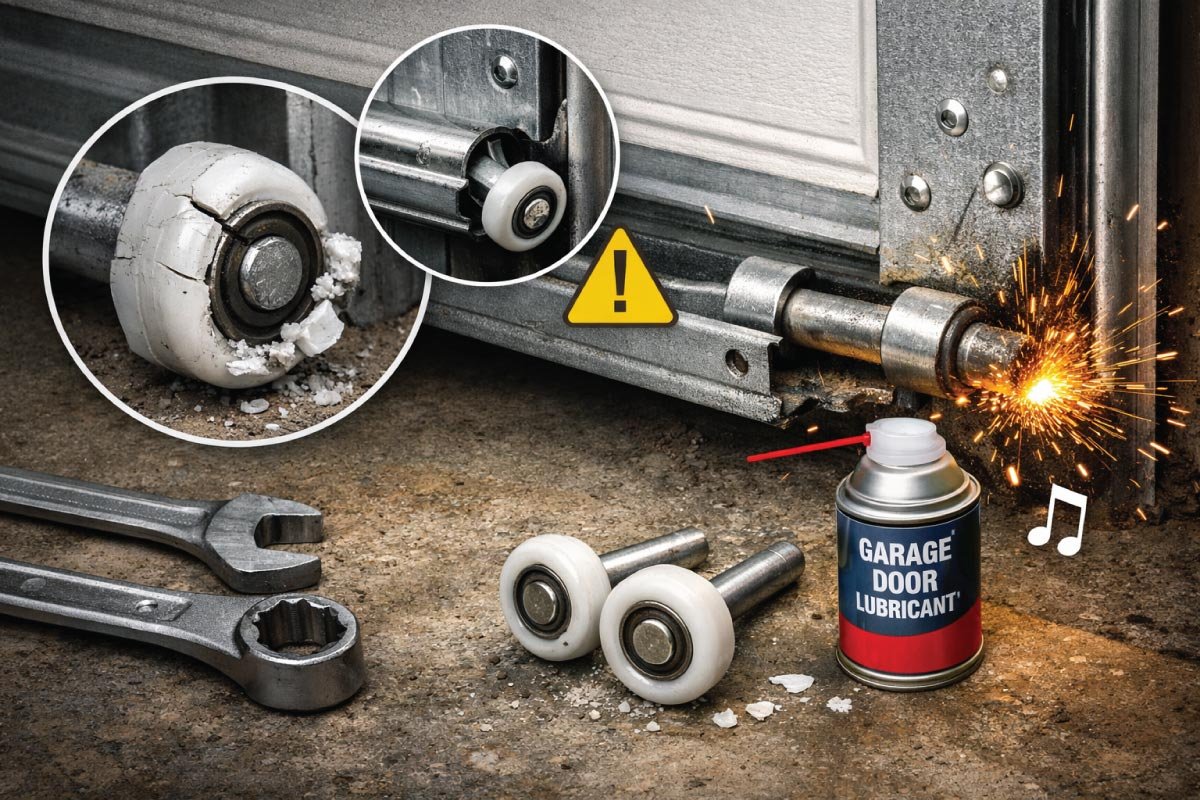
Garage door rollers allow the door to glide smoothly along the tracks during operation. When rollers become worn, damaged, or misaligned, they can create resistance that causes the door to hesitate or stop halfway. Ignoring roller issues can lead to further strain on the opener and tracks, making early inspection and maintenance especially important.
Check for:
-
Cracked or chipped rollers
-
Rollers popping out of the track
-
Loud grinding noises
Lubricating metal rollers or replacing worn nylon rollers can often solve the issue.
Inspect the Lift Cables
Symptoms include:
-
Crooked or uneven door
-
Door stuck at an angle
-
Visible loose cable
Cable repairs should always be handled by a professional.
Test the Garage Door Opener
Not all garage door issues stem from mechanical parts; sometimes the opener is the culprit. Problems like an overheated motor, worn gears, or incorrect limit settings can prevent the door from opening fully, causing it to stop halfway. Testing the opener and performing simple resets can help identify the problem before calling a professional for adjustments or repairs.
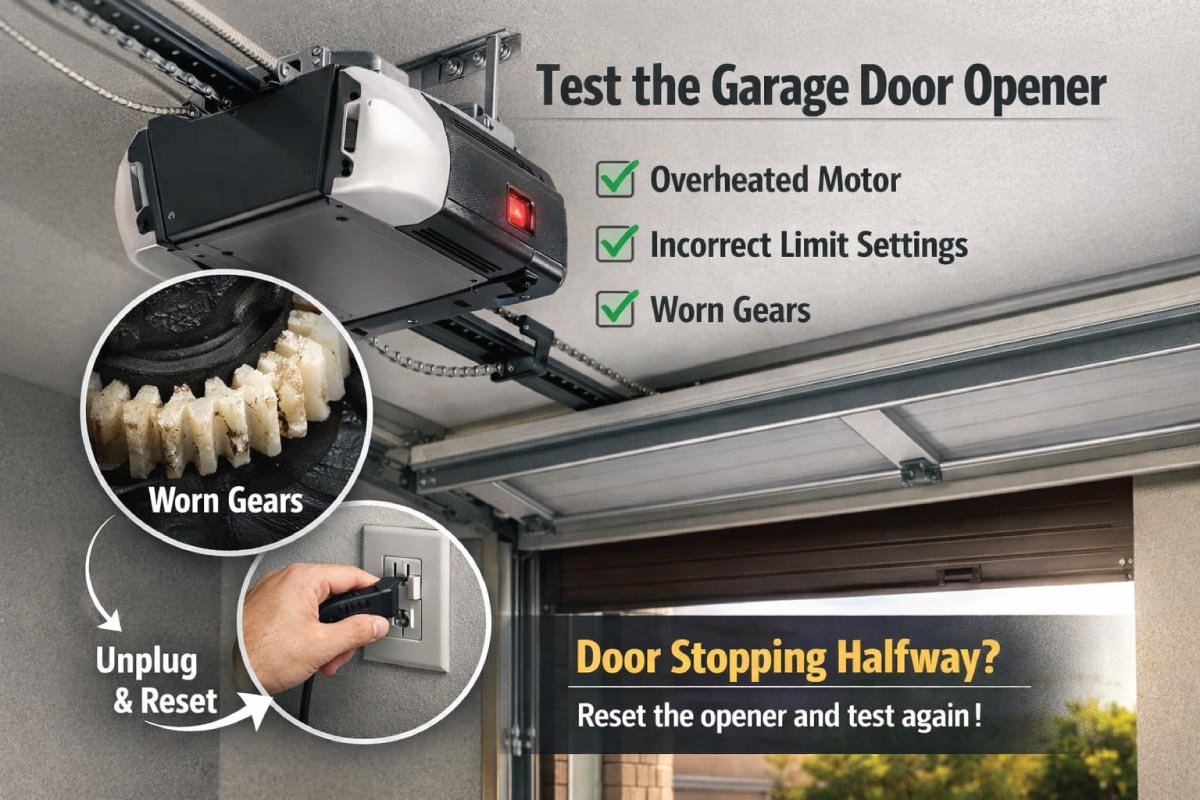
Things to check:
-
Overheated motor
-
Incorrect limit settings
-
Worn gears
Try unplugging the opener for a few minutes and resetting it. If the issue persists, the opener may need adjustment or repair.
Manual vs. Automatic Garage Door Issues
Manual vs. Automatic Garage Door Troubleshooting
| Door Type | Common Issues | Symptoms | Best Solution |
|---|---|---|---|
| Manual Garage Door | Spring imbalance, track obstruction | Heavy door, uneven movement | Spring adjustment or track repair |
| Automatic Garage Door | Sensor issues, opener limits, motor strain | Door stops or reverses midway | Sensor alignment or opener adjustment |
| Both Types | Cable damage, roller wear | Door tilts or jams | Professional inspection |
👉 Squeaky Garage Door Fix is your go-to guide for silencing annoying garage door noises with easy DIY solutions. Discover common causes like dry rollers or loose hardware and learn simple fixes that save time and money. Read the full post to enjoy a smoother, quieter garage door today.
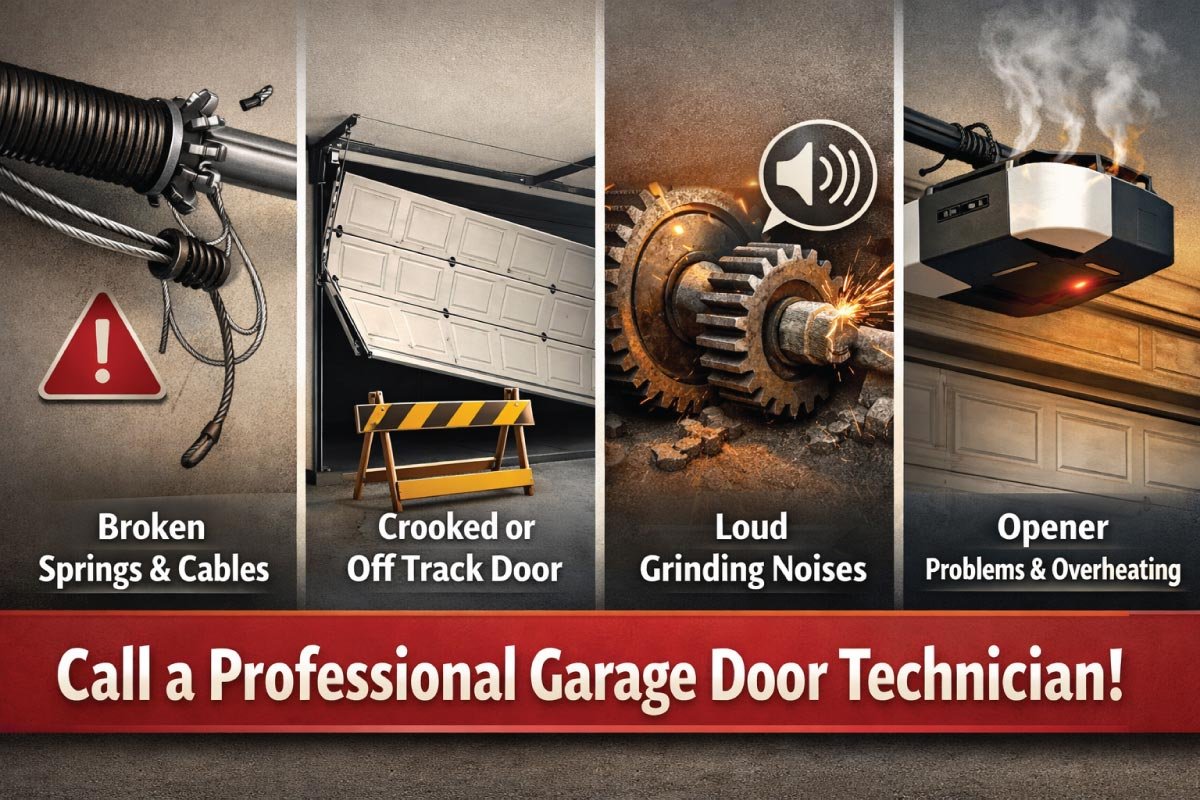
When to Call a Professional Garage Door Technician5
Preventing Garage Door Problems in the Future
Preventing garage door problems is far easier than repairing them after they occur. Regular maintenance keeps all components functioning smoothly and reduces the risk of the door stopping halfway. Simple habits like lubrication, cleaning, and sensor checks, combined with periodic professional inspections, can extend the life of your garage door and ensure safe, reliable operation for years to come.
Preventive tips:
Lubricate rollers, hinges, and springs every 6 months
Keep tracks clean and debris-free
Test safety sensors monthly
Schedule annual professional inspections
A little maintenance goes a long way in extending the life of your garage door system.
Final Thoughts
A garage door stuck halfway isn’t just annoying—it can signal safety and mechanical issues. Common causes include damaged springs, worn cables, track obstructions, or opener problems. Early detection and basic checks can prevent costly repairs. Regular maintenance helps, but for high-risk issues, professional repair is the safest and smartest solution.

Engineer Ali Hasan is a garage door expert and the founder of FixFasty. With over 16 years of experience in mechanical systems and home maintenance, he provides practical, step-by-step guides on garage door installation, repairs, and maintenance, helping homeowners keep their garage doors safe, reliable, and long-lasting.