
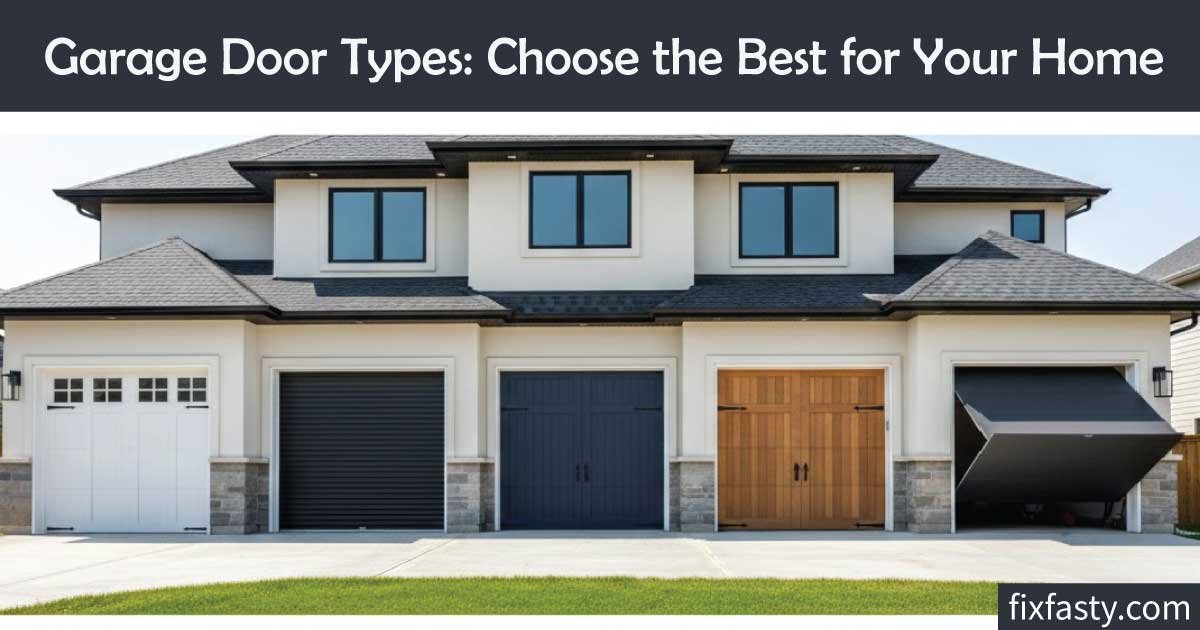
It is not merely an entryway to your home but an important element in the curb appeal and security of your home when it comes to improving your home in the future.
To find the appropriate garage door, one has to find a balance between style, durability, insulation, and price.
The types of garage doors, their advantages and disadvantages and tips to enable you choose the best garage door will be discussed in this guide.
Why Choosing the Right Garage Door Matters
A garage door is not a door, it is a statement. It secures your car and your possessions, and it is more energy-saving and beautifies your home. Using the wrong type may result in a lot of repairs, increased energy costs, and insecurity. The following are the things to consider before selecting:
-
Protects vehicles, boosts security, improves energy efficiency.
-
Wood classic look; steel durable; aluminum lightweight.
-
Insulation saves energy, reduces noise, stabilizes temperature.
-
Durable materials resist dents, rust, warping damage.
-
Stylish designs enhance curb appeal, increase home value.
-
Budget wisely for quality, security, longevity benefits.
👆 Discover everything you need to know about garage doors in our Complete Garage Door Guide. Learn the basics, repair tips, and essential maintenance steps to keep your door smooth, safe, and long-lasting. Whether you’re a DIY enthusiast or a homeowner, this guide helps you save time, avoid costly repairs, and extend your garage door’s life. Read the full post now!
Popular Garage Door Types
Selecting the appropriate garage door may make a big difference in terms of the look of your house, safety, and usability.
The variety of styles has been offered, and it is worth knowing the particularities of each of them, their advantages, and decrees.
Having acquainted yourself with the most popular types of garage doors, you will be able to make a better choice and design a door that is adequate in space, style, and cost.
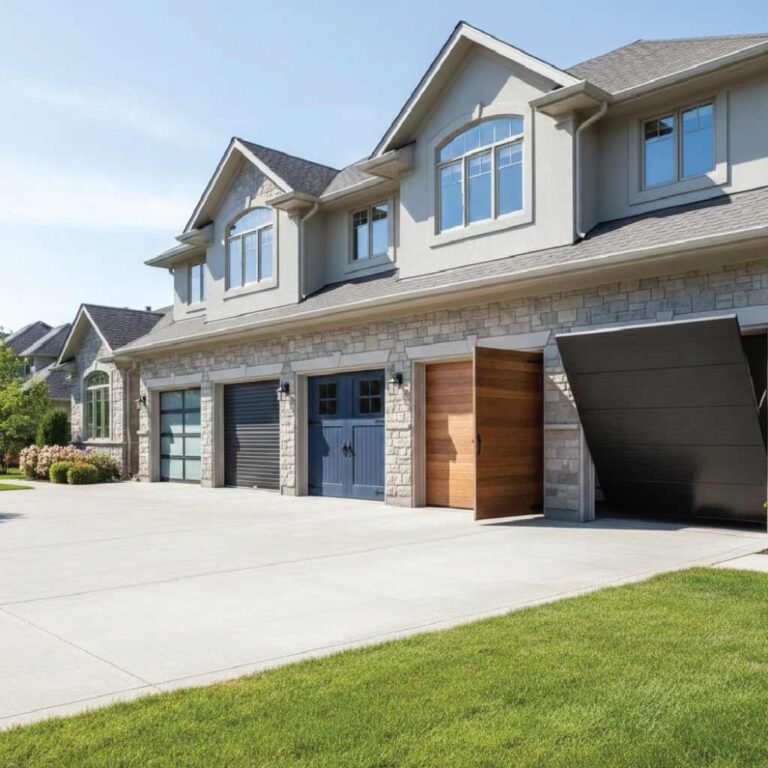
1. Sectional Garage Doors
Sectional garage doors are extremely versatile and most preferred by residential houses. They consist of several horizontal panels which curve along tracks, and are opened vertically, and are parallel to the ceiling.
Their structure is such that they utilize maximum space both interiors and exteriors of the garage, thus suitability to modern and limited space plans.
Pros:
-
Space-saving design.
-
Easy to automate with garage door openers.
-
Good insulation options.
Cons:
-
Hinges and rollers require occasional maintenance.
-
Slightly higher installation cost compared to single-panel doors.
Best For: Homes with limited driveway space or those seeking modern styles.
2. Roll-Up Garage Doors
Roll-up doors are made out of slim horizontal slats, which roll upward into coil on top of the doorway, which is often found in the business world.
They have been characterized by longevity and saving of space, which give the garage a clear space on its ceiling and walls, thus useful in professional and residential purposes.
Pros:
-
Extremely durable.
-
Saves ceiling space.
-
Minimal maintenance needed.
Cons:
-
Less insulation than sectional doors.
-
Typically more expensive.
Best For: Commercial properties or garages with limited headroom.
3. Swing-Out or Side-Hinged Doors
Side-hinged doors are similar to the traditional entry doors and they open outward, on a vertical hinge, on both sides. They are classic and have timeless appearance and are easy to use manually.
These doors are only fit in a house with large driveways since they provide an effective but good looking garage door.
Pros:
-
Classic appearance.
-
Easy manual operation.
-
Works well for wide openings.
Cons:
-
Requires ample driveway space.
-
Manual operation can be less convenient than automated doors.
Best For: Traditional homes and rural properties with ample outdoor space.
4. Slide to the Side Garage Doors
Slide to the side garage doors gain access through a horizontal mechanism on a track parallel to the wall. This is an ideal design that fits low ceiling garages and it is operated smoothly without overhead interference.
Although they are not so popular, these doors are a modern solution to a house that wants a functional and space saving door.
Pros:
-
Efficient for garages with low headroom.
-
Smooth operation, especially when automated.
Cons:
-
Less common, limited style options.
-
Requires wall space for sliding mechanism.
Best For: Garages with low ceiling height or modern architecture.
5. Tilt-Up Garage Doors
Tilt-up garage doors involve one complete panel of solid panel which tilts out and lifts up to open. They have a clean and minimalistic appearance because they are simply designed and are usually affordable.
Although they can fit small garages, they need a sufficient amount of overhead space and would be more properly used on light to moderate duty.
Pros:
-
Simple design and clean look.
-
Cost-effective for smaller garages.
Cons:
-
Requires overhead clearance.
-
Not ideal for heavy use.
Best For: Smaller garages or budget-conscious homeowners.
👉 Garage Door Parts Guide breaks down every essential component of your garage door, including springs, rollers, cables, and openers. Learn how each part works, common problems, and maintenance tips. Read the full post to fully understand your garage door system and keep it safe, efficient, and durable!
Materials for Garage Doors
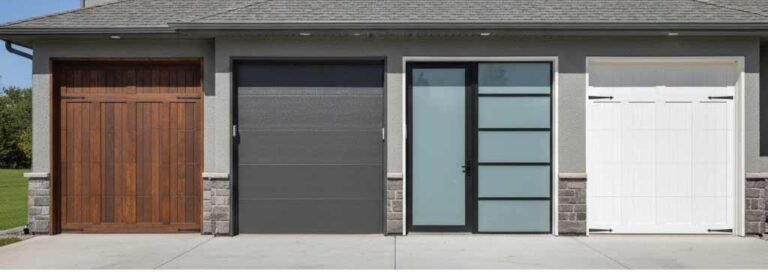
It is important to select the correct garage door material based on durability, appearance and maintenance. All the options used are wood, steel, aluminum or composite, and each has its own advantages and disadvantages.
Knowing their variations assists you in choosing a material that suits your taste, finances as well as your long term requirements.
| Material | Durability | Maintenance | Style Options | Cost |
|---|---|---|---|---|
| Steel | High | Low | Moderate | $$ |
| Wood | Medium | High | High | $$$ |
| Aluminum | Medium | Low | High | $$ |
| Composite | High | Low | High | $$-$$$ |
Tip: Steel doors are popular for their durability, while wood doors are often chosen for aesthetics.
Insulation Options
Insulation is important in ensuring that your garage is comfortable and energy efficient as well as minimize external noise.
There are three significant types of insulation on garage doors, single-layered, double-layered, and triple-layered, with each providing the same degree of thermal protection, sound-proofing, and general energy conservation.
| Type | R-Value | Benefits |
|---|---|---|
| Single-Layer | Low | Basic protection, low cost |
| Double-Layer | Medium | Better insulation, quieter operation |
| Triple-Layer | High | Maximum insulation, energy-efficient, soundproof |
Tip: Homes in extreme climates benefit from higher R-value doors, especially if the garage is attached to the house.
How to Choose the Best Garage Door for Your Home
The right garage door should be carefully planned. Using functionality, style, budget, and maintenance, you can choose a door that will improve the way your home looks, how secure it is, and how generally effective it is in the future.
1- Assess Your Needs
Begin by analyzing your requirements. The factors to put in consideration will include energy saving like insulations, security features to keep your house secure, and the frequency with which the door will be used every day. Knowing your needs means that the door works well.
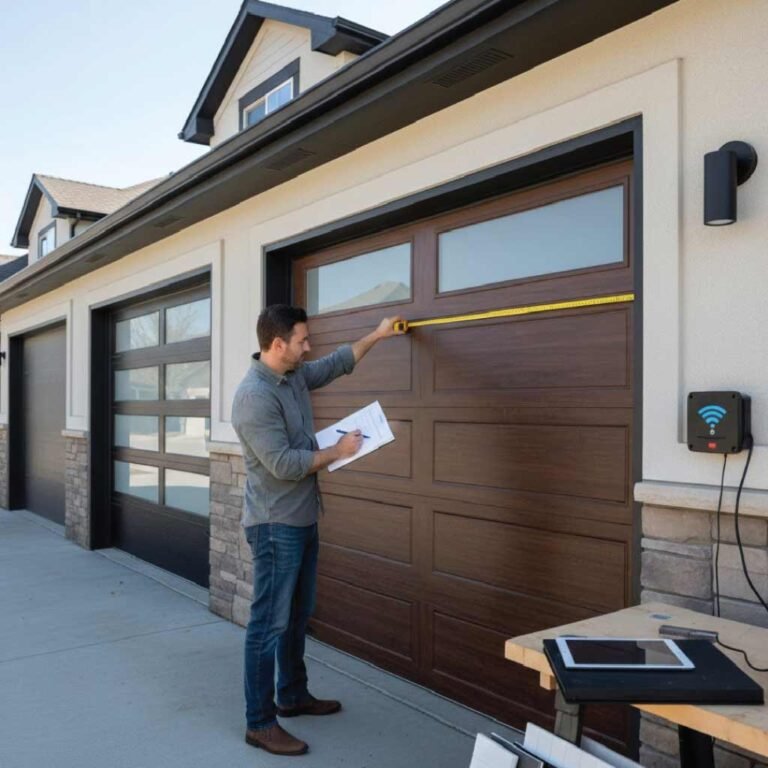
2- Measure Your Space
Before buying a garage door, it is necessary to take measurements with precision. Determine the size of your garage opening, height, width and depth of the driveway. Correct measurements will eliminate the problem of installations and allow a smooth running.
3- Set a Budget
Decide on your budget according to the cost, quality of the material and the features you want. The use of cheap doors can save money now but a durable well-insulated and automated doors with high quality are worth investing in, as they are beneficial in the long run as they save on maintenance in the long run.
4- Consider Style
The garage door of your home must be compatible with the architecture. Modern, traditional, and rustic, there are a variety of styles that suit your exterior design that will improve the curb appeal as well as potentially boost the value of your property, to make a complete and appealing picture.
5- Check Maintenance
Think of the amount of maintenance you can possibly afford. Other doors such as wood need frequent painting or staining whereas steel or composite types need little attention. When the maintenance requirements are understood, it prevents future inconvenience and extends the life of the doors.
6- Automation
Choose whether you are going to have an automatic or a smart garage door system. Automated doors offer convenience, safety, and the ability to work with the Smart home system, which can be controlled and monitored remotely, which is particularly helpful in busy households.
Garage Door Safety Tips
Garage doors weigh heavily and are very strong and very dangerous in case of mishandling. To be safe it is necessary to install properly, inspect frequently, and maintain regularly. The tips will save your family, keep your accidents away and allow to work with your garage doors without any difficulties and problems.
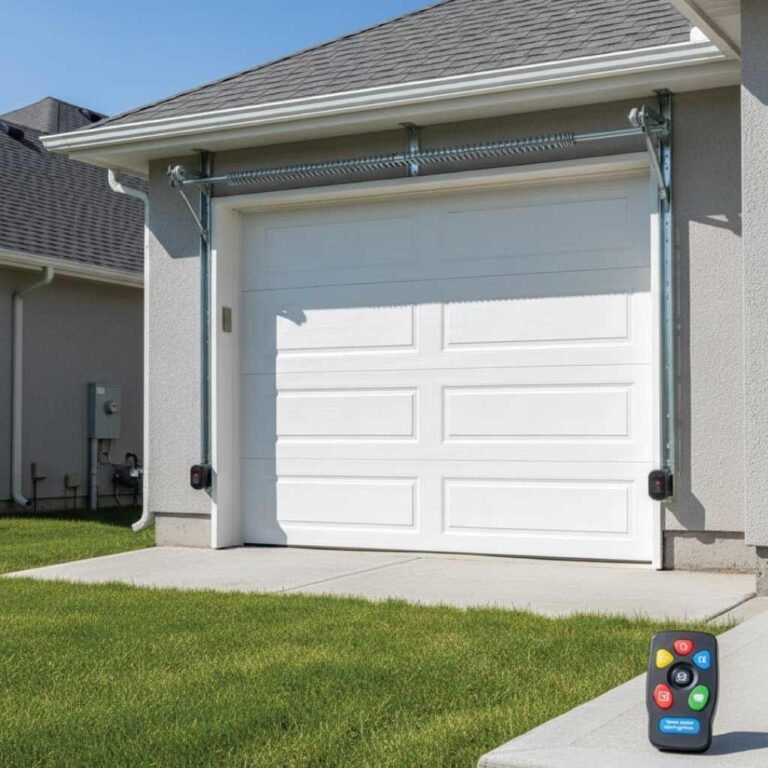
Tips:
-
Ensure professional installation.
-
Regularly inspect springs, cables, and rollers.
-
Keep remote controls out of children’s reach.
-
Test safety sensors periodically.
-
Lubricate moving parts for smooth operation.
Popular Garage Door Styles
In the modern garage doors, there are a variety of styles and the homeowners have the freedom of matching the architecture of their home and their preference. The correct choice of style to be used not only enhances the curb appeal but also adds to the general value of the property and its beauty.
Styles:
Carriage House: Classic, rustic appearance.
Contemporary: Sleek lines, often glass panels.
Traditional Raised-Panel: Most common and versatile.
Flush Panel: Smooth, minimalistic design.
Final Thoughts
The choice of an appropriate type of a garage door is a matter of style, functionality, and expense. Sectional doors are adaptable and commonly used whereas roll up doors are more durable, and less consuming of space.
Insulation, material and maintenance requirements should always be in mind before deciding on a final decision. Know the various types of garage doors and their advantages, it is possible to choose the right door that will not only make your home safer and more appealing, but also convenient.
Note: it is worth investing in a good quality garage door as it saves money on energy expenses and durability in the long term.
👉 Garage Door Opener Types explained for beginners! Discover the best garage door opener for your home, including chain, belt, and smart openers. Learn features, pros, and cons to make the right choice. Read the full post to find the perfect garage door opener for safety and convenience!

Engineer Ali Hasan is a garage door expert and the founder of FixFasty. With over 16 years of experience in mechanical systems and home maintenance, he provides practical, step-by-step guides on garage door installation, repairs, and maintenance, helping homeowners keep their garage doors safe, reliable, and long-lasting.