
Dealing with a garage door that won’t open fully is frustrating, disruptive, and risky, this guide explains common causes, practical fixes, and preventive tips to keep your door operating smoothly.
Common Reasons Your Garage Door Won’t Open Fully
Few problems are more frustrating than a garage door that won’t open completely; it can delay your schedule, create safety concerns, and understanding the underlying causes is the first step toward resolving it.
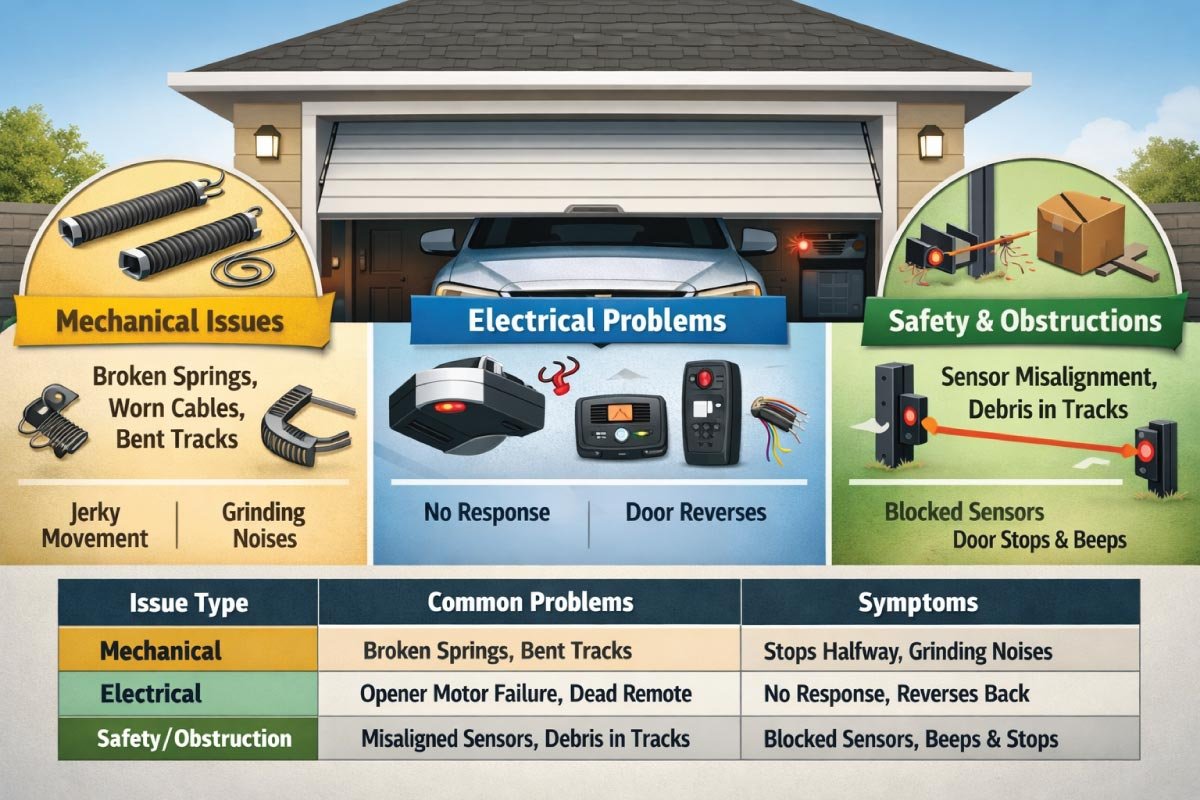
Mechanical issues – Springs, cables, and tracks
Electrical issues – Opener motor, wiring, and remote controls
Safety sensors or obstructions – Objects blocking sensors, dirt, or misalignment
Here’s a quick reference table:
| Issue Type | Common Problems | Symptoms |
|---|---|---|
| Mechanical | Broken springs, bent tracks, worn rollers | Door stops halfway, jerky movement, unusual noises |
| Electrical | Opener motor failure, dead remote batteries | Door doesn’t respond or reverses before opening fully |
| Safety/Obstruction | Misaligned sensors, dirt, debris on tracks | Door reverses, beeps, or stops before full opening |
Broken or Worn-Out Springs
Garage door springs balance the door’s weight for smooth operation; when they wear out or break, the door may struggle to open fully, creating frustration and serious safety risks.
Signs of broken springs:
Door won’t open or only partially opens
Loud banging or snapping noises
Visible gaps in torsion springs
Garage Door Spring Problems and Solutions
| Spring Type | Problem | DIY Fix | Professional Fix |
|---|---|---|---|
| Torsion Springs | Broken or stretched | Not recommended (dangerous) | Replace springs professionally |
| Extension Springs | Frayed or snapped | N/A | Replace with proper safety measures |
| Both Types | Rusted or misaligned | Lubricate regularly | Adjust or replace if needed |
⚠️ Safety Note: Garage springs are under high tension. DIY replacement is risky and can cause serious injury. Always consult a professional.
Misaligned or Damaged Tracks
Garage door tracks guide smooth movement; even small misalignments or damage can cause sticking, jerking, or incomplete opening.
Common track problems:
-
Bent or dented tracks
-
Loose bolts or fasteners
-
Accumulated dirt or debris
Track Issues and Maintenance Tips
| Track Issue | Symptoms | Solution |
|---|---|---|
| Bent Tracks | Door sticks or jerks while moving | Carefully straighten with a rubber mallet or call a professional |
| Loose Fasteners | Door rattles, tilts during operation | Tighten all track bolts |
| Dirty/Obstructed Tracks | Door stops mid-operation | Clean tracks and lubricate |
Regular cleaning and lubrication with a silicone-based garage door lubricant can prevent many track-related problems.
Remote Control or Keypad Problems
Not all garage door issues are mechanical; electrical problems with remotes, keypads, or signal transmission can cause unresponsive or unpredictable operation and disrupt your daily routine.
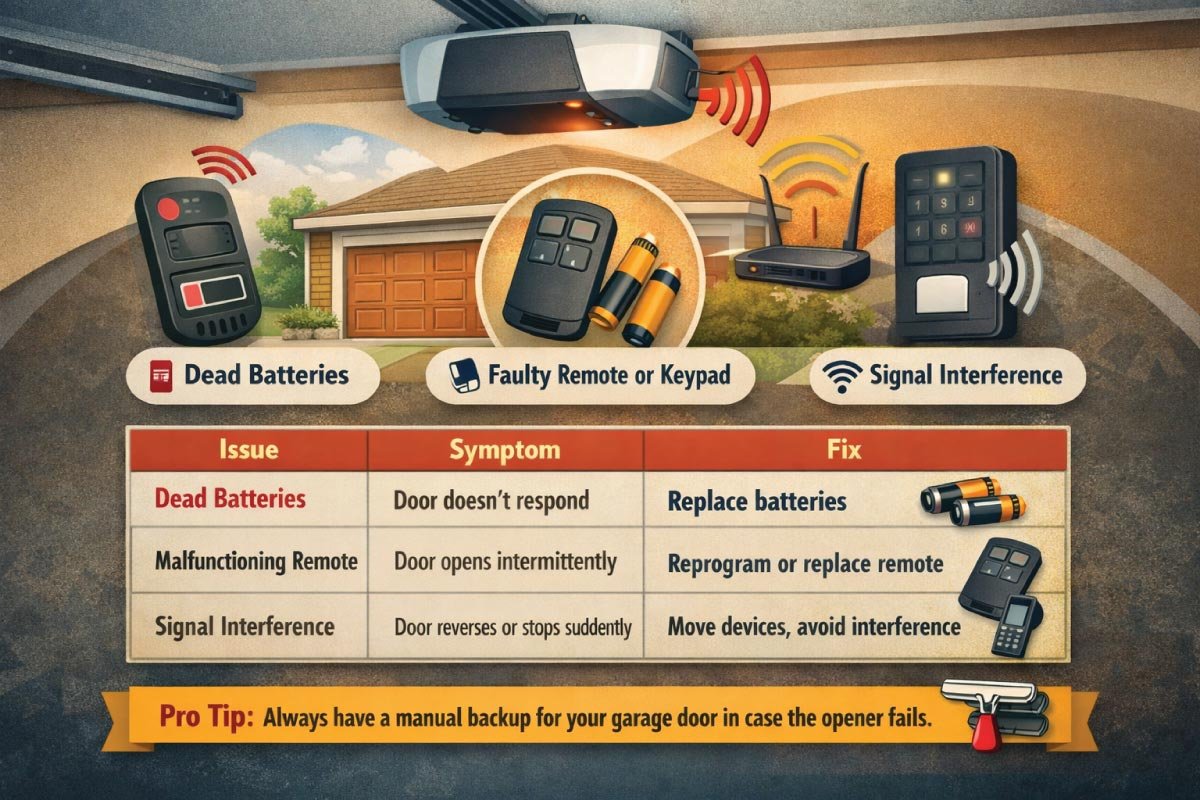
Dead or weak batteries
Malfunctioning remotes or keypads
Interference from nearby devices
Garage Door Remote Issues and Solutions
| Issue | Symptom | Fix |
|---|---|---|
| Dead Batteries | Door doesn’t respond | Replace batteries in remote or keypad |
| Malfunctioning Remote | Door opens intermittently | Reprogram or replace remote |
| Signal Interference | Door reverses or stops suddenly | Move devices, avoid nearby wireless interference |
Pro Tip: Always have a manual backup for your garage door in case the opener fails.
Safety Sensors or Obstructions
Reverse before opening fully
Stop moving halfway
Emit a flashing light or beep
Sensor Problems and Troubleshooting
| Sensor Issue | Symptom | Fix |
|---|---|---|
| Misaligned Sensors | Door reverses or stops prematurely | Adjust sensor so the beams align |
| Dirty Sensors | Door acts erratically | Clean sensors with a soft cloth |
| Obstruction on Track | Door won’t move fully | Remove any debris or objects from path |
Regularly inspect your sensors and ensure they’re free from dirt, spider webs, or debris.
Quick Maintenance Checklist Table
Regular garage door maintenance ensures smooth, safe operation, helps prevent sudden breakdowns, reduces repair costs, and extends the overall lifespan of your entire garage door system.
Lubricate rollers, hinges, and tracks regularly to minimize friction and ensure smooth movement.
Inspect springs for rust, gaps, or wear, and arrange professional replacement when needed.
Check tracks for alignment, bends, or loose hardware to prevent sticking and uneven movement.
Test safety sensors for proper alignment, cleanliness, and unobstructed signal operation.
Observe door operation for unusual noises, jerky motion, or slow response indicating problems.
Sensor Problems and Troubleshooting
Garage door sensors protect people and property, but dirt, misalignment, or damage can cause malfunctions, leading to incomplete opening or unexpected reversing during operation.
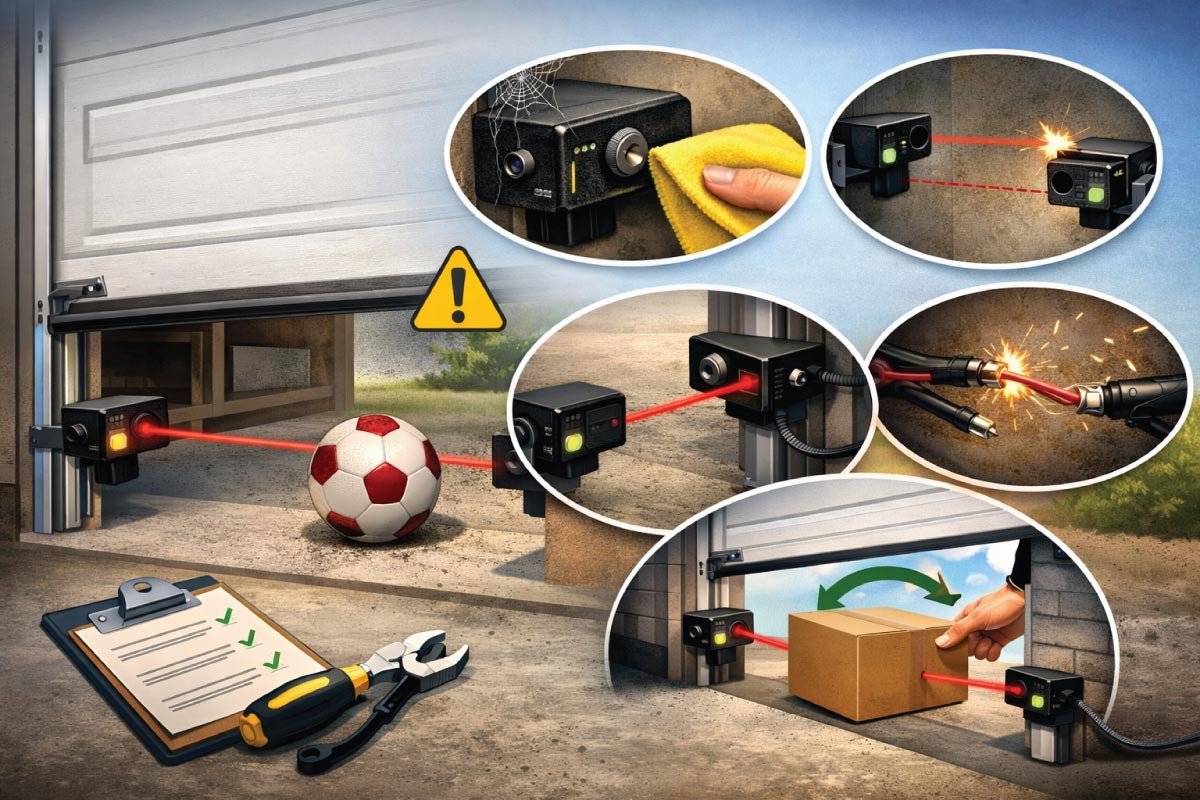
Clean sensor lenses with a soft cloth to remove dust, debris, or spider webs.
Check for obstructions blocking the infrared beam, such as toys or tools.
Verify sensor alignment so both units face each other correctly.
Inspect wiring and connections for damage, looseness, or wear.
Test sensor function by closing the door with an object in its path.
Garage Door Remote Issues and Solutions
| Issue | Symptom | Solution |
|---|---|---|
| Dead Batteries | Door doesn’t respond | Replace batteries in remote or keypad |
| Malfunctioning Remote | Door opens intermittently | Reprogram the remote or replace it if faulty |
| Signal Interference | Door reverses or stops suddenly | Move nearby electronic devices or change the remote’s frequency if possible |
| Damaged Keypad | Door fails to respond | Inspect wiring, repair connections, or replace the keypad |
| Range Issues | Remote only works when very close | Ensure remote is within operational range and check for obstacles |
Track Issues and Maintenance Tips
Garage door tracks guide smooth operation, but bends, misalignment, or debris can cause sticking, jerky movement, or incomplete opening. Regular cleaning, inspection, and lubrication keep the door running safely.
Inspect for bent or dented tracks – Straighten minor bends carefully or call a professional for severe damage.
Tighten loose fasteners – Check all bolts and brackets along the track to prevent wobbling or misalignment.
Clean tracks regularly – Remove dirt, dust, and debris to avoid jams and sensor issues.
Lubricate rollers and tracks – Use a silicone-based garage door lubricant for smooth operation.
Check track alignment – Ensure tracks are parallel and level to prevent binding or uneven movement.
Remove obstacles from the door path – Toys, tools, or other objects can interfere with smooth operation.
Listen for unusual noises – Grinding, scraping, or jerking sounds may indicate track issues needing attention.
Garage Door Spring Problems and Solutions
Garage door springs balance the door’s weight for smooth, safe operation. Broken, worn, or misaligned springs can prevent full opening and create noise or uneven movement.
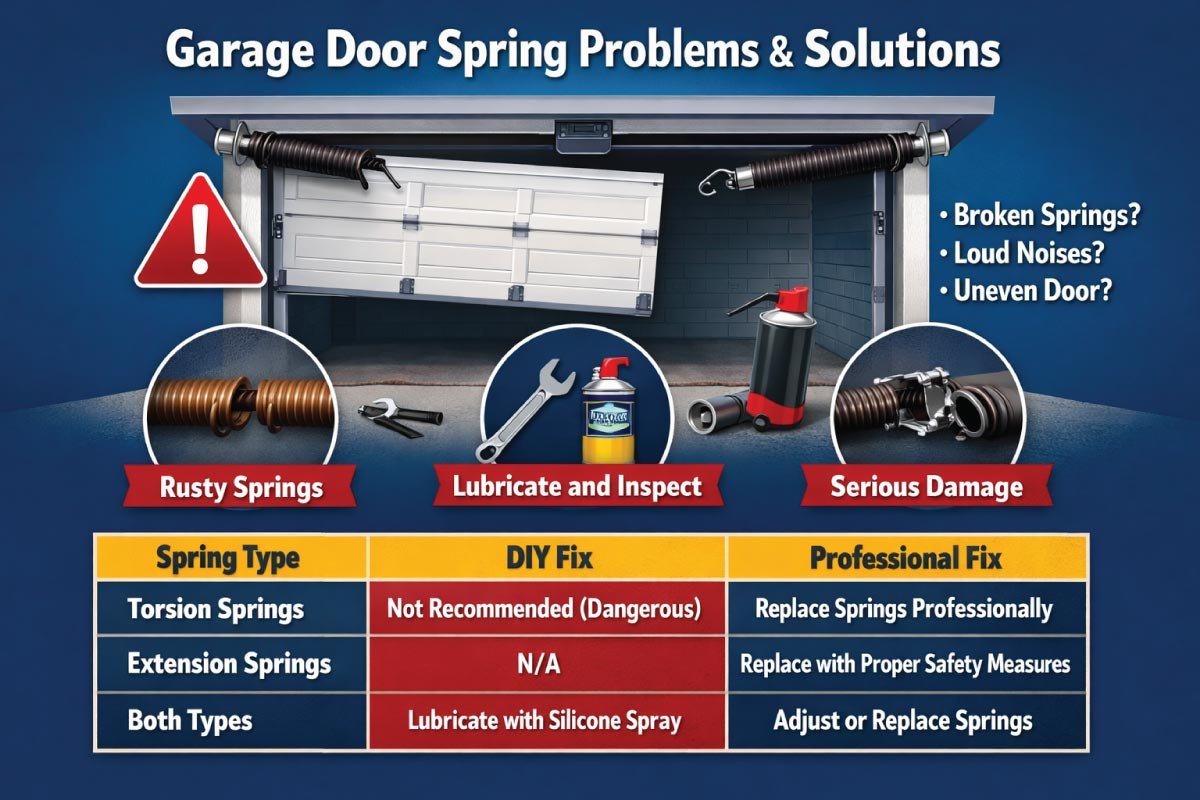
Here’s a quick reference table to understand spring problems and appropriate solutions:
| Spring Type | Problem | DIY Fix | Professional Fix |
|---|---|---|---|
| Torsion Springs | Broken or stretched | Not recommended (dangerous) | Replace springs professionally |
| Extension Springs | Frayed, snapped, or uneven | N/A | Replace with proper safety measures |
| Both Types | Rusted or misaligned | Lubricate with silicone-based lubricant | Adjust alignment or replace if necessary |
Mechanical Issues – Springs, Cables, and Tracks
Garage doors depend on springs, cables, rollers, and tracks for smooth, safe operation. Worn or misaligned parts can cause sticking, noise, or uneven movement, requiring regular inspections.
Inspect springs regularly – Look for gaps, rust, or wear; replace broken springs professionally.
Check cables and pulleys – Frayed or loose cables can cause uneven movement or door failure.
Examine rollers and hinges – Worn rollers or stiff hinges can make the door jerk or squeak.
Inspect tracks – Ensure tracks are straight, clean, and properly aligned to prevent binding.
Electrical Issues – Opener Motor, Wiring, and Remote Controls
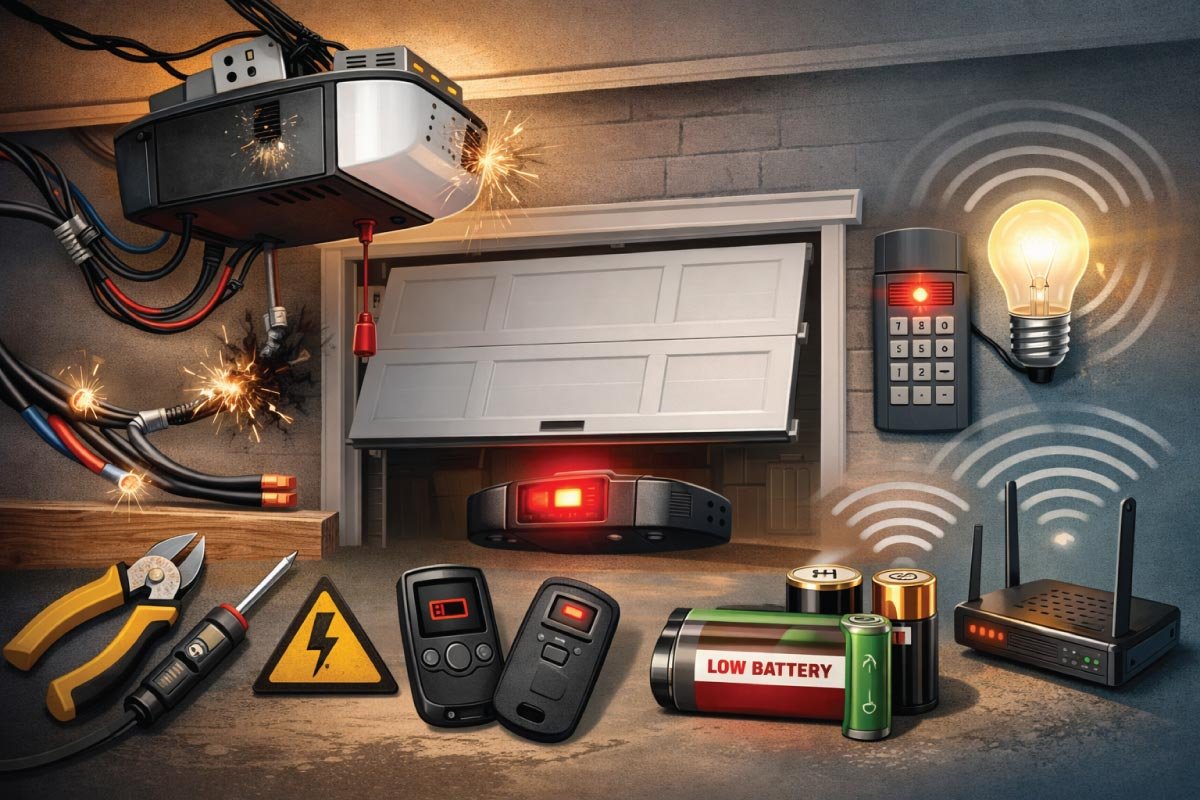
Test the opener motor – Listen for humming or grinding sounds that may indicate wear or failure.
Inspect wiring and connections – Check for frayed wires, loose connections, or exposed cables.
Replace batteries in remotes and keypads – Weak batteries can cause intermittent or no response.
Check remote and keypad operation – Reprogram or replace malfunctioning devices if necessary.
Look for signal interference – Ensure nearby wireless devices or LED lights aren’t affecting operation.
Safety Sensors or Obstructions – Objects Blocking Sensors, Dirt, or Misalignment
Safety sensors prevent accidents by detecting objects or people in the door’s path. Dirt, misalignment, or obstructions can cause malfunction, stopping or reversing the door unexpectedly.
Inspect sensor alignment – Make sure both sensors are facing each other and the beams are properly aligned.
Clean sensor lenses – Remove dust, spider webs, and debris with a soft cloth to prevent false readings.
Check for obstructions – Keep toys, tools, or other items clear of the door path and sensor area.
Motor or Opener Problems
If all mechanical parts seem fine, the issue might be with your garage door opener motor:
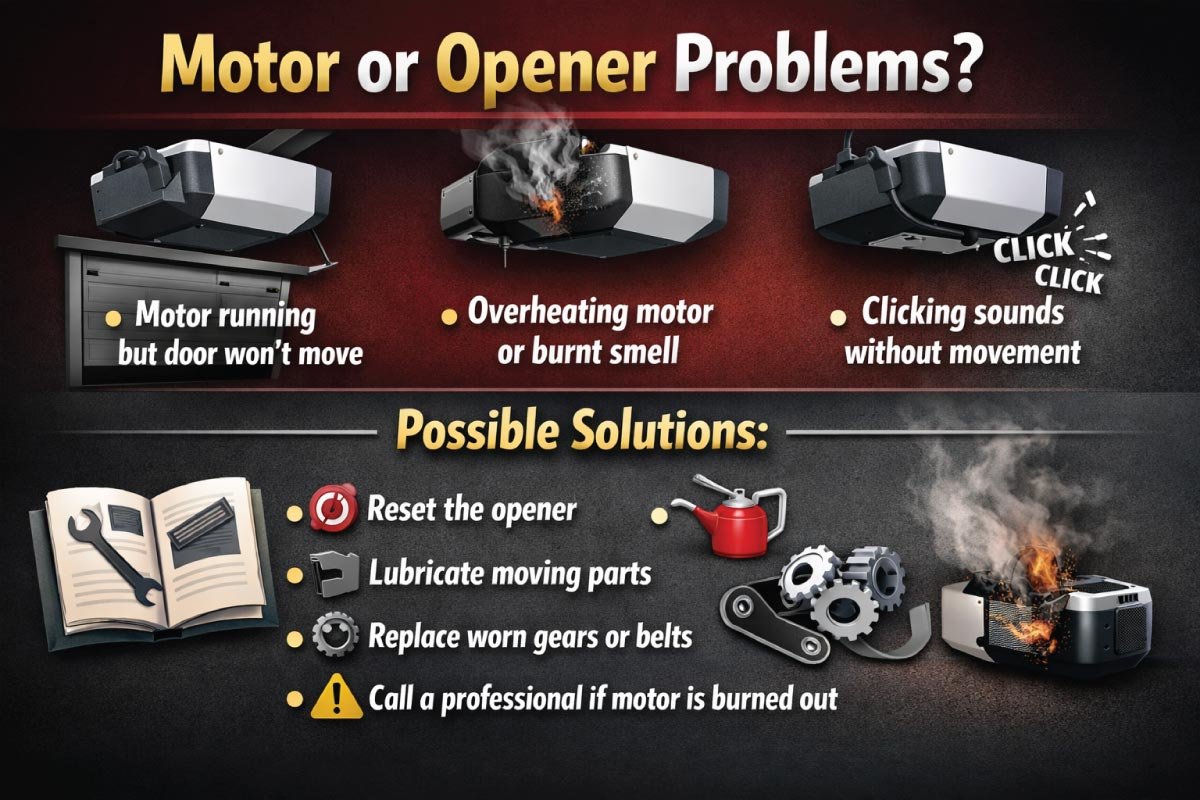
Motor running but door won’t move
Overheating motor or burnt smell
Clicking sounds without movement
Possible solutions:
Reset the opener (check the manual for instructions)
Lubricate moving parts to reduce strain on the motor
Replace worn gears or belts
Call a professional if the motor is burned out
Also Read:
Preventive Maintenance Tips
Lubricate moving parts – Hinges, rollers, and springs at least twice a year.
Check tracks and rollers – Ensure tracks are aligned and rollers are rolling smoothly.
Test safety sensors – Clean and realign sensors if needed.
Inspect springs – Look for wear, rust, or gaps.
Check opener function – Replace batteries and test remotes regularly.
| Task | Frequency | Notes |
|---|---|---|
| Lubricate rollers & hinges | 6 months | Use silicone-based lubricant |
| Inspect springs | 6 months | Look for gaps or rust |
| Clean tracks | 6 months | Remove debris and dirt |
| Test sensors | Monthly | Ensure alignment and cleanliness |
| Test opener & remotes | Monthly | Replace batteries if weak |
DIY vs Professional Help
Minor issues like battery replacement, sensor cleaning, or roller lubrication can be done at home, but high-tension springs, wiring, or heavy components require professional attention for safety.
| Problem | DIY Possible? | Recommendation |
|---|---|---|
| Dead batteries/remote | ✅ | DIY |
| Dirty sensors | ✅ | DIY |
| Lubricating tracks & rollers | ✅ | DIY |
| Broken springs | ❌ | Professional repair |
| Motor or opener replacement | ❌ | Professional repair |
| Misaligned tracks (severe) | ❌ | Professional repair |
Pro Tip: If your garage door consistently stops before opening fully, don’t force it. Doing so can damage the opener or door system.
Conclusion
A garage door that won’t open fully is more than inconvenient—it’s a safety risk. Identifying the cause, performing regular maintenance, and knowing when to call a professional keeps your door safe, reliable, and long-lasting. Preventive care and early troubleshooting save time, money, and frustration, ensuring your garage door remains a secure, functional part of your home.
Discover More:

Engineer Ali Usman is a professional garage door expert and author at FixFasty, with over 10 years of hands-on experience in garage door systems and mechanical maintenance. He writes clear, step-by-step guides on garage door repairs, parts, and safety practices, helping homeowners fix problems correctly and maintain smooth, secure, and long-lasting garage door performance.