
A squeaky garage door can be incredibly frustrating. That loud screech, grinding sound, or high-pitched squeal every time you open or close the door can wake the whole house, annoy the neighbors, and make your home feel poorly maintained. The good news is that most garage door noises are easy to fix with simple DIY solutions.
In this complete guide, you’ll learn why garage doors squeak, which parts cause noise, and exact step-by-step fixes that actually work. Whether you’re a homeowner, renter, or DIY beginner, this article will help you silence your garage door without spending a fortune.
Why Is My Garage Door Squeaking?
Before fixing the noise, it’s important to understand where it’s coming from. A garage door has many moving metal parts, and over time, friction, dirt, rust, and wear can create squeaking sounds.
The most common reasons include:
Lack of lubrication on hinges, rollers, and springs
Dirt and debris buildup in tracks and rollers
Loose hardware such as bolts and brackets
Worn-out rollers or hinges
Rusty springs or bearing plates
Most of these problems are easy to fix at home with basic tools.
Common Squeaky Garage Door Problems and Quick Solutions
| Garage Door Part | Common Problem | Why It Squeaks | Quick Fix |
|---|---|---|---|
| Rollers | Dirt, rust, wear | Friction while moving | Clean, lubricate, or replace |
| Hinges | Dry joints | Metal rubbing | Lubricate hinges |
| Springs | Dry or rusty | Tension movement | Apply lubricant |
| Tracks | Debris or misalignment | Rollers rubbing | Clean and realign |
| Brackets | Loose bolts | Vibration | Tighten hardware |
Tools and Supplies You will Need for DIY Fix
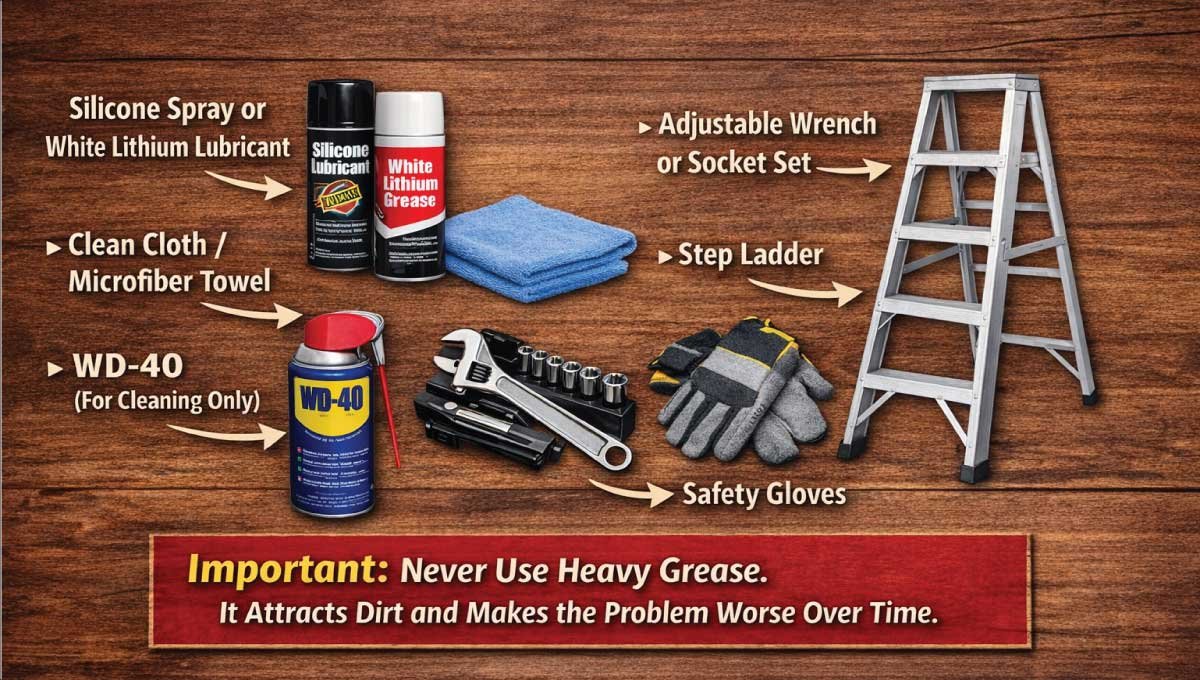
Before starting, gather these simple tools:
Silicone spray or white lithium garage door lubricant
Clean cloth or microfiber towel
WD-40 (for cleaning only)
Adjustable wrench or socket set
Step ladder
Safety gloves
Important: Never use heavy grease. It attracts dirt and makes the problem worse over time.
Step-by-Step Guide: How to Fix a Squeaky Garage Door
Step 1: Lubricate All Moving Parts (Most Important Fix)
1- Hinges (where they bend): Hinges allow the door panels to bend and move along the track; when dry, they squeak and bind. Lubricating hinge joints reduces friction, prevents metal wear, and ensures smooth, quiet panel movement.
2- Rollers (especially metal ones): Rollers guide the door along the tracks and carry much of the weight. Metal rollers especially need lubrication to spin freely, reduce vibration, minimize grinding noise, and prevent premature bearing failure.
3- Springs (torsion or extension): Torsion and extension springs lift most of the door’s weight, and dry coils rub together, causing loud squeaks. Lubrication reduces friction, prevents corrosion, quiets operation, and helps extend spring lifespan.
4- Bearing plates: Bearing plates support the torsion shaft and allow it to rotate smoothly as the door opens and closes. When unlubricated, they grind and squeal; proper lubrication ensures quiet rotation and reduces mechanical stress.
5- Pulleys (if your system has them): On extension-spring systems, pulleys guide the lifting cables and change direction under heavy load. Dry pulleys create squeaks and drag; lubricating them keeps the cable moving smoothly and reduces strain on the system.
How to Do It:
Close the garage door fully: Fully closing the door provides safe access to all components and prevents sudden movement during lubrication.
Spray lubricant on each hinge, roller, and spring: Apply lubricant directly to hinges, rollers, and springs to reduce friction and eliminate squeaking at contact points.
Move the door up and down to spread the lubricant: Opening and closing the door several times helps distribute the lubricant evenly across moving parts and internal bearings.
Wipe off excess spray: Removing excess lubricant prevents dripping, dust buildup, and slippery surfaces while keeping the garage door hardware clean.
Step 2: Clean the Tracks and Rollers Thoroughly
Dust, debris, and small stones build up over time, causing friction and noise. Cleaning the tracks and rollers ensures smooth movement, prevents grinding, and helps the door operate quietly and efficiently.
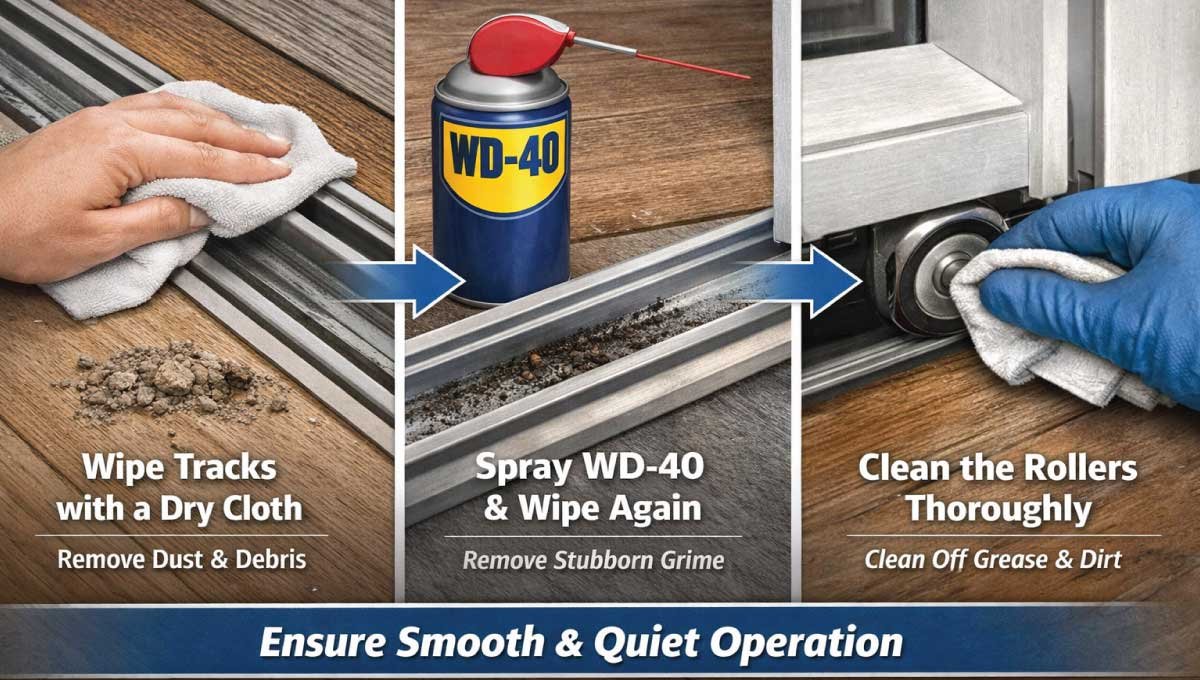
How to Clean:
Wipe tracks with a dry cloth: Use a clean, dry cloth to remove loose dust, dirt, and small debris from inside the tracks. This prevents buildup that can cause grinding noises and ensures the rollers move smoothly.
If needed, spray a little WD-40 and wipe again: For stubborn grime or sticky residue, lightly spray WD-40 onto the cloth and wipe the tracks again. This helps loosen buildup without oversaturating the area or attracting excessive dirt.
Clean the rollers carefully to remove grime: Gently wipe each roller to remove grease, dust, and dirt that can cause squeaking or uneven movement. Clean rollers spin more freely, reduce vibration, and help the door glide quietly.
Step 3: Tighten All Loose Hardware
Garage doors operate frequently, causing constant vibration that gradually loosens bolts, screws, and brackets. These loose components produce rattling, squeaking, and unstable movement. Regularly checking and tightening all hardware ensures quieter operation, better alignment, and longer-lasting door performance.
Check These Areas:
Hinges: Hinges connect the door panels and allow them to bend as the door moves. Over time, vibration can loosen hinge screws, causing squeaks and misalignment. Regularly checking and tightening hinges ensures smooth, stable, and quiet operation.
Brackets: Brackets hold essential components like rollers, tracks, and springs in place. Loose brackets can rattle or shift, creating noise and stressing other parts. Inspect and tighten them to maintain proper alignment and reduce squeaking or grinding sounds.
Track mounts: Track mounts secure the garage door tracks to walls or ceilings. If they loosen, tracks can vibrate or misalign, causing the door to operate noisily or bind. Tightening mounts keeps the tracks stable and ensures smooth door movement.
Support arms: Support arms, also called door arms, connect the door to the opener or counterbalance system. Loose arms can cause rattling, uneven motion, or stress on the opener. Checking and tightening them ensures quiet, reliable, and safe operation.
Step 4: Inspect and Replace Worn-Out Rollers
Over time, garage door rollers wear down, crack, or become misaligned, causing squeaking, grinding, and uneven movement. Inspecting them regularly and replacing any damaged or worn rollers ensures smooth operation, reduces noise, and prevents further strain on the door and opener system.
Signs Rollers Need Replacement:
Cracks or chips: Rollers with visible cracks, chips, or missing pieces indicate structural weakness. Damaged rollers cannot rotate smoothly, increasing friction and noise. Replacing them promptly prevents further wear on tracks, reduces squeaking, and maintains safe, efficient door operation.
Wobbling movement: If a roller wobbles while the door moves, it signals worn bearings or a loose axle. Wobbling creates uneven motion, vibrations, and extra strain on other hardware. Replacing the roller restores stability, smooth gliding, and quieter operation.
Loud grinding noise: A grinding or scraping sound during door movement usually means the roller is failing or misaligned. Worn rollers damage tracks and bearings, creating friction and noise. Replacing them eliminates the grinding and ensures the door moves quietly and safely.
Flat spots on wheels: Flat spots develop when rollers wear unevenly or are overloaded. They cause jerky motion, vibration, and squeaking as the door moves. Replacing rollers with flat spots ensures smoother travel, reduces noise, and protects the tracks from damage.
| Roller Type | Noise Level | Lifespan | Best For |
|---|---|---|---|
| Plastic | Loud | Short | Budget use |
| Steel | Medium | Medium | Heavy doors |
| Nylon | Very quiet | Long | Smooth, silent operation |
Step 5: Lubricate the Springs Safely
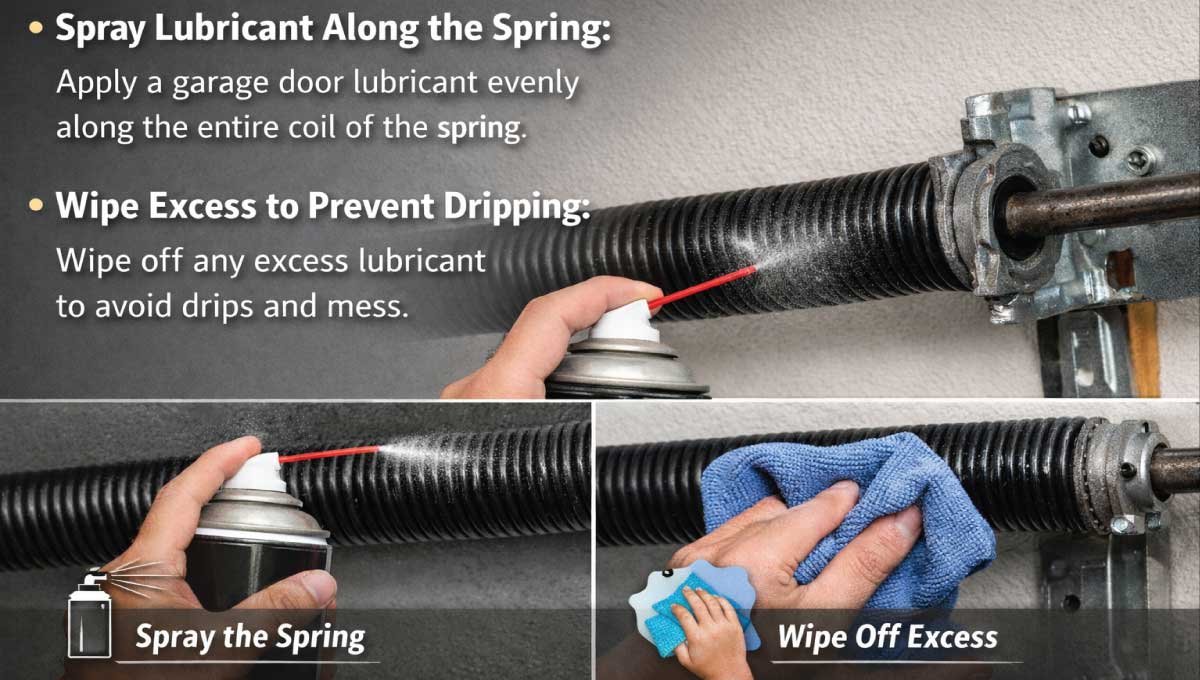
What to Do:
Spray lubricant along the length of the spring: Apply a garage-door-safe lubricant evenly along the entire coil of each spring. This reduces friction between coils, prevents squeaking, protects against rust, and ensures the springs move smoothly under heavy tension during opening and closing.
Wipe excess to prevent dripping:After applying lubricant, carefully wipe away any excess to avoid dripping onto the floor, opener, or other components. Excess lubricant can attract dust and dirt, create slippery surfaces, and reduce overall cleanliness and efficiency of the garage door system.
Step 6: Check and Realign the Tracks
Signs of Misalignment:
Door jerks while moving: If the garage door jerks or moves unevenly during opening or closing, it indicates the tracks are misaligned. This uneven motion increases friction, causes squeaking, and places extra stress on rollers, springs, and the opener system.
Visible gaps between roller and track: Gaps between the rollers and track edges are a clear sign of misalignment. These gaps prevent smooth roller movement, create noise, and can lead to accelerated wear on both the rollers and tracks, compromising door performance and safety.
Door rubs one side: When the door rubs against one side of the track, it signals uneven alignment. This constant contact generates squeaking, scraping, and friction, and if not corrected, it may damage the rollers, tracks, and other moving components over time.
How to Fix:
Loosen track bolts slightly: Loosen the bolts holding the tracks just enough to allow slight movement. This creates flexibility to adjust the track alignment without fully detaching it, preventing unnecessary damage or misplacement.
Gently tap track into correct position: Carefully tap the track using a rubber mallet or similar tool until it is properly aligned. Ensure the rollers sit evenly and the door moves smoothly along the track.
Retighten bolts securely: Once the track is correctly positioned, tighten all bolts firmly. Securely fastened tracks prevent future misalignment, reduce squeaking and vibration, and maintain safe, smooth operation of the garage door.
👉 Garage Door Making Noise? This helpful guide explains the common reasons behind grinding, squeaking, or rattling sounds and shows simple DIY fixes you can try at home. Learn how to restore quiet operation, improve safety, and prevent future issues by reading the full post today.
DIY Garage Door Fix Comparison Table
| Fix Method | Difficulty Level | Time Required | Cost | Noise Reduction |
|---|---|---|---|---|
| Lubrication | Easy | 10–15 min | Low | ⭐⭐⭐⭐⭐ |
| Cleaning | Easy | 15 min | Free | ⭐⭐⭐⭐ |
| Tightening hardware | Easy | 10 min | Free | ⭐⭐⭐⭐ |
| Replacing rollers | Medium | 30–45 min | Medium | ⭐⭐⭐⭐⭐ |
| Track realignment | Medium | 30 min | Free | ⭐⭐⭐ |
| Spring repair | Hard | — | High | ⭐⭐⭐⭐⭐ (Pro only) |
Best Lubricants for Garage Door Noise
Choosing the correct lubricant is crucial for quiet, smooth garage door operation. Recommended options include silicone spray for clean, long-lasting coverage, white lithium spray grease for metal parts, and garage door-specific lubricants as the overall best choice. Avoid heavy grease, motor oil, or cooking oil, as they attract dirt, build up grime, and can cause more damage over time.
How Often Should You Maintain Your Garage Door?
Regular maintenance keeps your door quiet and extends its life.
| Maintenance Task | How Often |
|---|---|
| Lubrication | Every 6 months |
| Cleaning tracks | Every 3–6 months |
| Tighten hardware | Every 6 months |
| Visual inspection | Monthly |
| Professional service | Once per year |
Signs Your Garage Door Needs Professional Help
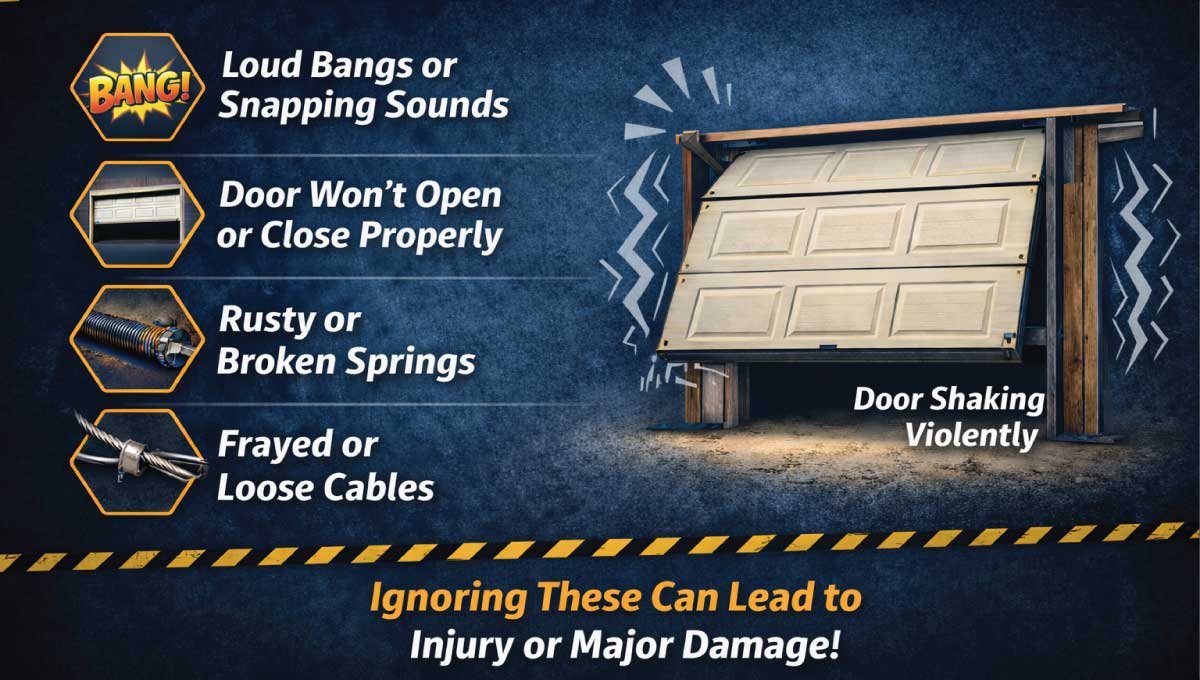
Call a professional if:
You hear loud bangs or snapping sounds
The door won’t open or close properly
Springs are rusty, stretched, or broken
Cables are frayed or loose
The door shakes violently
Ignoring these can lead to injury or major damage.
Final Thoughts
A squeaky garage door is rarely a sign of a major problem and doesn’t necessarily require costly repairs. In most cases, basic maintenance—like lubricating moving parts, cleaning tracks and rollers, and tightening loose hardware—can restore smooth, quiet operation in less than an hour. These simple DIY solutions are effective, cost-saving, and can dramatically improve your home’s comfort. Regular care now helps your garage door last longer, operate more quietly, and perform reliably, protecting your investment and preventing future headaches.
👉 Complete Garage Door Guide covers everything from basic components to common repairs and smart maintenance tips. This post helps homeowners understand how garage doors work, fix minor issues, and avoid costly repairs. If you want a safer, smoother, and longer-lasting garage door, read the full guide and become confident with your garage care.

Engineer Ali Hasan is a garage door expert and the founder of FixFasty. With over 16 years of experience in mechanical systems and home maintenance, he provides practical, step-by-step guides on garage door installation, repairs, and maintenance, helping homeowners keep their garage doors safe, reliable, and long-lasting.