
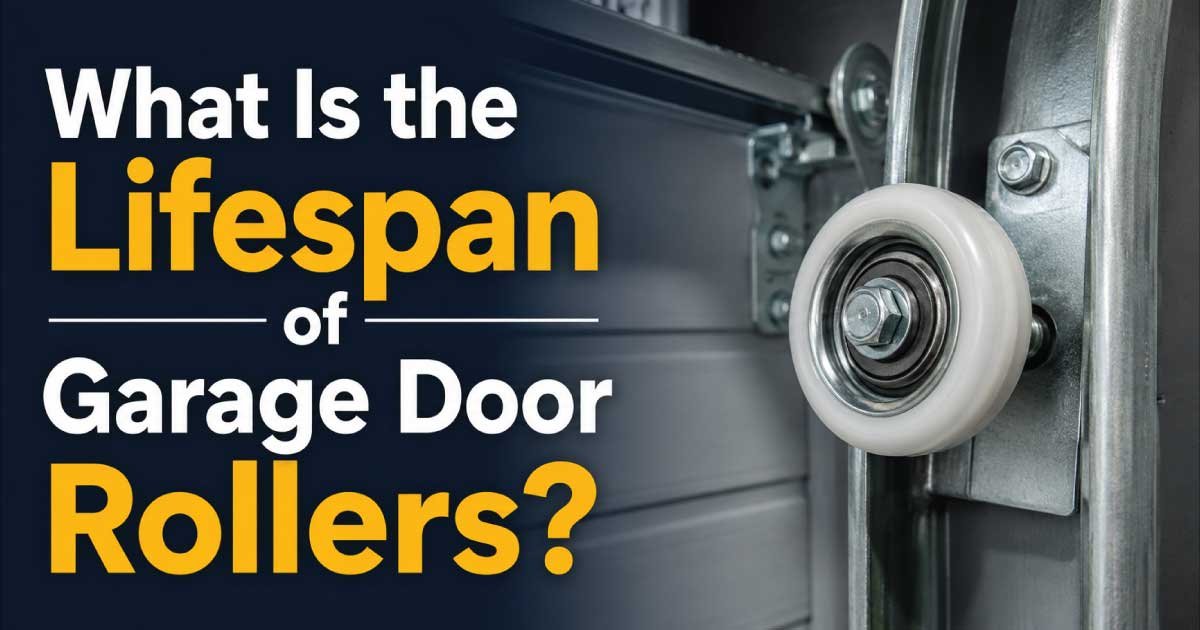
Garage door rollers are small parts that make a big difference. Every time you open or close your garage door, the rollers guide the door smoothly along its tracks. Over time, these components wear down because of constant movement, dirt buildup, changing weather, and lack of maintenance. When rollers begin to fail, your garage door may become noisy, uneven, slow, or even unsafe to operate.
Understanding what is the lifespan of garage door rollers helps homeowners avoid unexpected breakdowns and expensive emergency repairs. Replacing worn rollers before they fail completely can protect other important parts, including the tracks, hinges, opener, and springs. It can also improve safety, especially if your garage door is used multiple times each day.
This guide explains how garage door rollers normally work, the warning signs of worn rollers, the most common reasons they wear out, and the safest way to inspect them. You’ll also learn practical troubleshooting steps, basic diagnosis techniques, and the tools needed to determine whether your rollers require maintenance, repair, or replacement.
Common Signs and Symptoms
Garage door rollers rarely fail without warning. In most cases, they show clear signs of wear long before they stop working properly. Recognizing these symptoms early can help you prevent damage to other garage door components and reduce repair costs.
Common warning signs include:
- Loud squeaking or grinding noises during operation
- Garage door shaking or vibrating while opening or closing
- Door moving unevenly along the tracks
- Jerky or hesitant movement
- Visible cracks or chips on nylon rollers
- Rust or corrosion on steel rollers
- Rollers coming off the track
- Flat spots on the roller wheels
- Door becoming slower than normal
- Garage door opener straining harder than usual
You may also notice that the garage door no longer closes evenly or leaves a slight gap at the bottom. While worn rollers are not always the only cause, they are one of the most common reasons for uneven movement.
Another useful clue is the age of the rollers. If they’ve been in service for many years without replacement or regular maintenance, wear becomes much more likely.
How the Appliance or System Normally Works
Before troubleshooting garage door rollers, it helps to understand how they fit into the entire garage door system. Knowing how everything works together makes it easier to recognize what has failed.
A standard sectional garage door uses multiple rollers attached to hinges on each door panel. These rollers sit inside metal tracks mounted on both sides of the garage opening.
When the garage door opens:
- The opener or your manual lifting force moves the door.
- The rollers travel smoothly inside the tracks.
- Hinges allow each door section to bend as the door follows the curved track.
- Springs balance the weight so the opener doesn’t lift the entire load alone.
Healthy rollers should:
- Roll smoothly with minimal resistance.
- Stay centered inside the track.
- Produce very little noise.
- Keep the door properly aligned.
- Reduce stress on the opener and springs.
Most residential garage doors use one of three roller materials:
- Plastic rollers – Lowest cost but shortest lifespan.
- Steel rollers – Strong and durable but often noisier.
- Nylon rollers – Quiet operation with excellent durability, especially when equipped with sealed bearings.
The number of bearings inside each roller also affects performance. Premium rollers with multiple sealed bearings generally last much longer and require less maintenance than inexpensive models with fewer bearings.
Most Common Reasons This Problem Happens
Garage door rollers wear out for several different reasons. Some are expected with age, while others result from poor maintenance or problems elsewhere in the garage door system. Identifying the actual cause helps you choose the right repair instead of replacing parts unnecessarily.
Normal Wear and Tear
Garage door rollers have a limited service life because they rotate thousands of times every year. Every opening and closing cycle creates friction between the roller bearings and the track.
Why it happens
Daily operation gradually wears the bearings and roller surface. Eventually, smooth movement becomes difficult.
Symptoms
- Increasing noise
- Rough movement
- Visible wear
- Slower operation
How to identify it
Inspect each roller closely. Worn rollers often wobble on their stems or show uneven wear around the wheel.
Lack of Lubrication
Proper lubrication reduces friction and protects moving parts from premature wear. Without it, metal components generate excessive heat and wear much faster.
Why it happens
Many homeowners either forget routine maintenance or use the wrong lubricant, such as grease that attracts dirt.
Symptoms
- Squeaking
- Grinding
- Increased resistance
- Roller sticking
How to identify it
Dry rollers usually appear dusty or rusty and may squeak immediately when the door starts moving.
Dirt and Debris in the Tracks
Garage floors collect dust, sand, leaves, and small debris. Over time, some of this material enters the tracks.
Why it happens
Foreign material interferes with smooth roller movement and increases friction.
Symptoms
- Jerky door movement
- Clicking sounds
- Rollers stopping briefly
How to identify it
Inspect the full length of both tracks with a flashlight. Dirt buildup is often easy to see near the bottom corners.
Rust and Corrosion
Steel rollers are especially vulnerable to moisture, particularly in humid climates or garages exposed to rain and snow.
Why it happens
Moisture attacks unprotected metal surfaces, increasing friction and damaging bearings.
Symptoms
- Rust-colored residue
- Rough rolling
- Grinding noises
How to identify it
Look for orange or brown corrosion around the bearings and roller stems.
Bent Tracks
Sometimes the rollers themselves are still in good condition, but damaged tracks prevent them from rolling smoothly.
Why it happens
Vehicle impacts, accidental bumps, or loose mounting brackets can bend the track.
Symptoms
- Door sticking in one location
- Rollers jumping
- Uneven movement
How to identify it
Stand several feet away and visually inspect both tracks. Any bends, dents, or misalignment may interfere with roller travel.
Worn Bearings
The wheel itself may appear fine while the internal bearing has failed.
Why it happens
Bearings naturally wear after years of repeated rotation.
Symptoms
- Roller wobble
- Grinding
- Excessive vibration
How to identify it
Rotate each roller by hand during inspection. A healthy bearing turns smoothly without noticeable play.
Heavy Garage Door Usage
The lifespan of garage door rollers depends heavily on usage rather than age alone.
Why it happens
Homes where multiple family members frequently use the garage may cycle the door eight to fifteen times every day.
Symptoms
- Earlier wear than expected
- Multiple rollers failing together
How to identify it
Estimate your daily door cycles. High-use doors often require roller replacement much sooner than lightly used systems.
Safety Precautions Before Troubleshooting
Garage doors are among the heaviest moving objects in most homes. Although inspecting rollers is usually safe, some repair tasks involve components under extreme spring tension. Understanding these risks helps prevent serious injuries.
Before beginning any inspection or DIY repair:
- Disconnect the automatic garage door opener.
- Keep children and pets away from the work area.
- Wear safety glasses.
- Wear sturdy work gloves.
- Use a stable ladder if inspecting upper rollers.
- Ensure the garage has adequate lighting.
- Never place fingers between door sections.
- Avoid standing directly beneath a partially open door.
- Do not loosen torsion springs or spring brackets.
- Do not remove bottom rollers attached to spring cables unless you’re trained to do so.
If the door appears severely damaged, has come off its tracks, or is hanging unevenly, stop troubleshooting and arrange for a professional inspection before operating it again.
Tools Required
A careful inspection doesn’t require many specialized tools, but having the right equipment makes the job easier and safer.
| Tool | Purpose |
|---|---|
| Safety glasses | Protect eyes from dust and debris |
| Work gloves | Improve grip and protect hands |
| Flashlight | Inspect rollers, tracks, and bearings |
| Step ladder | Reach upper roller assemblies safely |
| Clean microfiber cloth | Wipe dirt from rollers and tracks |
| Garage door lubricant | Lubricate approved moving parts |
| Adjustable wrench | Check loose hardware if needed |
| Screwdriver set | Inspect brackets and hinges |
| Tape measure | Verify track spacing if necessary |
Step-by-Step Troubleshooting Guide
A systematic inspection helps you identify worn rollers without replacing parts unnecessarily. Work through each step carefully before deciding whether maintenance or replacement is required.
1. Observe the Door During Operation
What to inspect
Watch the garage door open and close from a safe distance.
Why it matters
Movement often reveals problems before visual inspection does.
Expected result
The door should travel smoothly with consistent speed.
What to do next
If you notice shaking, hesitation, or loud noises, continue with a closer inspection.
2. Listen for Unusual Sounds
What to inspect
Pay attention to squeaks, grinding, clicking, or scraping.
Why it matters
Different sounds often indicate different types of roller wear.
Expected result
Healthy rollers operate quietly.
What to do next
Locate where the sound occurs before inspecting individual rollers.
3. Inspect Every Roller
What to inspect
Examine each roller for cracks, rust, flat spots, or wobbling.
Why it matters
A single damaged roller can affect the entire system.
Expected result
All rollers should appear round, clean, and firmly attached.
What to do next
Replace damaged rollers rather than waiting for complete failure.
4. Check the Tracks
What to inspect
Look for dirt, dents, loose brackets, or bent sections.
Why it matters
Healthy rollers cannot operate correctly inside damaged tracks.
Expected result
Tracks should remain straight, clean, and securely fastened.
What to do next
Clean minor debris or schedule professional repair for bent tracks.
5. Evaluate Lubrication
What to inspect
Determine whether moving parts appear dry.
Why it matters
Proper lubrication extends roller life and reduces wear.
Expected result
Rollers should move freely without excessive friction.
What to do next
Apply garage-door-approved lubricant if appropriate and test the door again.
6. Assess Overall Roller Age
What to inspect
Estimate the installation date and usage history.
Why it matters
Rollers approaching the end of their expected lifespan often fail in groups.
Expected result
Older rollers may still function but show increasing wear.
What to do next
Plan preventive replacement if several rollers show signs of aging.
Quick Diagnosis Table
The following table summarizes common symptoms, likely causes, and the most appropriate next step for homeowners.
| Symptom | Possible Cause | Recommended Solution |
|---|---|---|
| Loud squeaking | Dry rollers or worn bearings | Lubricate and inspect for wear |
| Grinding noise | Bearing failure | Replace affected rollers |
| Door shakes during operation | Worn or damaged rollers | Inspect all rollers and replace damaged units |
| Roller comes off track | Bent track or severely worn roller | Stop using the door and inspect track alignment |
| Slow door movement | High friction or dirty tracks | Clean tracks and inspect rollers |
| Uneven door travel | Multiple worn rollers or track issue | Check roller condition and track alignment |
| Visible cracks in nylon rollers | Age-related wear | Replace cracked rollers promptly |
| Rust on steel rollers | Moisture damage | Replace corroded rollers and improve maintenance |
How to Fix Each Common Cause
Now that you’ve identified the likely cause of worn or noisy rollers, the next step is choosing the correct repair. Some issues can be handled by most homeowners with basic tools, while others involve high-tension components that should only be serviced by a trained garage door technician. Always follow the safety precautions discussed earlier before attempting any repair.
Replace Worn or Damaged Rollers
If a roller has cracked, developed flat spots, wobbles excessively, or no longer turns freely, replacement is the best solution.
How to fix it:
- Disconnect the garage door opener.
- Secure the door so it cannot move unexpectedly.
- Replace only the rollers that can be safely removed without disturbing the bottom bracket or spring system.
- Install a replacement roller that matches the original size and stem length.
- Ensure the roller sits correctly inside the track before testing the door.
DIY or professional?
- Upper and middle rollers may be suitable for experienced DIY homeowners on some garage door designs.
- Bottom rollers should always be replaced by a professional because they are connected to cables under extreme spring tension.
Lubricate Dry Rollers
Dry rollers are one of the easiest problems to correct.
How to fix it:
- Wipe away old dirt and dust.
- Apply a garage-door-specific silicone or lithium-based lubricant to the bearings and moving joints.
- Open and close the door several times to distribute the lubricant evenly.
Avoid using heavy grease or engine oil. These products attract dirt and may create more problems over time.
Clean Dirty Tracks
Dirty tracks prevent even healthy rollers from moving smoothly.
How to fix it:
- Remove loose debris using a dry cloth.
- Wipe the inside of the tracks with a damp microfiber cloth.
- Dry the tracks thoroughly.
- Inspect for dents or obstructions.
Do not lubricate the tracks. Rollers are designed to roll on clean metal, not slide across a lubricated surface.
Replace Rusted Steel Rollers
Surface rust may be cleaned temporarily, but heavily corroded rollers should be replaced.
Modern sealed nylon rollers offer several advantages:
- Quieter operation
- Less maintenance
- Better resistance to moisture
- Longer bearing life
For many homeowners, upgrading from older steel rollers significantly improves overall garage door performance.
Correct Minor Hardware Problems
Sometimes the rollers are not the only issue.
Loose hinge bolts or mounting brackets may cause the rollers to sit at the wrong angle.
Inspect:
- Roller brackets
- Hinges
- Mounting bolts
- Track fasteners
Tighten loose hardware carefully without overtightening.
Repair Bent Tracks
Small bends can occasionally be straightened by an experienced homeowner, but significant track damage usually requires replacement.
Professional repair is recommended if:
- The track has large dents.
- The track has separated from the wall.
- The rollers repeatedly leave the track.
- The door binds in the same location every time.
Operating a garage door with damaged tracks can quickly destroy new rollers.
Advanced Troubleshooting
If replacing worn rollers doesn’t completely solve the problem, another component in the garage door system may be contributing to poor performance. Advanced troubleshooting helps identify these less obvious issues before unnecessary parts are replaced.
Check Garage Door Balance
An unbalanced door places excessive strain on rollers.
To test balance:
- Disconnect the opener.
- Lift the door halfway.
- Release it carefully.
A properly balanced door should remain nearly in place.
If the door quickly falls or rises, the springs need adjustment. Do not adjust torsion springs yourself.
Inspect Hinges
Worn hinges allow excessive movement between door sections.
Symptoms include:
- Rollers twisting inside the track
- Door wobbling
- Metal clicking sounds
Replace cracked or bent hinges promptly.
Examine the Garage Door Opener
A struggling opener can make healthy rollers appear faulty.
Check for:
- Delayed starts
- Motor straining
- Inconsistent travel
- Incorrect travel limits
Sometimes adjusting the opener settings solves the issue without replacing additional hardware.
Look for Track Misalignment
Tracks should remain parallel throughout their length.
Misaligned tracks may cause:
- Rollers to bind
- Uneven wear
- Excessive vibration
Even small alignment errors can shorten the lifespan of new rollers.
Inspect Roller Bearings Individually
Premium nylon rollers often hide bearing wear until close inspection.
Spin each accessible roller by hand.
Healthy bearings should:
- Rotate smoothly
- Stop gradually
- Produce little noise
Grinding or rough rotation usually means replacement is necessary.
When Repair Is Not Worth It
Sometimes replacing individual rollers is no longer the most practical solution. Older garage doors often develop multiple worn components at the same time, making repeated repairs less cost-effective than a larger upgrade.
Replacement may be the better choice when:
- Most rollers have reached the end of their lifespan.
- Tracks are severely bent.
- Multiple hinges are failing.
- Springs are also nearing replacement age.
- The garage door itself is badly warped or damaged.
- Repair costs approach the value of a newer, safer system.
For example, replacing one roller every few months may seem inexpensive, but if the entire roller set is the same age, replacing all of them together usually saves both time and future labor costs.
Likewise, an aging garage door opener may continue placing excessive stress on newly installed rollers if it is no longer operating smoothly.
Preventive Maintenance Tips
Routine maintenance is the easiest way to maximize the lifespan of garage door rollers. Most inspections take only a few minutes and can prevent much more expensive repairs later.
Follow these best practices:
- Inspect rollers every six months.
- Clean dirt from the tracks regularly.
- Lubricate bearings and hinges with garage-door-approved lubricant.
- Tighten loose bolts during inspections.
- Replace damaged rollers immediately.
- Keep water away from steel components whenever possible.
- Test door balance annually.
- Listen for changes in operating noise.
- Avoid slamming the garage door.
- Schedule professional maintenance every one to two years.
A simple maintenance routine can often extend the service life of quality rollers by several years.
Common Mistakes to Avoid
Many garage door problems become worse because of well-intentioned but incorrect repairs. Avoiding these common mistakes can protect both your garage door and your safety.
- Ignoring unusual noises for months.
- Lubricating the tracks instead of the rollers.
- Using household grease instead of garage door lubricant.
- Mixing different roller sizes during replacement.
- Replacing only the visibly damaged roller when several others are worn.
- Attempting to remove bottom brackets connected to torsion springs.
- Continuing to operate a garage door that has come off the track.
- Buying low-quality replacement rollers solely because they cost less.
- Forgetting to inspect hinges and tracks during roller replacement.
- Skipping regular maintenance after installing new rollers.
When to Call a Professional
While many inspections are safe for homeowners, some repairs involve significant risks. Knowing when to stop and call an experienced technician is an important part of responsible garage door maintenance.
Professional service is recommended if:
- The bottom roller needs replacement.
- A torsion spring is damaged.
- The lifting cables appear frayed.
- The garage door has come completely off the track.
- The opener continues struggling after roller replacement.
- The tracks require realignment.
- The door feels unusually heavy.
- Structural damage is present.
- Multiple components require replacement at the same time.
Professional technicians also have specialized tools to safely adjust spring tension and verify proper door balance after repairs.
Estimated Repair Costs
Repair costs vary depending on the roller material, local labor rates, and whether additional garage door components require service.
| Repair | Estimated Cost | DIY or Professional |
|---|---|---|
| Lubricate rollers | $10–$20 | DIY |
| Clean tracks | $0–$20 | DIY |
| Replace one standard roller | $10–$30 | DIY (upper/middle only, if safe) |
| Replace complete roller set | $80–$250 | DIY or Professional |
| Upgrade to premium nylon rollers | $150–$350 | Professional recommended |
| Track adjustment | $125–$300 | Professional |
| Track replacement | $250–$600 | Professional |
| Garage door tune-up | $100–$250 | Professional |
Frequently Asked Questions
1. What is the lifespan of garage door rollers?
The lifespan of garage door rollers depends on their material, quality, and usage. Plastic rollers may last only 2–3 years, steel rollers often last 10–15 years with maintenance, and high-quality nylon rollers with sealed bearings can last 15–20 years under normal residential use.
2. How often should garage door rollers be inspected?
Garage door rollers should be inspected at least twice a year. A quick visual inspection can reveal cracks, rust, excessive wear, or loose hardware before these problems develop into larger repairs. Homes with frequent garage door use may benefit from quarterly inspections.
3. Can I replace garage door rollers myself?
Yes, some garage door rollers can be replaced by experienced homeowners, but only if the repair does not involve spring-loaded components. Middle and upper rollers are often safer to replace, while bottom rollers should always be handled by a qualified technician because of cable and spring tension.
4. Which type of garage door roller lasts the longest?
High-quality nylon rollers with sealed ball bearings generally offer the longest service life for residential garage doors. They operate quietly, require less maintenance than steel rollers, resist corrosion, and provide smoother movement over many thousands of operating cycles.
5. Why are my new garage door rollers still noisy?
New rollers can remain noisy if another component is causing the problem. Dirty tracks, worn hinges, loose hardware, poor lubrication, an unbalanced door, or a failing garage door opener may all create noise even after new rollers have been installed.
6. Should all garage door rollers be replaced at the same time?
In many cases, yes. If several rollers are the same age, replacing the entire set provides more consistent performance and prevents repeated service calls. It also helps ensure even wear across the entire garage door system.
7. Does weather affect garage door roller lifespan?
Yes, weather has a noticeable impact on roller longevity. Moisture promotes rust on steel rollers, while dirt, road salt, and temperature changes increase wear on bearings and moving parts. Regular cleaning and lubrication help reduce weather-related damage.
8. What happens if I ignore worn garage door rollers?
Ignoring worn rollers can lead to more serious damage. The garage door may become misaligned, tracks may bend, hinges can wear faster, and the opener must work harder. In severe cases, rollers may leave the track, creating a significant safety hazard.
9. How do I know when garage door rollers need replacement instead of lubrication?
Rollers that simply squeak may only need lubrication, but cracked wheels, flat spots, rusted bearings, excessive wobbling, or rough rotation usually indicate replacement is necessary. A close inspection is the best way to distinguish between routine maintenance and worn-out parts.
Final Thoughts
Understanding what is the lifespan of garage door rollers helps homeowners prevent unexpected breakdowns and extend the life of the entire garage door system. While rollers are designed to withstand thousands of opening and closing cycles, they eventually wear out through normal use, inadequate maintenance, harsh weather, or heavy daily operation. Recognizing early warning signs—such as unusual noise, vibration, uneven movement, or visible wear—allows you to address problems before they damage tracks, hinges, springs, or the opener.
Routine inspections, proper lubrication, and keeping the tracks clean are simple maintenance tasks that can significantly increase roller lifespan and improve overall garage door performance. When replacement is needed, choosing high-quality nylon rollers with sealed bearings often provides quieter operation and longer service life than lower-cost alternatives.
Most importantly, always put safety first. Basic inspections and maintenance are suitable for many homeowners, but repairs involving springs, cables, bottom brackets, or major track alignment should be left to qualified professionals. A well-maintained garage door operates more smoothly, lasts longer, and provides reliable, safe performance for years to come.

Engineer Ali Usman is a professional garage door expert and author at FixFasty, with over 10 years of hands-on experience in garage door systems and mechanical maintenance. He writes clear, step-by-step guides on garage door repairs, parts, and safety practices, helping homeowners fix problems correctly and maintain smooth, secure, and long-lasting garage door performance.