
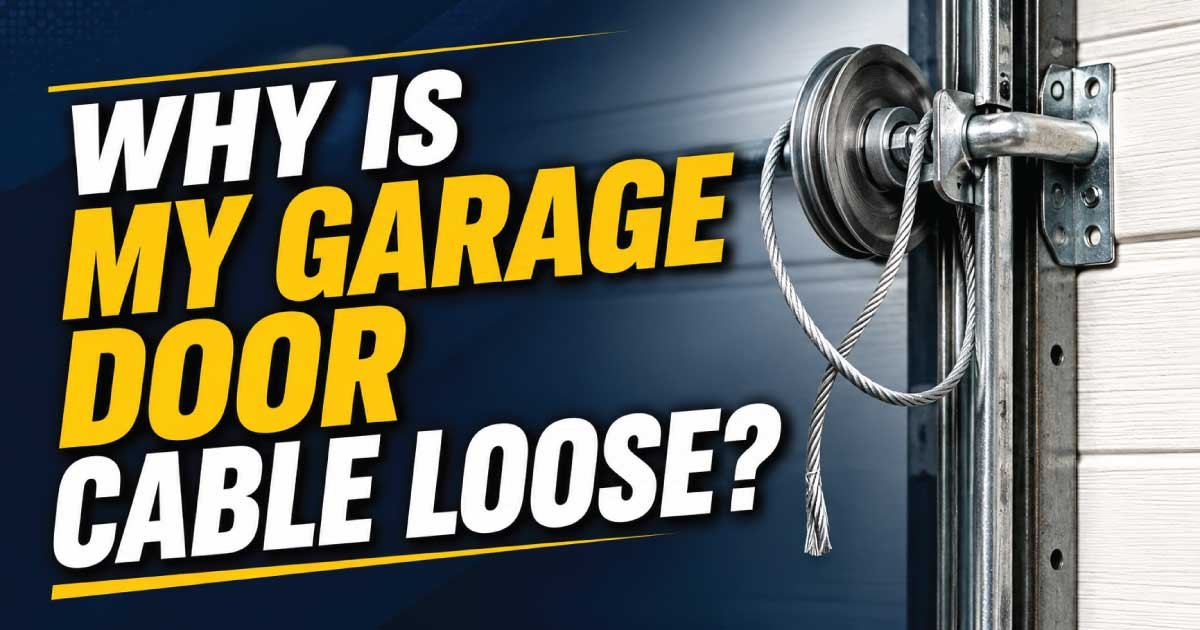
Why Is My Garage Door Cable Loose?

A loose garage door cable is more than a minor inconvenience. It often signals that something in the garage door system is no longer working as it should. The cable helps lift and lower the heavy door by working together with the springs, drums, and tracks. When it becomes loose, frayed, or slips off the drum, your garage door may open unevenly, get stuck, or become unsafe to operate.

Many homeowners first notice a hanging cable after hearing a loud bang, seeing the door tilt to one side, or finding that the opener struggles to lift the door. While some causes are simple, such as a door that came off track, others involve damaged torsion springs or worn hardware that require careful attention.

This repair guide explains why is my garage door cable loose, the warning signs to watch for, how the garage door system normally works, and the most common causes behind the problem. You’ll also learn essential safety precautions, the tools needed for inspection, a logical troubleshooting process, and a quick diagnosis table to help you identify the likely cause before deciding whether a DIY repair or professional repair is the safest option.


Common Signs and Symptoms

A loose garage door cable rarely appears without other warning signs. Recognizing these symptoms early can prevent additional damage to the door, opener, or spring system. Many homeowners notice several of these issues at the same time.

Common signs include:

  • A cable hanging loosely from one side of the garage door
  • The garage door opens unevenly or looks crooked
  • One side of the door lifts higher than the other
  • The door becomes stuck halfway during operation
  • The opener strains or stops unexpectedly
  • Loud snapping, grinding, or popping noises
  • The cable has slipped off the cable drum
  • Visible fraying or broken cable strands
  • The garage door feels unusually heavy when operated manually
  • The door reverses before fully closing

You may also notice gaps around the bottom seal because one side of the door is lower than the other. In many cases, the loose cable itself is not the root problem. Instead, it is a symptom of another mechanical failure within the lifting system.

For example, if a torsion spring breaks, one cable immediately loses tension while the other side may remain partially tight. Likewise, a roller that jumps out of the track can cause the cable to unwind even though the cable itself is still in good condition.

Ignoring these warning signs can allow the problem to worsen, increasing repair costs and creating a serious safety hazard.


How the Garage Door System Normally Works

Understanding how the garage door operates makes it much easier to diagnose why a cable becomes loose. Every component depends on the others to keep the heavy door balanced and moving smoothly.

A typical residential garage door includes these major parts:

  • Torsion or extension springs
  • Lift cables
  • Cable drums
  • Rollers
  • Vertical and horizontal tracks
  • Hinges
  • Garage door opener
  • Bottom brackets

The springs carry most of the door’s weight. When you open the door, the springs release stored energy that helps lift it. The lift cables wrap around the cable drums mounted at the ends of the torsion shaft. As the shaft rotates, the drums wind or unwind the cables evenly.

Because both cables remain under equal tension, the door rises level from both sides.

When any part of this system becomes damaged or misaligned, cable tension changes immediately.

The cable may loosen because:

  • The spring no longer provides proper tension.
  • The drum rotates incorrectly.
  • The door binds inside the tracks.
  • One side of the door stops moving.

A garage door opener is designed to move a balanced door—not lift its full weight. If the balance is lost, the opener often struggles, stops, or suffers premature wear.

This interconnected design explains why simply tightening a loose cable rarely fixes the underlying problem.


Most Common Reasons This Problem Happens

A loose cable almost always points to another mechanical issue. Identifying the true cause prevents repeat failures and helps you choose the correct repair method instead of replacing parts unnecessarily.

Broken Torsion or Extension Spring

Garage door springs eventually wear out after thousands of opening and closing cycles. When a spring breaks, it instantly removes tension from one or both lift cables.

Why it happens

  • Normal wear over time
  • Rust buildup
  • Poor maintenance
  • Metal fatigue

Symptoms

  • Loud bang from the garage
  • Loose cable
  • Heavy garage door
  • Door only opens a few inches

How to identify it

Inspect the torsion spring above the door. A visible gap in the spring usually indicates it has broken.

Cable Slipped Off the Drum

The cable can unwind from the drum when the door becomes uneven or loses spring tension.

Why it happens

  • Door operated with broken spring
  • Door hit an obstacle
  • Uneven lifting
  • Sudden impact

Symptoms

  • Cable hanging beside the track
  • Door crooked
  • One side higher than the other

How to identify it

Look above the door where the cable wraps around the drum. If the cable is no longer seated in the grooves, it has slipped off.

Worn or Frayed Cable

Garage door cables operate under high tension every day. Over time, the steel strands begin to wear.

Why it happens

  • Age
  • Moisture
  • Rust
  • Constant friction

Symptoms

  • Frayed strands
  • Rust spots
  • Cable appears thinner
  • Rough movement

How to identify it

Inspect the entire cable from bottom bracket to cable drum using a flashlight.

Garage Door Came Off Track

If rollers leave the track, one side of the door may stop moving while the other continues.

Why it happens

  • Vehicle impact
  • Bent track
  • Loose hardware
  • Worn rollers

Symptoms

  • Crooked door
  • Loud scraping noise
  • Loose cable
  • Door jams halfway

How to identify it

Look for rollers sitting outside the metal track.

Damaged Cable Drum

Cable drums guide the cable during every opening cycle. Worn grooves or cracks prevent smooth cable movement.

Why it happens

  • Long-term wear
  • Rust
  • Improper installation
  • Impact damage

Symptoms

  • Cable repeatedly slips
  • Uneven lifting
  • Jerky movement

How to identify it

Inspect the grooves for excessive wear, cracks, or sharp edges.

Loose or Damaged Bottom Bracket

The bottom bracket anchors the cable to the garage door.

Why it happens

  • Corrosion
  • Loose fasteners
  • Physical damage

Symptoms

  • Cable detached from door
  • Door leans
  • Uneven movement

How to identify it

Check whether the cable remains securely attached at the bottom corner of the door.

Obstructions or Binding Tracks

Sometimes the lifting system is healthy, but the door binds because something blocks normal movement.

Why it happens

  • Debris in tracks
  • Bent track
  • Loose bolts
  • Damaged rollers

Symptoms

  • Door hesitates
  • Opener strains
  • Cable loosens after stopping suddenly

How to identify it

Inspect both tracks from top to bottom for dents, dirt, or objects.


Safety Precautions Before Troubleshooting

Garage door systems store a tremendous amount of mechanical energy. Even a simple inspection requires caution because springs and cables remain under significant tension. Taking a few safety steps first greatly reduces the risk of serious injury.

Before beginning any troubleshooting:

  • Disconnect the automatic garage door opener.
  • Close the garage door completely if possible.
  • Keep children and pets away from the work area.
  • Wear safety glasses.
  • Wear sturdy work gloves.
  • Use a stable ladder on level ground.
  • Never place fingers near cable drums.
  • Never loosen torsion spring set screws without proper training.
  • Do not remove bottom brackets while cables are under tension.
  • Avoid operating the opener repeatedly if the door is crooked.
  • Stop immediately if you discover a broken spring.

One of the most dangerous mistakes homeowners make is attempting to rewind garage door springs without specialized winding bars and proper experience. The stored spring energy can cause severe injuries if released unexpectedly.

If your inspection reveals a broken torsion spring, severely frayed cable, or damaged cable drum, it is safest to postpone further repairs until the system can be repaired correctly.


Tools Required

A careful inspection requires only a few basic tools. These help you diagnose the problem safely without disassembling high-tension components.

Tool Purpose
Flashlight Inspect cables, drums, and tracks
Safety glasses Protect eyes from debris and broken strands
Work gloves Protect hands while inspecting hardware
Stepladder Reach upper door components safely
Tape measure Check door alignment and track spacing
Adjustable wrench Tighten accessible hardware if needed
Socket set Inspect mounting bolts
Level Check whether the door sits evenly
Clean cloth Wipe dirt from inspection areas
Silicone garage door lubricant Lubricate rollers and hinges after inspection if appropriate

Step-by-Step Troubleshooting Guide

A systematic diagnosis prevents unnecessary repairs. Follow these steps in order instead of replacing parts based on guesswork. Each inspection helps narrow down the actual cause of the loose garage door cable.

  1. Inspect the cable carefully.
    Look for frayed strands, rust, broken wires, or a cable that has slipped off the drum. This determines whether the cable itself has failed. If the cable is damaged, avoid operating the door and plan for cable replacement.
  2. Check the springs.
    Examine the torsion or extension springs for visible breaks, gaps, or stretched sections. A broken spring immediately affects cable tension. If a spring is damaged, stop troubleshooting because spring replacement requires specialized tools.
  3. Inspect both cable drums.
    Verify that each cable sits neatly inside the drum grooves. A cable that has jumped the grooves often indicates another mechanical issue. If the drum appears damaged or worn, note it for repair before attempting to rewind the cable.
  4. Look at the tracks and rollers.
    Check for bent tracks, loose brackets, damaged rollers, or debris that could prevent smooth movement. A binding door often causes cable slack. Remove loose debris, but do not force rollers back into the track under tension.
  5. Test door balance manually.
    With the opener disconnected and only if the springs appear intact, lift the door halfway. A properly balanced door should remain in place. If it quickly falls or rises, the spring system likely needs adjustment or replacement.
  6. Inspect the bottom brackets and cable attachment points.
    Ensure both cables remain securely attached to the bottom corners of the door. Loose hardware or corrosion can cause uneven lifting. Tighten only non-tensioned hardware and leave spring-loaded components untouched.
  7. Reconnect the opener only after confirming safe operation.
    Once the inspection is complete and no major safety issues are found, reconnect the opener and observe one full opening and closing cycle. If the door still operates unevenly, discontinue use until the underlying problem is repaired.

Quick Diagnosis Table

A quick comparison of symptoms and likely causes can help narrow down the problem before beginning repairs. While this table provides a useful starting point, always perform a complete inspection because multiple issues can occur at the same time.

Symptom Possible Cause Recommended Solution
Cable hanging loose Broken spring Replace the spring before resetting the cable
Door opens unevenly Cable off drum Inspect drum and restore proper cable routing
Frayed cable Normal wear Replace the cable promptly
Door feels extremely heavy Failed spring Stop using the opener and schedule spring replacement
Door stuck halfway Track obstruction or roller issue Clear obstruction and inspect rollers
Cable repeatedly slips Worn cable drum Replace the damaged drum
One side lower than the other Cable tension imbalance Diagnose spring, drum, and cable alignment
Opener struggles to lift door Mechanical imbalance Inspect the complete lifting system before further use

How to Fix Each Common Cause

Now that you’ve identified the likely cause of the loose cable, the next step is choosing the correct repair. The right solution depends on what failed—not simply on the cable itself. In many cases, replacing or resetting the cable without fixing the underlying issue will only cause the problem to return. Always follow the safety precautions discussed earlier before attempting any repair.

Replace a Broken Garage Door Spring

A broken torsion or extension spring is one of the most common reasons a garage door cable becomes loose.

How to fix it:

  1. Confirm the spring is broken by checking for a visible gap or damaged extension spring.
  2. Do not attempt to operate the garage door.
  3. Replace the broken spring with one that matches the door’s size and weight.
  4. After installing the new spring, reset the cable on the drum and test door balance.

DIY or professional?

Replacing extension springs is sometimes manageable for experienced DIY homeowners using proper safety equipment. Torsion spring replacement is significantly more dangerous because the springs are under extreme tension and is best left to a professional.

Reset a Cable That Slipped Off the Drum

If the cable is still in good condition but has slipped off the drum, it must be correctly rewound.

How to fix it:

  1. Ensure the spring system is intact.
  2. Fully close the garage door.
  3. Secure the door to prevent movement.
  4. Carefully rewind the cable into the drum grooves.
  5. Verify equal tension on both sides before testing.

If the cable slips off again after resetting, another issue—such as a worn drum, bent track, or spring imbalance—is likely responsible.

Replace a Worn or Frayed Cable

Garage door cables should never be repaired with clamps, knots, or temporary fixes.

Repair steps:

  • Purchase the correct replacement cable for your door model.
  • Disconnect spring tension safely.
  • Remove the damaged cable.
  • Install the new cable following the original routing.
  • Ensure both cables have equal tension.
  • Test the door several times manually before reconnecting the opener.

If both cables are the same age, replacing them as a pair is often the better long-term solution.

Repair or Replace a Damaged Cable Drum

A worn cable drum prevents smooth cable movement.

Look for:

  • Cracked metal
  • Worn grooves
  • Sharp edges
  • Bent drum flanges

If any of these conditions exist, replacing the drum is usually more reliable than trying to repair it.

Correct Track Problems

Tracks should be straight, secure, and free of obstructions.

Minor issues can often be corrected by:

  • Tightening loose mounting brackets
  • Cleaning accumulated dirt
  • Removing small dents that interfere with roller movement
  • Replacing damaged rollers

If the track is severely bent or twisted, replacement is generally the safest option.

Replace Damaged Bottom Brackets

Bottom brackets experience constant tension from the lift cables.

Replace them if you notice:

  • Cracks
  • Heavy rust
  • Loose mounting holes
  • Bent attachment points

Never remove a bottom bracket while the cable is still under spring tension.


Advanced Troubleshooting

Some garage door cable problems are caused by less obvious issues that may not be visible during a basic inspection. These problems often develop gradually and require a more detailed diagnosis.

Incorrect Spring Size

Sometimes the springs themselves are not broken—they’re simply the wrong size.

This often happens after previous repairs where incorrect replacement springs were installed.

Signs include:

  • Door won’t stay halfway open
  • One cable repeatedly loosens
  • Door feels unusually heavy
  • Opener struggles despite new components

A professional can measure spring dimensions and verify the correct lifting capacity.

Bent Torsion Shaft

The torsion shaft transfers spring force to both cable drums.

If it bends from impact or improper installation, cable tension may become uneven.

Symptoms include:

  • One cable constantly loosens
  • Door lifts unevenly
  • Drums rotate differently

The shaft usually requires replacement.

Worn Bearings

End bearings and center bearings allow the torsion shaft to rotate smoothly.

When bearings wear out, friction increases.

Common symptoms include:

  • Grinding noises
  • Jerky door movement
  • Uneven cable tension

Bearing replacement restores smooth operation.

Garage Door Opener Problems

Although the opener rarely causes a loose cable directly, it can worsen existing problems.

Possible issues include:

  • Incorrect travel limits
  • Excessive closing force
  • Worn drive gears
  • Improper adjustment

Always correct mechanical issues before adjusting opener settings.

Structural Door Damage

Wood and steel garage doors can warp after years of use.

A warped door places uneven loads on the lifting system, eventually affecting cable tension.

Look for:

  • Visible twisting
  • Large gaps along one side
  • Uneven movement despite good springs

In severe cases, replacing the door may be more economical than repeated repairs.


When Repair Is Not Worth It

Not every garage door is worth repairing. As systems age, multiple components often wear out at the same time. Replacing individual parts may only provide a temporary solution if the overall system has reached the end of its service life.

Replacement is often the smarter choice when:

  • The garage door is over 20–25 years old.
  • Multiple springs, cables, rollers, and tracks need replacement.
  • The door panels are badly damaged.
  • Replacement parts are difficult to find.
  • Repair costs approach the price of a new door.
  • The opener is also nearing the end of its lifespan.

A new garage door system typically offers quieter operation, improved safety features, better insulation, and lower maintenance requirements.


Preventive Maintenance Tips

Most loose cable problems develop gradually. Routine maintenance helps identify wear before it becomes a major repair.

Follow these preventive maintenance practices:

  • Inspect cables every three to six months.
  • Look for broken strands or rust.
  • Lubricate rollers, hinges, and bearings with garage door lubricant.
  • Keep tracks clean.
  • Tighten loose hardware annually.
  • Test door balance twice a year.
  • Replace worn rollers before they damage tracks.
  • Listen for unusual noises during operation.
  • Schedule professional maintenance every one to two years.
  • Never ignore small alignment issues.

A simple visual inspection takes only a few minutes and can prevent expensive repairs later.


Common Mistakes to Avoid

Many homeowners unintentionally make the problem worse while trying to fix a loose garage door cable.

Avoid these common mistakes:

  • Continuing to use the opener after noticing a loose cable
  • Attempting torsion spring repairs without training
  • Ignoring frayed cable strands
  • Replacing only one worn cable when both are old
  • Using the wrong replacement parts
  • Forgetting to inspect the cable drum
  • Over-lubricating tracks instead of rollers and hinges
  • Assuming the cable is the only damaged component
  • Operating a door that is visibly crooked
  • Delaying repairs after hearing loud snapping noises

Taking time to diagnose the complete system usually saves both time and money.


When to Call a Professional

Some garage door repairs involve significant safety risks. While homeowners can perform basic inspections and maintenance, certain repairs should always be handled by an experienced technician.

Call a professional if:

  • A torsion spring has broken.
  • The cable snapped completely.
  • The cable repeatedly comes off the drum.
  • The door is severely crooked.
  • The garage door came off its tracks.
  • The torsion shaft is bent.
  • You notice structural damage to the door.
  • The opener continues to struggle after basic troubleshooting.
  • The repair requires releasing spring tension.
  • You’re uncertain about the cause of the problem.

Professional technicians have specialized tools for safely adjusting high-tension spring systems and ensuring the door is properly balanced after repairs.


Estimated Repair Costs

The cost of repairing a loose garage door cable depends on the failed component, labor rates, and the type of garage door system.

Repair Estimated Cost DIY or Professional
Replace lift cable $100–$250 DIY (experienced) or Professional
Replace torsion spring $200–$450 Professional
Replace extension spring $120–$300 DIY (experienced) or Professional
Replace cable drum $100–$220 Professional
Replace rollers $80–$180 DIY or Professional
Track realignment $125–$300 Professional
Track replacement $200–$500 Professional
Bottom bracket replacement $120–$250 Professional
Garage door tune-up $80–$150 Professional
Complete garage door replacement $900–$2,500+ Professional

Costs are approximate and vary by location, door size, material, and labor rates.


Frequently Asked Questions

1. Why is my garage door cable loose but not broken?

A loose garage door cable usually means another component has failed. The most common causes include a broken spring, a cable that slipped off the drum, a door that came off track, or uneven cable tension. Inspect the entire lifting system instead of focusing only on the cable.

2. Can I use my garage door if one cable is loose?

No, you should stop using the garage door immediately. Operating the door with a loose cable can damage the opener, bend the tracks, cause the second cable to fail, or even allow the door to fall unexpectedly. It’s much safer to diagnose and repair the issue first.

3. How long do garage door cables typically last?

Garage door cables commonly last between 8 and 15 years, depending on usage, climate, maintenance, and door weight. Regular inspections for rust, fraying, or broken strands can help identify wear before the cable fails and causes additional damage.

4. Should I replace both garage door cables at the same time?

Yes, replacing both cables together is generally recommended. Since both cables experience the same amount of wear, replacing only one may leave the older cable vulnerable to failure shortly afterward, leading to another repair and additional labor costs.

5. Can a garage door opener cause a loose cable?

Usually not. A garage door opener rarely creates the original problem. Instead, existing issues such as broken springs, worn drums, or track problems force the opener to work harder, which can make cable problems worse over time.

6. How can I tell if the spring or the cable is the real problem?

Inspect both components carefully. A broken spring often has a visible gap and causes the door to feel extremely heavy. If the spring appears intact but the cable has slipped off the drum or shows fraying, the cable or drum may be the primary issue.

7. Is a loose garage door cable dangerous?

Yes, a loose garage door cable can become dangerous quickly. The door may move unevenly, become stuck, or unexpectedly fall if additional components fail. Treat a loose cable as a warning sign that the lifting system needs immediate inspection and repair.

8. How often should I inspect my garage door cables?

Inspect garage door cables every three to six months as part of routine preventive maintenance. Look for rust, broken strands, loose connections, and uneven tension. Regular inspections help detect developing problems before they become expensive or hazardous repairs.

9. Can weather affect garage door cables?

Yes, weather can shorten cable life. Moisture promotes rust, freezing temperatures may affect moving parts, and humidity can accelerate corrosion. Keeping cables clean, dry, and properly maintained helps reduce weather-related wear and extends their service life.

10. What is the first thing I should check if my garage door cable becomes loose?

The first thing to check is the garage door spring system. A broken torsion or extension spring is one of the most frequent reasons a cable loses tension. After confirming the springs are intact, inspect the cable drum, tracks, rollers, and cable condition.


Final Thoughts

If you’ve been asking “Why is my garage door cable loose?”, the answer is often more complex than a loose cable alone. In most cases, the cable is reacting to another problem, such as a broken spring, worn cable drum, damaged track, or imbalance in the lifting system. Identifying the root cause is the key to making a safe and lasting repair.

Start with a careful visual inspection, follow a logical troubleshooting process, and never ignore warning signs like frayed cables, uneven door movement, or loud snapping noises. While basic maintenance and inspections are well within the abilities of many homeowners, repairs involving high-tension springs and cable systems demand extra caution. Knowing when to stop and call a professional is just as important as knowing how to perform a DIY repair.

Regular inspections, preventive maintenance, and prompt attention to small issues will help keep your garage door operating safely, smoothly, and reliably for years to come. By understanding how the system works and addressing problems early, you can reduce repair costs, improve safety, and avoid unexpected garage door failures.

Leave a Comment