
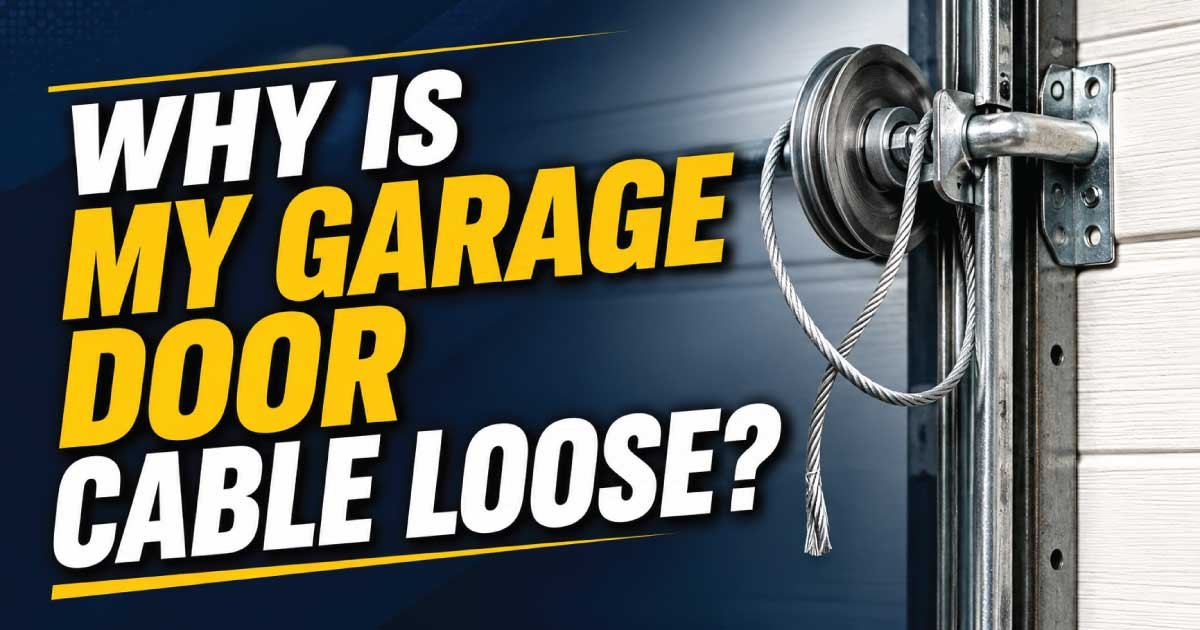
A loose garage door cable is more than a minor inconvenience. It often signals that something in the garage door system is no longer working as it should. The cable helps lift and lower the heavy door by working together with the springs, drums, and tracks. When it becomes loose, frayed, or slips off the drum, your garage door may open unevenly, get stuck, or become unsafe to operate.
Many homeowners first notice a hanging cable after hearing a loud bang, seeing the door tilt to one side, or finding that the opener struggles to lift the door. While some causes are simple, such as a door that came off track, others involve damaged torsion springs or worn hardware that require careful attention.
This repair guide explains why is my garage door cable loose, the warning signs to watch for, how the garage door system normally works, and the most common causes behind the problem. You’ll also learn essential safety precautions, the tools needed for inspection, a logical troubleshooting process, and a quick diagnosis table to help you identify the likely cause before deciding whether a DIY repair or professional repair is the safest option.
Common Signs and Symptoms
A loose garage door cable rarely appears without other warning signs. Recognizing these symptoms early can prevent additional damage to the door, opener, or spring system. Many homeowners notice several of these issues at the same time.
Common signs include:
- A cable hanging loosely from one side of the garage door
- The garage door opens unevenly or looks crooked
- One side of the door lifts higher than the other
- The door becomes stuck halfway during operation
- The opener strains or stops unexpectedly
- Loud snapping, grinding, or popping noises
- The cable has slipped off the cable drum
- Visible fraying or broken cable strands
- The garage door feels unusually heavy when operated manually
- The door reverses before fully closing
You may also notice gaps around the bottom seal because one side of the door is lower than the other. In many cases, the loose cable itself is not the root problem. Instead, it is a symptom of another mechanical failure within the lifting system.
For example, if a torsion spring breaks, one cable immediately loses tension while the other side may remain partially tight. Likewise, a roller that jumps out of the track can cause the cable to unwind even though the cable itself is still in good condition.
Ignoring these warning signs can allow the problem to worsen, increasing repair costs and creating a serious safety hazard.
How the Garage Door System Normally Works
Understanding how the garage door operates makes it much easier to diagnose why a cable becomes loose. Every component depends on the others to keep the heavy door balanced and moving smoothly.
A typical residential garage door includes these major parts:
- Torsion or extension springs
- Lift cables
- Cable drums
- Rollers
- Vertical and horizontal tracks
- Hinges
- Garage door opener
- Bottom brackets
The springs carry most of the door’s weight. When you open the door, the springs release stored energy that helps lift it. The lift cables wrap around the cable drums mounted at the ends of the torsion shaft. As the shaft rotates, the drums wind or unwind the cables evenly.
Because both cables remain under equal tension, the door rises level from both sides.
When any part of this system becomes damaged or misaligned, cable tension changes immediately.
The cable may loosen because:
- The spring no longer provides proper tension.
- The drum rotates incorrectly.
- The door binds inside the tracks.
- One side of the door stops moving.
A garage door opener is designed to move a balanced door—not lift its full weight. If the balance is lost, the opener often struggles, stops, or suffers premature wear.
This interconnected design explains why simply tightening a loose cable rarely fixes the underlying problem.
Most Common Reasons This Problem Happens
A loose cable almost always points to another mechanical issue. Identifying the true cause prevents repeat failures and helps you choose the correct repair method instead of replacing parts unnecessarily.
Broken Torsion or Extension Spring
Garage door springs eventually wear out after thousands of opening and closing cycles. When a spring breaks, it instantly removes tension from one or both lift cables.
Why it happens
- Normal wear over time
- Rust buildup
- Poor maintenance
- Metal fatigue
Symptoms
- Loud bang from the garage
- Loose cable
- Heavy garage door
- Door only opens a few inches
How to identify it
Inspect the torsion spring above the door. A visible gap in the spring usually indicates it has broken.
Cable Slipped Off the Drum
The cable can unwind from the drum when the door becomes uneven or loses spring tension.
Why it happens
- Door operated with broken spring
- Door hit an obstacle
- Uneven lifting
- Sudden impact
Symptoms
- Cable hanging beside the track
- Door crooked
- One side higher than the other
How to identify it
Look above the door where the cable wraps around the drum. If the cable is no longer seated in the grooves, it has slipped off.
Worn or Frayed Cable
Garage door cables operate under high tension every day. Over time, the steel strands begin to wear.
Why it happens
- Age
- Moisture
- Rust
- Constant friction
Symptoms
- Frayed strands
- Rust spots
- Cable appears thinner
- Rough movement
How to identify it
Inspect the entire cable from bottom bracket to cable drum using a flashlight.
Garage Door Came Off Track
If rollers leave the track, one side of the door may stop moving while the other continues.
Why it happens
- Vehicle impact
- Bent track
- Loose hardware
- Worn rollers
Symptoms
- Crooked door
- Loud scraping noise
- Loose cable
- Door jams halfway
How to identify it
Look for rollers sitting outside the metal track.
Damaged Cable Drum
Cable drums guide the cable during every opening cycle. Worn grooves or cracks prevent smooth cable movement.
Why it happens
- Long-term wear
- Rust
- Improper installation
- Impact damage
Symptoms
- Cable repeatedly slips
- Uneven lifting
- Jerky movement
How to identify it
Inspect the grooves for excessive wear, cracks, or sharp edges.
Loose or Damaged Bottom Bracket
The bottom bracket anchors the cable to the garage door.
Why it happens
- Corrosion
- Loose fasteners
- Physical damage
Symptoms
- Cable detached from door
- Door leans
- Uneven movement
How to identify it
Check whether the cable remains securely attached at the bottom corner of the door.
Obstructions or Binding Tracks
Sometimes the lifting system is healthy, but the door binds because something blocks normal movement.
Why it happens
- Debris in tracks
- Bent track
- Loose bolts
- Damaged rollers
Symptoms
- Door hesitates
- Opener strains
- Cable loosens after stopping suddenly
How to identify it
Inspect both tracks from top to bottom for dents, dirt, or objects.
Safety Precautions Before Troubleshooting
Garage door systems store a tremendous amount of mechanical energy. Even a simple inspection requires caution because springs and cables remain under significant tension. Taking a few safety steps first greatly reduces the risk of serious injury.
Before beginning any troubleshooting:
- Disconnect the automatic garage door opener.
- Close the garage door completely if possible.
- Keep children and pets away from the work area.
- Wear safety glasses.
- Wear sturdy work gloves.
- Use a stable ladder on level ground.
- Never place fingers near cable drums.
- Never loosen torsion spring set screws without proper training.
- Do not remove bottom brackets while cables are under tension.
- Avoid operating the opener repeatedly if the door is crooked.
- Stop immediately if you discover a broken spring.
One of the most dangerous mistakes homeowners make is attempting to rewind garage door springs without specialized winding bars and proper experience. The stored spring energy can cause severe injuries if released unexpectedly.
If your inspection reveals a broken torsion spring, severely frayed cable, or damaged cable drum, it is safest to postpone further repairs until the system can be repaired correctly.
Tools Required
A careful inspection requires only a few basic tools. These help you diagnose the problem safely without disassembling high-tension components.
| Tool | Purpose |
|---|---|
| Flashlight | Inspect cables, drums, and tracks |
| Safety glasses | Protect eyes from debris and broken strands |
| Work gloves | Protect hands while inspecting hardware |
| Stepladder | Reach upper door components safely |
| Tape measure | Check door alignment and track spacing |
| Adjustable wrench | Tighten accessible hardware if needed |
| Socket set | Inspect mounting bolts |
| Level | Check whether the door sits evenly |
| Clean cloth | Wipe dirt from inspection areas |
| Silicone garage door lubricant | Lubricate rollers and hinges after inspection if appropriate |
Step-by-Step Troubleshooting Guide
A systematic diagnosis prevents unnecessary repairs. Follow these steps in order instead of replacing parts based on guesswork. Each inspection helps narrow down the actual cause of the loose garage door cable.
- Inspect the cable carefully.
Look for frayed strands, rust, broken wires, or a cable that has slipped off the drum. This determines whether the cable itself has failed. If the cable is damaged, avoid operating the door and plan for cable replacement. - Check the springs.
Examine the torsion or extension springs for visible breaks, gaps, or stretched sections. A broken spring immediately affects cable tension. If a spring is damaged, stop troubleshooting because spring replacement requires specialized tools. - Inspect both cable drums.
Verify that each cable sits neatly inside the drum grooves. A cable that has jumped the grooves often indicates another mechanical issue. If the drum appears damaged or worn, note it for repair before attempting to rewind the cable. - Look at the tracks and rollers.
Check for bent tracks, loose brackets, damaged rollers, or debris that could prevent smooth movement. A binding door often causes cable slack. Remove loose debris, but do not force rollers back into the track under tension. - Test door balance manually.
With the opener disconnected and only if the springs appear intact, lift the door halfway. A properly balanced door should remain in place. If it quickly falls or rises, the spring system likely needs adjustment or replacement. - Inspect the bottom brackets and cable attachment points.
Ensure both cables remain securely attached to the bottom corners of the door. Loose hardware or corrosion can cause uneven lifting. Tighten only non-tensioned hardware and leave spring-loaded components untouched. - Reconnect the opener only after confirming safe operation.
Once the inspection is complete and no major safety issues are found, reconnect the opener and observe one full opening and closing cycle. If the door still operates unevenly, discontinue use until the underlying problem is repaired.
Quick Diagnosis Table
A quick comparison of symptoms and likely causes can help narrow down the problem before beginning repairs. While this table provides a useful starting point, always perform a complete inspection because multiple issues can occur at the same time.
| Symptom | Possible Cause | Recommended Solution |
|---|---|---|
| Cable hanging loose | Broken spring | Replace the spring before resetting the cable |
| Door opens unevenly | Cable off drum | Inspect drum and restore proper cable routing |
| Frayed cable | Normal wear | Replace the cable promptly |
| Door feels extremely heavy | Failed spring | Stop using the opener and schedule spring replacement |
| Door stuck halfway | Track obstruction or roller issue | Clear obstruction and inspect rollers |
| Cable repeatedly slips | Worn cable drum | Replace the damaged drum |
| One side lower than the other | Cable tension imbalance | Diagnose spring, drum, and cable alignment |
| Opener struggles to lift door | Mechanical imbalance | Inspect the complete lifting system before further use |

Engineer Ali Usman is a professional garage door expert and author at FixFasty, with over 10 years of hands-on experience in garage door systems and mechanical maintenance. He writes clear, step-by-step guides on garage door repairs, parts, and safety practices, helping homeowners fix problems correctly and maintain smooth, secure, and long-lasting garage door performance.