
Your garage door is one of the most used and essential parts of your home. From protecting your vehicle to providing security and insulation, it’s crucial to keep it in top condition. Proper maintenance prevents costly repairs, reduces noise, and ensures smooth operation.
In this complete guide, you will learn how to maintain your garage door step by step, including inspection, lubrication, cleaning, and safety checks. We have included two tables for quick reference and a full checklist you can use every 6–12 months.
Why Garage Door Maintenance is Important
Garage doors endure daily use, weather exposure, and constant movement, which can lead to noise, sticking, or premature wear on springs, rollers, and hinges. Rust and corrosion may also develop over time, creating potential safety hazards such as broken cables or malfunctioning openers.
Regular maintenance not only prevents these issues but also keeps your garage door operating smoothly, quietly, and safely, extending its lifespan and protecting your home and family.
Squeaky or noisy operation
Sticking or jerky movement
Premature wear on rollers, hinges, or springs
Rust and corrosion on metal parts
Safety hazards like broken cables or faulty openers
Regular maintenance keeps your garage door reliable, safe, and efficient, and can extend its lifespan by years.
Tools & Supplies You will Need
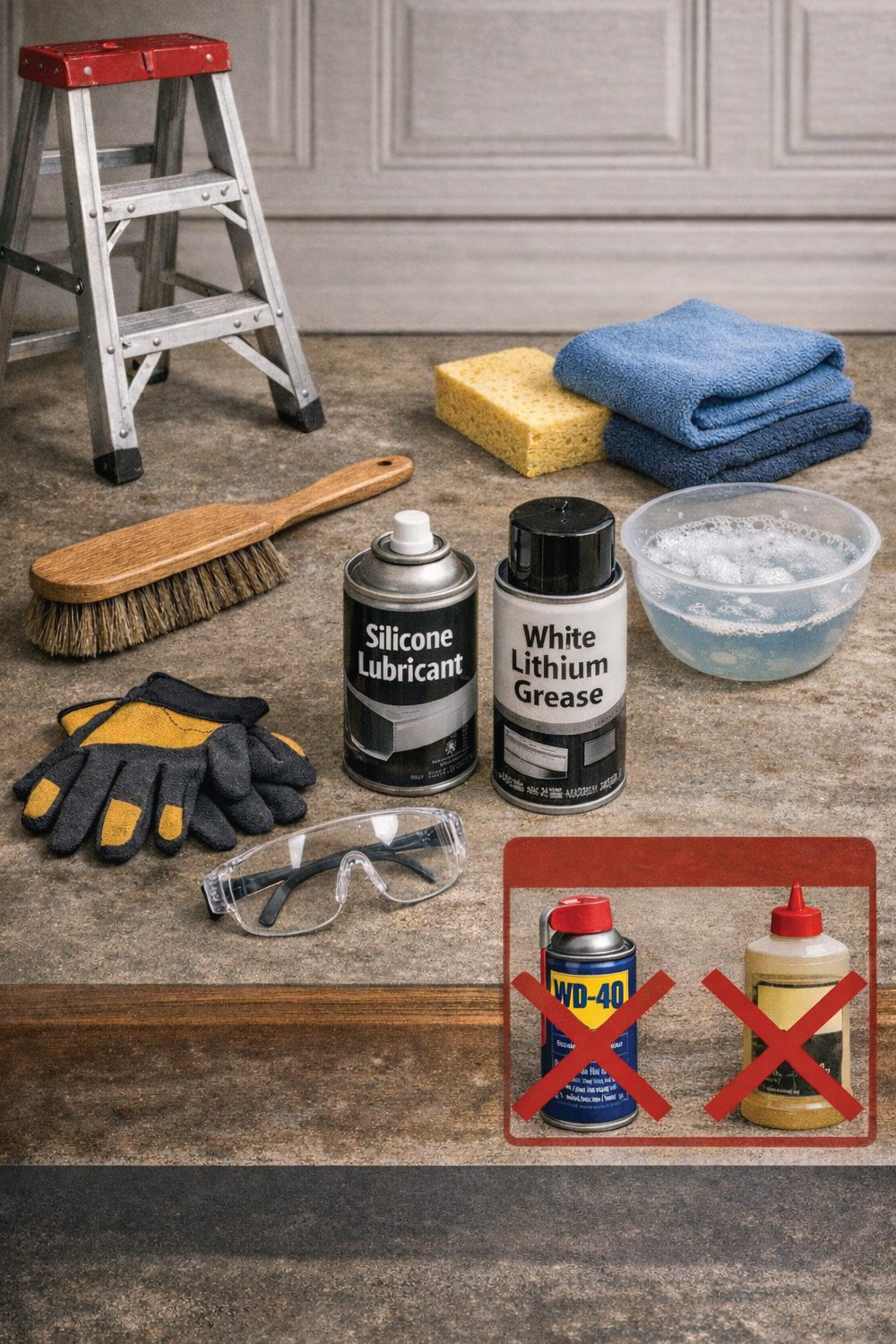
Maintaining your garage door does not require a full toolbox, just a few basic supplies can keep it running smoothly. You will need a step ladder for reach, cleaning materials like cloths or a soft brush, and a proper lubricant such as silicone spray or white lithium grease.
Safety gear like gloves and glasses protects you during maintenance. Avoid household oils or WD-40, which clean but don’t provide lasting lubrication or protection.
1- Step Ladder
A sturdy step ladder is essential for safely reaching high parts of your garage door, such as tracks, springs, and hinges. Choose a stable, non-slip ladder with the right height for your garage. Always place it on a flat surface to prevent accidents during maintenance.
2- Clean Cloth or Rag
A clean cloth or rag is useful for wiping away dust, grease, and old lubricant from garage door parts. Regular cleaning ensures smoother operation and better lubrication results. Use a lint-free cloth to avoid leaving fibers behind on moving components.
3- Soft Brush
A soft brush helps remove dirt, cobwebs, and debris from tight spaces like tracks and rollers. Unlike hard brushes, it won’t scratch or damage sensitive parts. Regular brushing keeps components clean and prevents buildup that can affect door performance.
4- Silicone Spray or White Lithium Grease
These lubricants are ideal for garage doors because they reduce friction and protect against rust. Silicone spray works well for lighter parts, while white lithium grease is better for heavy-duty components like hinges and springs. They ensure long-lasting, smooth operation.
5- Safety Gloves and Glasses
Wearing safety gloves and glasses protects you from sharp edges, dust, and accidental injuries. Gloves improve grip while handling tools, and glasses shield your eyes from debris. Safety gear is especially important when working with springs and moving parts.
6- Mild Soap and Water
A mixture of mild soap and water is perfect for cleaning garage door surfaces and removing grime. It helps maintain both the appearance and functionality of the door. Avoid harsh chemicals, as they can damage finishes and reduce the lifespan of components.
6- Avoid Using Household Oils or WD-40
While products like WD-40 are good for cleaning and loosening rusted parts, they are not suitable as long-term lubricants. They evaporate quickly and don’t provide lasting protection. Always use proper garage door lubricants for effective and durable maintenance results.
Recommended Garage Door Lubricants
Choosing the right lubricant is key to keeping your garage door running smoothly and quietly. Different products are designed for specific parts: silicone spray works well on hinges and rollers, white lithium grease provides long-lasting friction control for springs, and garage door–specific lubricants are formulated for all hardware.
Avoid using WD-40 as a long-term solution, it cleans but doesn’t provide proper lubrication or protection. Selecting the right lubricant ensures optimal performance and longevity.
| Lubricant Type | Best Use | Pros | Cons |
|---|---|---|---|
| Silicone Spray | Hinges, rollers, pivot points | Clean, water-resistant, long-lasting | Slightly higher cost |
| White Lithium Grease | Hinges, springs | Durable, excellent friction control | Can attract dust if overused |
| Garage Door Lubricant | All hardware | Engineered for garage doors | Less widely available |
| WD-40 | Cleaning only | Removes rust and dirt quickly | Not a proper lubricant |
1. Inspect Hinges, Springs, and Hardware
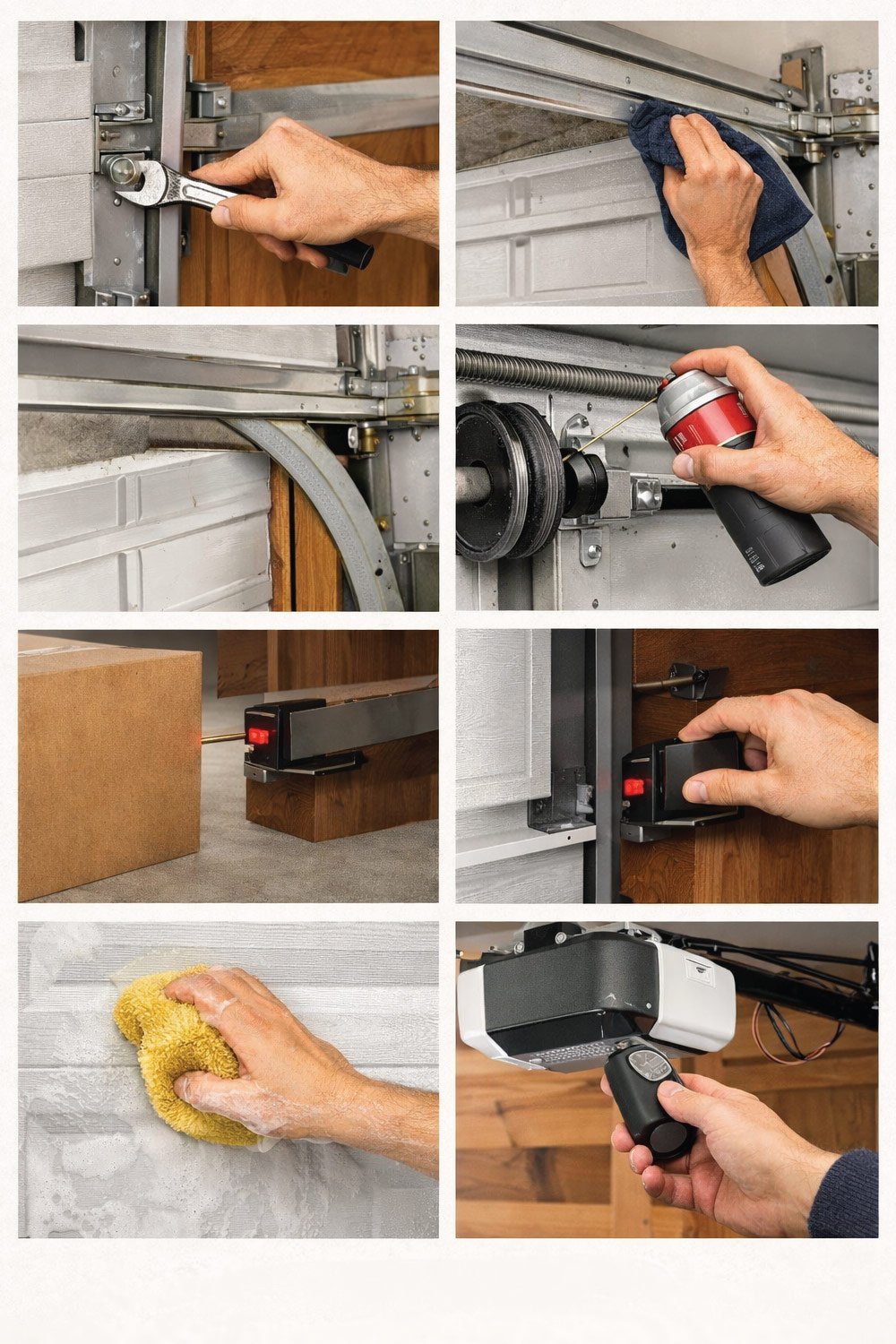
Regular inspection of hinges, springs, and hardware is essential for detecting early wear and preventing failures. Carefully check for rust, cracks, loose screws, or frayed cables that can impact performance. Tighten all bolts securely and replace any worn or damaged parts immediately to ensure safe operation, maintain efficiency, and avoid unexpected breakdowns or costly repairs.
2. Clean Tracks and Rollers
Cleaning tracks and rollers is important for smooth and quiet garage door operation. Dirt, debris, and old grease can build up over time, causing friction or misalignment. Use a dry cloth or soft brush to remove buildup, inspect rollers for cracks or wear, and apply light lubrication to bearings for consistent and reliable performance.
3. Lubricate Moving Parts
Lubricating moving parts helps reduce friction, eliminate noise, and extend the lifespan of your garage door system. Apply a thin layer of silicone spray or white lithium grease to hinges, springs, rollers, and locks. Open and close the door several times to spread lubricant evenly, then wipe away excess to prevent dust accumulation.
4. Test the Balance and Safety Features
Testing balance and safety features ensures your garage door operates correctly and safely. Disconnect the opener and manually lift the door; it should stay halfway open without support. Check auto-reverse sensors by placing an object in the path, and test the emergency release cord to confirm everything functions properly and prevents accidents.
5. Inspect Weather Stripping
Inspecting weather stripping helps maintain insulation and protect your garage from outside elements. Over time, seals may crack, harden, or wear out, reducing effectiveness. Check the bottom seal and side strips carefully, and replace any damaged sections to prevent drafts, block dust and pests, and improve overall energy efficiency.
6. Clean the Door Surface
Cleaning the garage door surface removes dirt, grime, and mold that can damage its finish over time. Use mild soap and water to clean the panels, rinse thoroughly, and dry completely. Regular cleaning improves appearance, prevents corrosion, and helps maintain the door’s durability, ensuring it stays in good condition for years.
7. Check the Garage Door Opener
Checking the garage door opener ensures reliable and efficient automatic operation. Inspect chains, belts, or screw drives for signs of wear and lubricate them according to manufacturer instructions. Test remote controls and wall switches, replacing batteries if needed, to maintain smooth performance and prevent unexpected malfunctions or system failures.
Complete Garage Door Maintenance Checklist
A complete garage door maintenance checklist helps you stay on top of all critical tasks, ensuring safety, smooth operation, and long-lasting performance.
By following a regular schedule, you can prevent costly repairs, reduce wear on components, and avoid potential accidents.
This checklist breaks down each task by frequency and recommended action, covering hinges, springs, rollers, tracks, cables, openers, weather stripping, door panels, and safety features. Regularly checking and maintaining these components keeps your garage door reliable, efficient, and safe for years to come.
| Task | Frequency | Recommended Action |
|---|---|---|
| Hinges | Every 6 months | Clean, inspect, lubricate |
| Springs | Every 6 months | Inspect, lubricate (torsion & extension) |
| Rollers | Every 6 months | Inspect, lubricate bearings |
| Tracks | Every 3–6 months | Clean, remove debris (do not lubricate) |
| Cables | Every 6 months | Inspect for frays or damage |
| Opener | Annually | Lubricate moving parts, check sensors & remote |
| Weather Stripping | Annually | Replace damaged seals |
| Door Panels | Annually | Clean and check for dents or corrosion |
| Safety Features | Every 6 months | Test auto-reverse, emergency release |
Common Mistakes to Avoid
Even small mistakes during garage door maintenance can reduce performance and create safety risks. Over-lubricating attracts dust, while ignoring worn parts can lead to serious damage. Lubricating tracks or skipping safety checks also causes issues. Understanding these common mistakes helps ensure safer, more effective, and cost-efficient garage door maintenance over time.
1- Over-Lubricating
Applying too much lubricant may seem helpful, but it often causes more harm than good. Excess grease attracts dust, dirt, and debris, leading to buildup that affects smooth operation. Always apply a thin, even layer of lubricant only where needed to keep components clean, efficient, and functioning properly without unnecessary residue.
2- Ignoring Worn Parts
Ignoring worn or damaged components is a common mistake that can lead to bigger problems. Lubrication cannot fix rusted springs, cracked hinges, or frayed cables. Always inspect parts carefully and replace anything that shows signs of wear to ensure safe operation and prevent unexpected breakdowns or costly repairs later.
3- Lubricating Tracks
Many homeowners mistakenly apply lubricant to garage door tracks, which can actually cause more issues. Tracks should remain clean and dry to allow rollers to move freely. Adding grease attracts dirt and leads to buildup, increasing friction and affecting door alignment, ultimately reducing performance and causing unnecessary strain on components.
4- Skipping Safety Checks
Skipping safety checks puts both your garage door system and your family at risk. Features like auto-reverse sensors and emergency release cords are essential for safe operation. Regularly testing these systems ensures they function correctly, helping prevent accidents, injuries, and potential damage caused by a malfunctioning garage door.
5- Inconsistent Maintenance
Inconsistent maintenance often leads to sudden failures and expensive repairs. Neglecting regular inspections, cleaning, and lubrication allows small issues to grow into major problems. Following a consistent maintenance schedule ensures smoother operation, improves safety, extends the lifespan of your garage door, and reduces the need for emergency fixes.
Benefits of Regular Garage Door Maintenance
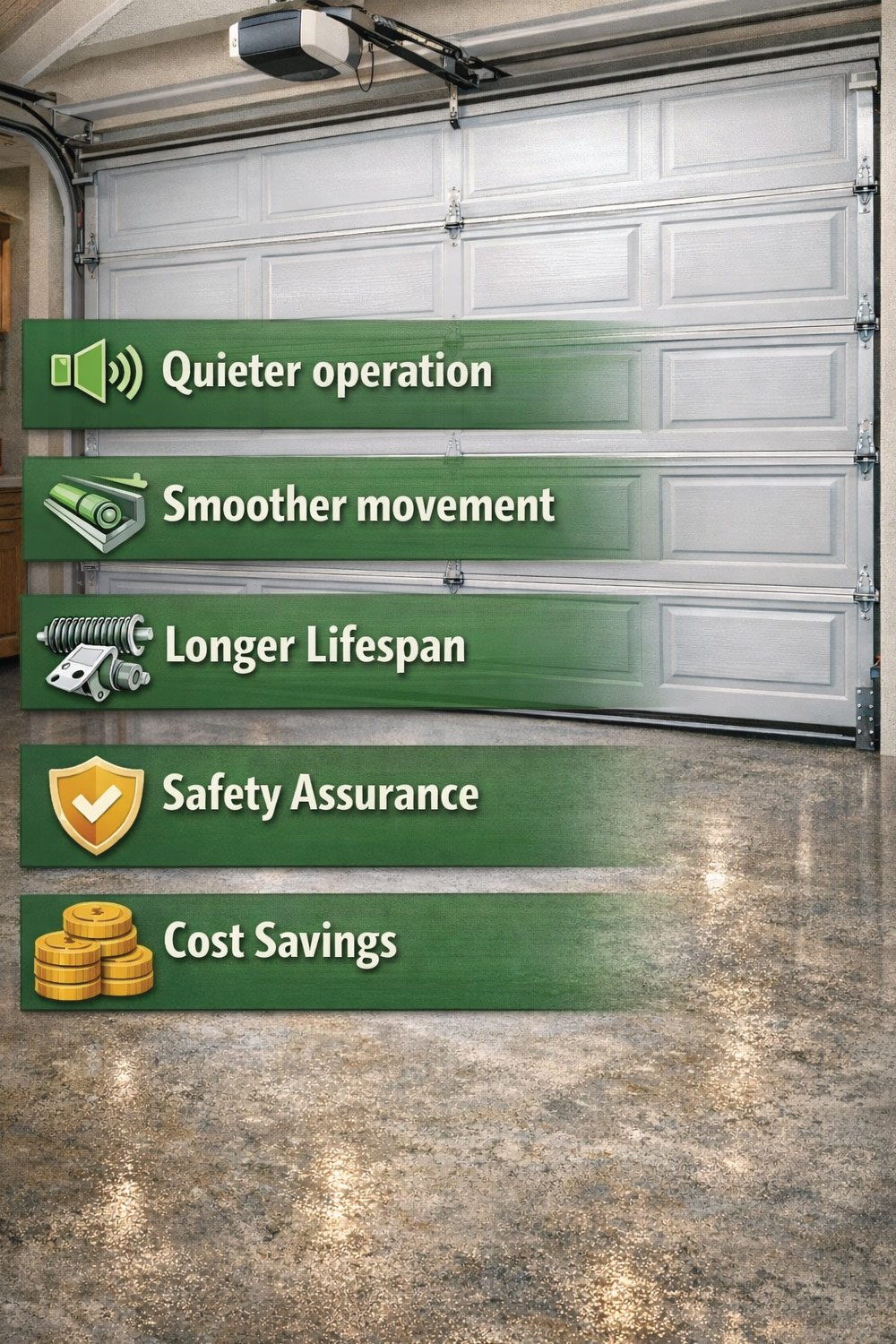
Regular garage door maintenance provides more than just basic functionality; it improves performance, safety, and durability. By keeping all components in good condition, you reduce noise, prevent sudden failures, and ensure smooth operation. Consistent care also helps avoid costly repairs, making maintenance a smart and long-term investment for homeowners.
1- Quieter Operation
Regular maintenance helps eliminate squeaks, rattles, and grinding noises that develop over time. Proper lubrication and cleaning reduce friction between moving parts, allowing the door to open and close quietly. This creates a more comfortable environment, especially for homes with attached garages or frequent door usage.
2- Smoother Movement
Maintained garage doors operate smoothly without jerks or uneven motion. Cleaning tracks, inspecting rollers, and proper lubrication reduce resistance and strain on components. This ensures balanced movement, improves efficiency, and prevents unnecessary wear, helping your door function reliably with minimal effort during daily use.
3- Longer Lifespan
Consistent maintenance significantly extends the lifespan of garage door components such as springs, rollers, hinges, and the opener. By reducing wear and addressing small issues early, you prevent premature failure. This helps your entire system last longer, saving you from frequent replacements and maintaining dependable performance.
4- Safety Assurance
Regular inspections and maintenance improve safety by identifying worn or faulty parts before they cause accidents. Checking springs, cables, and safety features ensures the door operates securely. This reduces the risk of injuries, protects your property, and provides peace of mind knowing your garage door system is functioning properly.
5- Cost Savings
Preventive maintenance helps you avoid expensive repairs by addressing minor issues early. Regular cleaning, lubrication, and inspections reduce the chances of major component failure. This proactive approach saves money over time, as small maintenance costs are far less than emergency repairs or full garage door replacements.
Professional Maintenance Considerations
While many garage door maintenance tasks can be done at home, some situations require professional expertise for safety and proper repair. Issues like broken springs, damaged rollers, or a malfunctioning opener can be dangerous to handle alone. Hiring a professional ensures correct repairs, prevents injuries, and protects your garage door system from further damage.
1- Broken Springs or Cables
Broken springs or cables are serious issues that should never be handled without professional help. These components are under high tension and can cause severe injury if mishandled. A trained technician has the right tools and expertise to replace them safely while ensuring your garage door operates correctly.
2- Severely Damaged Hinges or Rollers
When hinges or rollers become severely rusted, bent, or damaged, they can affect the door’s alignment and movement. Attempting to fix or replace them without proper knowledge may worsen the problem. Professionals can quickly identify the issue and restore smooth, safe operation using the correct replacement parts.
3- Door Off the Track
A garage door that has come off its track is both unsafe and difficult to fix without experience. Forcing it back can damage other components or cause injury. A professional technician can realign the door properly, inspect for underlying issues, and ensure the entire system functions smoothly again.
4- Malfunctioning Garage Door Opener
If your garage door opener continues to malfunction despite lubrication and basic checks, it may have internal mechanical or electrical issues. Professionals can diagnose the problem accurately, repair or replace faulty components, and ensure the opener works efficiently without putting extra strain on the door system.
5- Handling Complex Repairs Safely
Professionals are trained to handle complex repairs, especially those involving high-tension springs and critical components. They use specialized tools and follow safety procedures to complete repairs efficiently. Relying on expert service reduces risks, ensures long-term reliability, and keeps your garage door system operating safely and effectively.
Final Thoughts
Proper garage door maintenance is simple, affordable, and highly effective in keeping your system running at its best. By regularly following a basic checklist, lubricating moving parts, cleaning surfaces, and inspecting key components, you ensure safe operation for your family, quiet and smooth door movement, and a longer lifespan for your entire garage door system.
Making it a habit to inspect your garage door twice a year helps prevent unexpected issues and keeps it working reliably while protecting your home efficiently over time.

Engineer Ali Usman is a professional garage door expert and author at FixFasty, with over 10 years of hands-on experience in garage door systems and mechanical maintenance. He writes clear, step-by-step guides on garage door repairs, parts, and safety practices, helping homeowners fix problems correctly and maintain smooth, secure, and long-lasting garage door performance.