
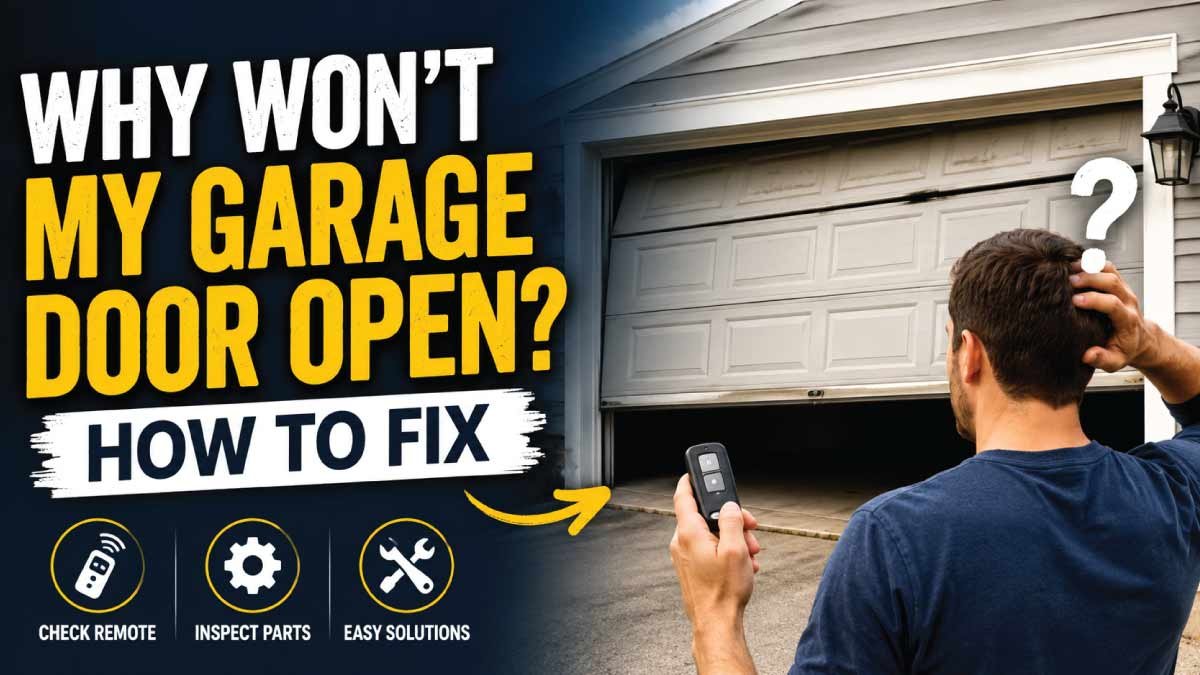
A garage door that won’t open or close is one of the most common household problems, and in most cases it is caused by simple electrical, mechanical, or safety system issues. The key is quick diagnosis checking the most likely causes first so you can decide whether it’s a basic DIY fix or time to call a professional.
From power supply problems and dead remote batteries to misaligned sensors, broken springs, or track obstructions, identifying the root cause early can save time, money, and prevent further damage to the system.
Quick Diagnosis: Why Your Garage Door Won’t Open or Close
A garage door that won’t open or close properly usually has a simple underlying issue in its electrical, mechanical, or safety system. Quick diagnosis helps you identify the cause and decide whether it’s a DIY fix or needs professional repair.
Here are the most common reasons:
-
Power supply issues – The opener may not be receiving electricity due to a tripped breaker, unplugged cord, or blown fuse.
-
Dead remote or keypad batteries – Weak batteries or signal issues can stop the garage door from responding.
-
Misaligned safety sensors – If the photo-eye sensors are blocked or out of alignment, the door will not close for safety reasons.
-
Broken springs or cables – Damaged torsion springs or snapped cables can make the door too heavy to lift or stop it from moving.
-
Track obstructions or damage – Dirt, debris, or bent tracks can prevent smooth movement of the rollers.
-
Engaged manual lock or emergency release – If the manual lock is activated or the emergency cord is pulled, the opener will not function.
-
Opener motor or gear issues – A worn-out motor, stripped gears, or internal failure can stop the system completely.
By checking these seven areas one by one, you can quickly identify the problem and take the right solution before it gets worse.
What to Do When Your Garage Door Won’t Open
A garage door that refuses to open usually follows a predictable pattern. By matching the symptom with its likely cause, you can quickly decide whether it’s a simple fix or requires professional help.
| Symptom | Likely Cause |
|---|---|
| Door does not respond to remote or wall switch | Power issue, dead remote batteries, or activated lock mode |
| Motor is running but the door stays in place | Broken spring, slipped cable, or disengaged trolley system |
| Door starts moving but stops or goes back down | Misaligned, blocked, or dirty safety sensors |
| Door feels unusually heavy when lifting manually | Damaged or worn torsion spring |
| Door shakes, grinds, or moves unevenly | Bent tracks, worn rollers, or lack of lubrication |
In most cases, minor issues like batteries, sensors, or obstructions can be fixed quickly with basic inspection and cleaning. However, problems involving springs, cables, or motor components are high-risk and should not be handled without proper tools or experience.
If the garage door still does not operate after basic troubleshooting, it’s best to contact a qualified technician. Professional repair ensures safety, prevents further damage, and restores smooth operation of the system.
My Experience With a Garage Door That Wouldn’t Open
I still remember the first time I dealt with a garage door that completely refused to open. At first, it didn’t feel like a serious issue. I pressed the remote a few times, then tried the wall button, expecting it to work any second. But nothing happened—no movement, no sound, nothing.
Like most people, I assumed something major had broken. I even started thinking about expensive repairs. Before calling anyone, I decided to check the basics. The remote batteries were fine, but I still replaced them just in case. Then I noticed the wall panel had a small lock indicator turned on—something I had never really paid attention to before. Once I turned that off, the remote started working again.
Another time, a similar issue happened, but the cause was different. The door would start to move and then stop halfway. After a closer look, I found the safety sensors near the bottom were slightly misaligned because something had bumped them. Cleaning and adjusting them fixed the problem instantly.
What I learned from these situations is simple: most garage door problems look bigger than they actually are. But I also learned not to ignore warning signs like grinding noises, heavy lifting, or broken springs. Those are the moments when it’s smarter and safer to step back and call a professional instead of forcing the system.
Safety Precautions When Fixing Your Garage Door Opening Problem
Garage doors are heavier and more complex than they look, and even a small mistake during troubleshooting can lead to injury or extra damage. Before trying to fix the issue yourself, it’s important to keep safety at the center of every step.
1. Never Force a Stuck Door
If the door is not moving, avoid pushing or pulling it with force. A stuck garage door often involves springs or cables under high tension, and forcing it can cause sudden breakage or serious injury.
2. Disconnect Power Before Inspection
Before checking sensors, wiring, or opener parts, unplug the system or switch off the breaker. This prevents accidental activation while your hands are near moving parts or electrical components.
3. Avoid Touching Springs and Cables
Torsion springs and lift cables carry extreme tension. If they are broken or loose, do not attempt repair yourself. These parts should only be handled by trained technicians with proper tools.
4. Keep Hands and Tools Clear of Moving Parts
Never place your hands near rollers, tracks, or hinges while the door is partially open or moving. Even slow movement can trap fingers or cause sudden snapping.
5. Test the Door in Manual Mode Carefully
If you release the opener using the emergency cord, lower or lift the door slowly. A properly balanced door should move smoothly. If it feels heavy or uneven, stop immediately.
6. Call a Professional When in Doubt
If you notice burning smells, loud grinding, broken springs, or a completely unresponsive system, it’s safer to stop troubleshooting. A qualified garage door technician can handle the repair without risking injury or further damage.
Fixing a Garage Door That’s Stuck Closed
A garage door that refuses to open at all usually signals a mechanical or power-related issue. In many cases, forcing it can make the damage worse, especially if springs or cables are involved. It’s important to approach the problem step by step and stay safe.
1. Confirm Power and Opener Function
Start by checking whether the garage door opener is receiving power. Ensure the unit is plugged in and the circuit breaker has not tripped. If the motor light turns on but nothing happens, reset the system once before moving to other checks.
2. Test Remote and Wall Control
Try operating the door using both the remote and the wall switch. If neither works, the issue may be electrical or system-based. Replace remote batteries and ensure there is no lock or vacation mode accidentally activated on the opener unit.
3. Inspect Safety Sensor Alignment
Look at the sensors near the bottom of the tracks. If they are dirty, blocked, or misaligned, the door will stay closed for safety reasons. Clean the lenses and make sure both indicator lights are steady and properly facing each other.
4. Check for Physical Lock or Track Blockage
Make sure any manual lock on the door is fully disengaged. Then inspect the tracks for debris, dirt, or small objects that could block movement. Even minor obstructions can prevent the door from responding to the opener.
5. Examine Springs and Cables Carefully
If the opener runs but the door does not move, a broken spring or cable is the most likely cause. These parts balance the heavy weight of the door. When a spring fails, the door may feel extremely heavy or remain completely stuck. Avoid DIY repair and contact a professional technician for safety.
Troubleshooting a Garage Door That Won’t Go Up
When a garage door starts to move but stops midway or refuses to lift, the issue is often linked to safety sensors, track alignment, or mechanical resistance. Identifying the exact cause helps prevent further damage and ensures safe operation.
1. Check Safety Sensors (Photo Eyes)
Safety sensors are installed a few inches above the floor on both sides of the door. They must face each other directly to work properly. Dust, dirt, or even direct sunlight can interrupt the signal. Cleaning the lenses and realigning the brackets often restores normal function.
2. Inspect Sensor Alignment and Wiring
Even a slight bump can misalign the sensors and stop the door from opening. Check that both indicator lights are steady and not blinking. Also inspect the wiring for loose connections or damage, as faulty wiring can break the signal between sensors and opener.
3. Examine the Door Tracks
Look closely at the metal tracks on both sides of the door. Dirt buildup, rust, or small objects can block smooth movement. Clean the tracks and ensure there are no visible bends or gaps that could restrict the rollers.
4. Watch for Movement Issues
If the door grinds, shakes, or jerks while moving, stop using it immediately. These signs often indicate misaligned tracks, worn rollers, or a developing mechanical fault that can worsen if ignored or forced.
5. Prevent Further Damage
Continuing to operate a faulty garage door can cause the door to come off track or damage the opener. If basic cleaning and inspection do not solve the issue, it’s best to schedule professional servicing for safe and reliable repair.
Garage Door Not Responding to the Button or Remote?
A garage door that does not respond to either the remote or wall button usually points to simple control issues or a deeper power problem. Start with basic checks first before assuming major mechanical or electrical failure.
1. Check Remote Battery and Range
If only the remote is not working, replace the batteries immediately. Weak batteries are a common cause of failure. Also ensure you are within proper range of the opener and there is no signal blockage or interference affecting transmission.
2. Disable Lock or Vacation Mode
Many garage door systems include a lock or vacation mode on the wall panel. If this is turned on, the remote will not function. Switch off this mode and test both the wall button and remote again for normal operation.
3. Test the Wall Control Button
If both remote and wall control are unresponsive, check if the wall unit has power. A tripped breaker, loose connection, or power outage may be the cause. Reset the breaker and ensure the opener is receiving electricity properly.
4. Inspect the Garage Door Opener Unit
Examine the opener motor for blinking lights, error signals, or unusual sounds. These signs often indicate internal faults or system errors. In some cases, a simple reset of the opener can restore normal function after a power surge.
5. Check for Wiring or System Faults
If nothing responds at all, the issue may involve loose wiring or a faulty control board. These internal problems require technical expertise. At this stage, it is best to contact a professional technician to safely diagnose and repair the system.
When to Call a Garage Door Professional
You should call a professional if the door is completely unresponsive after checking power, batteries, and lock mode, or if you suspect electrical faults. Also seek expert help if the opener makes strange noises, smells like burning, or behaves unpredictably. In my view, anything beyond basic troubleshooting is best handled by a trained technician to avoid safety risks and prevent further damage.
Also Read This Basic Guide:

Engineer Ali Hasan is a garage door expert and the founder of FixFasty. With over 16 years of experience in mechanical systems and home maintenance, he provides practical, step-by-step guides on garage door installation, repairs, and maintenance, helping homeowners keep their garage doors safe, reliable, and long-lasting.