
: A Complete Homeowner’s Guide
Garage door gaps on the sides may seem like a small issue, but they can cause surprisingly big problems. From letting in cold air, rain, dust, and pests to increasing energy bills and reducing home security, side gaps should never be ignored. The good news is that in many cases, fixing these gaps is a manageable DIY project once you understand what causes them and how to address each situation properly.
This guide will walk you through why garage door side gaps happen, how to diagnose the problem, and step-by-step solutions to fix them. Whether your garage door is old or brand new, you’ll find practical, homeowner-friendly advice to restore a tight, weather-resistant seal.
Why Garage Door Side Gaps Affect Energy Efficiency
Garage door side gaps may seem minor, but they can have a noticeable impact on your home’s overall energy performance. Understanding how these gaps influence airflow and temperature control helps homeowners see why addressing them early can prevent discomfort and unnecessary heating or cooling expenses.
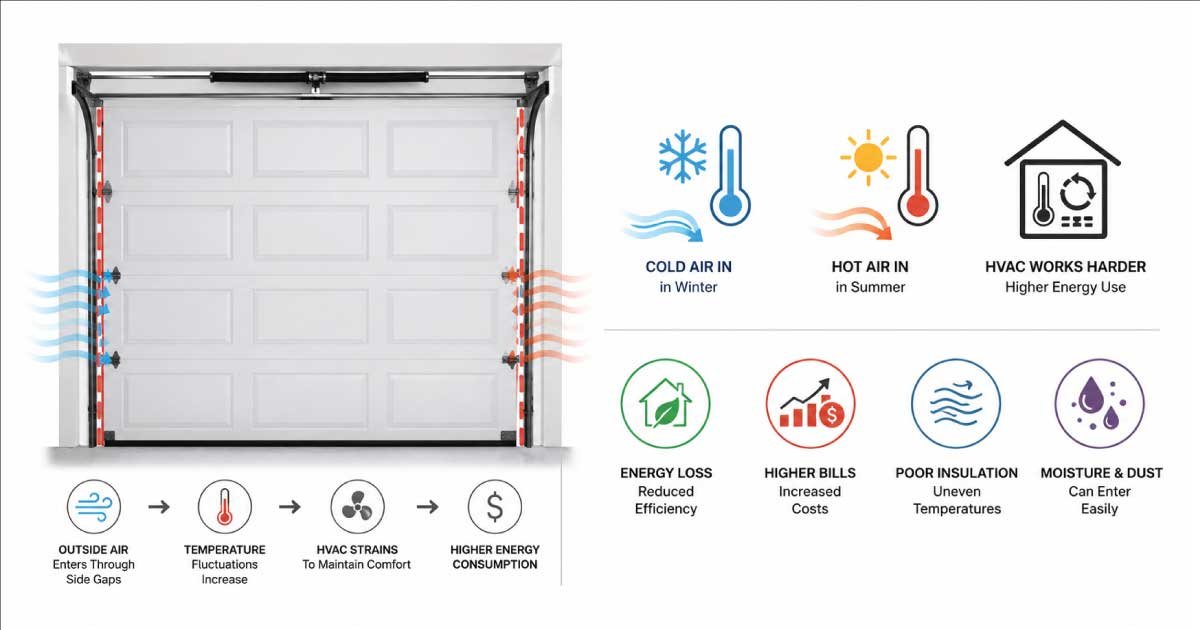
First, side gaps allow outside air to enter your garage. If your garage is attached to your house, this can affect indoor temperatures, forcing your HVAC system to work harder. Over time, this leads to higher energy bills.
How Garage Door Gaps Lead to Moisture and Water Damage
Moisture intrusion is a common but often overlooked consequence of garage door gaps. When openings are left unsealed, weather elements can easily penetrate the space, creating conditions that may cause gradual but costly damage to your garage and stored belongings.
Second, gaps invite moisture and water intrusion. Rain and snow can blow inside, damaging stored items, tools, or even the garage floor and framing.
Why Small Garage Door Gaps Attract Pests
Even tiny openings around your garage door can create big pest problems. Garages often provide warmth, shelter, and access to the home, making them an attractive entry point for insects and animals searching for food or nesting areas.
Third, even small openings provide access for insects, rodents, and small animals. Mice only need a gap about the width of a coin to get inside.
Garage Door Gaps and Home Security Risks
Garage doors play a critical role in protecting your home. When visible gaps are present, they can compromise the strength and integrity of the door, potentially making your property more vulnerable to unauthorized access or break-in attempts.
Finally, visible gaps can weaken home security, making it easier for someone to pry or manipulate the door.
Common Causes of Garage Door Gaps on the Sides 2
Garage door side gaps don’t usually appear without a reason. Identifying the cause helps ensure the fix lasts.
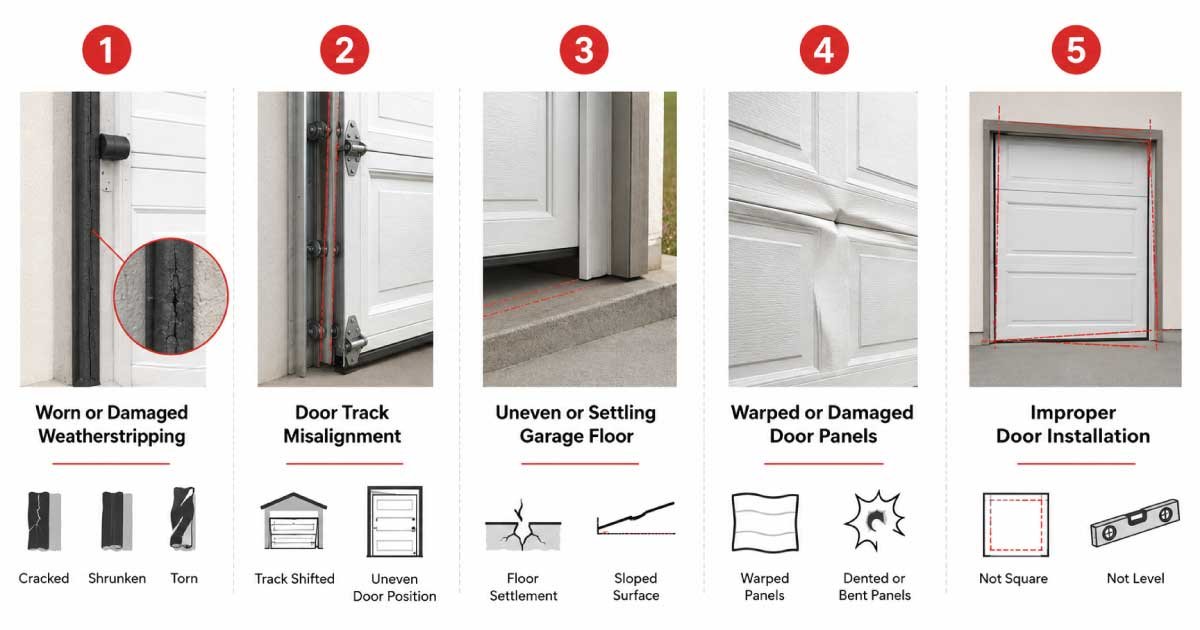
1. Worn or Damaged Weatherstripping
Weatherstripping plays a critical role in sealing the edges of your garage door against air, moisture, and pests. Because it is constantly exposed to outdoor conditions, it naturally deteriorates over time, making it one of the earliest components to fail and create visible side gaps.
The most common cause is old or cracked garage door side weatherstripping. Over time, rubber or vinyl seals dry out, shrink, or tear due to sun exposure and temperature changes.
2. Door Track Misalignment
Garage door tracks guide the door’s movement and ensure it closes evenly on both sides. Even slight shifts in these tracks can disrupt proper alignment, preventing the door from sitting flush against the frame and resulting in uneven or noticeable gaps.
If the vertical tracks on either side of the door shift slightly, the door may not sit evenly when closed. This can create gaps on one side or both.
3. Uneven or Settling Garage Floor
Garage floors are not immune to natural settling and structural changes over time. Small changes in concrete level or slope can affect how the door meets the ground and side frame, causing gaps that may appear gradually without obvious door damage.
Concrete floors can settle or slope as homes age. If the floor drops slightly near one side of the door, a visible gap may appear even if the door itself is properly aligned.
4. Warped or Damaged Door Panels
Garage door panels must remain straight and rigid to form a tight seal. Environmental exposure, physical impact, or long-term wear can alter their shape, making it difficult for the door to close evenly and leaving gaps along the sides.
Wood doors are especially prone to warping due to moisture, while metal doors can bend from impact. Even small panel distortions can prevent a tight seal.
5. Improper Door Installation
Correct installation is essential for long-term garage door performance. When doors or tracks are not installed square, level, or properly measured, sealing issues can occur immediately and become more noticeable as the door components wear and shift over time.
If the door or track system was not installed square and level from the beginning, gaps may have existed since day one and worsened over time.
Step 1: Inspect and Diagnose the Gap
Before attempting any repairs, it’s essential to clearly understand the nature and location of the garage door side gap. A careful inspection helps prevent wasted effort, ensures you choose the correct fix, and reduces the risk of overlooking underlying issues affecting door alignment or sealing.Before grabbing tools, perform a careful inspection.
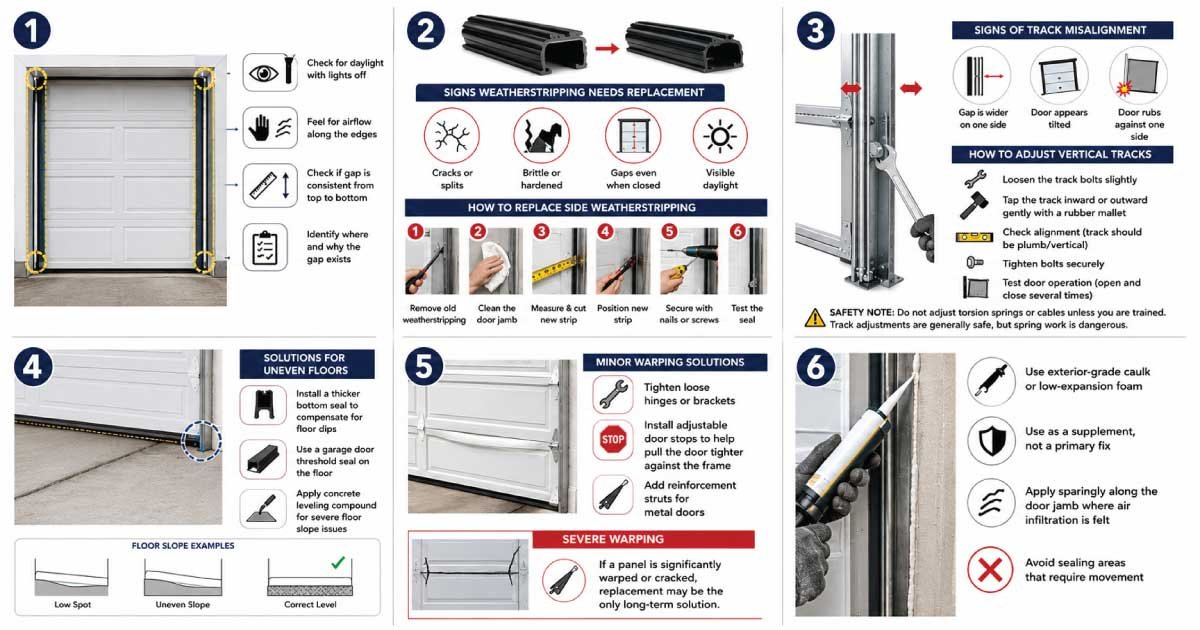
Close the garage door fully and stand inside the garage with the lights off. Look for daylight coming through the sides. Pay attention to whether the gap is consistent from top to bottom or only appears near the bottom or middle.
Next, run your hand along the inside edge of the door frame. Feel for airflow, cold spots, or loose weatherstripping. Also check if the door presses evenly against the side seals or pulls away at certain points.
Understanding where and why the gap exists will guide you to the right solution.
Step 2: Replace or Adjust Side Weatherstripping
Side weatherstripping is designed to create a tight barrier between the garage door and the frame, but it naturally wears out over time. Replacing or adjusting this component is often the fastest, most affordable solution and can dramatically improve insulation, moisture protection, and pest resistance.
For most homeowners, replacing worn weatherstripping is the simplest and most effective fix.
How Side Weatherstripping Works
Garage door side weatherstripping is mounted to the door jambs, not the door itself. When the door closes, it presses against the flexible flap, creating a seal.
Signs Weatherstripping Needs Replacement
- Cracks or splits in the rubber or vinyl
- Brittle or hardened material
- Gaps even when the door is fully closed
- Visible daylight along the sides
How to Replace Side Weatherstripping
- Remove the old weatherstripping
Use a pry bar or screwdriver to gently remove nails or screws. Pull the old strip away carefully. - Clean the door jamb
Remove dirt, old caulk, or debris to ensure a smooth surface. - Measure and cut the new weatherstripping
Cut pieces to match the height of the door opening. - Position the new strip
Close the door and press the weatherstripping against it to ensure a snug fit before fastening. - Secure with nails or screws
Start at the top and work downward, checking alignment as you go. - Test the seal
Close the door and look for light gaps. Adjust if necessary.
This fix alone resolves the majority of side gap problems.
Step 3: Adjust the Garage Door Tracks
When replacing weatherstripping doesn’t fully eliminate side gaps, the issue often lies with track alignment. Garage door tracks control how the door sits when closed, and even minor shifts over time can prevent proper sealing, creating uneven gaps along one or both sides of the garage opening.
If weatherstripping alone doesn’t fix the issue, misaligned tracks may be the culprit.
Signs of Track Misalignment
- Gap is wider on one side than the other
- Door appears tilted when closed
- Door rubs against one side while opening or closing
How to Adjust Vertical Tracks
- Loosen the track bolts
Use a wrench to slightly loosen the bolts holding the vertical track to the wall. - Tap the track inward or outward
Gently tap the track with a rubber mallet to reduce the gap between the door and the seal. - Check alignment
Ensure the track remains plumb (vertical) as you adjust. - Tighten bolts securely
Once aligned, tighten all fasteners. - Test door operation
Open and close the door several times to ensure smooth movement.
⚠️ Safety note: Do not adjust torsion springs or cables unless you are trained. Track adjustments are generally safe, but spring work is dangerous.
Step 4: Address Uneven Floors or Bottom Alignment
Garage door side gaps are often most noticeable near the floor, especially in older homes where concrete has settled over time. Addressing bottom alignment issues helps restore a proper seal, prevents drafts and water intrusion, and improves the overall effectiveness of the garage door system.
Sometimes the side gap is most noticeable near the bottom of the door.
Solutions for Uneven Floors
- Install a thicker bottom seal to compensate for floor dips
- Use a garage door threshold seal on the floor to create a raised barrier
- Apply concrete leveling compound for severe floor slope issues
A floor-mounted threshold is often the easiest and most effective solution for bottom-side gaps caused by uneven concrete.
Step 5: Fix or Reinforce Warped Door Panels
When garage door panels lose their original shape, sealing gaps along the sides becomes increasingly difficult. Warping or bending prevents the door from sitting flush against the frame, making repairs more complex and sometimes requiring structural reinforcement or replacement.
If the door itself is warped or bent, sealing the sides becomes more challenging.
Minor Warping Solutions
- Tighten loose hinges or brackets
- Install adjustable door stops to help pull the door tighter against the frame
- Add reinforcement struts for metal doors
Severe Warping
If a panel is significantly warped or cracked, replacement may be the only long-term solution. Attempting to force a severely damaged door to seal properly can strain the opener and shorten its lifespan.
🔧 Also Read: More Garage Door Solutions ➜ Garage Door Lubrication: Complete Guide for Everyone
Step 6: Seal Small Gaps with Caulk or Foam (Temporary Fix)
After completing mechanical adjustments and weather stripping repairs, tiny gaps may still remain along the garage door sides. For these minor openings, sealants can provide short-term relief by blocking airflow and moisture, but they should never replace proper door alignment or weather stripping.
For very small gaps that remain after adjustments, exterior-grade caulk or low-expansion foam can help.
Use this method only as a supplement, not a primary fix. Weather stripping should always be the main seal.
Apply caulk sparingly along the door jamb where air infiltration is felt. Avoid sealing areas that require movement.
When to Call a Professional
Some garage door side gap problems go beyond routine maintenance and simple adjustments. Recognizing when professional expertise is needed can prevent safety hazards, avoid costly mistakes, and ensure the door system remains structurally sound and operates smoothly for years to come.
While many side gap issues are DIY-friendly, some situations require expert help:
- The door is visibly crooked or unstable
- Gaps persist despite new weather stripping and track adjustments
- The door binds or struggles to open and close
- You suspect structural shifting of the garage framing
A professional can assess whether the issue is cosmetic or structural and prevent further damage.
🔧 Also Read: More Garage Door Solutions ➜ Complete Garage Door Guide: Basics, Repairs & Maintenance
Preventing Future Garage Door Side Gaps
After fixing existing side gaps, consistent care is essential to maintain a tight seal and proper door alignment. Regular inspections and simple upkeep habits help catch minor issues early, reduce wear on components, and prevent small problems from turning into costly garage door repairs.
- Inspect weather stripping annually
- Keep tracks clean and debris-free
- Lubricate hinges and rollers regularly
- Avoid bumping the door with vehicles or equipment
- Address floor cracks early
Routine maintenance goes a long way in preventing gaps from returning.
Final Thoughts
Garage door side gaps may start small, but they can lead to energy loss, pest problems, and long-term damage if ignored. Fortunately, most gaps are caused by worn weather stripping, minor track misalignment, or uneven floors, all of which can be fixed with basic tools and careful adjustments.
By inspecting the problem, choosing the correct solution, and performing regular maintenance, you can restore a tight seal and keep your garage protected year-round. Whether you’re preparing for winter, improving energy efficiency, or simply keeping pests out, fixing garage door side gaps is a worthwhile investment in your home.
🔧 Also Read: More Garage Door Solutions ➜ How to Fix a Garage Door Wheel Off Track: A Complete DIY Guide

Engineer Ali Usman is a professional garage door expert and author at FixFasty, with over 10 years of hands-on experience in garage door systems and mechanical maintenance. He writes clear, step-by-step guides on garage door repairs, parts, and safety practices, helping homeowners fix problems correctly and maintain smooth, secure, and long-lasting garage door performance.