

A noisy, jerky garage door is more than just an annoyance it can be an early warning sign of wear, misalignment, or lack of maintenance. Since your garage door is one of the largest moving components of your home, keeping it smooth and quiet is essential for safety, longevity, and everyday comfort.
This complete guide will walk you through why garage doors get noisy, how to maintain them properly, and step-by-step actions you can take to ensure quiet, reliable operation year-round. Whether you’re a DIY enthusiast or someone who prefers knowing when to call a professional, this guide has you covered.
Why a Smooth and Quiet Garage Door Matters
Many homeowners ignore garage door noise until it becomes unbearable or until something breaks. However, unusual sounds like grinding, squeaking, rattling, or banging often indicate underlying issues that can worsen over time.
A smooth and quiet garage door provides several key benefits:
Extended lifespan of door components
Improved safety for people, pets, and vehicles
Reduced repair costs by catching issues early
Better home comfort, especially for attached garages
Increased property value and curb appeal
In short, a quiet garage door isn’t a luxury it is a sign of a well-maintained home.
Common Causes of Garage Door Noise
Garage door noise is often an early warning sign that something isn’t working as smoothly as it should. Identifying the source of these sounds can help prevent further damage, improve performance, and extend the life of the system before the issue becomes more serious or costly to repair.
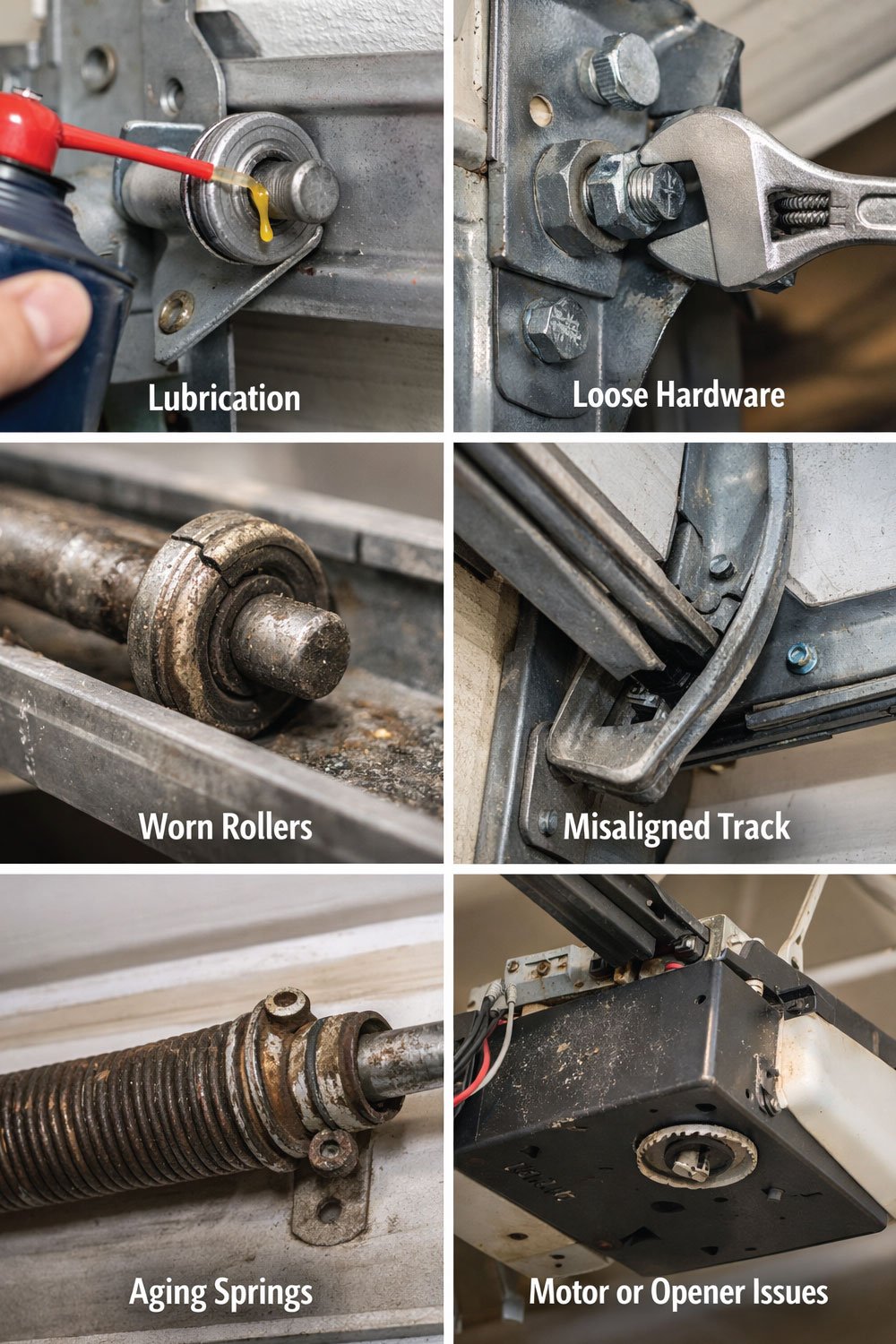
1. Lack of Lubrication
When moving metal components are not properly lubricated, friction increases significantly. This leads to unpleasant squeaking, screeching, or grinding noises as parts rub directly against each other during operation, making the door sound rough and less smooth.
2. Loose Hardware
Because garage doors operate frequently, vibration gradually loosens bolts, screws, hinges, and brackets. These loose components can cause rattling or shaking sounds, especially when the door is moving at higher speeds or passing through uneven sections.
3. Worn Rollers
Rollers guide the door along the tracks, and when they become worn, cracked, or damaged, they often create loud vibrations and uneven movement. Metal rollers are especially noisy compared to newer nylon options, which tend to run more quietly and smoothly.
4. Misaligned Tracks
Tracks that are bent, shifted, or not properly aligned can force the garage door to scrape, jerk, or drag during movement. This misalignment not only creates noise but also increases strain on the opener and other mechanical components over time.
5. Aging Springs
Springs carry a large amount of tension and naturally weaken with age and use. As they wear out, they may produce loud snapping, popping, or creaking sounds. These noises often indicate that the springs are nearing failure and need professional attention.
6. Motor or Opener Issues
If the garage door opener is old, underpowered, or malfunctioning, it may struggle to lift or lower the door properly. This can result in humming, grinding, or straining noises as the motor works harder than it should to complete each cycle.
Essential Garage Door Components You Should Know
Understanding the key components of a garage door helps you identify problems early and perform basic maintenance more effectively. Each part works together as a system, and when one component fails or wears out, it can affect the overall performance, safety, and noise level of the entire door operation.
Rollers – Guide the door along the tracks
Tracks – Metal rails on each side of the door
Hinges – Connect door panels and allow flexibility
Springs – Counterbalance the door’s weight
Cables – Work with springs to lift the door
Opener & Chain/Belt/Drive – Powers the doors movement
Each of these parts plays a role in smooth and quiet operation.
Step-by-Step Guide to Keeping Your Garage Door Quiet
A noisy garage door usually develops gradually due to wear, dirt buildup, or poor maintenance. Following a structured maintenance routine can significantly reduce unwanted sound, improve smooth operation, and extend the lifespan of your entire system while preventing small issues from turning into expensive repairs.
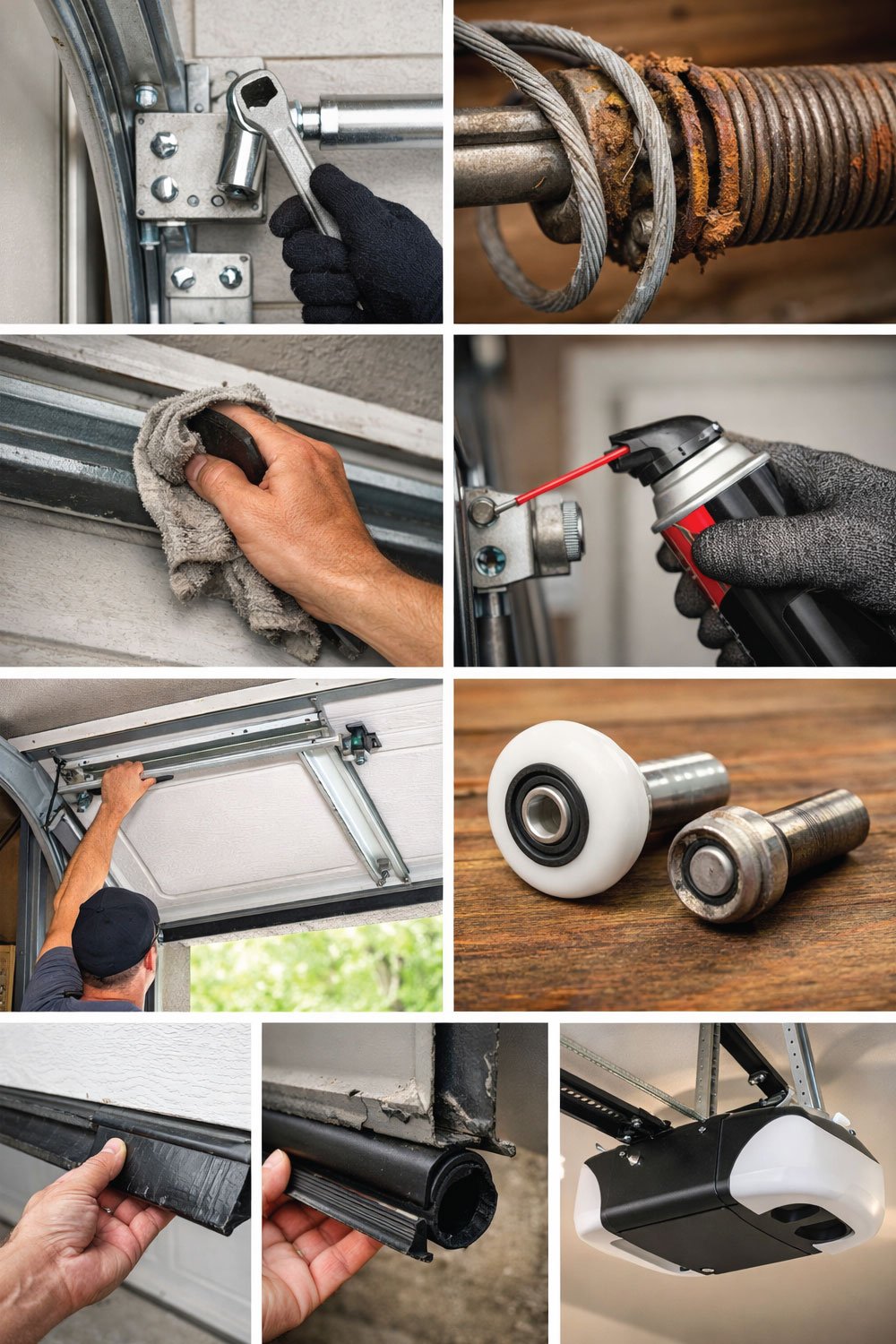
1. Perform Regular Visual Inspections
Regular inspections help you detect early signs of wear before they turn into serious mechanical problems. Even a quick monthly check can reveal loose parts, rust, or damage that contributes to noise and uneven movement.
At least once a month, take a few minutes to inspect your garage door system.
Look for:
Loose bolts or screws
Frayed cables
Rust on springs or tracks
Cracked rollers
Gaps or misalignment
Catching small issues early can prevent major problems later.
2. Tighten Loose Hardware
Garage doors create constant vibration during operation, which naturally loosens hardware over time. Tightening these components restores stability and reduces rattling or shaking noises that often occur during opening and closing cycles.
Using a socket wrench, carefully tighten:
Roller brackets
Track bolts
Hinges
Important: Do not adjust or tighten bolts connected to the springs. Springs are under high tension and should only be handled by professionals.
3. Clean the Tracks (But Do not Lubricate Them)
Dirty or clogged tracks can cause grinding sounds and irregular door movement. Cleaning them regularly ensures smoother travel for the rollers and helps maintain proper alignment without introducing unnecessary friction or resistance.
Dirt and debris can cause grinding noises and uneven movement.
Wipe tracks with a damp cloth
Remove grease buildup or hardened grime
Ensure tracks are straight and securely mounted
Avoid lubricating the tracks themselves this can actually attract dirt and make things worse.
4. Lubricate All Moving Parts Properly
Proper lubrication reduces friction between moving components, which is one of the main causes of garage door noise. Using the right product is essential, as incorrect lubricants can attract dust or create sticky buildup.
Lubrication is one of the most effective ways to reduce noise.
Best lubricant: Silicone based spray or garage door specific lubricant (avoid WD-40 as a primary lubricant).
Apply lubricant to:
Rollers (especially bearings)
Hinges
Springs
Bearings and pulleys
Opener chain or screw (if applicable)
Wipe away excess lubricant to prevent buildup.
Tip:
Lubricate every 6 months, or more often in extreme climates.
5. Upgrade to Nylon Rollers
Replacing old metal rollers with modern nylon alternatives is one of the most effective upgrades for reducing garage door noise. Nylon rollers are designed for smoother, quieter movement and require less maintenance over time compared to traditional metal options.
If your garage door still uses metal rollers, upgrading to nylon rollers can dramatically reduce noise.
Benefits of nylon rollers:
Quieter operation
Less vibration
No rust
Longer lifespan
Look for nylon rollers with sealed bearings for best performance.
6. Check Door Balance
A properly balanced garage door is essential for smooth, quiet operation. When the door is unbalanced, it forces the opener to work harder, which leads to jerky movement, extra vibration, and increased noise during both opening and closing cycles over time.
An unbalanced door puts extra strain on the opener and causes jerky, noisy movement.
How to test balance:
Disconnect the opener
Manually lift the door halfway
Release it
If the door stays in place, it is balanced.
If it falls or rises, the springs may need adjustment call a professional.
7. Inspect and Replace Worn Weather stripping
Weather stripping is the flexible seal along the bottom or sides of the garage door that helps block outside air, dust, and debris. When it becomes old, cracked, or hardened, it can create unwanted friction and vibrations that contribute to additional noise.
Old or cracked weather stripping can cause scraping noises and vibrations.
Replacing it:
Reduces noise
Improves insulation
Keeps out dust, pests, and moisture
it is an inexpensive fix with noticeable benefits.
8. Maintain the Garage Door Opener
The garage door opener is responsible for powering the entire system, so any wear or looseness in its components can significantly increase noise levels. Regular inspection helps ensure stable mounting and smooth mechanical operation without unnecessary vibration.
Your opener plays a major role in noise levels.
Check for:
Loose mounting brackets
Worn drive belts or chains
Vibration against ceiling or wall
If your opener is more than 10–15 years old, consider upgrading to a modern, quiet model with belt or direct drive technology.
🔧 Also Read: More Garage Door Solutions ➜ Garage Door Parts Guide: Everything You Need to Know
Seasonal Maintenance Tips
Seasonal changes can significantly affect how your garage door performs, as temperature, humidity, and weather conditions impact metal parts, lubrication, and alignment. Adjusting maintenance practices according to each season helps ensure smoother operation, prevents damage, and extends the overall lifespan of your garage door system.
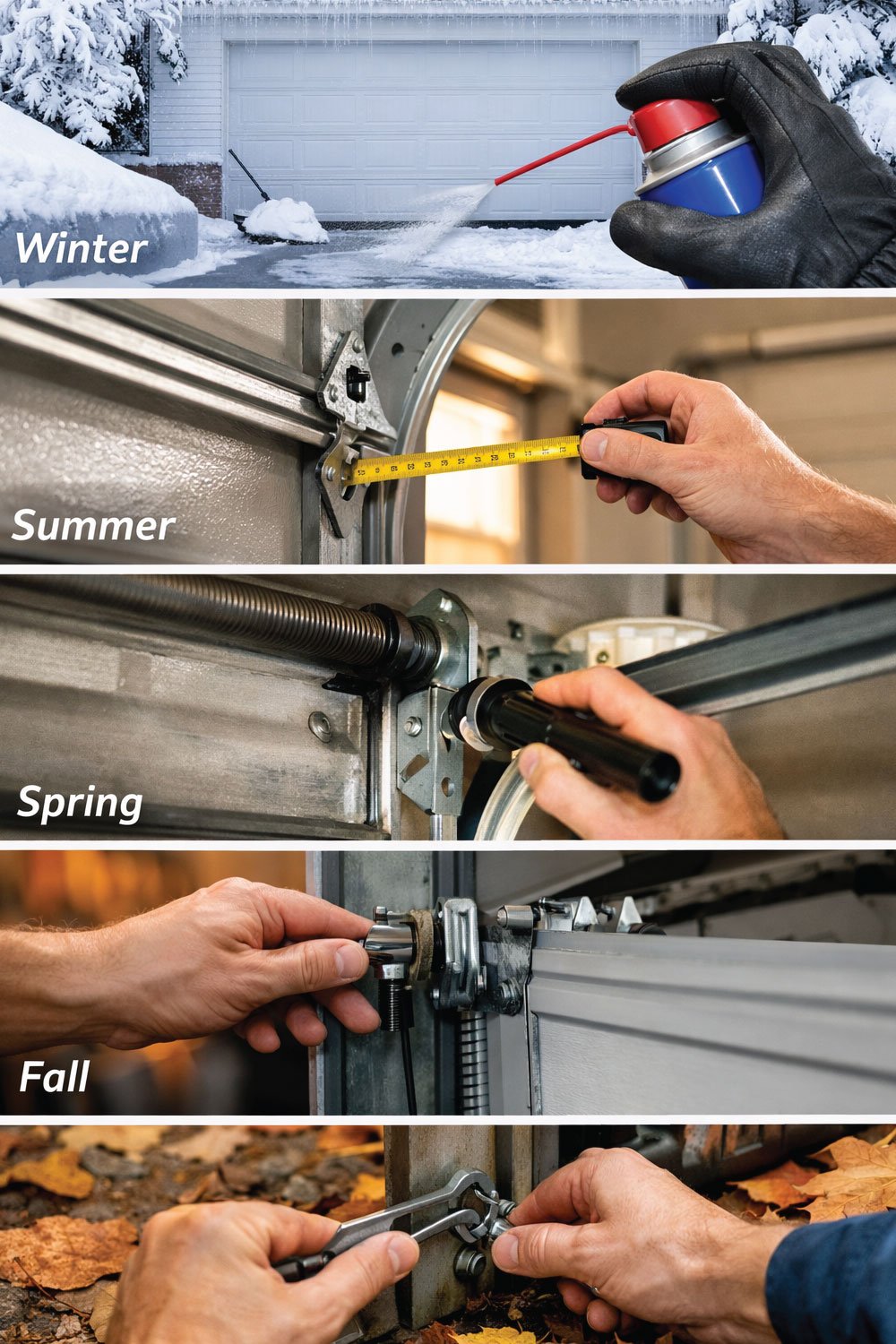
Winter
Use cold-weather lubricant
Check for metal contraction
Clear ice and snow buildup
Summer
Inspect for heat-related expansion
Lubricate more frequently in dry climates
Spring & Fall
Perform full inspections
Clean tracks and components
Tighten hardware
DIY Maintenance vs. Professional Service
Maintaining a garage door involves a mix of simple tasks you can safely handle on your own and more complex repairs that require professional expertise. Understanding this difference helps you keep the system running smoothly while avoiding unnecessary risks, injuries, or damage caused by improper handling of high-tension components.
🔧 Also Read: More Garage Door Solutions ➜ Garage Door Making Noise? Here’s How to Fix It
What You Can Do Yourself
Routine DIY maintenance focuses on basic cleaning, inspection, and minor adjustments that do not involve high-tension parts or complex mechanical systems. These tasks help improve performance, reduce noise, and extend the lifespan of your garage door without requiring specialized tools or technical training.
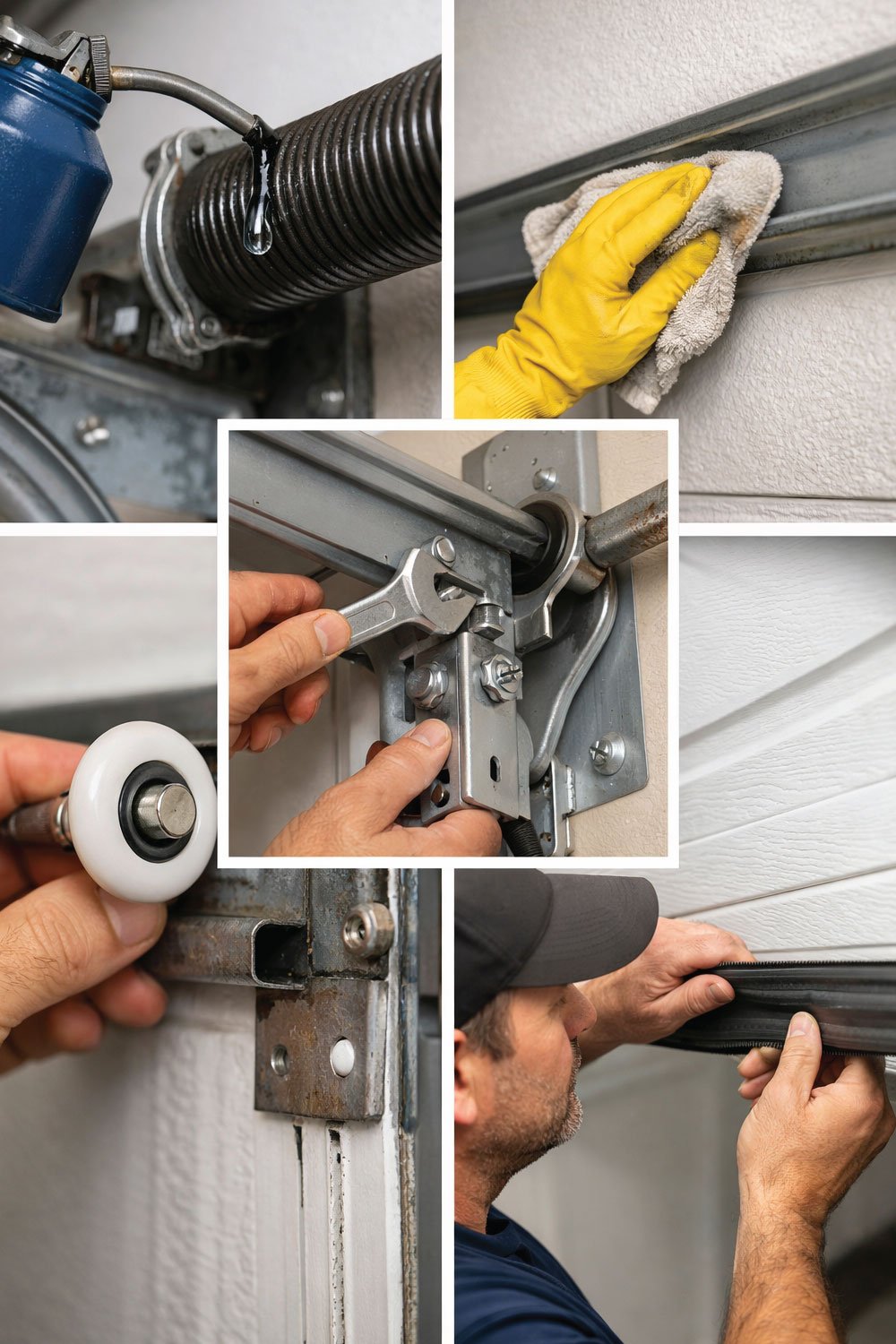
Lubrication
Cleaning tracks
Tightening hardware
Visual inspections
Replacing rollers or weather stripping
When to Call a Professional
Certain garage door issues involve dangerous components such as springs, cables, and motor systems that require specialized knowledge and equipment. Attempting these repairs without proper training can lead to serious injury or further damage to the door system, making professional service essential.
Spring repair or replacement
Cable issues
Major alignment problems
Opener motor failure
Door coming off tracks
Trying to fix high-tension components yourself can be dangerous and costly.
Final Thoughts
A smooth and quiet garage door isn’t just about comfort it is about safety, efficiency, and protecting one of your homes most used systems. With regular inspections, proper lubrication, and timely upgrades, you can keep your garage door running quietly for years to come.
By following the steps in this guide, you will not only reduce noise but also increase reliability, save money on repairs, and enjoy peace of mind every time your garage door opens or closes.
If you ever feel unsure or notice signs of serious wear, do not hesitate to consult a professional. A well maintained garage door is an investment that pays off every single day.

Engineer Ali Hasan is a garage door expert and the founder of FixFasty. With over 16 years of experience in mechanical systems and home maintenance, he provides practical, step-by-step guides on garage door installation, repairs, and maintenance, helping homeowners keep their garage doors safe, reliable, and long-lasting.