
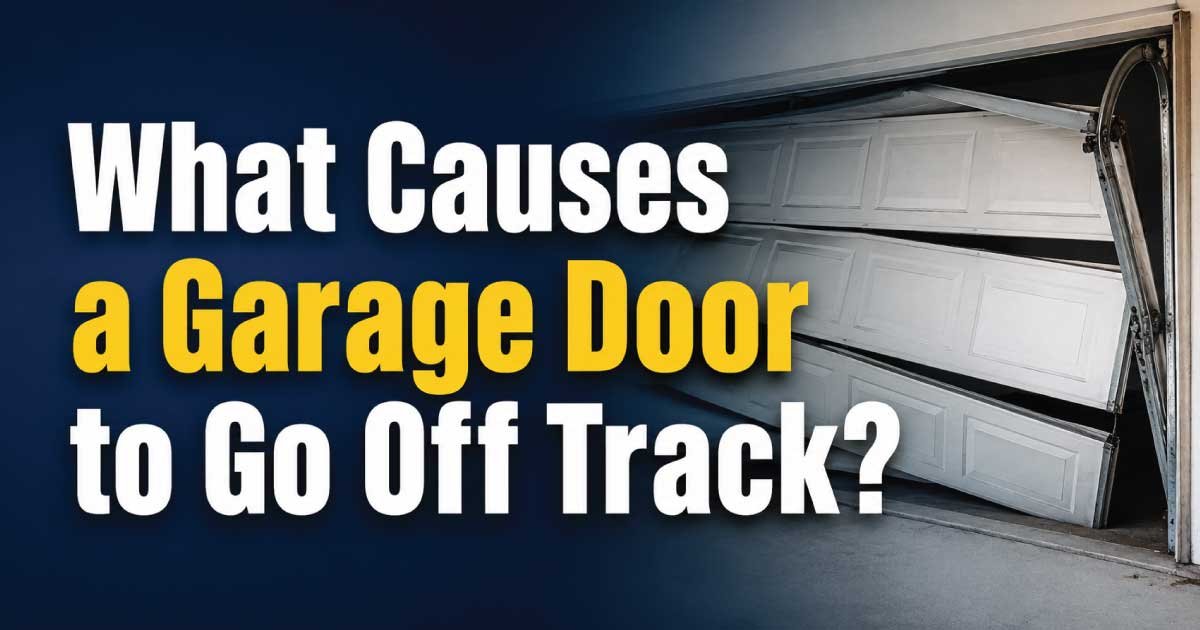
A garage door that has gone off track is more than an inconvenience—it can become a serious safety hazard if left unchecked. When the rollers slip out of the metal tracks or the door becomes uneven, the entire system can stop working properly. In some cases, the door may refuse to open or close. In others, it may move crookedly, make loud grinding noises, or even become stuck halfway.
Garage doors are heavy and rely on several components working together in perfect alignment. A small issue, such as a loose track bracket or worn roller, can eventually cause the door to derail. Weather, accidental impacts, poor maintenance, and damaged hardware also contribute to this common problem.
This repair guide explains what causes a garage door to go off track, how to recognize the warning signs early, and how to diagnose the problem safely. You’ll also learn which issues are suitable for DIY troubleshooting, when professional repair is the safer choice, and what inspections you can perform before deciding on the next step.
Table of Contents
ToggleCommon Signs and Symptoms
A garage door rarely comes off its track without giving warning first. Learning to recognize these symptoms can help you stop using the door before the damage becomes worse. Catching the problem early may prevent expensive repairs and reduce the risk of injury.
Common warning signs include:
- The garage door looks crooked or uneven while moving.
- One side of the door moves higher than the other.
- Rollers have popped out of the track.
- The door gets stuck halfway during opening or closing.
- Loud grinding, scraping, or popping noises.
- Gaps appear between the rollers and the track.
- The garage door opener struggles or stops suddenly.
- Bent or visibly damaged tracks.
- The door shakes excessively while operating.
- Cables appear loose, tangled, or hanging.
Less obvious symptoms may include:
- The opener reverses before the door fully closes.
- The door closes with a hard impact.
- Rollers hesitate or bind at certain points.
- The track vibrates noticeably during operation.
- Increased wear on rollers or hinges.
Practical example: If a bicycle accidentally bumps into the lower section of the garage door every day, the repeated impacts can gradually bend the track. At first, you may only hear unusual noises. Weeks later, the rollers may climb over the damaged section and leave the track completely.
Ignoring these early warning signs often turns a simple adjustment into a much larger repair.
How the Garage Door Normally Works
Understanding how a garage door operates makes it much easier to diagnose why it has gone off track. Although modern garage doors may look simple, they depend on several mechanical parts working together under significant tension.
The basic system includes:
- Vertical and horizontal metal tracks
- Rollers attached to each door panel
- Hinges connecting door sections
- Torsion or extension springs
- Lift cables
- Cable drums
- Garage door opener and rail
- Mounting brackets
When the opener activates, it pulls or pushes the door while the springs carry most of the weight. The rollers glide smoothly inside the tracks, allowing the door to travel upward and then curve along the horizontal rails above the garage.
If every component remains properly aligned, the movement is quiet and balanced.
The door goes off track when one or more rollers leave the track or the tracks themselves become misaligned. Once this happens, the remaining components are forced to carry uneven loads, which can quickly create additional damage.
Think of the track as railroad tracks and the rollers as train wheels. Even a small obstruction or slight bend can force the wheels off their intended path.
Most Common Reasons This Problem Happens
Garage doors usually go off track because one problem develops slowly over time or because a sudden event puts excessive force on the system. Identifying the actual cause is much more important than simply pushing the rollers back into place.
Bent or Damaged Tracks
Metal tracks are designed to keep the rollers perfectly aligned. Even a small bend changes the path the rollers follow.
Why it happens
- Vehicle impact
- Heavy objects hitting the track
- Rust damage
- Loose mounting brackets
- Years of wear
Symptoms
- Visible dents
- Rollers sticking
- Scraping noises
- Uneven movement
How to identify it
Inspect both tracks from floor to ceiling. Look for bends, flattened sections, or areas where the rollers no longer sit in the center of the track.
Worn or Broken Rollers
Rollers wear out naturally after thousands of opening and closing cycles. Plastic rollers usually wear faster than steel or nylon versions.
Why it happens
- Age
- Lack of lubrication
- Dirt buildup
- Heavy use
Symptoms
- Loud rolling noises
- Wobbling rollers
- Flat spots
- Rollers jumping during movement
How to identify it
Open the garage door only if it can be done safely. Examine each roller closely. Cracks, missing bearings, or excessive side-to-side movement indicate replacement is likely needed.
Loose Track Hardware
Tracks rely on brackets and bolts to remain perfectly aligned. As vibrations accumulate over the years, hardware can gradually loosen.
Why it happens
- Daily operation
- House settling
- Improper installation
- Age
Symptoms
- Track movement
- Rattling noises
- Uneven gaps
- Door shifting sideways
How to identify it
Check every visible bolt and mounting bracket for movement. A track should remain firmly attached without flexing when lightly pushed.
Broken or Loose Lift Cables
Lift cables help raise and lower the heavy garage door evenly. If one cable slips or breaks, the door quickly becomes unbalanced.
Why it happens
- Fraying
- Rust
- Excessive tension
- Normal wear
Symptoms
- One side drops lower
- Crooked door
- Hanging cable
- Jerky movement
How to identify it
Look for frayed strands, loose cable wraps on the drum, or uneven cable tension.
Important safety note: Never attempt to rewind or remove lift cables under tension. They store significant energy and can cause serious injury.
Obstructions Inside the Track
Garage tracks often collect debris that homeowners overlook.
Why it happens
- Dirt
- Leaves
- Small rocks
- Hardened grease
- Children’s toys
Symptoms
- Sudden stopping
- Roller hesitation
- Clicking noises
How to identify it
Inspect the full length of both tracks using a flashlight. Remove loose debris only after disconnecting power to the opener.
Accidental Vehicle Impact
One of the most common causes of off-track garage doors is backing into the door before it is fully open.
Why it happens
- Driver distraction
- Opener malfunction
- Poor visibility
Symptoms
- Bent panels
- Twisted track
- Rollers out of alignment
How to identify it
Look for fresh dents, paint transfer, or obvious structural damage around the impact area.
Broken Springs
Garage door springs support most of the door’s weight. When one breaks, the remaining hardware experiences excessive stress.
Why it happens
- Metal fatigue
- Rust
- High cycle count
Symptoms
- Extremely heavy door
- Loud bang before failure
- Crooked lifting
How to identify it
A torsion spring often shows a visible gap where it has broken.
Do not attempt spring replacement yourself unless you have professional training.
Also Read:
Safety Precautions Before Troubleshooting
Garage door troubleshooting should always begin with safety. Even a partially open garage door can weigh hundreds of pounds, and several components operate under dangerous spring tension. Taking a few simple precautions greatly reduces the chance of injury and prevents additional damage during your inspection.
Before inspecting the garage door:
- Disconnect the automatic garage door opener.
- Keep children and pets away from the work area.
- Never stand underneath a damaged or partially open door.
- Wear safety glasses and work gloves.
- Use a sturdy ladder on level ground.
- Avoid forcing the door open or closed.
- Do not loosen torsion spring hardware.
- Never disconnect lift cables under tension.
- If the door appears unstable, stop using it immediately.
- Have another adult nearby if the door must be manually inspected.
If you notice broken springs, snapped cables, severely bent tracks, or a door hanging at an angle, discontinue DIY troubleshooting. These repairs require specialized tools and experience.
Tools Required
Before beginning your inspection, gather a few basic tools. Most diagnostic work requires only simple hand tools rather than specialized garage door equipment. Having everything ready helps you inspect the system carefully without rushing or overlooking important details.
| Tool | Purpose |
|---|---|
| Flashlight | Inspect tracks, rollers, and cables |
| Safety glasses | Protect eyes from debris |
| Work gloves | Prevent cuts while handling metal parts |
| Adjustable wrench | Check loose bolts and brackets |
| Socket set | Tighten accessible hardware |
| Screwdriver set | Remove small covers or tighten screws |
| Level | Check track alignment |
| Tape measure | Measure spacing between tracks |
| Step ladder | Reach upper hardware safely |
| Clean cloth | Wipe dirt from tracks during inspection |
Step-by-Step Troubleshooting Guide
Diagnosing an off-track garage door is easier when you follow a logical inspection process. The goal is to identify the underlying cause without creating additional hazards. If you discover serious damage at any point, stop troubleshooting and arrange for a professional repair.
Disconnect the opener.
What to inspect: Ensure the opener is unplugged or released using the emergency cord.
Why it matters: Prevents accidental movement while inspecting the door.
Expected result: The door remains stationary and safe to examine.
What to do next: Continue with a visual inspection.
Inspect the overall door alignment.
What to inspect: Check whether one side sits lower than the other.
Why it matters: Uneven positioning often points to cable, spring, or roller problems.
Expected result: You identify whether the issue affects one side or the entire door.
What to do next: Focus your inspection on the affected side.
Examine the tracks.
What to inspect: Look for dents, bends, loose brackets, and debris.
Why it matters: Damaged tracks are among the most common causes of derailment.
Expected result: Tracks should appear straight and securely mounted.
What to do next: Note any damage for repair or replacement.
Check the rollers.
What to inspect: Look for cracked, worn, or missing rollers.
Why it matters: Faulty rollers can easily leave the track.
Expected result: Rollers should spin freely without excessive wobble.
What to do next: Replace damaged rollers rather than attempting temporary fixes.
Inspect cables and springs from a safe distance.
What to inspect: Look for frayed cables or broken springs without touching them.
Why it matters: These components affect balance and safe operation.
Expected result: Cables remain tight and springs appear intact.
What to do next: If damage is visible, stop and arrange professional service.
Test for loose hardware.
What to inspect: Mounting bolts and brackets.
Why it matters: Loose hardware can gradually shift the track out of alignment.
Expected result: Components remain firmly attached.
What to do next: Tighten accessible fasteners if they are not connected to spring assemblies.
Also Read:
Quick Diagnosis Table
A quick comparison of symptoms and likely causes can help narrow down the problem before repairs begin. While this table cannot replace a full inspection, it provides a practical starting point for homeowners trying to understand what may have caused their garage door to go off track.
| Symptom | Possible Cause | Recommended Solution |
|---|---|---|
| Door is crooked | Broken cable | Stop using the door and schedule professional repair |
| Roller outside track | Bent track or worn roller | Inspect track and replace damaged roller if appropriate |
| Loud grinding noise | Worn rollers | Replace worn rollers and lubricate approved moving parts |
| Door stops halfway | Track obstruction | Remove debris and inspect for damage |
| Track moves when touched | Loose brackets | Tighten accessible mounting hardware |
| Door feels unusually heavy | Broken spring | Do not operate the door; call a professional |
| Door shakes while moving | Misaligned track | Inspect alignment and mounting points |
| Scraping metal sound | Bent track | Repair or replace the damaged track section |
How to Fix Each Common Cause
Now that you’ve identified the most likely reason your garage door went off track, the next step is choosing the correct repair. Some problems are safe for homeowners with basic tools, while others involve high-tension components that should only be handled by trained technicians. The key is fixing the root cause rather than simply forcing the rollers back into the track.
Repair Bent or Misaligned Tracks
Minor track misalignment can sometimes be corrected, but severely bent tracks usually need replacement.
Safety first: Never attempt to straighten a track while the garage door is under load or if the rollers have completely left the track.
DIY steps for minor misalignment:
- Disconnect the garage door opener.
- Close the door completely if possible.
- Loosen—but do not remove—the track mounting bolts.
- Use a level to check the track alignment.
- Gently reposition the track until it is plumb and evenly spaced.
- Tighten the mounting bolts securely.
- Manually move the door a short distance to verify smooth operation.
Replace the track instead of repairing it if:
- It has deep dents.
- The metal is cracked.
- The track has twisted.
- The rollers cannot travel smoothly after adjustment.
Replace Worn or Damaged Rollers
Garage door rollers naturally wear out over time. Replacing them before they fail completely helps prevent future derailments.
DIY suitability: Moderate, but only if the repair does not require removing bottom fixtures attached to lift cables.
Basic procedure:
- Disconnect power to the opener.
- Open the track slightly at a safe access point if appropriate.
- Remove one roller at a time.
- Install the replacement roller.
- Confirm smooth rotation.
- Lubricate steel rollers with garage door lubricant if recommended by the manufacturer.
Avoid using household grease because it attracts dust and debris.
Tighten Loose Hardware
Loose brackets are one of the easiest causes to correct.
Inspect:
- Track brackets
- Hinge bolts
- Roller brackets
- Header mounting bolts
Replace stripped bolts rather than overtightening them.
Remove Track Obstructions
Clean both vertical and horizontal tracks using:
- A dry cloth
- A vacuum
- A soft brush
Avoid applying heavy grease inside the tracks. Rollers are designed to roll—not slide—through the track.
Replace Damaged Cables
Do not perform this repair yourself.
Garage door cables remain under high spring tension. Incorrect removal can cause the cable to whip unexpectedly and lead to serious injuries.
If a cable is:
- Frayed
- Rusted
- Loose
- Off the drum
- Broken
Stop operating the door immediately and contact a qualified garage door technician.
Replace Broken Springs
Broken torsion and extension springs should always be considered professional repairs.
A broken spring usually requires:
- Spring replacement
- Door balancing
- Tension adjustment
- Safety inspection
Replacing only one spring on a two-spring system is rarely recommended because the second spring is often near the end of its service life as well.
Repair Impact Damage
If a vehicle has struck the garage door:
Inspect for:
- Bent panels
- Twisted tracks
- Broken hinges
- Misaligned rollers
- Cracked mounting brackets
Minor cosmetic dents may not affect operation, but structural damage almost always requires professional evaluation before the door is used again.
Advanced Troubleshooting
If none of the common causes explains why your garage door went off track, a more detailed inspection may be necessary. Less common problems can produce similar symptoms, making careful diagnosis important before replacing parts unnecessarily.
Advanced issues include:
Worn Hinges
Loose or elongated hinge holes allow the door sections to shift during movement.
Signs include:
- Door twisting
- Uneven panel spacing
- Rollers entering the track at an angle
Replace damaged hinges rather than attempting temporary repairs.
Door Panel Damage
A cracked or warped panel changes the door’s alignment.
Common causes include:
- Moisture damage
- Vehicle impact
- Age
- Structural fatigue
Multiple damaged panels can make replacing the entire door more economical than individual repairs.
Improper Spring Balance
Even intact springs can become improperly balanced.
Symptoms include:
- Door drifting open
- Door falling rapidly
- Uneven lifting
- Excessive opener strain
Spring balancing requires specialized winding bars and should be left to professionals.
Garage Door Opener Problems
Although the opener does not usually cause rollers to leave the track directly, it can contribute by forcing a door with existing mechanical issues.
Inspect for:
- Loose drive chain or belt
- Incorrect travel limits
- Improper force settings
- Damaged trolley
Modern openers include adjustable force and travel settings that should be calibrated according to the manufacturer’s instructions.
Track Installation Errors
Occasionally, problems begin shortly after a new garage door installation.
Possible installation mistakes include:
- Tracks not parallel
- Incorrect spacing
- Loose lag bolts
- Improper roller selection
- Incorrect spring sizing
If the problem appeared immediately after installation, contact the installer before making adjustments yourself.
When Repair Is Not Worth It
Although many off-track garage doors can be repaired, there are situations where replacement provides better long-term value. Continuing to repair an aging or severely damaged door may lead to repeated service calls and higher overall costs.
Replacement is often the smarter choice when:
- Multiple panels are damaged.
- Tracks are severely twisted.
- Springs, rollers, and cables all show significant wear.
- The door is more than 20 years old and requires frequent repairs.
- Structural damage affects the door frame.
- Replacement parts are no longer readily available.
- Repair costs approach half the price of a new door system.
A new garage door may also improve:
- Home security
- Energy efficiency
- Noise reduction
- Curb appeal
- Reliability
When comparing repair versus replacement, consider the condition of the entire system, not just the part that failed.
Also Read:
Preventive Maintenance Tips
Regular maintenance is the best way to prevent a garage door from going off track. Most inspections take only a few minutes and can significantly extend the life of the rollers, tracks, springs, and opener.
Create a simple maintenance routine:
- Inspect rollers every three to six months.
- Tighten accessible bolts annually.
- Keep tracks clean and free of debris.
- Lubricate moving metal parts with garage door lubricant as recommended.
- Test door balance periodically.
- Listen for new grinding or scraping noises.
- Replace worn rollers before they fail.
- Keep vehicles and stored items away from the track area.
- Check weather seals for damage.
- Schedule a professional inspection every few years, especially for older doors.
Preventive maintenance is much less expensive than repairing a door that has completely derailed.
Common Mistakes to Avoid
Many garage door problems become worse because homeowners unintentionally make unsafe or ineffective repairs. Avoiding these common mistakes can save time, money, and prevent injuries.
Common mistakes include:
- Continuing to operate an off-track door.
- Forcing the opener to lift a stuck door.
- Ignoring unusual noises.
- Using excessive lubricant inside the tracks.
- Hammering bent tracks back into shape without inspection.
- Replacing only one worn roller when several have reached the end of their lifespan.
- Attempting spring or cable repairs without proper tools and training.
- Using incorrect replacement parts.
- Delaying repairs after a minor vehicle impact.
- Skipping routine maintenance for years.
Treat unusual movement as an early warning rather than waiting for a complete failure.
When to Call a Professional
Some garage door repairs carry risks that outweigh the potential savings of doing the work yourself. Knowing when to stop troubleshooting is just as important as knowing how to inspect the system.
Contact a professional if:
- A torsion or extension spring is broken.
- Lift cables have snapped or come off the drum.
- The door has completely left both tracks.
- The track is severely bent or detached.
- The opener continues straining after basic troubleshooting.
- The door is too heavy to lift manually.
- Structural damage affects multiple panels.
- The garage door repeatedly goes off track after previous adjustments.
- You are uncertain about the cause of the problem.
- You do not have the proper safety equipment.
A trained technician can safely rebalance the system, replace high-tension components, and verify that the entire door operates correctly before returning it to service.
Estimated Repair Costs
Repair costs vary depending on the type of damage, labor rates, and the garage door model. The table below provides typical price ranges to help homeowners estimate what they might expect.
| Repair | Estimated Cost | DIY or Professional |
|---|---|---|
| Tighten track hardware | $0–$30 | DIY |
| Clean and inspect tracks | $0–$20 | DIY |
| Replace rollers | $50–$200 | DIY (experienced) or Professional |
| Track realignment | $125–$300 | Professional recommended |
| Replace damaged track | $150–$500 | Professional |
| Cable replacement | $150–$350 | Professional |
| Spring replacement | $200–$500 | Professional |
| Hinge replacement | $75–$200 | DIY or Professional |
| Garage door opener adjustment | $100–$250 | DIY (minor settings) or Professional |
| Full garage door replacement | $800–$3,500+ | Professional |
Final Thoughts
Understanding what causes a garage door to go off track helps you respond quickly, safely, and effectively when problems appear. In many cases, early warning signs such as unusual noises, uneven movement, or loose hardware provide an opportunity to correct minor issues before they become major repairs. Regular inspections, proper maintenance, and prompt attention to worn components are the best ways to keep your garage door operating smoothly.
While homeowners can often handle basic troubleshooting, it’s important to recognize the limits of DIY repair. High-tension springs, lift cables, and severe track damage require specialized knowledge and tools to repair safely. Attempting these repairs without proper training can result in serious injury or additional damage to the door system.
By following the inspection methods, troubleshooting steps, and preventive maintenance practices outlined in this guide, you can improve your garage door’s reliability, reduce unexpected repair costs, and extend the life of the entire system. When in doubt, prioritize safety and seek professional assistance rather than forcing a damaged garage door back into operation.

Engineer Ali Usman is a professional garage door expert and author at FixFasty, with over 10 years of hands-on experience in garage door systems and mechanical maintenance. He writes clear, step-by-step guides on garage door repairs, parts, and safety practices, helping homeowners fix problems correctly and maintain smooth, secure, and long-lasting garage door performance.