
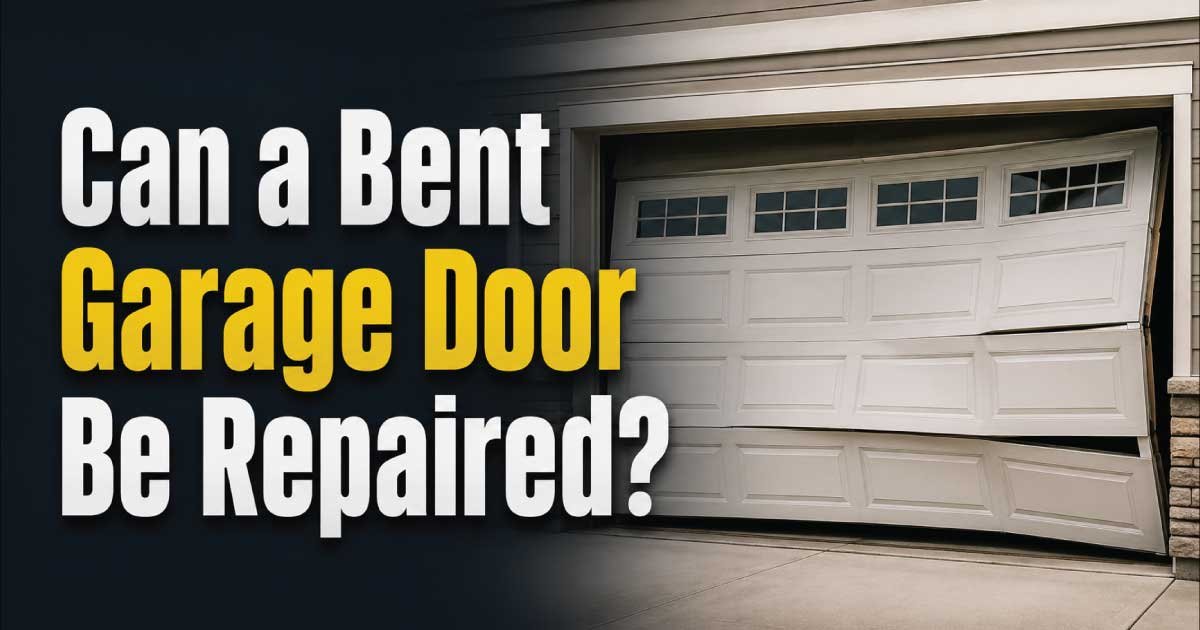
A bent garage door is more than a cosmetic problem. Even a small bend can affect how smoothly the door opens and closes, place extra stress on the garage door opener, and create safety risks if left unchecked. In many cases, homeowners first notice unusual noises, uneven movement, or gaps along the door before realizing that one or more panels have become bent.
Garage doors usually bend after accidental impacts, worn hardware, strong winds, or years of daily use. Whether the damage is minor or severe depends on how much the panels, tracks, and supporting components have been affected. The good news is that not every bent garage door needs complete replacement. Many cases can be repaired safely if the damage is identified early and the right repair method is used.
This repair guide explains how to determine whether a bent garage door can be repaired, what causes the damage, how to inspect the system safely, and which troubleshooting steps to follow before deciding between DIY repair and professional repair. By the end of this guide, you’ll understand how to diagnose the problem accurately and avoid making costly mistakes that could worsen the damage.
Common Signs and Symptoms
A bent garage door rarely fails without warning. Before the damage becomes severe, the door often shows several noticeable symptoms that indicate something is no longer operating correctly. Recognizing these warning signs early can prevent additional damage to the opener, tracks, rollers, and springs while making repairs easier and less expensive.
Common symptoms include:
- The garage door appears uneven when closed.
- One or more panels look warped or dented.
- The door shakes while opening or closing.
- Loud grinding, scraping, or popping noises occur during operation.
- The door becomes stuck halfway.
- Rollers repeatedly come off the track.
- Visible gaps appear between door sections.
- The garage door opener struggles to lift the door.
- The door closes but leaves spaces where air, dust, or rain can enter.
- The door reverses unexpectedly after touching the ground.
- The bottom seal no longer sits evenly on the floor.
Less obvious warning signs may include:
- Increased vibration during operation.
- Loose hinges between panels.
- Bent tracks caused by pressure from a damaged panel.
- Slow opening speed despite a properly functioning opener.
- New scratches on tracks or rollers caused by misalignment.
Practical example: A homeowner accidentally backs into the garage door at low speed. The damage appears to be only a small dent, but within a few weeks the rollers begin rubbing against the tracks because the bent panel changes the door’s alignment. Addressing the problem early often prevents much more expensive repairs later.
How the Garage Door Normally Works
Understanding how a garage door is designed to operate makes it much easier to identify what has failed. A modern garage door relies on several components working together, and damage to one part often affects the entire system rather than a single panel.
A sectional garage door consists of multiple horizontal panels connected by hinges. Rollers attached to these hinges travel inside vertical and horizontal tracks mounted on each side of the opening. Torsion or extension springs counterbalance the door’s weight, allowing the opener to lift it with minimal effort.
During normal operation:
- The opener pulls or pushes the door.
- Springs carry most of the door’s weight.
- Rollers move smoothly inside the tracks.
- Hinges allow each panel to bend as the door travels along the curved track.
- Weather seals create a tight fit when the door closes.
When a panel becomes bent, this smooth movement changes. The damaged section may twist slightly, forcing rollers against the track instead of allowing them to roll freely. This added friction increases wear on nearly every moving part.
Even if the garage door still opens, operating it repeatedly while bent can lead to:
- Premature roller wear
- Track misalignment
- Loose hinges
- Damaged cables
- Opener strain
- Spring imbalance
- Additional panel damage
Understanding this chain reaction helps explain why early diagnosis is so important.
Most Common Reasons This Problem Happens
A garage door rarely bends without a specific cause. Identifying why the damage occurred helps determine whether a simple repair is possible or if more extensive work will be required. Below are the most common causes, along with practical ways to recognize each one.
Vehicle Impact
Accidental vehicle contact remains the leading cause of bent garage doors. Even a slow-speed bump can deform one or more panels while leaving the rest of the system looking normal.
Why it happens
- Driver backs into the door.
- Door closes onto a parked vehicle.
- New drivers misjudge stopping distance.
Symptoms
- Large dent in one section.
- Crooked appearance.
- Door binds during movement.
How to identify it
Inspect each panel carefully. Fresh paint transfer, creases, or cracked insulation usually indicate impact damage.
Strong Wind or Storm Damage
High winds can place enormous pressure on large garage doors. Older doors without reinforcement braces are especially vulnerable.
Why it happens
- Wind pressure flexes the panels.
- Flying debris strikes the door.
- Sudden pressure changes stress weakened sections.
Symptoms
- Bowed center panels.
- Loose hinges.
- Cracks around fasteners.
How to identify it
Look for widespread bending across several panels rather than a single impact point.
Worn or Damaged Rollers
Rollers guide the door along its tracks. When they wear out or break, the door may twist as it moves.
Why it happens
- Bearings wear over time.
- Lack of lubrication.
- Normal aging.
Symptoms
- Jerky movement.
- Loud squeaking.
- Rollers wobble.
How to identify it
Open the door manually and inspect each roller for excessive play or visible wear.
Bent Tracks
Sometimes the garage door itself is not the original problem. A bent track forces otherwise straight panels into an uneven position.
Why it happens
- Previous impacts.
- Loose mounting brackets.
- Heavy force applied during operation.
Symptoms
- Door sticks at one location.
- Rollers bind.
- Visible gap between roller and track.
How to identify it
Stand several feet away and inspect both tracks from top to bottom for bends or twists.
Broken or Loose Hinges
Each panel depends on hinges to flex correctly while moving through the curved portion of the track.
Why it happens
- Rust.
- Loose fasteners.
- Metal fatigue.
Symptoms
- Panel separation.
- Uneven movement.
- Visible hinge movement.
How to identify it
Inspect every hinge for cracks, missing bolts, or unusual movement.
Aging and Metal Fatigue
Garage doors experience thousands of operating cycles over their lifetime. Repeated stress gradually weakens the metal.
Why it happens
- Daily use.
- Corrosion.
- Exposure to moisture.
Symptoms
- Slight warping.
- Hairline cracks.
- Multiple weak spots.
How to identify it
Look for widespread wear instead of damage concentrated in one location.
Safety Precautions Before Troubleshooting
Garage doors are among the heaviest moving objects in most homes. Before beginning any troubleshooting or DIY repair, it’s important to understand the potential hazards. Taking a few minutes to prepare can greatly reduce the risk of injury and prevent additional damage to the door system.
Before inspecting the door:
- Disconnect the automatic opener by pulling the emergency release cord.
- Keep children and pets away from the work area.
- Wear safety glasses and sturdy work gloves.
- Use a stable ladder placed on level ground.
- Never stand directly beneath a partially open garage door.
- Avoid forcing a stuck door open or closed.
- Do not loosen or adjust torsion springs without proper training.
- Never remove lift cables under tension.
- Disconnect power to the opener before inspecting electrical components.
- Use adequate lighting to inspect tracks, hinges, and rollers.
Important safety warning: Springs store enough energy to cause serious injuries if handled incorrectly. If troubleshooting suggests a broken spring, damaged cable, or severely misaligned door, stop the inspection and arrange for professional repair instead of attempting a DIY repair.
Also Read:
Tools Required
Having the correct tools before starting makes inspection easier and reduces the chance of damaging components during troubleshooting. Most homeowners already own many of the basic tools needed for a careful visual inspection.
| Tool | Purpose |
|---|---|
| Flashlight | Inspect tracks, rollers, hinges, and hidden damage |
| Safety glasses | Protect eyes from debris |
| Work gloves | Prevent cuts from sharp metal edges |
| Step ladder | Reach upper panels safely |
| Socket wrench set | Tighten loose bolts and brackets |
| Screwdrivers | Remove covers and tighten hardware |
| Level | Check track alignment |
| Tape measure | Measure panel distortion and track spacing |
| Rubber mallet | Lightly adjust minor misalignment without damaging metal |
| Garage door lubricant | Reduce friction during maintenance after inspection |
Step-by-Step Troubleshooting Guide
A systematic inspection helps separate minor issues from serious structural damage. Follow these steps in order instead of jumping directly to repairs. Each step builds on the previous one and helps narrow down the actual cause of the problem.
Step 1: Perform a Visual Inspection
Begin with the garage door fully closed. Walk several feet back and examine the entire door.
What to inspect
- Bent panels
- Dents
- Gaps
- Broken windows
- Loose hardware
Why it matters
Visible damage often reveals whether the problem resulted from an impact or gradual wear.
Expected result
The damaged area should become easier to identify.
What to do next
If multiple panels are bent, continue inspecting the supporting components.
Step 2: Check the Tracks
Inspect both vertical and horizontal tracks from top to bottom.
What to inspect
- Twists
- Dents
- Loose brackets
- Debris
Why it matters
A damaged track may be causing the door to bend further during operation.
Expected result
Tracks should remain straight and securely attached.
What to do next
If tracks appear bent, avoid operating the door until repairs are made.
Step 3: Inspect the Rollers
Examine every roller individually.
What to inspect
- Cracked wheels
- Worn bearings
- Rollers partially outside the track
Why it matters
Faulty rollers create uneven movement that can worsen panel damage.
Expected result
Rollers should rotate smoothly with minimal side-to-side movement.
What to do next
Replace worn rollers if appropriate and continue checking alignment.
Step 4: Test Manual Operation
Disconnect the opener and lift the door carefully by hand.
What to inspect
- Resistance
- Binding
- Uneven movement
Why it matters
Manual operation isolates opener issues from mechanical problems.
Expected result
A balanced door should move smoothly with moderate effort.
What to do next
If the door binds consistently at one location, inspect that section more closely.
Step 5: Examine Hinges and Fasteners
Inspect every hinge connecting adjacent panels.
What to inspect
- Loose screws
- Cracked hinges
- Missing bolts
Why it matters
Loose hardware allows panels to flex beyond their intended range.
Expected result
All hinges should remain firmly attached.
What to do next
Tighten loose fasteners if they are undamaged. Replace broken hardware instead of attempting temporary fixes.
Step 6: Evaluate the Severity of the Bend
Determine whether the damage is cosmetic or structural.
What to inspect
- Depth of bending
- Panel alignment
- Door operation
Why it matters
Minor dents may be repairable, while structural bends often require panel replacement.
Expected result
You’ll have a clearer understanding of whether a DIY repair is realistic.
What to do next
If the door cannot move safely or appears unstable, stop troubleshooting and avoid further operation until the problem has been repaired.
Also Read:
Quick Diagnosis Table
This quick reference helps match common symptoms with likely causes before beginning repairs. While it does not replace a full inspection, it can speed up the diagnosis process and help homeowners decide on the safest next step.
| Symptom | Possible Cause | Recommended Solution |
|---|---|---|
| Door has a visible dent | Vehicle impact | Inspect panel; repair or replace if structurally bent |
| Door sticks while opening | Bent track | Inspect track alignment and repair or replace damaged sections |
| Loud scraping noise | Worn rollers or track damage | Replace worn rollers and inspect tracks |
| Uneven door when closed | Bent panel or loose hinges | Tighten hardware and assess panel condition |
| Door shakes during operation | Misaligned rollers or warped panel | Inspect roller alignment and damaged sections |
| Opener struggles to lift door | Bent door causing extra resistance | Stop using the opener and perform a complete inspection |
| Gaps around the closed door | Warped panels | Determine whether panel repair or replacement is the better option |
| Rollers leave the track | Severe panel or track damage | Discontinue use and arrange for professional repair if structural damage is confirmed |
How to Fix Each Common Cause
Now that you’ve identified the likely cause of the problem, the next step is deciding whether the damage can be repaired safely. Some bent garage doors only need minor adjustments or replacement hardware, while others require new panels or even a complete door replacement. The key is repairing the underlying cause rather than simply straightening the visible bend.
Minor Panel Dents
Small dents that do not affect the door’s movement are often cosmetic.
Repair method
- Disconnect the garage door opener.
- Inspect both sides of the damaged panel.
- Confirm the panel has not cracked or folded sharply.
- For steel doors, gently reshape shallow dents using a rubber mallet and a wooden block placed against the opposite side.
- Tighten nearby hinges if the impact loosened them.
- Test the door manually before reconnecting the opener.
Best for:
- Small dents
- Light creases
- Doors that still move smoothly
If the panel remains flat and the door operates normally, no further repair may be necessary.
Bent Garage Door Panels
A panel with a sharp crease or significant bend usually loses much of its original strength.
Repair method
- Inspect the panel for cracks around hinges.
- Check whether adjacent panels are also damaged.
- Replace the damaged panel if the manufacturer still supplies matching parts.
- Verify that replacement panels match the door’s weight and dimensions.
Replacing a single panel is often much less expensive than replacing the entire garage door when the remaining sections are in good condition.
Bent Tracks
Tracks should guide the rollers—not force them into position.
Repair method
- Loosen the mounting brackets slightly.
- Use a level to verify alignment.
- Straighten only minor bends with appropriate tools.
- Replace tracks with severe twists, cracks, or crushed sections.
- Retighten mounting hardware securely.
- Test door movement manually.
Never continue operating a door on severely damaged tracks, as rollers can leave the track unexpectedly.
Worn Rollers
Damaged rollers increase friction and can gradually bend otherwise healthy panels.
Repair method
- Replace worn or cracked rollers.
- Install high-quality nylon or sealed-bearing rollers if compatible with your door.
- Lubricate moving parts with a garage door lubricant.
- Avoid using heavy grease, which attracts dirt.
Rollers should always rotate freely without excessive side-to-side movement.
Loose Hinges
Loose hinges allow panels to shift during operation.
Repair method
- Tighten loose fasteners.
- Replace cracked hinges immediately.
- Inspect neighboring hinges because damage often spreads.
- Verify that each hinge sits flush against the panel.
If hinge mounting holes have become enlarged, replacing the affected panel may be necessary.
Garage Door Opener Strain
Sometimes the opener appears to be the problem when it is actually struggling against a bent door.
Repair method
- Repair the mechanical problem first.
- Reset the opener only after the door moves freely by hand.
- Check the opener’s force and travel settings according to the manufacturer’s instructions.
- Test the automatic reverse system after repairs.
Avoid increasing opener force to compensate for a damaged door. Doing so can create a serious safety hazard.
Also Read:
Advanced Troubleshooting
If the basic inspection does not identify the problem, the damage may involve less obvious components. Advanced troubleshooting focuses on structural issues that develop over time or after significant impacts. These problems often require careful diagnosis because several components may fail together.
Check the following areas:
Door Frame Alignment
A bent door may actually be the result of a shifting garage opening.
Look for:
- Uneven gaps around the frame
- Cracks in surrounding masonry
- Loose mounting brackets
- Signs of foundation movement
Even a properly repaired door will not operate correctly if the opening itself has shifted.
Torsion Shaft Problems
A severe impact can bend the torsion shaft slightly.
Possible symptoms include:
- Uneven cable tension
- Door lifting unevenly
- One side moving faster than the other
- Persistent alignment problems despite replacing panels
Because torsion systems remain under significant spring tension, diagnosis beyond a visual inspection should be left to a professional.
Cable Wear
Lift cables may stretch or fray after the door becomes misaligned.
Inspect for:
- Broken strands
- Rust
- Uneven winding
- Loose attachment points
Never attempt to remove cables under spring tension.
Multiple Hidden Panel Cracks
Steel and aluminum doors sometimes develop hidden stress cracks around hinge locations.
Inspect carefully using a flashlight.
Look for:
- Fine cracks
- Paint splitting
- Rust forming along bends
- Metal beginning to separate
Hidden cracks usually indicate the panel should be replaced rather than repaired.
Weather Seal Problems
Sometimes homeowners assume the door is bent because gaps appear underneath.
Instead, inspect:
- Bottom weather seal
- Side seals
- Threshold condition
- Garage floor level
An uneven floor can create gaps even when the door itself remains straight.
When Repair Is Not Worth It
Although many bent garage doors can be repaired, there are situations where replacement provides better value and greater long-term reliability. Continuing to repair a severely damaged door often leads to recurring problems and higher overall costs.
Replacement is usually the better option when:
- Multiple panels are bent.
- The frame has twisted.
- Tracks, springs, and panels all sustained damage.
- Replacement panels are no longer available.
- The repair cost approaches half the price of a new door.
- The door is more than 20 years old and shows widespread wear.
- Rust has weakened structural sections.
- Safety features can no longer operate correctly.
For example, replacing a single damaged panel may cost considerably less than replacing an entire door. However, if three panels, both tracks, several rollers, and the opener have all been affected after a vehicle impact, installing a new door often becomes the more economical long-term solution.
Modern garage doors also offer:
- Better insulation
- Improved wind resistance
- Quieter operation
- Stronger panel construction
- Enhanced security
- Lower maintenance requirements
Preventive Maintenance Tips
Most bent garage doors result from gradual wear or accidental damage rather than sudden failure. Routine maintenance helps identify small issues before they become expensive repairs and extends the life of the entire door system.
Follow these preventive maintenance practices:
- Inspect the door visually every month.
- Tighten loose bolts and hinge screws.
- Lubricate rollers, hinges, and bearings every six months.
- Keep tracks free of dirt and debris.
- Test door balance by disconnecting the opener.
- Listen for new grinding or scraping noises.
- Replace worn rollers before they fail.
- Check weather seals for proper contact.
- Keep vehicles clear of the door while operating it.
- Test the automatic reverse feature regularly.
- Schedule a professional inspection every few years, especially for older doors.
Simple maintenance often prevents small alignment issues from developing into bent panels or damaged tracks.
Common Mistakes to Avoid
Many garage door repairs become more expensive because homeowners unintentionally worsen the damage. Avoiding a few common mistakes can save money and reduce the risk of injury.
Avoid these errors:
- Continuing to operate a visibly bent door.
- Ignoring unusual noises.
- Forcing a stuck door open with the opener.
- Attempting to straighten severely creased panels.
- Adjusting torsion springs without proper training.
- Using incorrect replacement hardware.
- Forgetting to disconnect electrical power before inspection.
- Replacing only one damaged component while ignoring related wear.
- Applying excessive lubricant that attracts dirt.
- Delaying repairs after a vehicle impact.
Addressing small problems early is almost always less expensive than waiting for multiple components to fail.
When to Call a Professional
Some garage door repairs are well within the ability of an experienced homeowner. Others involve heavy components under extreme tension and should only be handled by trained technicians. Knowing when to stop is an important part of safe troubleshooting.
Contact a professional if:
- The torsion spring is broken.
- Lift cables are damaged.
- The door has come completely off its tracks.
- Multiple panels require replacement.
- The opener rail has bent.
- Structural framing appears damaged.
- The door weighs significantly more than normal.
- You cannot identify the source of the binding.
- The garage door suddenly drops when released manually.
- You are uncomfortable working around spring-loaded components.
Professional technicians have specialized tools for safely handling high-tension systems and verifying that the repaired door is properly balanced before returning it to service.
Estimated Repair Costs
Repair costs vary depending on the type of damage, the door material, local labor rates, and whether replacement parts are still available.
| Repair | Estimated Cost | DIY or Professional |
|---|---|---|
| Minor dent repair | $50–$150 | DIY or Professional |
| Single panel replacement | $250–$800 | Professional |
| Roller replacement | $75–$200 | DIY or Professional |
| Track repair | $125–$350 | Professional recommended |
| Track replacement | $250–$600 | Professional |
| Hinge replacement | $50–$150 | DIY or Professional |
| Cable replacement | $150–$350 | Professional |
| Spring replacement | $200–$500 | Professional |
| Complete garage door replacement | $900–$3,500+ | Professional |
Final Thoughts
A bent garage door does not always mean you need a complete replacement. In many situations, early diagnosis and prompt repairs can restore safe operation while preventing additional damage to the tracks, rollers, opener, and other important components. The most important step is determining whether the bend is cosmetic or structural before attempting any repair.
Regular inspections, proper lubrication, and addressing small issues before they become major problems can significantly extend the life of your garage door. Always begin with a careful visual inspection, follow safe troubleshooting practices, and avoid operating the door if it appears unstable or severely misaligned.
Remember that some repairs—particularly those involving springs, lift cables, or major structural damage—are best left to trained professionals. Knowing when a DIY repair is appropriate and when expert help is required protects both your safety and your investment.

Engineer Ali Usman is a professional garage door expert and author at FixFasty, with over 10 years of hands-on experience in garage door systems and mechanical maintenance. He writes clear, step-by-step guides on garage door repairs, parts, and safety practices, helping homeowners fix problems correctly and maintain smooth, secure, and long-lasting garage door performance.