
Your garage door works harder than almost any other part of your home. It opens and closes multiple times a day, supports heavy weight, and faces constant exposure to weather.
From freezing winters to hot, humid summers, each season affects your garage door differently. Without proper seasonal care, small issues can turn into expensive repairs—or worse, safety hazards.
This complete guide will walk you through how to care for your garage door in every season, step by step, so it stays quiet, safe, and reliable all year long.
Why Seasonal Garage Door Maintenance Matters
Garage doors are made up of metal, wood, rubber, and multiple moving mechanical parts, all of which respond differently to temperature changes, moisture, dust, and seasonal conditions. Heat can cause expansion, while cold leads to contraction, increasing strain on components.
Seasonal garage door maintenance helps prevent unexpected breakdowns, improves safety, and extends the lifespan of springs, rollers, and hinges. Think of it as preventive care—small, routine checks each season can save you from costly emergency repairs later.
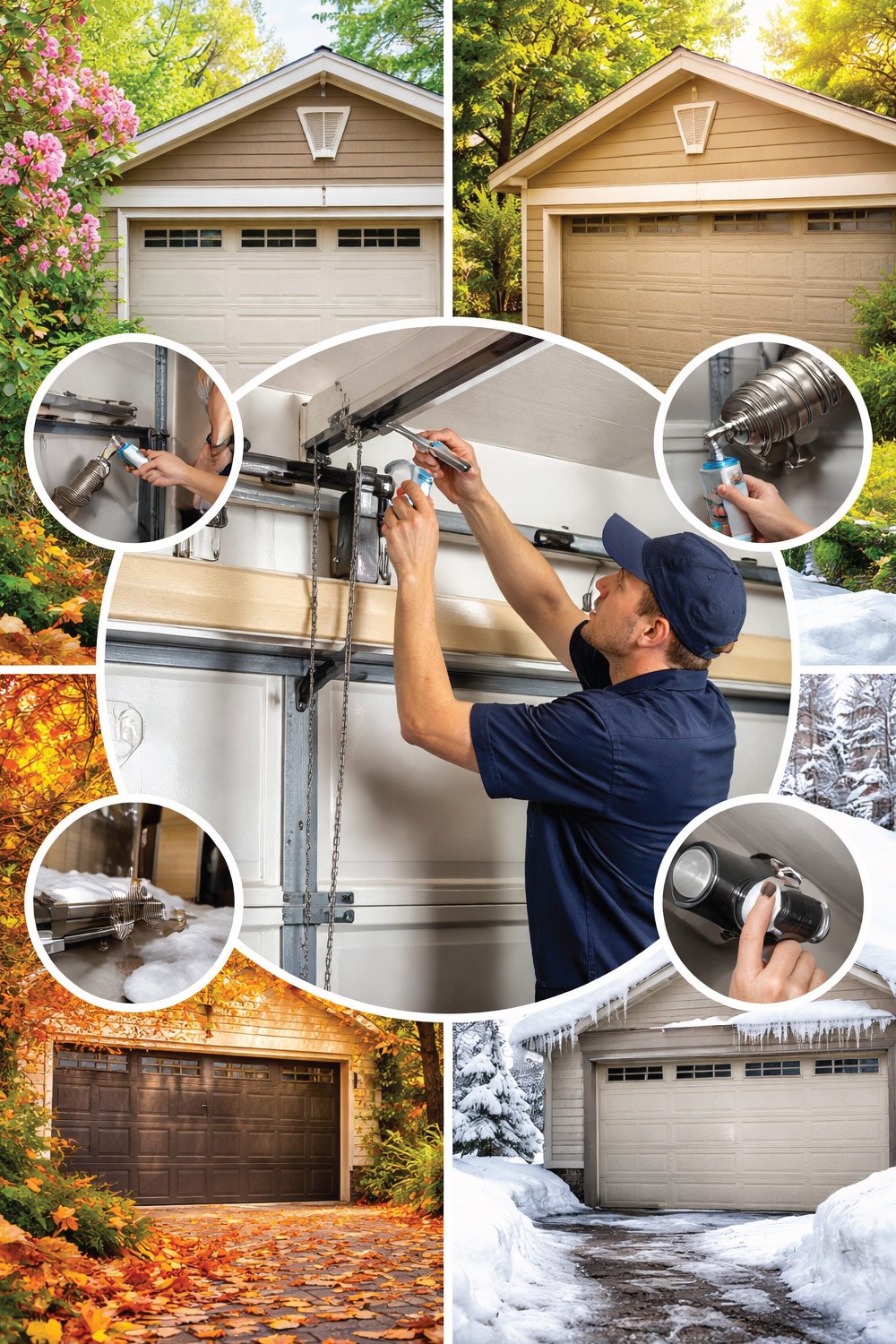
Temperature changes
Moisture and humidity
Dust, debris, and salt
Heat expansion and cold contraction
Seasonal maintenance helps you:
Prevent breakdowns
Extend the lifespan of springs, rollers, and hinges
Improve safety and smooth operation
Avoid emergency repair costs
Think of it as preventive care—small seasonal checks save big money later.
Tools & Supplies You Will Need Year-Round
Keeping a few basic tools and supplies ready makes garage door maintenance simple, quick, and effective. With the right items on hand, you can easily clean, inspect, and lubricate components to ensure smooth operation and long-lasting performance throughout the year.
1- Clean Cloth or Microfiber Rag
A clean cloth or microfiber rag is essential for wiping dust, grease, and debris from garage door components. It helps keep tracks, rollers, and panels clean, making inspections easier and preventing dirt buildup that can affect performance and cause long-term mechanical wear.
2- Soft Brush
A soft brush is useful for removing dirt and debris from hard-to-reach areas like tracks and hinges. It allows gentle cleaning without damaging sensitive parts, ensuring smooth movement of components while helping you spot early signs of wear or alignment issues.
3- Step Ladder
A sturdy step ladder helps you safely access higher parts of your garage door system, such as springs and upper tracks. It improves visibility during inspections and reduces the risk of accidents, ensuring that all components are properly checked and maintained.
4- Silicone Spray or White Lithium Grease
Silicone spray or white lithium grease is essential for lubricating moving parts like rollers, hinges, and tracks. These lubricants reduce friction, prevent rust, and ensure smooth, quiet operation while offering long-lasting protection without attracting excessive dust or debris.
5- Mild Soap and Water
A mixture of mild soap and water is ideal for cleaning garage door surfaces without causing damage. It effectively removes dirt, stains, and grime while protecting the finish, helping maintain the appearance and structural condition of the door over time.
6- Safety Gloves and Glasses
Safety gloves and protective glasses are important for preventing injuries during maintenance tasks. They protect your hands from sharp edges and your eyes from dust or debris, ensuring a safer working environment while handling tools and inspecting garage door components.
7- Avoid Household Oils and WD-40
Household oils and WD-40 should be avoided for garage door lubrication because they only provide temporary cleaning effects. They can attract dust and lead to faster wear, making them unsuitable compared to proper lubricants designed for long-term protection and performance.
Spring Garage Door Care (Post-Winter Recovery)
Winter can be especially harsh on garage doors. Cold temperatures cause metal components to contract, moisture encourages rust, and road salt can corrode hinges, springs, and tracks. By the time spring arrives, hidden damage may already be affecting performance.
Spring garage door maintenance is essential for post-winter recovery. Inspecting, cleaning, lubricating, and testing key components helps reverse seasonal wear, restores smooth operation, and prevents minor issues from turning into costly repairs later in the year.
What to Do in Spring:
Inspect springs, hinges, and rollers for rust or wear
Clean tracks to remove salt and debris
Lubricate all moving parts
Test door balance and safety sensors
Check weather stripping for cracks
Spring is the most important season for garage door maintenance because it helps reverse winter damage.
Summer Garage Door Care (Heat & Humidity Protection)
Summer heat and humidity can place extra stress on your garage door system. High temperatures cause metal parts to expand, while moisture can thin lubricants and interfere with electronic components. Increased summer activity also means your garage door operates more frequently.
Summer maintenance helps reduce heat-related wear and keeps the system running quietly and efficiently. Lubricating moving parts, checking the opener motor, and inspecting controls prevent friction, overheating, and unexpected failures during the hottest months of the year.
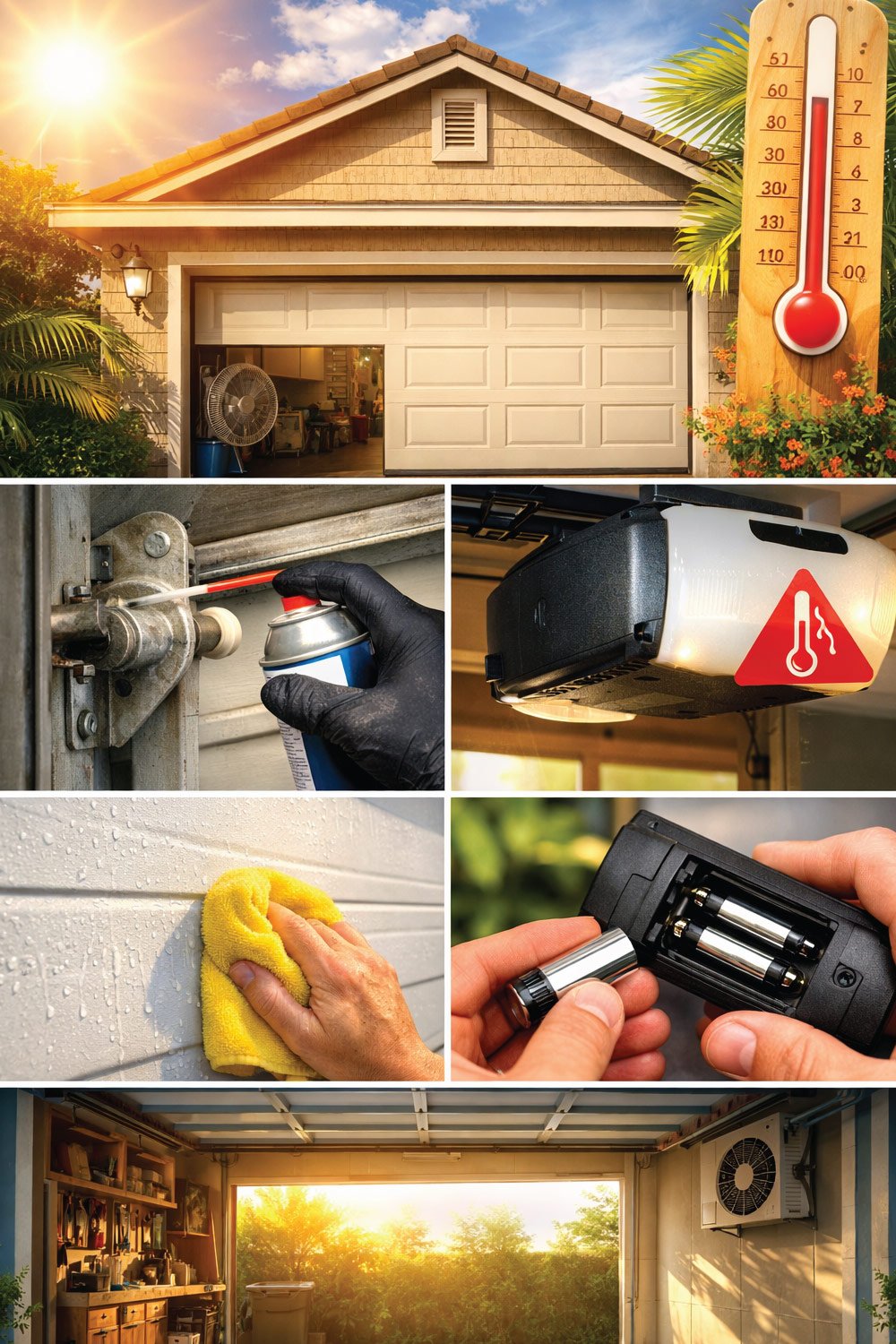
What to Do in Summer:
Lubricate hinges, rollers, and springs to reduce friction
Inspect opener motor for overheating
Clean door panels to prevent surface damage
Check remote controls and replace batteries
Ensure proper ventilation in the garage
Pro tip:
Heat increases friction—light lubrication prevents noisy operation.
Fall Garage Door Care (Preparation for Cold Weather)
Preparing your garage door in the fall is essential to ensure it performs smoothly during colder months. Temperature drops can affect metal components, lubrication, and alignment. A few simple maintenance steps help prevent unexpected breakdowns, reduce noise, and extend the lifespan of your garage door system.
1- Inspect and Tighten Hardware
During fall, temperature changes can cause nuts, bolts, and brackets to loosen over time. Carefully inspect all visible hardware and tighten any loose components. This simple step helps maintain structural stability and prevents vibrations or misalignment during frequent use in colder months.
2- Lubricate Moving Parts Properly
Cold weather can make metal parts stiff and noisy, so proper lubrication is important before winter arrives. Apply silicone spray or white lithium grease to rollers, hinges, and tracks to reduce friction, ensure smooth operation, and prevent wear caused by low temperatures.
3- Check Weather Stripping and Seals
Inspect the weather stripping at the bottom and sides of the garage door for cracks or gaps. Damaged seals allow cold air, moisture, and pests to enter. Replacing worn seals improves insulation, keeps your garage warmer, and protects stored items from harsh weather conditions.
4- Test Door Balance and Alignment
An unbalanced garage door can strain the opener and lead to costly repairs. Disconnect the opener and manually lift the door halfway. If it doesn’t stay in place, it may need adjustment. Proper balance ensures safe and efficient operation throughout the winter season.
5- Clean Tracks and Remove Debris
Dirt, leaves, and debris can accumulate in garage door tracks during fall. Clean the tracks thoroughly using a brush or cloth to ensure smooth movement. Keeping tracks clear prevents jamming, reduces wear on rollers, and helps maintain consistent door performance in colder conditions.
Winter Garage Door Care
Winter conditions can put extra stress on your garage door system, especially in freezing temperatures. Metal parts contract, lubrication thickens, and moisture can cause components to stick or freeze. Proper winter maintenance ensures safe operation, prevents damage, and keeps your garage door functioning reliably during harsh weather.
1- Prevent Freezing of Garage Door Components
In cold weather, moisture can freeze around the bottom seal or tracks, causing the door to stick. Regularly check and clear ice buildup, and keep the area dry. This prevents damage to the opener and avoids forcing the door open, which can lead to serious mechanical issues.
2- Lubricate Parts to Handle Low Temperatures
Cold temperatures can make standard lubricants thick and ineffective. Apply winter-friendly lubricants like silicone spray or lithium grease to springs, rollers, and hinges. This helps maintain smooth movement, reduces strain on the opener, and prevents parts from becoming stiff or noisy.
3- Check Garage Door Opener Performance
Winter can affect the performance of your garage door opener, especially if the motor struggles in cold conditions. Test the opener regularly, listen for unusual sounds, and ensure it opens and closes smoothly. Adjust sensitivity settings if needed to avoid operational failures.
4- Inspect Weather Seals for Insulation
Cold air can easily enter through worn or cracked weather seals, making your garage colder and less energy-efficient. Inspect the bottom seal and side strips, and replace them if damaged. Good insulation helps maintain temperature and protects items stored inside the garage.
5- Keep Tracks Clean and Free from Ice
Snow, dirt, and ice buildup in the tracks can block smooth door movement and cause misalignment. Regularly clean the tracks and remove any obstructions. Keeping them clear ensures consistent performance and reduces the risk of the door getting stuck or damaged.
Seasonal Garage Door Maintenance Checklist
A seasonal garage door maintenance checklist makes it easy to keep your door operating safely and efficiently all year long. Each season brings different challenges that affect performance, durability, and safety.
By following a simple, season-specific routine, you can address weather-related wear before it becomes a serious problem. This checklist helps you stay organized, extend the lifespan of key components, and avoid unexpected repairs through proactive, year-round care.
| Season | Key Focus | Recommended Tasks |
|---|---|---|
| Spring | Damage recovery | Clean, inspect, lubricate, test balance |
| Summer | Heat protection | Lubricate, clean panels, check opener |
| Fall | Winter prep | Tighten hardware, replace seals, inspect cables |
| Winter | Cold safety | Cold-weather lubrication, ice removal, seal checks |
Year-Round Garage Door Maintenance Tasks
Some garage door maintenance tasks should be performed year-round, not just during seasonal inspections. These routine checks help you catch small issues early and keep your door operating smoothly and safely.
Listening for unusual noises, watching door movement, tightening hardware, cleaning tracks, and lubricating moving parts every six months promotes consistent performance. When it comes to garage door care, consistency is far more important than intensity.
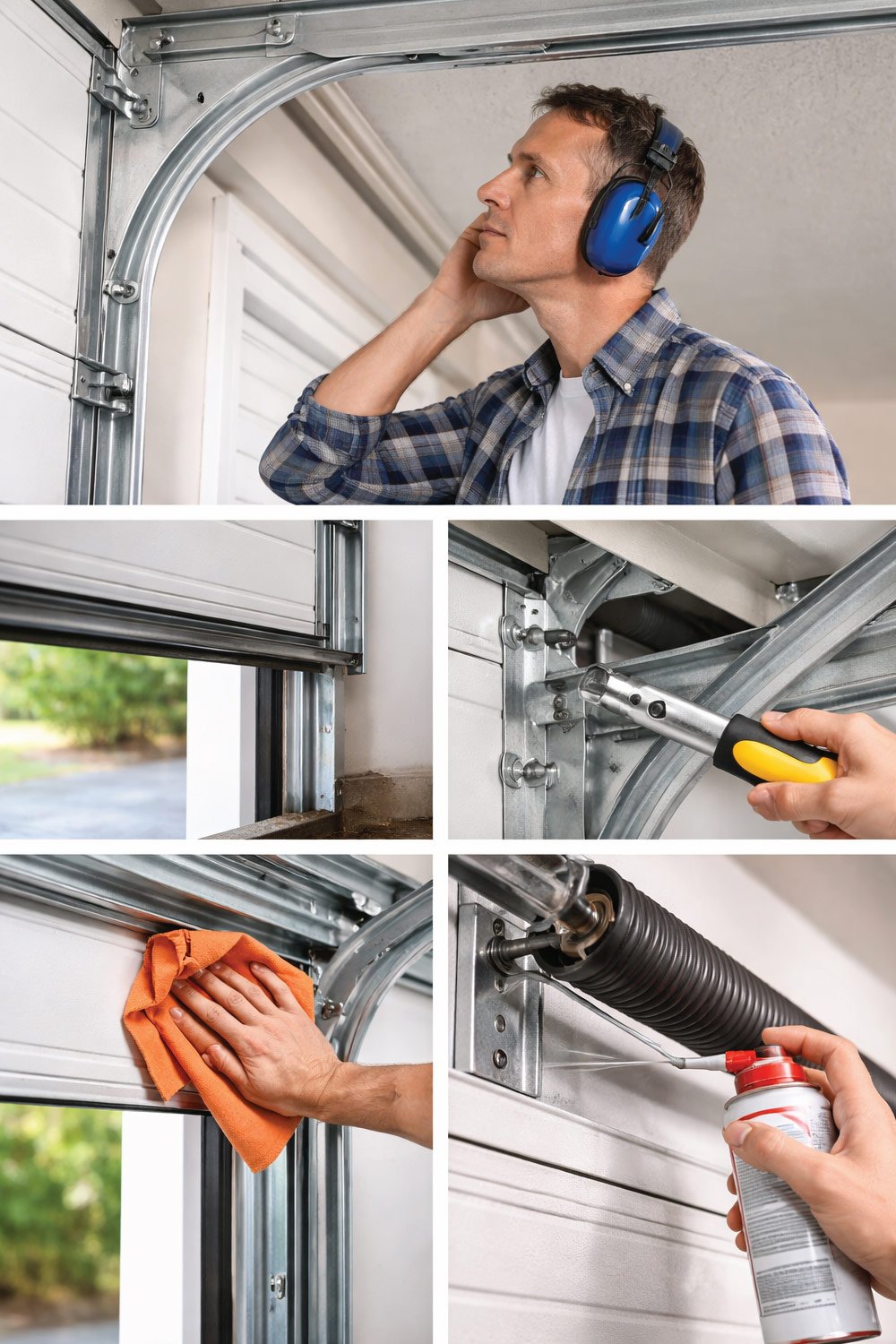
Listen for unusual noises
Watch for uneven or jerky movement
Tighten loose screws and bolts
Keep tracks clean and debris-free
Lubricate moving parts every 6 months
Consistency is more important than intensity.
Garage Door Parts & Maintenance Frequency
Knowing how often each garage door component needs attention helps prevent wear, noise, and unexpected failures. Different parts experience different levels of stress, which means maintenance frequency varies across the system.
Following a consistent schedule for inspecting, cleaning, and lubricating key components keeps your garage door operating safely and efficiently. This maintenance frequency guide provides a simple reference to ensure no critical part is overlooked throughout the year.
| Component | Maintenance Frequency | Action |
|---|---|---|
| Hinges | Every 6 months | Inspect and lubricate |
| Springs | Every 6 months | Inspect and lubricate |
| Rollers | Every 6 months | Lubricate bearings |
| Tracks | Every 3–6 months | Clean only (no grease) |
| Weather Stripping | Annually | Replace if cracked |
| Opener | Annually | Inspect, test, lubricate if needed |
| Safety Sensors | Every 6 months | Test auto-reverse function |
Common Seasonal Garage Door Problems (and How to Prevent Them)
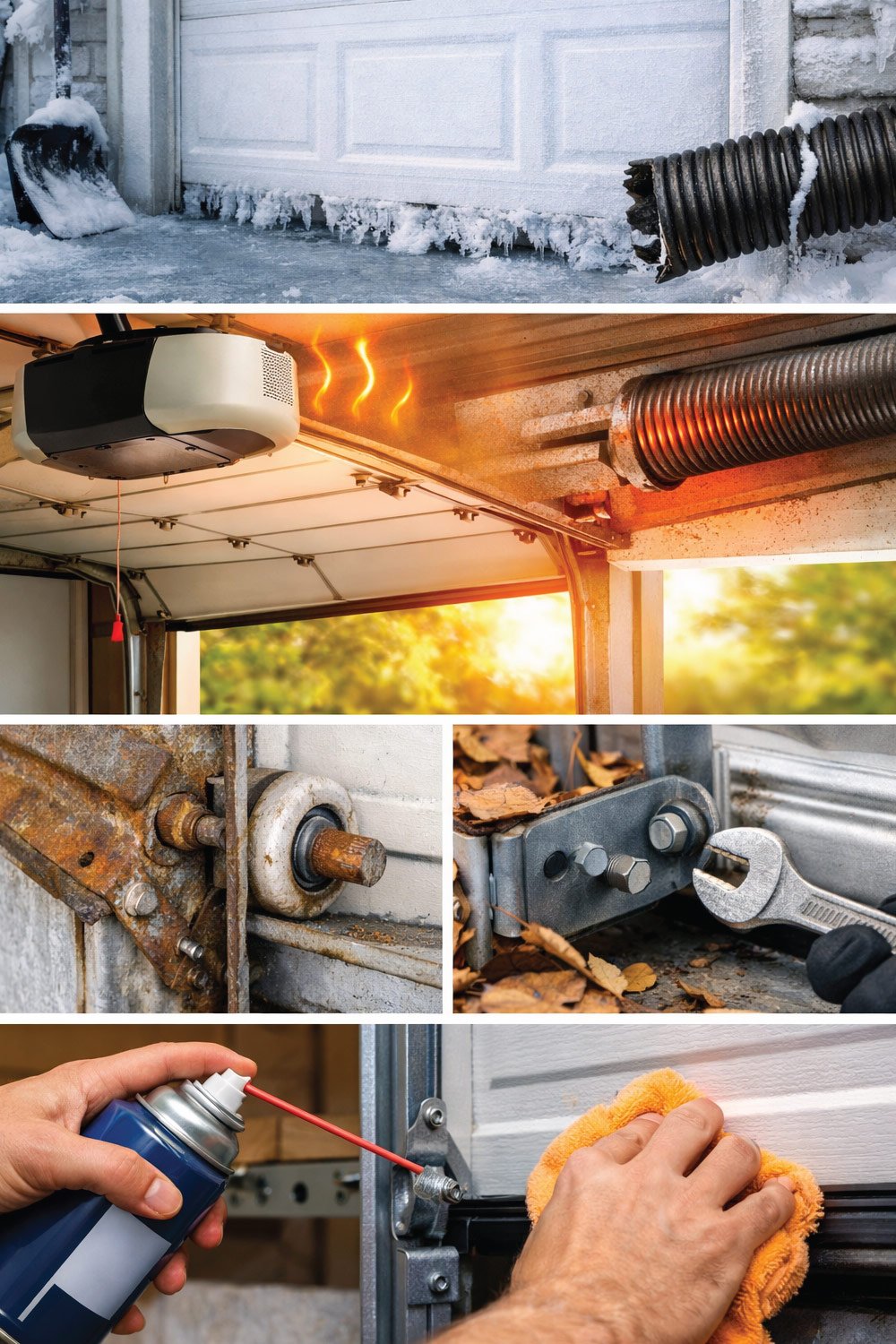
Garage doors face different challenges in each season due to temperature changes, moisture, dust, and regular usage. These seasonal effects can lead to performance issues, safety risks, and costly repairs if ignored. Understanding common problems and taking preventive steps helps keep your garage door reliable and long-lasting.
1- Garage Door Sticking
Seasonal temperature changes can cause metal parts to expand or contract, leading to sticking or jerky movement. This is common in both winter and summer. Regular lubrication and cleaning of tracks and rollers help maintain smooth operation and prevent unnecessary strain on the opener.
2- Noisy Operation Due to Dry
Grinding, squeaking, or rattling sounds often appear when components lack proper lubrication or begin to wear out. This problem is more noticeable during seasonal changes. Applying the right lubricant and checking for worn rollers or hinges can significantly reduce noise and improve performance.
3- Misaligned or Dirty Tracks
Dust, debris, or slight shifts in alignment can cause tracks to become uneven, affecting door movement. This issue is common during fall and spring when debris buildup increases. Cleaning tracks regularly and ensuring proper alignment prevents jamming and extends the life of moving parts.
4- Weather Seal Damage and Air Leaks
Extreme heat, cold, or moisture can crack or shrink weather seals, allowing air, water, and pests to enter. Damaged seals reduce insulation and increase energy costs. Inspecting and replacing seals seasonally helps maintain a comfortable and protected garage environment.
5- Garage Door Opener Strain
Seasonal conditions can put extra load on the garage door opener, especially if the door is unbalanced or parts are stiff. This can lead to slow operation or sudden failure. Regular testing, proper lubrication, and balance checks help prevent overloading and extend opener life.
Safety Tips for All Seasons
Garage door maintenance should always be approached with safety as the top priority, regardless of the season. Many components operate under high tension and can cause serious injury if handled improperly.
Following basic safety practices—such as keeping hands clear, testing sensors, and avoiding spring adjustments—helps prevent accidents. When springs or cables are damaged, calling a professional is always the safest choice.
Never adjust spring tension yourself
Keep hands clear of moving parts
Test safety sensors regularly
Replace worn components promptly
Call a professional for broken springs or cables
Garage doors are heavy and under tension—safety always comes first.
When to Call a Professional
Final Thoughts
Learning how to care for your garage door in every season is one of the smartest home maintenance habits you can develop.
By adjusting your care routine based on weather conditions, you protect your investment, improve safety, and avoid costly repairs.
Spend a little time each season, follow the checklist, and your garage door will stay smooth, quiet, and dependable all year long.
👉 Lubricate Garage Door Springs Safely Guide helps you protect your door and avoid costly damage with proper lubrication techniques. Learn which lubricants to use, step-by-step application, and key safety tips. Don’t risk mistakes—read the full guide now and keep your garage door running smoothly and safely!

Engineer Ali Usman is a professional garage door expert and author at FixFasty, with over 10 years of hands-on experience in garage door systems and mechanical maintenance. He writes clear, step-by-step guides on garage door repairs, parts, and safety practices, helping homeowners fix problems correctly and maintain smooth, secure, and long-lasting garage door performance.