
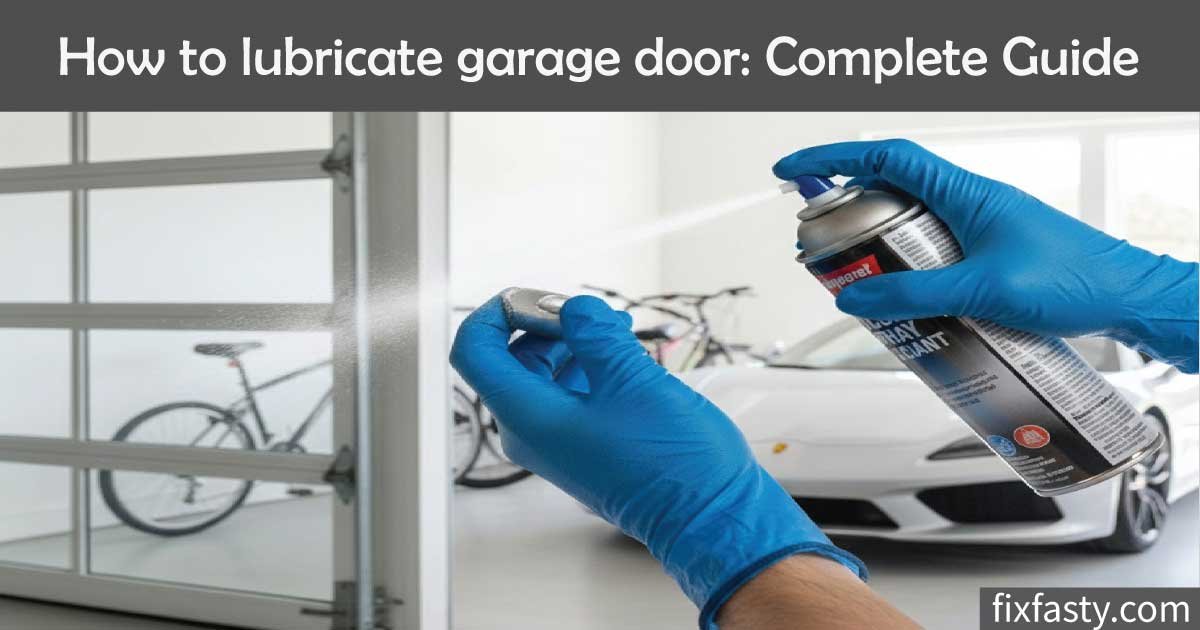
How to grease a garage door to move smoothly and quietly is one of the frequently asked questions of the homeowners. A loud, slow or bumpy garage door is not only irritating, but it can be an indication that your garage door should be lubricated.
Constant maintenance will ensure that the system operates effectively, and it will increase its lifespan and will also save you the burden of expensive repair costs. Regardless of the purpose of your DIY maintenance, or your first-time learning, this entire guide will help you through step-by-step instructions.
By the end, you will know how to lube a garage door, which parts to oil, the best products to use, and common mistakes to avoid.
Why Garage Door Lubrication Is Important
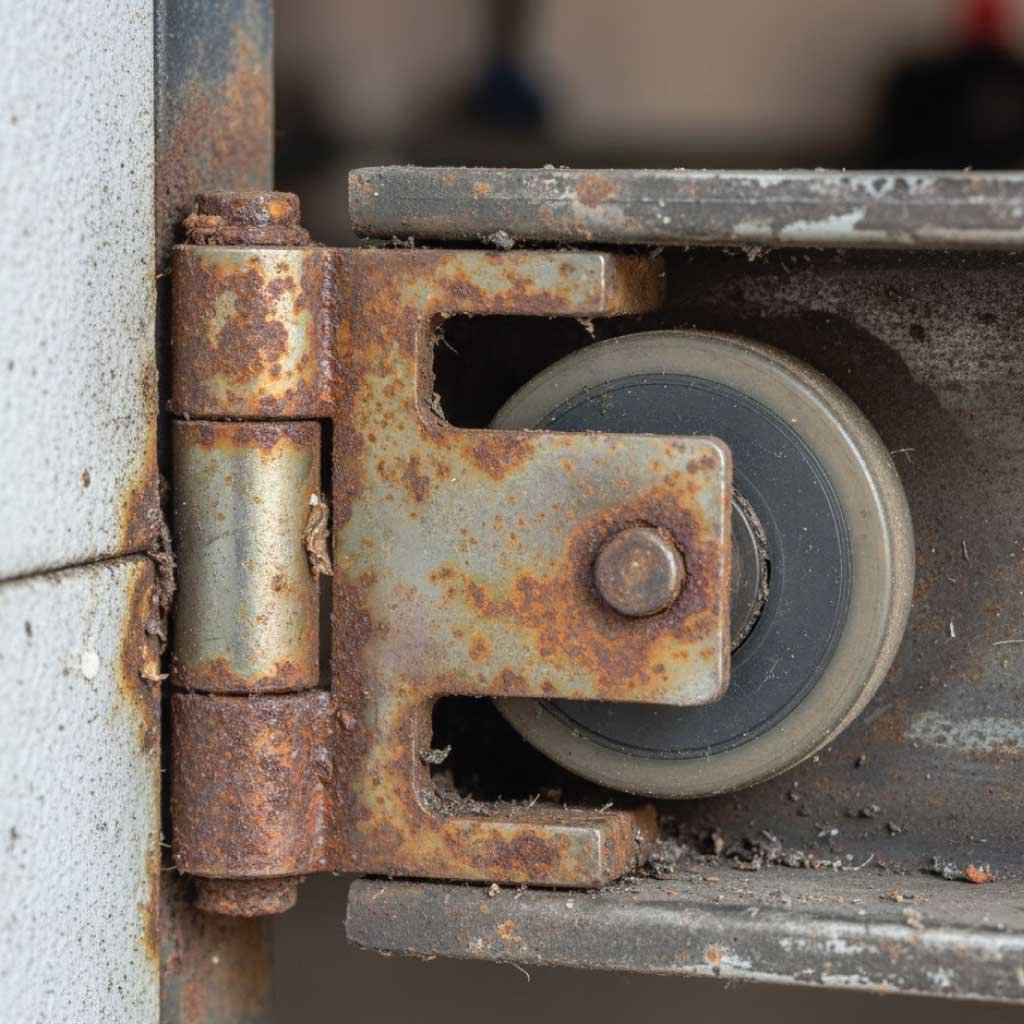
The biggest thing that moves in the house is your garage door. It opens and closes numerous times in a day, which creates unending pressure on rollers, hinges, tracks, springs and bearings. As time goes on, this repeated movement causes friction, wear, and metal to metal contact.
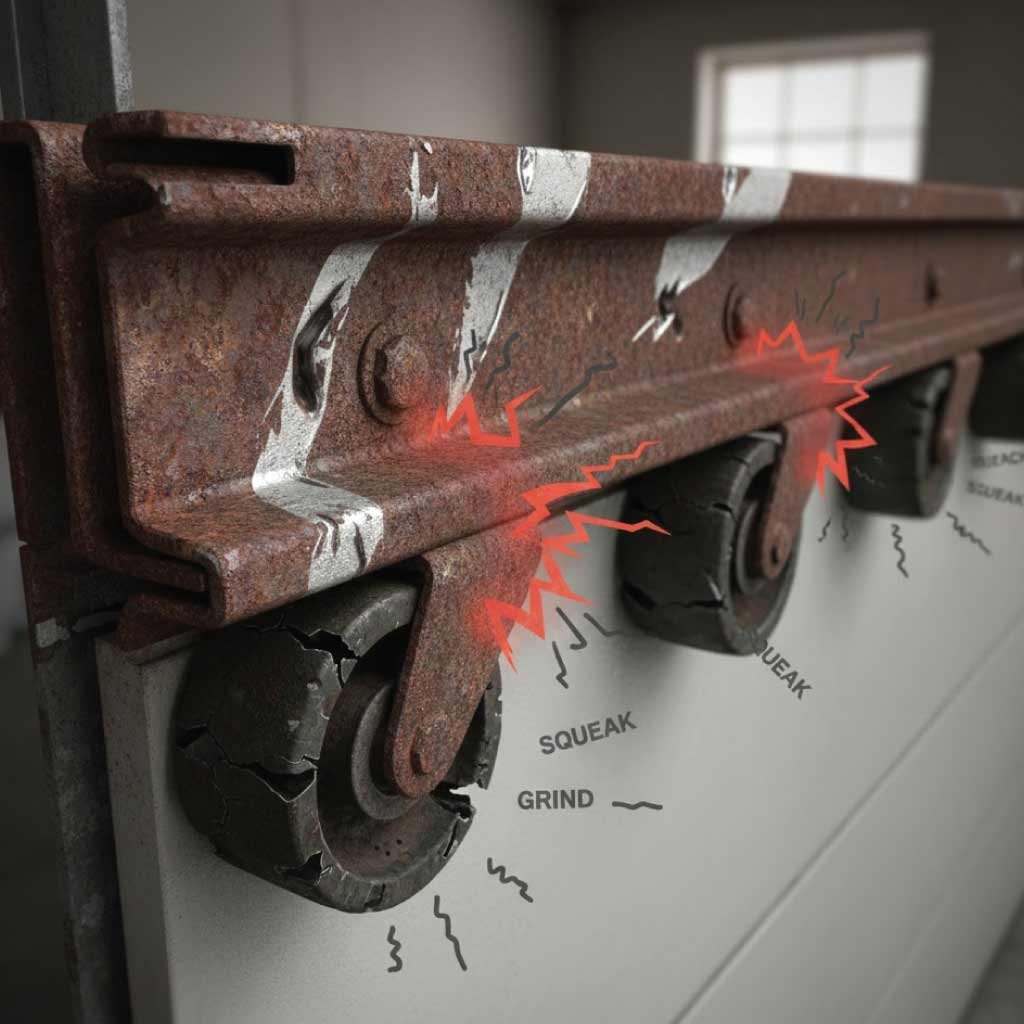
The lack of lubrication causes the parts to start grinding, the noise level rises, the movement is not even, and minor problems may easily transform them into the costly repairs.
- Metal parts grind against each other
- The door becomes noisy and jerky
- Parts wear out faster
- The motor works harder than necessary
Lubricating your garage door reduces friction, prevents rust, and keeps everything moving quietly and safely.
How Often Should You Lubricate Your Garage Door?
- You hear squeaking or grinding noises
- The door moves unevenly
- You live in a dusty, humid, or coastal area
- The door is used multiple times per day
If you are asking, “How do I lubricate my garage door to keep it quiet year-round?”—twice a year is a good rule of thumb.
Tools and Supplies You will Need
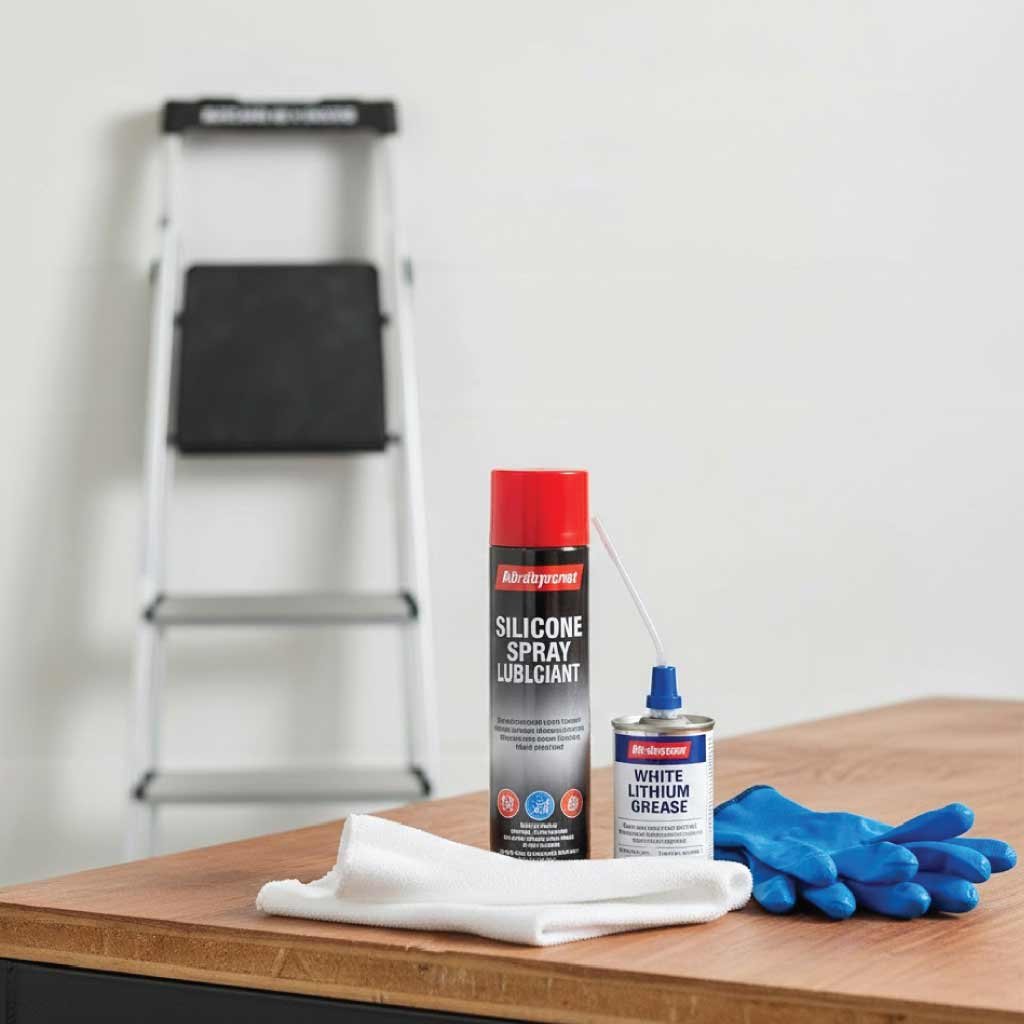
Before you start, gather these basic items:
- Garage door lubricant (silicone-based or lithium grease)
- Clean cloth or rag
- Step ladder
- Safety gloves
- Mild household cleaner
⚠️ Avoid WD-40 as a primary lubricant. It’s a cleaner, not a long-lasting lubricant.
Best Lubricant for Garage Doors
To ensure a smooth running and a long lasting performance of your garage door, it is important to select the correct type of lubricant to use. The best alternatives limit friction, do not rust, and do not allow dirt to collect.
The silicone sprays are excellent on rollers and tracks whereas the white lithium grease is the best to use on springs and metal parts and this guarantees smooth, noiseless movement.
Recommended Options
Silicone spray lubricant – Ideal for rollers and tracks
White lithium grease – Best for springs and metal parts
What Not to Use
- Heavy grease that attracts dirt
- Motor oil
- Cooking oil
Using the wrong product can cause buildup and attract dust, making the problem worse.
Step-by-Step: How to Lubricate a Garage Door
Need to know How do you lubricate a garage door correctly? – Use these steps below. By following each step one by one, proper functioning and minimization of noise is enabled and the life of the garage door parts is lengthened.
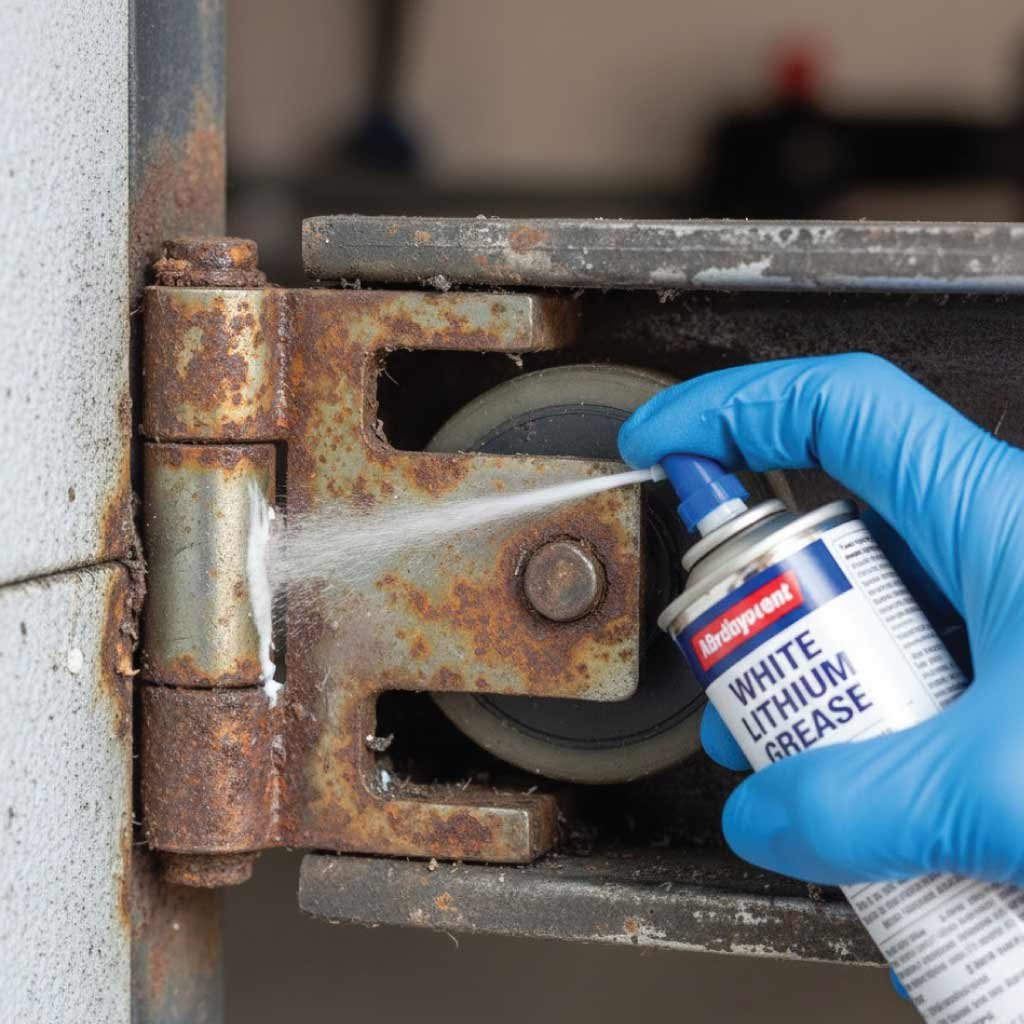
Step 1: Close the Garage Door and Turn Off Power
It is important to make sure that you close the door of the garage fully. This is to guarantee that every moving component is safe.
Then disconnect the garage door opener or shut off the circuit breaker to make sure you do not accidentally turn it on during work.
The most important is safety since the door is heavy and is strained. It is also a precaution when spraying lubricants around moving parts, to avoid damaging the opener, as well as injuring yourself.
Step 2: Clean All Moving Parts
Clean thoroughly all moving parts before applying any lubricant. Wipe the rollers, hinges, tracks and springs with a clean cloth or a mild cleaner.
The elimination of dust, dirt and old grease will make sure that the lubricant will penetrate thus will decrease the friction. The lubricant may also be rendered useless due to dirty surfaces hence creating a squeaky or jerking movement.
Cleaning also helps you to check on wear or damages which enables you to solve problems at hand at an early stage.
Step 3: How to Lubricate Garage Door Rollers
The question most commonly posed by many homeowners is, How to lubricate garage door rollers? Apply a grease that is a silicone lubricant or white lithium grease to the roller bearings. The roller track should not be sprayed, as too much oil on a track will attract dirt and will hinder smooth movement.
Wipe all the oily parts to avoid dripping. In the case of plastic rollers, it is only the metal bearings that are lubricated, but not the plastic wheels. Lubricated rollers also make the door slide without any noise and properly lubricated rollers make the door take smooth turns.
Step 4: Lubricate the Hinges
Hinges are used to join the pieces of your garage door and enable it to bend and move freely. Coat all joints and metal pivots with lubricant.
Pay attention to the places where metal touches metal, because these are the places that are the most likely to frict and wear. Lubricating hinges decrease squeaks and avoid the unwarranted stress on the door panels and opener.
Once lubricated, open and close the door gently and make sure that the hinges move freely and lubricant is spread evenly.
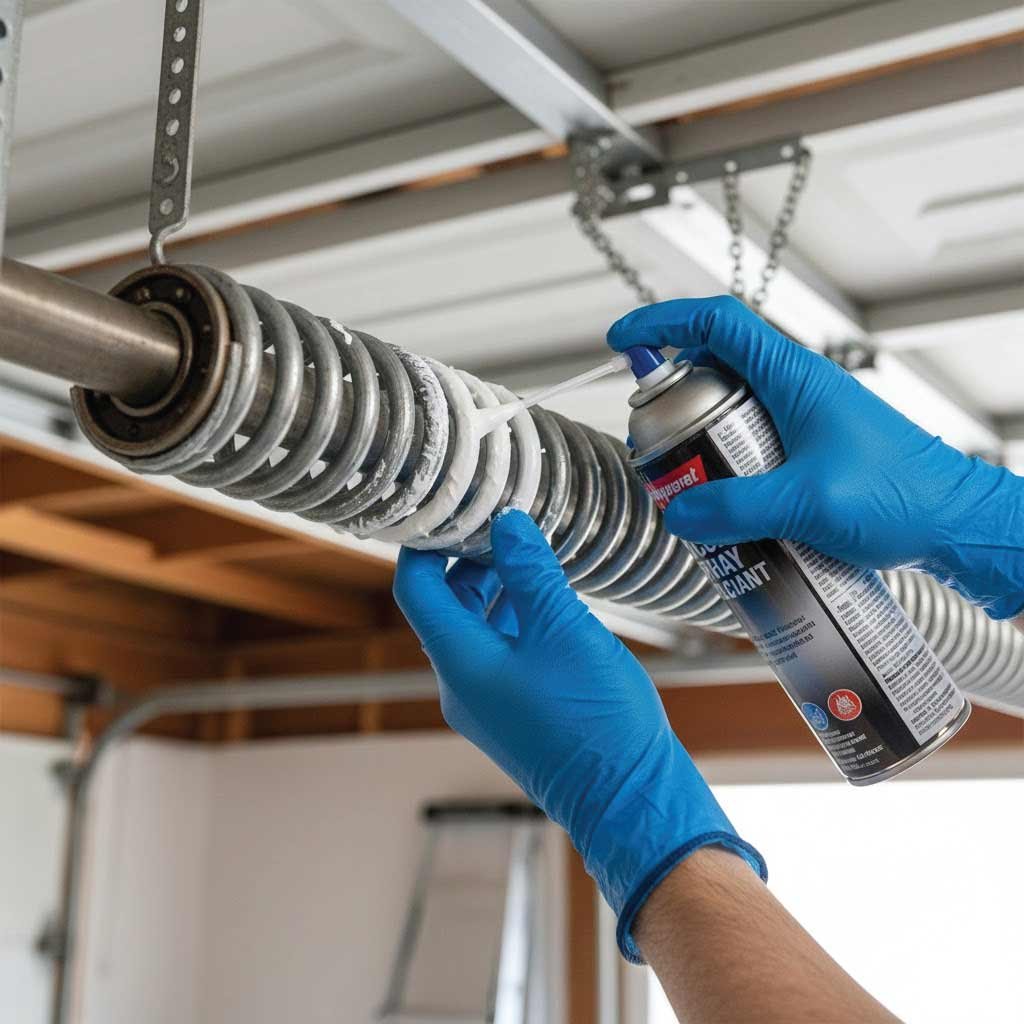
Step 5: How to Oil Garage Door Springs
Garage door springs are of extreme tension and as such are vital to the functioning of the door. The question most of the time is, “How can you oil a garage door spring and not hurt yourself? Spray or grease with lithium white, and spray the whole length of the spring.
Do not ever tamper with the tension of the springs yourself; it is very unsafe. Spray and open the door two to three times to spread the lubricant evenly. Adequate spring lubrication ensures that the springs do not rust and strain on other parts.
Step 6: Lubricate Bearings and End Plates
The torsion shaft is supported by the bearings and end plates and helps in decreasing vibration. Coat the end bearing plates on both sides (as well as the center bearing when available).
Lubrication ensures that metal-metal friction does not occur, noise is minimized and the torsion system will last longer. Do not overload these elements because too much lubricant will drip and get dust.
The lubricated bearings enable the shaft to move easily, thus the door opens and closes easily.
Step 7: What About Garage Door Tracks?
One of the questions that is most asked is, How do you lubricate your garage door tracks? The solution: lubricate not the tracks. Rather, clean them using a cloth in order to remove dirt, dust and ancient grease.
When the tracks are oily, it can cause the door to slip or move in an uneven manner and this may slow down the rollers or even the door itself.
Maintaining tracks is a method of maintaining a smooth running process and avoiding any possible accidents. Track bends or obstructions can be early detected by regularly inspecting the tracks.
Step 8: Lubricate the Lock and Arm Bar
In case your garage door has a manual lock then it is also good to lubricate. To have a smooth working mechanism, spray a small amount into the lock mechanism, so that it does not rust up.
Also, apply the lubricant on the arm bar in the point of contact with the door. Well-lubricated locks and arm bars ensure that the door is available with the right kind of locks and arm bars and thus the wear at the connections are minimized.
Such a minor measure will lengthen the life of your door hardware and make them a little safer to use.
How to Lube Garage Door Opener Chain or Screw
In case you have a garage door with a chain-drive opener, use garage door grease all over the chain. Cleanse off all excess, or it may drip, whereupon dust and dirt will be drawn on, and the opener will run smoothly and noiselessly, and give life to your appliance.
When using screw-drive openers, consult the manual of the manufacturer on the application of lubricant. Screw-driven systems need certain maintenance and the application of incorrect grease may lead to damages.
Effective lubrication decreases friction, noise, and wear and requires the door to perform effectively without straining the motor and mechanical components.
Testing the Door After Lubrication
Once everything is lubricated:
- Reconnect the power
- Open and close the door several times
- Listen for noise reduction
- Check for smooth movement
If the door is still loud, lubrication may not be the only issue.
Common Mistakes to Avoid
Even if you know how do you lubricate a garage door, these mistakes can cause problems:
❌ Using WD-40 only
❌ Over-lubricating parts
❌ Ignoring rollers and hinges
❌ Lubricating dirty components
❌ Forgetting regular maintenance
If you notice these, it’s time to ask, “How do I oil my garage door properly?”—and follow this guide.
How Long Does Garage Door Lubrication Last?
Garage door lubrication will normally stay between 6-12 months, depending on such aspects as the frequency of use, weather and exposure to dust or humidity.
Better lubricants like silicone sprays, white lithium grease, etc. have a better and longer lasting protection, lower the amount of friction, and also don’t wear out the moving parts.
The constant care and attention of maintenance maintain a smooth and quiet run, lengthens the life of rollers, hinges, springs and bearings and prevents the expensive repairs.
Benefits of Regular Garage Door Lubrication
When lubricating your garage door on a regular basis, not only do you have reap the benefits of a smoothly running and efficiently working machine but also prevent wear and tear on the parts, create less noise and increase the life span of your garage door. Safety and energy efficiency are also increased due to proper maintenance.
Quieter operation: Lubricating rollers, hinges, and springs minimizes friction and prevents squeaks or grinding noises, resulting in a quieter, smoother garage door movement.
Longer part lifespan: Consistent lubrication reduces wear on metal components, extending the life of rollers, hinges, springs, and bearings, and preventing premature failure.
Fewer repairs: Well-lubricated doors experience less strain and damage, decreasing the frequency and cost of repairs or part replacements.
Better energy efficiency: Smooth-operating doors reduce motor strain, lowering electricity use and ensuring the opener works more efficiently over time.
Improved safety: Proper lubrication prevents parts from sticking or seizing, reducing the risk of accidents, injuries, or door malfunctions.
Final Thoughts
You know how to lubricate your garage door, how to oil a garage door, and how to lubricate garage door rollers, now you know how to do it because you are the one who made the video.
It is a simple maintenance procedure that only requires less than 30 minutes yet can save you hundreds in terms of repair expenses.
Garage door lubrication is one of the home maintenance activities you should make a habit of, and your door will remain silent, smooth and reliable over a long period of your life.
👉 Want to master every aspect of your garage door? Check out our Complete Garage Door Guide: Basics, Repairs & Maintenance for an in-depth look at garage door types, parts, maintenance tips, and repair solutions. Read the full post to become a garage door expert and keep your door running smoothly!

Engineer Ali Hasan is a garage door expert and the founder of FixFasty. With over 16 years of experience in mechanical systems and home maintenance, he provides practical, step-by-step guides on garage door installation, repairs, and maintenance, helping homeowners keep their garage doors safe, reliable, and long-lasting.