
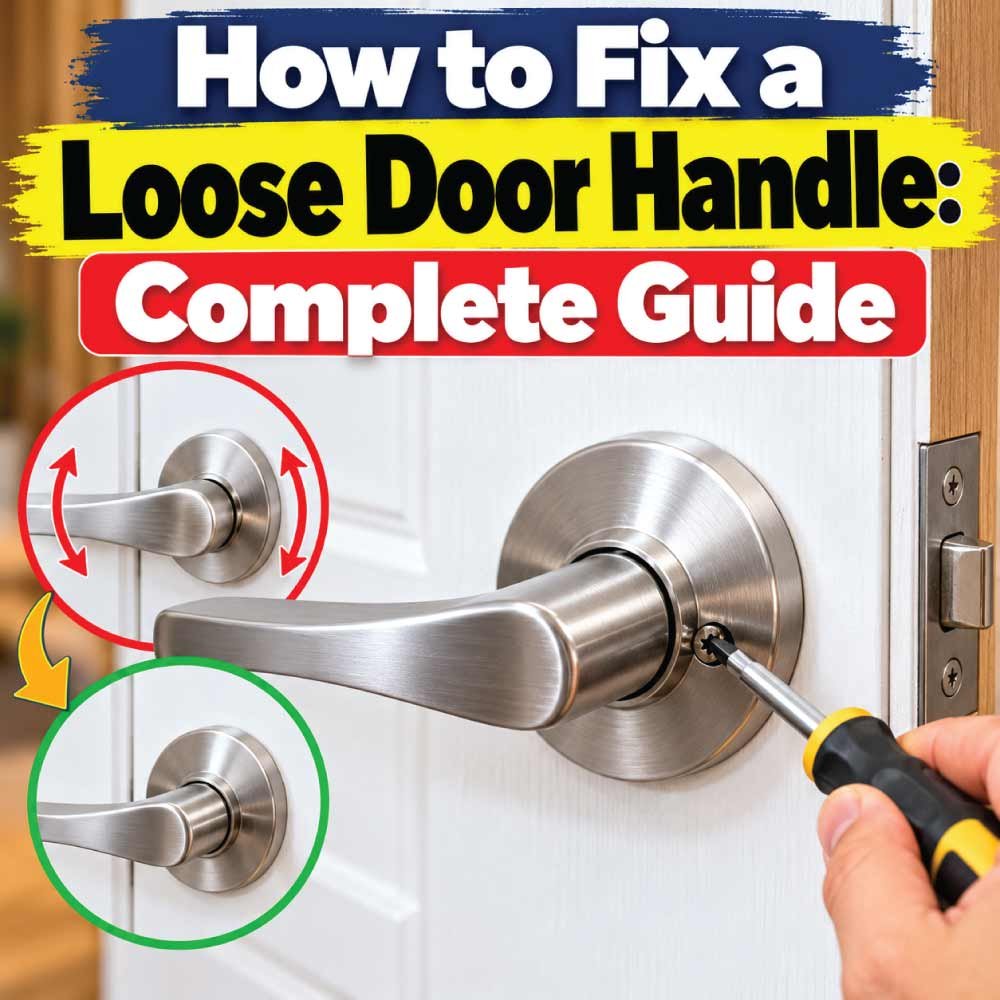
A loose door handle can make opening and closing a door frustrating. The handle may wobble, sag, spin without engaging the latch, or feel as though it is about to come off completely. In many cases, the problem is caused by loose mounting screws, a worn spindle, or a damaged internal mechanism.
The good news is that many loose door handles can be repaired with basic tools and a few simple adjustments. The correct fix depends on whether you have a lever handle, round doorknob, privacy lock, or entry door handle with a locking mechanism.
This guide explains how to fix a loose door handle, identify the likely cause, tighten the correct components, and recognize when replacement is the better option.
Quick Answer: How Do You Fix a Loose Door Handle?
To fix a loose door handle, first determine whether the handle is loose at its base, wobbles on its spindle, or moves without operating the latch. Tightening the mounting screws often resolves the problem, but a worn spindle, loose set screw, or damaged internal mechanism may require additional attention.
Follow these initial steps:
- Check whether the handle has visible mounting screws or a decorative cover.
- Locate and tighten any accessible screws with the correct screwdriver.
- If the screws are hidden, carefully remove the decorative cover according to the handle’s design.
- Inspect the handle’s set screw and spindle connection.
- Reassemble the handle and test its movement and latch operation.
- Replace damaged components if tightening does not solve the problem.
Important: Do not overtighten the screws. Excessive force can strip the screw threads, damage the door surface, or cause the handle mechanism to bind.
Common Causes of a Loose Door Handle
Identifying the cause before disassembly helps prevent unnecessary repairs.
1. Loose Mounting Screws
Mounting screws secure the handle or doorknob to the door. Repeated use and vibration can gradually loosen these fasteners.
Common symptoms include:
- The handle moves from side to side.
- The handle base separates slightly from the door.
- The entire assembly feels unstable.
- The handle still operates the latch normally.
If the handle is otherwise in good condition, tightening the mounting screws may be all that is needed.
2. Loose Set Screw
Some lever handles use a small set screw to secure the handle to a spindle. This screw is often located underneath the lever or along its side.
When it loosens, the handle may wobble or slide away from its normal position even though the main mounting plate remains secure.
A correctly tightened set screw can restore a firm connection if the screw threads and spindle are undamaged.
3. Worn or Damaged Spindle
The spindle is the metal rod that transfers movement from the handle to the latch mechanism. Depending on the handle design, it may be square, round, or part of a more specialized assembly.
A worn spindle or damaged spindle connection can cause the handle to rotate excessively or operate inconsistently.
Possible signs include:
- The handle turns without retracting the latch.
- The handle feels loose even after the mounting screws are tightened.
- The handle slips on the spindle.
- The latch operates only when the handle is held in a particular position.
A damaged spindle may need replacement.
4. Worn Internal Spring Mechanism
Many lever handles contain a return spring that helps the lever return to its horizontal position after use.
If the spring weakens or breaks, the handle may droop or remain in a lowered position.
Tightening the mounting screws usually will not correct a failed return spring. Depending on the handle design, the spring mechanism may be replaceable, or the complete handle assembly may need replacement.
5. Loose or Misaligned Mounting Plate
Some door handles attach to the door through a mounting plate hidden beneath a decorative cover.
If the plate is loose or misaligned, the handle may wobble even when the visible parts appear intact.
A mounting plate can sometimes be secured by tightening its screws and correctly repositioning the assembly. Damaged screw holes or a bent plate may require additional repair.
6. Stripped Screw Holes
When a mounting screw no longer grips the wood or other door material, tightening it may not hold the handle securely.
This can happen after repeated use, previous overtightening, or installation into damaged material.
If a screw spins without becoming tight, inspect the screw hole rather than applying more force. The mounting point may need repair before the handle can be secured properly.
Tools and Materials You May Need
Gather the following items before starting:
- Phillips or flathead screwdriver.
- Hex key or Allen wrench, if the handle uses a set screw.
- Small container for screws and other hardware.
- Soft cloth to protect the door finish.
- Replacement mounting screws, if required.
- Compatible spindle or handle replacement parts, if needed.
- Flashlight for inspecting hidden mounting points.
Use the tool that fits the fastener correctly. An incorrectly sized screwdriver or hex key can damage the screw head and make removal more difficult.
Safety Precautions Before Repairing a Door Handle
Most loose door handles are straightforward to repair, but a few precautions can prevent damage or inconvenience.
Keep the door open while working. This helps prevent accidental lockouts and makes it easier to test the latch.
Do not force stuck components. Excessive pressure can damage the handle or door.
Keep track of small parts. Set screws, springs, and retaining clips can be easy to lose.
Support loose hardware during removal. Some handles contain several connected pieces that may separate unexpectedly.
Take extra care with exterior doors. Avoid leaving your home unsecured while removing an entry handle or lock.
Do not dismantle unfamiliar locking mechanisms unnecessarily. Follow the manufacturer’s instructions, especially for keyed entry locks and electronic handles.
If the door handle is part of a fire-rated door, a security door, or a specialized access-control system, make sure any repair preserves the required function. Seek professional assistance if you are unsure.
Step-by-Step: How to Fix a Loose Door Handle
Follow these steps in order, beginning with the simplest repair.
Step 1: Identify What Is Loose
Open the door and gently move the handle to determine where the movement occurs.
Check whether:
- The entire handle assembly moves against the door.
- Only the lever or knob moves on its mounting point.
- The handle rotates without retracting the latch.
- The lever droops and does not return to its normal position.
- The handle is secure but the latch itself feels loose or unreliable.
These symptoms can point to different faults.
If the entire assembly moves, inspect the mounting screws first. If the handle spins without operating the latch, the spindle or internal mechanism may be damaged.
Step 2: Tighten the Visible Mounting Screws
If you can see screws on the handle or mounting plate, start there.
- Hold the handle steady with one hand.
- Use the correct screwdriver to tighten each mounting screw gradually.
- Alternate between screws if there are two or more, keeping the handle aligned.
- Stop when the assembly feels secure.
- Operate the handle to make sure it moves freely.
Do not overtighten the screws. If a screw turns continuously without tightening, its threads or the mounting hole may be damaged.
If tightening the visible screws does not solve the problem, the handle may have hidden fasteners.
Step 3: Remove the Decorative Cover if Necessary
Many modern handles hide their mounting screws beneath a decorative rose or cover plate.
The removal method varies by model. Some covers twist off, some pull away, and others have a small release notch.
- Look for a visible notch, groove, or release point.
- Check the manufacturer’s instructions for the correct removal method.
- Use an appropriate tool carefully if the design permits it.
- Remove the cover without bending or scratching the finish.
- Locate the mounting screws beneath it.
Avoid prying aggressively against the door. If the cover will not move, check whether it has a hidden retaining screw or clip.
Step 4: Tighten the Hidden Mounting Screws
Once the mounting plate is exposed, inspect its fasteners.
- Hold the handle assembly in its correct position.
- Tighten the mounting screws gradually.
- Keep the plate aligned with the door.
- Check that the handle remains centered and does not rub against the plate.
- Test the handle before reinstalling the decorative cover.
If the screws will not tighten, examine the screw holes for damage. Repeatedly turning a screw in a stripped hole will not provide a reliable repair.
Step 5: Tighten the Handle’s Set Screw
If the handle itself wobbles while the mounting plate remains secure, look for a small set screw beneath or beside the lever.
- Identify the correct screw and matching hex key or screwdriver.
- Position the handle correctly on its spindle.
- Tighten the set screw until the handle is secure.
- Avoid excessive force that could strip the screw or damage the spindle.
- Move the handle through its normal range to confirm that it no longer slips.
If the set screw is missing or its threads are damaged, obtain a compatible replacement. A new screw will not solve the problem if the spindle connection itself is worn.
Step 6: Inspect the Spindle and Internal Mechanism
If the handle remains loose after the mounting screws and set screw have been tightened, the internal connection may be damaged.
With the door open, follow the manufacturer’s removal instructions to inspect the handle assembly.
Look for:
- A visibly worn or bent spindle.
- A cracked handle hub.
- Damaged internal threads.
- A loose or broken retaining clip.
- A failed return spring.
- Components that no longer fit together securely.
Replace only the parts that are confirmed to be damaged and available for your handle model.
If the handle spins freely without moving the latch, do not assume that tightening the mounting screws will fix it. The spindle, hub, or latch mechanism may need repair or replacement.
Step 7: Repair Stripped Screw Holes if Needed
If the mounting screws spin without gripping, the screw holes may be stripped.
For a handle mounted into a wooden door, a suitable wood-repair method may restore the mounting point. However, the correct approach depends on the size of the damage, the door construction, and the handle’s mounting design.
Before attempting a repair:
- Remove the loose handle assembly according to the manufacturer’s instructions.
- Inspect the screw holes for enlarged or damaged material.
- Determine whether the mounting plate can be secured using an approved repair method.
- Use compatible replacement fasteners where appropriate.
- Reinstall the handle and confirm that the mounting plate is firmly supported.
Do not install longer screws blindly. They may interfere with internal hardware or damage the door. Hollow-core doors, metal doors, and specialized security doors may require different repair methods.
If the mounting material is severely damaged, a carpenter or locksmith can recommend a durable repair.
Step 8: Reassemble the Handle and Test the Latch
Once the necessary adjustments or replacements are complete, reassemble the handle.
- Position the handle and spindle correctly.
- Secure the mounting plate and set screws.
- Reinstall the decorative cover.
- Open and close the handle several times with the door open.
- Confirm that the latch retracts fully and returns correctly.
- Close the door gently and test the latch again.
- Check that the handle remains firm and does not wobble.
If the handle binds, sags, or fails to retract the latch, reopen the door and inspect the assembly. Do not force the door shut if the latch is not operating correctly.
Also Read:
How to Diagnose a Loose Door Handle
The following table can help you choose the next step based on the symptom.
| Symptom | Possible Cause | Recommended Action |
|---|---|---|
| Entire handle moves against the door | Loose mounting screws or plate | Tighten the mounting hardware |
| Lever wobbles but mounting plate is secure | Loose set screw or worn spindle connection | Inspect and secure the set screw |
| Handle turns without operating the latch | Damaged spindle, hub, or internal mechanism | Inspect the connection and replace damaged components |
| Lever droops after use | Worn return spring or internal mechanism | Check whether the spring assembly is serviceable |
| Screw spins without tightening | Stripped screw hole or damaged threads | Repair the mounting point or replace the damaged fastener |
| Handle is tight but latch sticks | Misalignment, damaged latch, or door-related problem | Inspect latch operation and alignment separately |
These symptoms suggest possible causes rather than confirming a specific fault. Handle designs vary, so the manufacturer’s repair instructions should guide disassembly.
Common Mistakes to Avoid
Avoid these mistakes when repairing a loose door handle:
Overtightening the mounting screws: Excessive force can strip threads or damage the door.
Prying off decorative covers forcefully: Hidden clips and retaining screws can break.
Ignoring the set screw: A loose lever can remain unstable even when the mounting plate is secure.
Replacing the entire handle too soon: Tightening a loose fastener may solve the problem.
Using incompatible replacement parts: Spindles, screws, and handle assemblies are not universally interchangeable.
Ignoring a faulty latch: A firm handle is not enough if the latch fails to retract or engage properly.
Leaving an exterior door unsecured: Plan the repair so the door and lock remain secure.
Forcing a damaged handle: Excessive movement can damage the spindle or latch further.
A careful inspection helps distinguish between a simple adjustment and a component that needs replacement.
When to Call a Professional
Many loose handles can be repaired with a screwdriver or hex key, but professional assistance may be appropriate when:
- The handle remains loose after tightening the mounting hardware.
- The spindle or internal mechanism is broken.
- The screw holes are severely damaged.
- The handle is part of a keyed entry lock or electronic locking system.
- The latch does not retract or engage reliably.
- The door is a fire-rated or specialized security door.
- The handle or lock cannot be removed without risking damage.
- The door cannot be secured properly after the repair.
A locksmith is often the appropriate professional for problems involving lock cylinders, keyed entry hardware, or specialized locking mechanisms. A carpenter may be better suited to significant damage around the handle’s mounting holes or the door itself.
If the handle is attached to an exterior door, make sure the door can be secured before leaving the property unattended.
Also Read:
Should You Repair or Replace a Loose Door Handle?
Repair is usually a sensible first option when the handle is structurally sound and the problem involves loose screws or a slipping set screw.
Repair the existing handle when:
- The mounting screws have simply loosened.
- The set screw can be tightened or replaced.
- The mounting plate is intact.
- The spindle and latch operate normally.
- Compatible replacement parts are available.
Consider replacing the handle when:
- The handle is cracked or badly worn.
- The spindle or internal mechanism is damaged and cannot be repaired economically.
- The return spring has failed and the assembly is not serviceable.
- The mounting hardware is extensively damaged.
- The lock no longer works reliably or cannot be secured properly.
Before buying a replacement, check the handle’s dimensions, spindle arrangement, door thickness compatibility, and locking requirements. A replacement that looks similar may not fit the existing door preparation.
How to Prevent a Door Handle from Becoming Loose Again
A few simple maintenance habits can help keep door handles secure.
Check the mounting screws periodically. Tighten them when looseness first appears.
Operate the handle gently. Avoid pulling or leaning heavily on the lever.
Address a loose set screw promptly. Continued movement can wear the spindle connection.
Keep the latch aligned. A latch that binds may put unnecessary strain on the handle.
Use compatible replacement parts. Correct fasteners and internal components help maintain a secure fit.
Avoid excessive force when closing the door. Slamming can contribute to wear in the handle and latch assembly.
Follow the manufacturer’s maintenance instructions. Lubrication and adjustment requirements vary by hardware design.
If the handle repeatedly loosens despite proper tightening, investigate the spindle, mounting plate, screw holes, and latch instead of continuing to tighten the same fasteners.
Frequently Asked Questions
1. Why does my door handle keep coming loose?
Repeated loosening may be caused by worn screw threads, a damaged spindle connection, a loose set screw, or a mounting plate that cannot grip the door securely. If tightening the screws provides only temporary improvement, inspect the mounting points and internal components.
2. How do I tighten a door handle with no visible screws?
Many handles hide their mounting screws beneath a decorative cover. Look for a release notch, retaining clip, or small set screw and follow the manufacturer’s removal instructions. Once the cover is removed, tighten the mounting hardware without overtightening it.
3. Why does my door handle spin without opening the door?
The spindle, handle hub, or internal latch mechanism may be damaged or disconnected. Keep the door open while troubleshooting and inspect the handle according to the manufacturer’s instructions. If the spindle or latch is broken, the damaged component may need replacement.
4. Why does my lever door handle droop?
A drooping lever may have a failed return spring, a worn internal mechanism, or a loose connection. Tightening the mounting screws may help if the assembly is loose, but a damaged spring mechanism may require a repair kit or a new handle.
5. Can I fix a loose door handle without replacing it?
Yes. Many loose handles only need their mounting screws or set screws tightened. If a spindle, spring, or mounting point is damaged, repair may still be possible if compatible parts are available. Replacement is more appropriate when the assembly is broken or no longer operates reliably.
6. Is a loose door handle a security problem?
It can be, especially when the handle is attached to an exterior door or integrated lock. A loose handle may interfere with the latch or locking mechanism. Repair it promptly and confirm that the door closes, latches, and locks correctly before relying on it for security.
Conclusion
Fixing a loose door handle usually starts with checking the mounting screws, hidden fasteners, and set screw. If those adjustments do not solve the problem, inspect the spindle, internal spring mechanism, and mounting holes for damage.
Avoid overtightening fasteners or forcing stuck components, and make sure the latch works correctly before closing the door. If the handle remains unstable, the mounting material is damaged, or the locking mechanism is unreliable, replace the appropriate components or seek help from a locksmith or carpenter.

Engineer Ali Hasan is a garage door expert and the founder of FixFasty. With over 16 years of experience in mechanical systems and home maintenance, he provides practical, step-by-step guides on garage door installation, repairs, and maintenance, helping homeowners keep their garage doors safe, reliable, and long-lasting.