
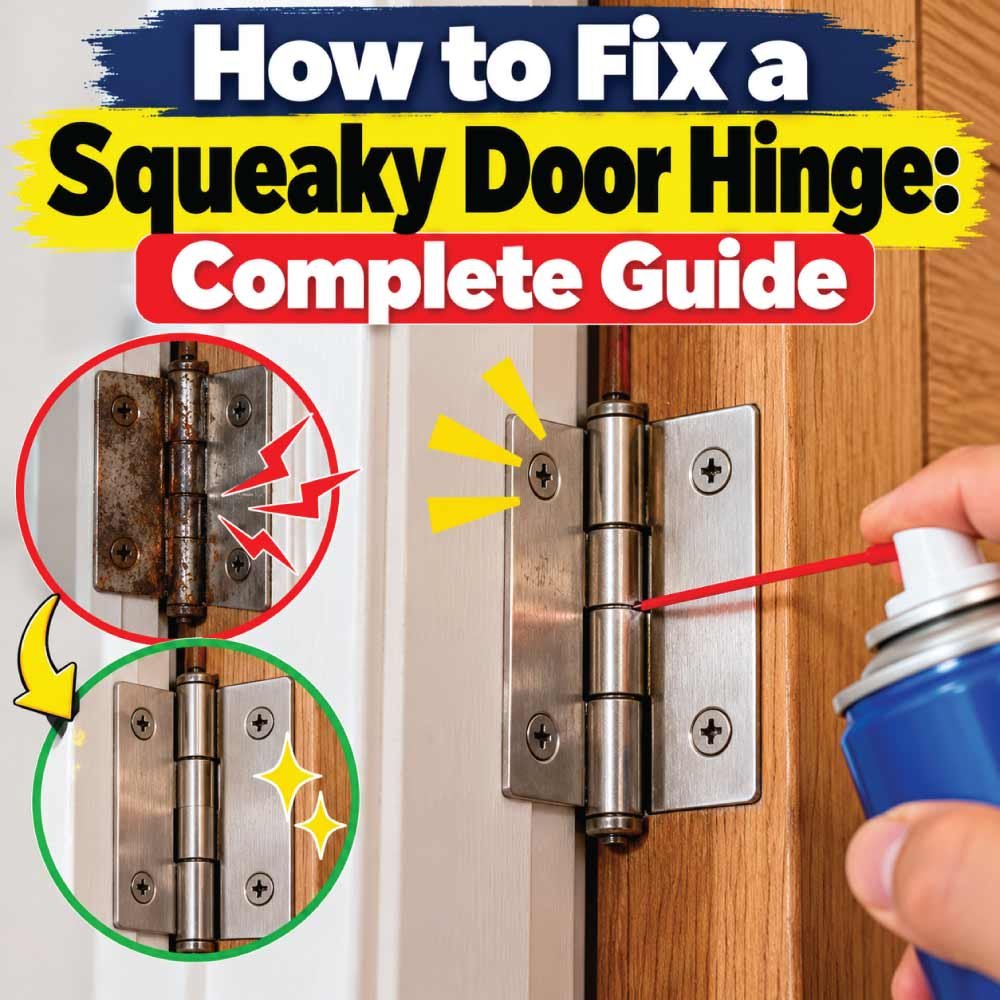
A squeaky door hinge can be annoying, especially when the sound wakes someone up, interrupts a quiet room, or makes an otherwise peaceful home feel noisy. The good news is that fixing a squeaky door hinge is usually a simple DIY task that takes only a few minutes and requires minimal tools.
Most squeaky door hinges make noise because of friction between metal parts, accumulated dirt, rust, or a lack of lubrication. In some cases, loose screws, a misaligned door, or worn hinge components may be responsible.
This complete guide explains how to fix a squeaky door hinge, identify the source of the noise, choose the right lubricant, and prevent the squeak from returning.
Quick Answer: How Do You Fix a Squeaky Door Hinge?
The easiest way to fix a squeaky door hinge is to lubricate the hinge’s moving parts.
Open and close the door slowly to identify which hinge is making the noise. Clean away visible dirt and dust, then apply a small amount of suitable lubricant to the hinge pin and moving joints. Move the door back and forth several times to distribute the lubricant, and wipe away any excess.
If the squeaking continues, inspect the hinge for rust, loose screws, misalignment, or worn components. Tightening loose screws or cleaning and removing the hinge pin may be necessary to solve the problem permanently.
What Causes a Door Hinge to Squeak?
Before repairing the hinge, it helps to understand why it makes noise. Identifying the cause can prevent repeated repairs and help you choose the right solution.
1. Lack of Lubrication
Door hinges contain metal parts that move against one another whenever the door opens or closes. Without adequate lubrication, friction develops between these surfaces and produces a high-pitched squeaking sound.
This is one of the most common reasons for a squeaky door hinge.
2. Dirt and Dust Buildup
Dust, pet hair, household debris, and other particles can accumulate around the hinge pin and knuckles. This buildup interferes with smooth movement and may cause squeaking even when the hinge has some lubrication.
Cleaning the hinge before applying lubricant can improve the results.
3. Rust or Corrosion
Hinges exposed to moisture may develop rust, particularly in bathrooms, kitchens, garages, basements, and exterior doorways.
Rust increases friction and can make the hinge difficult to move. Severe corrosion may damage the metal and eventually require hinge replacement.
4. Loose Hinge Screws
Loose screws can allow the hinge to shift slightly as the door moves. This movement may create rubbing, clicking, squeaking, or other noises.
If the door also sags or feels unstable, loose hinge screws may be part of the problem.
5. Misaligned Door or Hinge
A door that is not properly aligned may place uneven pressure on its hinges. The door could rub against the frame, bind near the latch, or put additional stress on the hinge joints.
Lubrication may reduce the noise temporarily, but the underlying alignment problem will remain.
6. Worn or Damaged Hinge Components
Older hinges may have worn pins, damaged knuckles, bent leaves, or other defects. If the metal components no longer fit together correctly, the hinge may continue squeaking despite cleaning and lubrication.
In this situation, replacing the damaged hinge may be the most reliable solution.
Tools and Materials You May Need
Gather the following supplies before starting the repair:
- Suitable hinge lubricant
- Clean cloth or paper towels
- Small cleaning brush or old toothbrush
- Screwdriver that fits the hinge screws
- Needle-nose pliers, if hinge-pin removal is necessary
- A small hammer and hinge-pin punch, if needed
- Mild household cleaner for removing dirt
- Protective gloves
- A doorstop or helper to keep the door stable
You may not need every item. Most squeaky door hinges can be fixed with a cloth, an appropriate lubricant, and a few minutes of work.
What Is the Best Lubricant for a Squeaky Door Hinge?
Choosing the right lubricant can make a significant difference in how well the repair works and how long it lasts.
Silicone-Based Lubricant
A silicone-based spray lubricant is a convenient option for many door hinges. It helps reduce friction and generally leaves a relatively clean finish when applied correctly.
Use a product suitable for metal hinges, and avoid spraying it onto floors, painted surfaces, or other areas where it could leave a slippery residue.
White Lithium Grease
White lithium grease provides longer-lasting lubrication and can work well on metal-to-metal contact points.
It is particularly useful when a hinge needs more persistent lubrication, provided the product is appropriate for the hinge and surrounding materials.
Light Machine Oil
A light machine oil can lubricate the moving parts of many traditional metal hinges. Apply only a small amount to the hinge pin and joints.
Avoid using excessive oil, which can drip onto the door, floor, or trim.
Multipurpose Penetrating Lubricant
Some multipurpose sprays can help loosen a stiff hinge or displace moisture. However, not every penetrating lubricant is designed to provide long-lasting lubrication.
Check the product label to confirm that it is suitable for hinge lubrication. If necessary, follow it with an appropriate lubricant recommended for the hinge.
Can You Use Cooking Oil on a Squeaky Door Hinge?
Cooking oil is generally not the best choice. It can become sticky over time, attract dust, and leave residue around the hinge.
A lubricant designed for metal mechanisms is usually a better option because it is intended to reduce friction without creating unnecessary buildup.
How to Fix a Squeaky Door Hinge Step by Step
Follow these steps to quiet a squeaky door hinge without unnecessarily removing the door.
Step 1: Identify the Squeaky Hinge
Open and close the door slowly several times. Listen carefully to determine which hinge is producing the noise.
A door may have two, three, or more hinges, and the sound can sometimes travel through the frame, making it difficult to identify the exact source.
Place your hand lightly near each hinge while moving the door. You may feel vibration around the hinge that is making the noise.
Once you identify the affected hinge, focus your repair on that area.
Step 2: Clean the Hinge
Inspect the hinge for dust, dirt, grease buildup, and visible rust.
Use a dry cloth to remove loose debris. For stubborn dirt, use a small brush and a mild cleaner suitable for the hinge’s finish.
Avoid soaking the hinge or allowing excess moisture to remain around the metal components. Dry the hinge thoroughly before applying lubricant.
Cleaning first helps prevent dirt from mixing with the lubricant and creating a sticky residue.
Step 3: Apply Lubricant to the Hinge
Open the door enough to expose the hinge joints. Apply a small amount of suitable lubricant around the hinge pin and the points where the hinge knuckles move against one another.
Use the product’s applicator straw or a small dropper when possible to control the amount.
You generally do not need to remove the hinge or door for this step.
Avoid spraying large amounts of lubricant onto the surrounding door, wall, floor, or trim. If using an aerosol product, follow its safety instructions and keep it away from flames or other ignition sources.
Step 4: Move the Door Back and Forth
After applying the lubricant, open and close the door slowly several times.
This movement helps distribute the lubricant through the hinge joints. Listen for any remaining squeaking and check whether the door moves more smoothly.
If the sound has disappeared, wipe away excess lubricant with a clean cloth.
If the hinge still squeaks, apply a small additional amount if appropriate for the product. Avoid repeatedly adding lubricant without checking for dirt, rust, or mechanical damage.
Step 5: Tighten Loose Hinge Screws
If lubrication does not solve the problem, inspect the screws on the hinge leaves.
Use the correct screwdriver to tighten any loose screws gradually. Do not overtighten them, as this can damage the screw heads, strip the holes, or affect alignment.
If a screw turns without becoming secure, the screw hole may be stripped. A longer or otherwise appropriate replacement screw may help, depending on the door and frame construction.
For screws near the edge of a heavy door, use extra care and avoid removing multiple screws at once.
Step 6: Check for Door Misalignment
Close the door slowly and look for signs of rubbing or uneven gaps around the frame.
Check whether the door catches near the top, scrapes the floor, or requires extra force to latch. These symptoms can indicate an alignment issue rather than a simple lubrication problem.
If the hinge screws are secure but the door still binds, the hinge may be bent, the frame may have shifted, or the door may have sagged.
Correcting the alignment may require adjusting the hinge position or repairing the frame.
Step 7: Test the Door Again
Open and close the door several times after completing the repair.
The door should move smoothly without squeaking, grinding, or catching. Check the hinges for excess lubricant and wipe away any residue.
If the sound remains, proceed to a more thorough hinge cleaning or inspection.
Also Read:
How to Fix a Squeaky Door Hinge by Removing the Hinge Pin
Sometimes lubricant applied to the outside of the hinge is not enough. Dirt or corrosion may be trapped around the hinge pin, requiring a deeper cleaning.
Removing a hinge pin can help, but not all hinges are designed for easy pin removal.
Step 1: Support the Door
Before removing a hinge pin, make sure the door is stable. Interior doors can be heavier than they appear, and removing pins without support may cause the door to shift or fall.
For a heavy door, an exterior door, or a door with multiple difficult-to-access hinges, get assistance or consider hiring a professional.
Step 2: Check Whether the Pin Is Removable
Inspect the top of the hinge. Traditional hinges often have a removable pin that can be tapped upward from the bottom.
Some hinges have fixed pins, security features, or decorative caps that prevent ordinary removal. Do not force a pin that is not designed to come out.
Step 3: Remove the Pin Carefully
If the pin is removable, use an appropriate hinge-pin punch and a small hammer to tap it upward gently.
Protect nearby surfaces from accidental hammer marks. If the pin is stuck because of corrosion, avoid striking it forcefully, as this may damage the hinge or surrounding frame.
Step 4: Clean the Pin and Hinge Knuckles
Wipe the pin with a clean cloth. Remove visible dirt and light residue from the pin and accessible hinge surfaces.
If the pin is badly corroded, bent, or deeply pitted, replacing it or the hinge may be necessary.
Step 5: Apply Lubricant and Reinstall the Pin
Apply a thin layer of suitable lubricant to the pin and the contact surfaces. Reinsert the pin carefully, ensuring that the hinge knuckles remain aligned.
Do not force the pin if it does not slide into place. Check the alignment and confirm that you have the correct pin.
Step 6: Test the Door
Open and close the door several times. Confirm that the hinge moves smoothly and that the door remains securely attached.
If the hinge continues making noise, inspect it for wear, bending, or alignment problems.
Also Read:
How to Fix a Squeaky Door Hinge Without Removing the Pin
If you want to avoid taking anything apart, you can often fix the problem with external lubrication.
- Open the door enough to expose the hinge joints.
- Clean the visible dirt from the hinge.
- Apply a small amount of suitable lubricant to the hinge pin and knuckles.
- Move the door back and forth several times.
- Wipe away excess lubricant.
- Repeat the process for other hinges if necessary.
This approach works well for many ordinary squeaky interior doors. If the hinge is heavily rusted or contaminated internally, removing the pin for cleaning may be more effective.
How to Fix a Squeaky Door Hinge Caused by Rust
Rust can create friction and make a hinge noisy or difficult to move.
For light surface rust, clean the affected area with a suitable brush or cleaner, following the product instructions. Dry the hinge thoroughly and apply an appropriate lubricant.
Do not use aggressive abrasives that could damage a painted or decorative finish.
If rust has deeply pitted the metal, weakened the hinge, or caused the pin to seize, replacement may be safer and more reliable than repeated lubrication.
For exterior doors, also look for the source of moisture. Rain exposure, condensation, or poor weather protection may cause corrosion to return.
How to Fix a Door That Squeaks and Sticks
A door that squeaks while sticking or rubbing against the frame may have an alignment problem.
Start by identifying where the door contacts the frame. Look for worn paint, scrape marks, uneven gaps, or areas where the door is difficult to close.
Tighten loose hinge screws and lubricate the hinge if needed. Then test the door again.
If the door still sticks, the frame may have shifted, the hinges may be incorrectly positioned, or the door may have swollen due to moisture.
Do not assume that lubrication alone will fix a door that visibly rubs against the frame. Correcting the underlying alignment issue is often necessary.
Common Mistakes to Avoid When Fixing a Squeaky Door Hinge
Avoid these mistakes to get a better result and prevent damage.
Using too much lubricant: Excess product can drip onto the floor, stain surfaces, and attract dirt.
Lubricating without cleaning: Dirt and grime can mix with the lubricant and create additional buildup.
Using cooking oil: It may become sticky and attract dust over time.
Ignoring loose screws: A loose hinge can continue making noise even after lubrication.
Forcing a stuck hinge pin: Excessive hammering can damage the hinge or frame.
Removing pins without supporting the door: The door may shift or fall, particularly if it is heavy.
Ignoring rust damage: Severely corroded hinges may need replacement rather than repeated lubrication.
Spraying lubricant near flames: Some aerosol products are flammable. Follow the label and keep them away from ignition sources.
Ignoring door misalignment: If the door rubs against the frame, the underlying issue may require adjustment.
Leaving slippery residue on the floor: Clean up spills immediately to prevent slipping.
When Should You Replace a Door Hinge?
Lubrication and tightening can solve many squeaky hinge problems, but replacement may be necessary in certain situations.
Consider replacing the hinge if:
- The hinge is severely rusted or corroded.
- The hinge pin is bent or badly worn.
- The hinge leaves are bent or cracked.
- The hinge knuckles are damaged.
- The hinge continues squeaking despite proper cleaning and lubrication.
- The door sags because the hinge is damaged.
- The hinge screws cannot be secured because the mounting area is damaged.
Choose a replacement hinge that matches the original in size, type, finish, and load capacity.
For heavy entry doors, fire doors, or doors with special security requirements, use compatible hardware and follow the applicable installation requirements.
How to Prevent Door Hinges From Squeaking Again
A little routine maintenance can help prevent future noise.
1. Lubricate Hinges When Needed
Inspect frequently used doors periodically. If a hinge begins squeaking or moving stiffly, clean and lubricate it before the problem becomes worse.
Follow the lubricant manufacturer’s instructions regarding application and reapplication.
2. Keep Hinges Clean
Remove dust and dirt from the hinge surfaces before they accumulate. This is especially important near exterior doors, kitchens, garages, and other areas exposed to debris.
3. Address Moisture Problems
Keep exterior doors protected from excessive moisture and check for condensation around damp areas.
For hinges exposed to the weather, choose hardware and lubricants suitable for those conditions.
4. Tighten Loose Screws Promptly
If you notice movement around a hinge leaf, check the screws before the door becomes noticeably misaligned.
Use the correct screwdriver and avoid overtightening.
5. Avoid Putting Excess Weight on Doors
Do not hang heavy objects from a door unless the hinges and door structure are designed to support the additional load.
Excess weight can strain hinges, loosen screws, and cause the door to sag.
6. Check Door Alignment
If the door begins rubbing against the frame, investigate the cause instead of repeatedly lubricating the hinge.
Early adjustments can prevent additional wear and make the door easier to operate.
Frequently Asked Questions
Why Does My Door Hinge Squeak Even After Lubrication?
A hinge may continue squeaking because the lubricant has not reached the moving surfaces, dirt remains inside the hinge, or corrosion and wear have damaged the components.
Clean the hinge, apply a suitable lubricant to the contact points, and move the door back and forth. If the noise persists, inspect the pin, screws, and alignment.
What Is the Fastest Way to Stop a Squeaky Door?
The fastest solution for most squeaky doors is to clean the affected hinge and apply a small amount of suitable lubricant to its moving parts.
Open and close the door several times to distribute the lubricant, then wipe away excess product.
Can I Use WD-40 on a Squeaky Door Hinge?
Some multipurpose WD-40 products can help loosen stiff hinges and displace moisture, but the product you choose should be suitable for the intended purpose. Not every product in the range is designed for the same use.
Check the label, and use a dedicated hinge lubricant if longer-lasting lubrication is needed.
Can Petroleum Jelly Fix a Squeaky Door Hinge?
Petroleum jelly may reduce friction on some hinges, but it can leave a thick residue that attracts dust and may be inconvenient to apply.
A lubricant specifically intended for metal hinges is usually a more practical choice.
Why Does My Door Squeak When I Open It but Not When I Close It?
The hinge may experience different pressure or friction depending on the direction of movement. A partially dry hinge, a misaligned door, or a worn hinge pin may squeak only when opening or closing.
Test the door in both directions, clean and lubricate the hinge, and inspect for rubbing or damaged components if the sound continues.
Should I Lubricate All the Hinges on a Door?
If only one hinge is squeaking, start with that hinge. However, inspecting and maintaining all the hinges can help prevent similar problems from developing elsewhere.
Use only enough lubricant to reach the moving contact points, and wipe away excess.
How Often Should Door Hinges Be Lubricated?
There is no single schedule that applies to every door. Hinges in busy households or damp environments may need attention more frequently than those on rarely used interior doors.
Inspect them periodically and lubricate them when they begin squeaking, moving stiffly, or showing signs of friction.
Is a Squeaky Door Hinge a Serious Problem?
A squeaky hinge is usually a minor maintenance issue, but persistent noise can sometimes indicate loose screws, corrosion, worn parts, or door misalignment.
Address the problem early, especially if the door is sagging, difficult to close, or showing visible hinge damage.
Conclusion
Fixing a squeaky door hinge is usually a simple DIY repair that requires only a few tools and a suitable lubricant. Start by identifying the noisy hinge, cleaning away dirt, and lubricating the moving parts. Then test the door and tighten any loose screws if necessary.
If the squeaking continues, inspect the hinge pin, check for rust, and look for signs of wear or misalignment. A thorough cleaning may solve the problem, but severely damaged hinges should be replaced.
With regular maintenance and the correct lubricant, you can keep your doors operating smoothly, reduce irritating noise, and extend the life of your hinges.

Engineer Ali Hasan is a garage door expert and the founder of FixFasty. With over 16 years of experience in mechanical systems and home maintenance, he provides practical, step-by-step guides on garage door installation, repairs, and maintenance, helping homeowners keep their garage doors safe, reliable, and long-lasting.