
Garage doors are a part of our daily lives. We use them a lot. We do not think about them much. Because they open and close by themselves it is easy to forget about safety. Garage doors are really heavy and can hurt us if we are not careful.
If we do not use our garage doors correctly or take care of them they can be very dangerous. Garage doors can hurt our children, our pets, our cars and our things.
They have a lot of moving parts, heavy doors and openers that can malfunction. That is why we need to know about garage door safety. This will help us keep our families safe secure our homes and prevent accidents that can be avoided.
Why Garage Door Safety Is So Important
A lot of people do not know how complicated garage doors are. The springs are under a lot of tension the cables hold a lot of weight. The openers use sensors and electronics. If one part breaks it can affect the system.
Common Garage Door Safety Risks
Sudden door collapse due to broken springs: Broken or worn springs can cause the garage door to fall unexpectedly, leading to serious injuries or damage to vehicles and property if not addressed promptly.
Fingers caught between door panels: Fingers can easily get trapped between move the door panels, especially with older doors, cause the painful injuries if proper caution and safety features are ignored.
Children playing with remote controls: When children treat garage door remotes as toys, they may accidentally open or close the door, creating dangerous situations for people, pets, or vehicles nearby.
Malfunctioning safety sensors: Faulty or misaligned sensors may fail to detect obstacles, allowing the door to close on people, pets, or objects, increasing the risk of accidents and damage.
DIY repairs without proper tools: Attempting garage door repairs without the right tools or experience can result in serious injuries, improper installation, and long-term damage to the door system.
Understand and follow the safety practices can prevent accidents and extend the life of your garage door.
How Garage Doors Work (Safety Basics)
To stay safe we need to understand how garage doors work. Garage doors have parts that work together to open and close the door safely. If we know how these parts work we can see the risks. Avoid them.
1-Door Panels or Sections
The door panels or sections are the parts of the door that we can see. They are connected by hinges, which let the door bend when it moves. If the panels are damaged or not aligned correctly the door can move unevenly. This can cause the door to jam. Fall down suddenly.
2-Torsion or Extension Springs
The torsion or extension springs help lift and lower the door. They make it possible to open and close the door smoothly. If the springs break the door can fall down suddenly. This is very dangerous. We should not try to fix it ourselves.
3-Steel Cables
The steel cables work with the springs to lift and lower the door. They are, under a lot of tension. Help control the doors movement. If the cables are damaged or broken the door can. Fall down suddenly.
4-Rollers and Tracks
The rollers and tracks guide the door when it opens and closes. They need to be aligned and lubricated regularly. If they are not the door can move jerkily. Make loud noises. This can cause accidents and damage.
5-Automatic Garage Door Opener
The automatic garage door opener powers the doors movement. It uses a motor and drive system to open and close the door. We can use wall switches or remote controls to operate the door.. If the opener malfunctions the door can move erratically or not stop when it should. That is why we need to inspect and set up the opener correctly.
6-Safety Sensors
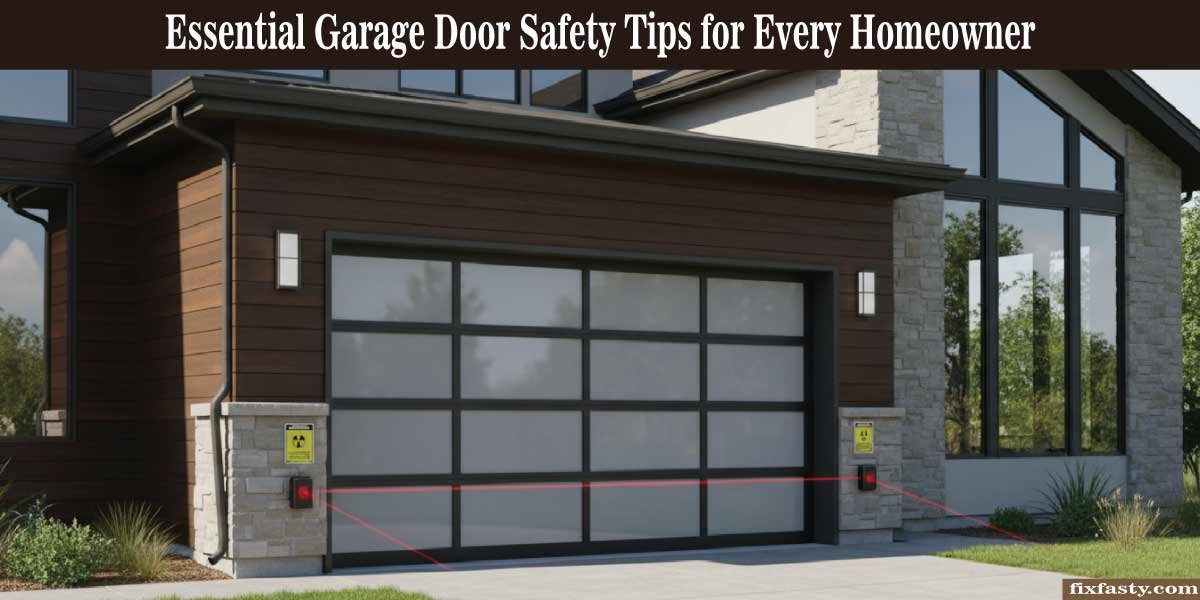
The safety sensors are located near the bottom of the door tracks. They detect objects in the doors path. Stop the door from closing if something is there. If the sensors are faulty or not aligned correctly they cannot protect us. The door can close on people, pets or things which can be very dangerous.
👉 Read the complete garage door guide covering basics, repairs, and maintenance tips. Learn how garage doors work, spot common problems early, and keep your system safe, reliable, and long-lasting. Click to explore the full guide now!
Keep Children and Pets Away from Garage Doors
One rule, for garage door safety is to keep kids and pets away from moving doors. Garage doors are really heavy. Use strong machinery, which can hurt people badly. Teaching kids to stay and keeping an eye on pets helps prevent accidents. It also helps prevent pinched fingers or the door moving unexpectedly.
Why This Matters
Kids might think the garage door is a toy, the remote control. Pets can easily run under a door that is closing. Both situations can cause injuries.
Safety Tips
Store remotes out of reach of children
Teach kids never to play near the garage door
Never allow children to operate the door alone
Watch pets when open or close the door
Garage doors should always be treated as powerful machinery, not toys.
Test Your Garage Door’s Auto-Reverse Feature Regularly
Modern garage doors have a safety feature that helps prevent accidents. This feature is called auto-reverse. It stops the garage door. Makes it go back up if something is in the way. You should test this feature regularly to make sure it is working properly. This way you can be sure that your garage door is safe to use every day.
How to Test Auto-Reverse
Place a solid object (like a wooden block) under the door
Close the door using the opener
The door should reverse immediately upon contact
If the door doesn’t reverse, stop using it and contact a professional.
👉 New to garage doors? This Garage Doors for Beginners complete guide 2026 explains types, parts, safety, repairs, and maintenance. Learn the basics step by step and make smarter decisions. Read the full guide for safe, reliable garage door use!
Understand Garage Door Sensors and Keep Them Aligned
There are sensors on garage doors that help keep people safe. These sensors are called photo-eye sensors. They are usually found near the bottom of the door tracks. They can tell if something is in the way of the door. If something is in the way the door will. Go back up. You need to make sure these sensors are working properly and are clean. This is important for your garage door to work safely and reliably.
1-Keep Sensors Clean and Free of Dust
Sometimes things like dust or dirt can block the sensors beam. This means the sensor cannot work properly. You should clean the sensor lenses with a cloth regularly. This will help the sensor work correctly and your garage door will be safe to use.
2-Make Sure Both Sensors Are Aligned
The photo-eye sensors need to be facing each other to work properly. If they are not facing each other the door might not close correctly. It might even behave in a way that’s not predictable. You should check the alignment of the sensors regularly to make sure they are working correctly.
3-Never Disable Sensors for Convenience
You might be tempted to disable the safety sensors if your garage door is not closing properly.. This is not a good idea. The safety sensors are there to protect you and your property. If you disable them you will be removing a layer of protection. This could lead to accidents or injuries.
4-Check Sensor Lights Regularly
Most sensors have lights that tell you if they are working correctly. You should check these lights to see if there are any problems. This will help you find any issues before they cause accidents or problems with your garage door.
Misaligned or dirty sensors are a cause of garage door accidents. This is why it is so important to inspect and care for your sensors regularly. This will help keep your household safe.
Never Attempt DIY Repairs on Springs or Cables
Why DIY Repairs Are Risky
Springs can snap unexpectedly
Serious injuries or fatalities can occur
Improper repairs can cause door failure
Always call a trained garage door technician for spring, cable, or track repairs.
Perform Regular Visual Inspections
You should regularly check your garage door to make sure it is safe and working properly. Look at the springs, cables, rollers, tracks and hardware. Check for signs of wear, rust or misalignment. If you find any problems fix them away. This will help prevent accidents and make sure your garage door lasts a time.
What to Look For
Frayed or worn cables
Rusted or broken springs
Loose bolts or brackets
Bent tracks or damaged rollers
If anything looks unusual, stop using the door and schedule a professional inspection.
Keep Garage Door Tracks Clear and Clean
Track Maintenance Tips
Remove dirt, leaves, and debris
Do not lubricate tracks (rollers should be lubricated instead)
Check for dents or bends
Smooth movement equals safer operation.
👉 Learn how garage doors work with this clear step-by-step guide. Understand springs, cables, rollers, sensors, and openers for safe operation and easy maintenance. Read the full post to prevent issues and keep your garage door running smoothly.
Common Garage Door Hazards and How to Prevent Them
Garage doors are important for keeping your home safe and secure.. They can be dangerous if you do not take care of them. Broken springs or misaligned sensors can cause injuries or damage. You should regularly inspect your garage door. Fix any problems you find. This will help keep your household safe and your door working smoothly.
| Hazard | Potential Risk | Prevention Tip |
|---|---|---|
| Broken springs | Door falling suddenly | Professional inspection |
| Misaligned sensors | Door not reversing | Regular alignment checks |
| Frayed cables | Door imbalance | Replace immediately |
| Loose hardware | Door instability | Tighten during maintenance |
| Dirty tracks | Door jamming | Clean regularly |
Use the Manual Release Handle Properly
The manual release handle on your garage door is a safety feature. It lets you open your door manually if the power is out or if your opener is not working.. You need to be careful when you use it. If you pull it quickly the door could move suddenly and hurt you. Make sure you follow the instructions carefully.
Manual Release Safety Tips
Only use when the door is fully closed
Never pull during door movement
Reconnect properly after use
Incorrect use can cause the door to fall suddenly.
Secure Your Garage Door Against Break-Ins
Garage doors can be a target for burglars. Especially if they are old. Not well maintained. You can help protect your home by upgrading your locks, openers and sensors. This will make it harder for burglars to get in.
Security Safety Tips
Use rolling code technology openers
Lock the door manually when away for long periods
Never leave the garage door open unattended
Secure the emergency release cord
A secure garage door protects both your home and family.
Avoid Standing Under a Moving Garage Door
Never walk under a moving garage door. This is very dangerous. Even if the door seems to be working it could still fall and hurt you. This could happen if the springs or cables fail or if there is a problem with the opener.
Why This Is Dangerous
Mechanical failure can happen suddenly
Sensors may not detect fast movement
Springs can break without warning
Always wait until the door has completely stopped before passing through.
Schedule Professional Garage Door Inspections
What Professionals Check
Spring tension and balance
Cable condition
Safety sensor operation
Opener performance
Structural integrity
Professional inspections can prevent accidents and expensive emergency repairs.
Garage Door Safety Maintenance Checklist
Take care of your garage door is important for safety and smooth operation. You should make a list of things to check and do regularly. This includes inspecting your door cleaning it lubricating the parts and having it checked by a professional. This will help prevent accidents and make sure your door lasts a time.
| Task | Frequency | Purpose |
|---|---|---|
| Test auto-reverse | Monthly | Prevent injuries |
| Inspect cables & springs | Monthly | Identify wear |
| Clean sensors | Monthly | Ensure detection |
| Lubricate moving parts | Twice a year | Smooth operation |
| Professional inspection | Annually | Overall safety |
Teach Every Family Member Garage Door Safety
Everyone in your household should know the safety rules for garage doors. This includes staying from moving doors using the remote correctly and telling someone if there is a problem. This will help keep everyone safe.
Family Safety Tips
Explain garage door dangers to children
Show how sensors work
Demonstrate safe operation
Encourage reporting unusual noises
Awareness helps prevent accidents before they happen.
Replace Old or Outdated Garage Doors
Signs It’s Time to Replace
Door is over 20 years old
No safety sensors installed
Frequent malfunctions
Poor security features
Upgrading to a modern garage door greatly improves safety and reliability.
Final Thoughts
Garage doors are heavy and powerful. They need to be maintained to prevent accidents. You should test the safety features clean the sensors inspect the parts and have your door checked by a professional. This will help reduce the risks and keep your household safe. You should also teach your family members about garage door safety. Make sure they follow the rules. This will help prevent accidents and make sure your door works smoothly and safely for a time.

Engineer Ali Usman is a professional garage door expert and author at FixFasty, with over 10 years of hands-on experience in garage door systems and mechanical maintenance. He writes clear, step-by-step guides on garage door repairs, parts, and safety practices, helping homeowners fix problems correctly and maintain smooth, secure, and long-lasting garage door performance.