
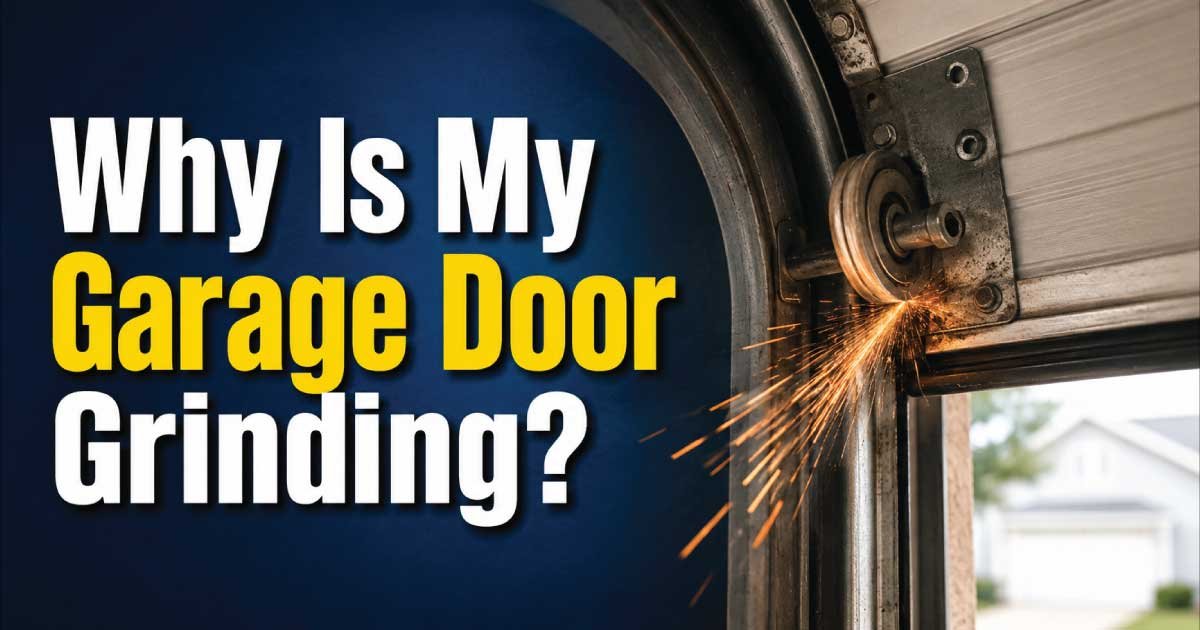
A grinding garage door is more than an annoying noise. It often signals that one or more parts are wearing out, misaligned, or struggling to move smoothly. Ignoring the sound can turn a small maintenance issue into an expensive repair, leaving you with a door that sticks, moves unevenly, or stops working altogether. In some cases, continued operation can even damage the garage door opener or create a safety hazard.
The good news is that many grinding noises have predictable causes. Worn rollers, dry hinges, loose hardware, damaged tracks, and opener problems are among the most common reasons homeowners hear grinding during operation. Learning how your garage door should normally work makes it much easier to identify where the sound is coming from and whether it’s safe to investigate yourself.
This repair guide explains why your garage door is grinding, how to recognize the warning signs, which components deserve your attention first, and how to troubleshoot the problem safely. You’ll also learn when a simple DIY repair is enough and when the issue points to a more serious mechanical failure that requires professional service.
Common Signs and Symptoms
A grinding garage door rarely appears without other warning signs. Paying attention to these symptoms can help you narrow down the source of the problem before disassembling anything. Many homeowners notice subtle changes for weeks before the grinding becomes loud enough to demand attention.
Common symptoms include:
- Loud grinding or scraping during opening or closing
- Metal-on-metal noises
- Jerky or uneven door movement
- Slow opening or closing speed
- Vibrations felt through the garage door opener
- Door hesitating before moving
- One side of the door moving slightly ahead of the other
- Visible shaking while the door travels
- Rollers appearing to wobble in the tracks
- Squealing that gradually changes into grinding
- Garage door opener straining or sounding louder than usual
- Fine metal dust collecting near rollers or tracks
- Door stopping midway before continuing
You may also notice that the grinding only occurs at specific points in the door’s travel. For example, the noise may happen only when the door is halfway open, suggesting a damaged track or worn roller in that area. If the grinding happens every time the opener starts, the problem may be inside the opener rather than the door itself.
The sooner you investigate these symptoms, the less likely you’ll face major component replacement.
How the Garage Door Normally Works
Understanding how a garage door operates makes troubleshooting much easier because you’ll know which components should move smoothly and quietly. A typical residential garage door relies on several parts working together in perfect alignment.
When you press the wall button or remote, the garage door opener powers a drive system—usually a chain, belt, or screw drive. The opener pulls or pushes a trolley connected to the garage door.
At the same time:
- Torsion or extension springs carry most of the door’s weight.
- Rollers travel inside metal tracks.
- Hinges allow each door section to bend as it follows the curved track.
- Bearings and shafts rotate with minimal friction.
- The opener guides movement instead of lifting the entire weight.
A properly maintained garage door should produce a steady mechanical sound without harsh scraping or grinding. While some older chain-drive openers naturally make more noise than belt-drive models, they still should not produce a metal grinding sound.
Grinding usually means friction has increased somewhere in the system. Instead of parts rolling smoothly, they are rubbing, dragging, or wearing against each other. Identifying where that friction occurs is the key to an accurate diagnosis.
Most Common Reasons This Problem Happens
Most grinding noises originate from a relatively small number of components. Understanding why each problem develops, how it sounds, and what visual clues to look for helps you diagnose the issue much faster.
Worn or Damaged Rollers
Garage door rollers endure thousands of opening and closing cycles over their lifetime. As they wear, their bearings begin to fail, preventing the rollers from rotating smoothly inside the tracks.
Why it happens
- Age and normal wear
- Lack of lubrication
- Dirt buildup
- Low-quality plastic rollers wearing out
Common symptoms
- Grinding near the tracks
- Rough movement
- Door shaking during travel
How to identify it
Open the door manually and inspect every roller. Worn rollers may wobble, crack, chip, or refuse to rotate freely.
Dry Hinges and Moving Parts
Many grinding noises develop simply because moving parts have lost their protective lubrication. Metal components begin rubbing directly against one another, increasing friction and wear.
Why it happens
- Skipped maintenance
- Dust accumulation
- Old lubricant drying out
Common symptoms
- Grinding that gradually developed
- Squeaking before grinding
- Noise at multiple hinge locations
How to identify it
Look for dry metal surfaces, rust, or hinges that resist movement.
Bent or Misaligned Tracks
The tracks guide the rollers throughout the door’s travel. Even slight bending can force rollers against the track walls, producing grinding sounds.
Why it happens
- Vehicle impact
- Loose mounting brackets
- House settling
- Accidental damage
Common symptoms
- Grinding in one location
- Door jerking
- Rollers rubbing the track edge
How to identify it
Inspect both tracks from top to bottom. Look for dents, bends, gaps, or areas where the rollers no longer sit in the center.
Loose Hardware
Garage doors vibrate every time they move. Over time, bolts, brackets, hinges, and fasteners can gradually loosen.
Why it happens
- Constant vibration
- Normal expansion and contraction
- Years of repeated operation
Common symptoms
- Rattling followed by grinding
- Shaking panels
- Increased vibration
How to identify it
Inspect hinges, brackets, roller mounts, and track supports for loose fasteners or visible movement.
Garage Door Opener Problems
Sometimes the grinding isn’t coming from the door at all. Internal gears inside the opener can wear out, especially on older units with plastic drive gears.
Why it happens
- Gear wear
- Motor strain
- Poor maintenance
- Excessive door weight caused by spring problems
Common symptoms
- Grinding starts immediately after pressing the remote
- Noise comes from the opener housing
- Door moves inconsistently
How to identify it
Listen carefully while the opener runs. If the grinding clearly comes from the motor housing rather than the tracks, inspect the opener before assuming the door itself is at fault.
Failing Bearings
The torsion shaft rotates on bearings that reduce friction. As these bearings wear, rotation becomes rough and noisy.
Why it happens
- Age
- Dirt contamination
- Lack of lubrication
- Heavy usage
Common symptoms
- Grinding near the torsion spring shaft
- Rough rotation
- Increased vibration
How to identify it
Watch the shaft while the door moves. Excessive vibration or grinding near the bearing plates suggests wear.
Broken or Weak Springs
Although springs don’t usually create grinding directly, they can overload other components.
Why it happens
- Metal fatigue
- Corrosion
- End of service life
Common symptoms
- Heavy door
- Opener struggling
- Multiple new noises appearing
How to identify it
Look for visible gaps in torsion springs or stretched extension springs. Never attempt to repair high-tension springs without proper training.
Safety Precautions Before Troubleshooting
Before inspecting a grinding garage door, remember that it is one of the heaviest moving systems in your home. Even a basic residential door can weigh well over 100 pounds, while its springs store enough energy to cause severe injuries if handled incorrectly. A careful inspection is much safer than rushing into repairs.
Follow these safety precautions before beginning any diagnosis:
- Disconnect power to the garage door opener before inspecting moving parts.
- Pull the emergency release only when the door is fully closed unless you know the springs are functioning properly.
- Wear safety glasses and work gloves.
- Keep children and pets away from the work area.
- Never place hands near torsion springs, cables, or cable drums.
- Do not loosen spring hardware under any circumstances.
- Use a stable ladder on a flat surface.
- Avoid operating a door that appears crooked or partially off its tracks.
- If you smell burning insulation from the opener motor, stop using the system immediately.
- Never stand directly beneath a moving garage door during testing.
If the grinding is accompanied by broken cables, snapped springs, or a door that has come off the track, stop troubleshooting and arrange for professional repair. Those situations involve significantly higher safety risks than routine maintenance.
Tools Required
Most basic garage door inspections require only common household tools. The goal is to inspect, tighten, and clean components rather than perform major mechanical repairs.
| Tool | Purpose |
|---|---|
| Flashlight | Inspect tracks, rollers, and hinges |
| Step ladder | Reach upper hardware safely |
| Socket wrench set | Tighten loose bolts and brackets |
| Screwdriver set | Remove covers and tighten screws |
| Garage door lubricant | Lubricate rollers, hinges, and bearings |
| Clean microfiber cloth | Wipe dirt and old lubricant |
| Small brush | Remove debris from tracks |
| Safety glasses | Protect eyes from debris |
| Work gloves | Prevent cuts and improve grip |
Step-by-Step Troubleshooting Guide
Following a logical inspection process helps you locate the grinding noise without overlooking important clues. Resist the urge to replace parts immediately. Careful diagnosis often reveals a simple issue that costs little to correct.
- Listen carefully to the noise.
Identify whether the grinding comes from the opener, tracks, rollers, or spring shaft. This narrows the inspection area. If you can pinpoint the location, move on to inspecting that component first. - Disconnect the opener safely.
Turn off power and disengage the opener only if the door is fully closed. This allows you to check whether the noise comes from the opener or the door itself. If the door moves quietly by hand, inspect the opener more closely. - Inspect the rollers.
Look for cracked, chipped, or wobbling rollers. Roll each roller by hand if possible. Rollers that bind, stick, or fail to rotate smoothly are strong candidates for replacement. - Check the tracks.
Examine both vertical and horizontal tracks for dents, debris, or misalignment. Small obstructions may cause grinding as rollers pass through them. Remove loose debris, but avoid bending tracks back into shape without the proper tools. - Inspect hinges and hardware.
Tighten loose bolts and examine hinges for excessive wear or cracking. Loose hardware often causes vibrations that sound like grinding. If tightening eliminates movement, test the door again. - Lubricate approved moving parts.
Apply a garage-door-specific lubricant to rollers (unless sealed), hinges, bearings, and spring coils if recommended by the manufacturer. Avoid using heavy grease on tracks because it attracts dirt. After lubrication, operate the door to see whether the sound improves. - Evaluate the opener.
If the grinding persists only with the opener engaged, inspect the drive system and motor housing. Continued grinding from inside the opener usually indicates internal wear that may require repair or replacement.
Quick Diagnosis Table
This quick reference can help you match common symptoms with likely causes before deciding on the next step.
| Symptom | Possible Cause | Recommended Solution |
|---|---|---|
| Grinding throughout movement | Worn rollers | Inspect and replace damaged rollers |
| Grinding at one spot | Bent or obstructed track | Clean track and inspect for damage |
| Grinding from opener housing | Worn opener gear | Inspect opener and replace worn components |
| Metal scraping noise | Dry hinges or bearings | Lubricate approved moving parts |
| Door shakes while moving | Loose hardware | Tighten bolts, hinges, and brackets |
| Door moves unevenly | Misaligned track or roller issue | Inspect alignment and damaged rollers |
| Loud vibration with grinding | Failing bearings | Inspect bearings and replace if worn |
| Opener strains to lift door | Weak or broken spring | Stop using the door and schedule professional spring repair |

Engineer Ali Usman is a professional garage door expert and author at FixFasty, with over 10 years of hands-on experience in garage door systems and mechanical maintenance. He writes clear, step-by-step guides on garage door repairs, parts, and safety practices, helping homeowners fix problems correctly and maintain smooth, secure, and long-lasting garage door performance.