
Garage doors are one of the most frequently used entry points in our homes. Yet, they are often neglected until they start squeaking, sticking, or malfunctioning. Proper maintenance, especially lubrication, is essential to extend the lifespan of your garage door and ensure smooth, quiet operation. In this guide, we’ll cover everything you need to know about how to lubricate a garage door safely and efficiently.
Why Lubrication is Essential for Garage Doors
Lubrication is vital for keeping garage doors running smoothly. With multiple moving parts like rollers, hinges, tracks, and springs, friction naturally builds over time. Without proper lubrication, doors can become noisy, wear out faster, strain the opener, and even pose safety risks. Regularly applying lubricant reduces friction, prevents rust, and extends the life of your garage door system.
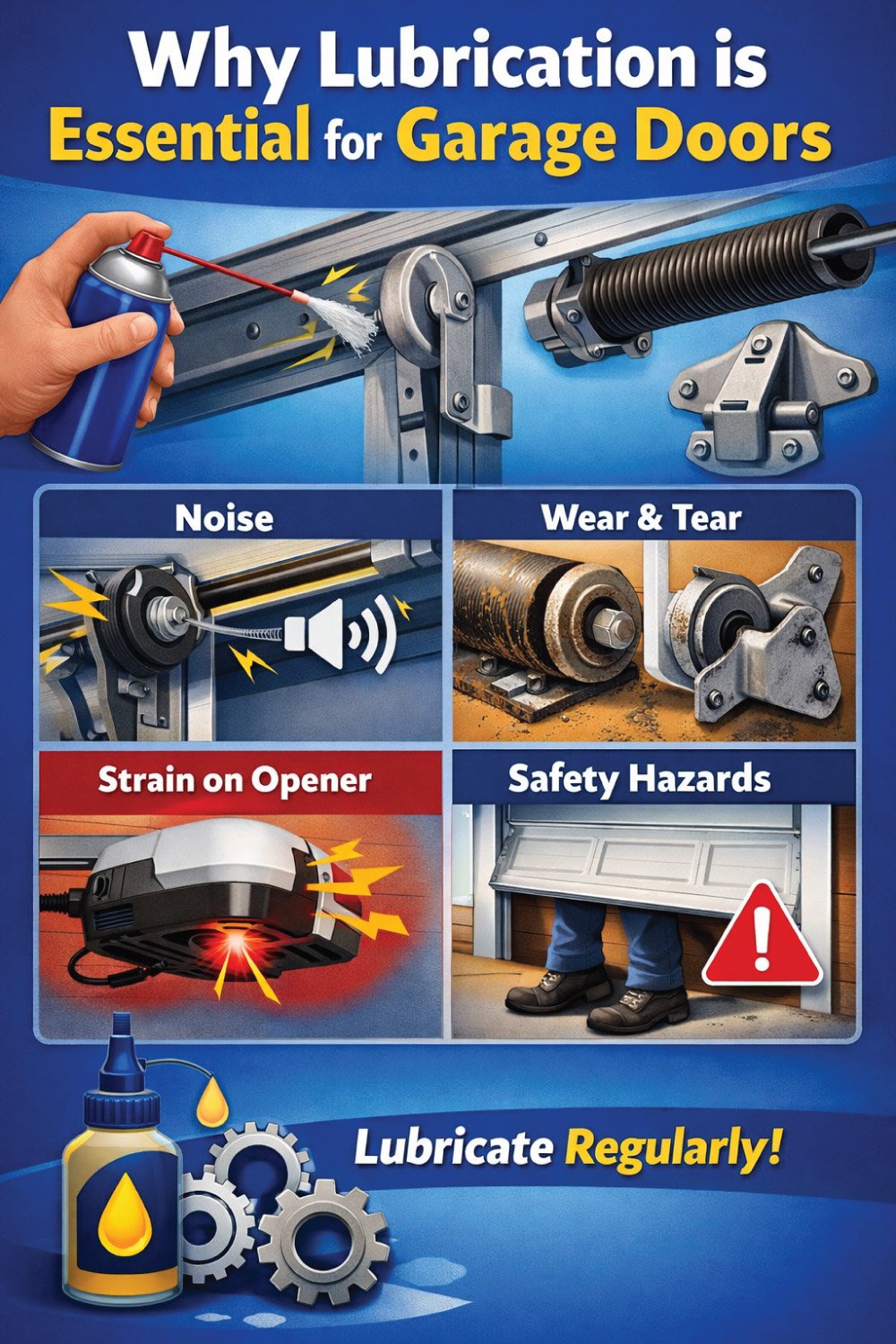
Noise – Squeaks and grinding sounds when opening or closing the door.
Wear and Tear – Metal components can wear down faster without proper lubrication.
Strain on the Opener – Friction makes the motor work harder, reducing its lifespan.
Safety Hazards – A poorly maintained door can malfunction, leading to accidents.
Regular lubrication reduces friction, prevents rust, and ensures your garage door operates smoothly for years.
Tools and Materials Needed For Garage Door Lubrication
Before lubricating your garage door, it’s important to gather the right tools and materials. Using improper lubricants can damage the door’s components and reduce its lifespan. Essential items include garage door lubricant, rags, a ladder, and protective gear. Avoid WD-40 or cooking oils, as they can attract dirt or fail to lubricate properly.
| Tool/Material | Purpose |
|---|---|
| Garage door lubricant (silicone or lithium-based) | Reduces friction on rollers, hinges, springs, and tracks |
| Clean cloths or rags | For wiping off dirt, dust, and old grease |
| Ladder | To reach higher parts safely |
| Safety glasses and gloves | Protects eyes and hands during maintenance |
| Small brush (optional) | For cleaning rust or debris from hard-to-reach areas |
Pro Tip: Avoid using WD-40 or cooking oils. WD-40 is a cleaner, not a lubricant, and oils can attract dirt and gum up your garage door components.
Step-by-Step Guide: How to Lubricate a Garage Door
Maintaining a garage door with proper lubrication keeps it running smoothly, quietly, and safely. Over time, dirt, dust, and friction can wear down rollers, hinges, springs, and the opener. Following a systematic approach ensures every moving part gets the right attention. Use the correct lubricants, take safety precautions, and your garage door will operate efficiently for years.
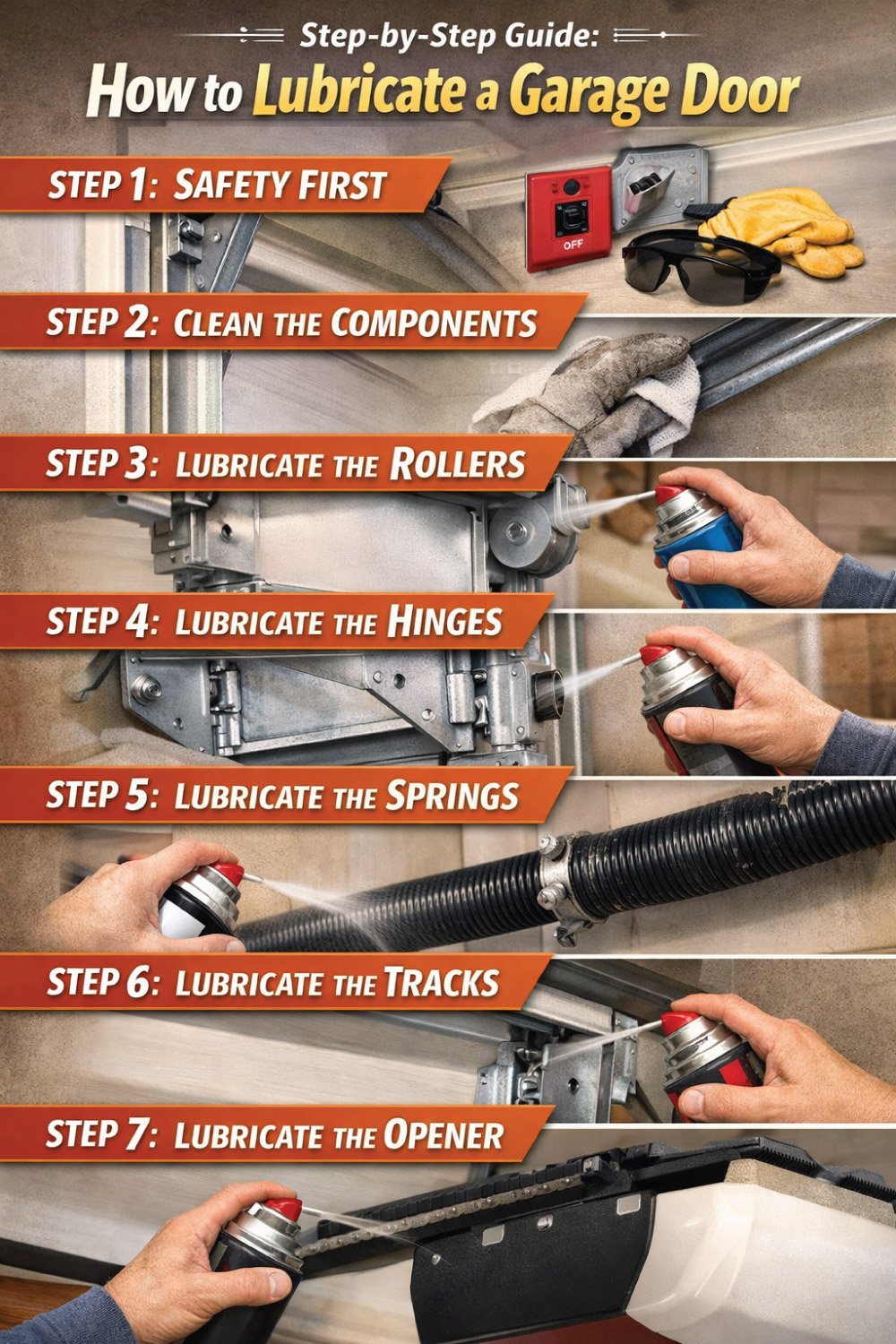
Step 1: Safety First
Safety is the first priority when maintaining a garage door. Before starting, disconnect the opener to prevent accidental movement, keep children and pets clear of the area, and wear protective gear such as gloves and safety glasses. Proper precautions prevent injuries during maintenance.
Disconnect the garage door opener to prevent accidental movement.
Keep children and pets away from the work area.
Wear protective gear like gloves and safety glasses.
Step 2: Clean the Door Components
Before lubricating your garage door, it’s important to clean all moving components thoroughly. Dirt, dust, and rust can interfere with lubricant performance and cause premature wear. Cleaning rollers, hinges, tracks, and springs ensures smoother operation and helps the lubricant work effectively, extending the life of your garage door system.
Rollers
Hinges
Tracks
Springs
If you notice rust, use a small brush or fine steel wool to remove it before applying lubricant.
Step 3: Lubricate the Rollers
Garage door rollers are critical for smooth and efficient door movement, but they can wear out or become noisy without proper lubrication. Different roller materials require specific care: steel rollers need full bearing lubrication, while nylon rollers should be lubricated only at the bearings to avoid buildup. Correct lubrication keeps the door operating quietly and extends the life of the rollers.
Types of rollers:
Garage door rollers are essential for smooth operation, but they require proper lubrication to function well. Different types of rollers need different care: steel rollers benefit from full bearing lubrication, while nylon rollers should only have their bearings lubricated to avoid residue and buildup.
| Roller Type | Recommended Lubrication Method |
|---|---|
| Steel rollers | Apply a small amount of lithium or silicone-based lubricant directly to the bearings |
| Nylon rollers | Only lubricate the bearing, not the nylon body, to prevent residue build-up |
Spray the lubricant lightly—too much can attract dust and create a gummy mess.
Step 4: Lubricate the Hinges
Apply a few squirts of lubricant at the pivot points.
Move the door manually to work the lubricant into the hinge.
This will eliminate squeaks and ensure smooth motion.
Step 5: Lubricate Springs
Garage door springs are under high tension and require careful lubrication to operate safely. Applying lubricant along their length reduces friction and extends their lifespan. Always exercise caution—never attempt to adjust or remove springs unless you are trained, as they store significant energy and can cause serious injury.
Spray the lubricant directly along the length of the springs.
Open and close the door a few times manually to distribute the lubricant evenly.
Warning: Do not attempt to adjust or remove springs unless you are trained. Springs store significant energy and can cause serious injury.
Step 6: Lubricate Tracks (If Necessary)
Lubricating your garage door tracks is usually optional, but when needed, it helps ensure smooth and quiet operation. Proper technique is important—over-lubricating can attract dust or cause rollers to slip. By cleaning the tracks first and applying a light, targeted coating, you can maintain optimal performance without creating new problems.
Wipe the track clean of dirt.
Apply a light coating of silicone lubricant on the inside edges only.
Avoid over-spraying to prevent attracting dust.
Step 7: Lubricate the Garage Door Opener
Chain drive: Apply a light coat of white lithium grease.
Screw drive: Use silicone spray on the threaded rod.
Belt drive: Usually requires minimal maintenance, but consult the manual.
Also Read:
Tips for Effective Garage Door Lubrication
Proper lubrication is key to keeping your garage door operating smoothly, quietly, and safely. Regular maintenance not only reduces wear on moving parts but also prevents costly repairs and extends the life of your door. By following simple tips on timing, weather adjustments, and inspection, you can ensure your garage door continues to function efficiently.
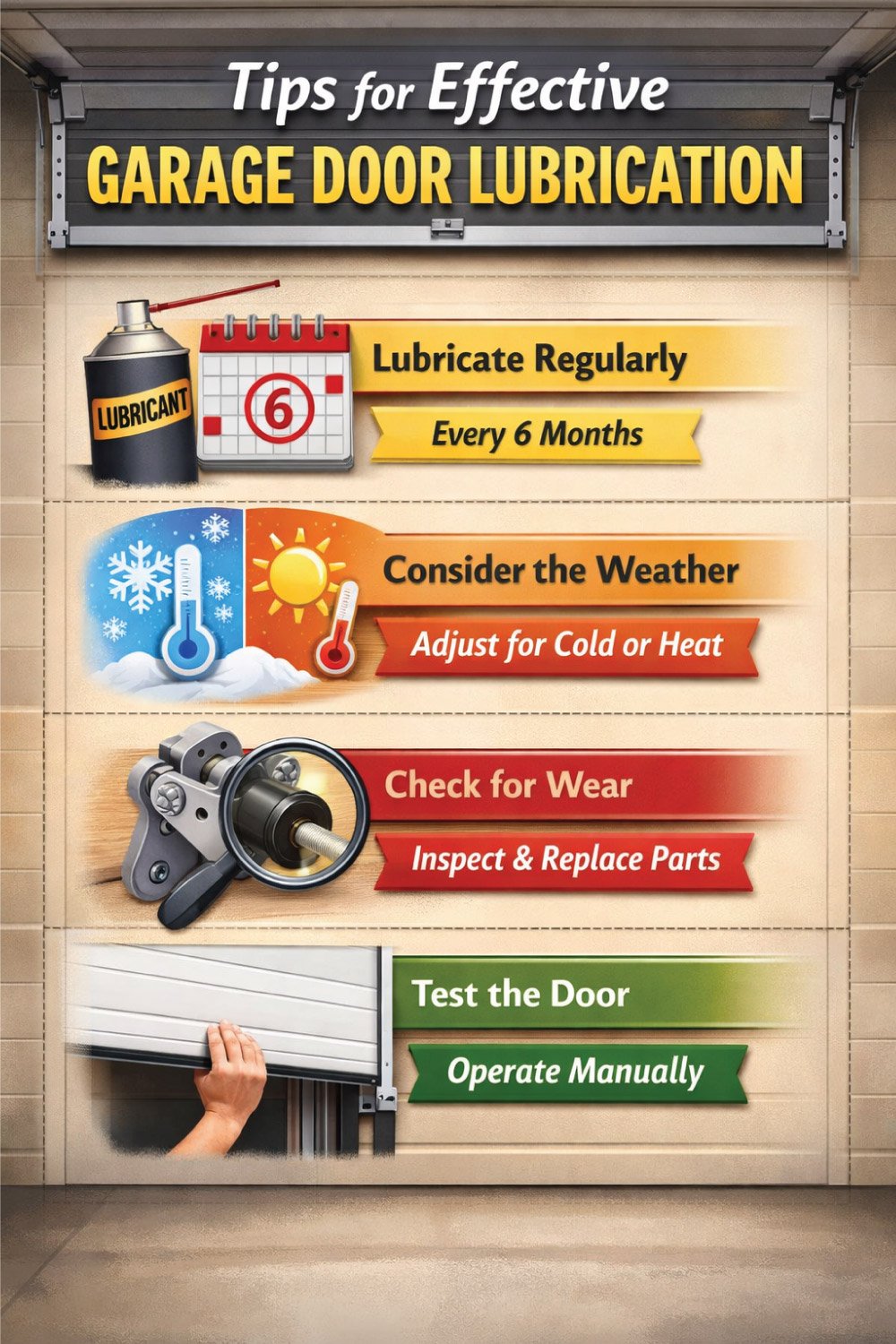
Frequency: Lubricate your garage door at least every 6 months. High-use doors may require more frequent maintenance.
Weather Consideration: Cold climates may cause lubricants to thicken; warm the lubricant slightly if necessary.
Check for Wear: During lubrication, inspect for worn or damaged parts and replace them promptly.
Manual Check: Move the door manually to ensure smooth operation after lubrication.
Also Read:
Common Mistakes to Avoid When Lubricating Garage Door Parts
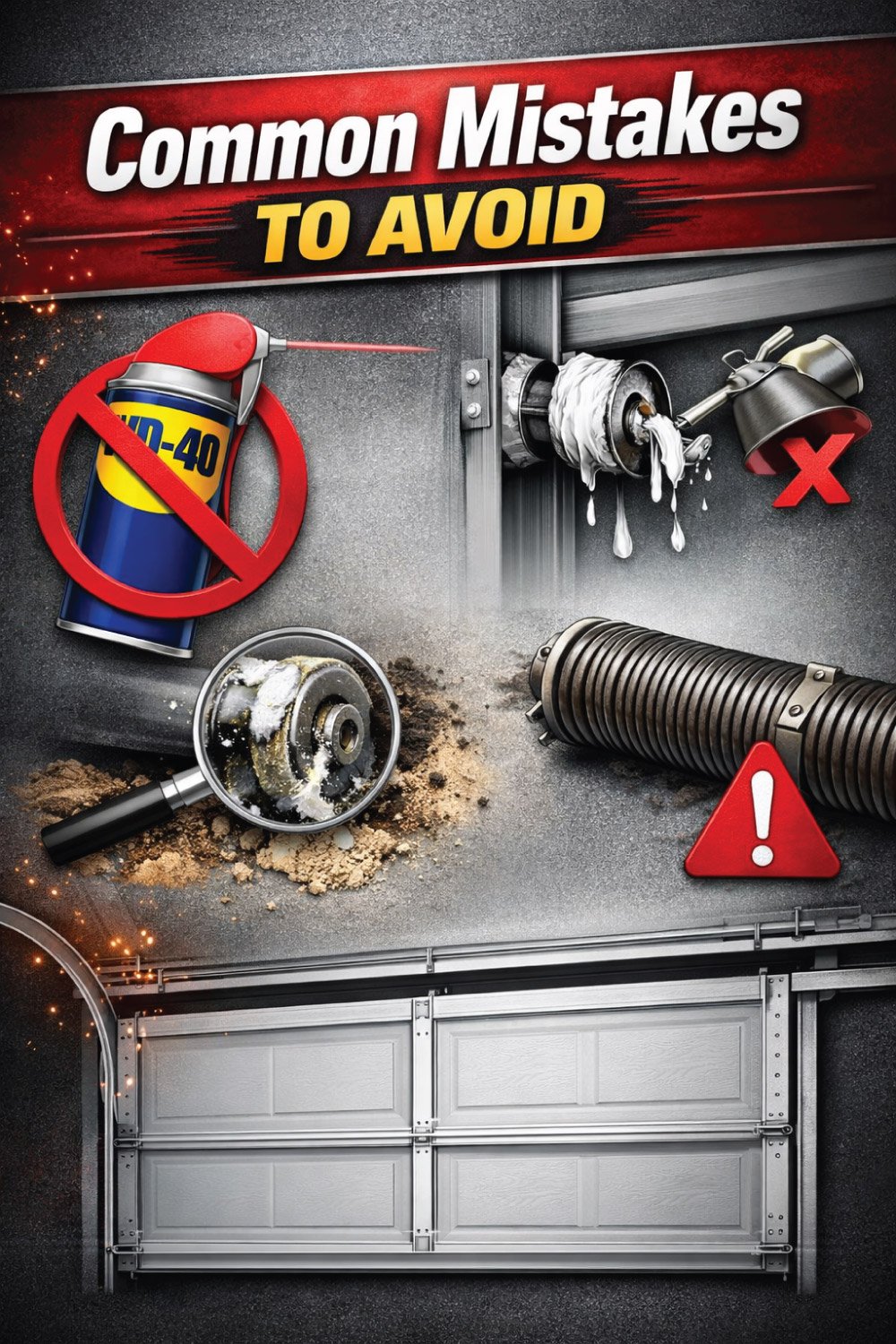
Lubricating a garage door may seem simple, but certain mistakes can cause more harm than good. Using the wrong lubricant, over-lubricating, or skipping dirty parts can lead to wear and damage. Proper attention to springs and correct application ensures smooth operation and extends the door’s lifespan.
| Mistake | Why to Avoid |
|---|---|
| Using WD-40 | It cleans but doesn’t lubricate, leading to squeaks and wear |
| Over-lubricating | Excess lubricant attracts dirt and can damage rollers |
| Lubricating dirty parts | Dirt and dust can mix with lubricant to form abrasive paste |
| Ignoring springs | Springs under tension are dangerous if not maintained carefully |
Also Read:
How to Know Your Garage Door Needs Lubrication
Keeping your garage door properly lubricated is essential for smooth, quiet, and safe operation. Certain warning signs—like squeaking, jerky movement, rusted parts, or stiffness—indicate it’s time for maintenance. Regularly checking and lubricating your door prevents wear and tear, extends the life of components, and helps avoid costly repairs.
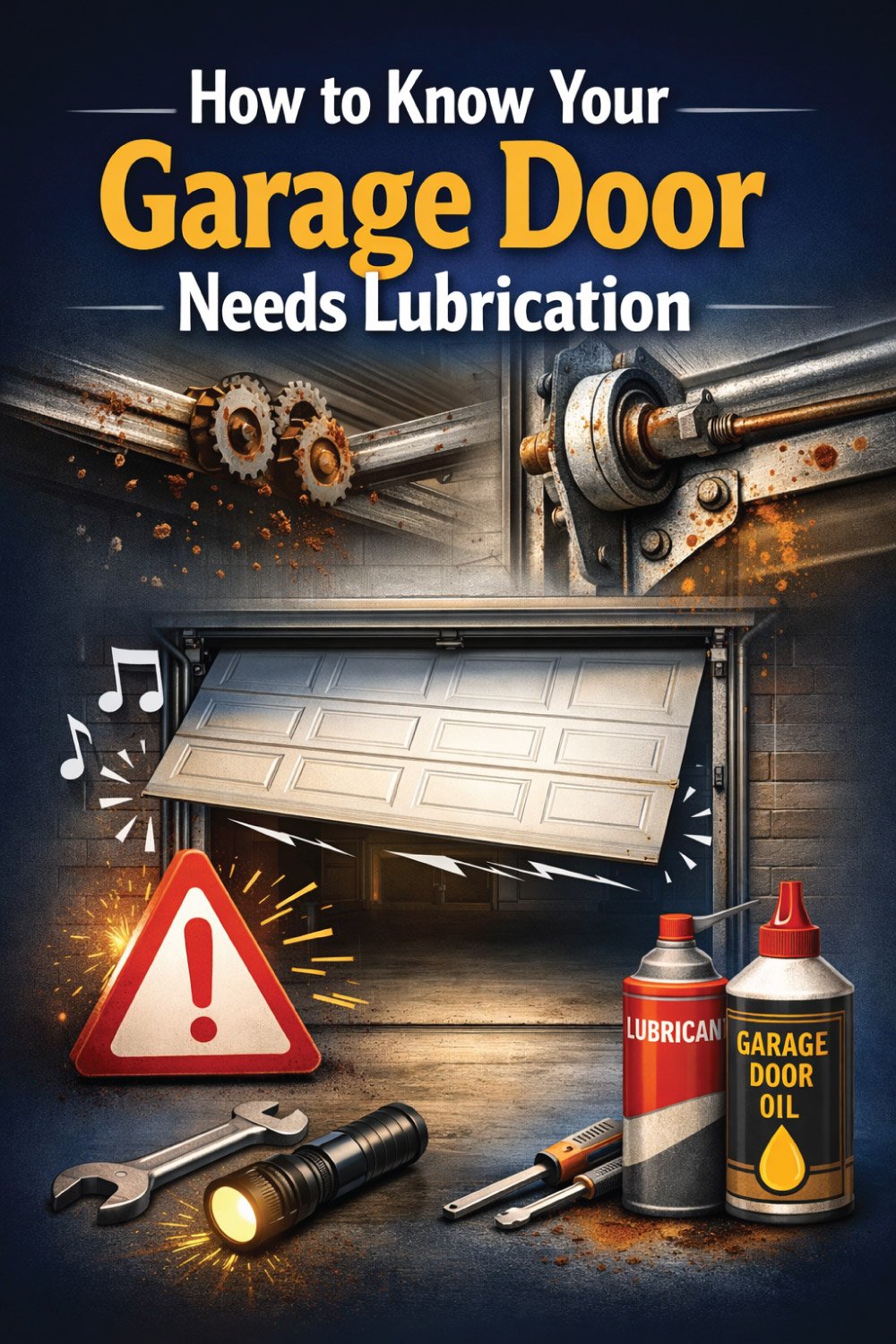
Loud squeaking or grinding noises
Slow or jerky movement
Visible rust on rollers or hinges
Stiff operation, even when manually moving the door
Regular inspection can prevent expensive repairs and ensure the door remains safe and functional.
Recommended Lubricants for Garage Doors
Choosing the right lubricant is key to keeping a garage door operating smoothly. Silicone and lithium-based products work best for rollers, hinges, and springs, while white lithium spray is ideal for opener chains or screw drives. Avoid oil-based lubricants, as they can drip, attract dirt, and stain floors.
| Lubricant Type | Suitable For | Notes |
|---|---|---|
| Silicone-based spray | Rollers, hinges, springs | Non-greasy, does not attract dust |
| Lithium-based grease | Rollers, hinges, springs | Long-lasting, excellent for metal parts |
| White lithium spray | Opener chains and screw drives | Reduces friction on moving parts |
Avoid oil-based lubricants that can drip and stain garage floors.
Also Read:
Final Thoughts on the Best Way to Lubricate a Garage Door
Lubricating your garage door is one of the easiest ways to prolong its life and keep it operating smoothly. By following the steps above, you can ensure quiet, efficient operation while reducing wear on expensive components. Regular maintenance is key—schedule lubrication at least twice a year and always follow safety precautions. A well-lubricated garage door not only works better but also improves home safety and reduces stress on the opener system. Don’t wait until your door starts squeaking or sticking—make lubrication part of your home maintenance routine.

Engineer Ali Hasan is a garage door expert and the founder of FixFasty. With over 16 years of experience in mechanical systems and home maintenance, he provides practical, step-by-step guides on garage door installation, repairs, and maintenance, helping homeowners keep their garage doors safe, reliable, and long-lasting.