
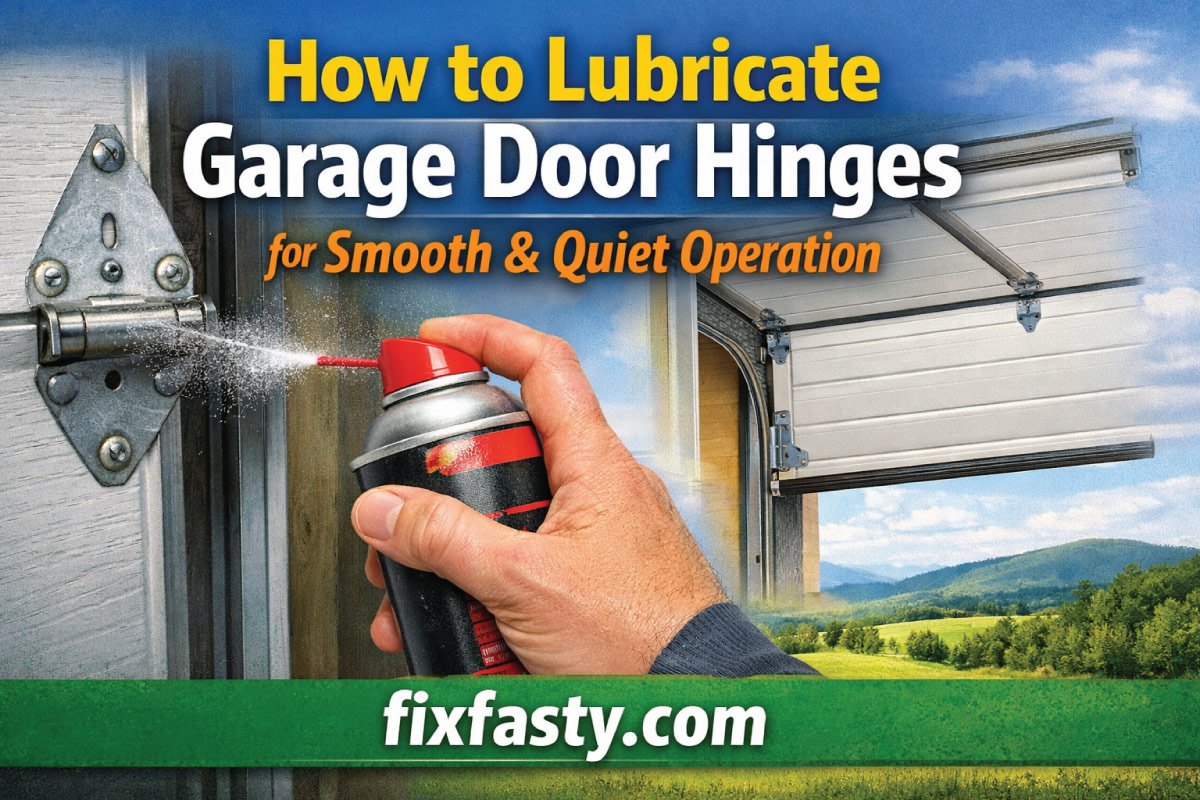
A noisy or squeaky garage door is not just annoying, it can indicate wear and tear that, if ignored, may lead to more expensive repairs. One of the most common causes of a creaky garage door is dry or unlubricated hinges. Proper hinge lubrication ensures smooth movement, quieter operation, and longer lifespan for your garage door.
In this detailed guide, we will cover everything from why hinges need lubrication, how to choose the right lubricant, step-by-step application, and a maintenance schedule to keep your door in top shape. Plus, we will include two helpful tables for quick reference.
Why Garage Door Hinges Need Lubrication
Garage door hinges play a crucial role in the smooth operation of your sectional garage door. These small metal connectors bend and twist every time the door opens or closes, making them prone to friction and wear.
Over time, dust, moisture, and metal-on-metal contact can lead to squeaking noises, jerky movement, and even rust. Regular lubrication reduces friction, protects against corrosion, and helps your door operate quietly and efficiently much like giving joints a little oil for smooth movement.
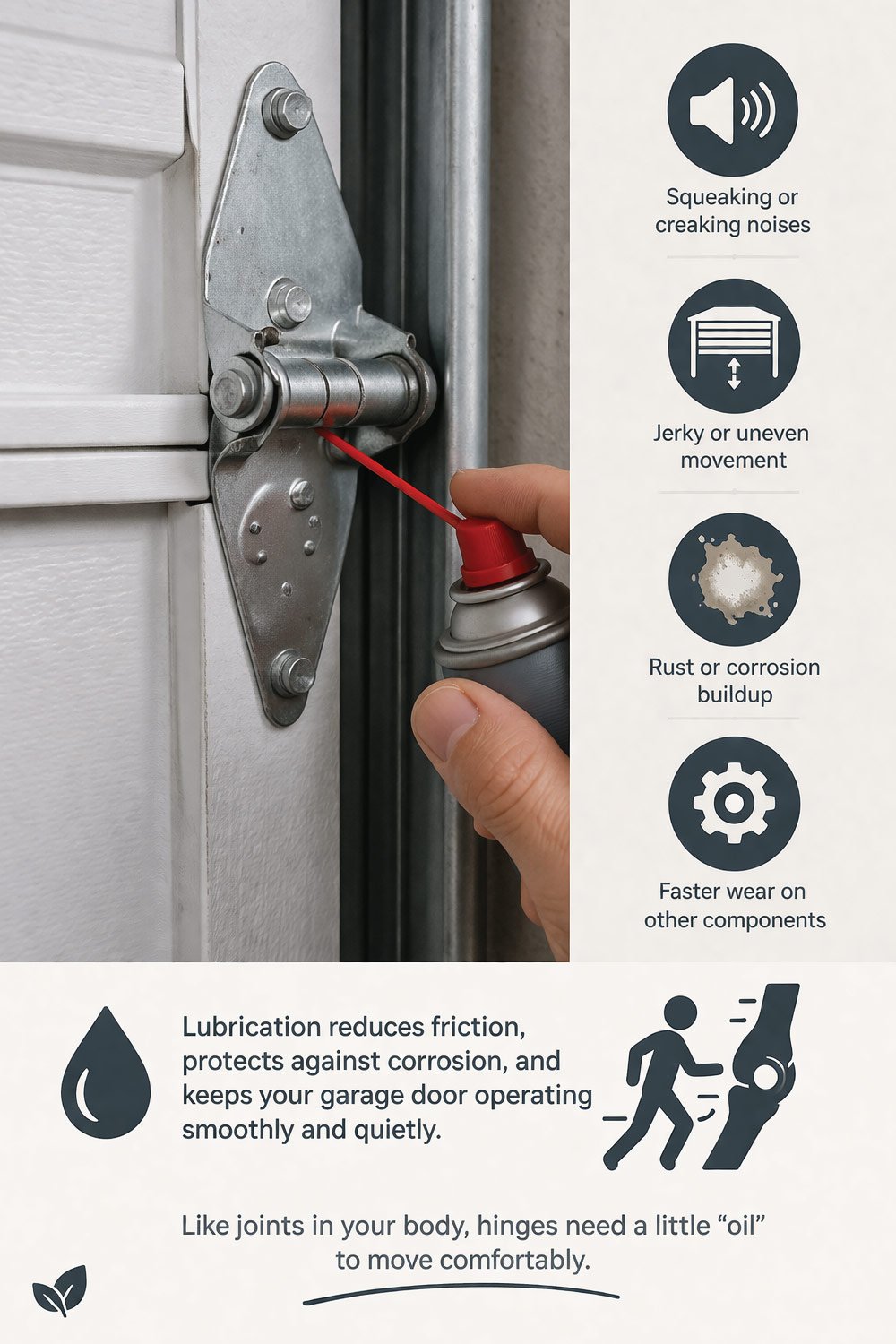
Squeaking or creaking noises
Jerky or uneven movement
Rust or corrosion buildup
Faster wear on other components
Lubrication minimizes friction and metal-on-metal wear, protects against corrosion, and ensures smoother operation. Think of hinges like the joints in a human body, they need a little “oil” to move comfortably.
Signs Your Garage Door Hinges Need Lubrication
You do not always need to take apart your garage door to know when the hinges need attention. Often, signs of lubrication issues are easy to notice during normal use.
Listen for loud squeaks or grinding sounds, watch for jerky movement, and check for visible rust or dry, dull metal.
Stiff hinges or a door that sticks near the end of its travel are also warning signs. Ignoring these issues can lead to costly damage to hinges, rollers, tracks, and springs.
- Loud squeaks or grinding sounds during operation
- Jerky or uneven door movement
- Visible rust or dry, dull metal on the hinges
- Hinges feeling stiff when manually moving them
- Door sticking or slowing down near the end of travel
If these signs appear, it’s time to lubricate. Ignoring them can lead to costly hinge replacement or damage to rollers, tracks, and springs.
Tools & Materials You will Need
Lubricating garage door hinges is a simple task, but having the right tools and materials makes the job safer and more effective. A step ladder helps you reach top hinges easily, while a clean cloth or soft brush removes dust and debris. Protective gloves keep your hands clean and safe from minor cuts.
Choosing the correct lubricant is equally important. Silicone spray, white lithium grease, or garage door–specific lubricants ensure smooth, long-lasting operation. Avoid using WD-40, as it’s a cleaner, not a proper lubricant, and can attract dirt over time.
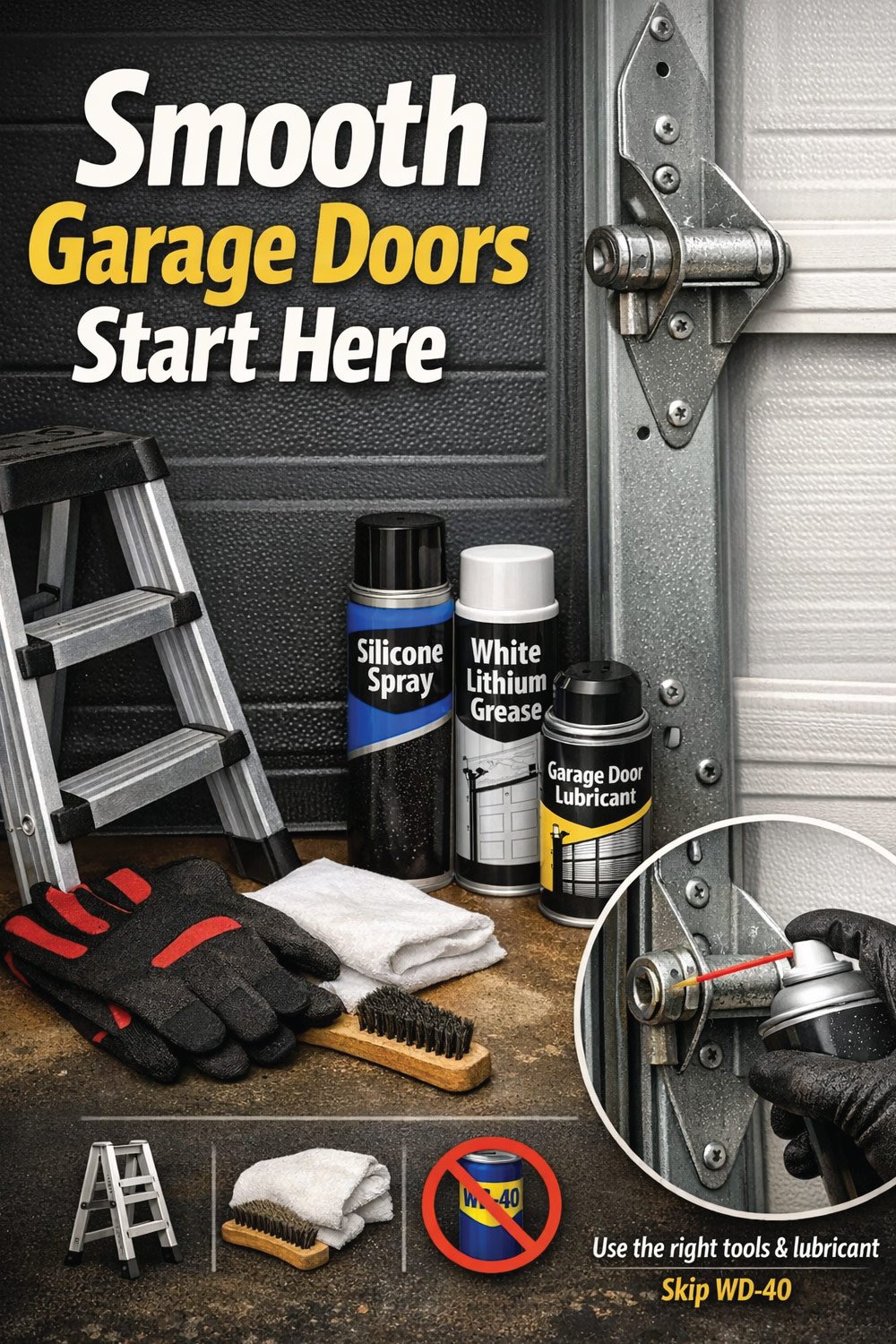
Essential Tools
Having the right tools makes garage door hinge lubrication safe, easy, and effective. These basic items help you reach, clean, and apply lubricant properly, ensuring better results and reducing the risk of damage or injury during routine maintenance tasks.
1- Step Ladder
A sturdy step ladder helps you safely access the top hinges of your garage door. It provides stability and proper height, allowing you to work comfortably and accurately without straining or risking falls while performing maintenance.
2- Clean Cloth or Rag
A clean cloth or rag is essential for removing dust, grime, and old lubricant from hinges. It also helps wipe away excess lubricant after application, preventing buildup and ensuring a clean, efficient lubrication process.
3- Soft Brush
A soft brush is useful for loosening stubborn dirt, rust, or debris from hinges before lubrication. Cleaning thoroughly ensures better lubricant penetration, improving hinge performance and extending the lifespan of your garage door components.
4- Protective Gloves
Wearing protective gloves keeps your hands clean and protects against sharp edges or minor cuts. It also prevents direct contact with lubricants, making the process safer and more comfortable during regular garage door maintenance.
Recommended Lubricants
Choosing the right lubricant is key to long-lasting results. High-quality options reduce friction, resist dust, and protect metal parts from wear and rust, ensuring smooth, quiet operation and extending the life of your garage door hinges.
1- Silicone Spray
Silicone spray is ideal for tight spaces and moving parts. It penetrates easily, provides long-lasting lubrication, and resists moisture. This makes it a great option for maintaining smooth hinge movement without attracting excessive dust or debris.
2- White Lithium Grease
White lithium grease is a heavy-duty lubricant designed for metal-to-metal contact. Its thick consistency provides strong protection against wear and tear, making it perfect for garage door hinges that experience frequent use and higher pressure.
3- Garage Door–Specific Lubricant
Garage door-specific lubricants are specially formulated for optimal performance. They offer superior protection, reduce noise, and last longer than general-purpose oils. Using these ensures your hinges and other components stay in top condition for extended periods.
Avoid WD-40: As a lubricant; it’s a cleaner, not a proper lubricant. Using it will only temporarily reduce noise and may attract dirt.
Best Lubricants for Garage Door Hinges
Choosing the right lubricant is key to keeping your garage door hinges working smoothly and quietly. Different products offer distinct benefits depending on the application, from water-resistant silicone sprays to thick, durable white lithium grease.
Garage door–specific lubricants provide long-lasting performance for the entire system, while cleaners like WD-40 are better suited for rust removal rather than ongoing lubrication.
For optimal results, apply a light coat and operate the door to ensure even distribution across all moving parts.
| Lubricant Type | Ideal Use | Pros | Cons |
|---|---|---|---|
| Silicone Spray | Hinges, rollers, pivot points | Clean, water-resistant, long-lasting | Slightly higher cost |
| White Lithium Grease | Metal hinges, pivot points | Thick, durable, excellent friction control | Can attract dust if over-applied |
| Garage Door Lubricant | Entire garage door system | Specifically formulated, long-lasting | Less widely available |
| WD-40 | Cleaning and rust removal | Removes dirt and rust quickly | Not suitable for long-term lubrication |
Tip: For best results, apply a light coat of lubricant, then move the door to distribute it evenly.
Step-by-Step Guide: How to Lubricate Garage Door Hinges
Maintaining your garage door hinges is essential for smooth operation and long-term durability. Lubricating them reduces friction, prevents squeaks, and extends the life of your door hardware. This step-by-step guide walks you through a safe and simple process, ensuring your hinges stay clean, well-lubricated, and fully functional with minimal effort.
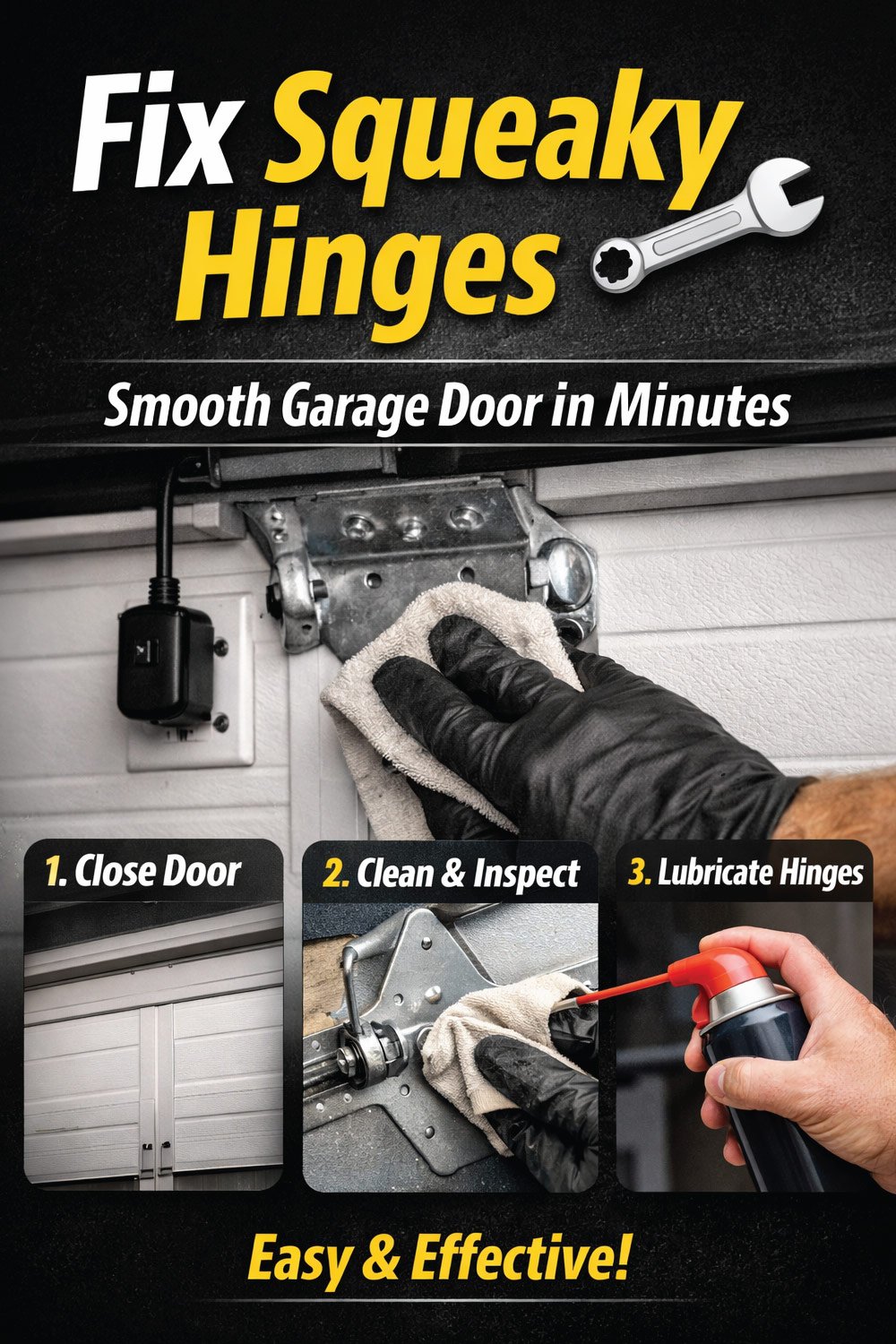
Step 1: Close the Garage Door Completely
Before you start any maintenance work on your garage door hinges, ensure the door is fully closed. This is a crucial safety precaution because an open or partially open door can have tension in the springs that may cause sudden movement, leading to injury. Closing the door fully relieves this tension and creates a stable position for safely accessing all hinge points.
Fully lower the garage door.
Ensure no objects are in the path of the door.
Verify that the door is stationary before beginning work.
Step 2: Disconnect the Garage Door Opener
For maximum safety, it’s essential to disconnect the automatic opener before lubricating your hinges. Even if the door seems stationary, the motor can engage accidentally, causing sudden movement. Unplugging the unit or pulling the emergency release cord ensures the door stays secure and prevents potential injuries while you work.
Unplug the garage door opener from the electrical outlet.
Engage the emergency release cord to detach the door from the motor.
Double-check the door cannot move on its own.
Step 3: Inspect Hinges
Before applying any lubricant, a careful inspection of the hinges is necessary. Look for visible signs of wear or damage that lubrication alone cannot fix. Identifying problems early can prevent accidents or costly repairs later. Rust, cracks, or loose screws should be addressed immediately.
Check for cracks, bends, or physical damage.
Ensure screws and mounting hardware are tight.
Look for signs of rust or corrosion that may affect hinge function.
Replace any damaged hinges before lubricating.
Step 4: Clean Hinges
Cleaning your garage door hinges before lubrication helps the new lubricant work effectively and last longer. Dirt, dust, and old grease can block smooth movement if not removed first. A clean surface ensures the lubricant reaches all moving parts, reducing friction and wear over time.
Wipe hinges with a clean rag to remove loose dirt.
Use a soft brush for hard-to-reach spots.
Remove old grease buildup completely before applying new lubricant.
Step 5: Apply Lubricant
Once hinges are clean, it’s time to lubricate. Focus on pivot points and all areas where metal rubs against metal. Using the right amount of lubricant prevents excess buildup, which can attract dirt and cause more friction. Proper lubrication improves hinge performance and extends the life of your garage door.
Apply lubricant to pivot points on each hinge.
Target all moving joints and metal-on-metal contact areas.
Use short, controlled bursts—avoid over-lubricating.
Tip: Use short bursts. Over-lubricating attracts dirt and debris, which can increase friction over time.
Step 6: Move the Door Manually
After applying lubricant, manually operate the door to help distribute the grease evenly. Opening and closing the door 2–3 times ensures that the lubricant reaches all internal hinge surfaces and moving joints. This step also helps you identify any areas that may need additional lubrication.
Lift the door manually, avoiding the opener.
Move the door slowly to distribute lubricant.
Observe any hinges that feel stiff or noisy for extra attention.
Step 7: Wipe Off Excess
Finally, remove any excess lubricant from the hinges and surrounding areas. Leftover lubricant can drip onto your garage floor or attract dust and debris, which may reduce hinge performance over time. Cleaning up ensures a neat workspace and prolongs the benefits of your maintenance efforts.
Use a clean cloth to wipe drips or overspray.
Check surrounding metal surfaces for any lubricant residue.
Dispose of cleaning materials safely.
Garage Door Maintenance Schedule
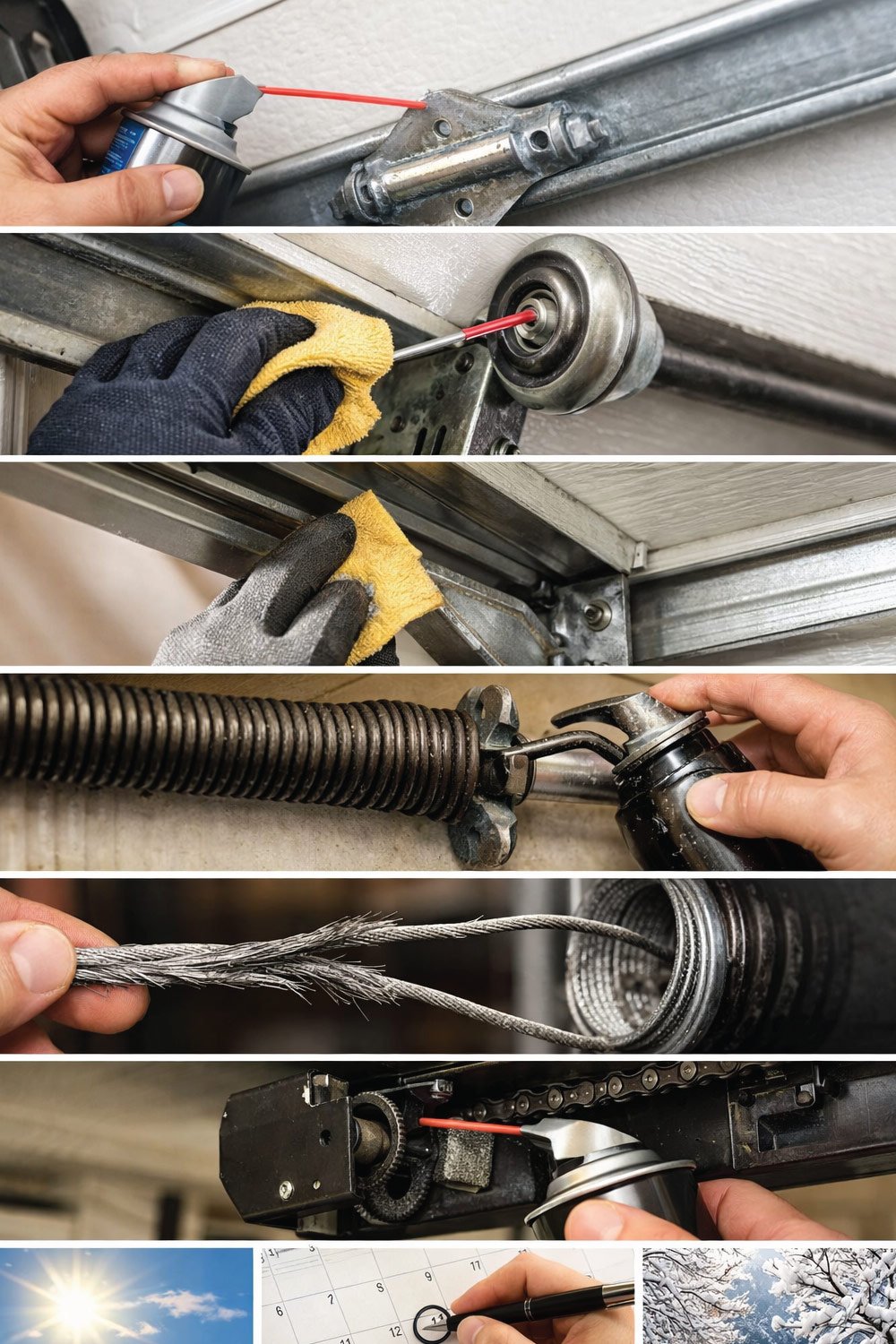
Regular garage door maintenance keeps your door operating smoothly, quietly, and safely. Proper care prevents premature wear, reduces repair costs, and extends the life of key components like hinges, rollers, tracks, springs, cables, and opener mechanisms.
Following a consistent schedule ensures that moving parts stay clean, lubricated, and free of damage. This guide outlines recommended maintenance intervals and actions, helping you stay on top of routine tasks and avoid unexpected issues while keeping your garage door in top condition year-round.
| Component | Frequency | Recommended Action |
|---|---|---|
| Hinges | Every 6 months | Clean and lubricate |
| Rollers | Every 6 months | Lubricate bearings |
| Tracks | Every 3–6 months | Clean, do not grease |
| Springs | Once per year | Light lubrication |
| Cables | Visual check | Inspect for wear, fraying |
| Opener chain/belt | Annually | Lubricate if applicable |
Pro Tip: Mark your calendar for hinge maintenance in spring and fall for best results. Frequent use or extreme weather may require more frequent lubrication.
Also Read: 👉 Learn the right way to lubricate your garage door for smooth, quiet performance and longer lifespan. This quick guide covers simple steps, best lubricants, and expert tips to avoid costly repairs. Don’t miss out—read the full post to keep your garage door running like new!
Common Mistakes to Avoid
Even simple maintenance can backfire if done incorrectly. Using the wrong lubricant, skipping rust issues, or over-applying grease can reduce hinge performance and cause noise or damage. Understanding common pitfalls helps you avoid mistakes, ensuring your garage door stays smooth, quiet, and long-lasting.
Wrong Lubricant: Household oils or WD-40 won’t protect hinges long-term.
Ignoring Rust: Severe rust needs hinge replacement before lubrication.
Over-Lubricating: Too much lubricant attracts dust and dirt, making noise worse.
Lubricating Tracks: Garage door tracks should remain clean. Grease here can make rollers slip.
How Often Should You Lubricate Garage Door Hinges?
Lubricating your garage door hinges regularly keeps the system quiet, smooth, and long-lasting. For most homes, applying lubricant twice a year is enough. However, factors like weather, dust, and frequent usage may require more frequent maintenance to keep everything running efficiently.
1- Standard Recommendation: Twice a Year
For typical households, lubricating hinges every six months maintains smooth performance. This routine prevents rust, reduces friction, and keeps your garage door operating quietly. Scheduling maintenance in spring and fall is a simple way to stay consistent year-round.
2- Coastal or Humid Environments
Moisture in humid or coastal areas can cause rust and corrosion on hinges. In these conditions, lubrication every 3–4 months is recommended. This extra care protects metal parts and ensures your garage door continues to function properly despite environmental challenges.
3- Dusty Garages
Garages exposed to dust, dirt, or debris need more frequent lubrication. Dust can mix with old lubricant and create buildup, affecting performance. Cleaning and lubricating hinges every 3–4 months helps maintain smooth movement and prevents unnecessary wear.
4- Heavy Daily Door Usage
If your garage door is used multiple times a day, hinges experience more stress and friction. In such cases, lubricating every 2–3 months keeps components in good condition, reduces strain, and prevents early failure.
Why Consistency Matters
Regular hinge lubrication prevents squeaks, reduces wear, and avoids costly repairs. It also extends the life of your garage door system. Staying consistent with this simple maintenance task ensures reliable, quiet operation throughout the year.
Benefits of Proper Garage Door Hinge Lubrication
Proper garage door hinge lubrication improves performance, safety, and durability. It reduces noise, ensures smooth movement, and prevents costly repairs. Regular maintenance protects components from wear and tear, extending your garage door’s lifespan. This simple task saves money and keeps your door operating efficiently for years.
1- Quieter Operation:
Lubricating garage door hinges helps eliminate annoying squeaks and creaks caused by friction. Over time, dust and dryness make hinges noisy. Applying the right lubricant creates a smooth surface, reducing sound and ensuring quiet operation every time you open or close your garage door.
2- Smoother Movement:
Well-lubricated hinges allow your garage door to move smoothly without jerks or sudden stops. Dry hinges can cause uneven motion and strain the opener. Regular lubrication ensures consistent performance, making your garage door open and close effortlessly while reducing stress on the entire system.
3- Reduced Wear:
Friction is the main cause of wear in garage door parts. Proper lubrication minimizes metal-to-metal contact, protecting hinges and nearby components. This reduces damage over time, helping your garage door last longer and preventing the need for frequent part replacements or expensive repairs.
4- Improved Safety:
Dry or damaged hinges can lead to serious safety issues like door misalignment or sudden failure. Lubrication keeps hinges functioning properly, reducing the risk of accidents. A well-maintained garage door system ensures safe operation and protects both your property and family.
5- Cost Savings:
Regular hinge lubrication is a small investment that prevents major repair costs. By keeping parts in good condition, you avoid breakdowns and extend your garage door’s lifespan. This simple maintenance step helps you save money while ensuring reliable long-term performance.
Also Read: 👉 Discover the complete guide to garage door lubrication for smooth, quiet, and long-lasting performance. Learn the best methods, tools, and expert tips to prevent wear and costly repairs. Whether you’re a beginner or DIY enthusiast, read the full guide to keep your garage door working perfectly year-round!
When to Call a Professional
Although lubricating hinges is a simple DIY task, some problems require professional attention. Signs like broken hinges, warped panels, damaged springs, or a door off its track indicate issues beyond routine maintenance. Consulting a trained garage door technician ensures these problems are addressed safely and correctly, preventing accidents and costly repairs.
Broken or bent hinges
Misaligned or warped door panels
Damaged or loose springs
Door off-track
Persistent loud grinding after lubrication
Professional garage door technicians have the right tools and safety expertise to handle serious issues safely.
Expert Tips for Long-Lasting Results
Applying the right techniques during garage door hinge lubrication ensures longer-lasting performance and fewer issues. By using proper products, keeping components clean, and following a consistent routine, you can maintain a quiet, smooth, and reliable garage door system for years.
1- Use Quality Lubricants
Choose high-quality options like silicone spray or lithium grease instead of basic household oils. These lubricants last longer, resist dust buildup, and provide better protection against wear, ensuring your hinges stay smooth and efficient over time.
2- Keep Hinges Clean
Before applying any lubricant, clean the hinges to remove dirt and debris. Dust can reduce effectiveness and create buildup. A clean surface allows the lubricant to work properly, improving performance and extending the life of your garage door components.
3- Check and Tighten Screws
Loose screws can affect hinge alignment and cause uneven movement. Inspect and tighten all screws before lubrication. This simple step ensures smoother operation and prevents unnecessary strain on the hinges and other garage door parts.
4- Avoid Over-Lubrication
Applying too much lubricant can attract dust and create sticky residue. A thin, even coat is enough to reduce friction and protect the hinges. Proper application keeps your garage door running efficiently without causing buildup issues.
5- Follow a Regular Schedule
Consistency is key for long-term results. Lubricating your garage door hinges twice a year helps maintain quiet and smooth operation. Sticking to a routine prevents wear, reduces repair costs, and keeps your system functioning reliably.
Conclusion
Learning how to lubricate garage door hinges is an easy, low-cost way to maintain your garage door. With just a few tools, the right lubricant, and 15–20 minutes of time, you can enjoy smooth, quiet, and reliable operation for years.
Regular hinge maintenance is more than convenience—it’s a way to protect your investment, enhance safety, and prevent unexpected repairs.
Make lubrication part of your routine, and your garage door will reward you with years of quiet and seamless performance.

Engineer Ali Usman is a professional garage door expert and author at FixFasty, with over 10 years of hands-on experience in garage door systems and mechanical maintenance. He writes clear, step-by-step guides on garage door repairs, parts, and safety practices, helping homeowners fix problems correctly and maintain smooth, secure, and long-lasting garage door performance.