
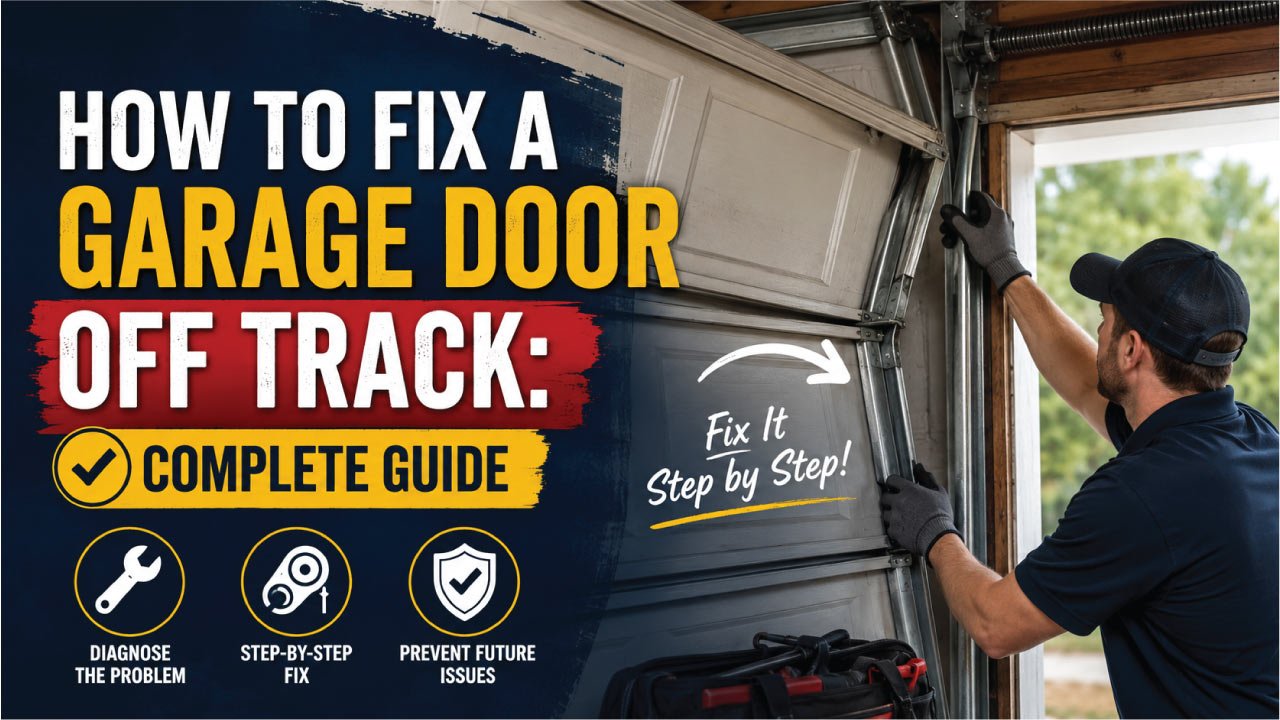
Common Signs of an Off-Track Garage Door
An off-track garage door usually shows clear warning signs before it completely stops working. Since the rollers are no longer moving correctly inside the tracks, the door may become unstable, noisy, or difficult to operate. Identifying these symptoms early can help prevent further damage and costly garage door repairs.
- The garage door looks crooked or uneven
- Rollers appear outside the metal tracks
- Grinding, scraping, or loud shaking noises
- The door gets stuck halfway while opening or closing
- One side moves faster than the other
- Visible gaps between the rollers and tracks
What Causes a Garage Door to Go Off Track?
A garage door can go off track for several reasons, usually related to impact damage, worn components, or poor maintenance. Since garage doors rely on balanced movement and properly aligned tracks, even a small problem can force the rollers out of position and stop the door from operating safely.
1. Hit by a Vehicle
One of the most common reasons a garage door goes off track is accidental impact from a car or truck. Even a slow bump can bend the tracks, damage the rollers, or shift the door alignment. This often causes the rollers to slip outside the track during operation.
2. Broken or Loose Rollers
Garage door rollers help the door move smoothly along the tracks. Over time, rollers can wear out, crack, loosen, or completely break due to regular use. When rollers stop moving properly, they may jump out of the track, causing the garage door to become stuck or uneven.
3. Bent Tracks
Garage door tracks must stay straight and properly aligned for safe operation. If the tracks become bent from impact, loose hardware, or excessive pressure, the rollers may no longer follow the correct path. This can cause shaking, grinding noises, and eventually force the door off track.
4. Broken Cables or Springs
Garage door springs and cables control the balance and lifting force of the door. When a cable snaps or a spring breaks, one side of the door may carry more weight than the other. This uneven tension can quickly pull the rollers out of the tracks during movement.
5. Lack of Maintenance
Poor garage door maintenance is a major cause of off-track problems. Dirt buildup, dry rollers, loose brackets, and missing lubrication increase friction and stress on the system. Without regular inspection and servicing, small issues can gradually damage the tracks and lead to serious alignment problems.
Is an Off-Track Garage Door Dangerous?
Yes, an off-track garage door can be very dangerous if ignored or forced to operate. Garage doors are extremely heavy and depend on properly aligned tracks, rollers, cables, and springs for safe movement. Once the door comes off track, the entire system becomes unstable, increasing the risk of serious injury, property damage, and costly mechanical failures.
- Damage the garage door opener system
- Bend or misalign the tracks even further
- Break springs, cables, or rollers completely
- Cause the garage door to fall suddenly
- Create safety risks for people and vehicles
- Put excessive strain on other door components
- Lead to expensive repairs if left unfixed
Can You Fix Garage Door Off-Track Yourself?
Some minor garage door off-track problems can be fixed by homeowners, especially if the issue is caused by slight track misalignment or loose hardware. However, garage door systems contain heavy moving parts and high-tension springs that can become extremely dangerous without proper tools, training, and safety precautions during the repair process.
- Small track alignment issues may be manageable for experienced DIY users
- Loose bolts or minor roller adjustments can sometimes be repaired safely
- Avoid forcing the door back into place manually
- Loose or damaged cables should always be handled professionally
- Broken torsion or extension springs are extremely dangerous
- A heavily tilted or jammed door may collapse unexpectedly
- Professional technicians have the proper tools and safety equipment for repairs
Tools You Will Need to Fix a Garage Door That Went Off Track
Fixing an off-track garage door requires more than basic DIY skills. Using the correct tools helps you safely realign the door, protect the tracks from further damage, and complete the repair process more efficiently without creating additional mechanical problems.
1. Locking Pliers or C-Clamps
Locking pliers or C-clamps are essential for securing the garage door in position while you work. They prevent the door from suddenly sliding down the tracks, helping reduce the risk of injury and making the repair process safer and more controlled.
2. Adjustable Wrench
An adjustable wrench is useful for loosening and tightening bolts, nuts, and brackets connected to the garage door tracks. Since garage door hardware comes in different sizes, this tool helps handle multiple adjustments during the repair process efficiently.
3. Socket and Ratchet Set
A socket and ratchet set makes it easier to remove tight or rusted fasteners commonly found on garage door assemblies. It provides better grip and leverage than standard hand tools, helping speed up repairs while reducing strain on your hands.
4. Rubber Mallet
A rubber mallet allows you to gently tap bent or misaligned tracks back into position without damaging the metal surface. Unlike a regular hammer, it helps correct alignment problems while minimizing dents, scratches, and unnecessary impact damage.
5. Screwdrivers
Both flathead and Phillips screwdrivers are commonly needed for adjusting brackets, hinges, and small hardware parts on a garage door system. Keeping multiple screwdriver sizes nearby helps ensure you can handle different screws during the repair process.
6. Level
A level helps confirm that the garage door tracks are properly aligned after adjustments are made. Uneven tracks can cause the door to become unstable or go off track again, making accurate leveling an important part of the repair.
7. Garage Door Lubricant
Garage door lubricant helps reduce friction between rollers, hinges, and tracks after repairs are completed. Applying proper lubrication improves door movement, decreases noise, and helps extend the life of important moving components within the garage door system.
8. Safety Gloves
Safety gloves protect your hands from sharp metal edges, dirty tracks, and accidental pinching while working on the garage door. They also provide a stronger grip on tools and hardware, helping improve control during adjustments and repairs.
9. Safety Glasses
Safety glasses help protect your eyes from rust particles, dust, loose debris, and metal fragments that may fall during the repair process. Wearing proper eye protection is especially important when working around damaged tracks or moving hardware components.
10. Ladder
A sturdy ladder provides safe access to upper rollers, tracks, and mounting brackets on the garage door system. Using a stable ladder helps you work more comfortably at height while reducing the risk of slips, falls, or poor positioning.
Safety Precautions When Fixing a Garage Door Off Track
Repairing an off-track garage door can be dangerous because garage doors are extremely heavy and operate under high spring tension. Following proper safety precautions helps reduce the risk of injury, prevents additional damage, and makes the repair process safer and more manageable.
1. Disconnect the Garage Door Opener
Always unplug the automatic garage door opener before starting any repair work. This prevents the door from accidentally moving while you are working on the tracks, rollers, or hardware, helping avoid sudden movement that could cause serious injury.
2. Keep the Door Secure Before Working
Use locking pliers or C-clamps below the rollers to hold the garage door in place. Securing the door prevents it from sliding down unexpectedly, especially if the tracks are damaged or the rollers have completely come off track.
3. Never Touch the Torsion Springs
Garage door torsion springs are under extreme tension and can cause severe injuries if handled incorrectly. Avoid adjusting, loosening, or removing springs unless you are professionally trained and have the correct tools designed for spring repairs.
4. Wear Proper Safety Gear
Always wear safety gloves and protective eyewear while repairing a garage door. Gloves help protect your hands from sharp metal edges, while safety glasses shield your eyes from rust, dust, or debris that may fall during the repair process.
5. Avoid Forcing the Door Open or Closed
Never force an off-track garage door to move manually or with the opener. Forcing the door can bend the tracks further, damage the rollers, strain the opener motor, and increase the risk of the door collapsing unexpectedly.
6. Inspect Cables for Damage Carefully
Check the garage door cables for fraying, looseness, or visible damage before starting repairs. Damaged cables can snap without warning and may cause the door to shift suddenly, making the repair process much more dangerous.
7. Use a Stable Ladder
If you need to reach upper tracks or rollers, always use a sturdy and properly balanced ladder. Avoid standing on unstable objects because poor positioning can lead to slips, falls, or loss of control while working at height.
8. Keep Children and Pets Away
Make sure children and pets stay completely away from the garage area during repairs. Garage doors contain heavy moving parts that can shift unexpectedly, creating serious safety hazards for anyone standing nearby during the repair process.
9. Stop if the Door Looks Severely Damaged
If the garage door is heavily tilted, hanging unevenly, or has broken springs and loose cables, stop the repair immediately. Severe structural damage often requires professional equipment and experience to fix safely without causing additional risks.
10. Call a Professional When Necessary
Some garage door repairs are too dangerous for DIY work, especially those involving springs, cables, or major track damage. Contacting a professional technician is the safest option when the problem appears beyond basic alignment or roller adjustments.
Step-by-Step Guide to Fix a Garage Door Off Track
An off-track garage door can become a serious safety problem if not repaired correctly. Following the proper repair process helps prevent additional track damage, protects the opener system, and restores smooth door movement. Always work carefully because garage doors are heavy and contain high-tension components.
Step 1. Disconnect the Garage Door Opener
Begin by unplugging the garage door opener and pulling the emergency release cord to separate the opener from the door. This prevents the system from activating accidentally while you work and allows you to move the garage door manually during inspection and repairs safely.
Step 2. Secure the Garage Door in Place
Place locking pliers or C-clamps below the rollers on both sides of the track to hold the garage door securely. This step is extremely important because an unstable garage door can suddenly slide down, causing injuries or creating additional damage to the tracks and rollers.
Step 3. Inspect the Tracks, Rollers, and Hardware
Carefully inspect the tracks, rollers, hinges, brackets, and cables for signs of bending, looseness, cracks, or damage. Dirt buildup and small obstructions can also push rollers out of alignment, so checking every moving part helps identify the exact cause of the problem.
Step 4. Loosen the Track Brackets Slightly
Using a wrench or socket set, slightly loosen the bolts holding the garage door track brackets in place. Do not remove the hardware completely. Creating a small amount of movement in the track makes it easier to guide the rollers back properly.
Step 5. Carefully Guide the Rollers Back Into the Track
Slowly move the garage door and position the rollers back inside the track opening one at a time. Avoid using excessive force because pushing too hard can bend the tracks further, damage the rollers, or create alignment problems that worsen over time.
Step 6. Straighten Minor Track Misalignment
If the tracks appear slightly bent or uneven, gently tap them back into alignment using a rubber mallet. Work slowly and check the track position frequently with a level because uneven tracks can cause the garage door to come off again later.
Step 7. Tighten All Bolts and Mounting Hardware
Once the rollers are correctly aligned inside the tracks, securely tighten every bracket, bolt, and mounting fastener. Loose hardware often contributes to garage door instability, so properly securing the entire track system helps maintain safe and smooth door operation after repairs.
Step 8. Lubricate Moving Garage Door Components
Apply garage-door-safe lubricant to the rollers, hinges, bearings, and tracks after the repair is complete. Proper lubrication reduces friction, minimizes grinding noises, improves door movement, and helps protect important components from unnecessary wear caused by repeated daily operation over time.
Step 9. Test the Garage Door Manually
Before reconnecting the opener, slowly lift and lower the garage door by hand several times. Manual testing allows you to check whether the rollers stay aligned, the tracks remain stable, and the door moves smoothly without sticking or becoming uneven.
Step 10. Reconnect the Opener and Perform Final Testing
Reconnect the automatic garage door opener and test the system using the wall switch or remote control. Watch the door carefully during operation and listen for unusual sounds because jerky movement, shaking, or loud noises may indicate additional adjustments are still needed.
Tips for Preventing Garage Door Off-Track Problems
Garage door off-track issues are often caused by poor maintenance, damaged rollers, loose hardware, or accidental impact. Following simple preventive maintenance steps regularly can help keep the garage door balanced, reduce repair costs, and improve the overall lifespan and safety of the entire system.
Inspect garage door tracks regularly for bends, loose brackets, gaps, dirt buildup, or alignment problems that could force rollers out of position during normal operation and eventually cause the garage door to derail unexpectedly.
Clean the tracks and rollers frequently to remove dust, debris, hardened grease, and small obstructions that may interfere with smooth movement and increase pressure on the garage door opener and track system.
Lubricate rollers, hinges, bearings, and springs every few months using a garage-door-safe lubricant to reduce friction, minimize wear, decrease noisy operation, and help maintain smooth and balanced garage door movement.
Tighten loose bolts, screws, brackets, and mounting hardware regularly because constant garage door vibration can slowly loosen components over time and create instability that increases the chances of the door going off track.
Signs You Should Call a Professional for an Off-Track Garage Door
Some garage door problems are too dangerous or complicated for a DIY repair. Knowing when to contact a professional technician can help prevent serious injuries, avoid additional damage to the garage door system, and ensure the repair is completed safely and correctly.
The garage door is heavily tilted, crooked, or hanging unevenly because this usually indicates serious track, cable, or spring problems that require professional repair tools and experience.
The torsion springs appear broken, stretched, or damaged since garage door springs are under extreme tension and can cause severe injuries if handled improperly during repairs or adjustments.
Garage door cables are loose, frayed, tangled, or disconnected because damaged cables can snap suddenly and cause the heavy door to fall unexpectedly during operation or repair attempts.
The tracks are severely bent, cracked, or pulled away from the wall, making it difficult to safely realign the garage door rollers without replacing damaged hardware or structural components.
The garage door opener continues straining, making loud noises, or failing to operate correctly after basic troubleshooting because the issue may involve internal motor damage or advanced mechanical problems.
The rollers repeatedly come off track even after adjustments and lubrication, which may indicate deeper alignment, balance, or structural issues within the garage door system that need professional inspection.
The garage door feels extremely heavy when lifted manually because this often signals broken springs or balance issues that can place dangerous pressure on both the opener and the tracks.
You notice unusual grinding, popping, snapping, or screeching sounds during operation because these noises can indicate serious hardware failure, track damage, or worn moving components requiring immediate professional attention.
The garage door panels are bent, cracked, or physically damaged after an accident or impact since structural damage can affect door balance, track alignment, and safe operation.
You are unsure about any part of the repair process or do not have the correct tools because garage doors are heavy mechanical systems, and improper repairs can create significant safety hazards.
Conclusion
A garage door off track problem should never be ignored because it can quickly turn into a serious safety and repair issue. In many cases, the problem starts with small warning signs like noisy operation, uneven movement, loose rollers, or bent tracks. Fixing these issues early can prevent expensive damage to the garage door opener, springs, cables, and track system.
If the damage is minor, carefully following the correct repair steps and safety precautions may help you fix the garage door off track yourself. However, if the door is heavily tilted, the cables are loose, or the springs are damaged, it’s always safer to call a professional garage door technician.
Regular garage door maintenance, proper lubrication, and routine inspections are the best ways to prevent future off-track problems and keep your garage door operating smoothly, safely, and reliably for years.
Also Read:

Engineer Ali Hasan is a garage door expert and the founder of FixFasty. With over 16 years of experience in mechanical systems and home maintenance, he provides practical, step-by-step guides on garage door installation, repairs, and maintenance, helping homeowners keep their garage doors safe, reliable, and long-lasting.