
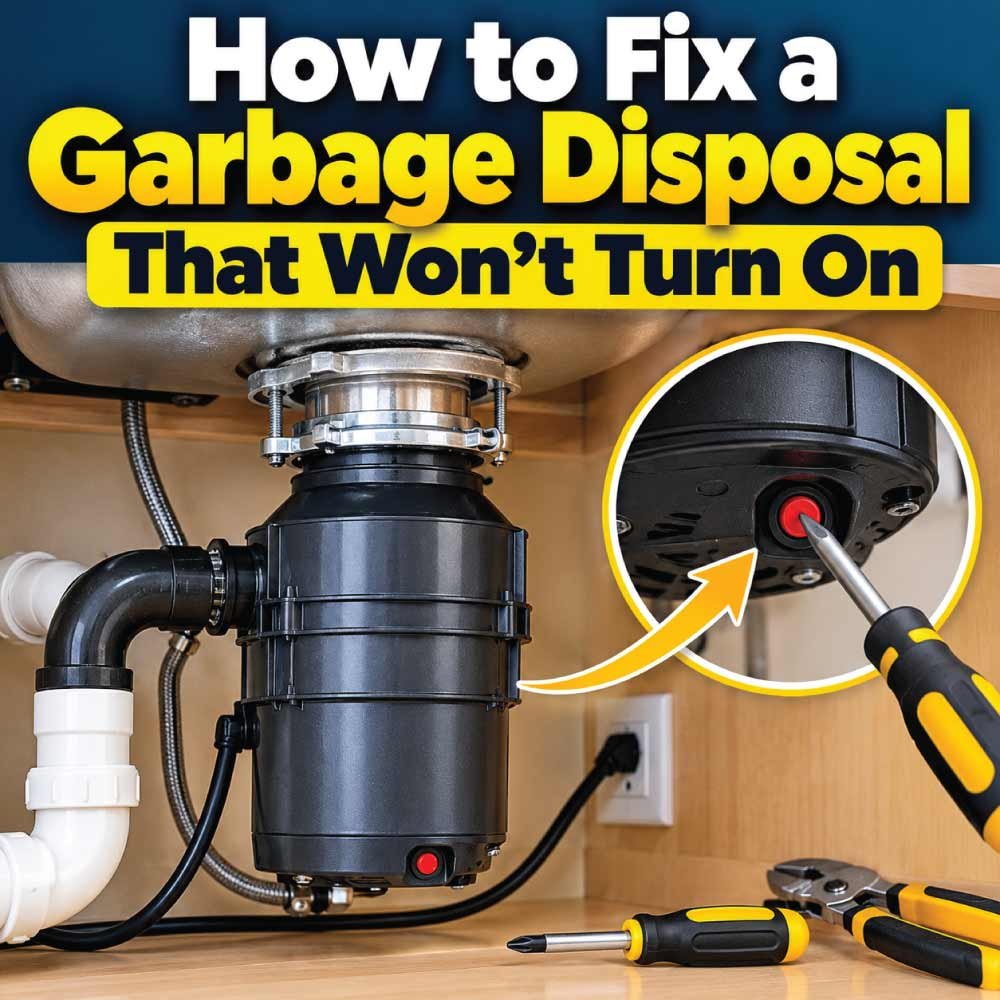
A garbage disposal that won’t turn on can interrupt your kitchen routine, especially when food scraps are left in the sink. The problem may be caused by a tripped reset button, a tripped circuit breaker, a jammed grinding mechanism, a faulty wall switch, or an electrical connection issue.
Before replacing the disposal, start with a few simple checks. Many common problems can be identified without removing the unit or taking apart its electrical components.
This guide explains how to fix a garbage disposal that won’t turn on, how to identify the likely cause, which tools you may need, and when to call a qualified professional. It also covers important safety precautions because garbage disposals contain sharp grinding components and connect to household electricity.
Quick Answer: How Do You Fix a Garbage Disposal That Won’t Turn On?
If your garbage disposal does not respond when you flip the switch, first check whether the unit has power. If it hums but does not grind, a jammed mechanism may be responsible. If it remains completely silent, the problem may involve the reset button, circuit breaker, wall switch, or disposal itself.
Follow these initial checks:
Turn the disposal switch off.
Check whether the unit is plugged in, if it uses a plug, without reaching into the sink or touching exposed wiring.
Look for a tripped reset button on the disposal.
Check the household circuit breaker if the unit still has no power.
If the disposal hums, switch it off immediately because the motor may be stalled.
Follow the manufacturer’s instructions to clear a jam using the designated tool and procedure.
Restore power only after the problem has been addressed and all tools have been removed.
Safety warning: Never put your hand or fingers inside a garbage disposal, even when it appears to be off. Before clearing a jam or working near the grinding mechanism, disconnect electrical power at the plug or circuit breaker and verify that the unit cannot start.
Common Reasons a Garbage Disposal Won’t Turn On
Understanding the symptoms can help you narrow down the cause without replacing the appliance unnecessarily.
1. Tripped Garbage Disposal Reset Button
Many garbage disposals have an overload protector that shuts the motor off if it overheats or becomes overloaded. A small reset button, commonly located on the underside of the unit, may pop out when this happens.
Possible signs include:
- The disposal suddenly stops working.
- The motor does not respond to the switch.
- The unit stops after processing a heavy load.
- The reset button has popped out.
Allow the motor to cool and check the reset procedure in the manufacturer’s instructions. If the button trips repeatedly, the unit may be jammed, overloaded, or experiencing another fault.
2. Tripped Circuit Breaker
A garbage disposal draws electrical current when operating. An overloaded circuit, electrical fault, or other problem may cause the circuit breaker to trip.
Look for these symptoms:
- The disposal is completely silent.
- Other devices on the same circuit have also lost power.
- The circuit breaker appears to be in a tripped position.
- The disposal stopped suddenly during operation.
A tripped breaker can sometimes be reset safely at the electrical panel, provided there are no signs of an electrical fault and the panel is safe to access. If it trips again, do not keep resetting it.
3. Jammed Grinding Mechanism
Food scraps, fibrous vegetables, bones, or foreign objects can prevent the grinding plate from rotating.
Typical signs include:
- A humming sound without grinding.
- The disposal stops while processing food.
- The motor starts briefly and then shuts off.
- The overload protector trips after an attempted start.
A jammed disposal should be switched off immediately. Continuing to energize a stalled motor can cause overheating and repeated overload shutdowns.
4. Faulty Wall Switch
The wall switch or air switch that controls the disposal may be faulty. Some disposals are controlled by a countertop air switch, while others use a conventional electrical switch.
Signs of a possible switch problem include:
- The disposal is silent despite having power.
- The reset button does not restore operation.
- The disposal works intermittently.
- The switch feels damaged or does not operate normally.
Electrical switch testing and replacement may require a qualified electrician, especially if the work involves opening an electrical box or handling wiring.
5. Loose Power Connection or Unplugged Unit
Some garbage disposals plug into an electrical outlet beneath the sink, while others are permanently wired.
A plug may have become disconnected during cabinet cleaning or plumbing work. A damaged cord or outlet can also prevent the disposal from receiving power.
Check only accessible external connections. Never handle exposed conductors or remove an electrical cover while the circuit is energized.
6. Failed Motor or Internal Electrical Component
If the disposal receives power but remains silent, or if the motor repeatedly overheats despite a clear grinding mechanism, an internal fault may be responsible.
Possible problems include a failed motor, damaged internal wiring, or a faulty electrical component.
These problems generally require professional diagnosis. Repeatedly pressing the reset button will not repair a failed motor or internal electrical fault.
Tools and Materials You May Need
The tools required depend on the problem and the manufacturer’s recommended procedure.
- Flashlight.
- Manufacturer-approved disposal wrench or hex key, if applicable.
- Wooden tongs or long-handled pliers for retrieving an accessible foreign object after power is disconnected.
- Small container for any removed object.
- Replacement reset button or other parts only if specified for the model and diagnosed as necessary.
You may not need any tools if the problem is simply a tripped reset button or circuit breaker.
Never use your fingers to retrieve objects from the disposal. Do not use an improvised tool that could become trapped in the grinding mechanism.
Safety Precautions Before Repairing a Garbage Disposal
Garbage disposals combine electricity, water, and sharp grinding components. Take these precautions before troubleshooting.
Disconnect power before clearing a jam. Unplug the unit or turn off the correct circuit breaker. A wall switch alone is not sufficient protection.
Never reach inside the disposal. Use a flashlight to inspect the opening and an appropriate tool to retrieve an accessible object.
Keep electrical connections dry. Do not touch plugs, outlets, or electrical components with wet hands.
Do not remove electrical covers while energized. Wiring inspections and electrical repairs should be handled by a qualified professional when appropriate.
Never bypass the reset mechanism or overload protection. These features help protect the motor.
Avoid using chemical drain cleaners. They may damage plumbing components and can create a hazard if someone later works on the disposal.
Stop if you smell burning or see smoke. Disconnect power only if it is safe to do so, and seek professional assistance.
If the disposal is hardwired and you cannot confidently isolate its circuit, do not attempt jam removal or internal repair.
Step-by-Step: How to Fix a Garbage Disposal That Won’t Turn On
Work through these steps in order. Start with basic power checks before attempting to clear a jam.
Step 1: Determine Whether the Disposal Is Silent or Humming
Turn the disposal switch on briefly only if there are no signs of electrical damage, burning, leaking, or an obvious obstruction.
Observe what happens:
Completely silent: The unit may not be receiving power, the reset protector may have tripped, or an electrical component may have failed.
Hums but does not grind: The motor may be receiving power but unable to rotate because of a jam.
Starts and stops: The motor may be overheating, the overload protector may be activating, or an electrical fault may be present.
Trips the breaker immediately: Stop testing. An electrical fault or mechanical problem may require professional attention.
If the motor hums without turning, switch it off immediately. Do not keep trying to start it.
Step 2: Check the Power Connection
If the disposal is completely silent, determine how it receives power.
For a plug-in model, look beneath the sink to see whether the power cord is visibly connected to its outlet. Do not pull on the cord or touch damaged electrical components.
For a hardwired model, do not remove covers or inspect internal wiring yourself unless you are qualified to perform that work safely.
If the plug is disconnected and the cord, outlet, and surrounding area are dry and undamaged, reconnect it securely. Then test the disposal only after confirming that the grinding mechanism is not jammed.
If the outlet appears damaged, feels hot, produces sparks, or has signs of moisture, do not use it. Contact an electrician.
Step 3: Press the Reset Button
If the unit still does not turn on, check its overload reset button.
- Turn the wall switch off.
- Disconnect electrical power at the plug or circuit breaker.
- Locate the reset button, usually on the bottom of the disposal housing.
- If the button has popped out, allow the motor to cool according to the manufacturer’s instructions.
- Press the button only when the unit is cool and the manufacturer permits resetting at this stage.
- If it will not stay depressed, wait longer and check the manufacturer’s troubleshooting instructions.
Do not repeatedly press a reset button that will not stay in place.
If the reset button stays in place, restore power and test the disposal briefly, provided the grinding mechanism is clear.
If the unit works again, monitor it during normal use. If the overload protector trips repeatedly, investigate the underlying cause rather than relying on repeated resets.
Step 4: Check the Circuit Breaker
If the disposal remains silent, the circuit breaker may have tripped.
- Turn the disposal switch off.
- Locate the household electrical panel if it is safe and accessible.
- Look for a breaker in the tripped position.
- Follow the panel instructions to reset it if there are no signs of electrical damage or a fault.
- Return to the disposal only after the circuit has been restored safely.
If the breaker trips again when you try to operate the disposal, stop using the unit and contact a qualified electrician or appliance professional.
Do not repeatedly reset a breaker that will not remain on. Do not remove the panel cover or touch internal electrical components.
Step 5: Clear a Jammed Disposal
If the disposal hums but does not turn, a jam may be preventing the grinding plate from rotating.
Always disconnect power before attempting this repair.
Turn off the wall switch.
Unplug the disposal or switch off its circuit breaker.
Confirm that the unit cannot start.
Use a flashlight to inspect the sink opening from above without placing your hand inside.
If a foreign object is visible and safely reachable, remove it with suitable long-handled tongs or pliers.
If your disposal has a manufacturer-provided hex socket on the bottom, use the specified wrench to work the mechanism back and forth as instructed.
Stop if the mechanism will not move, the wrench slips, or unusual resistance remains.
Remove the wrench and any other tools before restoring power.
Not every disposal has a bottom-mounted hex socket. Some models use different jam-clearing procedures, so follow the instructions for your specific unit.
Do not insert a broom handle or other object into the grinding chamber unless the manufacturer explicitly recommends that method. Avoid improvised procedures that could damage the unit or cause an object to become trapped.
Step 6: Allow the Motor to Cool
If the disposal stopped after processing a large amount of food or after repeated attempts to start, its overload protector may have activated.
After disconnecting power, allow the unit to cool for the period recommended by the manufacturer.
Once it has cooled, make sure the grinding mechanism is clear and follow the recommended reset procedure.
If the motor overheats again during normal operation, stop using the disposal. A recurring problem may indicate a persistent jam, excessive load, electrical issue, or failing motor.
Step 7: Test the Disposal Safely
After addressing the likely cause, restore power and test the unit.
- Make sure all tools and removed objects are clear of the sink and disposal.
- Confirm that any guards or covers removed during approved maintenance are correctly restored.
- Turn on cold water if required by the manufacturer’s operating instructions.
- Switch on the disposal briefly.
- Listen for normal operation and check for unusual vibration, grinding, or humming.
- Turn it off if it does not start normally.
If the disposal runs normally, continue using it according to the manufacturer’s instructions. If it remains silent, hums without rotating, or trips the breaker, stop testing and arrange further diagnosis.
Also Read:
Troubleshooting: What the Symptoms Mean
The disposal’s behavior can help you decide what to check next.
| Symptom | Possible Cause | Recommended Action |
|---|---|---|
| Completely silent | No power, tripped reset, faulty switch, or internal electrical fault | Check the external power connection, reset button, and breaker |
| Hums but does not rotate | Jammed grinding mechanism | Disconnect power and follow the model-specific jam-clearing procedure |
| Reset button keeps tripping | Persistent jam, overheating, overload, or motor problem | Stop repeated resets and investigate the cause |
| Breaker trips immediately | Possible electrical fault or mechanical problem | Stop using the unit and contact a qualified professional |
| Disposal starts intermittently | Possible switch, connection, or internal component fault | Stop using it if the problem persists and arrange diagnosis |
| Burning smell or smoke | Possible overheating or electrical failure | Stop operation, isolate power only if safe, and seek professional help |
| Disposal runs but drains slowly | Possible drain blockage rather than a power problem | Investigate the drain separately after disconnecting disposal power where necessary |
These symptoms indicate possible causes, not confirmed diagnoses. More than one fault can produce similar behavior.
Common Mistakes to Avoid
Avoid these mistakes when troubleshooting a garbage disposal that will not turn on:
Continuing to run a humming disposal: A stalled motor can overheat.
Putting your hand inside the grinding chamber: Always use suitable tools and keep fingers out.
Relying on the wall switch for safety: Disconnect power at the plug or breaker before clearing a jam.
Repeatedly pressing the reset button: Recurring trips indicate an underlying problem.
Resetting a repeatedly tripping circuit breaker: This may expose you to an electrical hazard.
Using chemical drain cleaners: These products can create hazards and may damage plumbing components.
Using the wrong wrench or excessive force: This can damage the disposal’s mechanism.
Assuming every silent disposal has a failed motor: Power supply problems and reset protection should be checked first.
A careful troubleshooting process helps distinguish between a simple interruption and a problem that requires professional repair.
Also Read:
When to Call a Professional
Some garbage disposal problems are not suitable for DIY repair.
Contact a qualified professional if:
- The circuit breaker trips repeatedly.
- The reset button will not stay depressed after the motor has cooled.
- The grinding mechanism remains jammed after the manufacturer’s recommended procedure.
- The motor hums but cannot rotate after the jam has been cleared.
- You smell burning, see smoke, or notice melted or damaged wiring.
- Water is leaking from the disposal housing or electrical area.
- The disposal is hardwired and electrical isolation is uncertain.
- The unit makes unusual mechanical noises or vibrates excessively.
- You suspect a failed motor, internal wiring fault, or damaged electrical switch.
Use a qualified electrician for suspected household wiring, switch, outlet, or circuit problems. A plumber or qualified appliance technician may be appropriate for disposal mounting, drain connections, mechanical problems, and unit replacement.
If smoke or fire is present, move away from the hazard and contact emergency services as appropriate. Do not handle a wet or damaged electrical unit.
Repair or Replace a Garbage Disposal?
The best choice depends on the unit’s condition and the cause of the failure.
Repair may be worthwhile when:
- The problem is a tripped reset button.
- The disposal has a removable jam.
- An accessible power connection was disconnected.
- A replaceable external switch or other serviceable component is faulty.
- The unit is otherwise in good condition.
Replacement may be more practical when:
- The motor has failed.
- The housing is cracked or leaking.
- Internal corrosion or electrical damage is extensive.
- The unit repeatedly fails despite appropriate repairs.
- Replacement parts are unavailable or repair costs are unreasonable compared with a new unit.
Never replace a disposal simply because it will not turn on until you have ruled out basic power and reset issues. Conversely, do not keep repairing a unit with serious electrical damage or a leaking housing.
If you rent your home, contact the property manager before replacing the disposal or undertaking repairs beyond basic troubleshooting.
How to Prevent Garbage Disposal Problems
Proper operation and routine care can reduce the likelihood of jams and unexpected shutdowns.
Run cold water as directed. Follow the manufacturer’s instructions for water flow during operation.
Feed food scraps gradually. Avoid overloading the disposal with a large amount of waste at once.
Avoid unsuitable materials. Follow the manufacturer’s restrictions on fibrous foods, hard materials, grease, and other waste.
Do not pour grease down the disposal. Grease can contribute to drain blockages as it cools and accumulates.
Keep utensils and foreign objects out of the sink opening. Small objects can obstruct the grinding mechanism.
Stop immediately if the motor hums without grinding. Continuing to run it may cause overheating.
Inspect for leaks periodically. Moisture around the housing or connections should be addressed promptly.
Follow the manufacturer’s maintenance instructions. Cleaning and operating recommendations vary by model.
Avoid putting your hand inside the disposal to remove scraps, even during routine cleaning.
Frequently Asked Questions
1. Why is my garbage disposal completely silent when I turn it on?
A silent disposal may have lost power, tripped its overload reset, or developed a fault in the switch, wiring, or motor. Start by checking the external power connection, reset button, and circuit breaker, provided there are no signs of electrical damage. If these checks do not resolve the problem, seek professional diagnosis.
2. Why does my garbage disposal hum but not turn on?
A humming sound usually means the motor is receiving power but cannot rotate normally. A jammed grinding mechanism is one possible cause. Switch the unit off immediately, disconnect power, and follow the manufacturer’s jam-clearing instructions. Do not continue running a stalled motor.
3. Where is the reset button on a garbage disposal?
On many models, the reset button is located on the bottom of the disposal housing. Its position and appearance vary by manufacturer. Consult the owner’s manual if you cannot find it, and allow the motor to cool before following the recommended reset procedure.
4. How do I know if my garbage disposal motor is burned out?
A failed motor is one possible explanation if the unit remains inoperative despite a verified power supply and appropriate troubleshooting. However, a faulty switch, electrical connection, or other internal component can cause similar symptoms. Burning smells, smoke, repeated overheating, or persistent humming warrant stopping use and arranging professional diagnosis.
5. Can I reset a garbage disposal while it is jammed?
Do not repeatedly reset or energize a disposal while the grinding mechanism is jammed. Disconnect power, clear the obstruction using the manufacturer’s approved procedure, and allow the motor to cool before resetting it as directed. If the mechanism will not move freely, stop and seek assistance.
6. Should I replace my garbage disposal if the reset button keeps tripping?
Not necessarily. Repeated tripping can result from a jam, overheating, excessive loading, or an electrical or motor problem. Identify the underlying cause before deciding whether the unit needs repair or replacement. If the problem continues after a proper jam check and cooling period, consult a qualified professional.
Conclusion
When a garbage disposal won’t turn on, begin by identifying whether the unit is completely silent, humming without grinding, or repeatedly losing power. Check the reset button and circuit breaker, then investigate a possible jam only after disconnecting electrical power.
Never reach into the grinding chamber, repeatedly run a stalled motor, or keep resetting a circuit that trips again. If the disposal remains inoperative, leaks, smells burnt, or shows signs of electrical damage, stop troubleshooting and contact a qualified professional. A careful diagnosis can help you determine whether a simple reset, a mechanical repair, or a complete replacement is the right solution.

Engineer Ali Hasan is a garage door expert and the founder of FixFasty. With over 16 years of experience in mechanical systems and home maintenance, he provides practical, step-by-step guides on garage door installation, repairs, and maintenance, helping homeowners keep their garage doors safe, reliable, and long-lasting.