
Your garage door is one of the hardest-working systems in your home. It opens and closes thousands of times a year, protects your vehicles and belongings, adds curb appeal, and often serves as a primary entry point for your family. Yet despite its importance, the garage door is frequently overlooked until something goes wrong.
The good news? With regular care and a few simple maintenance habits, you can keep your garage door working like new all year long. Proper upkeep not only improves performance and safety but also extends the lifespan of your door and saves you money on costly repairs.
In this comprehensive guide, we will walk you through everything you need to know to maintain your garage door through every season.
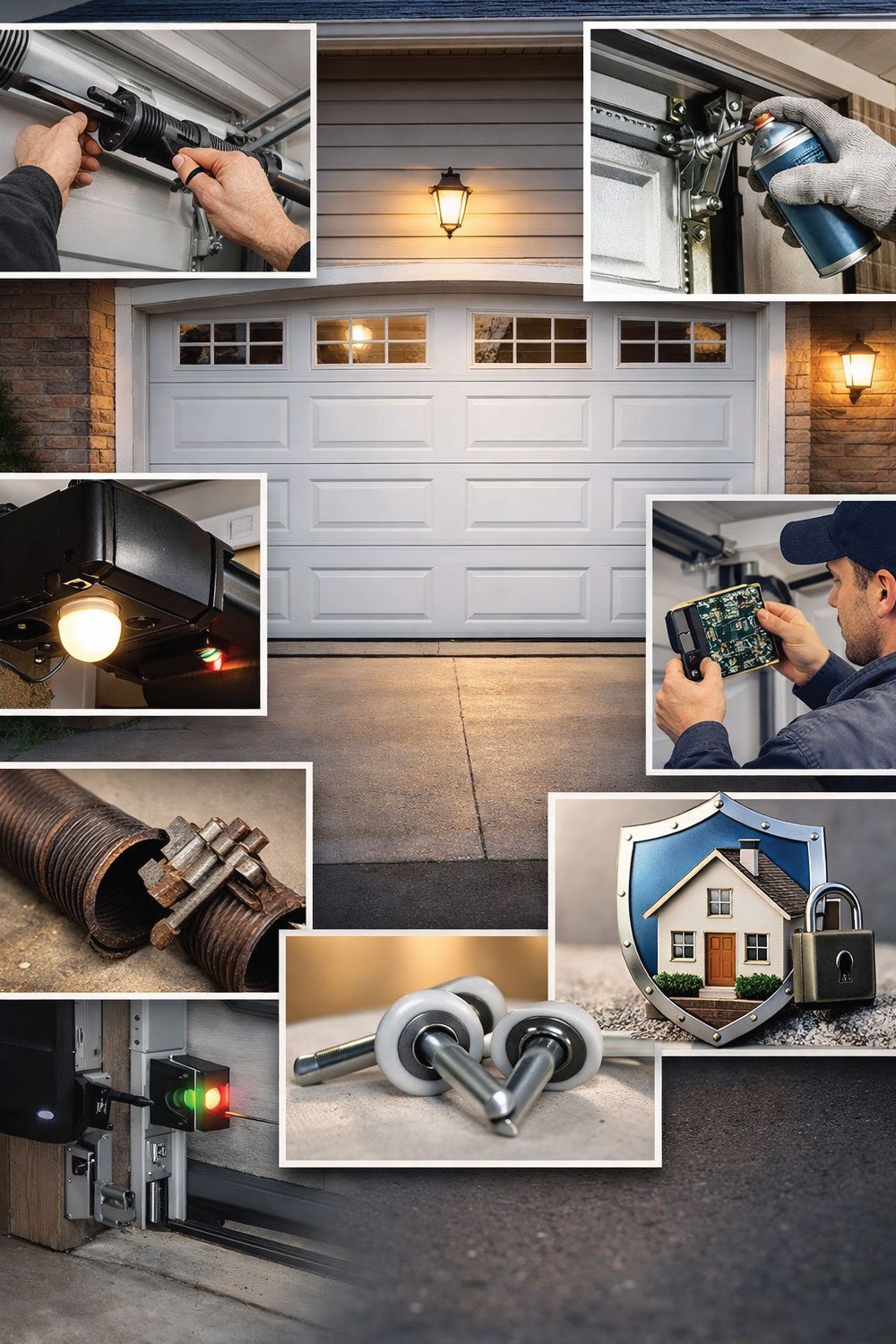
Monthly Visual Inspections: Your First Line of Defense
A quick monthly inspection can catch small issues before they become major problems. Taking a few minutes to visually assess your garage door helps identify wear and tear early, ensuring safe operation and preventing unexpected failures that could disrupt your daily routine or require costly repairs.
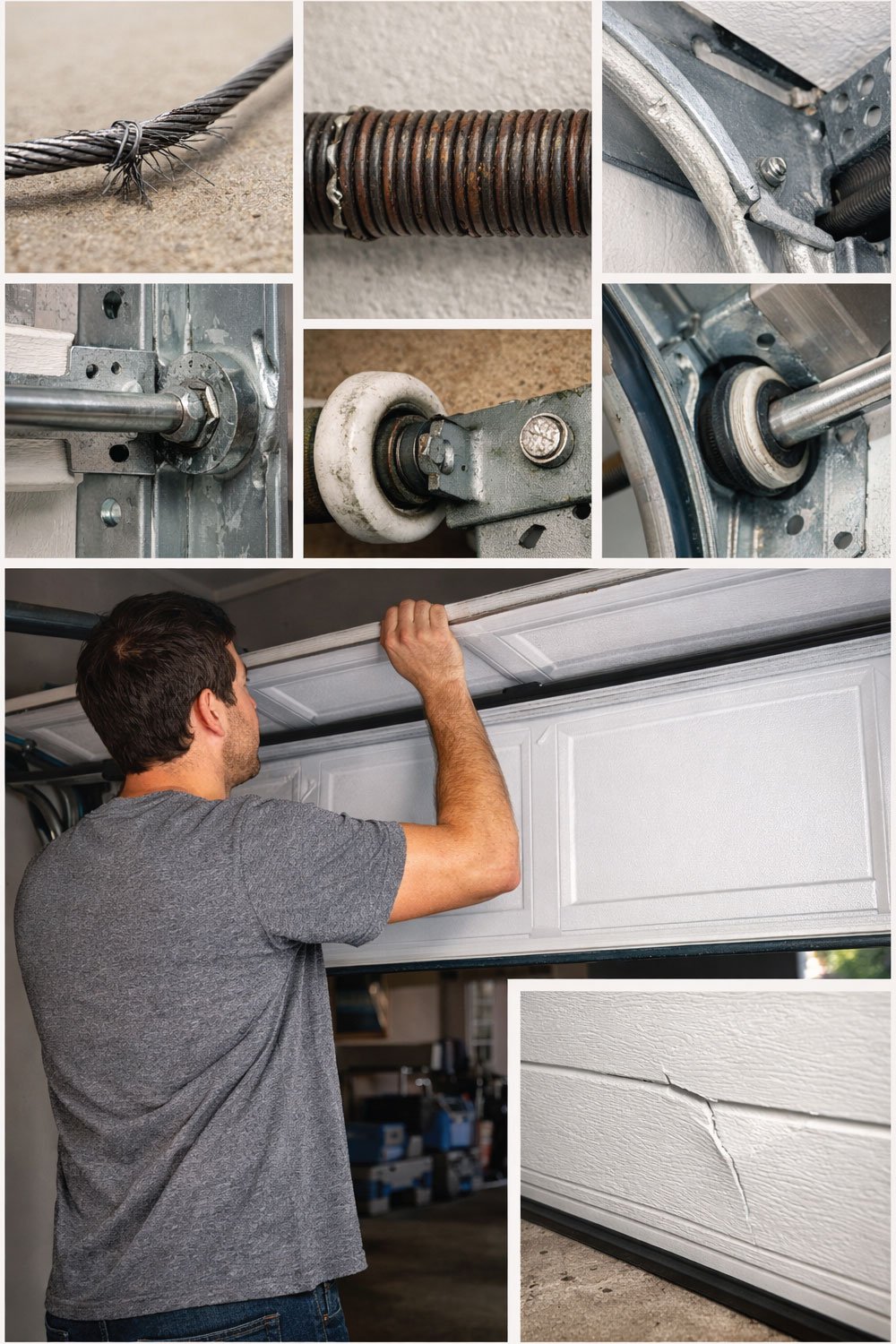
What to Look For
Loose or missing hardware
Frayed cables
Rust on springs or tracks
Bent tracks
Worn rollers
Cracks or damage to door panels
Stand inside the garage with the door closed and examine the springs, cables, and brackets. Then open the door manually and watch how it moves. It should lift smoothly without jerking or sticking.
If you notice anything unusual especially frayed cables or damaged springs do not attempt to fix them yourself. These components are under extreme tension and can be dangerous.
Keep Moving Parts Properly Lubricated
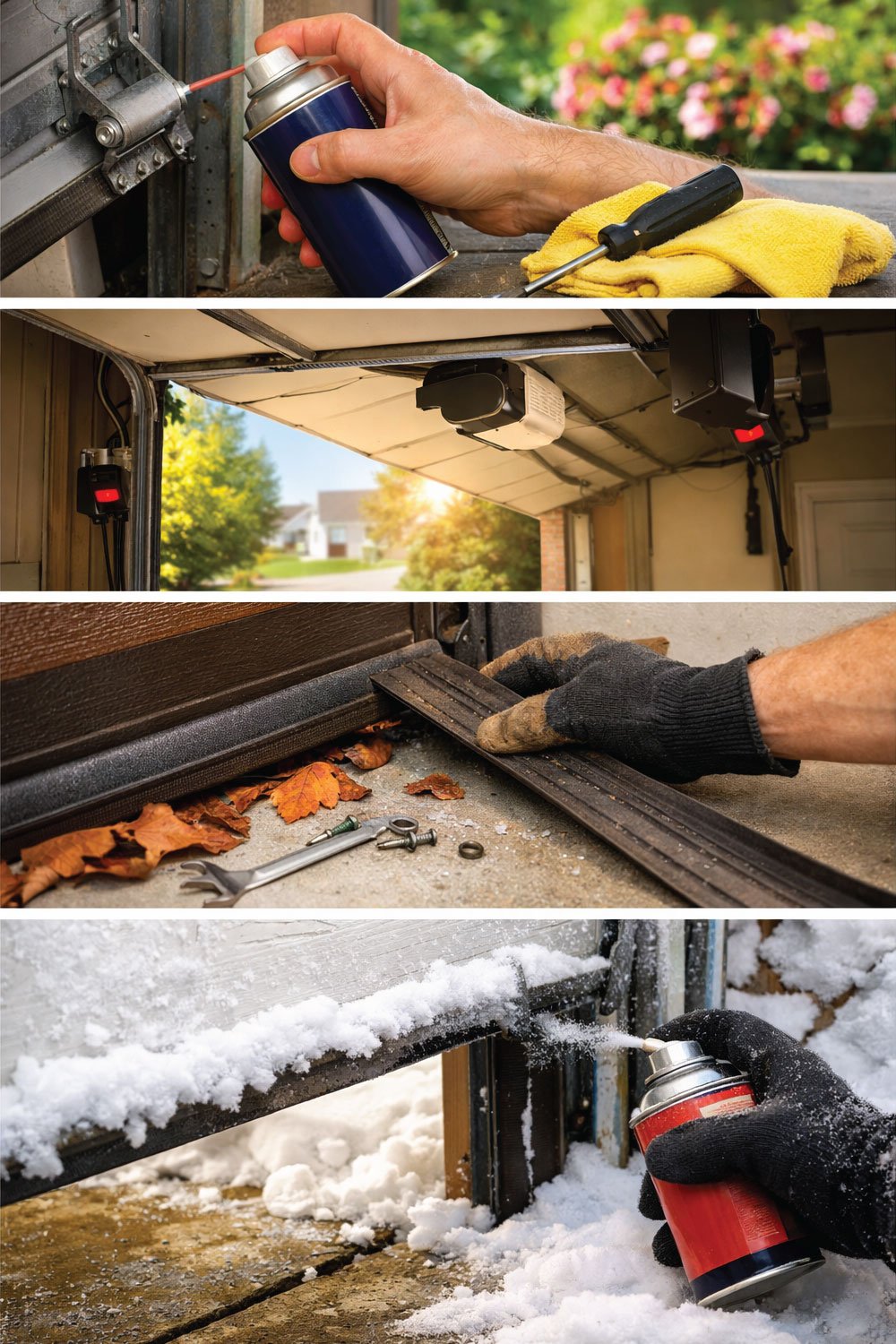
One of the simplest and most effective ways to keep your garage door running like new is proper lubrication. Regularly lubricating key components reduces friction, minimizes noise, and prevents premature wear, helping your system operate efficiently and extending the lifespan of essential moving parts.
What to Lubricate
Hinges
Rollers (especially steel rollers)
Springs
Bearing plates
Opener chain or screw (if applicable)
What Not to Lubricate
Tracks (clean them instead)
Plastic rollers (unless manufacturer recommends)
Use a high-quality garage door lubricant or silicone-based spray. Avoid grease or heavy oils, which attract dirt and can cause buildup.
Lubrication should be done every 3–6 months, or more often in extreme climates.
Inspect and Replace Weather Seals
Weather seals play a major role in protecting your garage from moisture, pests, and temperature extremes. Properly maintained seals act as a barrier against outside elements, helping maintain indoor comfort while preventing damage to stored belongings and structural components over time.
Areas to Check
Bottom seal (rubber strip along the base)
Side seals
Top seal
Cracked, brittle, or missing seals allow water, cold air, and insects into your garage. Replacing worn weather stripping improves energy efficiency and protects stored items.
Check seals seasonally, especially before winter and summer.
Test Safety Features Regularly
Garage door safety systems are essential, particularly for households with children or pets. Regular testing ensures that built in safety mechanisms respond correctly, reducing the risk of accidents or injuries and ensuring your garage door operates in compliance with modern safety standards.
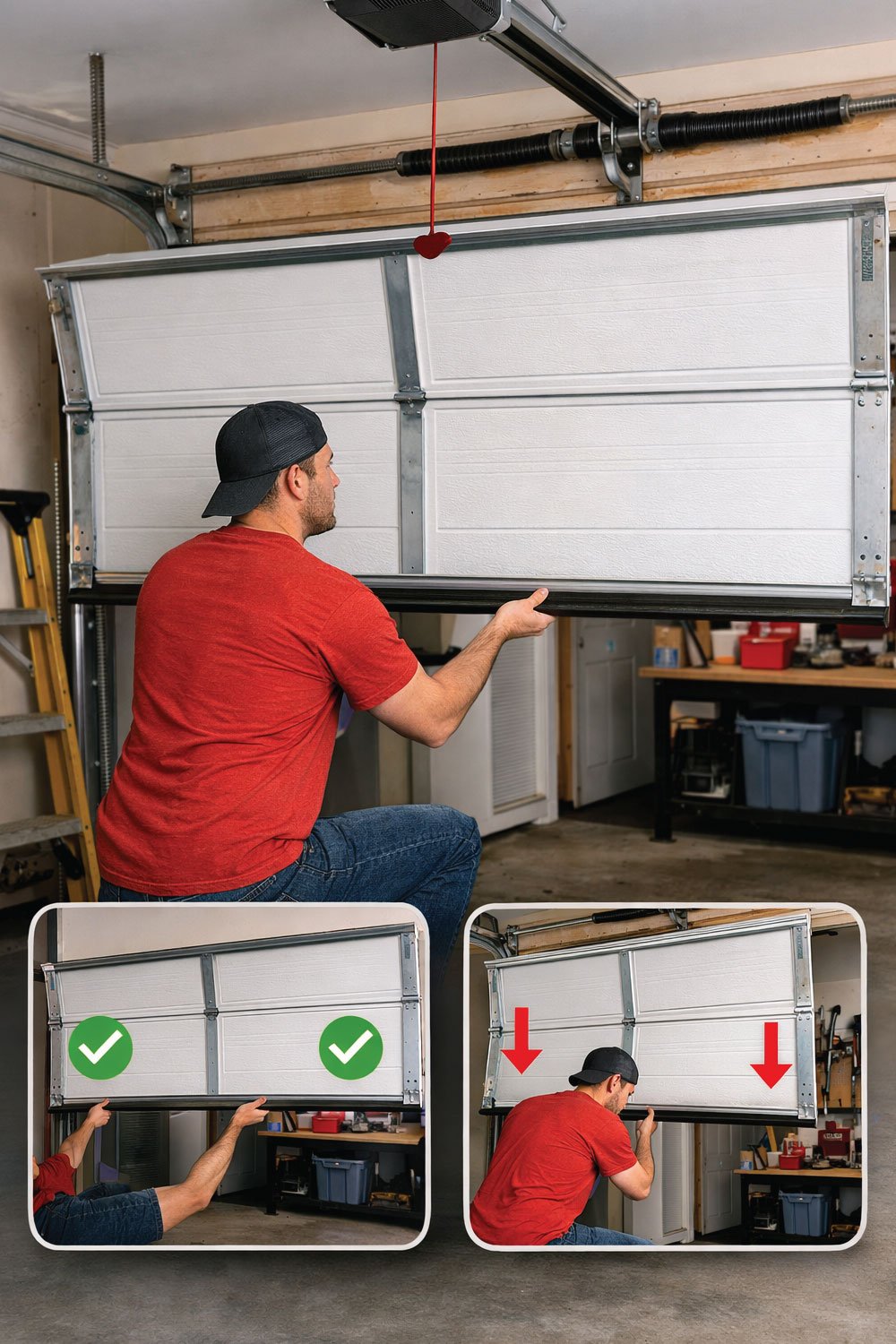
Auto-Reverse Test
Place a solid object (like a piece of wood) under the door
Close the door using the opener
The door should immediately reverse when it touches the object. If it does not, stop using the door and have it serviced.
Photo-Eye Sensor Test
Wave an object in front of the sensors while the door is closing. The door should reverse instantly. Clean sensors with a soft cloth and ensure they are aligned.
Keep the Garage Door Clean
A clean garage door does not just improve your home’s appearance it also helps extend the life of its components. Dirt, grime, and environmental buildup can lead to corrosion and wear over time. Regular cleaning keeps surfaces protected and ensures smoother operation throughout the year.
Cleaning Tips
Wash door panels with mild soap and water
Rinse thoroughly and dry
Avoid harsh chemicals
For wooden doors, inspect paint or stain annually
Cleaning removes dirt and corrosive materials that can weaken components over time.
🔧 Also Read: More Garage Door Solutions ➜ Garage Doors for Beginners: Complete Guide 2026
Listen for Unusual Noises
Your garage door often “tells” you when something is wrong. Paying attention to unusual sounds can help you detect issues early before they turn into costly repairs. Consistent noise changes are often the first warning signs that parts need adjustment, lubrication, or replacement.
Pay attention to:
Grinding
Squeaking
Banging
Rattling
Popping sounds
Unusual noises usually indicate lack of lubrication, loose hardware, or worn parts. Addressing them early can prevent breakdowns.
Do not Ignore Small Problems
A slow-moving door, occasional sticking, or minor vibration may not seem urgent but they often signal larger issues developing. Ignoring these early warning signs can place additional strain on the system, eventually leading to significant damage and unexpected failure when you least expect it.
Small problems left unaddressed can lead to:
Broken springs
Burned-out openers
Bent tracks
Complete door failure
Prompt attention saves time, money, and stress.
Schedule Professional Tune Ups
While DIY maintenance goes a long way, professional inspections are invaluable for keeping your garage door in peak condition. Trained technicians can detect issues that are not visible to the untrained eye, ensuring all components function safely and efficiently while reducing the likelihood of unexpected failures.
A professional garage door technician can:
Adjust spring tension
Inspect internal components
Ensure safety compliance
Identify hidden wear
Optimize performance
An annual professional tune up helps catch problems you may not notice and ensures your garage door operates safely year round.
Upgrade When Necessary
If your garage door or opener is more than 15–20 years old, frequent repairs may signal it’s time for an upgrade. Older systems tend to be less efficient and more prone to breakdowns, while newer models offer improved reliability, convenience, and long term cost savings.
Modern garage doors offer:
Quieter operation
Improved insulation
Smart technology integration
Enhanced safety features
Better durability
Upgrading can reduce maintenance needs and improve overall home value.
🔧 Also Read: More Garage Door Solutions ➜ How Garage Doors Work: Step-by-Step Guide
Final Thoughts
Keeping your garage door working like new year round doesn’t require advanced technical skills just consistency, awareness, and timely action. Regular inspections, lubrication, seasonal adjustments, and professional servicing work together to ensure smooth, safe, and reliable operation.
By investing a small amount of time in maintenance now, you’ll avoid costly repairs later and enjoy the peace of mind that comes with a dependable garage door.
Treat your garage door like the essential system it is, and it will continue to serve your home efficiently for years to come.

Engineer Ali Usman is a professional garage door expert and author at FixFasty, with over 10 years of hands-on experience in garage door systems and mechanical maintenance. He writes clear, step-by-step guides on garage door repairs, parts, and safety practices, helping homeowners fix problems correctly and maintain smooth, secure, and long-lasting garage door performance.