
Your garage door is one of the most frequently used parts of your home, yet it is often the most neglected when it comes to maintenance. Every day, it opens and closes multiple times, protecting your car, tools, and home security.
But without proper care, it can become noisy, slow, or even dangerous. The good news is that garage door maintenance is simple, affordable, and completely doable at home. You don’t need to be a professional technician. With a few basic tools and regular attention, you can extend the life of your garage door and avoid expensive repairs.
In this guide, you will learn step-by-step DIY maintenance tips for beginners, a complete checklist, and a troubleshooting guide to keep your garage door working smoothly all year round.
Table of Contents
ToggleWhy Garage Door Maintenance Is Important
Regular garage door maintenance is essential for keeping your home safe, functional, and cost-efficient. Many homeowners overlook small issues until they turn into major failures, leading to expensive repairs or complete system replacement.
Routine care helps ensure smooth operation, reduces wear on moving parts, and minimizes unexpected breakdowns. It also improves safety by preventing accidents caused by faulty springs or sensors.
Additionally, proper maintenance enhances security and extends the overall lifespan of the garage door system, making it a smart long-term investment for any homeowner.
Here are a few key reasons why maintenance matters:
Prevents sudden breakdowns
Increases lifespan of the door system
Improves home security
Reduces loud noises and vibrations
Saves repair costs in the long run
A well-maintained garage door can last 15–30 years, while a neglected one may fail in less than 10 years.
Basic Tools You will Need for DIY Maintenance
Before starting any DIY garage door maintenance, it is important to gather the right tools to ensure safety and efficiency.
Having basic equipment on hand allows you to perform simple inspections, tighten loose parts, and handle minor cleaning without professional help.
Most of these tools are commonly found in households, making the process easy and affordable. Proper preparation also helps you work faster and avoid interruptions while maintaining different components of the garage door system effectively and safely.
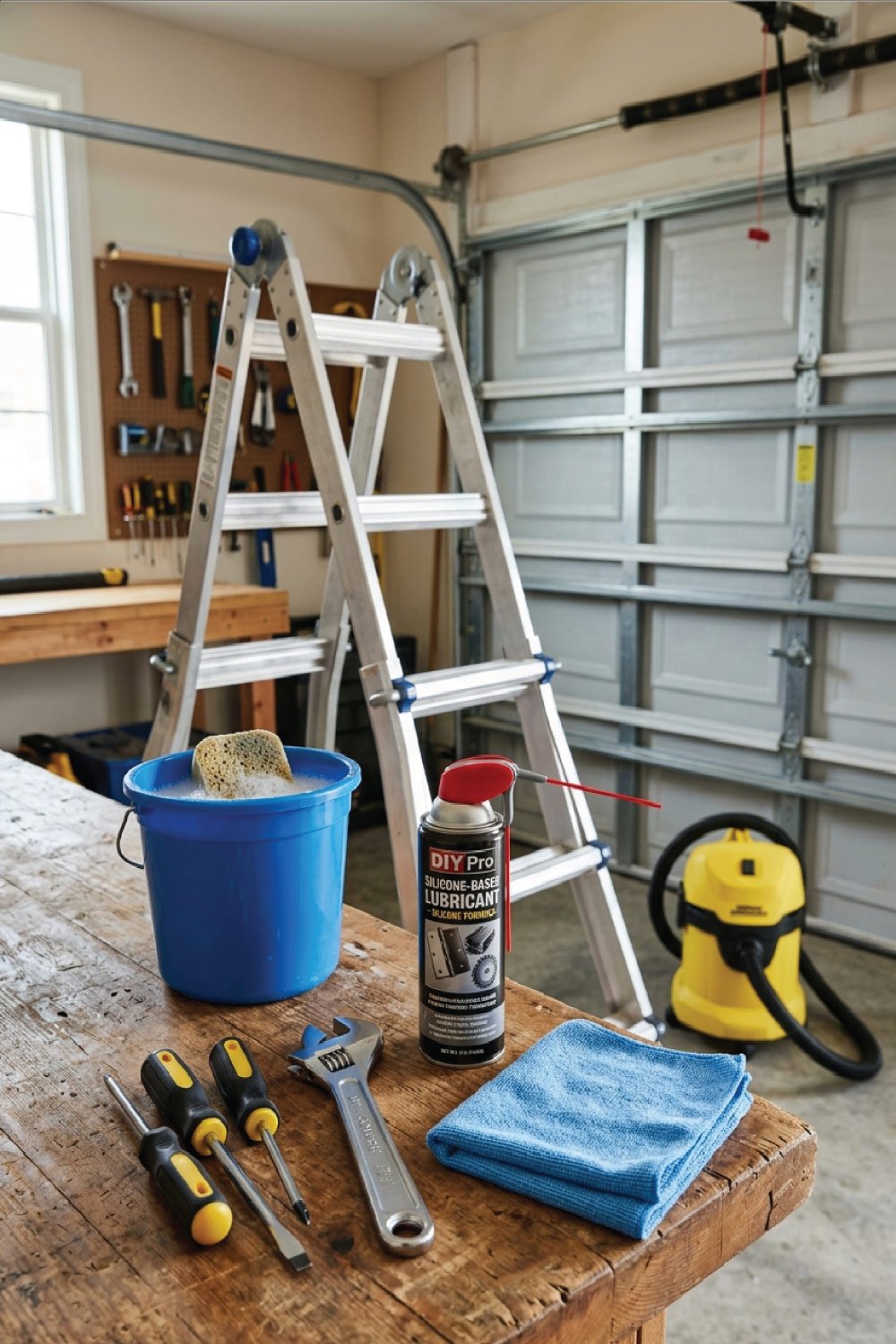
1- Screwdriver Set
A screwdriver set is essential for tightening or loosening screws on hinges, brackets, and panels of a garage door. Regular use helps keep hardware secure and prevents rattling or misalignment. Having both flathead and Phillips screwdrivers ensures you can handle different screw types during routine maintenance tasks.
2- Adjustable Wrench
An adjustable wrench is used to tighten or loosen nuts and bolts on garage door components like tracks, rollers, and brackets. Its adjustable jaw makes it versatile for various sizes. Proper use ensures all fittings remain secure, reducing vibrations, preventing wear, and maintaining smooth and stable door operation.
3- Silicone-Based Lubricant
Silicone-based lubricant is ideal for reducing friction on garage door parts such as rollers, hinges, and tracks. It helps ensure quiet and smooth movement without attracting dust or dirt. Regular lubrication prevents rust, minimizes wear, and extends the lifespan of mechanical components, improving overall door efficiency.
4- Clean Cloth or Rag
A clean cloth or rag is useful for wiping dirt, grease, and debris from garage door components. Keeping parts clean prevents buildup that can cause friction or damage. It’s also helpful when applying lubricants, ensuring even distribution and removing excess product for a cleaner, more effective maintenance process.
5- Mild Detergent and Water
Mild detergent mixed with water is perfect for cleaning garage door surfaces without causing damage. It removes dust, stains, and grime from panels, tracks, and frames. Regular cleaning not only improves appearance but also prevents corrosion and buildup that could affect the door’s performance over time.
6- Ladder
A ladder is necessary for safely reaching higher parts of the garage door, such as tracks, springs, and openers. It allows proper inspection and maintenance of areas that are otherwise hard to access. Using a stable ladder ensures safety while performing tasks like cleaning, tightening, or lubricating overhead components.
7- Vacuum Cleaner (Optional)
A vacuum cleaner helps remove dust, dirt, and debris from tracks and surrounding areas of the garage door. Keeping tracks clean ensures smoother movement and prevents blockages. Although optional, it’s a convenient tool for maintaining cleanliness and reducing wear caused by accumulated particles over time.
Step-by-Step Garage Door Maintenance Guide
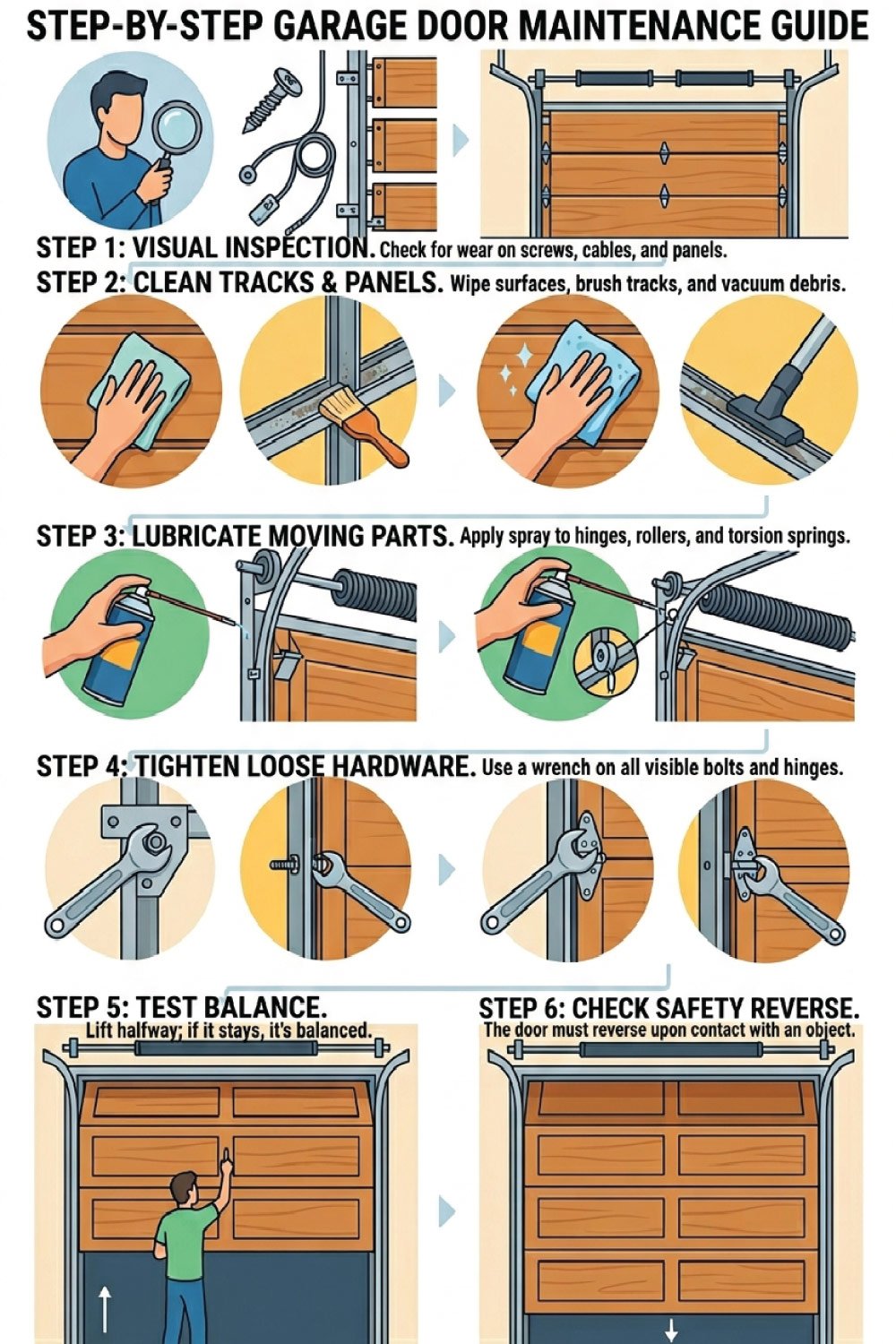
1. Visual Inspection (Most Important Step)
Regular visual inspection is the foundation of effective garage door maintenance because it helps you detect small issues before they turn into major problems.
By carefully examining the door system each month, you can identify early signs of wear, damage, or misalignment that may affect performance and safety over time.
During the inspection, look for loose screws, rust on metal components, frayed cables, cracked panels, or uneven movement.
These warning signs often indicate underlying mechanical issues that should be addressed quickly to avoid costly repairs or unexpected breakdowns.
Loose bolts or screws
Rust on metal parts
Frayed cables
Cracks in panels
Uneven door movement
Do this inspection once every month to catch problems early.
2. Clean the Tracks and Panels
Keeping the garage door tracks and panels clean is essential for ensuring smooth and quiet operation. Dirt, dust, and debris can gradually build up and interfere with the door’s movement, causing unnecessary strain on the system and reducing its efficiency over time.
To clean properly, use a damp cloth for wiping panels and a brush or vacuum to remove debris from the tracks. Avoid using harsh chemicals, as they may damage the surface. Regular cleaning helps maintain smooth operation and reduces noise significantly.
How to clean:
Use a damp cloth for panels
Remove debris from tracks using a brush or vacuum
Avoid using harsh chemicals
Clean tracks = smoother operation + less noise.
3. Lubricate Moving Parts
Lubrication plays a key role in reducing friction and preventing wear in the moving parts of your garage door system. Without proper lubrication, components like hinges and rollers can become stiff, noisy, and prone to damage over time.
Use a silicone-based lubricant on hinges, rollers, springs, and bearings for best results. Avoid grease or heavy oil, as they tend to attract dust and dirt. Regular lubrication ensures smoother movement, quieter operation, and a longer lifespan for all mechanical parts.
Apply silicone-based lubricant on:
Hinges
Rollers
Springs
Bearings
Avoid using grease or heavy oil as it attracts dust.
4. Tighten Loose Hardware
Over time, constant vibration from daily use can cause nuts, bolts, and brackets in your garage door system to loosen. If left unchecked, this can lead to instability, noise, or even mechanical failure, making regular tightening an important maintenance step.
Use a wrench to carefully check and tighten all hardware components, ensuring they are secure but not over-tightened. Excess force can damage threads or weaken parts, so it is important to maintain balance between safety and proper tension.
Check all brackets and tighten them
Use a wrench for safety
Do not overtighten as it may damage parts
5. Test the Garage Door Balance
Testing the balance of your garage door is crucial for ensuring smooth operation and reducing stress on the automatic opener motor. An unbalanced door can lead to uneven movement, faster wear, and potential safety hazards over time.
To test, disconnect the opener and manually lift the door halfway. If it stays in place, the balance is correct. If it falls or rises, adjustments are needed. A properly balanced door improves efficiency and extends system life.
Quick test:
Disconnect the automatic opener
Lift the door halfway
If it stays in place, it is balanced
If it falls or rises, it needs adjustment
6. Check the Auto-Reverse Feature
The auto-reverse feature is a vital safety mechanism designed to prevent accidents and injuries. It ensures that the garage door automatically reverses direction if it detects an obstruction while closing, protecting both people and objects underneath.
To test it, place a small object under the closing door and observe its reaction. If the door does not reverse immediately, the system may be faulty and should be inspected by a professional technician to ensure safe operation.
Place a small object under the door and close it:
The door should reverse immediately
If it doesn’t, call a technician
Benefits of DIY Garage Door Maintenance
Taking care of your garage door on your own offers several practical advantages that make it a smart habit for homeowners. With simple regular maintenance, you can keep your system in good condition without relying too often on expensive professional services.
DIY maintenance not only helps you save money but also gives you better control over the safety and performance of your garage door. By handling small issues early, you can prevent major problems and ensure smooth operation throughout the year.
1. Saves Money
One of the biggest benefits of DIY garage door maintenance is cost savings. By performing regular inspections and minor fixes yourself, you can reduce the need for frequent professional repairs.
This helps you avoid expensive emergency services and keeps your maintenance budget low while still ensuring your garage door stays in good working condition.
2. Improves Safety
Regular DIY maintenance allows you to identify potential safety hazards before they become serious problems. Checking parts like sensors, cables, and springs helps reduce the risk of accidents.
By catching issues early, you protect your family and property from unexpected garage door failures or dangerous malfunctions.
3. Extends Lifespan
Consistent maintenance significantly increases the lifespan of your garage door system. Cleaning, lubricating, and tightening parts helps reduce wear and tear over time.
A well-maintained garage door can last many years longer than one that is neglected, saving you from early replacement costs.
4. Better Performance
DIY maintenance ensures that your garage door operates smoothly, quietly, and efficiently every day. Regular care prevents common issues like noise, sticking, or slow movement.
This results in a more reliable system that performs better and provides greater convenience in daily use.
Garage Door Maintenance Schedule
A proper garage door maintenance schedule keeps your system running smoothly throughout the year. Instead of waiting for issues, regular care helps detect problems early. Simple routines like inspection, cleaning, and lubrication improve performance, extend lifespan, and reduce costly repairs, making your garage door safer, quieter, and more reliable.
1- Visual Inspection (Monthly)
Perform a monthly visual inspection to identify signs of wear, damage, or misalignment. Check springs, cables, rollers, and tracks for cracks, rust, or loose parts. Early detection of small issues prevents major failures, improves safety, and ensures your garage door continues operating efficiently without unexpected breakdowns.
2- Cleaning Tracks (Every 2–3 Months)
Clean the garage door tracks every two to three months to remove dust, debris, and buildup. Dirty tracks can cause the door to stick or move unevenly. Use a cloth or vacuum to clear particles, ensuring smooth movement, reducing strain on components, and maintaining proper alignment.
3- Lubrication (Every 3–4 Months)
Lubricate all moving parts, including hinges, rollers, and springs, every three to four months. Proper lubrication reduces friction, prevents squeaking, and protects against rust. Using a silicone-based lubricant ensures smooth operation, extends component life, and keeps your garage door functioning quietly and efficiently.
4- Tightening Hardware (Twice a Year)
Tighten all nuts, bolts, and screws at least twice a year to keep the garage door stable. Regular use can loosen hardware over time, causing vibrations or misalignment. Securing these components improves safety, reduces wear, and ensures the entire system remains firmly in place.
5- Balance Check (Twice a Year)
Test the garage door balance twice a year to ensure it opens and closes evenly. Disconnect the opener and manually lift the door halfway; it should stay in place. An unbalanced door puts stress on the opener and components, leading to faster wear and potential damage.
6- Safety Sensor Test (Monthly)
Check the safety sensors monthly to ensure they are working properly. Place an object in the door’s path; the door should stop or reverse automatically. Functional sensors prevent accidents and injuries, making them a critical safety feature that must always remain clean, aligned, and operational.
Common Garage Door Problems & Fixes
Garage doors can develop minor issues over time due to regular use, weather conditions, or lack of maintenance. Understanding common problems helps you quickly identify what’s wrong and apply simple fixes before the situation gets worse.
This troubleshooting guide is designed for beginners, making it easier to diagnose issues and perform basic repairs safely. In many cases, small adjustments or cleaning can restore normal function without needing professional assistance.
| Problem | Possible Cause | DIY Solution |
|---|---|---|
| Door makes loud noise | Lack of lubrication | Apply silicone lubricant |
| Door opens unevenly | Broken spring or imbalance | Check balance or call technician |
| Remote not working | Dead batteries | Replace batteries |
| Door stuck halfway | Obstruction in tracks | Clean tracks and remove debris |
| Door reverses randomly | Sensor misalignment | Adjust safety sensors |
| Slow movement | Dirt buildup or old rollers | Clean and lubricate parts |
Safety Tips You Should Never Ignore
Garage doors are heavy mechanical systems that operate under high tension, which makes safety extremely important during any kind of maintenance or inspection. Even small mistakes can lead to serious injury or damage, so it is essential to always follow basic precautions before attempting any DIY work.
Never try to adjust springs or high-tension components without proper experience, as they can be dangerous. Always disconnect the power before performing any repairs, wear protective gloves during inspection, and keep children away from moving parts. For complex issues or major repairs, it is always safer to call a qualified professional technician.
Never touch or adjust springs without experience
Disconnect power before repairs
Keep children away from moving parts
Wear gloves during inspection
Call a professional for major repairs
👉 How to Lubricate Garage Door Springs Safely Guide shows you the right way to reduce noise, prevent rust, and extend spring life. Learn safe, step-by-step lubrication methods and avoid common mistakes that cause damage or injury. Read the full guide to keep your garage door running smoothly and safely!
How Often Should You Maintain Your Garage Door?
Maintaining your garage door on a regular schedule helps ensure smooth operation, reduces wear and tear, and prevents unexpected breakdowns. A consistent routine also improves safety and extends the lifespan of the entire system, making it more reliable in the long run.
For best results, follow a simple maintenance timeline: perform monthly visual inspections and safety tests, carry out cleaning and lubrication every three months, check hardware and balance every six months, and schedule a full professional inspection once a year for optimal performance.
Monthly: Visual inspection + safety test
Quarterly: Lubrication and cleaning
Every 6 months: Tightening hardware + balance check
Yearly: Full professional inspection (recommended)
Regular care prevents unexpected breakdowns and keeps your system running quietly.
Signs Your Garage Door Needs Immediate Repair
Even with regular maintenance, garage doors can develop serious issues that require immediate attention to avoid accidents or further damage. Recognizing early warning signs can help you act quickly and prevent costly repairs or safety risks.
Watch for loud grinding or squeaking noises, slow or uneven door movement, shaking tracks, inconsistent remote response, or visible damage to cables. If you notice any of these problems, stop using the door immediately and inspect it or contact a professional technician for safe repair.
Loud grinding or squeaking noises
Door moving slower than usual
Door shaking or shaking tracks
Remote not responding consistently
Visible cable damage
If you notice any of these, stop using the door and inspect it immediately.
Expert Tip for Long-Term Care
One of the best secrets professionals use is consistency. Instead of waiting for problems, schedule short monthly checks. Even 10–15 minutes of inspection can prevent expensive damage.
Also, keep a small maintenance log to track when you last cleaned, lubricated, or inspected the door.
Conclusion
Maintaining your garage door at home is simple when you stay consistent and follow basic care routines. Regular inspections, proper cleaning, and timely lubrication help prevent major issues and keep everything running smoothly. Fixing small problems early saves time and money while improving safety. By prioritizing these easy steps, you can ensure long-lasting performance and confidently handle garage door maintenance like a professional.
👉 How to Maintain Your Garage Door (Complete Checklist) helps you keep your garage door in top condition with simple, step-by-step tasks. From inspecting parts to lubrication and safety checks, this guide ensures smooth operation and longer lifespan. Don’t miss the full checklist to prevent costly repairs

Engineer Ali Hasan is a garage door expert and the founder of FixFasty. With over 16 years of experience in mechanical systems and home maintenance, he provides practical, step-by-step guides on garage door installation, repairs, and maintenance, helping homeowners keep their garage doors safe, reliable, and long-lasting.