
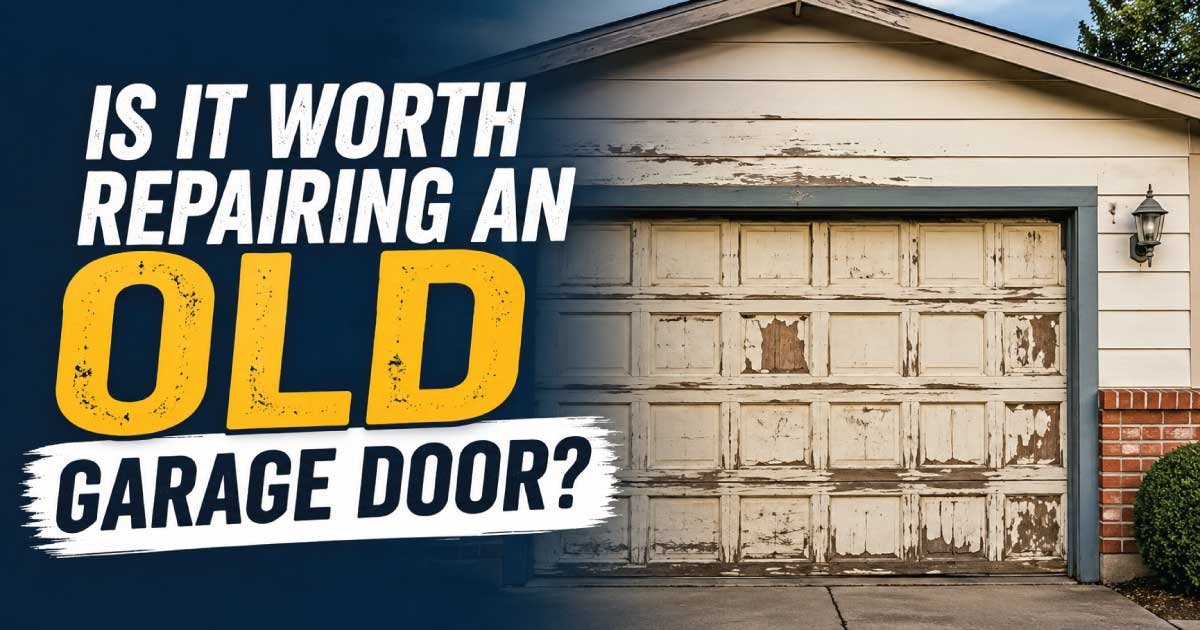
Is It Worth Repairing an Old Garage Door?

An old garage door often starts showing signs of wear long before it stops working completely. It may become noisy, move unevenly, get stuck halfway, or refuse to open at all. These problems can result from worn springs, damaged rollers, aging hardware, electrical issues with the opener, or years of normal use. While some repairs are simple and inexpensive, others may indicate that replacing the entire door is the better long-term investment.

Deciding whether to repair or replace an old garage door isn’t always straightforward. A quick fix might restore smooth operation for years, but repeatedly repairing a severely worn door can cost more than installing a modern, energy-efficient replacement. The right choice depends on the door’s age, condition, repair costs, safety, and overall reliability.

This guide explains whether it is worth repairing an old garage door, how to recognize common warning signs, what typically causes problems, and how to troubleshoot them safely. You’ll also learn which issues are suitable for DIY repair, when professional repair is necessary, and how to make an informed decision that protects both your home and your budget.


Common Signs and Symptoms

Garage door problems rarely appear without warning. Most homeowners notice small changes in operation before a complete failure occurs. Paying attention to these early warning signs can prevent more expensive repairs and reduce the risk of damage or injury.

Common symptoms include:

  • Garage door moves slower than usual.
  • Door makes grinding, squeaking, or banging noises.
  • Door stops halfway during opening or closing.
  • Garage door reverses unexpectedly.
  • Door appears crooked or uneven.
  • Gaps appear between door sections.
  • Remote control works inconsistently.
  • Garage door opener strains or hums without moving the door.
  • Springs, cables, or rollers show visible wear.
  • Door feels unusually heavy when disconnected from the opener.
  • Higher energy bills due to poor insulation in older doors.
  • Rust, rot, dents, or cracked panels affecting operation.

These symptoms do not always mean the entire garage door needs replacement. In many cases, a careful inspection can identify one failed component that can be repaired at a reasonable cost.


How the Garage Door Normally Works

Understanding how a garage door operates makes troubleshooting much easier. Modern garage doors rely on several mechanical and electrical components working together. When one part wears out, the entire system can become unreliable or unsafe.

A standard garage door system includes:

  • Door panels
  • Hinges
  • Rollers
  • Vertical and horizontal tracks
  • Torsion or extension springs
  • Lift cables
  • Bottom brackets
  • Garage door opener
  • Safety sensors
  • Remote controls and wall switch

When you press the opener button, the motor turns a chain, belt, or screw drive that lifts the door. The springs do most of the heavy lifting by balancing the door’s weight. Rollers travel smoothly inside the tracks while cables keep the door aligned.

If one of these components becomes damaged or worn, the door may bind, tilt, become noisy, or stop operating altogether. Identifying which part has failed is the first step toward deciding whether repair is worthwhile.


Most Common Reasons This Problem Happens

Garage doors experience thousands of operating cycles during their lifetime. Exposure to weather, lack of maintenance, accidental impacts, and aging parts all contribute to breakdowns. Understanding the most common causes helps homeowners diagnose problems more accurately and avoid unnecessary replacements.

Worn or Broken Springs

Garage door springs eventually wear out because they support the full weight of the door every time it opens and closes. Most torsion springs are rated for approximately 10,000 to 20,000 cycles.

Why it happens

  • Normal wear
  • Rust
  • Poor maintenance
  • High usage

Symptoms

  • Door won’t open
  • Loud bang from the garage
  • Door feels extremely heavy
  • Opener struggles

How to identify it

Look above the garage door for a visible gap in the torsion spring. Extension springs along the sides may also appear stretched or broken.

Repair or replace?

Replacing springs is usually worthwhile if the door itself remains in good condition. However, spring replacement should always be performed by a professional because of the stored tension.

Damaged Rollers

Rollers allow the door to travel smoothly along its tracks. Over time, plastic rollers wear down while steel rollers may lose lubrication or develop worn bearings.

Why it happens

  • Age
  • Dirt buildup
  • Lack of lubrication
  • Heavy use

Symptoms

  • Squeaking
  • Jerky movement
  • Door shaking
  • Increased vibration

How to identify it

Inspect each roller for cracks, flat spots, broken bearings, or excessive wobbling.

Repair or replace?

Replacing worn rollers is one of the most cost-effective garage door repairs and often restores smooth operation.

Bent or Misaligned Tracks

Tracks guide the rollers during operation. Even a small bend can interfere with movement.

Why it happens

  • Vehicle impact
  • Loose mounting brackets
  • Foundation movement
  • Accidental damage

Symptoms

  • Door binds
  • Door sticks halfway
  • Rollers jump the track

How to identify it

Stand several feet away and check whether both tracks remain straight and parallel.

Minor misalignment can often be corrected, while severely damaged tracks usually require replacement.

Worn Lift Cables

Lift cables work together with the springs to raise and lower the garage door safely.

Why it happens

  • Rust
  • Fraying
  • Normal wear
  • Poor spring balance

Symptoms

  • Uneven door
  • Crooked movement
  • Loose cable
  • Door jams

How to identify it

Inspect both cables for broken strands or visible fraying.

Because cables are under significant tension, replacement should not be attempted without proper training.

Garage Door Opener Problems

Sometimes the garage door itself is fine, but the opener has developed an electrical or mechanical issue.

Why it happens

  • Worn gears
  • Motor failure
  • Circuit board problems
  • Faulty limit settings
  • Aging electronics

Symptoms

  • Motor runs without lifting the door
  • Remote fails
  • Door reverses
  • Clicking sounds

How to identify it

Disconnect the opener using the emergency release. If the door moves smoothly by hand, the opener may be the problem instead of the door.

Aging Door Panels

Older wooden, steel, and aluminum doors naturally deteriorate over time.

Why it happens

  • Moisture
  • Rust
  • UV exposure
  • Physical damage

Symptoms

  • Cracks
  • Rot
  • Rust holes
  • Poor insulation
  • Sagging

How to identify it

Inspect every panel carefully for structural damage rather than cosmetic dents.

Replacing individual panels may make sense if replacements are still available. If several panels have deteriorated, replacing the entire door is often the better investment.


Safety Precautions Before Troubleshooting

Garage doors are much heavier than many homeowners realize. A typical residential garage door weighs between 130 and 300 pounds, while larger insulated doors can weigh considerably more. Certain components store enough energy to cause serious injuries if handled incorrectly.

Before beginning any inspection or DIY repair, follow these safety precautions:

  • Disconnect electrical power to the garage door opener.
  • Pull the emergency release only when the door is fully closed whenever possible.
  • Keep children and pets away from the work area.
  • Never loosen torsion spring hardware.
  • Never remove lift cables under tension.
  • Wear safety glasses.
  • Use work gloves when handling metal components.
  • Use a sturdy ladder placed on level ground.
  • Avoid standing directly beneath the door during inspection.
  • Lock the door in place if inspecting underneath.
  • Replace damaged tools before starting work.

Safe DIY tasks generally include:

  • Cleaning tracks
  • Lubricating moving parts
  • Tightening loose hardware
  • Replacing weather stripping
  • Testing safety sensors
  • Replacing remote batteries

Professional repair is recommended for:

  • Broken springs
  • Cable replacement
  • Track replacement
  • Bottom bracket repairs
  • Opener motor replacement
  • Structural door damage

Tools Required

Most basic garage door inspections require only common household tools. Having the right equipment improves safety and helps you identify problems without causing additional damage.

Tool Purpose
Flashlight Inspect tracks, springs, and hardware
Safety glasses Protect eyes from debris
Work gloves Prevent cuts while handling metal parts
Step ladder Reach upper hardware safely
Socket wrench set Tighten loose bolts and brackets
Screwdrivers Remove covers and adjust hardware
Tape measure Check track alignment and door balance
Silicone-based garage door lubricant Reduce friction on moving parts
Clean cloth Wipe dirt and old grease
Level Verify track alignment

Step-by-Step Troubleshooting Guide

A systematic inspection helps you determine whether repairing an old garage door is practical or whether replacement is becoming the more cost-effective option. Complete each step in order instead of jumping directly to replacing parts.

  1. Inspect the door visually.
    Look for cracked panels, rust, broken windows, loose hinges, bent tracks, or damaged weather seals. This initial inspection reveals whether the problem is cosmetic or structural. If you discover severe structural damage, arrange a professional inspection before operating the door again.
  2. Test the manual operation.
    Disconnect the opener using the emergency release and carefully lift the door by hand. A properly balanced door should move smoothly and stay near the halfway position. If it feels unusually heavy or falls quickly, the springs may no longer be providing adequate support.
  3. Check the rollers and tracks.
    Examine each roller for cracks, worn bearings, or excessive movement, and inspect the tracks for dents, debris, or misalignment. Clean dirty tracks with a dry cloth and remove small obstructions. If the rollers continue binding after cleaning, they may need replacement.
  4. Inspect the springs and cables.
    Without touching them, look for gaps in torsion springs, stretched extension springs, or frayed lift cables. These components are essential for safe operation and should only be replaced by trained technicians if damaged.
  5. Test the garage door opener.
    Reconnect the opener and operate the door using both the wall button and remote control. Listen for unusual motor noises and confirm the door opens and closes completely. If the motor runs but the door does not move, the opener or drive mechanism may require repair.
  6. Verify the safety sensors.
    Clean both photo-eye sensors and confirm they face each other correctly. A blinking indicator light often signals misalignment. Correct sensor alignment should restore normal closing operation.
  7. Evaluate the repair costs.
    After identifying the faulty components, compare the estimated repair expense with the age and overall condition of the door. If multiple major parts are failing at the same time, replacement may offer better long-term value.

Quick Diagnosis Table

This quick reference table summarizes the most common symptoms, likely causes, and the recommended next step. It can help homeowners narrow down the problem before deciding whether a DIY repair or professional inspection is appropriate.

Symptom Possible Cause Recommended Solution
Door will not open Broken spring Professional spring replacement
Door is noisy Worn rollers or lack of lubrication Lubricate or replace rollers
Door opens unevenly Frayed cable or damaged spring Stop using the door and call a professional
Door reverses while closing Misaligned safety sensors Clean and realign sensors
Door sticks halfway Bent track or damaged roller Inspect tracks and replace damaged parts if necessary
Remote does not work Dead battery or opener issue Replace battery and test opener
Door feels heavy Failed spring Professional diagnosis and repair
Door has visible rust, rot, or multiple damaged panels Aging door structure Compare repair costs with full replacement before making a decision

How to Fix Each Common Cause

Once you’ve identified the source of the problem, the next step is deciding whether the repair is practical. Some garage door issues require only basic tools and a little time, while others involve high-tension components that should always be handled by a trained technician. Knowing the difference can save money without compromising safety.

Replace Worn Rollers

Damaged rollers are one of the most common causes of noisy or jerky garage doors. Replacing them often restores smooth operation without major expense.

DIY difficulty: Moderate (only if springs are not under tension)

Steps:

  1. Disconnect the garage door opener.
  2. Open the door only if it can be secured safely.
  3. Remove one roller at a time.
  4. Install the matching replacement roller.
  5. Tighten all hardware.
  6. Lubricate the new rollers with garage door lubricant.
  7. Test the door several times.

When replacement is worthwhile:

  • Rollers are cracked or worn.
  • Bearings are noisy.
  • The rest of the garage door is in good condition.

Lubricate Moving Parts

Many homeowners mistake poor lubrication for major mechanical failure. Dry hinges, rollers, and bearings create friction that increases wear.

DIY difficulty: Easy

Lubricate:

  • Hinges
  • Steel rollers
  • Bearings
  • Torsion spring coils (light coating only)
  • End bearing plates

Avoid using heavy grease on the tracks. Instead, wipe the tracks clean with a dry cloth because rollers need a clean surface rather than a slippery one.

Tighten Loose Hardware

Garage doors vibrate every time they operate. After years of use, bolts and brackets often loosen.

Inspect:

  • Hinge bolts
  • Track brackets
  • Opener mounting hardware
  • Roller brackets

Tighten loose fasteners carefully without overtightening them. Stripped fasteners should be replaced.

Realign Safety Sensors

If the door refuses to close but opens normally, the safety sensors are often responsible.

Steps:

  1. Clean both sensor lenses.
  2. Check that both sensors point directly at each other.
  3. Tighten mounting brackets.
  4. Verify indicator lights remain steady.
  5. Test the door again.

If the sensors still fail after alignment, damaged wiring or faulty sensors may require professional repair.

Replace Weather Stripping

Weather stripping protects the garage from water, dust, insects, and drafts.

Signs it needs replacement include:

  • Visible cracks
  • Brittle rubber
  • Water entering beneath the door
  • Air leaks

Most bottom seals and perimeter seals can be replaced by homeowners using basic hand tools.

Repair or Replace the Garage Door Opener

Garage door openers usually last 10–15 years with proper maintenance.

Minor issues include:

  • Remote battery replacement
  • Reprogramming remotes
  • Resetting travel limits
  • Replacing safety sensors

Professional repairs may be needed for:

  • Burned-out motors
  • Worn drive gears
  • Failed circuit boards
  • Broken drive systems

If the opener is approaching the end of its expected lifespan and lacks modern safety features, replacement is often more economical than repeated repairs.

Replace Broken Springs

Broken springs are among the most serious garage door failures.

Do not attempt this repair yourself.

Torsion springs remain under extreme tension, even when the door is closed. Improper removal can cause severe injuries.

Professional spring replacement includes:

  • Installing correctly sized springs
  • Balancing the door
  • Inspecting cables
  • Lubricating moving parts
  • Testing safe operation

If your door is otherwise structurally sound, replacing springs is usually worth the investment.

Repair Damaged Panels

Panel damage varies widely.

Repair may be appropriate when:

  • One panel has minor dents.
  • Cosmetic damage does not affect operation.
  • Matching replacement panels are still available.

Replacement becomes the better option if:

  • Multiple panels are damaged.
  • The frame is bent.
  • The manufacturer no longer produces matching panels.
  • Repair costs approach the price of a new door.

Advanced Troubleshooting

Some garage door problems are less obvious and require a more detailed inspection. These issues often develop gradually, making them difficult to diagnose without a systematic approach.

The Door Is Properly Balanced but Still Operates Poorly

Possible causes include:

  • Worn opener drive gear
  • Bent door sections
  • Failing bearings
  • Excessive track friction

Inspect each moving component individually instead of assuming the opener is at fault.

The Door Opens by Itself

Unexpected opening may result from:

  • Faulty wall button
  • Neighboring remote interference
  • Stuck transmitter button
  • Shorted wiring
  • Smart garage controller malfunction

Start by removing batteries from all remotes to isolate the problem.

The Door Closes Unevenly

Uneven closing usually indicates:

  • Cable stretch
  • Roller damage
  • Bent track
  • Spring imbalance

Because multiple components may contribute, professional diagnosis is often the safest approach.

Excessive Vibration

A vibrating garage door can indicate:

  • Loose hardware
  • Worn rollers
  • Opener mounting issues
  • Unbalanced door
  • Damaged hinges

Address vibration promptly because it accelerates wear on nearly every moving part.

Frequent Opener Overload

Modern garage door openers include overload protection.

If the opener repeatedly stops during operation, inspect for:

  • Binding rollers
  • Obstructions
  • Door imbalance
  • Damaged springs
  • Incorrect travel settings

Avoid repeatedly forcing the opener to operate, as this can shorten the motor’s lifespan.


When Repair Is Not Worth It

Repairing an old garage door is not always the most economical decision. In some cases, continued repairs become more expensive than replacing the entire system.

Replacement is usually the smarter choice when:

  • The garage door is more than 20–25 years old.
  • Multiple major components have failed.
  • Replacement parts are difficult to find.
  • The door has significant structural damage.
  • Extensive rust or wood rot has weakened the frame.
  • Repair costs exceed roughly 50% of a comparable new door.
  • The door lacks modern safety features.
  • Energy efficiency is poor due to inadequate insulation.

A new garage door can provide:

  • Better insulation
  • Quieter operation
  • Improved curb appeal
  • Lower maintenance requirements
  • Enhanced security
  • Smart opener compatibility
  • Higher home value

If the door requires repeated repairs every year, replacement often becomes the better long-term investment.


Preventive Maintenance Tips

Routine maintenance extends the life of both the garage door and opener while reducing the likelihood of unexpected breakdowns. Most maintenance tasks take only a few minutes and can prevent expensive repairs.

Recommended maintenance schedule:

Every month

  • Inspect springs and cables visually.
  • Test automatic reverse safety features.
  • Listen for unusual noises.

Every three to six months

  • Lubricate hinges and rollers.
  • Tighten loose hardware.
  • Clean safety sensors.

Every year

  • Check door balance.
  • Inspect weather seals.
  • Examine tracks for alignment.
  • Schedule a professional inspection if the door receives heavy daily use.

Good preventive maintenance often doubles the service life of many garage door components.


Common Mistakes to Avoid

Many garage door repairs become more expensive because of avoidable mistakes during inspection or maintenance.

Common mistakes include:

  • Ignoring unusual noises until a major failure occurs.
  • Using the wrong type of lubricant.
  • Lubricating dirty tracks instead of cleaning them.
  • Attempting spring replacement without training.
  • Continuing to operate a door with frayed cables.
  • Replacing parts without diagnosing the actual cause.
  • Overtightening bolts and stripping hardware.
  • Blocking or bypassing safety sensors.
  • Using mismatched replacement parts.
  • Delaying repairs after noticing uneven door movement.

Correct diagnosis is often more important than replacing parts. Taking time to identify the root cause prevents unnecessary expenses.


When to Call a Professional

While many maintenance tasks are suitable for homeowners, certain repairs involve significant safety risks or specialized equipment.

Contact a professional if:

  • A torsion or extension spring has broken.
  • Lift cables are frayed or off the drum.
  • The door has come off its tracks.
  • The opener motor has failed internally.
  • Structural damage affects multiple panels.
  • The garage door falls rapidly when disconnected.
  • The door becomes severely unbalanced.
  • Electrical troubleshooting extends beyond simple sensor alignment.
  • You are unsure how to safely complete a repair.

Professional technicians have the tools and experience to safely handle high-tension components and ensure the door is properly balanced after repairs.


Estimated Repair Costs

The cost of repairing an old garage door depends on the failed component, labor rates in your area, and the availability of replacement parts. Comparing repair costs with the price of a new door can help you make a financially sound decision.

Repair Estimated Cost DIY or Professional
Roller replacement $100–$250 DIY or Professional
Track adjustment $125–$300 Professional recommended
Track replacement $250–$600 Professional
Garage door spring replacement $200–$450 Professional
Lift cable replacement $150–$350 Professional
Weather stripping replacement $50–$200 DIY
Safety sensor replacement $100–$250 DIY or Professional
Garage door opener repair $150–$400 Professional
Garage door opener replacement $350–$800 Professional
Single panel replacement $250–$800 Professional
Complete garage door replacement $800–$4,000+ Professional

Frequently Asked Questions

Is it worth repairing an old garage door?

Yes, it is worth repairing an old garage door if the damage is limited to replaceable components such as rollers, springs, sensors, or the opener. When the door’s structure remains sound and repair costs are reasonable, repairing is usually more cost-effective than replacing the entire system.

How old is too old to repair a garage door?

A garage door over 20 to 25 years old deserves careful evaluation before investing in major repairs. Age alone does not require replacement, but repeated failures, unavailable replacement parts, poor insulation, and structural deterioration often make installing a new door the better long-term choice.

Should I replace my garage door if the spring breaks?

Not necessarily. A broken spring does not automatically mean the entire garage door should be replaced. If the door panels, tracks, and hardware remain in good condition, replacing the spring is typically a practical and economical repair performed by a qualified technician.

Can I repair my garage door myself?

Yes, homeowners can safely perform basic maintenance and minor repairs such as lubrication, weather seal replacement, sensor cleaning, and tightening hardware. However, repairs involving springs, lift cables, bottom brackets, or major structural components should always be left to experienced professionals due to serious safety risks.

What is the most expensive garage door repair?

Replacing multiple structural components or installing a new garage door opener can be among the more expensive repairs. Extensive panel damage combined with spring, track, or cable replacement may cost enough that replacing the complete door becomes a better financial decision.

How do I know if my garage door is beyond repair?

A garage door may be beyond repair if it has severe structural damage, widespread rust or rot, repeated major component failures, or repair costs approaching the price of a new installation. A professional inspection can confirm whether replacement provides better long-term value.

How often should a garage door be serviced?

Most residential garage doors benefit from annual professional servicing, while homeowners should inspect and lubricate moving parts every few months. Regular maintenance helps identify worn components early, improves reliability, and reduces the likelihood of emergency repairs.

Does replacing a garage door increase home value?

Yes, replacing a garage door often increases home value by improving curb appeal, energy efficiency, and security. Because the garage door is one of the home’s largest visible features, a modern replacement can provide an excellent return on investment during resale.

Can an old garage door opener be repaired?

Yes, many older garage door openers can be repaired if the problem involves sensors, remotes, gears, or limit settings. However, if the motor, control board, or drive system has failed and replacement parts are unavailable, upgrading to a newer opener is usually the better option.


Final Thoughts

Deciding whether it is worth repairing an old garage door depends on more than the immediate repair bill. The condition of the door, its age, the extent of the damage, and the expected lifespan after repair all play important roles. In many cases, replacing worn rollers, springs, sensors, or weather seals can restore reliable operation for years at a reasonable cost. On the other hand, a door with extensive structural damage, recurring mechanical failures, or outdated safety features may no longer justify continued repairs.

The best approach is to start with a careful inspection, follow a logical troubleshooting process, and prioritize safety at every stage. Handle only maintenance and repairs that match your skill level, and never attempt work on high-tension springs or lift cables without proper training. Regular preventive maintenance, prompt attention to warning signs, and informed repair decisions will help extend the life of your garage door while reducing long-term expenses. By balancing repair costs against the benefits of replacement, you can choose the solution that offers the greatest value, safety, and reliability for your home.

Leave a Comment