
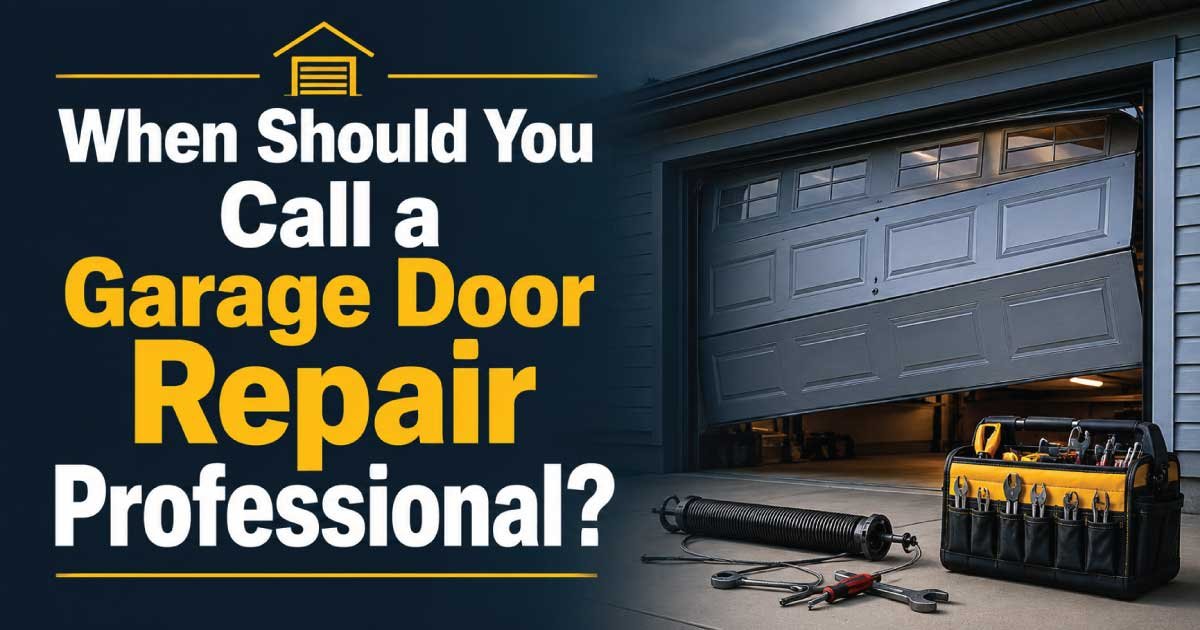
A garage door is one of the hardest-working systems in most homes. It opens and closes several times a day, protects your vehicles and belongings, and often serves as a primary entrance. When it starts making unusual noises, moving unevenly, refusing to open, or reversing unexpectedly, it’s more than just an inconvenience. These warning signs often indicate mechanical wear, electrical issues, or damaged safety components that should not be ignored.
Knowing when you should call a garage door repair professional can help you avoid expensive damage, prevent injuries, and extend the life of your garage door system. While some maintenance tasks are safe for homeowners, other problems involve high-tension springs, heavy moving parts, and electrical components that require specialized knowledge and equipment.
This repair guide explains how a garage door system normally works, the most common warning signs of trouble, why these issues happen, and how to perform a safe initial inspection. You’ll also learn which problems you can troubleshoot yourself, when to stop, and how to recognize situations that require professional repair before they become serious safety hazards.
Common Signs and Symptoms
Most garage door problems begin with small warning signs before the system fails completely. Paying attention to these early symptoms can help you diagnose issues sooner, reduce repair costs, and prevent sudden breakdowns. Some signs are minor maintenance concerns, while others indicate problems that require immediate professional attention.
Common symptoms include:
- Garage door won’t open or close completely
- Door moves only a few inches before stopping
- Remote control works inconsistently
- Wall switch doesn’t respond
- Loud grinding, squeaking, popping, or banging noises
- Door shakes or vibrates while moving
- Door appears crooked or uneven
- Garage door reverses before touching the floor
- Slow opening or closing speed
- Door feels unusually heavy when disconnected from the opener
- Visible gaps in extension or torsion springs
- Frayed or loose lifting cables
- Bent or damaged tracks
- Flashing opener lights after operation
- Burning smell from the opener motor
- Door gets stuck midway through travel
Less common symptoms may include:
- The opener runs, but the door doesn’t move.
- The door opens by itself unexpectedly.
- Safety sensors blink continuously.
- Rollers repeatedly jump off the track.
- The opener hums without lifting the door.
If more than one of these symptoms appears at the same time, the problem is often more complex than a simple adjustment. Continuing to operate the door can place extra stress on the opener, springs, and lifting system, increasing the likelihood of additional damage.
How the Garage Door System Normally Works
Understanding how a garage door operates makes troubleshooting much easier. Every component depends on the others, so a problem in one area often creates symptoms elsewhere. Knowing the normal sequence of operation also helps homeowners recognize when something is out of place.
A standard residential garage door includes several major components:
- Garage door opener
- Torsion or extension springs
- Lift cables
- Rollers
- Hinges
- Vertical and horizontal tracks
- Safety photo-eye sensors
- Emergency release mechanism
- Remote controls and wall switch
Here’s what normally happens during operation:
- You press the remote or wall button.
- The opener motor receives the signal.
- The motor turns a belt, chain, or screw drive.
- Springs provide most of the lifting force.
- Cables lift the door evenly on both sides.
- Rollers travel smoothly inside the tracks.
- The opener controls speed and stopping points.
- Safety sensors monitor for obstacles during closing.
- The door reaches its fully open or closed position.
- The opener locks the door in place until the next cycle.
One important point many homeowners don’t realize is that the garage door opener is not designed to lift the entire weight of the door by itself. Properly adjusted springs carry most of the load. If the springs weaken or break, the opener works much harder than intended, which often leads to motor damage.
Modern garage door systems also include force sensors and automatic reverse features. If the opener detects excessive resistance or the photo-eye sensors detect an obstruction, it immediately stops and reverses the door to reduce the risk of injury.
Most Common Reasons This Problem Happens
Garage door issues rarely occur without warning. Most develop gradually because of wear, weather, poor maintenance, accidental damage, or aging components. Identifying the root cause helps determine whether basic troubleshooting is appropriate or whether professional repair is the safer option.
Broken or Worn Springs
Garage door springs have a limited lifespan measured in operating cycles. After thousands of openings and closings, the metal weakens until it eventually breaks.
Why it happens
- Normal wear over time
- Rust and corrosion
- Poor spring adjustment
- Heavy daily use
Symptoms
- Loud bang from the garage
- Door suddenly becomes very heavy
- Opener struggles to lift the door
- Door only opens a few inches
How to identify it
Look for a visible gap in a torsion spring or a stretched extension spring. Never attempt to repair or remove garage door springs yourself because they are under extreme tension and can cause serious injury.
Damaged Lift Cables
Lift cables work together with the springs to raise and lower the garage door safely. They gradually wear from friction and constant tension.
Why it happens
- Age
- Rust
- Fraying
- Misaligned pulleys
- Broken springs placing extra strain on the cables
Symptoms
- Uneven door movement
- One side rises faster than the other
- Loose cable hanging beside the track
How to identify it
Inspect both cables from a safe distance. Frayed strands, unraveling wire, or loose cables indicate the door should not be operated until repaired.
Misaligned Safety Sensors
Photo-eye sensors prevent the garage door from closing on people, pets, or objects. Even slight movement can interrupt their alignment.
Why it happens
- Accidental bumps
- Dirt on the sensor lenses
- Loose mounting brackets
- Wiring issues
Symptoms
- Door closes briefly, then reverses
- Flashing opener lights
- Sensor indicator lights blinking
How to identify it
Check whether both sensor indicator lights remain solid. Clean the lenses with a soft cloth and verify both sensors face each other directly.
Worn Rollers and Tracks
Rollers guide the garage door through the tracks. Over time, both components experience wear that affects smooth operation.
Why it happens
- Lack of lubrication
- Dirt buildup
- Bent tracks
- Old plastic rollers
- Heavy usage
Symptoms
- Grinding noises
- Jerky movement
- Door sticking during travel
How to identify it
Visually inspect the tracks for dents or debris and look for cracked, chipped, or worn rollers. Minor cleaning is a DIY maintenance task, but bent tracks often require professional adjustment.
Garage Door Opener Problems
The opener contains electrical and mechanical parts that eventually wear out or lose calibration.
Why it happens
- Aging motor
- Faulty circuit board
- Incorrect travel settings
- Power fluctuations
- Worn drive gear
Symptoms
- Motor runs without moving the door
- Intermittent operation
- Unusual humming noises
How to identify it
Disconnect the opener using the emergency release and lift the door manually. If the door moves smoothly by hand, the opener may be the source of the problem.
Safety Precautions Before Troubleshooting
Garage doors can weigh well over 150 pounds, and some components store enough energy to cause severe injuries if handled improperly. Before beginning any troubleshooting or inspection, make safety your first priority. Knowing what not to do is just as important as knowing what to inspect.
Follow these essential safety precautions:
- Disconnect power to the opener before inspecting electrical components.
- Keep children and pets away from the work area.
- Never stand beneath a partially open garage door.
- Do not loosen, adjust, or remove torsion or extension springs.
- Never disconnect lift cables under tension.
- Wear safety glasses and work gloves.
- Use a stable ladder instead of standing on vehicles or storage boxes.
- Avoid loose clothing that could become caught in moving parts.
- Test the emergency release only when the door is fully closed whenever possible.
- If the door appears crooked or off-track, stop using it immediately.
Professional repair is the safest choice if you notice:
- Broken springs
- Snapped cables
- Bent tracks causing the door to lean
- Smoke or burning odors from the opener
- Electrical damage
- Structural damage after a vehicle impact
These repairs require specialized tools, replacement parts, and experience that most homeowners do not have.
Also Read:
Tools Required
Most basic inspections require only common household tools. These tools help you identify visible problems without attempting dangerous repairs.
| Tool | Purpose |
|---|---|
| Flashlight | Inspect dark areas around tracks, springs, and opener |
| Step ladder | Safely reach the opener and upper hardware |
| Safety glasses | Protect eyes from dust and debris |
| Work gloves | Improve grip and protect hands |
| Tape measure | Check door alignment and track spacing |
| Soft cloth | Clean safety sensor lenses |
| Screwdriver set | Tighten accessible screws and brackets |
| Adjustable wrench | Inspect and tighten non-tension hardware |
| Garage door lubricant | Lubricate rollers, hinges, and bearings where recommended |
| Smartphone camera | Document damaged components for repair estimates |
Step-by-Step Troubleshooting Guide
A logical inspection process helps you rule out simple problems before assuming major repairs are needed. Always begin with the safest checks and avoid dismantling any part of the lifting system.
- Check the power supply.
Confirm the opener is plugged in and the circuit breaker has not tripped. Without power, the opener cannot respond to the remote or wall switch. If power is restored and the door operates normally, no further troubleshooting may be needed. - Inspect the remote and wall control.
Test both controls to determine whether the issue is isolated to one device. Replace remote batteries if necessary. If one control works while the other does not, the problem is likely with the transmitter rather than the garage door system. - Examine the safety sensors.
Look for dirt, misalignment, or blocked sensor lenses. Properly aligned sensors usually display steady indicator lights. If cleaning and alignment restore normal operation, monitor the door for consistent performance over the next several cycles. - Operate the door manually.
Disconnect the opener using the emergency release with the door fully closed if possible. Lift the door by hand. It should move smoothly and stay near the halfway point without falling. If it feels extremely heavy or unstable, stop troubleshooting and arrange a professional inspection. - Inspect visible hardware.
Check rollers, hinges, tracks, brackets, and mounting bolts for damage or looseness. Tighten only accessible fasteners that are not connected to springs or cables. If you find bent tracks or damaged lifting components, avoid further operation until repairs are completed.
Quick Diagnosis Table
| Symptom | Possible Cause | Recommended Solution |
|---|---|---|
| Door won’t open | Broken spring or opener issue | Stop using the door and schedule a professional inspection |
| Door reverses while closing | Misaligned safety sensors | Clean and realign the sensors |
| Loud grinding noise | Worn rollers or lack of lubrication | Inspect rollers and apply approved garage door lubricant |
| Door moves unevenly | Damaged cable or track problem | Avoid operating the door and contact a professional |
| Opener runs but door doesn’t move | Disconnected trolley or damaged drive mechanism | Check the emergency release and inspect the opener |
| Door feels very heavy | Broken spring | Do not attempt DIY spring replacement |
| Flashing opener lights | Sensor obstruction or system fault | Clear obstructions and verify sensor alignment |
| Slow or jerky movement | Worn rollers, debris, or track damage | Clean tracks, inspect hardware, and schedule repairs if needed |
How to Fix Each Common Cause
Once you’ve identified the likely cause of your garage door problem, the next step is determining whether it’s safe to repair yourself or if professional service is the better choice. Many homeowners can handle basic maintenance, but repairs involving high-tension parts, electrical components, or structural alignment require specialized tools and training. Always disconnect power to the opener before performing any maintenance, and stop immediately if you encounter damaged springs or cables.
Misaligned Safety Sensors
Safety sensors are one of the easiest garage door components to troubleshoot.
How to fix it:
- Disconnect power to the opener.
- Wipe both sensor lenses with a clean microfiber cloth.
- Remove leaves, tools, or other objects blocking the beam.
- Check that both sensors face each other directly.
- Tighten loose mounting brackets.
- Restore power and test the door several times.
When to call a professional:
- Damaged sensor wiring
- Cracked sensor housings
- Sensors remain unresponsive after alignment
Dirty or Dry Rollers and Hinges
Lack of lubrication creates unnecessary friction that causes noisy and uneven operation.
How to fix it:
- Clean loose dirt from rollers and hinges.
- Apply a garage door lubricant designed for moving metal parts.
- Open and close the door several times to distribute the lubricant.
- Wipe away excess lubricant to prevent dirt buildup.
Avoid using heavy grease or general-purpose penetrating oils unless recommended by the manufacturer, as they can attract dust and reduce performance over time.
Minor Track Obstructions
Small obstructions may prevent rollers from moving smoothly.
How to fix it:
- Remove leaves, stones, or accumulated debris.
- Wipe the tracks with a clean cloth.
- Inspect for loose mounting brackets.
- Tighten accessible hardware if needed.
Do not hammer bent tracks back into shape. Improper adjustments can worsen alignment and create additional safety risks.
Remote Control Problems
Sometimes the garage door itself is functioning correctly, but the remote is not.
How to fix it:
- Replace the batteries.
- Clean the battery contacts.
- Confirm you’re within operating range.
- Reprogram the remote if recommended by the manufacturer.
- Verify the opener’s antenna hangs freely.
If multiple remotes fail while the wall button continues working, reprogramming usually resolves the issue.
Garage Door Opener Settings
Modern openers use travel limits and force settings to control movement.
Incorrect adjustments may cause:
- Incomplete opening
- Door reversing unexpectedly
- Door stopping before reaching the floor
Many homeowners can adjust these settings by following the manufacturer’s instructions. However, avoid making large adjustments all at once. Test the door after every small change to prevent creating additional problems.
Broken Springs
Do not attempt DIY spring replacement.
Torsion and extension springs store tremendous energy. Removing or installing them incorrectly can cause severe injuries or property damage.
A qualified garage door repair professional will:
- Select springs with the correct rating.
- Safely release spring tension.
- Replace both springs when appropriate.
- Balance the door.
- Inspect cables and bearings for related wear.
Replacing both springs together is often recommended because they typically wear at similar rates.
Damaged Lift Cables
Lift cables should also be considered professional repairs.
Never attempt to:
- Rewind cables.
- Disconnect cable drums.
- Remove cable brackets under tension.
Cable failures often occur alongside spring failures, making the repair significantly more dangerous than it appears.
Also Read:
Advanced Troubleshooting
If basic troubleshooting doesn’t identify the problem, a more detailed inspection may be necessary. These less common failures are often overlooked because their symptoms resemble more familiar issues. Diagnosing them accurately can prevent replacing the wrong parts and wasting money.
Worn Opener Drive Gear
Many chain-drive openers contain a plastic drive gear that gradually wears out.
Symptoms include:
- Motor runs normally.
- Door doesn’t move.
- Grinding noise from inside the opener.
This repair requires partial disassembly of the opener and replacement of internal components.
Faulty Logic Board
The logic board acts as the opener’s control center.
Possible symptoms include:
- Random operation
- Remote programming failures
- Flashing lights without an obvious cause
- Intermittent response
Power surges and aging electronics are common causes.
Door Out of Balance
A balanced garage door should stay nearly in place when lifted halfway manually.
If it:
- Falls quickly
- Rises on its own
- Feels unusually heavy
the spring system likely needs professional adjustment.
Operating an unbalanced door places excessive stress on the opener and shortens its lifespan.
Bent Door Sections
Vehicle impacts, severe weather, or accidental damage may bend one or more door panels.
Watch for:
- Visible gaps
- Uneven movement
- Rollers leaving the tracks
- Excess vibration
Minor cosmetic dents may not affect operation, but structural damage usually requires panel replacement or professional realignment.
Electrical Problems
Electrical faults can involve:
- Loose wiring
- Failed capacitors
- Burned circuit boards
- Damaged wall switches
- Faulty outlets
Because these issues combine electricity with heavy moving equipment, professional diagnosis is the safest approach.
When Repair Is Not Worth It
Although many garage door problems are repairable, there comes a point where replacement offers better long-term value. Continually fixing an aging system can become more expensive than investing in a modern, safer, and more energy-efficient door.
Replacement is often the smarter option when:
- The door is more than 20–25 years old.
- Multiple major components have failed.
- Replacement parts are difficult to obtain.
- Structural panels are severely damaged.
- Repair costs approach half the price of a new installation.
- The door lacks modern safety features.
- Insulation is poor and energy efficiency is important.
- The opener is incompatible with current safety standards.
New garage doors typically provide:
- Improved insulation
- Quieter operation
- Better security
- Smartphone connectivity
- Enhanced safety systems
- Increased curb appeal
- Higher property value
A professional inspection can help determine whether repair or replacement offers the best return on investment.
Preventive Maintenance Tips
Preventive maintenance is the most effective way to reduce unexpected garage door repairs. Spending a few minutes every few months inspecting and maintaining the system can significantly extend the life of its components and improve overall reliability.
Good maintenance habits include:
- Inspect rollers, hinges, and tracks every month.
- Listen for new noises during operation.
- Lubricate moving parts every six months or as recommended.
- Test the automatic reverse system monthly.
- Clean photo-eye sensors regularly.
- Tighten accessible hardware during routine inspections.
- Keep tracks free from dirt and debris.
- Replace remote batteries before they fail completely.
- Watch for rust on springs and cables.
- Schedule a professional inspection every one to two years.
Avoid delaying small repairs. Replacing an inexpensive roller or hinge early can prevent damage to the opener, tracks, or door panels later.
Common Mistakes to Avoid
Many garage door repairs become more expensive because homeowners unintentionally make the problem worse. Understanding these common mistakes can help you avoid unnecessary damage and stay safe during troubleshooting.
Avoid these errors:
- Continuing to operate a door with a broken spring.
- Ignoring unusual noises.
- Lubricating tracks instead of rollers and hinges.
- Attempting spring replacement without proper tools.
- Operating a door with frayed cables.
- Adjusting torsion hardware without training.
- Using incorrect replacement parts.
- Forcing a stuck garage door open.
- Disabling safety sensors.
- Skipping routine inspections.
A good rule is simple: if a repair involves spring tension, structural alignment, or electrical diagnosis beyond basic checks, professional service is usually the safest and most cost-effective choice.
Also Read:
When to Call a Professional
Some garage door issues are simply too dangerous or technically complex for DIY repair. Knowing when you should call a garage door repair professional can prevent injuries, protect your equipment, and ensure the repair is completed correctly the first time.
Call a professional if you notice:
- Broken torsion or extension springs
- Snapped or frayed lift cables
- Garage door off its tracks
- Door hanging unevenly
- Structural damage after an impact
- Opener motor emitting smoke or burning odors
- Persistent electrical issues
- Door that suddenly becomes extremely heavy
- Repeated failures after basic troubleshooting
- Bent tracks requiring realignment
- Multiple worn components needing replacement
- Annual inspections for older garage door systems
Professional technicians have specialized winding bars, alignment tools, lifting equipment, and replacement parts that allow them to safely repair systems under extreme tension. They can also identify hidden wear that may not be obvious during a homeowner’s inspection, helping prevent future breakdowns.
Estimated Repair Costs
The cost of garage door repairs depends on the failed component, labor rates, door size, and local market conditions. The estimates below represent common residential repairs.
| Repair | Estimated Cost | DIY or Professional |
|---|---|---|
| Sensor cleaning and alignment | $0–$75 | DIY or Professional |
| Remote battery replacement | $5–$20 | DIY |
| Roller lubrication | $10–$25 | DIY |
| Roller replacement | $100–$250 | Professional Recommended |
| Track adjustment | $150–$300 | Professional |
| Cable replacement | $150–$350 | Professional |
| Spring replacement | $200–$500 | Professional |
| Garage door opener repair | $150–$400 | Professional |
| Logic board replacement | $200–$450 | Professional |
| Complete opener replacement | $350–$800 | Professional |
| New garage door installation | $900–$2,500+ | Professional |
Costs vary depending on door material, opener type, and regional labor rates. Requesting a written estimate before work begins helps avoid surprises.
Final Thoughts
Knowing when you should call a garage door repair professional is just as important as knowing how to perform basic troubleshooting. Many issues begin with simple warning signs such as unusual noises, slow movement, uneven operation, or reversing during closing. Addressing these symptoms early can prevent more expensive repairs and reduce the risk of unexpected breakdowns.
Routine inspection, lubrication, and cleaning are valuable DIY maintenance tasks that help extend the life of your garage door system. However, repairs involving springs, lift cables, electrical components, opener internals, or structural alignment should always be handled by trained professionals. These parts operate under significant force and can become hazardous without the proper equipment and experience.
By following a logical troubleshooting process, practicing preventive maintenance, and recognizing the limits of DIY repair, homeowners can keep their garage doors operating safely and reliably for many years. When in doubt, prioritize safety over convenience—a professional inspection today can prevent costly damage and serious injuries tomorrow.

Engineer Ali Usman is a professional garage door expert and author at FixFasty, with over 10 years of hands-on experience in garage door systems and mechanical maintenance. He writes clear, step-by-step guides on garage door repairs, parts, and safety practices, helping homeowners fix problems correctly and maintain smooth, secure, and long-lasting garage door performance.