
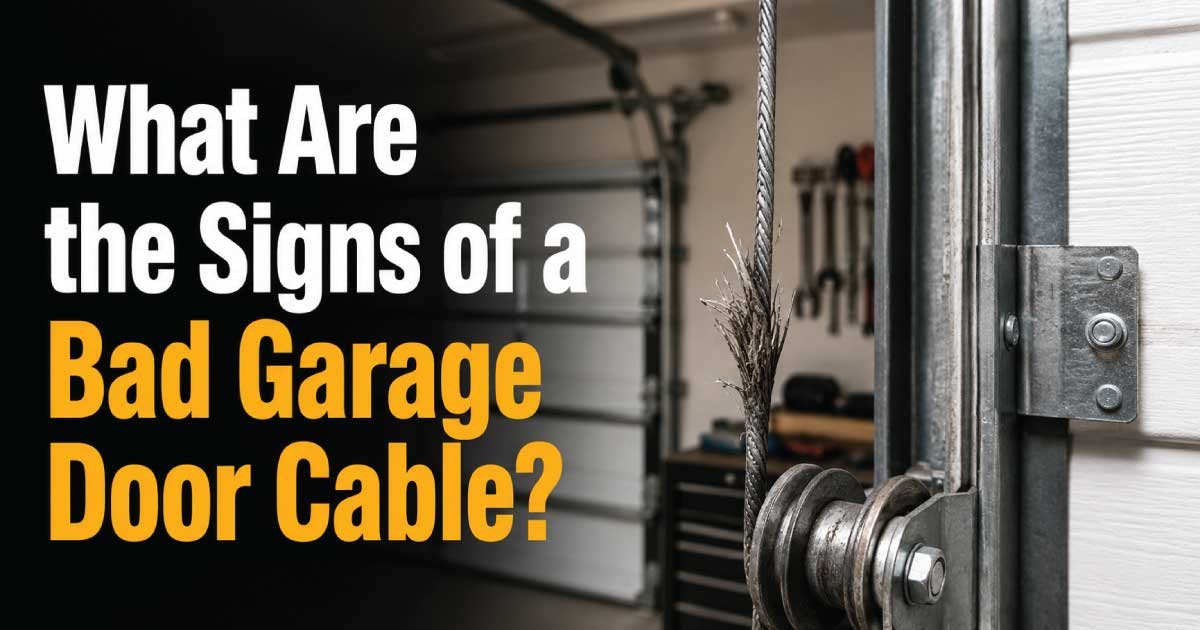
A garage door is one of the largest moving components in any home, and its smooth operation depends on several essential parts working together. Among these components, garage door cables play a critical role in lifting and lowering the heavy door safely. While homeowners often notice issues with springs, rollers, or openers, damaged garage door cables can go unnoticed until they cause significant problems.
Ignoring a worn or damaged cable can lead to expensive repairs, unexpected breakdowns, and even serious safety hazards. Recognizing the warning signs early can help you avoid larger issues and ensure your garage door continues to operate safely and efficiently.
In this guide, we’ll explain the common signs of a bad garage door cable, why cables fail, the risks of delaying repairs, and when it’s time to call a professional.
What Is a Garage Door Cable?
Garage door cables are heavy-duty steel cables that work alongside the garage door springs. Their primary function is to support the weight of the garage door during opening and closing.
These cables help:
- Lift the heavy garage door evenly
- Maintain proper door balance
- Prevent sudden door drops
- Reduce strain on the garage door opener
- Improve overall safety
Most residential garage doors use either torsion spring cables or extension spring safety cables. Both types are essential for safe operation.
Common Signs of a Bad Garage Door Cable
Knowing the warning signs can help you prevent a complete garage door failure.
1. Frayed or Broken Cable Strands
One of the earliest signs of cable damage is visible fraying.
Steel cables are made from multiple strands twisted together. Over time, constant movement causes individual wires to wear out.
You may notice:
- Loose wire strands sticking out
- Rust forming on the cable
- Uneven cable thickness
- Broken steel wires
Even minor fraying weakens the cable considerably. Once a cable begins unraveling, it can snap without warning.
2. Garage Door Looks Uneven
A healthy garage door should remain level while opening and closing.
If one cable becomes damaged, one side of the door may lift higher than the other.
Signs include:
- Crooked door movement
- One side dragging
- Door tilting during operation
- Uneven gaps along the bottom
Operating the door in this condition can damage the tracks, rollers, and opener.
3. Door Makes Loud Noises
Garage doors naturally make some sound during operation, but unusual noises often indicate cable problems.
Listen for:
- Grinding
- Snapping
- Popping
- Scraping
- Squealing
These sounds may occur because damaged cables no longer move smoothly over the cable drums.
4. Garage Door Won’t Open Completely
A failing cable may prevent the door from lifting properly.
Common symptoms include:
- Door opens halfway then stops
- Door immediately reverses
- Opener struggles to lift the door
- Door feels unusually heavy
If a cable snaps completely, the garage door may become impossible to open safely.
5. Loose or Hanging Cable
Garage door cables should always remain under proper tension.
A loose cable may:
- Hang from the side of the door
- Slip off the cable drum
- Become tangled
- Rub against other hardware
This issue requires immediate attention because the cable could come off completely.
6. Door Slams Shut
One of the most dangerous warning signs is a garage door that closes rapidly.
When a cable fails, the springs can no longer control the door’s weight properly.
This creates serious safety risks, especially if:
- Children are nearby
- Vehicles are underneath
- Pets are in the garage
Never attempt to operate a door that suddenly falls.
7. Visible Rust or Corrosion
Garage door cables are exposed to moisture, humidity, and temperature changes.
Over time, rust weakens the steel.
Look for:
- Brown discoloration
- Corrosion
- Rough cable texture
- Pitting
Rust reduces cable strength and increases the chance of breakage.
8. Cable Has Come Off the Drum
Garage door cables wrap around cable drums mounted near the torsion spring.
If the cable slips off, you may notice:
- Loose loops of cable
- Door becoming crooked
- Door refusing to move
- Cable wrapped incorrectly
Never rewind the cable yourself unless you have proper training.
9. Garage Door Shakes During Movement
A damaged cable can cause uneven lifting.
This often leads to:
- Excessive vibration
- Jerky movement
- Shaking
- Sudden stops
Ignoring these symptoms can place extra stress on other garage door components.
10. The Door Feels Extremely Heavy
If you disconnect the automatic opener and manually lift the garage door, it should feel relatively balanced.
If the door suddenly feels much heavier than normal, damaged cables or springs may no longer be supporting its weight.
Avoid forcing the door open manually if it feels unusually heavy.
Also Read:
Why Garage Door Cables Go Bad
Several factors contribute to cable wear over time.
Normal Wear and Tear
Garage doors typically open and close several times every day.
After thousands of cycles, cables naturally begin wearing out.
Rust
Humidity and water exposure gradually corrode steel cables.
Homes in wet or coastal climates often experience faster cable deterioration.
Poor Maintenance
Lack of routine inspection allows minor damage to become severe.
Simple annual maintenance can significantly extend cable life.
Misaligned Tracks
If garage door tracks become bent or misaligned, cables experience uneven tension.
This accelerates wear.
Broken Springs
Garage door springs and cables work together.
When springs fail, cables suddenly carry additional stress, increasing the likelihood of failure.
Why You Should Never Ignore a Bad Garage Door Cable
Waiting too long can create expensive and dangerous problems.
Potential consequences include:
- Complete cable breakage
- Door falling unexpectedly
- Damaged garage door opener
- Bent tracks
- Broken rollers
- Damaged panels
- Personal injury
- Vehicle damage
Replacing a worn cable early is often far less expensive than repairing multiple damaged components later.
Can You Replace Garage Door Cables Yourself?
Many homeowners consider DIY repairs after watching online tutorials.
However, garage door cable replacement involves high-tension springs that can cause serious injuries if handled incorrectly.
Professional technicians use specialized tools to safely:
- Release spring tension
- Replace damaged cables
- Balance the door
- Test safe operation
- Inspect related components
Unless you have extensive experience, cable replacement should always be left to trained professionals.
Also Read:
How Professionals Diagnose Cable Problems
During a professional inspection, technicians typically examine:
- Cable condition
- Cable drums
- Springs
- Rollers
- Hinges
- Tracks
- Bearings
- Bottom brackets
- Door balance
- Garage door opener
This comprehensive inspection helps identify hidden issues before they become costly repairs.
How to Extend the Life of Garage Door Cables
Routine maintenance can significantly increase cable lifespan.
Helpful maintenance tips include:
- Inspect cables every few months.
- Look for rust or fraying.
- Keep the tracks clean.
- Schedule annual professional maintenance.
- Avoid forcing a stuck garage door.
- Replace worn springs before they damage the cables.
- Never ignore unusual noises.
Preventive maintenance often saves homeowners hundreds of dollars in future repair costs.
When Should You Call a Garage Door Repair Professional?
You should contact a garage door repair expert immediately if you notice:
- Frayed cables
- Broken cable strands
- Crooked door movement
- Loud snapping noises
- Loose cables
- Door falling rapidly
- Cable off the drum
- Door won’t open properly
Prompt repairs help prevent additional damage and keep your family safe.
Final Thoughts
Garage door cables are small components with a big responsibility. They help support the full weight of your garage door, maintain smooth movement, and keep the entire system operating safely. When cables begin to fray, loosen, rust, or fail, they should never be ignored.
Regular inspections and timely maintenance can help you identify problems before they turn into major repairs. If you notice any of the warning signs discussed above, avoid using the garage door until it has been inspected by a qualified technician. Acting quickly not only protects your garage door system but also helps ensure the safety of everyone who uses it.
Whether your cables need adjustment or replacement, professional garage door repairs can restore reliable operation and prevent more costly damage in the future.

Engineer Ali Usman is a professional garage door expert and author at FixFasty, with over 10 years of hands-on experience in garage door systems and mechanical maintenance. He writes clear, step-by-step guides on garage door repairs, parts, and safety practices, helping homeowners fix problems correctly and maintain smooth, secure, and long-lasting garage door performance.