
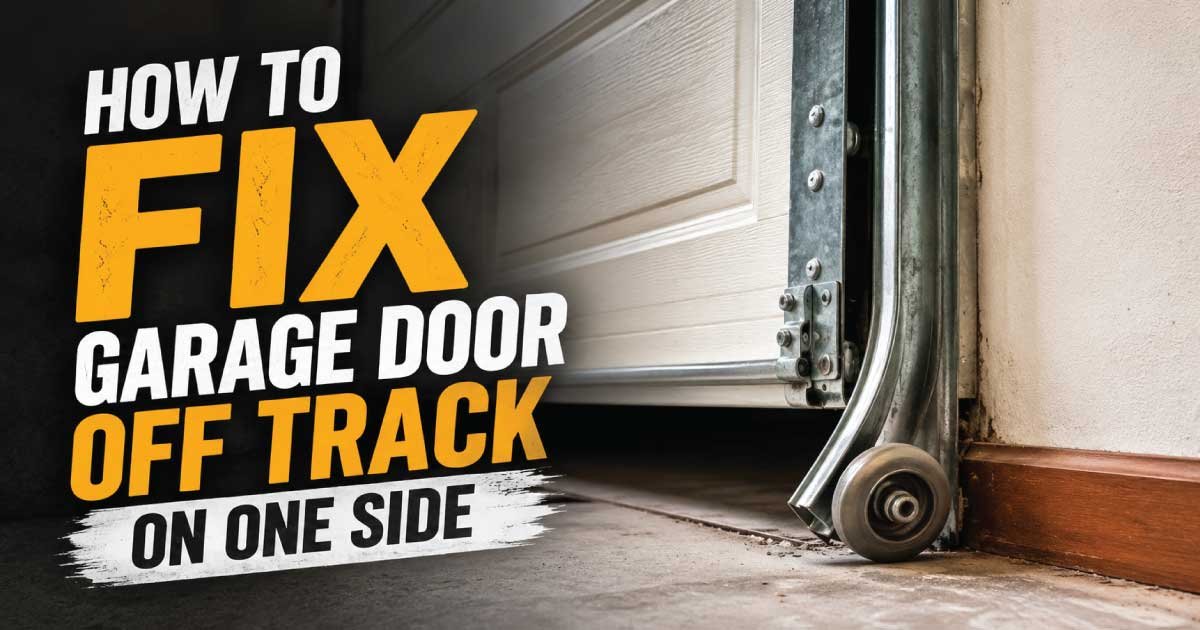
A garage door that has come off track on one side is more than just an inconvenience—it’s a serious safety issue. When one side slips out of alignment, the door can jam, tilt, or even collapse unexpectedly. Many homeowners first notice the problem when the door looks crooked, makes grinding noises, or refuses to open or close smoothly.
The good news is that some off-track garage door issues can be fixed safely by homeowners, as long as the damage is minor and you follow the right steps. However, garage doors are heavy and under high tension, so it’s critical to know when a DIY fix is appropriate and when to call a professional.
Understanding How Garage Door Tracks Work
Before attempting any repair, it’s important to understand how the garage door track system operates as a whole. Knowing how the tracks, rollers, and door panels work together helps you identify problems early, avoid unnecessary damage, and approach repairs more safely and confidently.
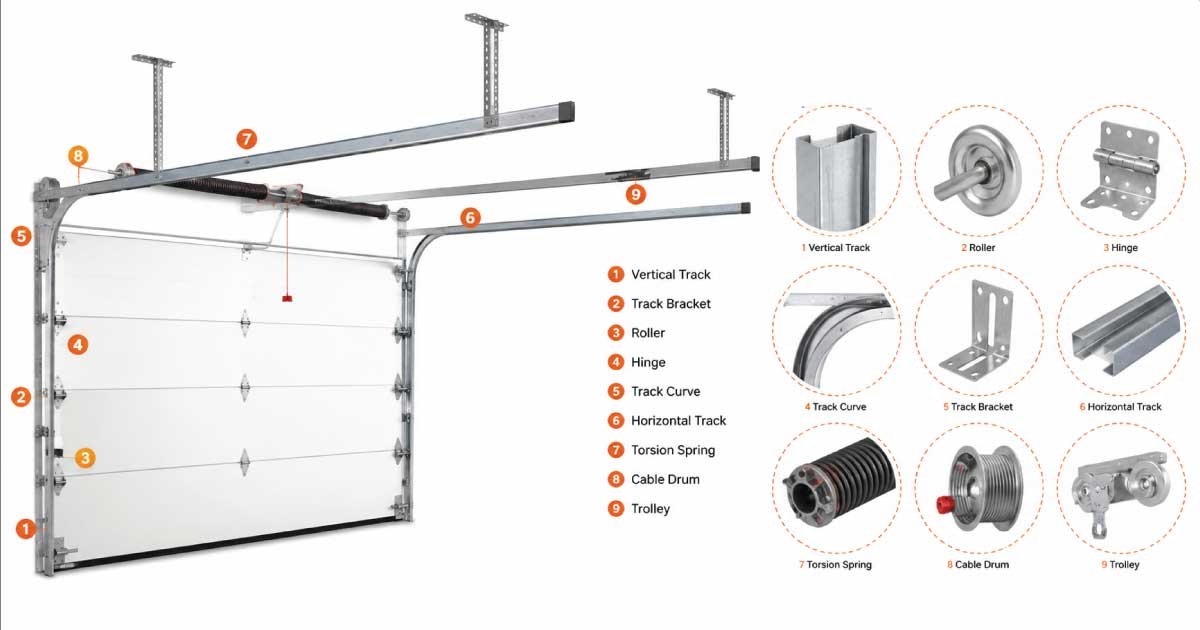
Garage doors run on metal tracks mounted to the wall on both sides of the opening. Small wheels called rollers sit inside these tracks and guide the door as it moves up and down. For the door to operate correctly, both tracks must remain:
- Parallel
- Securely fastened
- Free from obstructions
When one side goes off track, the door becomes unbalanced. The opener may struggle, the door may stick halfway, or the bottom panel may tilt inward or outward.
Common Causes of a Garage Door Coming Off Track on One Side
Knowing the cause helps you determine whether the problem can be safely handled at home or if professional service is necessary. Garage doors come off track for several mechanical or external reasons, and identifying the exact cause prevents repeat failures and further damage.
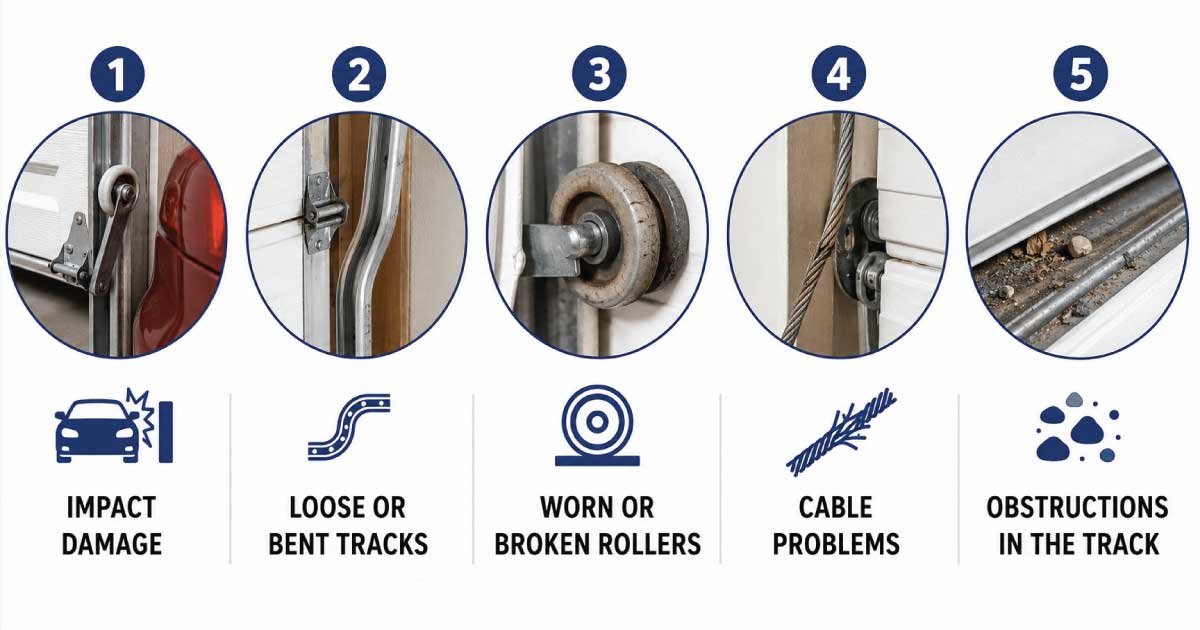
1. Impact Damage
Impact damage occurs when an external object strikes the garage door or its tracks with enough force to dislodge a roller. This often happens accidentally during everyday activities around the driveway or garage and can immediately affect door alignment and smooth operation.
A car bumper, bike, lawn equipment, or even trash bins can knock a roller out of the track. This is one of the most common causes.
2. Loose or Bent Tracks
Garage door tracks must stay straight and firmly secured to guide the door properly. Over time, normal use, vibrations, or poor installation can weaken mounting points, causing the tracks to shift or deform and interfere with smooth roller movement.
Over time, vibration and daily use can loosen track brackets. A bent track can force rollers out of alignment.
3. Worn or Broken Rollers
Rollers experience constant motion and bear significant weight every time the door opens or closes. As they age, lack of lubrication, rust, or material fatigue can reduce their ability to roll smoothly, increasing friction and the risk of derailment.
Cracked, rusted, or seized rollers may no longer glide smoothly, causing them to jump the track.
4. Cable Problems
Lifting cables work under high tension to keep both sides of the garage door balanced. When one cable becomes damaged or fails, uneven weight distribution occurs, often causing one side of the door to drop suddenly and pull rollers out of position.
If the lifting cable on one side becomes loose, frayed, or broken, that side of the door may drop, pulling rollers out of the track.
5. Obstructions in the Track
Garage door tracks are exposed to dust, moisture, and debris from daily use. Even small obstructions can disrupt roller movement, create resistance, and gradually force the door out of alignment if not cleaned or maintained regularly.
Dirt, hardened grease, small rocks, or metal debris can prevent rollers from moving freely.
Safety First: Important Warnings
Garage door repairs involve serious safety risks due to the door’s weight and the tension stored in its springs and cables. Understanding these dangers before starting helps prevent severe injuries, property damage, or worsening the problem through improper handling or unsafe repair attempts.
Garage doors can weigh 150–300 pounds and are supported by high-tension springs and cables.
Do NOT attempt this repair if:
- A torsion or extension spring is broken
- A lifting cable has snapped
- The track is severely bent or torn from the wall
- The door is hanging at an extreme angle
In these cases, stop immediately and contact a professional garage door technician.
Tools You will Need
Having the correct tools prepared before starting any garage door repair makes the process safer, faster, and more controlled. Using improper tools can lead to stripped hardware, misalignment, or personal injury, especially when working around heavy door components under tension.
If the issue appears minor, gather the following tools:
- Adjustable wrench or socket set
- Locking pliers or C-clamps
- Rubber mallet or hammer (with wood block)
- Flathead screwdriver or pry bar
- Level
- Safety gloves and eye protection
- Garage door lubricant (silicone-based)
Step-by-Step: How to Fix a Garage Door Off Track on One Side
Following a structured, step-by-step approach helps reduce risk and prevents further damage to your garage door system. Each step builds on the previous one, so take your time, work carefully, and stop immediately if anything feels unsafe or unstable during the process.
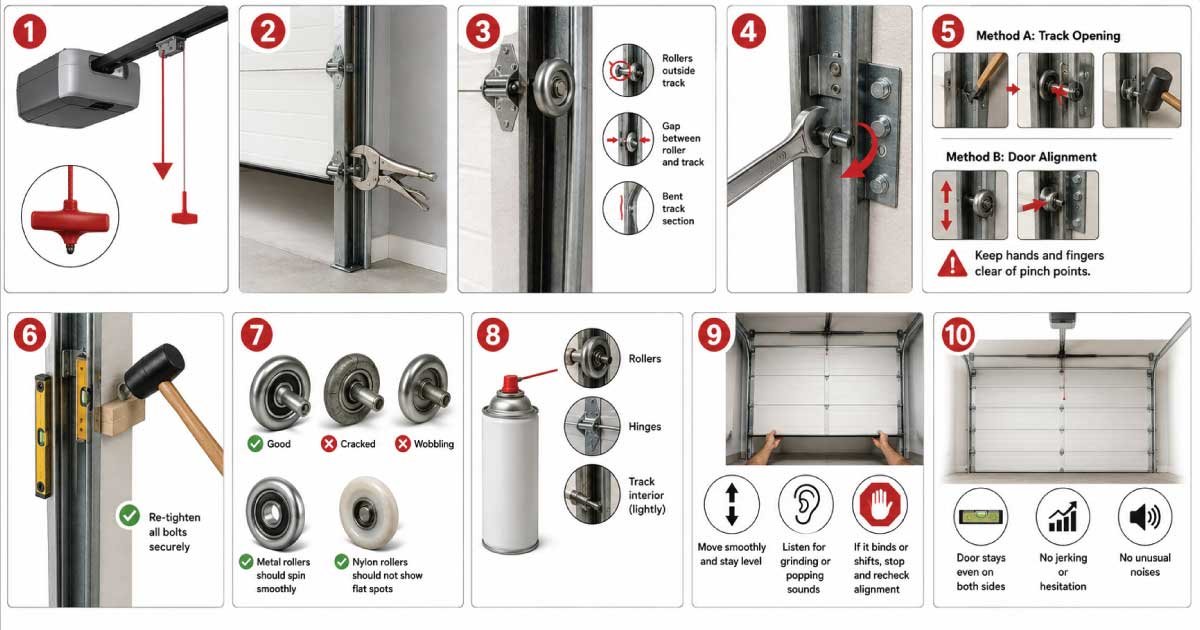
Step 1: Disconnect the Garage Door Opener
Disconnecting the opener is essential before any manual adjustment. This step prevents the motor from engaging while you work, reduces strain on the opener system, and allows you to safely move the door by hand without resistance or unexpected activation.
Pull the emergency release cord (usually a red handle) to disconnect the opener. This allows you to move the door manually and prevents motor damage.
Step 2: Secure the Door in Place
Before working on the track or rollers, the garage door must be stabilized. An unsecured door can suddenly slide or fall due to its weight, creating a serious safety hazard and increasing the risk of injury or property damage. If the door is partially open, do not let it slam shut.
- Place locking pliers or C-clamps on the track below the lowest roller on the working side
- This prevents the door from sliding unexpectedly
Step 3: Identify the Off-Track Rollers
Carefully inspecting the door helps confirm exactly where the problem lies. Identifying the affected rollers or track sections ensures you apply adjustments only where needed, reducing unnecessary loosening of properly aligned components.
Inspect both sides of the door. On the problem side, you’ll usually see:
- Rollers sitting outside the track
- A gap between the roller and track
- A visibly bent section of track
Step 4: Loosen the Track Brackets
Loosening the track brackets slightly provides the flexibility needed to reposition the rollers safely. This step should be done gradually and carefully to avoid shifting the entire track or creating additional alignment issues.
Using a wrench:
- Slightly loosen (do not remove) the bolts holding the track to the wall
- This creates enough flexibility to guide the roller back in
Step 5: Reinsert the Roller into the Track
Reinserting the roller is the core corrective action in this repair process. It must be done slowly and deliberately to avoid bending the track further or placing your hands in dangerous pinch points while the door is under partial load.
There are two common methods:
Method A: Track Opening
- Locate the curved section of track near the bottom
- Gently pry the track open just enough
- Guide the roller back inside
- Tap the track back into shape using a rubber mallet
Method B: Door Alignment
- Carefully lift or lower the door to align the roller
- Slide the roller back into the track opening
Always keep hands and fingers clear of pinch points.
Step 6: Straighten and Align the Track
Once the roller is properly seated, the track must be returned to correct alignment. Even minor bends or twists can cause recurring problems, uneven door movement, or future derailment if not corrected before tightening everything back into place.
Once the roller is back in place:
- Use a level to ensure the track is plumb (vertical)
- Gently tap bent areas straight with a mallet and wood block
- Re-tighten all mounting bolts securely
Step 7: Check and Adjust Rollers
Rollers play a critical role in smooth and balanced door movement. Inspecting them now helps prevent repeat failures, especially if worn rollers were the original cause of the door coming off track on one side.
Spin each roller by hand:
- Replace cracked, stiff, or wobbling rollers
- Metal rollers with bearings should rotate smoothly
- Nylon rollers should not show flat spots
Step 8: Lubricate Moving Parts
Proper lubrication reduces friction, minimizes wear, and helps the garage door operate quietly and smoothly. This step also protects newly realigned components from binding or jumping the track again during regular operation.
Apply garage door lubricant to:
- Rollers
- Hinges
- Track interior (lightly do not over-grease)
This reduces friction and prevents future derailment.
Step 9: Test the Door Manually
Manual testing ensures the door is balanced and moving correctly before reintroducing the opener. Skipping this step can cause immediate re-damage if alignment issues are still present or if resistance remains in the system.
Before reconnecting the opener:
- Lift and lower the door by hand
- It should move smoothly and stay level
- Listen for grinding or popping sounds
If the door binds or shifts, stop and recheck alignment.
Step 10: Reconnect the Opener and Test
Reconnecting the opener is the final confirmation that all adjustments were successful. This step ensures the door operates smoothly under motor power and that the opener is not straining due to misalignment, resistance, or lingering balance issues after the repair.
Reconnect the opener and run a full open/close cycle. Watch closely:
- Door should stay even on both sides
- No jerking or hesitation
- No unusual noises
🚪 Read More: Garage Door Repair Tips ➜ How to Test Garage Door Sensors with a Multimeter: Complete DIY Guide
Common Mistakes to Avoid
Avoiding common repair mistakes is just as important as following the correct steps. Small errors can quickly turn a manageable issue into major damage, increasing repair costs and safety risks while shortening the lifespan of your garage door system.
- Forcing the door closed when it’s off track
- Ignoring cable tension issues
- Hammering the track directly without a wood buffer
- Over-loosening track bolts, causing misalignment
- Using grease instead of silicone lubricant
These mistakes often lead to bigger, costlier problems.
When to Call a Professional
While minor track issues can sometimes be handled safely at home, certain warning signs indicate a serious mechanical problem. Attempting repairs under these conditions can be dangerous and may cause severe injury or additional damage to the door system.
DIY repair is not recommended if you notice:
- A broken spring
- A frayed or snapped cable
- Track pulled away from the wall
- Door extremely crooked or stuck overhead
- Repeated derailment after adjustment
Professional technicians have the tools and training to safely handle high-tension components.
How to Prevent Garage Doors from Going Off Track Again
Preventive maintenance greatly reduces the chances of track-related problems and extends the life of your garage door system. Regular inspections and small upkeep tasks help catch wear early, maintain proper alignment, and avoid unexpected breakdowns or safety hazards.
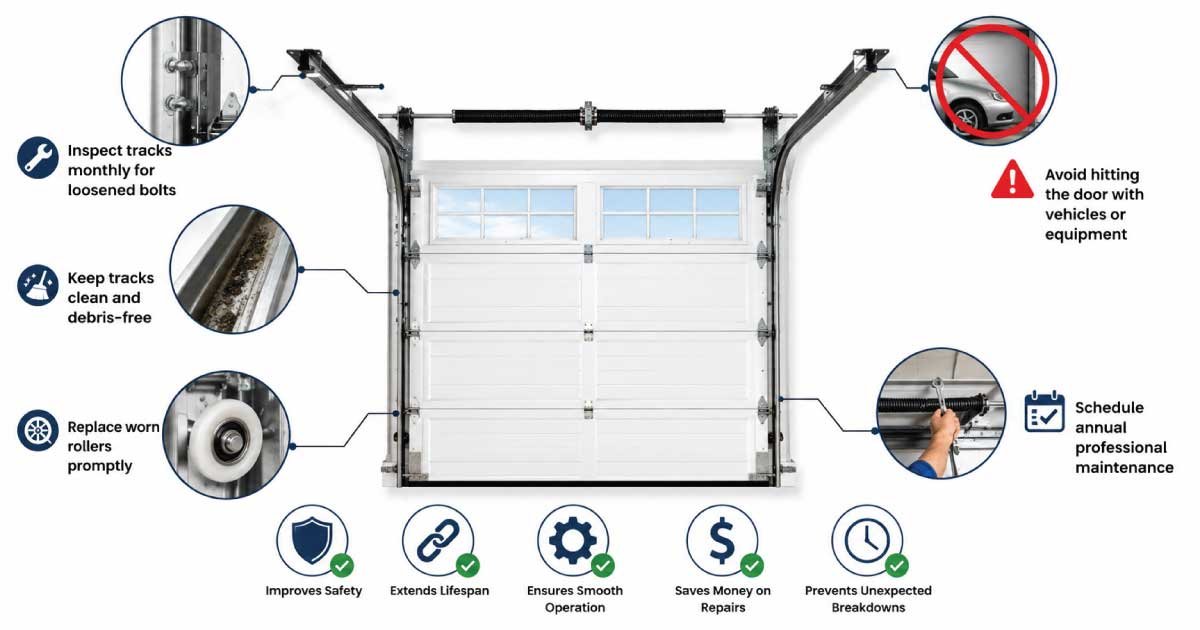
Prevention is easier than repair. Follow these tips:
- Inspect tracks monthly for loosened bolts
- Keep tracks clean and debris-free
- Replace worn rollers promptly
- Avoid hitting the door with vehicles or equipment
- Schedule annual professional maintenance
Final Thoughts
A garage door off track on one side can often look worse than it is—but it should never be ignored. In mild cases, careful realignment and track adjustment can restore smooth operation. However, because garage doors operate under significant weight and tension, safety must always come first.
If at any point the repair feels unsafe or the problem seems beyond basic alignment, don’t hesitate to stop and seek professional help. A properly aligned garage door not only works better but also protects your home, vehicle, and family.
🚪 Read More: Garage Door Repair Tips ➜ How to Fix a Garage Door Wheel Off Track: A Complete DIY Guide

Engineer Ali Hasan is a garage door expert and the founder of FixFasty. With over 16 years of experience in mechanical systems and home maintenance, he provides practical, step-by-step guides on garage door installation, repairs, and maintenance, helping homeowners keep their garage doors safe, reliable, and long-lasting.