
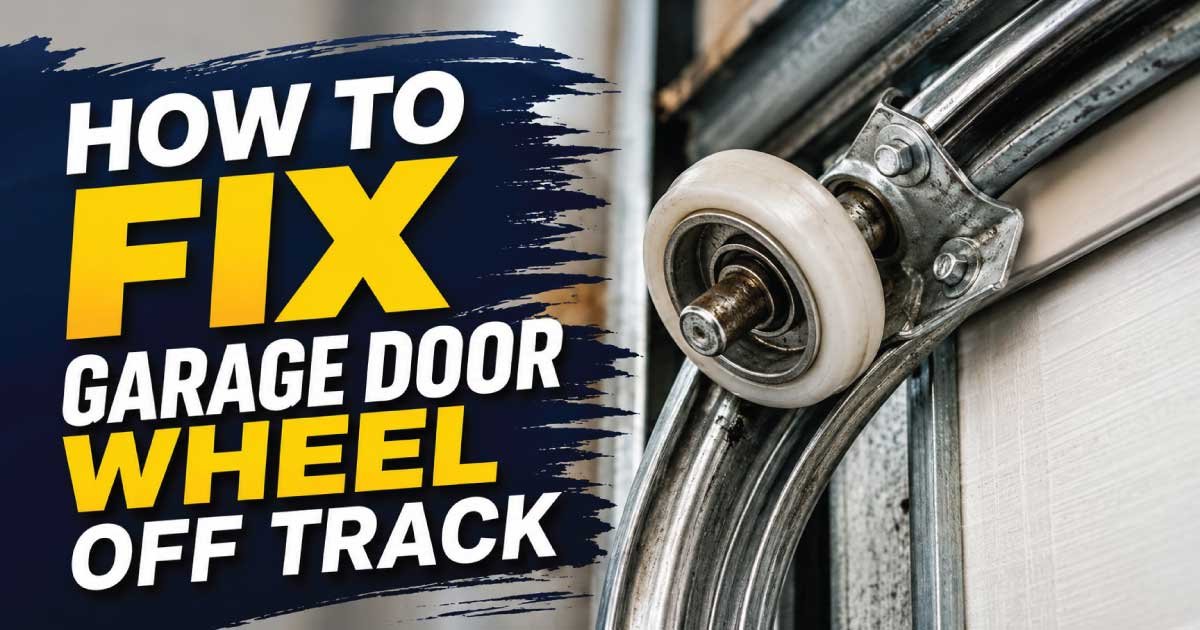
A garage door coming off its track is one of the most alarming problems a homeowner can face. One moment the door works fine, and the next it’s jammed, crooked, or hanging at an awkward angle. The culprit is often a garage door wheel (roller) that has slipped off the track. While this issue looks serious and can be dangerous it’s often fixable with the right tools, patience, and safety precautions.
This guide will walk you step by step through how to fix a garage door wheel off track, explain why it happens, and help you decide when it’s time to call a professional.
Understanding Garage Door Wheels and Tracks
Garage door wheels, commonly known as rollers, play a vital role in the smooth and safe operation of a garage door system. These small, round components are mounted along the door’s edges and move within metal tracks, allowing the door to open and close steadily, quietly, and with proper alignment.
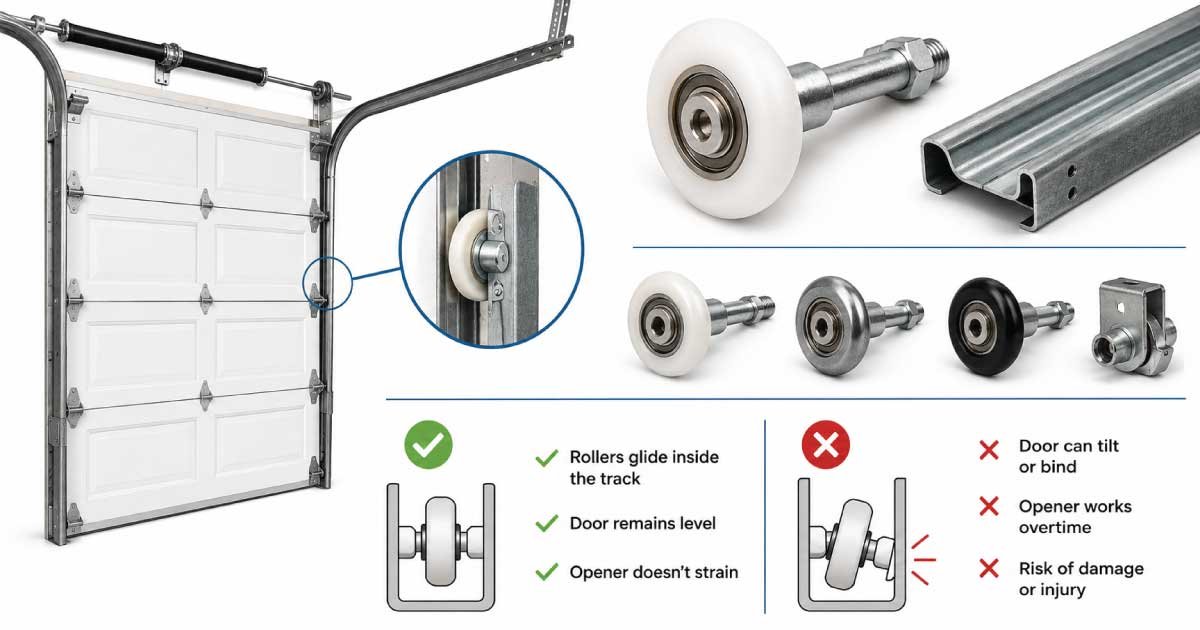
When everything is aligned correctly:
- The rollers glide inside the track
- The door remains level
- The opener doesn’t strain
When a wheel comes off track, the system loses balance. The door may tilt, stick, or stop moving altogether. Continuing to operate it in this condition can cause further damage or even injury.
Common Reasons a Garage Door Wheel Comes Off Track
Before fixing the problem, it’s important to understand why it happened. Garage door rollers usually derail due to physical interference, wear, or alignment issues. Knowing the exact cause helps you apply the right solution and prevents repeat problems that could lead to costly repairs or safety risks.
1. Obstruction in the Track
Garage door tracks must stay clean and clear for rollers to move smoothly. Even small amounts of dirt or debris can disrupt movement. Over time, grease can harden and trap particles, creating resistance that forces a roller out of position during normal operation.
Small objects, dirt, hardened grease, or debris can block the track, forcing the roller to jump out.
2. Bent or Damaged Track
Garage door tracks are designed to stay perfectly aligned, but they can bend from sudden impact or long-term stress. Once bent, the track can no longer properly cradle the roller, increasing friction and making derailment much more likely during opening or closing.
If the track is bent from impact (such as being hit by a car or lawn equipment), the roller may no longer sit properly.
3. Worn or Broken Rollers
Rollers experience constant movement and load, so wear is unavoidable over time. Aging rollers may develop cracks, flat spots, or internal bearing failure. These issues reduce stability, causing rollers to wobble or bind, which significantly raises the chance of coming off track.
Old rollers can crack, seize, or wobble, making them more likely to derail.
4. Loose Hardware
Garage door systems rely on tightly secured brackets, hinges, and bolts to maintain alignment. Vibration from daily use can slowly loosen hardware. When this happens, the track may shift slightly, creating gaps or angles that allow rollers to slip out unexpectedly.
Loose brackets or bolts can shift the track alignment over time.
5. Door Impact
Sudden force is one of the most common reasons rollers derail. Even a low-speed impact can knock tracks out of alignment. Many homeowners accidentally back into a closed door, and the resulting force often pushes rollers out of the track instantly.
Backing into a closed garage door is a very common cause of rollers popping off track.
Safety First: What You Must Do Before Starting
Garage doors are extremely heavy and operate under significant spring and cable tension. A simple mistake can quickly lead to serious injury or property damage. Taking a few minutes to prepare properly and follow basic safety rules greatly reduces risk and helps ensure the repair process stays controlled and manageable.
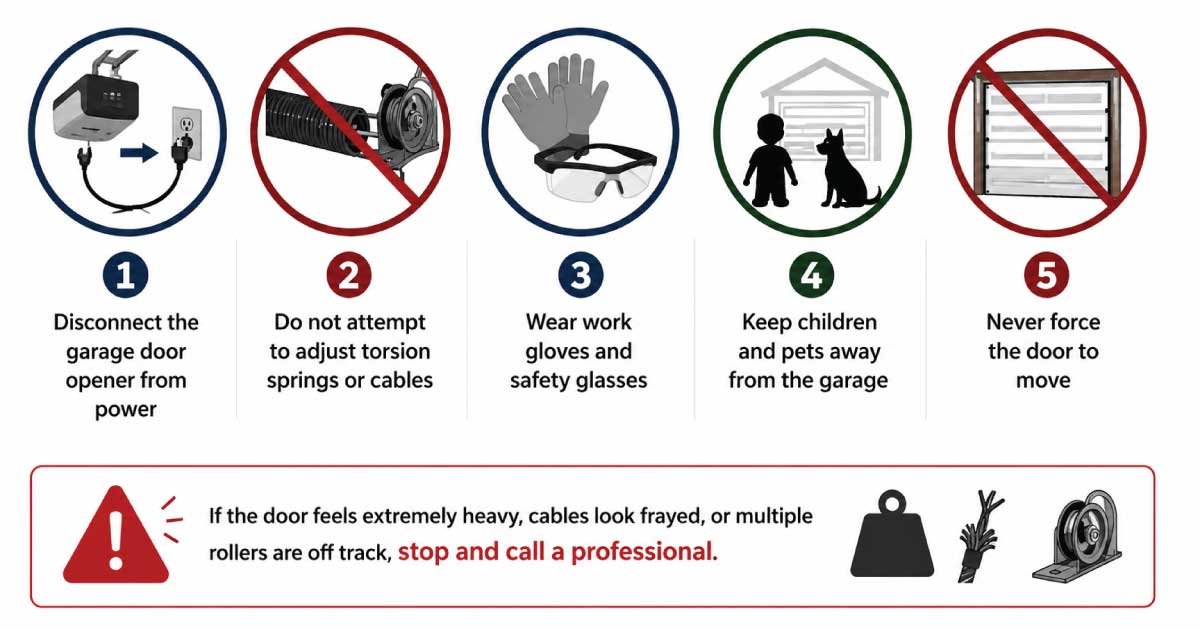
Essential Safety Steps
- Disconnect the garage door opener from power
- Do not attempt to adjust torsion springs or cables
- Wear work gloves and safety glasses
- Keep children and pets away from the garage
- Never force the door to move
If the door feels extremely heavy, cables look frayed, or multiple rollers are off track, stop and call a professional.
Tools and Supplies You will Need
Having the correct tools on hand makes the repair process smoother, faster, and far safer. While no specialized equipment is required, basic household tools allow you to stabilize the door, realign components, and replace damaged rollers without unnecessary strain or risk.
- Locking pliers or C-clamps
- Flathead screwdriver or pry bar
- Adjustable wrench
- Rubber mallet
- Level
- Garage door lubricant (silicone-based)
- Step ladder
- Replacement roller (if damaged)
Step-by-Step: How to Fix a Garage Door Wheel Off Track
Fixing a garage door wheel that has come off track requires patience, attention to detail, and strict safety awareness. Following each step carefully helps restore proper alignment, prevents further damage, and ensures the door operates smoothly again without putting unnecessary strain on the system or risking personal injury.
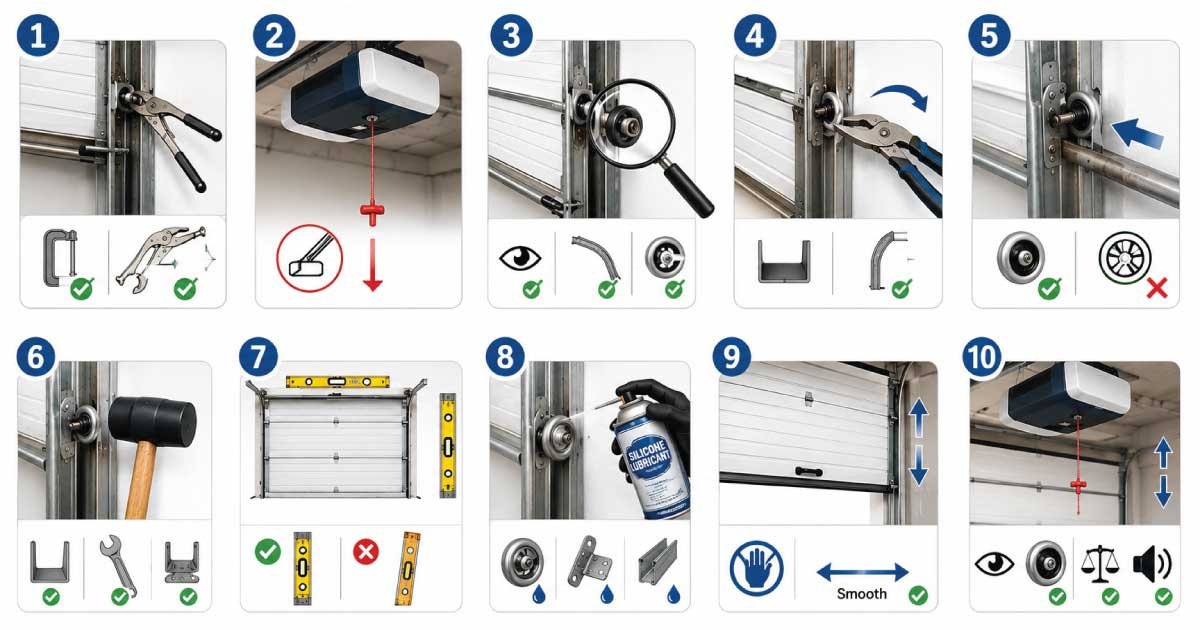
Step 1: Secure the Door in Place
Before touching the track or rollers, the garage door must be fully stabilized. An unsecured door can suddenly drop due to gravity, causing injury or damage. Properly securing the door ensures it stays in position while you work on the affected roller.
If the door is partially open, do not let it drop.
- Clamp locking pliers or C-clamps onto the track just below the lowest roller still inside the track
- This prevents the door from sliding down while you work
If the door is fully closed, it’s safer and easier to repair.
Step 2: Disconnect the Garage Door Opener
Disconnecting the opener eliminates the risk of the motor activating while your hands are near the rollers and track. This step ensures the door remains in manual mode, giving you full control and preventing sudden movement during the repair process.
Pull the emergency release cord to disconnect the opener. This ensures the door won’t move unexpectedly while you’re fixing the roller.
Step 3: Locate the Off-Track Roller
A careful inspection helps you understand the full scope of the problem before making adjustments. Identifying damage early prevents repeat issues and ensures you don’t miss additional rollers or track problems that could affect door balance and smooth operation.
Inspect both sides of the door and identify:
- Which roller is out
- Whether the track is bent
- If the roller itself is damaged
Often, only one roller is off, but always check them all.
Step 4: Open the Track Slightly
Garage door tracks are designed to hold rollers firmly, so a small adjustment is needed to reinsert one that has popped out. Opening the track slightly creates enough space to guide the roller back in without compromising the track’s shape or strength.
- Gently bend the outer edge of the track open just enough to guide the roller back in
- Do not over-bend the track; a small gap is sufficient
Work slowly to avoid cracking or warping the metal.
Step 5: Reinsert the Roller
This step restores the roller to its proper position inside the track. Careful placement ensures smooth movement and reduces friction. Checking the roller’s condition now prevents reinstalling a damaged part that could fail again soon.
- Carefully guide the roller back into the track
- Make sure it sits fully inside and rotates freely
If the roller is cracked, stiff, or wobbling, replace it instead of reinstalling it.
Step 6: Straighten and Secure the Track
Once the roller is back in place, the track must be returned to its original alignment. Properly shaped and secured tracks keep rollers moving smoothly, reduce noise, and prevent future derailments caused by misalignment or loose hardware.
After the roller is back in place:
- Use a wrench or mallet to gently bend the track back to its original shape
- Ensure the track is snug but not pressing tightly against the rollers
Check that all mounting brackets are tight.
Step 7: Check Track Alignment
Proper track alignment is critical for smooth garage door operation and long-term reliability. Even a slightly crooked track can place uneven pressure on rollers, increasing friction and causing them to derail again. Verifying alignment now helps prevent repeat issues and unnecessary wear on door components.
Using a level:
- Ensure the vertical tracks are plumb
- Horizontal tracks should slope slightly downward toward the back of the garage
Misaligned tracks can cause the roller to pop out again.
Step 8: Lubricate Rollers and Track
Lubrication reduces friction, noise, and strain on the garage door system. Applying the correct lubricant helps rollers glide smoothly through the track and protects metal parts from premature wear, especially after making adjustments or reinstalling rollers.
Apply a silicone-based garage door lubricant to:
- Rollers
- Hinges
- Track interior
Avoid grease or oil that attracts dirt and debris.
Step 9: Test the Door Manually
Manual testing allows you to feel resistance or imbalance that may not be obvious when using the opener. This step ensures the rollers and tracks are working together smoothly before mechanical assistance is restored.
Before reconnecting the opener:
- Slowly lift and lower the door by hand
- It should move smoothly without jerking or resistance
If it binds or tilts, stop and recheck alignment.
Step 10: Reconnect the Opener and Test
The final test confirms the repair was successful under normal operating conditions. Observing the door during a powered cycle helps catch any lingering issues before they cause damage or safety concerns.
Reconnect the opener and run a full open-close cycle while observing:
- Roller movement
- Door balance
- Unusual noises
If everything runs smoothly, the repair is complete.
🚪 Read More: Garage Door Repair Tips ➜ How to Fix a Garage Door Off Track: Complete Guide
When You Should NOT DIY This Repair
While fixing a single off-track garage door roller is often manageable for homeowners, certain situations significantly increase risk. Garage doors operate under extreme tension, and more complex failures can lead to serious injury or further damage if handled incorrectly. Knowing when to stop is just as important as knowing how to fix it.
Call a garage door technician if:
- Multiple rollers are off track
- The door is hanging unevenly
- Cables are loose or frayed
- The track is severely bent or torn
- The door uses torsion springs and feels extremely heavy
Attempting these repairs without training can be dangerous.
How to Prevent Garage Door Rollers from Coming Off Track
Preventing garage door rollers from coming off track is much easier than dealing with repairs after the fact. Regular maintenance and careful use help keep the system balanced, reduce wear on components, and extend the overall lifespan of your garage door.
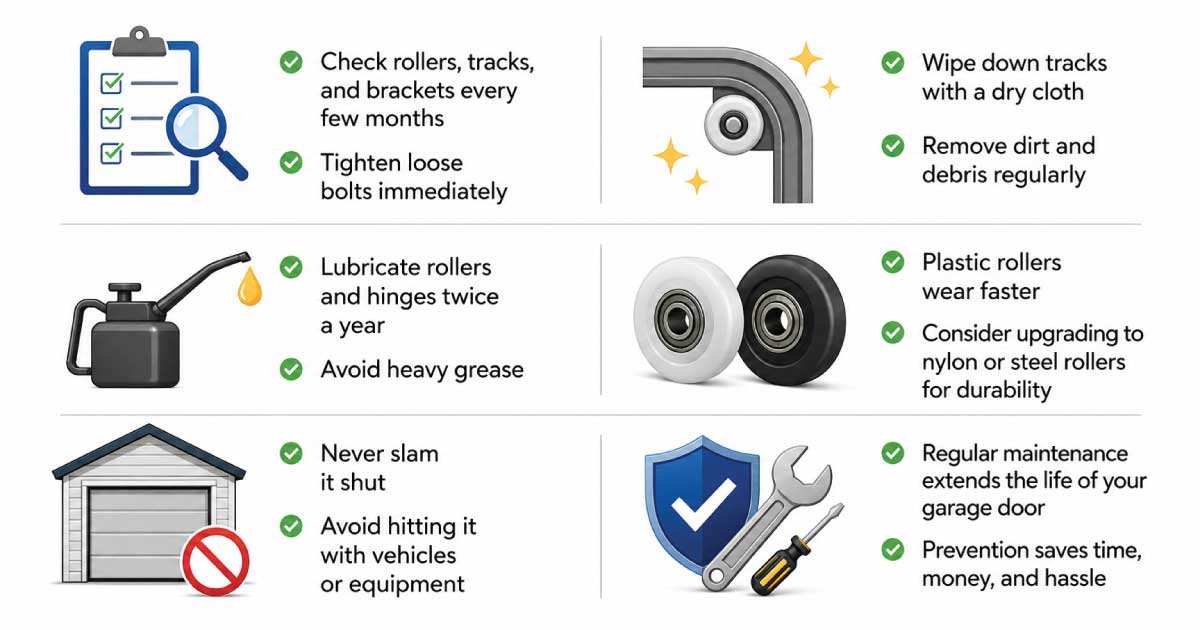
Perform Regular Inspections
Routine checks allow you to spot early signs of wear or misalignment before they become serious problems. Catching issues early can prevent rollers from slipping out of the track unexpectedly.
- Check rollers, tracks, and brackets every few months
- Tighten loose bolts immediately
Keep Tracks Clean
Clean tracks ensure smooth roller movement and reduce the chance of obstruction-related derailments. Dirt and debris buildup can create friction and force rollers out of alignment over time.
- Wipe down tracks with a dry cloth
- Remove dirt and debris regularly
Lubricate Moving Parts
Proper lubrication reduces friction and noise while allowing rollers to move freely inside the track. Consistent maintenance also helps prevent premature wear of metal components.
- Lubricate rollers and hinges twice a year
- Avoid heavy grease
Replace Worn Rollers
Old or damaged rollers are more likely to fail or jump the track. Upgrading to higher-quality materials can significantly improve performance and durability over time.
- Plastic rollers wear faster
- Consider upgrading to nylon or steel rollers for durability
Be Gentle with Your Garage Door
Careful daily use plays a major role in preventing mechanical stress and alignment issues. Avoiding sudden impacts helps keep tracks and rollers in proper working condition.
- Never slam it shut
- Avoid hitting it with vehicles or equipment
🚪 Read More: Garage Door Repair Tips ➜ How to Test Garage Door Sensors with a Multimeter: Complete DIY Guide
Cost of Repair vs Professional Service
Deciding between a DIY fix and hiring a professional often comes down to the severity of the issue, your experience level, and safety concerns. While minor roller realignment can be inexpensive to handle on your own, more complex problems may require expert tools and knowledge, which increases the overall service cost but ensures safer and longer-lasting results.
If you fix it yourself:
- Cost: $0–$20 (or $10–$30 if replacing a roller)
Professional repair:
- Typically $100–$250 depending on damage
DIY saves money, but safety should always come first.
Final Thoughts
A garage door wheel off track can look intimidating, but in many cases, it’s a straightforward DIY repair if handled carefully. By understanding the cause, taking proper safety precautions, and following a structured step-by-step approach, you can restore your garage door’s smooth operation and avoid costly service calls.
However, never hesitate to call a professional if the door feels unsafe or the damage is extensive. A garage door is the largest moving object in most homes—respecting its power is essential.
With regular maintenance and quick attention to minor issues, you can keep your garage door running smoothly for years to come.
🚪 Read More: Garage Door Repair Tips ➜ Simple Garage Door Safety Tips Every Homeowner Should Know

Engineer Ali Usman is a professional garage door expert and author at FixFasty, with over 10 years of hands-on experience in garage door systems and mechanical maintenance. He writes clear, step-by-step guides on garage door repairs, parts, and safety practices, helping homeowners fix problems correctly and maintain smooth, secure, and long-lasting garage door performance.