
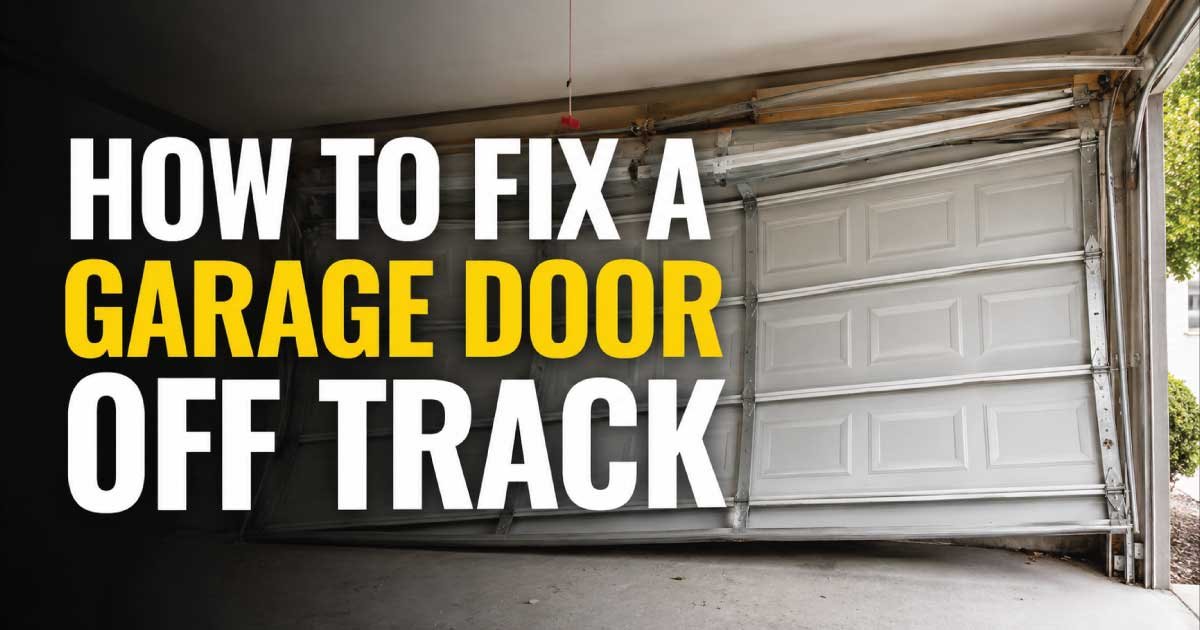
A garage door that has come off its track is more than an inconvenience—it can quickly become a serious safety hazard. Whether the rollers have slipped out of the track, the door looks crooked, or it refuses to open and close smoothly, ignoring the problem can lead to damaged hardware, costly repairs, or even personal injury. In many cases, a garage door goes off track because of accidental impact, worn rollers, broken cables, loose hardware, or poor maintenance. Understanding the root cause is the first step toward fixing it safely.
This guide explains how to fix a garage door off track in a practical, beginner-friendly way while also pointing out situations where a DIY repair is not the safest choice. You’ll learn how a garage door system normally works, how to recognize early warning signs, what tools you’ll need, and how to troubleshoot the problem step by step before attempting any repairs. By following the correct inspection process and safety precautions, you’ll be better prepared to identify the issue, prevent further damage, and decide whether the repair is suitable for DIY or requires a professional technician.
Common Signs and Symptoms
A garage door rarely comes off its track without showing warning signs first. Learning to recognize these symptoms can help you stop using the door before additional damage occurs. In many cases, homeowners notice unusual movement or sounds several days before the rollers completely leave the track.
Common signs include:
- The garage door appears crooked or uneven.
- One side of the door is higher than the other.
- Rollers have popped out of the metal track.
- The door gets stuck halfway when opening or closing.
- Loud grinding, scraping, or popping noises during operation.
- The door shakes excessively while moving.
- Gaps appear between the rollers and the track.
- Bent or visibly damaged track sections.
- Loose cables hanging near the sides of the door.
- The automatic opener strains or stops unexpectedly.
- The door closes only partway before reversing.
- Manual operation feels unusually heavy or difficult.
You may also notice that the opener continues running while the door barely moves. This often indicates that the door is no longer aligned correctly or another component has failed. Continuing to operate the opener in this condition can worsen the damage by bending the track further or placing excessive stress on the opener motor.
If the garage door has completely left the track or appears unstable, avoid forcing it open or closed until you’ve completed a careful inspection.
How the Appliance or System Normally Works
Before troubleshooting a garage door that has gone off track, it helps to understand how the system is designed to operate. Knowing how the parts work together makes it much easier to identify what has failed and why the door is no longer moving correctly.
A standard sectional garage door operates using several interconnected components:
- Tracks: Guide the rollers as the door moves vertically and then horizontally along the ceiling.
- Rollers: Small wheels attached to each door panel that travel smoothly inside the tracks.
- Hinges: Connect the individual door sections so they can bend as the door follows the curved track.
- Springs: Counterbalance the door’s weight, making it much easier to lift manually or with an opener.
- Cables: Transfer spring tension to help raise and lower the door evenly.
- Garage door opener: Powers the door using a motor and drive system but does not support the door’s weight.
During normal operation, the rollers remain fully seated inside the tracks while the springs balance the heavy weight of the door. The opener simply guides the movement rather than lifting the full load.
If any of these components become damaged, loose, or misaligned, the rollers may climb over the edge of the track or leave it entirely. Once this happens, the door often twists, jams, or becomes unsafe to operate.
Most Common Reasons This Problem Happens
A garage door can come off track for several different reasons. Identifying the exact cause is essential because simply putting the rollers back into the track without fixing the underlying issue usually results in the same problem happening again.
Accidental Impact
One of the most common causes is accidentally hitting the garage door with a vehicle.
Why it happens
Even a slow-speed bump can bend the track, shift the door panels, or force rollers out of alignment.
Symptoms
- Crooked door
- Bent lower track
- Visible dents
- Rollers outside the track
How to identify it
Inspect the lower panels and both tracks for fresh dents, scratches, or areas where the metal has shifted inward.
Bent or Misaligned Tracks
Garage door tracks must remain perfectly aligned for smooth operation.
Why it happens
Tracks may become bent after impact, loose mounting brackets, or years of vibration.
Symptoms
- Door binds during movement
- Rollers rub against the track
- Loud scraping noises
How to identify it
Stand several feet back and compare both tracks. They should appear straight and evenly spaced from top to bottom.
Worn or Broken Rollers
Rollers experience constant movement every time the garage door opens or closes.
Why it happens
Age, lack of lubrication, dirt buildup, and worn bearings eventually cause rollers to crack or seize.
Symptoms
- Jerky movement
- Grinding noises
- Rollers wobble excessively
How to identify it
Rotate each roller by hand while the door is secured. Healthy rollers spin smoothly without excessive side-to-side movement.
Broken Lift Cables
Garage door cables help lift the door evenly on both sides.
Why it happens
Rust, wear, fraying, or sudden spring failure can cause cables to snap.
Symptoms
- Door hangs unevenly
- One side lifts while the other stays down
- Loose cable visible
How to identify it
Look along both sides of the door. Any cable that appears loose, frayed, or broken requires immediate attention.
Because cables remain under significant tension, homeowners should avoid attempting cable repairs without proper training.
Loose Hardware
Garage doors contain dozens of bolts, brackets, hinges, and fasteners.
Why it happens
Daily vibration gradually loosens hardware over time.
Symptoms
- Rattling noises
- Track movement
- Misaligned hinges
How to identify it
Check mounting brackets, hinge screws, and track supports for movement or missing fasteners.
Obstructions in the Track
Small objects can interfere with roller movement.
Why it happens
Leaves, stones, children’s toys, hardened grease, or accumulated dirt block smooth travel.
Symptoms
- Door stops suddenly
- One roller jumps the track
- Uneven movement
How to identify it
Inspect the full length of both tracks using a flashlight.
Broken or Weak Springs
Garage door springs balance hundreds of pounds of door weight.
Why it happens
Springs wear out after thousands of operating cycles.
Symptoms
- Door feels unusually heavy
- Opener struggles
- Loud bang before failure
How to identify it
Look for visible gaps in torsion springs or stretched extension springs.
Never attempt to adjust or replace garage door springs without the proper equipment and experience because they store dangerous amounts of energy.
Safety Precautions Before Troubleshooting
Garage doors are among the heaviest moving parts in most homes. Before beginning any troubleshooting, take a few minutes to make the work area safe. Many serious injuries occur because homeowners underestimate the tension stored in springs and cables or attempt repairs while the door is unstable.
Follow these safety precautions before inspecting the system:
- Disconnect power to the automatic garage door opener.
- Pull the emergency release cord only if the door is fully closed and stable.
- Never stand directly beneath a partially open door.
- Wear safety glasses to protect against flying debris.
- Use sturdy work gloves when handling metal tracks.
- Keep children and pets away from the work area.
- Use a stable ladder positioned on level ground.
- Do not loosen spring brackets or cable drums.
- Avoid operating the opener repeatedly if the door is off track.
- Secure the door with locking pliers if movement is possible.
- Work with another adult whenever possible, especially when inspecting large double doors.
If the door appears ready to fall, has broken springs, or has completely collapsed off both tracks, stop troubleshooting immediately and arrange for professional repairs.
Also Read:
Tools Required
Having the correct tools nearby makes the inspection process safer and more efficient. Most basic troubleshooting requires only common household tools, while major repairs involving springs or cables should be left to trained technicians.
| Tool | Purpose |
|---|---|
| Safety glasses | Protect eyes during inspection |
| Work gloves | Prevent cuts from sharp metal edges |
| Flashlight | Inspect tracks, rollers, and hardware |
| Adjustable wrench | Tighten loose bolts and brackets |
| Socket wrench set | Remove or tighten mounting hardware |
| Screwdriver set | Adjust screws and small fasteners |
| Rubber mallet | Gently straighten minor track bends |
| Level | Check track alignment |
| Locking pliers | Secure the garage door during inspection |
| Shop vacuum | Remove dirt and debris from tracks |
| Silicone garage door lubricant | Lubricate rollers and hinges after inspection |
Step-by-Step Troubleshooting Guide
Troubleshooting should always begin with simple visual inspections before considering repairs. Following the steps in order helps identify the actual cause without creating additional damage.
1. Stop Using the Door Immediately
What to inspect
Determine whether the rollers have left the track or the door is visibly crooked.
Why it matters
Operating the opener can worsen damage to tracks, rollers, cables, and the motor.
Expected result
You confirm whether the door is safe to inspect manually.
What to do next
Disconnect the opener and continue with a visual inspection.
2. Inspect Both Tracks
What to inspect
Look for bends, dents, loose brackets, and debris.
Why it matters
Damaged tracks often cause rollers to derail.
Expected result
You identify whether the track itself is responsible.
What to do next
If only dirt or debris is present, clean the track before moving on. If the track is severely bent, avoid forcing the rollers back into place.
3. Check Every Roller
What to inspect
Look for cracked wheels, worn bearings, or rollers sitting outside the track.
Why it matters
Faulty rollers cannot travel smoothly and frequently cause repeat problems.
Expected result
You determine whether the rollers need replacement.
What to do next
Continue inspecting hinges before deciding on repairs.
4. Examine Hinges and Door Panels
What to inspect
Check for loose hinges, cracked mounting points, or bent panels.
Why it matters
Misaligned panels can push rollers out of position.
Expected result
You identify structural damage affecting door alignment.
What to do next
Tighten loose hardware if appropriate, but avoid straightening severely damaged panels yourself.
5. Inspect Cables and Springs from a Safe Distance
What to inspect
Look for frayed cables, broken springs, or obvious tension problems without touching them.
Why it matters
These components support the door’s weight, and failure can make the system dangerous.
Expected result
You can determine whether the problem goes beyond a simple track issue.
What to do next
If you see damaged cables or springs, stop DIY troubleshooting and arrange for professional service.
Quick Diagnosis Table
This quick-reference table helps match common symptoms with likely causes, making it easier to narrow down the problem before beginning repairs.
| Symptom | Possible Cause | Recommended Solution |
|---|---|---|
| Door is crooked | Broken cable or roller off track | Stop using the door and inspect cables and rollers |
| Loud grinding noise | Worn rollers or damaged track | Inspect rollers and track condition |
| Door sticks halfway | Bent track or obstruction | Remove debris and check track alignment |
| Rollers outside track | Impact damage or misalignment | Inspect tracks before attempting repositioning |
| Door feels unusually heavy | Broken spring | Do not operate the door; call a professional |
| Opener runs but door barely moves | Door off track or disconnected components | Disconnect power and inspect the full system |
| Visible bent track | Vehicle impact or loose brackets | Repair or replace damaged track sections |
| Door shakes during operation | Loose hardware or worn rollers | Tighten hardware and inspect roller condition |

Engineer Ali Usman is a professional garage door expert and author at FixFasty, with over 10 years of hands-on experience in garage door systems and mechanical maintenance. He writes clear, step-by-step guides on garage door repairs, parts, and safety practices, helping homeowners fix problems correctly and maintain smooth, secure, and long-lasting garage door performance.