
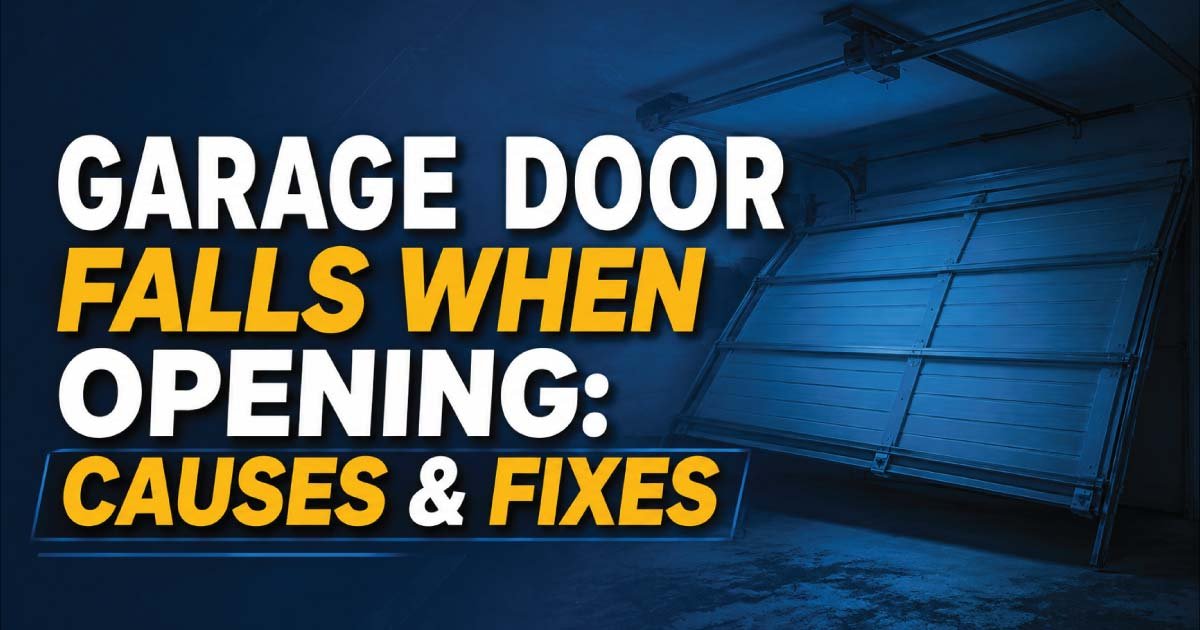
A garage door that falls when opening is more than an inconvenience—it can be a serious safety hazard. A properly functioning garage door should rise smoothly and remain balanced as it opens. If the door suddenly drops, slams shut, becomes difficult to lift, or falls several inches after you start opening it, there is likely a problem with the door’s spring system, cables, rollers, tracks, or other hardware.
The most common cause is a broken or weakened garage door spring, but it is not the only possibility. Damaged lift cables, worn rollers, loose hardware, an unbalanced door, or a malfunctioning opener can also cause unexpected movement.
Because garage doors are heavy and their springs are under significant tension, some repairs should never be attempted without the proper tools and experience. This guide explains why a garage door falls when opening, what you can safely check, when professional repair is necessary, and how to prevent the problem from returning.
Why Is My Garage Door Falling When Opening?
A garage door relies on a carefully balanced system of springs, cables, rollers, hinges, tracks, and an opener. These components work together to control the door’s weight and movement.
When one part fails, the door may become difficult to lift or lose control while opening.
Common causes include:
- Broken or worn torsion springs
- Stretched or damaged extension springs
- Broken or loose lift cables
- A door that is out of balance
- Damaged or worn rollers
- Bent or obstructed tracks
- Loose hinges or hardware
- A failing garage door opener
- Incorrect spring tension
- Excessive door weight caused by damaged panels or hardware
A door that falls suddenly should not be ignored. Continuing to operate it can damage additional components and increase the risk of injury or property damage.
Common Causes of a Garage Door That Falls
Broken or Weak Garage Door Springs
The springs are among the most important components in a garage door system. They counterbalance much of the door’s weight, making it possible for the opener or a person to raise the door.
When a spring breaks or loses its tension, the door can become extremely heavy. It may rise only partially before dropping or may refuse to stay open.
Signs of a spring problem include:
- The door feels unusually heavy.
- The door falls when you try to raise it.
- The door opens unevenly.
- You hear a loud snap or bang.
- A torsion spring has a visible gap.
- The opener struggles to lift the door.
A broken spring is one of the most common reasons a garage door falls unexpectedly.
Broken or Damaged Lift Cables
Garage door cables transfer the force from the spring system to the door. If a cable breaks, comes off its drum, becomes frayed, or loses proper tension, one side of the door may drop suddenly.
Cable problems can cause the door to:
- Hang crooked
- Bind while opening
- Drop on one side
- Make scraping or popping sounds
- Become difficult to lift manually
Never attempt to pull or reposition a severely damaged cable while the spring system is under tension. The cable and spring assembly can store considerable energy.
An Unbalanced Garage Door
A properly balanced garage door should stay relatively stable when manually positioned at different heights.
If the door falls when opening, the spring tension may no longer match the door’s weight. This can happen because of spring wear, incorrect installation, damaged components, or changes to the door itself.
An unbalanced door puts extra strain on:
- The garage door opener
- Springs
- Cables
- Rollers
- Tracks
- Hinges
Operating an unbalanced door repeatedly can turn a relatively simple repair into a much more expensive one.
Worn or Damaged Rollers
Rollers allow the door to travel along its tracks. Over time, rollers can wear out, crack, seize, or become excessively noisy.
Although worn rollers do not usually cause a door to fall by themselves, they can create enough resistance to interfere with smooth movement. The door may jerk, stop, or shift unexpectedly while opening.
Look for:
- Cracked rollers
- Excessive wobbling
- Grinding sounds
- Rollers that do not turn properly
- A door that catches at specific points
Bent, Misaligned, or Obstructed Tracks
Garage door tracks guide the rollers as the door moves. A bent track or obstruction can cause the door to bind.
If the door encounters significant resistance while opening, it may stop suddenly or move unpredictably.
Common track problems include:
- Dents or bends
- Loose mounting brackets
- Misalignment
- Rust or corrosion
- Debris inside the track
- Damage from a vehicle impact
Do not force the door if a track appears badly bent. Forcing it can cause rollers to come out of the track or put additional stress on the cables and springs.
Loose Hinges or Hardware
Garage doors contain numerous hinges, brackets, bolts, and fasteners. Normal vibration can gradually loosen hardware.
A loose hinge may cause one section of the door to move differently from the others. Loose brackets can also affect how the rollers travel.
While some exterior hardware can be visually inspected, avoid tightening components connected directly to a spring or cable system unless you know exactly how the system works.
Garage Door Opener Problems
Sometimes the door itself is mechanically sound, but the opener is malfunctioning.
A garage door opener is designed to move the door—not to compensate for a serious spring or balance problem. If the door is too heavy or mechanically restricted, the opener may struggle, reverse, stop, or fail to control the door properly.
If the door falls rapidly when the opener is engaged, stop using the opener until the mechanical system has been inspected.
Symptoms That Can Help Identify the Problem
Different symptoms can point toward different causes.
| Symptom | Possible Cause | Recommended Action |
|---|---|---|
| Door suddenly drops | Broken spring or cable | Stop using the door and arrange an inspection |
| Door is very heavy | Weak or broken spring | Professional spring inspection |
| Door hangs crooked | Cable, roller, or track problem | Stop operation and inspect professionally |
| Loud bang before failure | Broken spring | Do not operate until repaired |
| Door binds during opening | Track or roller problem | Check for visible obstruction; seek repair if binding continues |
| Opener struggles | Unbalanced or damaged door | Stop relying on the opener until the door is checked |
| One side rises faster | Cable or hardware issue | Stop operating and have the system inspected |
These symptoms are useful clues, but they do not always identify the exact failure. Several components can produce similar behavior.
What Should You Do If Your Garage Door Falls?
Safety should be the first priority.
If your garage door falls while opening, take these steps:
Stop Operating the Door
Do not repeatedly open and close the door to see whether the problem disappears. A failing spring or cable can deteriorate further without warning.
If the door is partially open, keep people and vehicles away from the area until you know it is secure.
Disconnect the Opener if Appropriate
If the opener is continuing to operate against a damaged door, stop using it. Follow the manufacturer’s instructions for safely disabling or disconnecting the opener.
Do not attempt to force the door manually if it is unusually heavy, crooked, or unstable.
Look for Obvious Visual Damage
From a safe distance, check for visible signs such as:
- A broken spring
- A loose or hanging cable
- A roller outside the track
- A severely bent track
- Damaged door panels
- Loose components
Do not touch springs or cables simply to determine whether they are broken.
Keep Children and Pets Away
A damaged garage door can move unexpectedly. Keep children, pets, and other people away from the door until the problem has been resolved.
Can You Fix a Garage Door That Falls When Opening Yourself?
Some basic maintenance tasks are suitable for homeowners, but spring and cable repairs require much more caution.
Tasks You May Be Able to Handle
Depending on the system and your comfort level, basic maintenance may include:
- Removing debris from around the door
- Keeping the area around the tracks clear
- Visually checking for obvious damage
- Cleaning dirty photo-eye sensors
- Replacing certain worn rollers if you have the correct procedure and tools
- Lubricating manufacturer-approved moving components
Always follow the manufacturer’s maintenance instructions.
Repairs Best Left to a Professional
Professional garage door service is strongly recommended for:
- Torsion spring replacement
- Extension spring replacement
- Cable replacement
- Spring tension adjustment
- Repositioning cables on drums
- Repairing major track damage
- Correcting serious door imbalance
- Replacing damaged spring hardware
Garage door springs can store enough energy to cause severe injury if they are released incorrectly. Specialized winding bars, procedures, and safety practices are required for many torsion-spring repairs.
How Professionals Diagnose a Falling Garage Door
A trained garage door technician generally starts by determining whether the problem is mechanical, electrical, or both.
The inspection may include:
- Checking the springs for breaks, wear, and incorrect tension.
- Inspecting lift cables for fraying, damage, or displacement.
- Examining rollers and hinges.
- Checking the tracks for alignment and damage.
- Assessing whether the door is properly balanced.
- Inspecting the opener and its attachment points.
- Looking for loose or damaged hardware.
- Testing the system after the underlying problem has been corrected.
The goal should be to identify the original cause rather than simply replacing whichever component looks damaged.
Garage Door Spring Problems: Torsion vs. Extension Springs
Garage doors commonly use either torsion springs or extension springs.
| Feature | Torsion Springs | Extension Springs |
| Typical location | Above the garage door | Along the horizontal tracks |
| Main function | Counterbalance door weight | Counterbalance door weight |
| Common failure sign | Visible gap in spring | Spring may appear stretched or broken |
| Repair risk | High | High |
| Professional service | Recommended | Recommended |
Both systems require careful handling. The difference in design does not make either type safe for untrained spring replacement.
How Much Does It Cost to Fix a Garage Door That Falls?
The repair cost depends on the failed component, the door design, local labor rates, and whether additional parts were damaged.
A basic service call may be relatively inexpensive compared with replacing multiple components. Spring or cable repairs typically cost more than simple maintenance, while major track, panel, or opener replacement can increase the total considerably.
Before approving repairs, ask the technician:
- What caused the door to fall?
- Which component has failed?
- Are any other components damaged?
- Does the spring system need replacement or adjustment?
- Is the door properly balanced?
- What is included in the quoted price?
- Does the repair include a warranty?
Avoid choosing a contractor solely because they offer the lowest price. Proper installation and safe adjustment are more important when dealing with a heavy moving door and high-tension springs.
How to Prevent a Garage Door From Falling
Regular maintenance can help identify problems before they become emergencies.
Inspect the Door Regularly
Look for changes in:
- Door balance
- Opening speed
- Noise level
- Cable condition
- Roller movement
- Track alignment
- Spring appearance
If the door suddenly behaves differently, investigate the cause instead of continuing normal use.
Keep Tracks Clean
Tracks should remain free of objects and heavy buildup. However, avoid treating the tracks like conventional lubrication points unless the manufacturer specifically recommends it.
The rollers, hinges, and other moving parts may require appropriate lubricant depending on the garage door system.
Test the Door Balance
A properly balanced door should not feel excessively heavy or immediately drop when manually moved by a qualified person following the manufacturer’s procedure.
If the door is difficult to lift or will not remain reasonably stable, do not compensate by repeatedly adjusting the opener. The underlying balance problem should be addressed.
Schedule Preventive Maintenance
Professional garage door maintenance can identify worn springs, cables, rollers, bearings, hinges, and other components before they fail.
This is particularly useful for older doors or systems that receive frequent daily use.
When Is a Falling Garage Door an Emergency?
Call for professional garage door repair promptly if:
- The door has fallen suddenly.
- A spring has broken.
- A cable is loose, broken, or visibly frayed.
- The door is hanging unevenly.
- A roller has come out of the track.
- The door is stuck in a dangerous position.
- The door is too heavy to lift safely.
- The opener is pulling against a damaged door.
- The door or track has been struck by a vehicle.
If the door is actively collapsing or poses an immediate danger to people, stay clear and contact appropriate emergency or professional assistance.
Common Mistakes to Avoid
A few seemingly simple responses can make the problem worse.
Don’t Keep Cycling the Door
Repeated operation can worsen spring, cable, roller, or track damage.
Don’t Adjust Spring Tension Without Proper Training
Spring adjustment is not ordinary DIY maintenance. Incorrect adjustments can cause the door to become dangerously unbalanced.
Don’t Force a Crooked Door
If one side is higher than the other, forcing the door can damage the track system or cause a cable to come loose.
Don’t Rely on the Opener to Lift an Unbalanced Door
The opener is not designed to compensate for a failed spring system. Doing so can damage the opener and create additional hazards.
Frequently Asked Questions
Why does my garage door fall when I open it halfway?
A garage door that falls from a partially open position may have a spring, cable, or balance problem. A properly functioning counterbalance system should prevent the door from suddenly dropping.
Can a garage door opener cause the door to fall?
An opener can malfunction, but sudden falling is often associated with a mechanical problem involving springs, cables, tracks, or balance. The complete system should be inspected before replacing the opener.
Is it safe to open a garage door with a broken spring?
Generally, you should avoid operating a garage door with a broken spring. The door may be extremely heavy, unstable, or difficult for the opener to control.
How do I know if my garage door spring is broken?
A visible gap in a torsion spring, a loud bang before the problem began, an unusually heavy door, or a door that will not stay open can indicate spring failure.
Why does my garage door drop on one side?
A door that drops on one side may have a broken or displaced cable, damaged roller, track issue, or other hardware problem. Because the door can become unstable, professional inspection is recommended.
Should I replace both garage door springs?
If a garage door uses a matched pair of springs and one has failed, a technician may recommend replacing both because the remaining spring may have similar wear. The correct approach depends on the door and spring configuration.
Conclusion
When a garage door falls when opening, the problem should be treated as a safety issue rather than a minor inconvenience. Broken or weakened springs, damaged cables, poor balance, worn rollers, bent tracks, loose hardware, and opener problems can all contribute to unexpected movement.
Start by stopping operation and keeping people away from the door. A visual inspection can help identify obvious damage, but avoid handling high-tension springs or cables yourself.
The safest long-term solution is to have the entire garage door system inspected and the underlying problem properly repaired. Regular maintenance, timely replacement of worn components, and attention to changes in door movement can also reduce the likelihood of an unexpected failure.
A garage door should open smoothly, remain properly balanced, and respond predictably every time. If it suddenly falls, jerks, becomes unusually heavy, or hangs unevenly, stop using it and arrange a professional garage door inspection.

Engineer Ali Hasan is a garage door expert and the founder of FixFasty. With over 16 years of experience in mechanical systems and home maintenance, he provides practical, step-by-step guides on garage door installation, repairs, and maintenance, helping homeowners keep their garage doors safe, reliable, and long-lasting.