
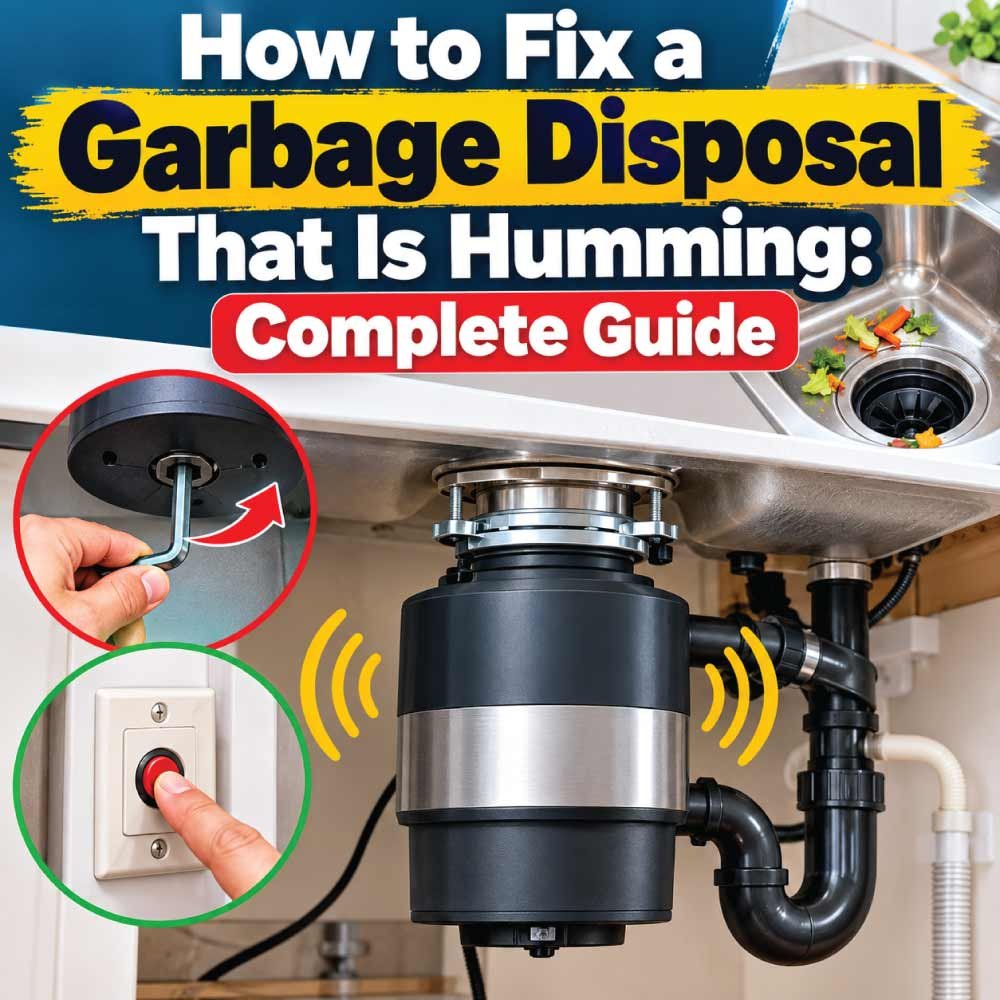
A garbage disposal that is humming but not spinning usually has power, but its motor or grinding plate may be unable to turn. Common causes include a jammed grinding mechanism, a stuck flywheel, or an overheated motor. In some cases, the disposal may need to be reset or repaired.
Before attempting any fix, turn off the garbage disposal and disconnect its power. Never put your hand inside the disposal, even if the switch is off. A humming disposal can overheat quickly, so do not leave it running while troubleshooting.
This guide explains how to identify why your garbage disposal is humming, safely clear common jams, use the reset button, and determine when a repair or replacement is necessary.
If your garbage disposal hums but does not grind, switch it off immediately. The most common cause is a jammed grinding plate or flywheel.
Follow these initial checks:
Turn off the disposal: Stop the motor to prevent overheating.
Disconnect the power: Unplug the unit or switch off its dedicated circuit breaker.
Check for a jam: Look inside the chamber with a flashlight, but never reach inside with your fingers.
Free the grinding mechanism: Use the disposal’s manufacturer-approved hex wrench or jam-clearing tool, if the model supports one.
Remove loose debris safely: Use long-handled tongs or pliers only after the power is disconnected.
Reset the motor: After clearing the jam and allowing the motor to cool, press the reset button if the manufacturer recommends it.
Test the disposal: Restore power, run cold water, and briefly switch on the unit.
If the motor continues humming without spinning, switch it off immediately. The mechanism may still be jammed, the motor may have failed, or another electrical problem may require professional attention.
Common Causes of a Garbage Disposal That Hums
Understanding the symptoms can help you identify the likely cause before attempting a repair.
1. A Jammed Grinding Plate or Flywheel
The most common reason a garbage disposal hums without spinning is a jammed grinding mechanism.
Food scraps, bones, fruit pits, utensils, or other hard objects can become trapped between the grinding components and prevent the mechanism from rotating.
Common signs include:
- The motor hums when the switch is turned on.
- The grinding plate does not rotate.
- The disposal worked normally before suddenly stopping.
- The motor stops humming after you switch it off.
A jam may be removable with the correct tool, provided the power is disconnected and the disposal is designed for that type of clearing procedure.
2. The Motor Has Overheated
A garbage disposal motor can overheat if it runs for too long, encounters a jam, or repeatedly struggles to turn.
Many disposals include an overload protector that shuts the motor off when it becomes too hot.
If the unit was humming before it stopped, a jam may have caused the motor to overheat. Allow it to cool and investigate the underlying problem before resetting it.
3. The Reset Button Has Tripped
Many garbage disposals have a small reset button on the underside or lower portion of the housing.
If the motor overloads, this button may trip to help protect the motor.
However, a tripped reset button does not necessarily mean the problem is solved. If the grinding mechanism remains jammed, resetting the disposal may simply cause it to hum again or trip once more.
4. The Grinding Mechanism Is Damaged
If the disposal hums despite a cleared grinding mechanism, an internal component may be damaged or worn.
Possible problems include a damaged flywheel, internal motor failure, or worn bearings.
These issues are more likely if the disposal makes unusual grinding noises, repeatedly stalls, or fails to operate after the usual troubleshooting steps.
5. An Electrical Problem Is Preventing Normal Operation
A faulty switch, damaged power cord, loose electrical connection, or other electrical fault can cause abnormal operation.
If the disposal makes unusual electrical noises, trips the breaker repeatedly, produces a burning smell, or shows signs of damaged wiring, stop troubleshooting and contact a qualified professional.
Tools and Materials You May Need
Gather the following items before beginning the repair:
- Flashlight.
- Manufacturer-approved garbage disposal hex wrench or jam-clearing tool, if applicable.
- Long-handled tongs or pliers.
- Safety glasses.
- Replacement parts only if a specific damaged component has been identified.
- The disposal’s owner’s manual.
Not every disposal uses the same jam-clearing mechanism. Check the model’s instructions before inserting a wrench or attempting to turn the grinding plate.
Safety Precautions Before Fixing a Humming Garbage Disposal
Garbage disposals contain sharp grinding components and electrical equipment near water. Follow these precautions carefully.
Disconnect the power before inspecting or clearing a jam. Turn off the wall switch, unplug the unit if accessible, or switch off the appropriate circuit breaker.
Never put your fingers or hands inside the disposal chamber.
Do not assume the disposal is safe simply because the wall switch is off.
Never run the motor while a wrench, tongs, or other tool is inside the chamber.
Do not remove the disposal housing or open electrical compartments unless you are qualified to perform the work.
Keep water away from exposed electrical connections.
Stop immediately if you notice smoke, a burning smell, damaged wiring, or repeated breaker trips.
If you cannot confirm that the disposal is disconnected from power, do not attempt to clear the jam.
How to Fix a Garbage Disposal That Is Humming Step by Step
Follow these steps in order, beginning with the simplest and safest checks.
Step 1: Turn Off the Garbage Disposal Immediately
If the disposal hums without grinding, switch it off immediately.
A motor that continues receiving power while its mechanism is stuck can overheat and suffer damage.
- Turn off the disposal switch.
- Unplug the unit if it has an accessible plug.
- If it is hardwired, switch off the appropriate circuit breaker.
- Keep the disposal switched off while inspecting it.
If the unit was humming for more than a brief moment, allow it to cool before attempting to reset it.
What to look for: If the humming stops when you turn off the switch, that confirms the motor is no longer being energized through that control. It does not prove that the grinding mechanism is free.
Step 2: Inspect the Disposal Chamber for Visible Objects
With the power disconnected, use a flashlight to inspect the inside of the disposal from above.
Look for objects that may be blocking the grinding plate, such as:
- A spoon or other utensil.
- A bone fragment.
- A fruit pit.
- A bottle cap or other hard object.
- A large piece of food waste.
Do not reach inside, even if the object appears easy to remove.
If an object is visible and safely accessible, use long-handled tongs or pliers to remove it. Avoid forcing an object deeper into the mechanism.
If the obstruction cannot be removed safely, leave the disposal disconnected and contact a plumber or appliance repair professional.
Step 3: Check Whether the Grinding Mechanism Is Jammed
If you cannot see an obvious obstruction, the grinding plate or flywheel may still be stuck.
Many garbage disposals have a hex socket underneath the unit that accepts a special jam-clearing wrench. Other models use different mechanisms, so check the manufacturer’s instructions first.
For a model equipped with an underside hex socket:
- Confirm that the power is disconnected.
- Locate the designated hex socket beneath the disposal.
- Insert the correct manufacturer-approved wrench.
- Gently move the mechanism back and forth as directed by the manufacturer.
- Continue only if the mechanism begins to move without excessive force.
- Remove the wrench completely when finished.
Do not force the wrench if the mechanism will not move. Excessive force can damage the disposal.
If the mechanism becomes easier to turn, the jam may have been cleared. However, check the chamber for loose debris before restoring power.
Important: Never insert a wrench through the sink opening while the motor is energized. Never attempt to operate the disposal with a wrench left in place.
Step 4: Check and Use the Reset Button
After clearing any obstruction, inspect the disposal’s reset button.
Many models have a small button on the underside of the motor housing. Its location and reset procedure vary by manufacturer.
- Make sure the disposal remains disconnected from power.
- Allow the motor to cool if it has overheated.
- Locate the reset button according to the owner’s manual.
- Press the button if it has tripped and the manufacturer’s instructions permit resetting it.
- Wait as directed by the manual before restoring power.
If the button will not stay in, or it trips again when the disposal is used, do not keep pressing it repeatedly. The motor may still be jammed, overheating, or experiencing an electrical fault.
Step 5: Restore Power and Test the Disposal
Once you have removed the obstruction, checked the mechanism, and reset the unit if needed, prepare to test it.
- Remove all tools from the disposal chamber.
- Confirm that no objects remain inside that could cause another jam.
- Restore power.
- Turn on cold water.
- Briefly switch on the disposal and listen for normal grinding operation.
- Switch it off if the motor hums without spinning, makes unusual noises, or trips the reset button.
If the disposal operates normally, allow water to run briefly afterward to help carry remaining food particles through the drain.
If it hums again, stop immediately. Do not repeatedly restart it in an attempt to force the mechanism to turn.
Step 6: Investigate a Disposal That Still Hums
If the disposal still hums after the jam has been cleared and the motor has cooled, further diagnosis may be needed.
Possible causes include:
- A jam that has not been fully cleared.
- A damaged grinding mechanism.
- A failed motor.
- An internal electrical fault.
- A reset or overload problem that has not been resolved.
Do not disassemble the motor housing or attempt internal electrical repairs unless you have the appropriate qualifications.
A qualified plumber or appliance repair technician can determine whether the disposal can be repaired economically or needs replacement.
How to Identify the Cause of a Humming Garbage Disposal
Use the following table to match the symptom with the most likely cause and next step.
| Symptom | Possible Cause | Recommended Action |
|---|---|---|
| Motor hums but the grinding plate does not move | Jammed mechanism | Disconnect power and follow the model’s jam-clearing procedure |
| Disposal stops after prolonged use | Overheated motor | Allow it to cool and check for a jam before resetting |
| Reset button has tripped | Motor overload or another fault | Clear the underlying problem and reset according to the manual |
| Disposal hums again immediately after clearing a jam | Remaining obstruction or internal fault | Switch it off and seek further diagnosis |
| Burning smell or smoke | Overheating or electrical damage | Disconnect power if safe and contact a professional |
| Breaker trips repeatedly | Electrical fault, motor problem, or severe jam | Stop resetting the breaker and arrange professional inspection |
| Motor runs but the disposal does not grind properly | Damaged grinding components or another mechanical problem | Stop using it and have the unit inspected |
These symptoms are clues rather than definitive diagnoses. A disposal can have more than one problem at the same time.
Also Read:
Common Mistakes to Avoid
Avoid these mistakes when troubleshooting a humming garbage disposal:
Leaving the motor running while it hums: This can cause additional overheating and motor damage.
Reaching inside the disposal: Sharp components can cause serious injuries, even when the power is off.
Using the wrong wrench: A tool that does not fit the designated socket can damage the mechanism.
Forcing a jammed flywheel: Excessive force may damage internal components.
Resetting the motor repeatedly: Repeated resets do not fix a persistent jam or electrical fault.
Pouring chemical drain cleaner into the disposal: Harsh chemicals can create hazards and damage plumbing components.
Assuming a reset button fixes every problem: A reset restores the overload protector only when the underlying fault has been addressed.
Running the disposal with tools inside: Always remove every tool before restoring power.
When Should You Call a Professional?
Call a qualified plumber or appliance repair technician if:
- The grinding mechanism will not move using the manufacturer’s recommended procedure.
- The disposal continues humming after an obstruction has been cleared.
- The motor repeatedly trips its overload protector.
- You notice smoke, a burning smell, or damaged electrical components.
- The circuit breaker trips repeatedly.
- The disposal leaks from its housing or electrical connections.
- The unit is badly corroded or has suffered significant mechanical damage.
If the disposal is hardwired and electrical testing or wiring repairs are needed, use a qualified professional rather than opening energized electrical components.
Should You Repair or Replace a Humming Garbage Disposal?
The decision depends on the disposal’s age, condition, type of failure, and the cost of a suitable repair.
Repair may be appropriate when:
- A removable object has jammed the grinding mechanism.
- The motor overheated but works normally after cooling and clearing the obstruction.
- The unit has a straightforward problem covered by the manufacturer’s repair instructions.
- Compatible replacement parts are available and the repair is economical.
Replacement may be worth considering when:
- The motor has failed.
- The grinding mechanism is severely damaged.
- The housing is cracked or leaking.
- The unit has recurring problems despite proper repairs.
- Repair costs approach the cost of a suitable replacement.
If replacement is necessary, choose a compatible unit and have a qualified professional handle any electrical work or plumbing modifications beyond your experience.
Also Read:
How to Prevent a Garbage Disposal From Humming Again
Proper use and routine care can reduce the risk of future jams.
- Run cold water while operating the disposal, following the manufacturer’s instructions.
- Feed food scraps gradually rather than overloading the unit.
- Avoid putting utensils, fruit pits, bones, and other hard objects into the disposal unless the manufacturer specifically permits them.
- Do not pour grease or large amounts of oil into the disposal.
- Keep your hands out of the grinding chamber.
- Turn off the unit promptly if you hear humming without grinding.
- Follow the manufacturer’s cleaning and maintenance recommendations.
- Avoid using chemical drain cleaners unless the manufacturer specifically approves the product for the disposal and plumbing system.
If your disposal jams frequently despite proper use, have the unit inspected for mechanical wear or other underlying problems.
Frequently Asked Questions
Why is my garbage disposal humming but not spinning?
The most common cause is a jammed grinding plate or flywheel. A hard object or compacted food waste may be preventing the mechanism from turning. Disconnect the power, inspect the chamber with a flashlight, and follow the manufacturer’s approved jam-clearing procedure.
Can I fix a humming garbage disposal myself?
Many simple jams can be cleared by a homeowner who follows the manufacturer’s instructions and disconnects power before working. However, a damaged motor, persistent jam, electrical fault, or leaking housing may require professional repair.
Where is the reset button on a garbage disposal?
On many models, the reset button is located on the underside of the motor housing. Its position varies by design. Consult the owner’s manual to locate it and determine the correct reset procedure.
Is it safe to keep using a garbage disposal that hums?
No. Switch it off immediately if it hums without grinding. Continuing to energize a stalled motor can cause overheating and further damage.
Why does my garbage disposal hum after I press the reset button?
The reset button does not necessarily clear a jam. If the grinding mechanism is still blocked, the disposal may hum again as soon as power is restored. Disconnect the power and inspect the mechanism before attempting another test.
Does a humming garbage disposal need to be replaced?
Not necessarily. A removable jam or temporary motor overload may be resolved without replacing the unit. Replacement may be appropriate if the motor has failed, the grinding mechanism is damaged, or the housing leaks and repair is uneconomical.
Conclusion
A garbage disposal that hums but does not spin often has a jammed grinding mechanism or an overheated motor. Switch it off immediately, disconnect the power, inspect for visible obstructions without reaching inside, and follow the manufacturer’s instructions to clear the jam and reset the motor if necessary.
If the disposal continues humming, trips its overload protector repeatedly, or shows signs of electrical or mechanical damage, stop troubleshooting and contact a qualified professional. Safe diagnosis can prevent additional damage and help you decide whether a repair or replacement is the better option.

Engineer Ali Hasan is a garage door expert and the founder of FixFasty. With over 16 years of experience in mechanical systems and home maintenance, he provides practical, step-by-step guides on garage door installation, repairs, and maintenance, helping homeowners keep their garage doors safe, reliable, and long-lasting.