
Handling small household problems becomes much easier when you have the right tools within reach. A loose cabinet handle, a squeaky door hinge, a dripping faucet, or a picture that needs hanging often requires only a few basic tools and some patience. However, buying the wrong equipment can waste money, damage materials, or make a simple repair more difficult.
The best tools for basic home repairs are practical, versatile, easy to use, and suitable for common household maintenance tasks. Beginners do not need a professional workshop to get started. A carefully selected home repair toolkit can help with everyday jobs, furniture assembly, minor plumbing maintenance, hanging decorations, and simple hardware adjustments.
This guide explains which hand tools and power tools are worth buying first, what each tool does, how to choose quality equipment, and which safety precautions beginners should follow.
1. What Tools Should Every Beginner Have at Home?
A beginner’s home repair toolkit should cover the most common household tasks without taking up too much storage space. Start with versatile hand tools before investing in specialized equipment.
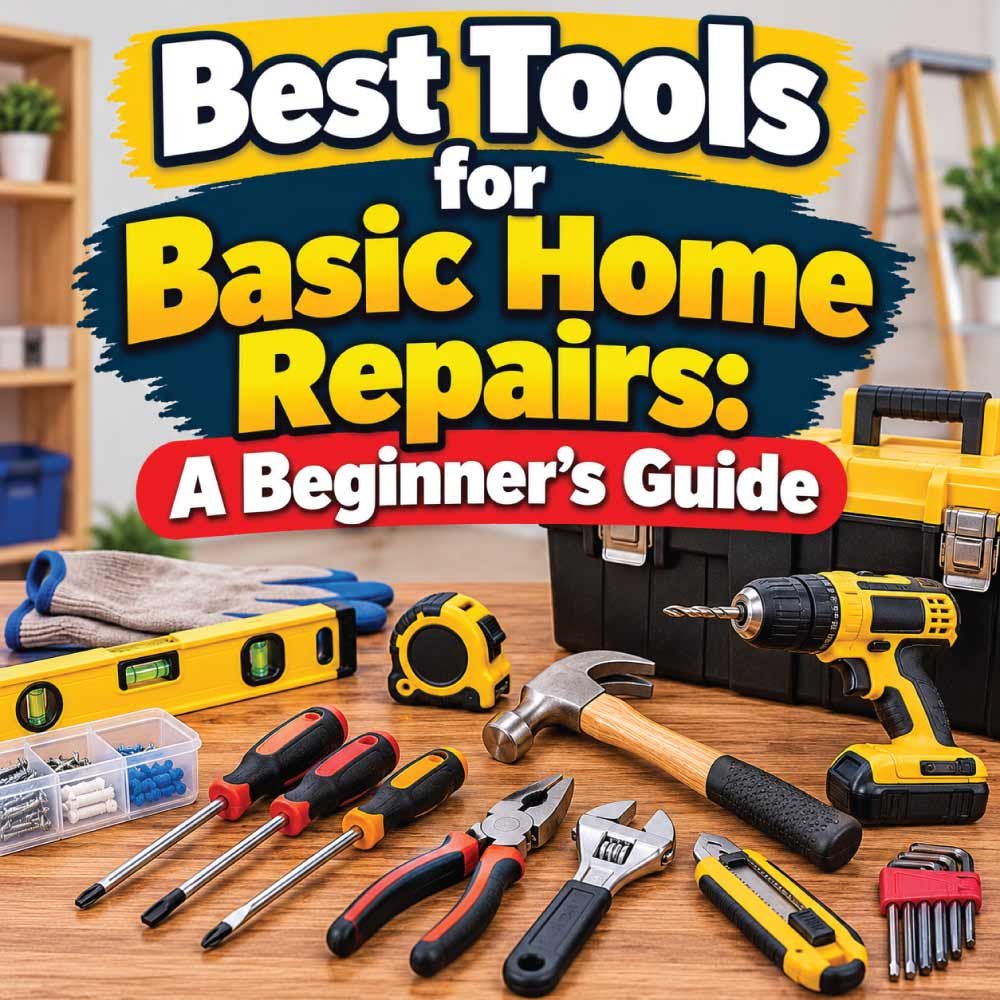
The following tools provide a useful foundation for most households:
Tape measure: Measures furniture, wall spaces, doors, and materials.
Screwdriver set: Tightens and loosens different types of screws.
Claw hammer: Drives nails and removes suitable nails from wood.
Adjustable wrench: Tightens or loosens compatible nuts and bolts.
Pliers: Grip, bend, and hold small components.
Utility knife: Cuts packaging, cardboard, and suitable thin materials.
Spirit level: Checks whether objects are level or plumb.
Hex key set: Assembles furniture and adjusts hex-socket fasteners.
Cordless drill-driver: Drills appropriate holes and drives compatible screws.
Flashlight: Illuminates dark cabinets, utility spaces, and repair areas.
These tools handle many routine maintenance jobs. You can add equipment gradually as your skills improve and your home repair needs become clearer.
Why Start With Hand Tools?
Hand tools are generally affordable, portable, and straightforward to operate. They also provide better control for many delicate adjustments than powered equipment.
For example, a manual screwdriver is often a better choice for tightening a small cabinet screw because it reduces the risk of stripping the screw head or damaging the surrounding material.
Power tools become more valuable when you regularly drill holes, assemble furniture, or complete jobs that require repeated fastening.
2. Essential Hand Tools for Basic Home Repairs
Hand tools form the foundation of a practical DIY repair kit. They do not require batteries or electrical power, and many can last for years when used correctly and stored properly.
Tape Measure
A tape measure helps you obtain accurate dimensions before buying materials, installing hardware, or arranging furniture.
Look for a tape with clear markings, a locking mechanism, a sturdy case, and a blade that retracts smoothly.
A 16-foot tape measure is a convenient general-purpose option for many household tasks, while a longer tape may be useful for measuring large rooms or exterior spaces.
Use it to:
- Measure shelves before installation.
- Check furniture dimensions before purchasing.
- Determine the spacing between wall fixtures.
- Measure replacement hardware and materials.
- Check door openings and available clearance.
Beginner tip: Measure twice before cutting or drilling. When measuring a space, record the width, height, and depth separately instead of relying on memory.
Screwdriver Set
Screwdrivers are among the most frequently used tools in a home repair toolkit. Different screw heads require different driver tips.
Common screwdriver types include:
| Screwdriver Type | Typical Use |
|---|---|
| Flathead (slotted) | Screws with one straight slot |
| Phillips | Cross-shaped screw heads |
| Torx | Star-shaped screw heads |
| Hex driver | Fasteners with hexagonal recesses |
| Precision screwdriver | Small screws in suitable household items |
A set with several sizes is more useful than a single screwdriver. Interchangeable-bit sets can save storage space, but individual screwdrivers may be more comfortable for frequent use.
Always match the driver tip to the screw head. A poorly fitting tip can slip, damage the fastener, or injure your hand.
Claw Hammer
A claw hammer is useful for driving nails into suitable materials and removing nails from wood. Its curved claw provides leverage when extracting a nail.
For general household tasks, choose a hammer that feels comfortable and balanced in your hand. A common household option weighs around 16 ounces, although a lighter hammer may be easier for some beginners to control.
Use a hammer for:
- Hanging appropriate lightweight items with suitable fasteners.
- Minor woodwork.
- Removing accessible nails.
- Assembling certain wooden components.
Do not use a hammer to force metal parts together unless the tool and application are designed for that purpose. For delicate furniture, a rubber mallet may be more appropriate.
Pliers
Pliers grip objects that are too small, slippery, or awkward to hold with your fingers. Different designs serve different purposes.
- Combination pliers: General gripping and holding.
- Long-nose pliers: Reaching into narrow spaces.
- Slip-joint pliers: Adjusting the jaw opening for different objects.
- Locking pliers: Holding compatible components securely.
Pliers can help with minor household adjustments, but they are not a substitute for the correct wrench. Their jaws may damage polished fittings, soft metal, or fasteners when excessive force is applied.
For plumbing fixtures, consider using a protective cloth where appropriate and avoid overtightening connections.
Adjustable Wrench
An adjustable wrench has a movable jaw that accommodates a range of compatible nut and bolt sizes. It is useful when you do not have a dedicated wrench for a particular fastener.
Choose a model with a smooth adjustment mechanism and jaws that close firmly around the fastener.
For better control, position the wrench so the applied force loads the fixed jaw when practical. Keep the jaws fully engaged and avoid using extension pipes to increase leverage.
An adjustable wrench is convenient, but a correctly sized fixed wrench or socket generally provides a more secure fit.
Hex Keys and Utility Knife
Hex keys, also called Allen keys, fit fasteners with hexagonal internal recesses. They are especially useful for flat-pack furniture, office chairs, handles, and other assembled products.
A set containing commonly used metric and imperial sizes helps prevent the frustration of finding that a key almost fits but cannot properly engage the fastener.
A utility knife is useful for opening packages, trimming suitable materials, and cutting cardboard or protective coverings. Choose a model with a secure blade-locking mechanism, and retract the blade whenever it is not in use.
Never use a utility knife to cut toward your body or force it through material that requires a different cutting tool.
3. Measuring and Layout Tools for Accurate Repairs
Accurate measurements make repairs easier and help prevent unnecessary holes, uneven installations, and wasted materials.
Spirit Level
A spirit level checks whether a surface is horizontal or vertical. It contains a liquid-filled vial with an air bubble that moves between marked lines.
A small level is useful for hanging pictures and installing short shelves. A longer level can provide a more reliable reading across wider surfaces.
Common applications include:
- Aligning shelves.
- Checking picture frames.
- Positioning curtain brackets.
- Checking the alignment of furniture components.
- Assessing whether a small installation is level.
A spirit level does not identify hidden pipes or electrical wiring. Before drilling, use appropriate detection equipment and follow the relevant safety precautions.
Stud Finder
A stud finder helps locate framing members behind suitable wall surfaces. These members provide stronger fixing points than drywall alone for many installations.
Some models detect changes in wall density, while others use different sensing methods. Advanced models may include metal detection or alerts for certain electrical conditions.
Before using a stud finder:
- Read the manufacturer’s instructions.
- Calibrate the device as directed.
- Scan the wall in the recommended pattern.
- Mark the suspected stud location.
- Verify that the intended drilling location is safe.
Do not assume a stud finder can reliably identify every pipe, wire, or hidden obstruction. Follow the manufacturer’s limitations, and avoid drilling where concealed services may be present.
Pencil and Marking Tools
A carpenter’s pencil, ordinary pencil, masking tape, and a small ruler are inexpensive but valuable additions to a DIY toolkit.
Use them to mark measurements, indicate drilling points, label removed components, and record the original positions of hardware.
For finished surfaces, test the marking method in an inconspicuous area first. Some pencils and markers can leave marks that are difficult to remove.
4. Best Power Tools for Beginners
Power tools can save time, particularly when a repair involves repeated fastening or drilling. However, beginners should buy them according to actual needs rather than purchasing a large set of equipment immediately.
Cordless Drill-Driver
A cordless drill-driver is one of the most versatile power tools for household maintenance. It can drill suitable holes and drive screws when fitted with the correct bit.
Look for the following features:
- Variable-speed trigger.
- Adjustable clutch for controlling screw-driving torque.
- Reversible rotation.
- Comfortable grip.
- Suitable battery capacity.
- Compatible drill bits and driver bits.
- A chuck that securely holds the intended accessories.
For most beginners, a compact drill-driver is easier to handle than a heavy-duty model.
A drill-driver is useful for furniture assembly, pilot holes in suitable wood, and installing compatible hardware. It is not automatically suitable for concrete, masonry, or every metalworking task.
Important: Before drilling into a wall, check for concealed wiring and plumbing. Do not rely on a drill, wall scanner, or stud finder as a guarantee that a location is safe.
Impact Driver
An impact driver delivers rotational impacts to help drive compatible fasteners, particularly longer screws and fasteners used in appropriate construction applications.
It can be useful for frequent fastening, but it is not essential for every beginner.
Compared with a standard drill-driver, an impact driver may offer more fastening power but can also damage screws or materials if used carelessly.
Choose a drill-driver first if you want one tool for a broader range of everyday jobs. Consider an impact driver later if your work involves repeated heavy fastening.
Electric Screwdriver
An electric screwdriver is a convenient alternative for assembling furniture and completing repetitive screw-driving tasks.
Many models are smaller and lighter than drill-drivers. Some include adjustable torque settings or integrated lighting.
However, they may not provide the power, chuck versatility, or battery capacity of a full-size drill-driver. For occasional household maintenance, this trade-off can be worthwhile.
Oscillating Multi-Tool
An oscillating multi-tool accepts compatible accessories for cutting, scraping, sanding, and other specialized tasks.
It can be useful when a repair involves trimming a small section of material, removing old sealant, or making a controlled cut in an accessible location.
It is not a necessary first purchase for most households. Beginners should learn the tool’s limitations, select the correct accessory, and wear appropriate protective equipment before using it.
Which Power Tool Should You Buy First?
| Tool | Best For | Priority for Beginners |
|---|---|---|
| Cordless drill-driver | Drilling and screw driving | High |
| Electric screwdriver | Light, repetitive fastening | Medium |
| Impact driver | Repeated heavy fastening | Low to medium |
| Oscillating multi-tool | Specialized cutting and scraping | Low |
These priorities are general recommendations, not universal rules. The best first power tool depends on the repairs you expect to perform.
Also Read:
5. Basic Plumbing Tools for Minor Household Maintenance
Plumbing tools can help with certain simple maintenance jobs, such as cleaning accessible drain stoppers or tightening compatible fittings. However, beginners should understand the difference between routine maintenance and repairs that require a qualified plumber.
Basin Wrench
A basin wrench is designed to reach certain nuts located underneath sinks, particularly those securing faucet assemblies.
Its long handle and specialized jaw make it useful in cramped spaces where an ordinary wrench cannot fit comfortably.
You may not need one for occasional household maintenance, but it can be helpful if you regularly replace faucets or work on compatible sink hardware.
Plunger
A plunger can help clear some localized drain blockages by creating pressure and suction.
Different designs suit different fixtures. A cup-style plunger is commonly used for sinks, while a flange-style design is intended for toilet bowls.
Use the correct plunger for the fixture and follow the product instructions. Avoid plunging a drain containing hazardous chemical cleaner because splashing can cause serious injury.
If a blockage persists, several fixtures drain slowly at once, or sewage backs up, stop and seek appropriate plumbing assistance.
Bucket, Cloths, and Drain Tools
A small bucket, absorbent cloths, and a suitable drain-cleaning tool are practical additions to a basic repair kit.
They can help collect water, protect nearby surfaces, and remove accessible debris from certain drains.
Before working on a faucet or supply connection, identify the correct shutoff valve and close it if appropriate. Confirm that the water has stopped before disassembling any component.
Never force a corroded valve or fitting. If a shutoff valve leaks, cannot be operated safely, or fails to stop the water, contact a qualified plumber.
6. Electrical Safety Tools and Equipment
Electrical work requires greater caution than ordinary furniture assembly or minor household adjustments. Basic tools do not make every electrical repair safe for an inexperienced person.
Insulated Screwdrivers
Insulated screwdrivers are designed with insulation intended for specified electrical applications. They must be appropriately rated, undamaged, and used according to their instructions.
Insulation alone does not make working on energized equipment safe. Do not attempt live electrical work simply because you own an insulated screwdriver.
Non-Contact Voltage Tester
A non-contact voltage tester can help indicate the presence of certain alternating-current electrical fields near a suitable conductor.
However, readings depend on the tester, the installation, and surrounding conditions. A negative indication does not prove that a circuit is de-energized.
Use only a tester suitable for the application and follow its testing procedure. Electrical isolation must be verified using an appropriate method by someone competent to do so.
Protective Equipment
For appropriate household tasks, useful safety equipment may include:
- Safety glasses for flying particles.
- Work gloves for handling suitable rough materials.
- Hearing protection when noise levels warrant it.
- A dust mask or respirator selected for the specific exposure.
- Closed-toe footwear with a stable grip.
Gloves are not appropriate for every power-tool operation because they can become caught in moving parts. Follow the tool manufacturer’s instructions.
Safety rule: If a repair involves exposed wiring, a damaged electrical panel, burning smells, repeated breaker trips, or uncertainty about safe isolation, stop and contact a qualified electrician.
Also Read:
7. Helpful Accessories to Complete Your Home Repair Toolkit
The right accessories can make a small toolkit considerably more useful without requiring a large additional investment.
Drill Bits and Driver Bits
A drill-driver is only as useful as the accessories fitted to it. Buy bits that match the materials and fasteners you expect to work with.
Common options include:
- Wood drill bits for suitable timber.
- Metal drill bits for compatible metalworking applications.
- Masonry bits for approved masonry drilling with a suitable tool.
- Phillips, slotted, Torx, and hex driver bits.
- Countersink bits for appropriate woodworking tasks.
Check bit compatibility, material suitability, speed recommendations, and any special requirements before use.
Fasteners and Wall Anchors
A small organizer containing suitable screws, nails, washers, and wall anchors can help with everyday repairs.
Different wall materials require different fixing methods. A fastener appropriate for wood may not be suitable for drywall, brick, concrete, or tile.
Consider the weight and type of the object being mounted, the wall construction, the anchor’s rated application, and the manufacturer’s installation instructions.
Do not assume a plastic wall plug will support every shelf or wall-mounted object.
Storage and Organization
A toolbox or divided organizer protects equipment and makes it easier to find the correct item.
Keep sharp blades covered, small fasteners separated by type, and batteries stored according to manufacturer recommendations.
Return tools to their storage locations after use. This simple habit reduces misplaced equipment and helps you notice damaged tools before the next repair.
8. How to Choose the Best Home Repair Tools
The best toolkit is not necessarily the biggest or most expensive. Choose equipment that fits your common tasks, physical comfort, storage space, and budget.
Match Tools to Your Repair Needs
Before shopping, list the jobs you expect to handle. For example:
Furniture assembly: Screwdrivers, hex keys, tape measure, and a drill-driver if needed.
Picture and shelf installation: Tape measure, level, suitable fasteners, stud finder, and compatible drilling equipment.
Basic plumbing maintenance: Adjustable wrench, suitable pliers, bucket, cloths, and an appropriate plunger.
Minor woodworking: Hammer, tape measure, pencil, clamps, and suitable cutting tools.
General maintenance: A screwdriver set, pliers, wrench, hammer, utility knife, and flashlight.
You can add specialized equipment when a recurring task justifies the purchase.
Check Build Quality and Comfort
Pay attention to grip, balance, adjustment mechanisms, material quality, and ease of maintenance.
For frequently used hand tools, comfortable handles can reduce fatigue. For power tools, consider weight, speed control, safety features, battery availability, and replacement-part support.
Buy from a reputable supplier and check the warranty terms. Avoid equipment with damaged insulation, loose handles, cracked housings, or unreliable locking mechanisms.
Compare Initial Cost With Long-Term Value
A very cheap tool may be sufficient for an occasional, low-demand job. However, tools used frequently may justify better construction and more comfortable handling.
Do not pay extra for features you will never use. A homeowner who hangs pictures and assembles furniture occasionally may not need a professional cordless tool collection.
A practical approach is to buy a reliable basic set and upgrade individual tools as your requirements develop.
9. Beginner Home Repair Toolkit: Priority and Budget Guide
The following table helps you decide which tools to purchase first. The priorities are general guidance rather than a fixed shopping requirement.
| Tool or Item | Main Purpose | Purchase Priority |
|---|---|---|
| Screwdriver set | Tightening and loosening screws | Essential |
| Tape measure | Measuring dimensions | Essential |
| Claw hammer | Driving and removing suitable nails | Essential |
| Pliers | Gripping and holding components | Essential |
| Adjustable wrench | Working with compatible nuts and bolts | Essential |
| Spirit level | Checking alignment | Essential |
| Flashlight | Illuminating work areas | Essential |
| Hex key set | Furniture and hex fasteners | Essential |
| Cordless drill-driver | Drilling and screw driving | Useful upgrade |
| Stud finder | Locating likely wall framing | Task-dependent |
| Plunger | Clearing certain localized blockages | Useful |
| Voltage tester | Indicating certain electrical conditions | Task-dependent |
| Oscillating multi-tool | Specialized cutting and scraping | Optional |
A Sensible Buying Strategy
Build your kit in stages rather than buying everything at once.
Stage 1: Basic hand tools
Start with screwdrivers, a tape measure, a hammer, pliers, an adjustable wrench, hex keys, a utility knife, and a flashlight.
Stage 2: Measuring and installation tools
Add a spirit level, suitable fasteners, an organizer, and a stud finder if you plan to mount objects on walls.
Stage 3: Power tools and specialized accessories
Buy a cordless drill-driver and compatible bits when your projects require them. Add plumbing or cutting tools only when you have a clear need and understand how to use them safely.
This approach helps avoid duplicate purchases and keeps the initial cost manageable.
10. Common Home Repair Tool Mistakes Beginners Should Avoid
Even a good toolkit can cause problems when tools are used incorrectly. Learning a few basic habits can protect both you and your home.
Using the Wrong Tool for the Job
Pliers should not replace every wrench, and a flathead screwdriver should not be forced into a Phillips screw. Incorrect tool selection can damage components and increase the risk of slipping.
Choose a tool designed for the task and make sure it fits properly before applying force.
Ignoring Hidden Pipes and Wires
Drilling or cutting into a wall without checking for concealed services can cause serious damage or injury.
Review available building information, use appropriate detection methods, and avoid uncertain locations. If you cannot establish that an area is safe, do not drill there.
Overtightening Screws and Fittings
Excessive force can strip screw heads, crack plastic components, damage threads, or distort plumbing fittings.
Use the appropriate tool and apply controlled force. For torque-sensitive components, follow the manufacturer’s specified requirements.
Buying Too Many Tools Too Soon
Large tool kits can contain accessories that a beginner rarely uses. Purchasing specialized equipment before understanding your needs can waste money and storage space.
Start with versatile essentials and expand your collection as your projects become more complex.
Neglecting Tool Maintenance
Clean tools after use, keep metal parts dry, and inspect handles, blades, cords, batteries, and housings regularly.
Remove damaged tools from service until they can be safely repaired or replaced. Never use a power tool with a damaged cord, compromised casing, or malfunctioning safety mechanism.
11. Basic Safety Tips Before Starting a Home Repair
Preparation is as important as having the correct equipment. Before beginning a repair, understand the task, identify its hazards, and determine whether it is suitable for your skill level.
Follow these basic precautions:
Read the instructions. Check the tool manual and the installation instructions for the product being repaired.
Prepare the work area. Remove clutter, provide adequate lighting, and keep children and pets away.
Wear suitable protection. Use eye, hearing, respiratory, or other protection appropriate to the specific task.
Secure the material. Clamp suitable workpieces when necessary rather than holding them close to a moving blade or drill bit.
Disconnect power when required. Unplug tools before changing accessories when instructed, and isolate electrical equipment appropriately before inspection or maintenance.
Use the right ladder and access equipment. Keep stable footing and avoid reaching too far from a ladder.
Know when to stop. Do not continue if a repair reveals unexpected damage, hazardous materials, structural concerns, or conditions beyond your competence.
Renting a tool or hiring a professional can be safer and more economical than attempting an unfamiliar, high-risk repair.
12. Frequently Asked Questions About Home Repair Tools
What are the most important tools for a new homeowner?
Start with a screwdriver set, tape measure, claw hammer, pliers, adjustable wrench, spirit level, hex keys, utility knife, and flashlight. A cordless drill-driver is a useful addition for regular furniture assembly and suitable drilling tasks.
The ideal selection depends on the home’s fixtures, construction, and likely maintenance needs.
Is a cordless drill necessary for basic home repairs?
No. Many small repairs require only hand tools. However, a cordless drill-driver can save time when assembling furniture, drilling suitable holes, or driving multiple screws.
Choose a model with speed control and an adjustable clutch if you expect to use it for varied household jobs.
What is the difference between a drill-driver and an impact driver?
A drill-driver is a versatile tool for drilling and controlled screw driving. An impact driver uses rotational impacts to help drive compatible fasteners, particularly in demanding fastening applications.
For most beginners who want one general-purpose power tool, a drill-driver is the more versatile starting point.
How much should a beginner spend on a home repair toolkit?
There is no single budget that suits every household. Costs depend on tool quality, local prices, the number of items purchased, and whether power tools are included.
Start with essential hand tools, compare individual prices with complete sets, and buy specialized equipment only when needed.
Can I use ordinary tools for plumbing repairs?
Some ordinary hand tools are suitable for minor maintenance, but plumbing work may require specialized equipment and knowledge. Always shut off the appropriate water supply before disassembling a fitting, and never force a corroded or damaged valve.
Persistent leaks, concealed pipe damage, sewage problems, and difficult supply-line repairs may require a qualified plumber.
Do I need special tools to hang shelves?
You generally need a tape measure, spirit level, suitable drill and bits when required, and fasteners appropriate for the wall construction and load.
A stud finder can help locate framing members behind suitable walls. Always check for concealed wiring and plumbing, and follow the mounting hardware manufacturer’s instructions.
How should I store home repair tools?
Store tools in a dry, organized toolbox or cabinet. Protect sharp edges, keep small accessories in labeled compartments, and follow battery storage instructions for cordless equipment.
Inspect tools periodically and replace damaged or unsafe items before using them again.
Conclusion
The best tools for basic home repairs are the ones that help you complete common household tasks safely, accurately, and without unnecessary expense. Start with versatile hand tools such as screwdrivers, a tape measure, a hammer, pliers, an adjustable wrench, and a spirit level. Add a cordless drill-driver and task-specific accessories when your needs justify them.
Focus on choosing tools that fit the job, maintaining them properly, and understanding their limitations. Most importantly, recognize when a repair involves electrical, plumbing, structural, or other hazards that require professional assistance.
A small, well-chosen home repair toolkit is enough to make many everyday maintenance jobs more manageable and help beginners build confidence over time.

Engineer Ali Hasan is a garage door expert and the founder of FixFasty. With over 16 years of experience in mechanical systems and home maintenance, he provides practical, step-by-step guides on garage door installation, repairs, and maintenance, helping homeowners keep their garage doors safe, reliable, and long-lasting.