
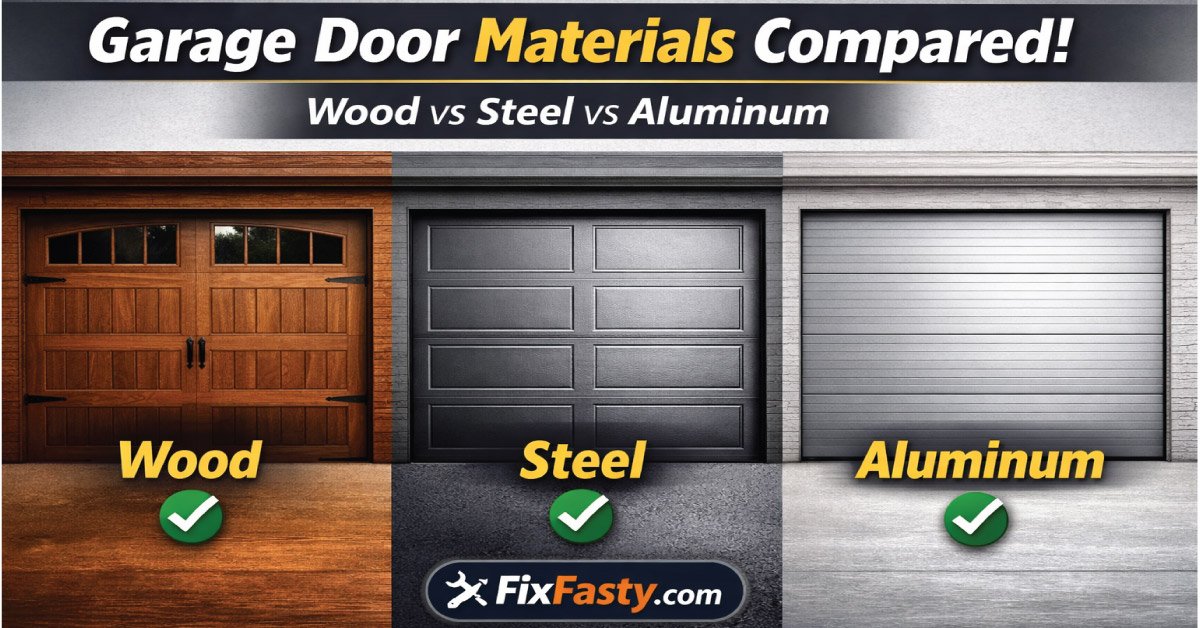
Choosing the right garage door material is one of the most important decisions homeowners make when upgrading or installing a new garage door.
It’s not just about looks your choice affects durability, maintenance, insulation, security, and long-term cost. Among all the options available, wood, steel, and aluminum are the three most popular garage door materials.
Each material has its own strengths and weaknesses, and what works perfectly for one home may not be ideal for another. In this detailed guide, we will compare wood, steel, and aluminum garage doors side by side to help you make an informed and confident decision.
Why Garage Door Material s important
Choosing the right garage door material is crucial for durability, security, and long-term performance. It affects insulation, maintenance needs, and overall appearance. A suitable material can withstand weather conditions, reduce repair costs, and improve your home’s energy efficiency and value.
- Improves durability and lifespan
- Enhances home security
- Boosts insulation and energy efficiency
- Reduces maintenance and repair costs
- Adds to overall curb appeal
Overview of Wood, Steel, and Aluminum Garage Doors
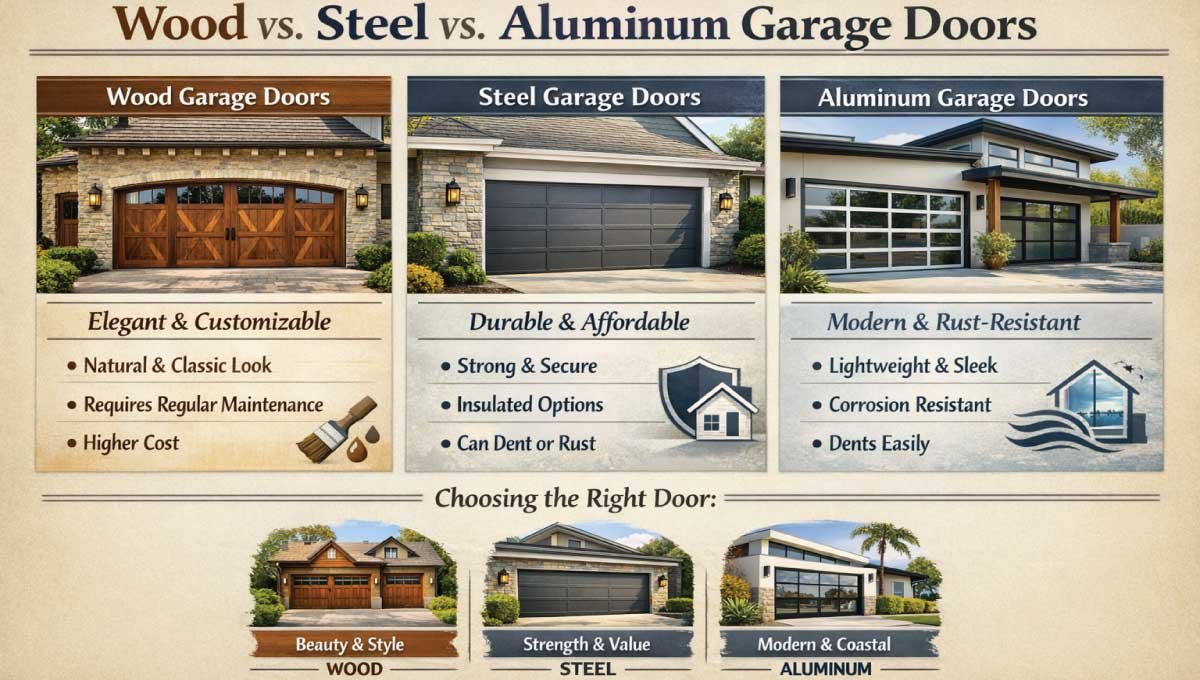
Choosing the right garage door material is essential for appearance, durability, maintenance, and budget. Wood, steel, and aluminum each offer distinct advantages in style, strength, insulation, and longevity, making them suitable for different climates, design preferences, and performance expectations. Understanding these differences helps homeowners make confident, practical decisions.
Wood Garage Doors
Wood garage doors deliver timeless elegance and natural warmth, enhancing curb appeal for traditional and upscale homes. They can be customized with stains, paints, and decorative details, but require regular maintenance to prevent warping, moisture damage, and fading, especially in humid or extreme weather conditions.
Steel Garage Doors
Steel garage doors are popular for their strength, security, and affordability, making them a practical choice for most households. They offer excellent durability, resist dents with proper gauge thickness, and can include insulation options to improve energy efficiency and reduce noise from outside.
Aluminum Garage Doors
Aluminum garage doors are lightweight and corrosion resistant, making them ideal for coastal or humid environments. Their sleek, modern appearance pairs well with contemporary designs, and many models feature glass panels for natural light, though they may dent more easily than steel.
Each one serves a different purpose and fits different homeowner needs.
Wood Garage Doors: Classic and Elegant
Wood garage doors are valued for their timeless beauty and premium appearance, making them a popular choice for homeowners seeking warmth and character. Their natural texture adds depth and charm, blending perfectly with traditional, rustic, and luxury home designs.
Benefits of Wood Garage Doors
Wood garage doors offer a unique combination of natural beauty, customization, and timeless appeal. They enhance your home’s exterior while providing design flexibility and elegance. Ideal for traditional and luxury homes, wood doors create a warm, high-end look that stands out.
1- Highly customizable:
Wood garage doors provide unmatched design flexibility, allowing homeowners to select from a variety of stains, paints, panel configurations, decorative windows, and hardware. This customization ensures the door aligns perfectly with your home’s architectural style while reflecting your personal taste and design preferences.
2- Great for traditional and luxury homes:
Wood garage doors are ideal for upscale, historic, and custom-built homes because of their rich, natural texture and classic appeal. They enhance architectural details and create a sophisticated look, making them a top choice for homeowners wanting elegance and long-lasting visual impact.
3- Excellent for boosting curb appeal:
The natural grain and warm tones of wood garage doors significantly enhance your home’s exterior. They create a welcoming and premium look that attracts attention, improves first impressions, and can increase property value by making the home appear more refined and visually appealing.
Drawbacks of Wood Garage Doors
Wood garage doors, while attractive, come with several drawbacks that homeowners should consider. They require regular maintenance, can be affected by weather conditions, and tend to be more expensive. Their weight and susceptibility to damage may also lead to higher long-term upkeep and repair costs.
1- Requires regular maintenance:
Wood garage doors need consistent painting, staining, or sealing to protect against moisture, sunlight, and wear. Without proper upkeep, they can fade, lose their finish, or become vulnerable to environmental damage over time.
2- Can warp, crack, or rot:
Exposure to extreme weather conditions like humidity, rain, heat, or freezing temperatures can cause wood to expand, contract, or deteriorate. This may lead to warping, cracking, or rotting if the door is not properly maintained.
3- Heavier and more expensive:
Wood garage doors are heavier than most materials, which can strain openers and hardware. They are also more costly due to high-quality materials, craftsmanship, and ongoing maintenance, making them less budget-friendly compared to other options.
Steel Garage Doors: Strong and Reliable
Steel garage doors are known for their strength, durability, and affordability. They offer excellent protection against weather and intruders while requiring minimal maintenance. Available in many styles and finishes, they suit both modern and traditional homes with long-lasting performance.
Benefits of Steel Garage Doors
Steel garage doors offer a strong, durable, and cost-effective solution for homeowners. They provide excellent security, resist warping and cracking, and require minimal maintenance. With various styles and insulation options available, steel doors combine practicality, energy efficiency, and long-lasting performance for everyday use.
1- Extremely strong and secure:
Steel garage doors provide superior durability and resistance to impact, making them highly secure against break-ins. Their solid construction offers peace of mind for homeowners looking for reliable protection for their property and belongings.
2- Resistant to warping and cracking:
Unlike wood, steel does not expand or contract due to weather changes, allowing it to maintain its shape and structure over time. This makes steel doors a dependable option for long-term use in varying climates.
3- Available in many styles and colors:
Steel garage doors come in a wide range of designs, finishes, and colors. Many models mimic the look of wood, giving homeowners aesthetic flexibility without the high maintenance requirements of natural materials.
4- Often insulated for energy efficiency:
Many steel garage doors include insulation layers that help regulate indoor temperature, reduce energy costs, and block outside noise. This makes them a practical choice for attached garages or homes in extreme climates.
5- Easy to maintain:
Steel doors require very little upkeep, usually needing only occasional cleaning and inspection. They do not require painting or sealing as frequently as wood, making them convenient for homeowners seeking a low-maintenance solution.
Drawbacks of Steel Garage Doors
Steel garage doors have a few limitations despite their durability. They can dent from heavy impacts, may rust if the protective coating is damaged, and offer less design flexibility than wood. Without proper insulation, they can also transfer heat or cold, affecting energy efficiency.
1- Can dent easily under impact:
Although strong, steel garage doors can develop dents if struck by heavy objects, vehicles, or hail. These dents may affect the door’s appearance and sometimes require panel replacement to restore its look.
2- Risk of rust if damaged:
If the protective coating or paint layer is scratched or chipped, steel doors may begin to rust over time. This is especially common in humid environments, requiring timely repairs to prevent corrosion.
3- Limited customization compared to wood:
While steel doors offer many design options, they cannot match the natural texture and customization possibilities of wood. This may limit choices for homeowners seeking a highly unique or handcrafted appearance.
Aluminum Garage Doors: Lightweight and Modern
Aluminum garage doors are popular for their sleek, modern appearance and lightweight design. They are easy to operate and resistant to corrosion, making them suitable for contemporary homes and humid environments where durability and low maintenance are priorities.
Benefits of Aluminum Garage Doors
Aluminum garage doors are lightweight, modern, and resistant to rust, making them ideal for humid environments. They are easy to operate, require minimal maintenance, and often feature sleek designs with glass panels, adding a contemporary look while allowing natural light into your garage space.
1- Lightweight and easy to operate:
Aluminum garage doors are significantly lighter than steel or wood, making them easier to open and close. This reduces strain on the garage door opener and hardware, improving efficiency and extending the lifespan of mechanical components.
2- Rust-resistant and weather-friendly:
Aluminum naturally resists corrosion, making it an excellent choice for coastal or humid areas. It does not rust like steel, ensuring long-term durability even in environments with high moisture or salt exposure.
3- Modern and stylish appearance:
Aluminum doors feature clean lines and smooth finishes that suit modern and minimalist home designs. Many include glass panels, allowing natural light into the garage while enhancing the overall aesthetic appeal.
3- Low maintenance:
Aluminum garage doors require minimal upkeep, typically needing only occasional cleaning. They do not require painting, staining, or sealing, making them a convenient option for homeowners who prefer hassle-free maintenance.
Drawbacks of Aluminum Garage Doors
Aluminum garage doors have some limitations to consider. They are more prone to dents and scratches due to their softer material, offer less natural insulation, and are not as strong as steel. This makes them less suitable for areas requiring maximum durability or high security.
1- More prone to dents and scratches:
Aluminum is softer than steel, making it more vulnerable to dents, scratches, and damage from impacts. This can affect the door’s appearance and may require repairs more frequently in high-use environments.
2- Lower insulation performance:
Standard aluminum doors offer limited insulation, which can impact energy efficiency. While insulated models are available, they may cost more, making basic versions less suitable for temperature-sensitive garages.
3- Not as strong as steel:
Although durable, aluminum doors are not as strong as steel when it comes to impact resistance and security. They may not provide the same level of protection against forced entry or heavy impacts.
Also Read:
Wood vs Steel vs Aluminum – Quick Comparison
| Feature | Wood Garage Doors | Steel Garage Doors | Aluminum Garage Doors |
|---|---|---|---|
| Appearance | Natural, classic, elegant | Clean, versatile | Modern, sleek |
| Durability | Moderate | High | Moderate |
| Maintenance | High | Low | Low |
| Cost | High | Affordable | Mid-range |
| Customization | Excellent | Good | Limited |
| Weight | Heavy | Moderate | Lightweight |
Appearance and Curb Appeal
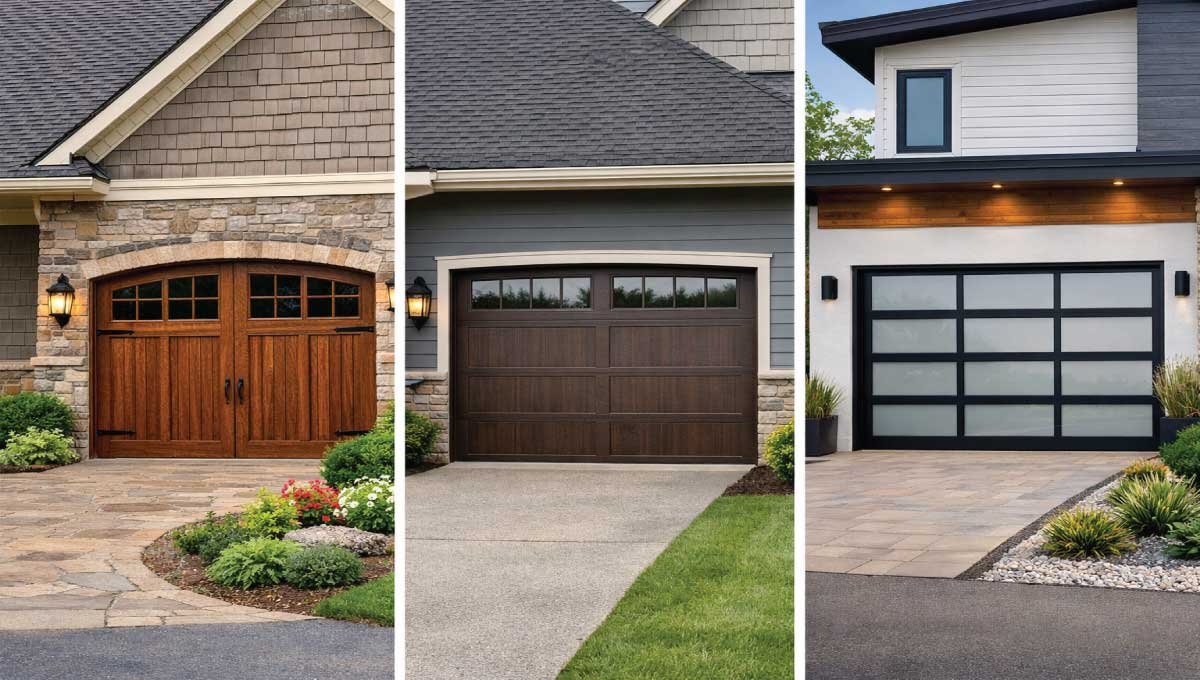
Wood garage doors provide warmth, richness, and a handcrafted feel.
Steel garage doors can mimic wood grain and come in many designs.
Aluminum garage doors give a modern, glass-and-metal look that stands out.
If curb appeal is your top priority, wood or modern aluminum designs may be your best choice.
Also Read:
Durability and Longevity
Durability is a major factor, especially if your garage door is used multiple times every day.
Steel doors are the most durable and can handle daily use with ease.
Wood doors can last a long time but only with proper maintenance.
Aluminum doors resist rust but dent more easily.
For long-term reliability, steel is often the safest choice.
Maintenance Requirements
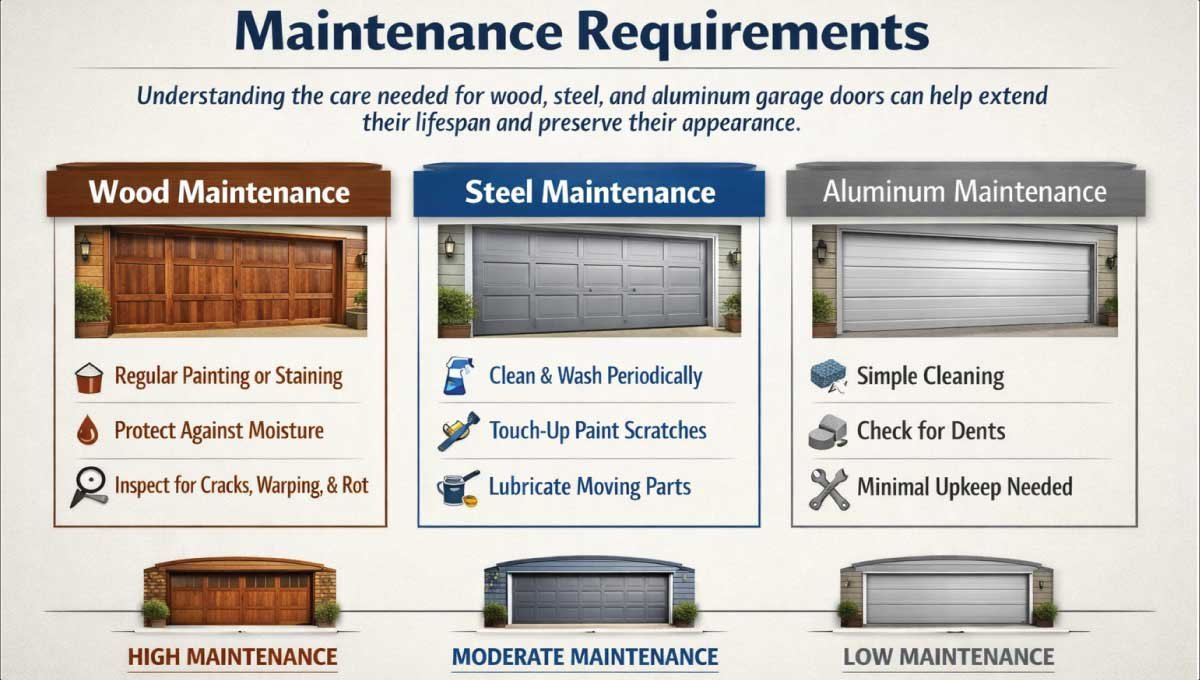
Maintenance needs vary greatly between wood, steel, and aluminum garage doors. Understanding the care each material requires helps homeowners protect their investment, extend the door’s lifespan, and preserve appearance while minimizing long-term costs.
1- Wood Maintenance:
Wood garage doors require consistent attention to maintain their natural beauty and structural integrity. This includes regular painting or staining, protecting against moisture, and frequent inspections for cracks, warping, or rot, especially in harsh weather conditions.
2- Steel Maintenance:
Steel garage doors are durable and relatively low-maintenance. Occasional cleaning, touch-up paint for scratches, and lubricating moving hardware keep the door functioning smoothly and looking good for many years.
3- Aluminum Maintenance:
Aluminum doors are lightweight and easy to care for, requiring only simple cleaning, checking for dents, and minimal routine maintenance. Their corrosion-resistant properties make them ideal for low-maintenance, modern home applications.
Also Read:
Insulation and Energy Efficiency
Insulation plays a vital role in maintaining comfortable temperatures and improving energy efficiency, especially for attached garages. The right garage door material can reduce heat loss, lower energy bills, and create a more stable indoor environment throughout changing weather conditions.
1- Steel Garage Doors
Steel garage doors are often designed with built-in insulation layers that help regulate indoor temperatures effectively. These insulated cores reduce heat transfer, improve energy efficiency, and minimize outside noise, making them a practical and reliable option for both hot and cold climates.
2- Wood Garage Doors
Wood garage doors naturally provide moderate insulation due to their dense material structure. However, over time, gaps, cracks, or warping may develop, reducing efficiency. Proper maintenance is essential to preserve their insulating ability and prevent unwanted air leaks or energy loss.
3- Aluminum Garage Doors
Aluminum garage doors typically offer lower insulation because of their lightweight and thin construction. While insulated versions are available with thermal breaks, standard models allow more heat transfer, making them less energy-efficient compared to steel or properly maintained wood doors.
Best Choice for Energy Efficiency
For homeowners in extremely hot or cold climates, insulated steel garage doors are often the best choice. They combine durability with superior thermal performance, helping maintain indoor comfort, reduce energy consumption, and provide long-term cost savings.
Security and Safety
Garage door security is essential because it serves as one of the main entry points to your home. A strong, well-built door not only protects your property from intruders but also enhances overall safety for your family and valuables.
1- Steel Garage Doors
Steel garage doors provide the highest level of security due to their strong, rigid structure and impact resistance. They are difficult to break, force open, or damage, making them the most reliable choice for homeowners who prioritize maximum protection and safety.
2- Wood Garage Doors
Wood garage doors offer solid protection when new, but their strength can decrease over time due to warping, cracking, or moisture damage. With proper maintenance, they remain secure, but aging wood may become easier to compromise compared to metal alternatives.
3- Aluminum Garage Doors
Aluminum garage doors are lightweight and easier to handle, but this also makes them less resistant to force. Without reinforcement, they can be more vulnerable to dents and break-ins, making them better suited for style-focused rather than high-security needs.
Best Choice for Home Security
For homeowners who prioritize safety and protection, steel garage doors are the best option. Their strong construction, durability, and resistance to forced entry make them the most secure choice compared to wood and aluminum alternatives.
👉 Choosing the Right Garage Door for Your Home: This guide helps you select the perfect garage door based on style, durability, security, and budget. Learn the pros and cons of different materials and make a smart decision for long-term value. Read the full post to choose confidently and improve your home’s look and safety.
Cost Comparison
Budget is always part of the decision.
| Garage Door Material | Cost Range | Notes |
|---|---|---|
| Wood | Most expensive | High cost due to premium materials and craftsmanship; adds natural beauty and upscale curb appeal. |
| Steel | Most affordable | Widely available, strong, durable, and low-maintenance; offers excellent value for most homeowners. |
| Aluminum | Mid-range | Lightweight and modern; costs more than steel but less than wood; corrosion-resistant, especially for coastal areas. |
Cost, Maintenance, and Best Use Guide
| Material | Average Cost | Maintenance Level | Best For |
|---|---|---|---|
| Wood | High | High | Luxury & traditional homes |
| Steel | Low–Medium | Low | Most residential homes |
| Aluminum | Medium | Low | Modern & coastal homes |
Climate Considerations
Your local climate plays a big role in choosing the right garage door material.
Humid or rainy areas: Aluminum or steel are better than wood.
Cold climates: Insulated steel doors perform best.
Coastal areas: Aluminum resists rust better than steel.
Dry climates: Wood can perform well with proper care.
Choosing a material that matches your climate helps extend its lifespan.
Noise and Operation
The material of your garage door can affect noise levels.
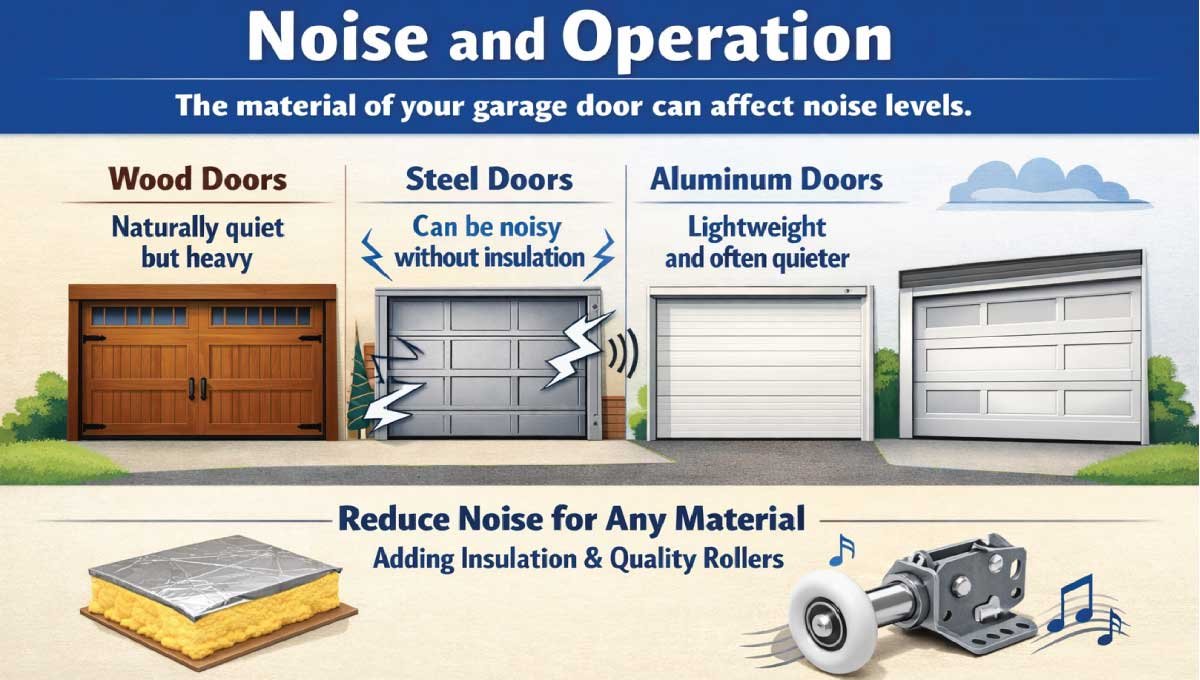
Wood doors are naturally quiet but heavy.
Steel doors can be noisy without proper insulation.
Aluminum doors are lightweight and often quieter.
Adding insulation and quality rollers can reduce noise for any material.
Which Garage Door Material Is Best for You?
Selecting the ideal garage door material depends on your specific priorities, lifestyle, and budget. Each material wood, steel, or aluminum offers distinct benefits and trade-offs, so understanding their characteristics helps you make a smart, long-term decision.
1- Choose Wood If:
Wood is perfect for homeowners who prioritize appearance and curb appeal. If you don’t mind regular maintenance such as painting or sealing, and want a custom, luxurious, high-end look, wood delivers unmatched elegance and warmth.
2- Choose Steel If:
Steel doors are ideal for those seeking strength, security, and long-lasting durability. They require minimal maintenance, fit most budgets, and offer excellent performance, making them a practical choice for homeowners who want quality without high upkeep.
3- Choose Aluminum If:
Aluminum doors suit modern and contemporary home designs. Lightweight, rust-resistant, and low-maintenance, they perform well in coastal or humid areas. Aluminum is ideal if you want sleek style combined with easy operation and long-term convenience.
| Material | Best For | Key Benefits | Considerations |
|---|---|---|---|
| Wood | Appearance & luxury | High-end look, customizable, enhances curb appeal | Requires regular maintenance, higher cost |
| Steel | Durability & budget | Strong, secure, low-maintenance, affordable | Less customizable than wood, can dent |
| Aluminum | Modern style & coastal homes | Lightweight, rust-resistant, low-maintenance | Less strong than steel, can dent easily |
Final Thoughts
Choosing between wood, steel, and aluminum garage doors is easier when you understand their strengths. Wood offers beauty and customization, steel provides strength and value, and aluminum delivers modern, low-maintenance style helping you select a door that enhances your home’s appearance, security, and long-term value.
👉 How to Open a Garage Door Manually (Quick & Easy Guide) This post helps you safely open your garage door by hand during power outages or system failure. Learn simple steps, safety tips, and common mistakes to avoid. Don’t miss the full guide to handle emergencies confidently and protect your garage system properly.

Engineer Ali Hasan is a garage door expert and the founder of FixFasty. With over 16 years of experience in mechanical systems and home maintenance, he provides practical, step-by-step guides on garage door installation, repairs, and maintenance, helping homeowners keep their garage doors safe, reliable, and long-lasting.