
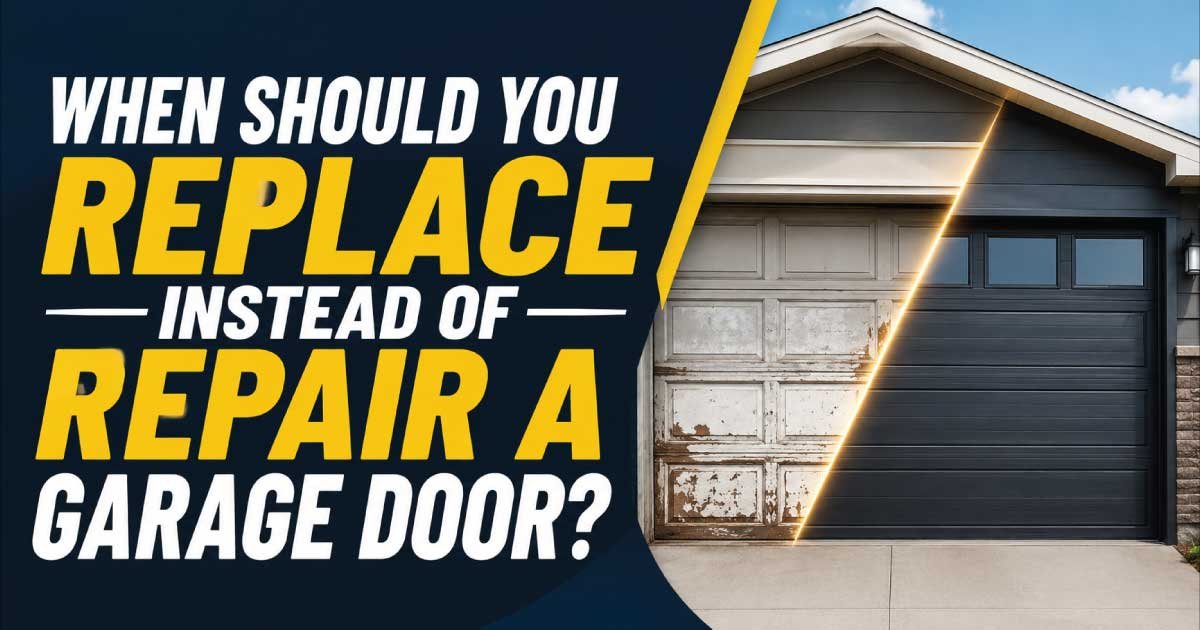
A garage door is one of the largest moving parts in your home, and it plays an important role in security, energy efficiency, and daily convenience. When it starts making unusual noises, moving unevenly, refusing to open, or showing visible damage, many homeowners immediately wonder whether a repair will solve the problem or if a complete replacement is the better investment. The answer depends on several factors, including the door’s age, the extent of the damage, repair costs, and overall safety.
Knowing when you should replace instead of repair a garage door can help you avoid spending money on repeated fixes that only provide temporary results. Some problems, such as worn rollers or broken weather seals, are inexpensive to repair. Others, including severe structural damage, repeated spring failures, or outdated safety features, often make replacement the smarter long-term choice.
This guide explains the warning signs, common causes of garage door problems, how a garage door normally works, important safety precautions, essential inspection tools, and a practical troubleshooting process. By the end, you’ll have a clear understanding of whether your garage door is likely worth repairing or if replacing it will save time, money, and future headaches.
Common Signs and Symptoms
Garage door problems often begin with small warning signs before developing into expensive or dangerous failures. Paying attention to these early symptoms can help you make an informed decision before the damage spreads to other components.
Common signs that may indicate your garage door needs major repairs or replacement include:
- The door struggles to open or close.
- It moves unevenly or appears crooked.
- Loud grinding, squeaking, or popping noises during operation.
- The door reverses unexpectedly.
- Large dents, cracks, rust, or warped panels.
- Sagging sections that no longer stay aligned.
- Broken or stretched springs.
- Frayed or damaged lift cables.
- The opener strains or sounds louder than usual.
- The garage door frequently needs repairs.
- Visible gaps around the edges causing drafts or water leaks.
- Poor insulation leading to higher heating or cooling costs.
- The door lacks modern safety sensors or automatic reverse features.
- The exterior finish is peeling, rotting, or severely corroded.
Some homeowners experience only one symptom, while others notice several occurring together. For example, a garage door that has sagging panels, damaged tracks, and frequent breakdowns often indicates widespread wear rather than a single faulty part.
If multiple symptoms appear at the same time, replacing the entire garage door may be more cost-effective than repairing individual components.
How the Garage Door System Normally Works
Understanding how a garage door operates makes it much easier to recognize what has gone wrong. Modern residential garage doors rely on several mechanical parts working together to safely lift and lower hundreds of pounds.
The basic operation follows this sequence:
- The wall button or remote sends a signal to the garage door opener.
- The opener activates the motor.
- The motor turns a chain, belt, or screw drive.
- Torsion or extension springs provide most of the lifting force.
- Cables transfer the spring tension to raise or lower the door.
- Rollers travel smoothly inside the metal tracks.
- Hinges allow each panel to bend as the door moves.
- Safety sensors near the floor detect obstacles and stop the closing cycle if necessary.
A properly functioning garage door should:
- Open smoothly.
- Close evenly.
- Stay balanced when manually lifted halfway.
- Operate quietly with minimal vibration.
- Reverse immediately when the safety sensors detect an obstruction.
When one component begins wearing out, it often places extra stress on the remaining parts. For example, worn rollers can force the opener to work harder, eventually shortening the life of both the motor and the springs.
Understanding this relationship helps explain why repeated repairs sometimes become more expensive than replacing the complete system.
Most Common Reasons This Problem Happens
Garage doors are designed to last many years, but constant movement, changing weather, accidental impacts, and normal wear eventually cause components to fail. Knowing the underlying cause helps determine whether repair is practical or replacement makes better financial sense.
Normal Wear and Aging
Garage doors typically last between 15 and 30 years depending on material, climate, maintenance, and usage. Every opening and closing cycle places stress on springs, rollers, hinges, cables, and the opener.
Why it happens:
- Metal parts gradually wear out.
- Lubrication dries up.
- Wooden doors absorb moisture.
- Steel doors may rust.
- Insulation breaks down over time.
Symptoms include:
- Frequent breakdowns.
- Noisy operation.
- Slower movement.
- Increasing repair frequency.
How to identify it:
Inspect the overall condition rather than focusing on one broken part. If multiple components show significant wear, the entire system may be nearing the end of its service life.
Major Structural Damage
Accidental vehicle impacts are among the most common causes of garage door replacement.
Why it happens:
- Cars back into the door.
- Heavy objects strike panels.
- Storm damage bends the frame.
- Falling tree branches dent multiple sections.
Symptoms include:
- Bent panels.
- Twisted tracks.
- Visible gaps.
- Difficulty opening or closing.
How to identify it:
Look for permanent bends that prevent the panels from sitting flat. If the door frame itself is distorted, repairs become increasingly difficult and expensive.
Repeated Spring or Cable Failures
Springs and lift cables handle tremendous amounts of tension every day.
Why it happens:
- Metal fatigue.
- Rust.
- High usage.
- Poor maintenance.
Symptoms include:
- Door feels unusually heavy.
- Loud bang from the garage.
- Door lifts unevenly.
- Opener struggles.
How to identify it:
A broken spring is often easy to spot because the coil separates. Frayed cables may show broken strands or uneven tension.
If these failures occur repeatedly despite previous repairs, replacing older hardware—or even the entire door system—may provide a more reliable solution.
Outdated Garage Door Design
Older garage doors often lack the efficiency and safety features found in modern systems.
Why it happens:
- Aging construction methods.
- Older insulation materials.
- Missing safety technology.
Symptoms include:
- Poor temperature control.
- Higher utility bills.
- Limited security.
- No automatic reversing sensors.
How to identify it:
Compare your garage door with modern insulated models. If your current door is decades old, upgrading may improve comfort, safety, and property value while reducing maintenance costs.
Extensive Rust, Rot, or Corrosion
Environmental exposure gradually damages garage doors, especially in humid or coastal climates.
Why it happens:
- Moisture.
- Salt exposure.
- Water leaks.
- Poor paint protection.
Symptoms include:
- Flaking paint.
- Soft wood.
- Rust holes.
- Weak structural areas.
How to identify it:
Probe suspicious wooden sections with a screwdriver or inspect steel doors for deep corrosion around the bottom panels and hinges.
Surface rust can often be repaired, but widespread corrosion usually indicates structural weakening.
Also Read:
Safety Precautions Before Troubleshooting
Garage doors may appear simple, but they contain components under extremely high tension. Serious injuries can occur if repairs are attempted without proper knowledge or safety precautions.
Before beginning any inspection:
- Disconnect power to the garage door opener.
- Pull the emergency release only when the door is fully closed whenever possible.
- Keep children and pets away from the work area.
- Wear safety glasses.
- Use sturdy work gloves.
- Wear closed-toe shoes with good traction.
- Never loosen or remove torsion springs.
- Never disconnect lift cables under tension.
- Secure ladders on stable ground.
- Use adequate lighting inside the garage.
- Avoid working alone when inspecting heavy doors.
Certain repairs should always be left to trained professionals, including:
- Torsion spring replacement.
- Cable replacement.
- Track realignment after major impacts.
- Opener motor disassembly.
- Complete door installation.
If the garage door appears unstable or partially collapsed, stop troubleshooting immediately and avoid operating it until it has been professionally inspected.
Tools Required
Before inspecting your garage door, gather a few basic tools that help you identify problems safely without unnecessarily disassembling components.
| Tool | Purpose |
|---|---|
| Flashlight | Inspect tracks, rollers, cables, and hinges |
| Tape measure | Check panel alignment and track spacing |
| Level | Verify tracks remain straight and properly aligned |
| Socket wrench set | Tighten accessible hardware |
| Screwdriver set | Inspect brackets and covers |
| Silicone garage door lubricant | Lubricate moving metal parts |
| Step ladder | Reach upper hardware safely |
| Work gloves | Protect hands from sharp metal edges |
| Safety glasses | Protect eyes during inspection |
| Notepad or phone camera | Record damage for comparison or professional estimates |
Step-by-Step Troubleshooting Guide
A systematic inspection helps identify whether your garage door has a repairable issue or multiple failures that point toward replacement. Work through each step carefully without attempting repairs that involve high-tension components.
1. Inspect the Overall Condition
Start by examining the entire garage door from both inside and outside.
Why it matters:
Overall condition reveals whether damage is isolated or widespread.
Expected result:
Panels should appear straight, evenly spaced, and free of major damage.
What to do next:
If multiple panels are cracked, bent, rusted, or sagging, continue checking the remaining components before deciding on repairs.
2. Test Manual Balance
Disconnect the opener using the emergency release and carefully lift the door halfway.
Why it matters:
A balanced door places minimal stress on the opener.
Expected result:
The door should remain near the halfway position without drifting.
What to do next:
If it quickly falls or rises, the spring system likely requires professional attention.
3. Inspect Rollers and Tracks
Examine the rollers for cracks, flat spots, or excessive wear while checking the tracks for bends or debris.
Why it matters:
Damaged rollers increase friction and strain the opener.
Expected result:
Rollers should move smoothly inside clean, straight tracks.
What to do next:
Minor debris can be removed, but bent tracks often require repair or replacement.
4. Examine Panels and Hinges
Look closely at each panel and hinge connection.
Why it matters:
Structural damage affects safe operation.
Expected result:
Panels remain firmly connected without large cracks or loose hinges.
What to do next:
If damage affects multiple sections, compare repair costs against a complete replacement estimate.
5. Evaluate Repair History
Think about how often repairs have been needed over the past few years.
Why it matters:
Frequent repairs often signal that several aging components are reaching the end of their lifespan.
Expected result:
A well-maintained door should not require constant service.
What to do next:
If repair costs continue increasing, replacement may provide better long-term value.
Also Read:
Quick Diagnosis Table
| Symptom | Possible Cause | Recommended Solution |
|---|---|---|
| Door is extremely noisy | Worn rollers, hinges, or lack of lubrication | Inspect components and lubricate; replace worn parts if needed |
| Door is crooked while moving | Broken cable, damaged track, or spring issue | Stop using the door and arrange professional inspection |
| Multiple dented or cracked panels | Structural impact damage | Compare panel replacement cost with full door replacement |
| Door feels very heavy | Broken torsion or extension spring | Do not lift manually; contact a qualified technician |
| Frequent breakdowns | Aging system with multiple worn components | Evaluate total repair costs versus replacing the entire door |
| Rust, rot, or severe corrosion | Long-term environmental damage | Replace heavily weakened sections or the complete door if structural integrity is compromised |
| High energy bills with attached garage | Poor insulation or outdated door | Consider upgrading to a modern insulated replacement |
| Opener strains during operation | Unbalanced door or worn mechanical parts | Inspect balance and supporting hardware before replacing the opener |

Engineer Ali Usman is a professional garage door expert and author at FixFasty, with over 10 years of hands-on experience in garage door systems and mechanical maintenance. He writes clear, step-by-step guides on garage door repairs, parts, and safety practices, helping homeowners fix problems correctly and maintain smooth, secure, and long-lasting garage door performance.