
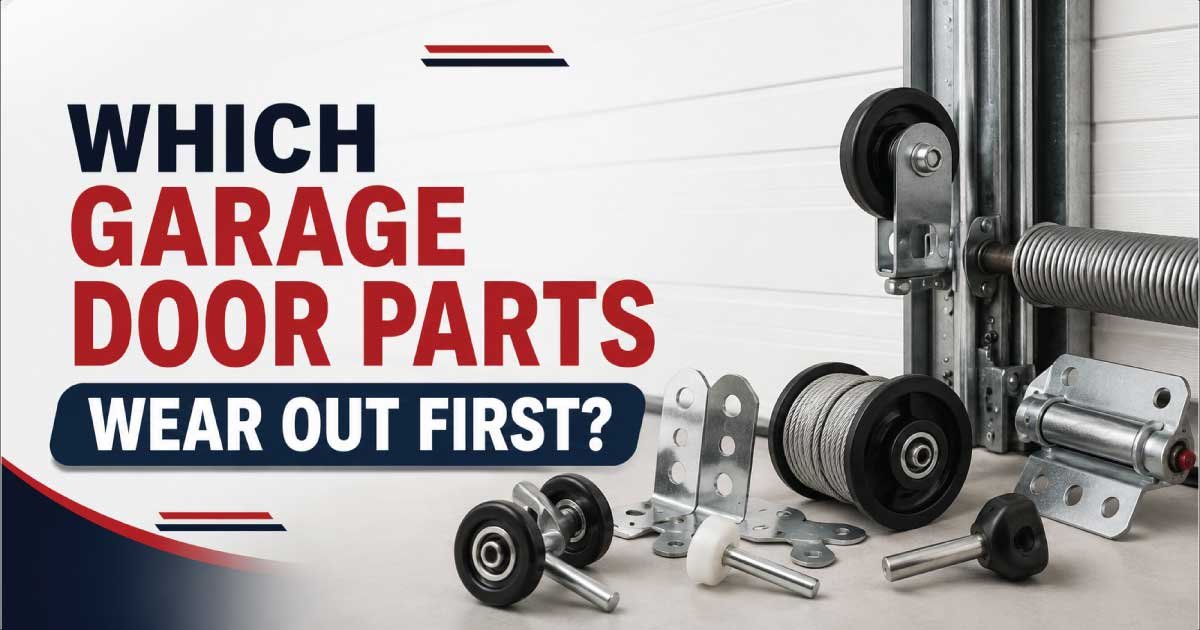
A garage door is one of the hardest-working systems in most homes. It may open and close several times every day, carrying hundreds of pounds with each cycle. Over time, that constant movement causes certain garage door parts to wear out first, while others continue working for many years with little attention. Knowing which components typically fail first helps you spot problems early, avoid expensive emergency repairs, and keep your garage door operating safely.
Many homeowners only notice an issue after the door becomes noisy, moves unevenly, or refuses to open. In reality, most failures begin with small warning signs that are easy to miss. Regular inspection and preventive maintenance can often extend the life of key components and reduce the chance of sudden breakdowns.
In this guide, you’ll learn how a garage door system normally works, the most common signs of wear, why specific parts fail sooner than others, and how to troubleshoot problems safely. You’ll also discover which inspections you can perform yourself and when it’s safer to contact a professional before a minor issue turns into a major repair.
Table of Contents
ToggleCommon Signs and Symptoms
Garage door parts rarely fail without warning. Most worn components show gradual changes in performance before they stop working completely. Paying attention to these symptoms allows you to diagnose problems early, reduce repair costs, and avoid damage to other parts of the system.
Common warning signs include:
- Unusual grinding, squeaking, or popping noises
- Garage door moving slower than normal
- Jerky or uneven door movement
- Door shaking while opening or closing
- Door stopping halfway during operation
- Remote works inconsistently
- Door feels unusually heavy when operated manually
- Visible rust, frayed cables, or worn rollers
- Gaps between torsion spring coils
- Garage door reversing before reaching the floor
- Crooked door that hangs unevenly
- Excessive vibration from the tracks
For example, if your garage door suddenly becomes much louder than usual, worn rollers or dry bearings are often responsible. If the opener struggles even though the motor still runs, aging springs may no longer support the door’s weight.
Small symptoms often indicate the beginning of a larger problem. Replacing an inexpensive roller today may prevent damage to tracks, hinges, or even the garage door opener later.
How the Garage Door System Normally Works
Understanding how a garage door works makes troubleshooting much easier. Although the system looks simple from the outside, several components work together to lift and lower a very heavy door safely.
When you press the wall button or remote:
- The garage door opener activates.
- The opener pulls or pushes the trolley along its rail.
- Springs carry most of the door’s weight.
- Cables transfer spring tension to lift the door.
- Rollers travel smoothly inside the tracks.
- Hinges allow door sections to bend as the door moves.
- Safety sensors monitor the doorway for obstacles.
Contrary to what many homeowners believe, the electric opener is not designed to lift the entire weight of the door. Its primary job is controlling movement. The springs do most of the heavy lifting.
If a spring weakens, the opener must work much harder than intended. That additional strain often causes premature wear on gears, chains, belts, motors, and other moving parts.
Because every component depends on the others, a single worn part can quickly affect the entire system if left unrepaired.
Most Common Reasons This Problem Happens
Garage doors contain dozens of moving parts, but some wear much faster because they experience constant friction, tension, or repeated movement. Understanding why these parts fail helps you recognize issues before they become dangerous or expensive.
Garage Door Springs Reach Their Cycle Limit
Springs are usually the first major component to wear out because they support almost the entire weight of the garage door every time it opens or closes.
Why it happens:
- Normal metal fatigue
- High daily usage
- Corrosion
- Lack of lubrication
- Poor spring sizing
Symptoms:
- Door feels unusually heavy
- Loud bang from the garage
- Door only opens a few inches
- Opener strains or stalls
How to identify it:
Look for gaps in a torsion spring or stretched extension springs. A broken spring is often easy to spot because the metal separates into two sections.
Safety note: Never attempt to remove or adjust a loaded torsion spring yourself. These springs store enough energy to cause severe injuries.
Rollers Wear from Constant Friction
Rollers guide the garage door along its tracks thousands of times over their lifespan. They are among the most frequently replaced garage door parts.
Why it happens:
- Daily movement
- Dirt buildup
- Worn bearings
- Lack of lubrication
- Aging plastic or nylon wheels
Symptoms:
- Grinding noises
- Door shakes
- Rough operation
- Increased vibration
How to identify it:
Inspect each roller for cracks, flat spots, worn bearings, or excessive wobble. Rollers should spin freely without sticking.
Steel rollers often become noisy as bearings wear, while nylon rollers usually fail more quietly but may crack with age.
Lift Cables Gradually Fray
Garage door cables work alongside the springs to lift and lower the door evenly. Although they are extremely strong, they gradually wear from tension and contact with pulleys or drums.
Why it happens:
- Rust
- Moisture
- Normal wear
- Misaligned drums
- Damaged pulleys
Symptoms:
- Door hangs unevenly
- Visible cable strands
- Door jerks during movement
- One side rises faster
How to identify it:
Look closely for broken wire strands, corrosion, flattened sections, or loose winding around the cable drum.
A damaged cable should never be ignored because it may snap unexpectedly while supporting the door.
Roller Hinges Loosen Over Time
Every door section is connected by hinges that flex whenever the door moves.
Why it happens:
- Repeated movement
- Loose fasteners
- Rust
- Metal fatigue
Symptoms:
- Door bends awkwardly
- Clicking noises
- Loose panels
- Uneven movement
How to identify it:
Inspect each hinge for cracked metal, elongated screw holes, missing bolts, or excessive movement.
Replacing worn hinges early often prevents damage to the door panels themselves.
Garage Door Opener Components Wear Out
The opener contains gears, bearings, chains, belts, motors, and electronic controls that eventually wear from years of operation.
Why it happens:
- Heavy doors
- Weak springs
- Lack of maintenance
- Age
- Frequent daily use
Symptoms:
- Motor hums but door doesn’t move
- Intermittent operation
- Slow opening
- Grinding sounds
How to identify it:
Listen carefully during operation. Grinding often indicates worn internal gears, while inconsistent movement may point to electronic or motor issues.
In many cases, the opener is not actually the original problem. Weak springs often overload the opener until internal components begin to fail.
Tracks Become Misaligned
Tracks rarely wear out completely, but they can bend or shift enough to interfere with smooth operation.
Why it happens:
- Vehicle impact
- Loose mounting brackets
- House settling
- Worn rollers
Symptoms:
- Door sticks
- Uneven movement
- Loud scraping
- Rollers jumping tracks
How to identify it:
Visually inspect both vertical and horizontal tracks. They should remain straight with consistent spacing from the door.
Minor bracket tightening is often a DIY repair, but bent tracks usually require professional adjustment.
Also Read:
Safety Precautions Before Troubleshooting
Garage doors are heavy mechanical systems that combine moving parts, high spring tension, and electrical components. Before beginning any troubleshooting or maintenance, take time to reduce the risk of injury. Many routine inspections are safe for homeowners, but certain repairs should never be attempted without proper training and specialized tools.
Before inspecting your garage door:
- Disconnect the automatic opener using the emergency release if manual inspection is required.
- Keep children and pets away from the work area.
- Never place hands between door sections.
- Wear safety glasses and sturdy work gloves.
- Use a stable ladder when inspecting overhead components.
- Do not loosen spring brackets or cable drums.
- Never cut, unwind, or adjust torsion springs.
- Avoid operating the door if cables are badly frayed.
- Disconnect electrical power before inspecting the opener housing.
- Replace damaged tools before beginning any repair.
A useful rule is simple: if a repair involves spring tension or lifting cables, leave it to a qualified garage door technician. Those components remain under extreme force even when the door appears to be closed.
Tools Required
Most inspections require only basic household tools. These are suitable for routine maintenance and troubleshooting, not for high-tension spring repairs.
| Tool | Purpose |
|---|---|
| Flashlight | Inspect dark areas around tracks and springs |
| Safety glasses | Protect eyes from debris |
| Work gloves | Prevent cuts while handling metal parts |
| Step ladder | Reach upper rollers and tracks safely |
| Tape measure | Check track alignment and door balance |
| Socket wrench set | Tighten loose hardware |
| Screwdriver set | Remove covers and adjust small components |
| Silicone garage door lubricant | Lubricate rollers, hinges, and bearings |
| Clean cloth | Remove dirt and old grease |
| Level | Check track alignment |
Step-by-Step Troubleshooting Guide
A systematic inspection helps identify the source of a garage door problem without replacing parts unnecessarily. Start with the safest checks first and move toward more detailed inspections only if the problem remains.
- Listen during door operation.
What to inspect: Run the door through one full cycle and listen for squeaks, grinding, popping, or scraping.
Why it matters: Different sounds often point to different worn parts.
Expected result: Smooth, relatively quiet movement.
What to do next: If unusual noises are present, inspect rollers and hinges. - Inspect the springs from a safe distance.
What to inspect: Look for visible gaps, rust, or stretched extension springs.
Why it matters: Springs are among the first garage door parts to wear out.
Expected result: Springs remain intact with no separation.
What to do next: If a spring appears broken, stop using the door and arrange professional replacement. - Check the rollers.
What to inspect: Examine each roller for cracks, worn bearings, or wobbling.
Why it matters: Damaged rollers increase friction and strain the opener.
Expected result: Rollers rotate smoothly with minimal play.
What to do next: Replace worn rollers if they are accessible and not attached to high-tension hardware. - Inspect lift cables.
What to inspect: Look for fraying, rust, or uneven winding on the drums.
Why it matters: Cable failure can cause the door to drop unevenly.
Expected result: Cables appear smooth and evenly tensioned.
What to do next: If any strands are broken, discontinue use and contact a professional. - Check hinges and hardware.
What to inspect: Tighten loose bolts and inspect hinges for cracks.
Why it matters: Loose hardware creates vibration and accelerates wear.
Expected result: All fasteners remain secure and hinges move freely.
What to do next: Lubricate moving joints and replace damaged hinges. - Examine the tracks.
What to inspect: Look for dents, debris, or loose brackets.
Why it matters: Misaligned tracks prevent smooth roller movement.
Expected result: Tracks remain clean, straight, and securely mounted.
What to do next: Remove debris and tighten brackets if necessary, but avoid bending tracks into place.
Quick Diagnosis Table
| Symptom | Possible Cause | Recommended Solution |
|---|---|---|
| Loud bang from garage | Broken torsion spring | Stop using the door and replace the spring professionally |
| Grinding noise | Worn rollers | Inspect and replace damaged rollers |
| Door feels heavy | Weak or broken springs | Have spring balance checked by a technician |
| Uneven door movement | Frayed cable or worn roller | Inspect cables and rollers immediately |
| Door shakes while moving | Loose hinges or worn rollers | Tighten hardware and replace worn components |
| Opener strains to lift door | Weak springs or opener wear | Test door balance before servicing the opener |
| Door sticks during travel | Dirty or misaligned tracks | Clean tracks and inspect alignment |
| Remote works but door reverses | Obstruction or sensor issue | Check safety sensors and remove obstacles |
How to Fix Each Common Cause
Now that you’ve identified the most likely worn components, the next step is deciding whether the repair is safe to perform yourself or should be left to a professional. Some garage door maintenance tasks are straightforward, while others involve high spring tension and can become dangerous without the proper tools and experience.
Replacing Worn Rollers
Rollers are one of the most common wear items and are often a DIY-friendly repair if they are not connected to the bottom bracket, which is attached to the lift cable under spring tension.
Steps:
- Disconnect the garage door opener.
- Open the door fully and secure it with locking pliers or clamps on the tracks.
- Remove one hinge at a time.
- Slide out the old roller.
- Install the new roller.
- Reattach the hinge securely.
- Repeat for each accessible roller.
- Lubricate metal bearings and hinges with a silicone-based garage door lubricant.
Do not remove the bottom roller bracket. It is connected to the lift cable and spring system and should only be serviced by a professional.
Replacing Loose or Damaged Hinges
Garage door hinges often wear after years of repeated bending.
Repair steps:
- Close the garage door.
- Inspect each hinge for cracks or bent metal.
- Tighten loose screws or bolts.
- Replace damaged hinges with matching numbered replacements.
- Lubricate hinge pivot points after installation.
If screw holes have enlarged in a wooden door, use longer screws or appropriate wood repair methods before reinstalling the hinge.
Lubricating Moving Parts
Many garage door problems result from poor maintenance rather than broken parts.
Lubricate these components every six to twelve months:
- Roller bearings
- Hinges
- Torsion spring coils
- Bearing plates
- Lock mechanism
Avoid lubricating:
- Garage door tracks
- Nylon roller wheels (unless the bearings require lubrication)
- Safety sensors
Dirty tracks should be cleaned with a dry cloth instead of coated with grease.
Tightening Loose Hardware
Garage doors vibrate every time they operate. Over thousands of cycles, bolts and fasteners gradually loosen.
Inspect and tighten:
- Hinge bolts
- Track brackets
- Opener mounting bolts
- Ceiling supports
- Roller brackets (except bottom brackets)
Do not overtighten fasteners, especially on older wooden doors, as this can strip the mounting holes.
Cleaning and Aligning Tracks
If rollers stick or scrape, inspect the tracks carefully.
DIY maintenance includes:
- Removing leaves and dirt
- Wiping away hardened grease
- Tightening loose mounting brackets
- Checking for obvious obstructions
If the tracks are bent or twisted, replacement or realignment is usually the safest option. Hammering bent tracks back into shape often creates additional alignment problems.
Replacing Weather Seals
Although weather stripping isn’t part of the lifting mechanism, it wears out relatively quickly.
Signs it needs replacement include:
- Cracks
- Hard or brittle rubber
- Water entering the garage
- Increased drafts
- Light visible beneath the door
Replacing bottom and side seals improves energy efficiency while reducing moisture, dust, and pests.
Repairs That Should Always Be Left to Professionals
Some garage door repairs involve stored mechanical energy that can cause severe injuries.
Professional repairs include:
- Torsion spring replacement
- Extension spring replacement
- Lift cable replacement
- Bottom bracket removal
- Cable drum adjustment
- Major track replacement
- Spring balancing
Attempting these repairs without specialized winding bars, clamps, and training can be extremely dangerous.
Also Read:
Advanced Troubleshooting
If basic inspections do not identify the problem, the issue may involve less common mechanical or electrical failures. These problems require more detailed diagnosis but can often be recognized by their unique symptoms.
Garage Door Is Balanced Incorrectly
Disconnect the opener and manually lift the door halfway.
A properly balanced door should remain nearly in place.
If it:
- Falls quickly, the springs are weak.
- Rises by itself, the springs are over-tensioned.
Both conditions shorten the life of the opener and should be corrected professionally.
Worn Opener Drive Gear
Many chain-drive openers contain plastic drive gears that eventually wear out.
Symptoms include:
- Motor runs
- Chain doesn’t move properly
- Grinding sounds
- Door remains stationary
Some manufacturers sell replacement gear kits, making repair less expensive than replacing the entire opener.
Failing Bearings
Garage doors use bearings at several locations.
Worn bearings produce:
- Metal grinding
- Increased vibration
- Jerky movement
- Slower door travel
Replacing bearings early reduces strain on the entire lifting system.
Door Panel Damage
Bent or cracked panels may appear cosmetic but often affect door alignment.
Inspect for:
- Cracks around hinges
- Buckled steel
- Water damage
- Warped wood
Minor panel damage may be repairable, while extensive structural damage often requires replacing the affected section or the entire door.
Safety Sensor Problems
Modern garage doors reverse automatically if the safety sensors detect an obstruction.
Common issues include:
- Dirty lenses
- Misalignment
- Damaged wiring
- Sunlight interference
Clean the lenses with a soft cloth and ensure both indicator lights remain steady.
When Repair Is Not Worth It
Not every garage door problem justifies continued repairs. As doors age, replacing multiple worn components may cost nearly as much as installing a new system with improved safety features and better insulation.
Replacement usually makes more sense when:
- Multiple springs, rollers, cables, and hinges have failed together.
- The door has severe structural damage.
- Repair costs exceed roughly 50% of replacement cost.
- Replacement panels are no longer available.
- The opener lacks modern safety features.
- The door is more than 20 to 25 years old and requires frequent repairs.
- Rust or rot has weakened the door frame.
A newer garage door may also improve curb appeal, energy efficiency, quieter operation, and home value.
Also Read:
Preventive Maintenance Tips
Preventive maintenance is the easiest way to extend the lifespan of garage door components. Most inspections take less than 20 minutes and can prevent costly breakdowns.
Follow these maintenance practices:
- Inspect rollers every six months.
- Lubricate moving metal parts twice a year.
- Tighten loose hardware annually.
- Keep tracks clean and free of debris.
- Test door balance every few months.
- Inspect cables visually without touching them.
- Check weather seals before winter.
- Listen for new noises during normal operation.
- Test safety sensors monthly.
- Schedule professional maintenance every one to two years.
Homeowners who perform routine inspections often catch worn components before they cause secondary damage.
Common Mistakes to Avoid
Many garage door failures become more expensive because of well-intentioned but incorrect repairs.
Avoid these common mistakes:
- Ignoring unusual noises until parts fail.
- Using grease on the tracks.
- Replacing only one worn roller when several have reached the end of their lifespan.
- Continuing to use the opener after a spring breaks.
- Attempting torsion spring repairs without training.
- Using incorrect replacement parts.
- Skipping regular lubrication.
- Forgetting to test the safety reversal system.
- Overtightening bolts into wooden panels.
- Delaying replacement of frayed cables.
Addressing small issues promptly is usually much less expensive than waiting for a complete system failure.
When to Call a Professional
Many routine inspections are safe for homeowners, but certain repairs should always be handled by an experienced garage door technician.
Call a professional if:
- A torsion or extension spring has broken.
- Lift cables are frayed or snapped.
- The garage door has come off its tracks.
- The door is severely unbalanced.
- The opener continues struggling after basic maintenance.
- Structural door panels are damaged.
- The bottom bracket requires removal.
- You are unsure whether a repair involves stored spring tension.
Professional technicians have specialized tools for safely handling high-tension components while ensuring the door is properly balanced afterward.
Estimated Repair Costs
| Repair | Estimated Cost | DIY or Professional |
|---|---|---|
| Roller replacement | $15–$120 | DIY or Professional |
| Hinge replacement | $10–$60 | DIY |
| Lubrication and maintenance | $10–$30 | DIY |
| Weather seal replacement | $30–$120 | DIY |
| Track adjustment | $125–$300 | Professional |
| Lift cable replacement | $150–$300 | Professional |
| Torsion spring replacement | $200–$450 | Professional |
| Extension spring replacement | $150–$350 | Professional |
| Garage door opener gear repair | $100–$250 | Professional |
| Complete garage door opener replacement | $300–$800 | Professional |
| New garage door installation | $800–$3,500+ | Professional |
Costs vary depending on your location, door size, labor rates, and the quality of replacement parts.
Final Thoughts
Knowing which garage door parts wear out first helps you catch problems before they become serious safety hazards or costly repairs. Springs, rollers, cables, hinges, bearings, and opener components all have limited service lives, but they rarely fail without warning. By paying attention to unusual noises, uneven movement, slower operation, and visible wear, you can diagnose many issues before they affect the entire system.
Routine inspection, regular lubrication, and timely replacement of worn components are the foundation of good preventive maintenance. Many simple maintenance tasks are well within the abilities of homeowners, but repairs involving high-tension springs or lift cables should always be handled by trained professionals.
A well-maintained garage door operates more quietly, lasts longer, and places less stress on the opener and other mechanical parts. Whether you’re performing a basic inspection, following a DIY repair guide, or deciding when professional repair is the safest choice, taking action early will improve reliability, enhance safety, and help you avoid unexpected breakdowns in the future.

Engineer Ali Usman is a professional garage door expert and author at FixFasty, with over 10 years of hands-on experience in garage door systems and mechanical maintenance. He writes clear, step-by-step guides on garage door repairs, parts, and safety practices, helping homeowners fix problems correctly and maintain smooth, secure, and long-lasting garage door performance.