
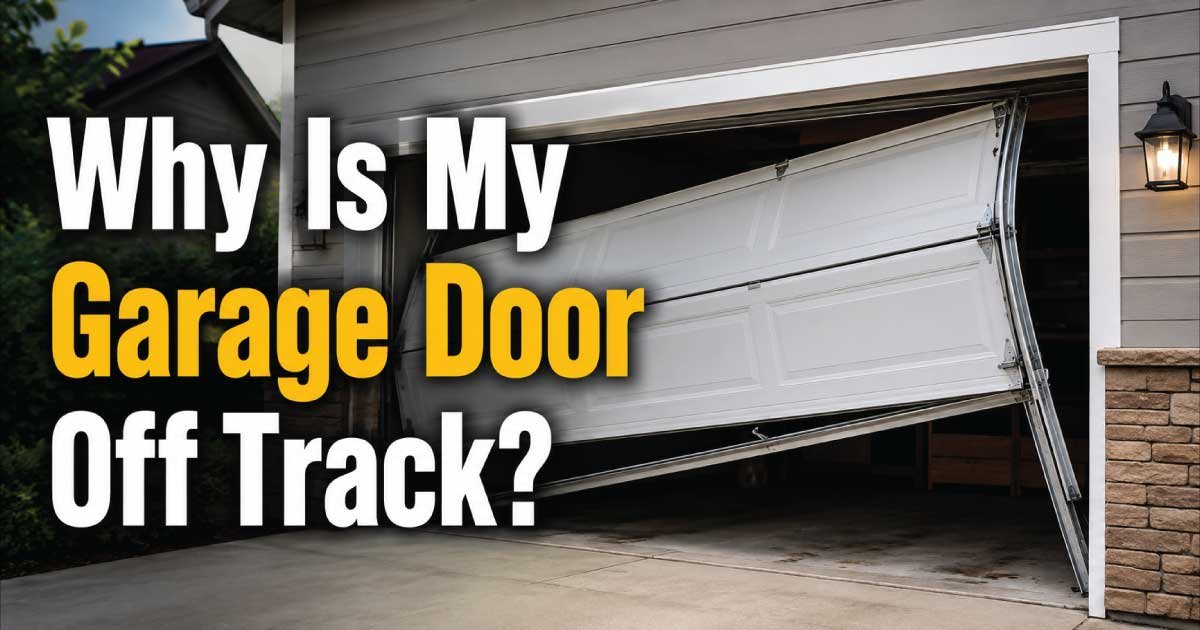
A garage door that has come off its track is more than an inconvenience—it can quickly become a serious safety hazard. When the rollers no longer sit properly inside the tracks, the door may become crooked, refuse to open or close, make loud grinding noises, or even fall unexpectedly if the problem worsens. Many homeowners first notice the issue after accidentally hitting the door with a vehicle, finding an object blocking the track, or hearing unusual sounds during normal operation.
The good news is that an off-track garage door often provides warning signs before complete failure. Understanding those signs can help you prevent further damage and avoid costly repairs. In many cases, simple inspection and troubleshooting can identify the root cause, although some repairs should always be left to trained professionals due to the high tension stored in garage door springs and cables.
In this guide, you’ll learn how a garage door track system normally works, the most common reasons a garage door goes off track, essential safety precautions, the tools needed for inspection, a practical step-by-step troubleshooting process, and a quick diagnosis table to help you identify likely causes before deciding on the best repair approach.
Common Signs and Symptoms
An off-track garage door rarely happens without warning. Recognizing the early symptoms allows you to stop using the door before additional damage occurs. Continuing to force a damaged garage door open or closed can bend tracks, damage rollers, snap cables, or overload the automatic opener.
Common warning signs include:
- The garage door appears crooked or uneven.
- One side of the door sits lower than the other.
- Rollers have come out of the metal track.
- The door stops halfway while opening or closing.
- Loud grinding, scraping, or popping noises.
- The opener strains but cannot move the door.
- The garage door shakes or jerks during operation.
- Visible gaps between rollers and track.
- Bent or twisted metal tracks.
- Frayed or loose lifting cables.
- The door becomes stuck completely.
For example, if you accidentally bump the lower section of the garage door with your car, one roller may jump out of the track. At first, the door might still move slightly, but each operation places additional stress on the remaining rollers and hardware. Stopping immediately can prevent a relatively small repair from becoming a complete track replacement.
How the Garage Door System Normally Works
Understanding how the garage door operates makes troubleshooting much easier. Every major component works together to lift and lower a door that may weigh anywhere from 130 to over 300 pounds. The opener supplies movement, but the springs carry most of the door’s weight.
The basic system includes:
- Vertical and horizontal metal tracks
- Steel or nylon rollers
- Hinges connecting each door section
- Torsion or extension springs
- Lift cables
- Drums and pulleys
- Automatic garage door opener
- Safety sensors
Here’s how everything works together:
- The opener begins pulling or pushing the door.
- The springs counterbalance the door’s weight.
- Lift cables keep both sides moving evenly.
- Rollers travel smoothly inside the tracks.
- Hinges allow each section to bend as the door curves overhead.
- The tracks guide the rollers through their entire path.
When one component fails, the entire system can lose alignment. For instance, a damaged roller may place sideways pressure on the track, while a broken cable can allow one side of the door to drop suddenly. Understanding this relationship helps explain why an off-track door often has more than one underlying cause.
Most Common Reasons This Problem Happens
Garage doors usually come off track because something interrupts the smooth movement of the rollers. Sometimes the cause is obvious, while other times several smaller issues combine over months of wear. Identifying the true cause prevents the problem from returning after repair.
Bent or Damaged Tracks
Metal tracks can bend from vehicle impacts, heavy objects, or repeated stress over time. Even a slight bend can force rollers out of alignment.
Why it happens
- Vehicle accidentally hits the door
- Heavy object strikes the track
- Loose mounting brackets allow movement
- Long-term wear
Symptoms
- Visible dents
- Door binds at one location
- Scraping noises
- Rollers climbing out of the track
How to identify it
Inspect the entire track using a flashlight. Look for bends, dents, gaps, or areas where the rollers no longer sit evenly.
Worn or Broken Rollers
Rollers experience thousands of cycles throughout their lifespan. As bearings wear out, they stop rolling smoothly and begin dragging against the track.
Why it happens
- Normal aging
- Lack of lubrication
- Dirt buildup
- Broken bearings
Symptoms
- Rough movement
- Loud squeaking
- Roller wobble
- Rollers partially leaving the track
How to identify it
Rotate each roller by hand with the door secured. Healthy rollers spin smoothly without excessive side-to-side movement.
Broken or Loose Lift Cables
Lift cables keep both sides of the garage door balanced. If one cable loosens or breaks, the door can tilt sharply.
Why it happens
- Cable wear
- Rust
- Fraying
- Pulley damage
Symptoms
- One side hangs lower
- Crooked door
- Slack cable
- Door jams during movement
How to identify it
Compare both cables. They should have similar tension and remain wrapped neatly around the cable drums.
Safety note: Never attempt to adjust garage door cables while the springs are under tension.
Obstructions Inside the Track
Even small objects can interrupt roller movement.
Common obstructions include:
- Small rocks
- Leaves
- Hardened grease
- Screws
- Children’s toys
- Packed dirt
Symptoms
- Door stops suddenly
- Roller jumps
- Grinding noises
- Jerky movement
How to identify it
Inspect the full length of each track using good lighting.
Loose Hardware
Garage doors vibrate every time they operate. Over many years, bolts and brackets gradually loosen.
Why it happens
- Daily vibration
- Aging hardware
- Poor installation
- Seasonal expansion and contraction
Symptoms
- Track movement
- Rattling sounds
- Misalignment
- Uneven door travel
How to identify it
Inspect all brackets, hinges, lag screws, and fasteners for looseness.
Broken Springs
Garage door springs carry most of the door’s weight. When a spring breaks, the opener struggles to lift the heavy door evenly.
Symptoms
- Door feels unusually heavy
- Loud bang before failure
- Crooked lifting
- Opener strains
How to identify it
Look for a visible gap in a torsion spring or a stretched extension spring.
Safety warning: Spring replacement should only be performed by trained professionals due to the extreme stored energy.
Impact Damage
Accidental vehicle contact remains one of the leading causes of off-track garage doors.
Even low-speed impacts can:
- Bend tracks
- Twist hinges
- Crack rollers
- Shift mounting brackets
- Misalign door panels
Often, homeowners continue operating the door after a minor impact, allowing the damage to spread throughout the system.
Also Read:
Safety Precautions Before Troubleshooting
Garage doors contain heavy moving parts and high-tension components. Before beginning any inspection or DIY repair, take steps to protect yourself and prevent additional damage. Never assume a door is stable simply because it has stopped moving.
Follow these safety precautions:
- Disconnect the automatic opener before inspecting the door.
- Keep children and pets away from the work area.
- Never stand beneath an unstable or partially open door.
- Wear safety glasses and work gloves.
- Use a sturdy ladder placed on level ground.
- Avoid forcing the door open or closed.
- Do not loosen spring hardware or cable drums.
- If a cable has snapped or a spring is broken, stop troubleshooting and arrange for professional repair.
- Use locking pliers or clamps only if you understand how to secure the door safely.
- Work with another adult whenever possible, especially when inspecting large double garage doors.
A good rule is simple: if the repair involves springs, cables, or lifting a damaged door manually, it is no longer a safe DIY project.
Tools Required
Before starting your inspection, gather the right tools. Most basic troubleshooting only requires common household tools and does not involve disassembling major components.
| Tool | Purpose |
|---|---|
| Flashlight | Inspect tracks, rollers, and hardware |
| Work gloves | Protect hands from sharp edges |
| Safety glasses | Shield eyes from debris |
| Step ladder | Reach upper tracks safely |
| Socket wrench set | Check loose bolts and brackets |
| Adjustable wrench | Tighten hardware |
| Tape measure | Check track alignment |
| Soft brush | Remove dirt and debris |
| Clean cloth | Wipe tracks and rollers |
| Garage door lubricant | Lubricate rollers and hinges after inspection |
Step-by-Step Troubleshooting Guide
A systematic inspection helps you identify the cause without creating additional problems. Resist the temptation to start adjusting tracks immediately. Instead, work through each step in order and stop if you discover damage involving springs or cables.
1. Disconnect the garage door opener
What to inspect
Pull the emergency release cord and verify the opener is disengaged.
Why it matters
This prevents the opener from moving the door unexpectedly during inspection.
Expected result
The door remains stationary.
What to do next
Begin a complete visual inspection.
2. Inspect both tracks
What to inspect
Look for bends, dents, loose brackets, debris, or gaps.
Why it matters
Damaged tracks are one of the most common reasons rollers leave the track.
Expected result
Tracks should appear straight and securely fastened.
What to do next
If severely bent, avoid operating the door.
3. Check the rollers
What to inspect
Examine each roller for cracks, flat spots, or wobbling.
Why it matters
A damaged roller often causes repeated derailment.
Expected result
Rollers should rotate smoothly.
What to do next
Replace worn rollers if you’re experienced, or schedule professional service.
4. Examine the cables
What to inspect
Look for fraying, slack, or uneven tension.
Why it matters
Uneven cables cause the door to lift crookedly.
Expected result
Both cables should remain tight and evenly wound.
What to do next
Do not attempt cable repairs yourself.
5. Inspect hinges and brackets
What to inspect
Look for cracked hinges or loose mounting hardware.
Why it matters
Loose hinges affect roller alignment.
Expected result
All hardware should be secure.
What to do next
Tighten accessible bolts if they are not connected to spring assemblies.
6. Test manual movement
What to inspect
Carefully raise and lower the disconnected door only if it appears stable.
Why it matters
Smooth manual movement helps isolate opener-related issues.
Expected result
The door should move evenly without binding.
What to do next
If resistance occurs, stop and inspect the area where movement becomes difficult.
Also Read:
Quick Diagnosis Table
The symptoms below provide a fast way to narrow down the most likely cause before attempting any repair. While several problems can produce similar behavior, this table helps identify where to begin your inspection safely.
| Symptom | Possible Cause | Recommended Solution |
|---|---|---|
| Door is crooked | Broken cable, damaged track | Stop using the door and inspect cables and tracks |
| Grinding noise | Worn rollers or debris | Clean tracks and inspect rollers |
| Roller outside track | Impact damage or bent track | Inspect alignment and avoid forcing the door |
| Door won’t open fully | Track obstruction or damaged roller | Remove debris and inspect roller movement |
| One side lifts higher | Loose cable or spring issue | Stop operation and arrange professional inspection |
| Door shakes while moving | Loose hardware or worn rollers | Tighten accessible hardware and inspect rollers |
| Opener strains but door barely moves | Broken spring or severe misalignment | Disconnect the opener and seek professional repair |
| Visible bent track | Vehicle impact or loose brackets | Replace or professionally straighten the damaged section |
How to Fix Each Common Cause
Now that you’ve identified the likely reason your garage door is off track, it’s time to consider the appropriate repair. Some problems are suitable for careful DIY work, while others involve high-tension components that should only be handled by a qualified garage door technician. The key is to repair the underlying cause—not just put the rollers back into the track—so the problem doesn’t return.
Repairing a Bent Track
Minor bends can sometimes be corrected if the track is only slightly deformed and the metal has not cracked.
DIY approach (minor damage only):
- Disconnect the garage door opener.
- Secure the door so it cannot move unexpectedly.
- Inspect the track for small bends or dents.
- Use a rubber mallet and a block of wood to gently reshape minor bends.
- Check that the track remains straight using a level.
- Tighten any loose mounting brackets.
- Test the door manually before reconnecting the opener.
Call a professional if:
- The track is severely bent.
- The track has pulled away from the wall.
- Metal is cracked or twisted.
- Multiple rollers have left the track.
Replacing a damaged track section is usually safer than attempting to straighten heavily damaged metal.
Replacing Worn Rollers
Garage door rollers naturally wear with age. Nylon rollers generally operate more quietly than steel rollers and often require less maintenance.
DIY approach (only if rollers are accessible and no spring components must be removed):
- Disconnect power to the opener.
- Secure the door in place.
- Remove the hinge holding the damaged roller if it is not under spring tension.
- Slide out the old roller.
- Install the replacement roller.
- Reattach the hinge securely.
- Lubricate moving parts with garage door lubricant.
Avoid using household grease or penetrating oils as a permanent lubricant. Use a product specifically designed for garage doors.
Clearing Track Obstructions
This is one of the safest repairs for homeowners.
Steps include:
- Vacuum loose debris.
- Wipe the tracks with a clean cloth.
- Remove hardened grease using a non-corrosive cleaner.
- Inspect for small screws, stones, or other objects.
- Lubricate rollers—not the inside of the tracks unless recommended by the manufacturer.
Tracks should remain clean and dry. Excess lubricant inside the track often attracts dirt that creates new problems.
Tightening Loose Hardware
Garage doors vibrate thousands of times during their lifespan.
Inspect:
- Roller brackets
- Track brackets
- Hinges
- Mounting bolts
- Opener mounting hardware
Tighten loose fasteners carefully, but never loosen or tighten bolts attached directly to torsion spring hardware.
Fixing Misaligned Tracks
Tracks occasionally shift because brackets loosen over time.
Minor adjustments may involve:
- Loosening mounting bolts slightly.
- Repositioning the track until it is straight.
- Confirming equal spacing between the rollers and track.
- Retightening the bolts securely.
If both vertical and horizontal tracks have shifted significantly, professional realignment is usually the safest solution.
Broken Springs
Garage door springs should never be considered a DIY repair.
Spring replacement involves:
- Specialized winding bars
- Proper spring sizing
- Controlled release of stored energy
- Precise balancing after installation
Attempting spring replacement without proper training can cause severe injuries.
Broken or Frayed Cables
Like springs, lifting cables remain under significant tension.
Professional technicians will:
- Secure the door.
- Release spring tension safely.
- Replace damaged cables.
- Rebalance the entire system.
- Test door operation under load.
If you notice a frayed cable, stop using the garage door immediately. Continued operation often causes additional damage.
Advanced Troubleshooting
Sometimes an off-track garage door isn’t caused by a single obvious problem. Less common issues can create repeated derailments even after replacing rollers or straightening tracks. A more detailed inspection helps uncover these hidden faults.
Uneven Door Panels
A damaged panel can twist the entire door.
Look for:
- Cracked panel joints
- Warped sections
- Loose reinforcement struts
- Bent hinges between panels
Even slight panel distortion changes how the rollers travel through the track.
Foundation Movement
Older homes occasionally develop shifting foundations.
Signs include:
- Garage opening no longer square
- Tracks pulling away from the wall
- Uneven gaps around the closed door
- Repeated alignment problems
If the garage framing has shifted, repairing only the door may not solve the problem.
Worn Bearings
Both torsion systems and roller assemblies use bearings.
Symptoms include:
- Loud rumbling
- Increased resistance
- Jerky movement
- Metal shavings near bearing locations
Bearing replacement usually accompanies larger garage door repairs.
Opener Travel Settings
Modern garage door openers use adjustable travel limits.
Incorrect settings may cause:
- Door pushing beyond its normal stopping point
- Excess pressure against the floor
- Rollers climbing the track
- Repeated alignment issues
Refer to your opener manufacturer’s instructions before adjusting travel limits.
Sensor-Related Problems
Although safety sensors do not directly cause doors to come off track, repeated reversing can stress worn hardware.
Inspect:
- Dirty sensor lenses
- Loose sensor brackets
- Misaligned beams
- Damaged sensor wiring
Keeping sensors clean helps prevent unnecessary door movement.
Also Read:
When Repair Is Not Worth It
Repairing a garage door makes sense in most situations, but there are times when replacement provides better value and improved safety. Investing in repeated repairs on an aging or heavily damaged system can quickly exceed the cost of installing a new door.
Replacement is often the better choice when:
- The door has severe structural damage.
- Multiple panels are bent.
- Tracks, rollers, springs, and cables all need replacement.
- The opener is also nearing the end of its service life.
- Repair costs exceed roughly half the price of a comparable new door.
- Replacement parts are no longer available.
- The door lacks modern safety features.
New garage doors often include:
- Better insulation
- Quieter operation
- Improved weather sealing
- Stronger hardware
- Smart opener compatibility
- Enhanced security features
If your garage door is over 20 years old and requires several major repairs at once, replacing the complete system is often the most cost-effective long-term solution.
Preventive Maintenance Tips
Most off-track garage door problems develop gradually. Regular maintenance helps identify small issues before they become expensive repairs. A simple inspection every few months can significantly extend the life of your garage door system.
Follow these preventive maintenance practices:
- Inspect rollers every six months.
- Check tracks for dirt and debris.
- Tighten accessible hardware annually.
- Lubricate rollers, hinges, and bearings with garage door lubricant.
- Listen for unusual noises during operation.
- Test the door balance by disconnecting the opener.
- Inspect weather seals for wear.
- Watch for frayed cables.
- Keep tracks free of stored items that could be bumped into them.
- Never drive away until the garage door is fully open.
Many service calls result from small problems that could have been detected during a five-minute visual inspection.
Common Mistakes to Avoid
Homeowners often make well-intentioned repairs that create larger problems. Understanding these common mistakes can help you avoid unnecessary damage and stay safe while troubleshooting.
Avoid these errors:
- Continuing to operate an off-track door.
- Forcing the opener to lift a jammed door.
- Ignoring unusual noises.
- Using incorrect lubricants.
- Hammering severely bent tracks back into shape.
- Attempting spring replacement without training.
- Reusing badly worn rollers.
- Forgetting to inspect both sides of the door.
- Overtightening hardware and stripping fasteners.
- Delaying repairs after minor vehicle impacts.
Stopping operation as soon as you notice a problem is often the best way to reduce repair costs.
When to Call a Professional
While homeowners can safely inspect many garage door components, certain repairs involve risks that outweigh any potential savings. Professional technicians have the specialized tools, replacement parts, and experience needed to restore safe operation.
Call a garage door professional if:
- A spring is broken.
- A lifting cable has snapped or frayed.
- The door has completely left the tracks.
- The track is badly bent.
- The garage door is hanging at an angle.
- The opener continues struggling after basic inspection.
- Structural damage is present.
- You are unsure how to secure the door safely.
- The door weighs too much to move manually.
- Previous DIY repairs have not solved the problem.
Professional repairs also include balancing the door after replacing major components, which helps prevent future alignment issues.
Estimated Repair Costs
Repair costs vary depending on your location, the type of garage door, and the extent of the damage. The estimates below reflect common residential garage door repairs.
| Repair | Estimated Cost | DIY or Professional |
|---|---|---|
| Track cleaning | $0–$25 | DIY |
| Roller replacement | $50–$180 | DIY or Professional |
| Track adjustment | $100–$250 | Professional recommended |
| Track replacement | $200–$500 | Professional |
| Cable replacement | $150–$300 | Professional |
| Spring replacement | $200–$450 | Professional |
| Hinge replacement | $20–$100 | DIY or Professional |
| Garage door opener adjustment | $75–$200 | DIY or Professional |
| Full garage door replacement | $900–$2,500+ | Professional |
Final Thoughts
If you’ve been asking, “Why is my garage door off track?”, the answer is usually a combination of wear, impact, poor maintenance, or damaged hardware rather than a single isolated problem. The most important step is to stop using the door as soon as you notice uneven movement, unusual noises, or rollers leaving the track. Early action can prevent additional damage and reduce repair costs.
Start with a careful visual inspection, clean the tracks, check for loose hardware, and look for obvious signs of worn rollers or minor obstructions. At the same time, recognize the limits of DIY repairs. Springs, cables, and severely damaged tracks present significant safety risks and should be repaired by qualified professionals.
Routine maintenance remains the best way to avoid future problems. Regular inspections, proper lubrication, and prompt attention to small issues can keep your garage door operating smoothly for years. By understanding how the system works and following a logical troubleshooting process, you’ll be better prepared to identify problems early, make informed repair decisions, and keep your garage door operating safely and reliably.

Engineer Ali Usman is a professional garage door expert and author at FixFasty, with over 10 years of hands-on experience in garage door systems and mechanical maintenance. He writes clear, step-by-step guides on garage door repairs, parts, and safety practices, helping homeowners fix problems correctly and maintain smooth, secure, and long-lasting garage door performance.