
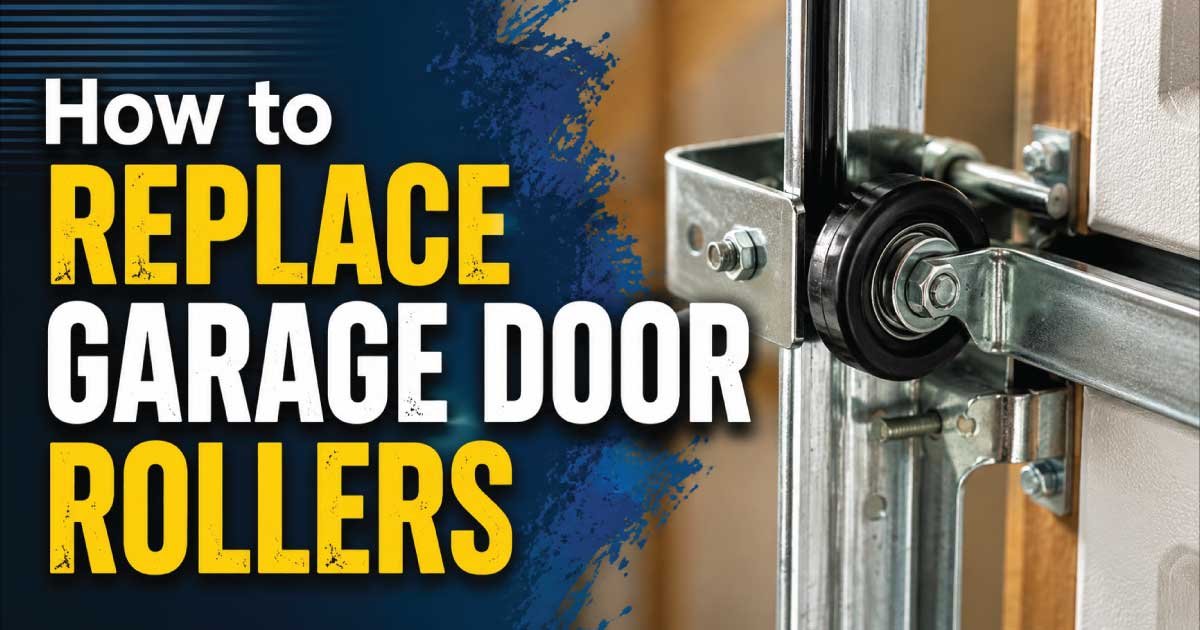
Garage door rollers may look like small parts, but they play a major role in how smoothly and safely your garage door operates. Every time you open or close the door, the rollers travel along the metal tracks, supporting the weight of the door while reducing friction. Over time, constant use, dirt buildup, moisture, and normal wear can cause rollers to crack, seize, or wear unevenly. When that happens, your garage door may become noisy, jerky, difficult to open, or even unsafe to use.
Replacing worn garage door rollers before they completely fail helps prevent damage to the tracks, hinges, opener, and other expensive components. In many cases, homeowners can replace standard rollers themselves with the right tools and careful preparation, although some situations require professional repair because of the high tension stored in garage door springs.
This comprehensive How to Replace Garage Door Rollers repair guide explains how garage door rollers work, the warning signs of failure, common causes of damage, essential safety precautions, the tools you’ll need, and a logical troubleshooting process to determine whether roller replacement is the right solution.
Common Signs and Symptoms
Garage door roller problems usually develop gradually rather than all at once. Paying attention to early warning signs can prevent larger repairs later. While some symptoms may point to damaged tracks or hinges, worn rollers are often the root cause.
Common signs include:
- Loud squeaking, grinding, or rattling noises during operation
- Garage door shaking or vibrating while opening or closing
- Rollers visibly cracked, chipped, or worn
- Rollers wobbling inside the track
- Door moving unevenly or appearing crooked
- Garage door sticking at certain points
- Door requiring extra force to open manually
- Automatic opener straining or slowing down
- Black plastic or metal dust collecting near the tracks
- Rollers coming partially out of the track
Some homeowners notice that the garage door becomes progressively louder over several months. This often happens because roller bearings wear out, causing increased friction inside the track. In other cases, nylon rollers may crack with age, especially in areas with frequent temperature changes.
A simple visual inspection can reveal many roller problems. If the wheels appear flattened, cracked, loose, or no longer rotate freely, replacement is usually recommended rather than attempting a repair.
How the Appliance or System Normally Works
Understanding how a garage door operates makes troubleshooting much easier. Although the system contains many moving parts, the rollers are responsible for guiding the door safely along its travel path.
Each garage door panel connects to hinges. Rollers attach to these hinges and fit inside the vertical and horizontal tracks on each side of the door. As the door opens, the rollers move smoothly through the curved sections of the track while the springs help counterbalance the heavy weight of the door.
A properly functioning roller should:
- Spin freely with minimal resistance.
- Stay centered inside the track.
- Support the door without wobbling.
- Move quietly with little vibration.
- Maintain proper alignment throughout the door’s travel.
Most residential garage doors use either nylon or steel rollers. Nylon rollers are quieter and require less maintenance, while steel rollers generally last longer under heavy use but may become noisier over time if lubrication is neglected.
It’s important to remember that rollers are guide wheels—not weight-bearing supports by themselves. The torsion or extension springs carry most of the door’s weight. This is why spring-related repairs involve significant safety risks compared with replacing standard rollers.
Most Common Reasons This Problem Happens
Garage door rollers rarely fail without a reason. Identifying the underlying cause helps ensure new rollers last as long as possible instead of wearing out prematurely.
Normal Wear and Tear
The most common reason for roller replacement is simple age. Every opening and closing cycle gradually wears the wheel material and internal bearings.
Why it happens
Daily use slowly wears the roller surfaces and bearing assemblies.
Symptoms
- Increasing noise
- Rough movement
- Loose or wobbly rollers
How to identify it
Inspect the rollers closely. Older rollers often show flattened edges, worn bearings, or cracked nylon wheels.
Lack of Lubrication
Even high-quality rollers need occasional maintenance unless they use sealed bearings.
Why it happens
Without lubrication, friction increases between moving parts, accelerating wear.
Symptoms
- Squeaking
- Grinding sounds
- Jerky movement
How to identify it
Dry rollers often appear dusty or rusty and make noise immediately when the door begins moving.
Dirt and Debris in the Tracks
Garage environments collect dust, leaves, insects, and road debris over time.
Why it happens
Foreign material creates resistance that forces rollers to work harder.
Symptoms
- Door sticking
- Uneven travel
- Excessive vibration
How to identify it
Inspect the tracks with a flashlight. Built-up dirt or hardened grease often indicates cleaning is needed before replacing rollers.
Bent or Misaligned Tracks
Sometimes the rollers are not the actual problem.
Why it happens
Vehicles, ladders, or accidental impacts can bend garage door tracks.
Symptoms
- Rollers jumping
- Door binding
- Visible gaps between roller and track
How to identify it
Use a level and inspect the tracks from top to bottom for bends or twists.
Rust and Moisture Damage
Homes in humid climates often experience faster hardware deterioration.
Why it happens
Moisture attacks steel bearings and roller stems.
Symptoms
- Rust stains
- Stiff rollers
- Grinding noises
How to identify it
Look for orange discoloration around bearings or roller shafts.
Poor-Quality Rollers
Not all replacement rollers are manufactured to the same standard.
Why it happens
Low-cost rollers often use smaller bearings and lower-grade materials.
Symptoms
- Premature wear
- Frequent replacements
- Increased noise
How to identify it
If rollers fail after only a few years despite normal use, upgrading to higher-quality nylon rollers with sealed bearings is often worthwhile.
Safety Precautions Before Troubleshooting
Garage door repairs deserve more caution than many homeowners realize. Although replacing some rollers is considered a manageable DIY repair, garage doors contain heavy moving parts and powerful spring systems that can cause serious injuries if handled incorrectly.
Before beginning any inspection or repair:
- Disconnect electrical power to the garage door opener.
- Pull the emergency release cord only when the door is fully closed unless the manufacturer’s instructions say otherwise.
- Never loosen or remove torsion springs or their mounting hardware.
- Wear safety glasses to protect against flying debris.
- Use work gloves to improve grip and protect your hands.
- Secure the door with locking pliers or clamps when appropriate.
- Keep children and pets away from the work area.
- Use a stable ladder positioned on level ground.
- Replace only one roller at a time unless following a proven repair procedure.
- If the door feels unusually heavy, stop immediately and inspect the spring system instead of forcing the door.
A good rule is simple: if replacing the roller requires disturbing spring tension, the repair is no longer a beginner DIY project and should be handled by a qualified garage door technician.
Tools Required
Before starting your inspection or garage door roller replacement, gather the necessary tools. Having everything within reach makes the troubleshooting process safer and more efficient while reducing the temptation to improvise with unsuitable equipment.
| Tool | Purpose |
|---|---|
| Safety glasses | Protect eyes from debris |
| Work gloves | Improve grip and protect hands |
| Stepladder | Safely reach upper rollers |
| Adjustable wrench | Remove or tighten hardware |
| Socket set | Remove hinge bolts |
| Locking pliers | Secure the garage door in place |
| Flat-head screwdriver | Assist with guiding rollers from tracks |
| Needle-nose pliers | Handle retaining clips where applicable |
| Silicone garage door lubricant | Lubricate moving components after installation |
| Flashlight | Inspect tracks, rollers, and hinges |
| Clean cloth | Remove dirt and old grease |
| Replacement garage door rollers | Replace worn or damaged rollers |
Step-by-Step Troubleshooting Guide
Before replacing any rollers, confirm they are actually causing the problem. A careful diagnosis can save both time and money while preventing unnecessary repairs.
1. Listen During Door Operation
What to inspect
Open and close the garage door while listening carefully for unusual sounds.
Why it matters
Different noises often point to different mechanical problems.
Expected result
A healthy door should move smoothly with minimal noise.
What to do next
If grinding or squeaking occurs at specific locations, inspect those rollers first.
2. Perform a Visual Roller Inspection
What to inspect
Look for cracked wheels, loose bearings, chipped nylon, rust, or bent stems.
Why it matters
Visible damage confirms that replacement is likely necessary.
Expected result
Rollers should appear round, smooth, and securely attached.
What to do next
Mark any damaged rollers so they can be replaced later.
3. Check the Tracks
What to inspect
Look for dents, bends, accumulated dirt, and obstructions.
Why it matters
Damaged tracks can mimic roller failure.
Expected result
Tracks should remain straight, clean, and securely fastened.
What to do next
Clean minor debris before assuming the rollers are defective.
4. Test Manual Door Movement
What to inspect
Disconnect the opener and carefully lift the door manually.
Why it matters
This separates opener problems from mechanical issues.
Expected result
The door should move smoothly with moderate effort.
What to do next
If movement remains rough, inspect rollers, hinges, and tracks more closely.
5. Examine the Hinges
What to inspect
Check whether hinges are cracked, bent, or loose.
Why it matters
Damaged hinges can misalign otherwise healthy rollers.
Expected result
Hinges should remain firmly attached with no excessive movement.
What to do next
Replace damaged hinges before installing new rollers.
6. Inspect Roller Bearings
What to inspect
Rotate each accessible roller by hand.
Why it matters
Healthy bearings spin freely with little resistance.
Expected result
Rollers should rotate smoothly without sticking.
What to do next
Replace rollers that bind, wobble, or feel rough.
7. Verify Spring Balance
What to inspect
Observe whether the door feels unusually heavy during manual lifting.
Why it matters
Failed springs overload the rollers and opener.
Expected result
A balanced garage door should stay partially open without falling rapidly.
What to do next
Do not replace rollers until spring problems are professionally repaired.
8. Decide Whether Roller Replacement Is Appropriate
What to inspect
Review all inspection findings together.
Why it matters
Rollers are only one part of the overall garage door system.
Expected result
You should have a clear understanding of whether worn rollers are the primary fault.
What to do next
Proceed with roller replacement only after confirming the tracks, hinges, and spring system are in good condition.
Also Read:
Quick Diagnosis Table
Before purchasing replacement parts, compare your garage door’s symptoms with the chart below. It helps narrow down the most likely cause and points you toward the appropriate next step.
| Symptom | Possible Cause | Recommended Solution |
|---|---|---|
| Loud squeaking | Dry or worn rollers | Inspect and replace rollers if lubrication doesn’t help |
| Grinding noise | Damaged bearings | Replace affected rollers |
| Door shakes while moving | Worn rollers or bent track | Inspect rollers and track alignment |
| Roller comes off track | Misaligned track or damaged roller | Inspect track before replacing roller |
| Door sticks halfway | Dirty track or seized roller | Clean track and inspect rollers |
| Opener struggles | Roller friction or spring issue | Check rollers first, then evaluate spring balance |
| Visible cracked roller | Aging nylon wheel | Replace roller immediately |
| Uneven door movement | Roller, hinge, or track problem | Inspect all three components before making repairs |

Engineer Ali Hasan is a garage door expert and the founder of FixFasty. With over 16 years of experience in mechanical systems and home maintenance, he provides practical, step-by-step guides on garage door installation, repairs, and maintenance, helping homeowners keep their garage doors safe, reliable, and long-lasting.